
Journalist

Lee Dong Geon
-
 Woman in Her 40s Killed by Forklift While Biking Across Crosswalk in Seoul A woman in her 40s died after a collision with a forklift while riding a bicycle across a crosswalk, according to a media report. The report said the crash happened on the 24th near Sinmokdong Station in Seoul’s Yangcheon District, when a forklift driven by a man in his 60s, identified only as A, struck the woman as she crossed. Police responded to a witness report and arrested A at the scene on suspicion of violating South Korea’s traffic accident handling law. He was not believed to be intoxicated at the time of his arrest, the report said. Seoul’s Yangcheon Police Station is investigating the circumstances of the crash, including whether the driver ran a signal. The victim’s family said the driver has not offered a proper apology. In a phone interview with Aju Economy on the 30th, the family cited a witness who said the forklift continued for about 7 meters after hitting the bicycle. The family said it reviewed nearby closed-circuit television footage and confirmed the witness account. The family also claimed the forklift entered a child protection zone without slowing and appeared to be moving quickly, adding that the driver seemed unaware he had hit the cyclist. They said that after realizing what happened, the driver got out and shouted profanity at the woman, including, “Why did you jump out, you XX,” and did not attend her funeral.* This article has been translated by AI. 2026-04-30 18:15:45
 -
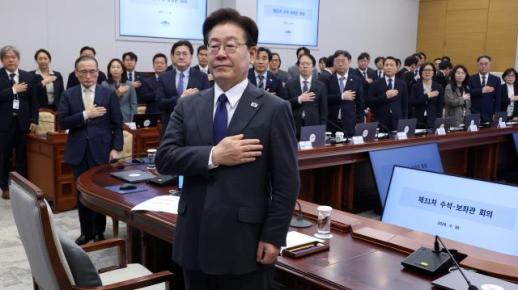 Lee Jae-myung to Host First Blue House Labor Day Ceremony With Both Major Unions President Lee Jae-myung will invite leaders of the country’s two largest labor federations and workers to Cheong Wa Dae’s state guesthouse on May 1, Labor Day, to hold a commemorative ceremony. Cheong Wa Dae said April 30 that Lee will host about 120 guests, including key figures from labor, management and government and workers from a range of occupations and generations, to mark Labor Day, which it said was restored 63 years ago. Both the Federation of Korean Trade Unions and the Korean Confederation of Trade Unions plan to attend, Cheong Wa Dae said. It will be the first time Cheong Wa Dae has hosted a Labor Day ceremony, and the first time the two federations have held a joint Labor Day event. Cheong Wa Dae said the event was made possible as organized labor responded to the Lee administration’s governing stance of “respect for labor.” It said Lee, who it described as a former “boy factory worker,” plans to reflect on the meaning of the restored Labor Day, share in the value of labor and thank workers for their dedication. Lee is expected to use his commemorative address to outline the government’s labor policy direction, including goals he has emphasized since taking office such as “eradicating industrial accidents” and “redistributing the fruits of growth.” With a Samsung Electronics union recently warning of a large-scale strike, attention is also focused on whether Lee will address the issue. Labor Day has been observed since 1923, but in 1963 its name was changed to “Workers’ Day.” The government restored the name Labor Day last year and designated it a legal public holiday this year.* This article has been translated by AI. 2026-04-30 18:12:24
 -
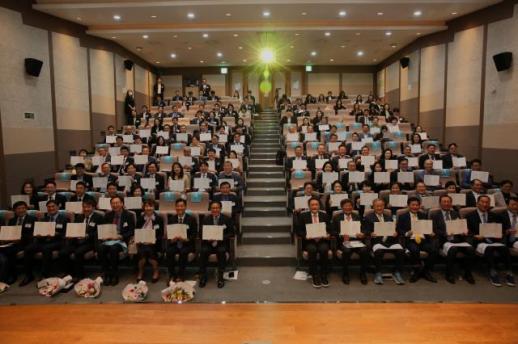 Yoonkyung Forum Holds 23rd CEO Ethics Pledge Ceremony on AI-ESG Strategy The Yoonkyung Forum, hosted by the Industrial Policy Research Institute and Seoul School of Integrated Sciences & Technologies, held its 23rd CEO ethics pledge ceremony on Wednesday at the Ahn Jung-geun Memorial Hall in Seoul, organizers said. Held under the theme “the convergence of AI and ESG,” the event drew about 100 leaders from private companies, public institutions, government and civil society. Participants discussed strategies that combine AI-driven innovation with ESG management and pledged to put them into practice. Organizers said the gathering underscored that strengthening ethical management with AI and building ESG competitiveness are key factors shaping the future competitiveness of South Korean companies. They noted that ESG is moving beyond declarations toward data-based execution and verification, and that combining AI with ESG is increasingly seen as a driver of competitiveness and sustainable growth. In a video message, the prime minister called the ceremony a meaningful occasion to reaffirm the idea that “ethics is competitiveness,” and said AI is opening a new chapter for ESG management. The prime minister said ESG is developing toward transparent, data-based verification, and that market trust is concentrating on companies that grow in sustainable ways. The prime minister added that the convergence of AI and ESG will be a key engine for competitiveness and sustainable growth, and said the government would support efforts to further embed ethical management in the AI era. A congratulatory address by the chairperson of the Anti-Corruption and Civil Rights Commission followed. The chairperson emphasized that responsible management grounded in ethics, fairness and transparency strengthens trust and provides a foundation for sustainable growth, and stressed the importance of public and private sectors working together to spread a culture of ethical management. The event was moderated by Kang Shin-sook, former head of SH Suhyup Bank, and included welcoming and congratulatory remarks, an awards presentation, a calligraphy performance, a CEO ethics pledge and a group recitation of “Our Pledge,” followed by a commemorative photo. Attendees agreed that ethical management is not optional but a necessary strategy for sustainable growth and public trust. An awards ceremony for the sixth annual contest recognizing institutions with strong ethical-management practices was held alongside the event. The contest, held annually since 2021, aims to identify organizations that have embedded ethical management institutionally and culturally, establish social standards and spread best practices. This year’s winners were Korea Ginseng Corp., Korea Water Resources Corp., Merz Aesthetics Korea, Korea Ocean Business Corp., KEPCO KPS and Korea Land & Housing Corp. Founded in 2003, the Yoonkyung Forum has promoted seminars, research and campaigns under the principle that “ethics is competitiveness.” Organizers said the 23rd CEO pledge ceremony and the contest again highlighted the forum’s role as a platform for cooperation to strengthen ethical and ESG management suited to the AI era and to bolster the global competitiveness of South Korean companies.* This article has been translated by AI. 2026-04-30 18:09:21
 -
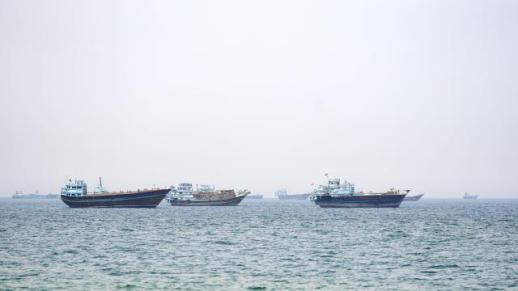 South Korea says Hormuz transit for its ships depends on safety, operators’ decisions South Korea’s Foreign Ministry said April 30 that the passage of Korean-flagged vessels through the Strait of Hormuz amid the U.S.-Iran war must take into account multiple factors, including safety conditions and decisions by shipping companies. Spokesman Park Il told a regular briefing that “there are various matters to consider, including the safety situation in the strait,” and that judgments and decisions on transit ultimately rest with ship operators. Park said the government’s basic position is that free passage for all vessels, including Korean ships, should be restored quickly. Under that stance, he said, Seoul is asking Iran for special cooperation so that 26 Korean vessels can pass through the strait as soon as possible, while staying in close contact with Gulf countries and the United States. The ministry recently dispatched Special Envoy Chung Byung-ha, the foreign minister’s special envoy, to Iran. Asked about a Japanese oil tanker that transited the strait on April 28, Park said each ship and operator faces different circumstances and the case cannot be treated as identical to the situation involving Korean vessels. He said the government will continue diplomatic efforts until the issue is resolved. Park added that Seoul is consulting with Iran and other relevant countries while taking into account operators’ views, but said it was difficult to provide details. “Our government is looking after our ships more actively than anyone,” he said. Some shipping companies are reported to be taking the position that, with prospects for U.S.-Iran ceasefire talks still unclear, they would rather watch negotiations than push for transit and take on added risk. The government has also reportedly conveyed to Iran its basic position that it will not pay transit fees for passage through the Strait of Hormuz. * This article has been translated by AI. 2026-04-30 18:03:16
 -
 WSJ: Saudi PIF to End LIV Golf Funding After This Year Saudi Arabia-backed LIV Golf is facing its biggest test after reports that the kingdom’s Public Investment Fund plans to stop funding the league, putting its future in doubt. The Wall Street Journal and Bloomberg News reported on April 30 (Korean time) that PIF has decided to maintain financial support for LIV Golf only through this year and then end it. The reports said players and staff could be formally notified as soon as April 30 local time. LIV Golf, launched in 2021 with Saudi backing, has poured more than $5 billion (about 7.4 trillion won) into the venture over four years. It drew attention by signing many top-ranked players and breaking with PGA Tour traditions, including 54-hole, three-round events and allowing players to wear shorts. The league has struggled, however, to attract spectators and television viewers. Questions have also emerged about governance. Sports Business Journal, citing an internal source, reported that PIF Gov. Yasir Al-Rumayyan, a central figure in LIV’s creation and a key financial backer, has stepped down as chair of LIV’s board. Signs of disruption have appeared on the schedule. LIV Golf said April 29 it is postponing its Louisiana tournament, originally set for late June in New Orleans, until the fall. The league said its “LIV Golf Korea 2026” event, scheduled to open May 28 at Asiad Country Club in Busan, will proceed as planned.* This article has been translated by AI. 2026-04-30 17:58:36
 -
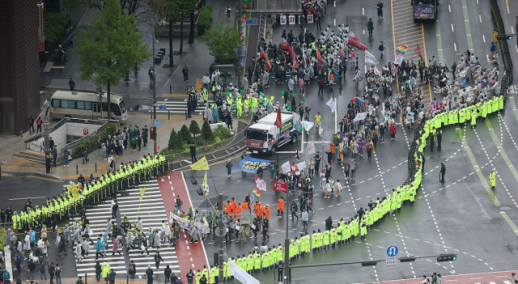 May Day Rallies to Snarl Traffic in Central Seoul and Yeouido Seoul is expected to face near gridlock across the city center on May 1, Workers’ Day, as large rallies and marches are planned around Sejong-daero and Yeoui-daero, with traffic controls on major arteries. The Seoul Metropolitan Police Agency said the Korean Confederation of Trade Unions and the Federation of Korean Trade Unions will each hold rallies and marches drawing tens of thousands of participants in central Seoul and the Yeongdeungpo area. With events running at the same time and overlapping in some hours, widespread congestion could hit key business districts. In central Seoul, preliminary gatherings are set to begin at 1 p.m. around Jongno, Eulji-ro and Yulgok-ro. A main rally is scheduled for 3 p.m. on the Sejong Intersection-to-City Hall Intersection stretch. Marchers are then expected to move from 4 p.m. along Jongno and Namdaemun-ro, passing the Bank of Korea Intersection and Sogong-ro before continuing around City Hall. Police expect sequential lane closures or partial occupation of lanes on Sejong-daero and in the Jongno area, slowing traffic significantly. In Yeongdeungpo, a large rally is planned from 2 p.m. around Yeoui-daero. The area is typically busy, and police said congestion could spread to nearby roads if crowds concentrate. With some overlap with the downtown events, simultaneous bottlenecks could develop along major routes linking central and western Seoul. Police warned travel times could rise sharply where disruptions coincide with commuting hours. Bus routes may be detoured or delayed, and heavy pedestrian traffic in some areas is expected to further reduce vehicle speeds. To limit disruption, police plan to deploy about 200 traffic officers around rally sites and use reversible lanes and phased vehicle controls. They also plan to station personnel at key intersections and detour points to help disperse traffic. Residents can check detailed information on rally times and controlled sections through police traffic updates, the traffic information center website and mobile channels. Police said additional controls may be imposed depending on conditions, making real-time updates important. With large crowds expected, significant congestion is likely. Police urged drivers passing through core corridors such as Sejong-daero, Jongno and Yeoui-daero to plan ahead, as travel times may vary widely depending on detours.* This article has been translated by AI. 2026-04-30 17:57:26
 -
 Asian stocks fall across the board as oil prices surge SEOUL, April 30 (AJP) - South Korea's benchmark KOSPI fell 1.38 percent to close at 6,598.87 on Thursday as rising oil prices dragged Asian markets lower. Brent crude futures jumped more than 5 percent in Asian trading, pushing regional stocks down over 1 percent. The junior KOSDAQ also dropped, closing at 1,192.35, down 2.29 percent. The main index rose to as high as 6,750.27 during the intraday session, setting a new intraday record. However, it later fluctuated and declined, falling below the 6,600 level. It ended lower for the first time in four days. The index briefly hit a new intraday high of 6,750.27 before falling back to close below 6,600, ending its upward streak for the first time in four days. Most major stocks fell. Samsung Electronics closed at 220,500 won (about $149.60), down 2.43 percent, while SK Hynix ended at 1,286,000 won, down 0.54 percent. Hyundai Motor fell 4.5 percent to 531,000 won, LG Energy Solution dropped 2.64 percent to 460,500 won, and Doosan Enerbility declined 1.63 percent to 127,100 won. Among entertainment stocks, HYBE rose more than 4 percent, while other companies declined. HYBE closed at 263,000 won, up 4.16 percent. JYP fell 2.48 percent to 62,900 won, SM dropped 0.92 percent to 96,600 won, and YG declined 1.82 percent to 54,000 won. Japan's Nikkei 225 stood at 59,111.55 as of 3:40 p.m., down 1.35 percent. Hong Kong's Hang Seng fell 1.19 percent to 25,800.75. 2026-04-30 17:46:09
 -
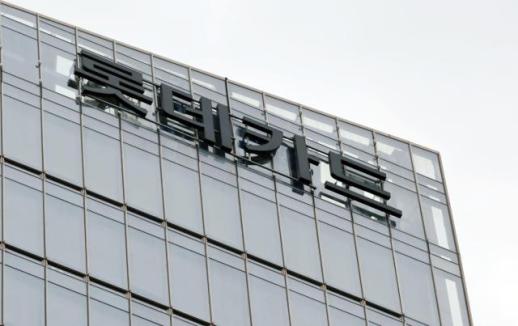 South Korea watchdog confirms 4.5-month business suspension for Lotte Card; FSC to decide Lotte Card, which suffered a large-scale customer data leak in a hacking incident last year, has been ordered by South Korea’s Financial Supervisory Service to suspend business for 4.5 months. According to the financial industry on Wednesday, the FSS confirmed the 4.5-month suspension in a sanctions review committee meeting held that day. Lotte Card said about 2.97 million customers — roughly one-third of its total — had information exposed in a hack in September last year. Of those, 280,000 customers had key data leaked, including card numbers, expiration dates and CVC codes, creating a risk of fraudulent card use. Earlier this month, the FSS gave Lotte Card advance notice of a sanctions package that included the 4.5-month suspension, a 5 billion won fine and personnel penalties. The sanctions will be finalized after a vote at a regular meeting of the Financial Services Commission. A Lotte Card official said the hacking case differs from a 2014 data leak involving an employee and called a business suspension for a hacking incident “an unprecedented level of sanction.” The official said follow-up steps remain, including an FSC vote, and the company will explain its objections to what it views as an enhanced penalty, its post-incident response and that no secondary harm occurred.* This article has been translated by AI. 2026-04-30 17:43:43
 -
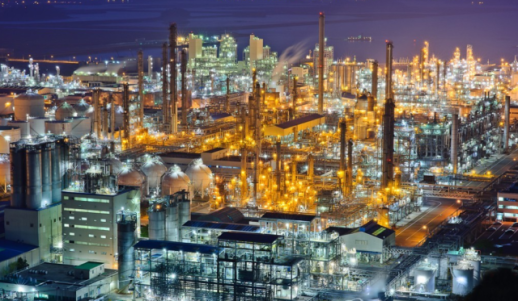 LG Chem narrows Q1 operating loss as petrochemicals rebound; targets 75% NCC run rate LG Chem said Thursday it posted first-quarter consolidated revenue of 12.2468 trillion won and an operating loss of 49.7 billion won. Revenue fell 6.2% from a year earlier, while the operating loss narrowed. By business, the petrochemicals division posted revenue of 4.4723 trillion won and operating profit of 164.8 billion won, which the company linked to the impact of the Middle East war. LG Chem said profitability improved from the previous quarter on a positive inventory lagging effect from higher naphtha prices and one-time income from refunds of European anti-dumping duties. The company said it returned to profit in February, before the outbreak of the war, citing aggressive cost cuts and portfolio improvements pursued since last year. For the second quarter, LG Chem expects lower sales volume and revenue due to a temporary shutdown of its Yeosu naphtha cracker center, or NCC, No. 2 plant. Still, it forecast profitability similar to the first quarter, citing continued naphtha lagging effects and ongoing cost reductions. On a government-led restructuring of commodity petrochemicals, LG Chem said on its first-quarter earnings call that its goal of securing final approval for business reorganization within the year remains unchanged. It said it is continuing detailed talks with partners GS Caltex and Hanwha TotalEnergies on integrating NCC operations at the Yeosu and Daesan industrial complexes. LG Chem said domestic NCC restructuring alone would be unlikely to resolve global oversupply in the short term, but said its partnership model would strengthen its refinery-based feedstock competitiveness while allowing partners to internalize LG Chem's petrochemical capabilities in a short period. To respond to ethylene shortages at home and abroad tied to the Middle East war, LG Chem said it kept average NCC utilization around 60% in March. It said it aims to lift the rate to at least 75% in the second quarter by securing additional feedstocks such as naphtha, though the Yeosu NCC No. 2 shutdown is expected to continue into the quarter. The advanced materials division posted revenue of 843.1 billion won and an operating loss of 43.3 billion won. LG Chem said revenue rose on higher cathode-material volumes for batteries and the launch of new semiconductor materials, and the loss narrowed. It said electronics and engineering materials are expected to remain solid in the second quarter on higher-value products, and it expects the division to return to profit as cathode-material volumes increase. LG Chem said it has completed development of a high-density LFP (lithium iron phosphate) cathode material and is in talks with customers, targeting mass production from late 2027 to early 2028. For sodium-battery cathode materials, it said pilot verification is under way, with mass production targeted for the first half of 2028 for high-output products and 2029 to 2030 for energy storage system use. The life sciences division posted revenue of 312.6 billion won and operating profit of 33.7 billion won. Revenue fell from the previous quarter due to differences in export shipment timing, but profitability improved as research and development and marketing costs declined. LG Chem expects second-quarter revenue growth on higher volumes of key products, while R&D investment is expected to continue for global clinical trials and other work. Subsidiary FarmHannong posted revenue of 266.2 billion won and operating profit of 34.8 billion won. LG Chem said results improved on higher domestic sales of crop protection products and increased demand for fertilizer pre-purchases tied to the Middle East war. For the second quarter, it expects higher crop protection sales but forecasts weaker revenue and profitability due to reduced exports from higher fertilizer raw-material costs and higher R&D spending. LG Chem CFO Cha Dong-seok said that despite uncertainty from unstable raw-material supply, profitability improved from the previous quarter on positive inventory lagging effects from higher petrochemical feedstock prices and recognition of one-time income, narrowing the companywide operating loss. He said external uncertainty, including Middle East geopolitical risks and weak demand in the North American electric vehicle market, is likely to persist, but the company will accelerate a shift toward a higher-value, higher-profit portfolio to build a business structure more resilient to rapid economic cycles.* This article has been translated by AI. 2026-04-30 17:37:01
 -
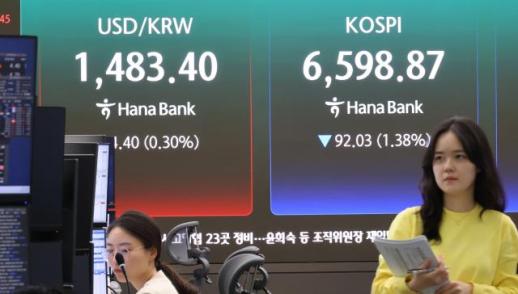 South Korean Won Weakens to 1,480s as Oil Surges and Fed Turns More Hawkish The won weakened against the U.S. dollar as international oil prices jumped on global supply-chain disruptions and expectations for U.S. rate cuts faded. In Seoul trading on April 30, the won closed at 1,483.3 per dollar in onshore trading at 3:30 p.m., up 4.3 won from the previous session. The currency opened at 1,486.5, up 7.5 won, and briefly climbed to 1,488.0 soon after the market opened before paring gains later in the day. A day earlier, the won ended at 1,488.5, up 9.5 won from the prior onshore close, nearing the 1,490 level. Since the outbreak of war in the Middle East, the strongest catalyst for the won’s decline has been oil. Volatility has increased as concerns grow that supply disruptions could be prolonged. Overnight, Brent crude briefly surged to $119.76 a barrel, the highest since June 2022, early in the Russia-Ukraine war. For energy-dependent South Korea, higher oil prices raise import costs and fuel worries about a weaker current account, adding pressure on the won. Another key variable is the combination of Middle East risk and the Federal Reserve’s stance. After the Middle East war pushed the exchange rate above 1,500 last month, markets appeared to gradually absorb the shock. But the Fed has now formally warned of inflation risks tied to the conflict, reinforcing investor concerns. In its latest Federal Open Market Committee statement, the Fed said the Middle East situation is a factor that is increasing inflation concerns and adding to high uncertainty around the economic outlook. With the Fed holding rates, expectations for a rate cut this year have effectively faded. Although the policy rate was left unchanged, the decision was viewed as a hawkish hold after three officials issued a dissenting view seen as aimed at blocking expectations for future cuts. According to CME Group’s FedWatch Tool, interest-rate futures markets priced in about a 12% chance that the Fed will raise rates by at least 0.25 percentage point by December. A day earlier, that probability was 0%. The shift has supported demand for the dollar as a safe-haven asset. The foreign exchange market is expected to remain volatile as it reacts to external factors. With talk of renewed military clashes in the Middle East, oil prices have risen again. On April 30 (Korea time), Brent futures for June delivery on London’s ICE Futures Exchange briefly topped $120 a barrel. Still, some expect pressure on the won to ease if the Bank of Korea raises rates later this year. Moon Da-un, a researcher at Korea Investment & Securities, said higher-than-expected domestic growth and interest rates would increase downward pressure on the exchange rate. He forecast the central bank will raise its policy rate by 0.25 percentage point each in August and November, citing solid growth and war-driven inflation pressure. Moon added that the Korea-U.S. policy rate gap would narrow to minus 0.75 percentage point from minus 1.25 percentage points, slowing overseas investment that had been rising in search of higher expected returns and leading to a more gradual accumulation of net external financial assets than previously expected.* This article has been translated by AI. 2026-04-30 17:35:22