
Journalist

Lee Hugh
-
 CJ Freshway Reports 1st Quarter Operating Profit of 11 Billion Won CJ Freshway has continued its growth in the first quarter by evenly expanding its distribution and food service sectors. On May 8, CJ Freshway announced that it achieved sales of 833.9 billion won and an operating profit of 11 billion won in the first quarter of this year, marking increases of 4.4% and 3.8%, respectively, compared to the same period last year. The core food distribution business, which includes restaurant ingredients and food materials, recorded sales of 399.9 billion won. Online sales in this segment surged by 17% year-on-year, driving overall growth. The domestic B2B food distribution market is valued at 50 trillion won annually, but most transactions still occur offline through regional wholesalers. This is why major distribution companies are fiercely competing to digitize this market. To lead this market transformation, CJ Freshway increased its stake in the IT company Marketboro, which operates the B2B food distribution open market platform 'Sikbom,' to 55%, becoming its largest shareholder in March. Leveraging this position, the company is aggressively expanding its franchise customer base and enhancing its logistics network with differentiated products such as dairy and seafood to accelerate its dominance in the online distribution ecosystem. The food service business, benefiting from the kitchenless strategy, recorded sales of 427.4 billion won. The kitchenless model, which provides meal services without location constraints, saw related service revenues, including 'Fresh Meal On,' increase by 41% year-on-year, contributing to improved profitability. In January, CJ Freshway opened the country's largest food court, 'Gourmet Bridge,' at Incheon Airport's Terminal 2, resulting in a 43% increase in sales from large concession channels compared to the previous year. The expansion of food service ingredient sales, particularly in the kids' and school meal segments, also supported the company's overall performance. Im Sung-cheol, Chief Financial Officer of CJ Freshway, stated, "Despite seasonal off-peak periods and an uncertain external environment, we have confirmed balanced growth in both the distribution and food service sectors, as well as the success of our new growth model centered on online and kitchenless strategies. We will accelerate our execution to establish a sustainable growth structure focused on profitability, as the foundation we have built in new businesses is beginning to yield significant results."* This article has been translated by AI. 2026-05-08 17:58:48
 -
 Middle East Risks Prompt Government to Double Consulting Support for Overseas Construction Disputes As instability in the Middle East continues, risks in the overseas construction market are escalating beyond poor contract awards to include project delays, payment issues, and contract disputes. The government has decided to expand consulting support for small and medium-sized construction firms facing overseas construction disputes, allocating an additional 400 million won through a supplementary budget. According to the Ministry of Land, Infrastructure and Transport, the government will secure 400 million won through the supplementary budget to enhance the "Integrated Consulting Support Project for Overseas Construction." This initiative provides legal, labor, and tax support for small and medium-sized construction firms that have registered for overseas construction. The ministry has increased expert consultation hours from 12 to 24 hours and has included labor consulting in the support services starting this year. The government's decision to expand support comes as geopolitical risks from the Middle East are likely to lead to increased costs and contract disputes in overseas construction projects. With rising oil prices, raw material costs, and logistics expenses due to instability in the region, there are growing concerns about conflicts between clients and contractors over project suspensions, delays, and payment issues. The flow of overseas construction contracts has already seen a sharp decline. According to the Overseas Construction Integrated Information Service (OCIS), the total value of overseas construction contracts in the first quarter of this year was $2.037 billion, a 75.2% decrease from $8.212 billion during the same period last year. This figure is also down 70.4% compared to the five-year average of $6.887 billion for the first quarter. Notably, contracts in the Middle East plummeted to $316.2 million, a staggering 93.6% drop from the previous year. Given the heavy reliance on the Middle East for overseas construction, the impact is significant. According to the Ministry of Land and the Korea Overseas Construction Association, the total value of overseas construction contracts last year reached $47.27 billion, the highest in 11 years since 2014. Of this, contracts in the Middle East accounted for approximately $11.9 billion, or 25.1% of the total. The Middle East has long been a key market for domestic construction firms, particularly in the plant and infrastructure sectors. The risks extend beyond just a decrease in new contracts. Ongoing projects are facing challenges related to logistics disruptions, workforce management, material procurement, and fluctuations in exchange rates and oil prices, which can lead to increased costs and project management issues. Prolonged construction periods heighten the likelihood of disputes over penalties for delays, contract modifications, and additional cost approvals between clients and contractors. Small and medium-sized construction firms are particularly vulnerable to these disputes due to their lack of local legal and contractual expertise compared to larger firms. Overseas projects often involve complex interactions among force majeure clauses, requirements for extending deadlines, local labor and tax laws, and responsibilities for exchange rate and logistics costs. Delayed responses to these issues can result in significant losses. The Ministry of Land plans to provide comprehensive consulting services through this initiative, including reviews of problematic contract clauses, assessments of force majeure related to delays, responses to defaults, local tax law advice, financial procurement, and risk management. Eligible applicants are small and medium-sized enterprises engaged in overseas construction as defined by the Overseas Construction Promotion Act, and they can apply through the Korea Overseas Construction Association. An industry insider noted, "The Middle East risk is not just about delays in new contracts; it can also lead to issues with existing project timelines, costs, and payment recovery, which adds to the burden. Large firms have their own legal and contractual teams, but small and medium-sized firms often find themselves responding too late after disputes arise, increasing the demand for preemptive consulting services." Kim Yoon-deok, Minister of Land, Infrastructure and Transport, stated, "Given the unavoidable situation of war in the Middle East, we anticipate that small and medium-sized construction companies operating overseas will face significant challenges. The government will do its utmost to minimize the damage to our companies."* This article has been translated by AI. 2026-05-08 17:56:41
 -
 Controversy Over Villa Supply in Seongdong District Amid Low Proportion Jung Won-o, the Democratic Party's candidate for Seoul mayor, has raised concerns about villa supply as part of his real estate policy. However, statistics reveal that the proportion of villas in Seongdong District, where he served as district chief for 12 years, is among the lowest in Seoul. In contrast, the proportion of apartments in Seongdong District exceeds the city average significantly. According to analysis from the National Statistical Office obtained by Aju Economy, as of 2024, the proportion of multi-family and villa units in Seongdong District stands at 9.9%, the second lowest after Nowon District at 8.8%. This figure is less than half of the Seoul average of 21.4%. Other districts with low villa proportions include Yeongdeungpo (10.0%), Dongdaemun (12.4%), and Gangnam (14.3%). Conversely, the proportion of apartments in Seongdong District is 54.0%, significantly higher than the Seoul average of 44.4%. Only seven of the 25 districts in Seoul have apartment proportions exceeding 50%. Nowon District leads with 78.4%, followed by Gangnam (62.2%), Seocho (58.1%), and then Seongdong. Other districts with high apartment proportions include Gangdong (50.3%) and Songpa (50.1%). In response, a representative from Oh Se-hoon’s camp criticized Jung, stating, "The 9.9% villa proportion in Seongdong District indicates a lack of available land for new villas or that existing low-rise residential areas have already been redeveloped into apartments. Jung is completely unaware of the realities in Seongdong District when discussing villa supply." The representative also pointed out that the surge in housing prices in Seongdong District is linked to the low villa proportion and high apartment ratio. Previously, Jung had identified villa supply as a key component of his real estate strategy. During a meeting with Seoul's district mayor candidates on May 4, he challenged Oh, asking, "Why didn’t you prepare for the soaring rents during your five years in office?" He noted that issues related to apartment redevelopment and reconstruction take 10 to 15 years, which he partially agreed was not solely his responsibility. Jung added, "The rental issue can be addressed within 2 to 3 years through supply via villas, officetels, and residential-type lodging facilities." Meanwhile, Oh also responded to Jung's comments on villa supply. On the previous day, he appeared on BBS Buddhist Broadcasting's "Kim Tae-seop’s Morning Journal" and remarked, "If Jung becomes mayor for four years, he will focus on villas since apartments take a long time to develop. However, villas are constructed by the private sector, not the city."* This article has been translated by AI. 2026-05-08 17:54:39
 -
 Jeju Air Reports 644 Billion Won Operating Profit Amid High Oil Prices Jeju Air has reported a second consecutive quarter of profit despite the pressures of rising international oil prices and exchange rates. The airline attributed its performance rebound to improved fuel efficiency through fleet modernization and a recovery in passenger demand. On May 8, Jeju Air announced that it achieved a revenue of 498.2 billion won and an operating profit of 64.4 billion won in the first quarter of this year. This represents a 36.5% increase in revenue compared to the same period last year, while the operating profit turned around from a loss of 35.7 billion won. The net profit for the period was recorded at 12.2 billion won. Following an operating profit of 18.6 billion won in the fourth quarter of last year, Jeju Air has maintained profitability for two consecutive quarters. This performance is seen as commendable given the challenges faced by most airlines due to high fuel prices and fluctuating exchange rates. The airline cited improvements in its revenue structure through fleet modernization and an increase in passenger demand as key factors behind its improved results. In the first quarter, Jeju Air added two next-generation B737-8 aircraft to its fleet. It also returned two leased B737-800 aircraft that were over 20 years old in November last year and February this year, and sold two older aircraft in March and April. As a result, fuel costs for the airline decreased by approximately 16% compared to the previous year. In addition to the 10 B737-8 aircraft currently in its fleet, Jeju Air plans to introduce five more by the end of the year. The number of passengers in the first quarter totaled 3,311,358, making it the leading low-cost carrier in South Korea. The load factor during this period was 91.9%, surpassing the national airline average of 88.8%. Jeju Air aims to continue its trend of improved performance through efficient route management. To address the uncertainties posed by increased volatility in fuel prices and exchange rates, as well as intensified competition, the airline plans to focus on sound management strategies. A company representative stated, "We will gradually improve our revenue structure based on fleet modernization and efficient route operations."* This article has been translated by AI. 2026-05-08 17:52:20
 -
 K-pop girl band BABYMONSTER adds seats for Seoul concert after tickets sell out SEOUL, May 08 (AJP) - K-pop girl band BABYMONSTER will open additional seats for its upcoming Seoul concert series after tickets for the original three-day run sold out immediately upon release. The move aims to accommodate a surge in demand from fans following the group's recent musical comeback. YG Entertainment reported that the 2026-27 BABYMONSTER World Tour Choom in Seoul saw an explosive response during both pre-sale and general ticketing windows. The agency noted that the members themselves expressed a desire to perform for a larger audience after tickets for all three sessions were exhausted. The additional seating will include general admission, restricted-view seats, and a limited quantity of sound-check passes. Fans can purchase these tickets starting at 8:00 p.m. (1100 GMT) on June 13 through NOL Ticket. The concerts are scheduled to take place at the Jamsil Indoor Gymnasium in South Korea from June 26 to June 28. This leg of the world tour comes on the heels of the group's third mini-album release on May 4. The new album features four tracks, including the title song Choom as well as Moon, I Like It, and Locked In. The release has received a positive reception for its diverse genres and unique production style. 2026-05-08 17:51:21
 -
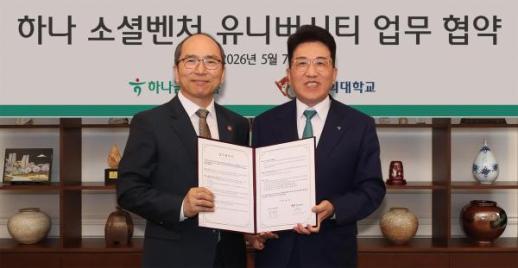 Hana Financial Partners with Kyung Hee University to Support Young Entrepreneurs Hana Financial Group is launching a program to nurture aspiring entrepreneurs to stimulate local youth entrepreneurship. The initiative aims to enhance the startup ecosystem by providing comprehensive support, from AI-based entrepreneurship education to commercialization, market expansion, and investment attraction.On May 8, Hana Financial announced a partnership with Kyung Hee University to recruit participants for the fifth class of the Hana Social Venture University.The Hana Social Venture University is a program operated in collaboration with the Ministry of Employment and Labor to create local job opportunities for youth. It began in 2022 with five regions and ten universities and has since expanded to 30 universities nationwide in 2023. By the end of last year, the program had produced a total of 5,050 graduates, with 431 startup teams currently in operation.Through the fifth class, Hana Financial plans to select around 1,500 aspiring young entrepreneurs from 30 universities across the country. The program will focus on AI-based entrepreneurship education and provide support throughout the entire startup process, including market expansion tailored to different customer types and the establishment of a regional and university-linked startup ecosystem. Additional support will include legal advice on the startup process, investment consulting, and funding assistance.Chairman Ham Young-joo stated, "We will support young people to fully unleash their potential with their unique colors and creative ideas, and we hope their challenges and growth will contribute to revitalizing the local economy."* This article has been translated by AI. 2026-05-08 17:46:55
 -
 Samsung Electronics Union Accepts Government Mediation Ahead of Strike The labor dispute between Samsung Electronics and its union has shifted from a potential clash to a phase of renegotiation. However, the threat of a general strike remains, and tensions could rise again depending on the outcome of upcoming negotiations. On May 8, the union announced it would participate in post-adjustment procedures on May 11-12 at the request of the government. Previously, the union had warned of a general strike on May 21 due to unresolved disagreements over wages and performance bonuses. Industry analysts interpret this decision as more than just a postponement. The government's direct involvement in mediation suggests that the labor conflict at Samsung Electronics could have significant repercussions across the industry. Particularly as Samsung accelerates its efforts to regain semiconductor competitiveness and transition to a company-wide artificial intelligence (AI) strategy, any production disruptions or organizational instability could increase management burdens. Internally, Samsung is simultaneously addressing high-bandwidth memory (HBM) competition, investing in next-generation packaging, and implementing AI-driven organizational innovations. The union appears to be strategically using government mediation to secure a stronger negotiating position and public support rather than immediately launching a general strike. However, the union has reiterated that it will proceed with a strike if satisfactory results are not achieved, indicating that tensions could escalate if the post-adjustment talks do not lead to a substantive agreement. Business circles anticipate that future discussions will focus not just on wage increases but also on the criteria for performance bonuses and the predictability of the compensation system. Given the significant performance disparities among different divisions within Samsung, conflicts over the compensation structure may recur structurally. One industry insider remarked, "The government's direct intervention indicates that this is viewed as a matter beyond a simple labor dispute. In a competitive environment for HBM and AI, a prolonged strike would pose significant burdens for Samsung Electronics."* This article has been translated by AI. 2026-05-08 17:43:30
 -
 President Lee and Canadian Prime Minister Carney Discuss Strengthening Security and Economic Cooperation On May 8, President Lee Jae-myung spoke with Canadian Prime Minister Mark Carney to discuss enhancing cooperation in security, economy, energy, critical minerals, and advanced industries. Chief Presidential Secretary Kang Yu-jeong reported in a written briefing that the two leaders assessed the smooth implementation of follow-up actions from their summit during the APEC meeting in Gyeongju last year. They agreed on the need for closer collaboration between their countries in achieving a peaceful resolution to the current situation in the Middle East, ensuring freedom of navigation in the Strait of Hormuz, and stabilizing energy supply through international efforts. As their relationship expands beyond security cooperation to encompass various fields including economy, energy, advanced industries, and culture, they expressed a commitment to deepen strategic cooperation based on this trend. President Lee stated, "Canada is a key ally for South Korea, and in light of the complex international order and unstable global energy supply chains, I hope we can further strengthen our cooperation in security, economy, energy, critical minerals, and advanced industries." Prime Minister Carney responded, "It is important for middle powers like Canada and South Korea to strengthen their ties through a more pragmatic approach." The two leaders also agreed to maintain regular communication to actively develop bilateral relations and to expedite discussions at all levels to achieve concrete and practical results in various fields. This conversation comes as South Korea is competing for a contract in Canada’s estimated 60 trillion won ($45 billion) Canadian Patrol Submarine Project (CPSP). The CPSP is a major project to build up to 12 diesel submarines to replace the four Victoria-class submarines, which are set to retire in the mid-2030s. The Hanwha Ocean and HD Hyundai Heavy Industries consortium from South Korea and Germany's Thyssenkrupp Marine Systems (TKMS) are on the shortlist and are currently in final competition ahead of an announcement in June.* This article has been translated by AI. 2026-05-08 17:41:20
 -
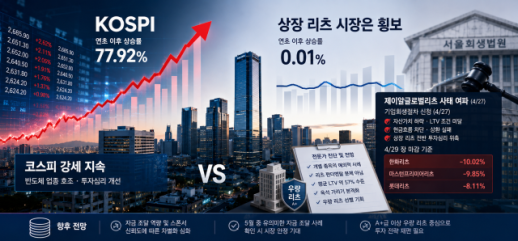 REIT Stocks Struggle Despite KOSPI Surge, Investors Urged to Differentiate The KOSPI index has recorded a rise of over 77% since the beginning of the year, continuing its bullish trend. However, the listed REIT market appears to be left out of this rally. Experts attribute the decline in investor sentiment to downward pressure from delayed global interest rate cuts and the recent corporate rehabilitation filing by JR Global REIT. They predict that while short-term volatility is inevitable, this situation will lead to a clearer differentiation between quality and poor-performing REITs. According to the Korea Exchange, as of market close on May 8, the KRX Prime Office REIT Index recorded zero returns since the start of the year. Similarly, the KRX Real Estate REIT Infrastructure Index saw only a 0.01% increase during the same period, indicating a stagnant trend. This starkly contrasts with the KOSPI's 77.92% rise since January. Analysts suggest that as investors focus on risk assets and growth stocks driven by the semiconductor sector, the appeal of REITs, which are generally considered defensive investments, has diminished. The situation worsened on April 27 when JR Global REIT filed for corporate rehabilitation at the Seoul Bankruptcy Court. With assets based in the Brussels Finance Tower and Manhattan office in New York, JR Global REIT faced a cash trap due to a decline in asset value, failing to meet loan-to-value (LTV) requirements, and ultimately defaulting on repayments. As a result, on April 29, many listed REITs, including Hanwha REIT (-10.02%), Mastern Premier REIT (-9.85%), and Lotte REIT (-8.11%), experienced significant declines, raising concerns about funding across the industry. However, analysts believe that the current crisis is unlikely to escalate into a fundamental issue for the entire REIT sector. They view the situation as an exceptional case influenced by the decline in overseas asset values and burdens from foreign exchange hedging settlements. Lee Hye-jin, a researcher at Daishin Securities, stated, "The JR Global REIT issue is a unique case stemming from the decline in overseas asset valuations and a lack of liquidity. REITs backed by large corporate sponsors with high credit ratings (AA- to A+) will likely face limited impacts on their funding environment." The average LTV for domestic listed REITs is managed at approximately 57% based on fair value, indicating a low risk level. The REIT industry has diversified its borrowing structure beyond secured loans to include corporate bonds and short-term bonds, enhancing its resilience to crises. Looking ahead, the REIT market is expected to see increased differentiation among stocks based on funding capabilities and sponsor credibility. Some analysts suggest that this could present an opportunity to select high-quality REITs. Lee Kyung-ja, a researcher at Samsung Securities, noted, "The recent JR Global REIT incident stems from exceptional risks associated with overseas assets, and it is important to avoid overextending this interpretation to the entire sector. REITs rated A+ and above still enjoy favorable conditions for issuing corporate bonds and can secure funding at lower rates than bank loans, preserving dividend payouts (DPS)." She added, "In the future, market differentiation will become more pronounced among top REITs with strong funding capabilities and sponsor competitiveness. If significant funding cases are confirmed in May, market sentiment is expected to stabilize gradually."* This article has been translated by AI. 2026-05-08 17:38:22
 -
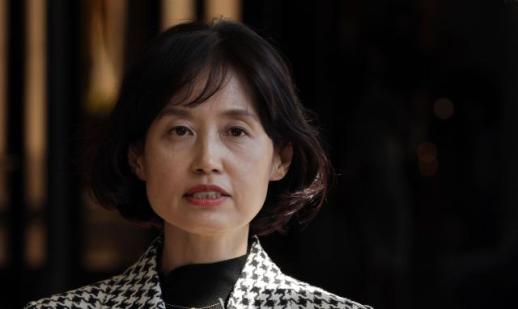 Park Eun-jung Wins Lawsuit Against Dismissal from Justice Ministry Park Eun-jung, a member of the Justice Innovation Party, has won a court ruling declaring her dismissal from the Justice Ministry during her tenure as unjust. On May 8, the Seoul Administrative Court's Administrative Division 4, led by Judge Kim Young-min, ruled in favor of Park in her lawsuit against the Justice Minister seeking to overturn her disciplinary action. In 2020, while serving as a disciplinary officer at the Justice Ministry, Park was accused of improperly using materials obtained during an investigation of Han Dong-hoon, then the Deputy Chief Prosecutor of the Busan High Prosecutors' Office, in the investigation of Yoon Suk Yeol, who was then the Prosecutor General. Following this, the Ministry's Disciplinary Committee imposed the highest level of disciplinary action, dismissal, on Park in February 2024, after the Yoon administration took office. Park contested the dismissal, claiming it was unjust, and filed a lawsuit against the Ministry. However, she did not wait for the court's decision and joined the Justice Innovation Party, subsequently running for the 22nd National Assembly elections, where she was elected as a proportional representative. The court stated, "The meetings of the Justice Ministry's Disciplinary Committee are part of the internal decision-making process, which is conducted in private," and concluded that there were no grounds to consider this as a public disclosure or leak. Additionally, the court clarified that Park's actions did not indicate an intent to gain personal benefit or undermine the fairness of her duties. The ruling emphasized that the dismissal appeared to stem from errors in judgment or procedural mistakes during the execution of her disciplinary duties, and that the dismissal was excessively harsh compared to the recognized reasons for it. In related news, the prosecution concluded in October of the previous year that there was no evidence to support allegations against Park regarding violations of the Communications Privacy Protection Act and the Personal Information Protection Act, as well as the leaking of official secrets.* This article has been translated by AI. 2026-05-08 17:35:58