
Journalist

Lee Hugh
-
 Samsung Electronics' Major Union Enters Post-Adjustment Process Following Government Request Samsung Electronics' largest union, the Major Union, has entered a post-adjustment process at the request of the government. This decision comes as the union and management prepare to return to the negotiating table ahead of a planned general strike on May 21.The Major Union of Samsung Electronics announced on the afternoon of May 8 that this decision was made following a meeting with Kim Do-hyung, head of the Gyeonggi Provincial Labor Office, and representatives from management.The union stated, "The Ministry of Labor deeply recognizes the seriousness of this matter and has promised full support for negotiations at the government level, strongly encouraging the post-adjustment process. We have taken the government's proactive stance and repeated requests seriously and have decided to participate in the post-adjustment process after internal review."The negotiations will be conducted under the authority of the Major Union, which has been delegated the rights to negotiate and conclude agreements.The post-adjustment process is set to take place intensively on May 11 and 12, with participation from Chairperson Choi Seung-ho and union members Lee Song-yi and Kim Jae-won.Choi Seung-ho, Chairperson of the Major Union, stated, "If we do not achieve a satisfactory outcome for our members, we will not hesitate to proceed with the general strike. We will ensure that preparations for the strike are thorough and without disruption." 2026-05-08 17:00:20
 -
 AI Revolutionizes Operations in Securities Firms Securities firms are accelerating their use of artificial intelligence (AI) to innovate operations. Some companies are incorporating AI usage into their key performance indicators (KPIs), reflecting a broader organizational shift. Previously limited to experimental use in select departments, AI is now being encouraged at the enterprise level and integrated deeply into daily operations. According to the financial investment industry on May 8, some securities firms have begun identifying departments where AI can be utilized and including AI-driven performance improvement metrics in their KPIs this year. Major firms like Shinhan Investment Corp. and Hana Securities are reportedly adopting policies to reflect AI-related KPIs in departments as overall AI usage increases. Before showcasing AI-driven customer services externally, securities firms are enhancing internal efficiency through AI. They are expanding AI adoption in repetitive and extensive tasks such as report writing, research, and data analysis. While strategies and implementation speeds vary among firms, a common direction is the 'close-to-business application' of AI. KB Securities is advancing its AI initiatives through its newly established AI Digital Headquarters, which was created in 2025. The organization has been segmented to separate data strategy, AI model development, and infrastructure operations, broadening AI applications to complex areas such as investment analysis, legal review, risk management, and customer consultation. The firm is also transitioning from simple automation to a stage of 'agentic AI' that supports decision-making. Korea Investment & Securities has been increasing AI utilization by having a dedicated team assess the applicability of AI solutions across its divisions since the beginning of the year. Notably, it has established an environment where investment information is delivered promptly through AI translations of overseas research materials obtained in collaboration with global financial firms. There are also examples of generative AI platforms linked to internal systems. One securities firm has created an AI work portal within its groupware, offering interactive services that support everything from file uploads to analysis and summarization. Additionally, most securities firms are expanding AI training for employees and collaborating with external AI solution companies to broaden their reach. However, the unique security regulations in the financial sector continue to pose challenges to widespread AI adoption. Principles such as network separation limit the scope of generative AI usage. Although the Financial Services Commission announced a 'Roadmap for Improving Network Separation in the Financial Sector' in August 2024 to suggest regulatory easing, cautious approaches remain prevalent in the field. Despite these challenges, the financial investment industry is focusing on the structural changes that AI adoption may bring. There is a growing atmosphere where not only back-office staff but also front-line personnel in private banking and investment banking are autonomously utilizing AI. It is anticipated that the scope of AI reflected in KPIs will gradually expand in the future. A securities firm representative stated, "AI can process vast amounts of information and handle repetitive tasks much faster and more accurately. This allows us to allocate the time saved to more essential tasks, such as customer consultations and risk management, thereby enhancing overall organizational competitiveness."* This article has been translated by AI. 2026-05-08 16:57:32
 -
 Public Frustration Grows Over Fuel Prices and Telecom Fees Amid Corporate Profits In January 2011, former President Lee Myung-bak sparked a stir in the oil industry when he remarked on the disparity between international oil prices and domestic fuel costs, saying, "Fuel prices are strange." His comments led to government inspections of gas stations and intense media scrutiny of oil company profits, igniting public outrage over rising fuel costs. Fifteen years later, amid soaring international oil prices due to the war in Iran, President Lee Jae-myung convened an emergency cabinet meeting, directing the establishment of a maximum price for gas stations. He expressed strong dissatisfaction, noting, "Prices vary from morning to noon to evening, and some stations have raised prices by nearly 200 won per liter in a single day," pointing to unethical pricing practices by certain gas stations. According to officials from the Ministry of Trade, Industry and Energy, the price inspections that began at gas stations are now extending to oil companies. Due to the surge in oil prices linked to the Iran conflict, the first-quarter operating profits of major refiners, including SK Innovation, S-Oil, GS Caltex, and HD Hyundai Oilbank, are projected to approach 5 trillion won. Some lawmakers are reportedly preparing to pressure these companies to return their profits. When international oil prices rise, the selling price of petroleum products made from already secured crude oil increases, leading to a significant short-term boost in operating profits. Notably, over 80% of the operating profits of domestic refiners come from exports, while the margin that refiners earn from domestic gas station sales is only a few dozen won per liter after taxes. Telecom companies are facing similar scrutiny. The first-quarter results of the three major telecom firms are expected to exceed market expectations. Industry insiders attribute this resilience not to wireless communications but to increased demand for cloud services and data centers, despite subscriber losses due to hacking incidents. The wireless communication sector itself has stagnated due to the government's stringent policies against significant rate hikes. Current telecom companies have found new revenue sources through investments in AI infrastructure rather than extracting profits from consumers. Nevertheless, whenever the economy falters, the government consistently targets telecom companies. The Lee Myung-bak administration promised a 20% reduction in communication fees, while the Park Geun-hye administration called for "half-price telecom fees." The Moon Jae-in administration sought to eliminate basic fees and increase discount rates, and the Yoon Suk-yeol administration has made expanding low-cost 5G plans a priority. None of these administrations have succeeded in achieving substantial rate reductions. Under the current government, the Ministry of Science and ICT is discussing improvements to telecom plans with the three major companies, which are expected to launch 5G plans priced in the 20,000 won range this year. Industry insiders express skepticism, noting that the government continues to seek solutions to economic stimulation through telecom fees, just as previous administrations did. By creating villains in the oil and telecom sectors, the government has used them as scapegoats to address public frustration stemming from economic downturns. It is now time to focus on the real issues at hand. Labor unions in large corporations, which pay salaries exceeding 100 million won, are demanding performance bonuses in the millions of won and have initiated strikes. In contrast, many workers in small and medium-sized enterprises, which make up a significant portion of the labor force, have received notices of wage freezes due to the economic downturn. As large corporations absorb the pressure of rising labor costs by lowering supplier prices, the burden will undoubtedly fall on subcontractors and their employees. Many workers will tighten their budgets, and it will become increasingly common to see neighborhood restaurants changing their signs every few months. As lunch prices soar above 10,000 won, images of workers demanding performance bonuses of 600 million won make headlines. Today, the government continues to target easy scapegoats while proposing economic stimulus measures. The entities generating billions in operating profits are not the oil companies or telecom firms profiting from cloud services, but rather a troubling structure that mocks the entire population while masquerading as the underprivileged.* This article has been translated by AI. 2026-05-08 16:52:17
 -
 Dongwon Industries Reports 17.1% Increase in Q1 Operating Profit Driven by Packaging and Logistics Growth Despite facing the dual challenges of rising raw material prices and high exchange rates, Dongwon Group demonstrated growth in the first quarter. The B2B sector and logistics and construction subsidiaries filled the gap left by the seafood and food divisions, boosting the group's overall performance. Dongwon Industries, the holding company of Dongwon Group, announced on May 8 that its consolidated revenue for the first quarter reached 2.53 trillion won, a 9.1% increase from the previous year, while operating profit rose 17.1% to 146.2 billion won. Performance varied among subsidiaries. Dongwon Industries' standalone revenue from the seafood division fell 7.8% to 295.8 billion won, with operating profit plummeting 35.7% to 66.6 billion won. Dongwon F&B, a food subsidiary, saw slight revenue growth due to the rise of online sales. However, operating profit declined by over 6% due to cost pressures from high exchange rates, unstable raw material supply, and intensified competition in offline sales. Conversely, the B2B and non-food subsidiaries served as a backbone for the group's performance. Dongwon Systems, a packaging and materials subsidiary, managed to perform well despite the burdens of high exchange rates and rising prices for naphtha and aluminum, thanks to increased exports of high-value products like flexible packaging and food cans. Dongwon Systems reported consolidated revenue of 337.8 billion won and operating profit of 13 billion won, marking increases of 0.3% and 3.9%, respectively. Notably, demand for pet food and retort pouches surged in the North American market, and the company expanded its export reach to 30 countries by securing new clients in Asia and Africa. Exports in the materials sector grew by approximately 20% year-on-year. Leveraging its technological expertise in the packaging business, Dongwon Systems is also investing in new ventures, including materials for secondary batteries and advanced films, to establish long-term growth drivers. Dongwon Home Food, a food distribution company, experienced balanced growth across all business areas, including seasoning products, meal services, and meat distribution, leading to improved performance through the expansion of new clients. Logistics subsidiary Dongwon Loex and construction subsidiary Dongwon Construction Industry also contributed to the group's profit improvement with double-digit growth in both revenue and operating profit. A Dongwon Group official stated, "The challenging business environment continues with high exchange rates, unstable raw material supply, and a sluggish domestic market, increasing our burdens." He added, "While the outlook for the second quarter remains bleak, we will focus on solid management based on our robust business portfolio spanning seafood, food, materials, and logistics." * This article has been translated by AI. 2026-05-08 16:48:49
 -
 Lee Seung-hwan Wins Partial Victory in Lawsuit Over Concert Cancellation The Seoul Central District Court has ruled that the city of Gumi unlawfully canceled singer Lee Seung-hwan's concert venue reservation and ordered the city to pay damages. On May 8, Judge Park Nam-jun of the court's civil division ruled in favor of Lee, his agency Dream Factory, and ticket purchasers in a lawsuit against Gumi City and Mayor Kim Jang-ho. The court ordered Gumi City to pay 35 million won to Lee, 75 million won to his agency, and 1.5 million won to each of the 100 ticket buyers, totaling 125 million won. Lee's team initially sought 250 million won in damages, but the court recognized only about half of that amount. However, the court acknowledged Gumi City's legal responsibility while not holding Mayor Kim personally liable for damages. In December 2024, Lee planned to hold his 35th anniversary concert, titled 'Heaven,' at the Gumi Cultural and Arts Center. However, just two days before the event, on December 23, Gumi City unilaterally canceled the venue reservation, citing public safety concerns. During this process, Mayor Kim's office reportedly demanded that Lee submit a pledge not to engage in political speech. When Lee's team refused, Gumi City decided to cancel the reservation. Subsequently, Lee's team filed a lawsuit against Mayor Kim and Gumi City in January of the following year, claiming that the demand and the cancellation were illegal actions. After the ruling, Lee expressed his disappointment on Facebook, stating, "They said they could not hold Mayor Kim accountable. I am still unsatisfied with the ruling," and he announced his intention to appeal for justice. In relation to this case, Lee's team also filed a constitutional complaint with the Constitutional Court, arguing that the city's demand for a pledge infringed on freedom of expression. However, the court dismissed the complaint in March of last year, stating that it did not meet the necessary requirements. 2026-05-08 16:45:53
 -
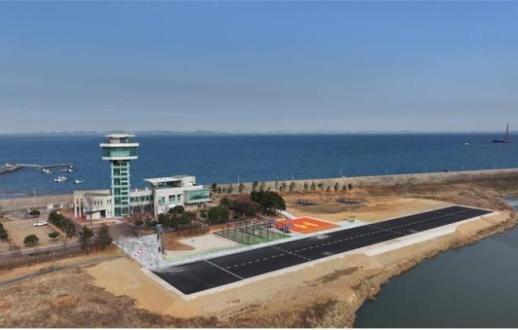 S. Korea expands drone security push with Army pact, coastal test site SEOUL, May 08 (AJP) - South Korea is expanding efforts to strengthen its drone security capabilities, as the National Intelligence Service signed a cooperation agreement with the Army and the government opened the country’s first integrated test site for land, sea and aerial unmanned systems. The moves reflect Seoul’s push to turn lessons from overseas battlefields into practical drone operations at home, as unmanned systems play a growing role in both military and public security missions. The NIS said Friday it signed a memorandum of understanding with the Army at Gyeryongdae, the military headquarters in South Chungcheong Province. Under the agreement, the two sides will share domestic and overseas drone security information, improve regulations on advanced drone use, verify drone and counter-drone systems and conduct joint drills against threats to national security facilities. The spy agency said it will also share information and analysis on drones used in overseas conflicts to support the Army’s efforts to strengthen its drone capabilities and upgrade tactics. The NIS signed a similar agreement with the Navy in October last year. “Information on drones used in overseas battlefields is an important asset for improving our military’s operational capabilities,” the NIS said. “Through close cooperation with the Army, we will support responses to drone threats and help establish a national drone security system.” In a related move, the Ministry of Science and ICT opened a coastal test site for unmanned vehicles in Dangjin, South Chungcheong Province. The facility, located at the Dangjin Drone Industry Support Center, is the country’s first test site where land, sea and aerial unmanned systems can be operated together for cooperative missions. The ministry said the site will support demonstrations of integrated control technologies for coastal security missions, including monitoring illegal entry, detecting pollution sources and responding to maritime accidents. The project will be carried out in cooperation with the Korea AeroSpace Administration and the Korea Coast Guard. 2026-05-08 16:45:07
 -
 Test Drive: Lexus RX450h+ Offers Flexible Electric and Hybrid Driving The first impression of the Lexus RX450h+ is its striking copper-toned exterior. The bronze color subtly shifts in the sunlight, exuding a sense of luxury that stands out in any setting. During the May holiday, I tested the RX450h+ in Seoul and the Boryeong area of South Chungcheong Province. This vehicle is notable for being a plug-in hybrid (PHEV) and part of the increasingly popular sport utility vehicle (SUV) segment. Activating the EV mode on the console, I noticed the driving range displayed on the dashboard, based on internal combustion, remained at 790 km. Even after driving through downtown Seoul, this number barely decreased. It was only when I thought, "I’m driving through Seoul for free," that I saw the electric driving range drop from 24 km to 15 km on the left side of the dashboard. The RX450h+ allows drivers to switch seamlessly between electric and hybrid modes based on their needs. Notably, when driving in hybrid mode, the electric vehicle battery charges automatically, allowing for a dual benefit. On May 1, while traveling from Seoul to Boryeong for a business trip, the benefits of EV mode became evident. The vehicle operated almost entirely on the electric motor, with minimal engine engagement. The smooth ride in low-speed urban areas felt akin to that of an electric sedan. The RX450h+ is equipped with an 18.1 kWh high-capacity lithium-ion battery, enabling approximately 56 km of driving in electric mode when fully charged. For drivers who frequently commute or travel within urban areas, the option to charge at a parking facility makes it a practical choice for electric driving. Once on the West Coast Highway, the vehicle's character shifted again. Engaging hybrid mode activated the 2.5-liter inline four-cylinder gasoline engine, delivering a refreshing acceleration. The engine and electric motor worked together seamlessly to increase speed. During heavy traffic between Hwaseong and Pyeongtaek, I experienced the effectiveness of the driver assistance systems. The Dynamic Radar Cruise Control (DRCC) maintained a stable distance from the vehicle ahead, even in slow-moving traffic. In fact, even in stop-and-go traffic at around 30 km/h, the vehicle responded smoothly without abrupt acceleration or deceleration. When traveling over 100 km/h, if the car in front suddenly slowed down, the RX450h+ naturally adjusted its speed. This feature significantly reduced fatigue during long drives. The interior focuses on Lexus's signature comfort. The driver's seat incorporates the Tazuna concept, inspired by horseback riding, enhancing the connection between the driver and the vehicle. It feels more like a refined, eco-friendly vehicle than an aggressive sports car, showcasing a new direction for Lexus in the era of electrification. 2026-05-08 16:34:58
 -
 Kolon Industries Reports 130% Increase in Q1 Operating Profit Kolon Industries announced on May 8 that its consolidated revenue for the first quarter reached 1.2374 trillion won, with an operating profit of 61.9 billion won. Despite ongoing external uncertainties, the company's operating profit surged by 130.1% compared to the same period last year, driven by the success of its ongoing Operational Efficiency (OE) project and increased sales of key products such as aramid, engineering plastics, and petroleum resins. In the industrial materials sector, sales growth in aramid and engineering plastics propelled revenue increases. Additionally, the expansion of high-value product sales contributed to improved operating profits. The chemicals division saw revenue and operating profit rise compared to both the same period last year and the previous quarter, thanks to the resumption of petroleum resin production following scheduled maintenance and increased sales to customers. The fashion division also experienced revenue growth year-on-year due to recovering consumer sentiment and strong sales of new products, resulting in a return to profitability. A Kolon Industries representative stated, "Despite the uncertain external environment, the OE project has yielded results, leading to increased revenue and operating profit across all divisions. We will continue to establish a foundation for sustained growth through operational efficiency and the expansion of high-value product lines." Meanwhile, Kolon Industries is accelerating efforts to streamline low-profit businesses and optimize non-core assets. Industry sources indicate that the company is considering the sale of low-profit divisions, including its semiconductor film business. In response, a company representative stated, "No decisions have been made regarding the sale of specific divisions."* This article has been translated by AI. 2026-05-08 16:33:20
 -
 Seoul imposes 30-day taxi suspensions, but deeper issues remain SEOUL, May 08 (AJP) - “I thought that was just the normal price at first,” said Teo, a 28-year-old Singaporean who visited Seoul last month after paying around 50,000 won ($36) for a roughly 20-minute taxi ride from Seoul station to his hotel. South Korea will suspend taxi drivers for 30 days from their very first violation if they are caught overcharging foreign passengers, as authorities move to curb mounting complaints from overseas visitors. However, experts say tougher penalties alone may not fully resolve the issue, pointing to structural problems within South Korea’s taxi industry and limited transportation alternatives for foreign tourists unfamiliar with local systems. “Overcharging foreign tourists is clearly a problem in itself, whether it amounts to discrimination or deception targeting people unfamiliar with the system,” said Jeong Ran-soo, professor at department of Tourism at Hanyang University. The Ministry of Land, Infrastructure and Transport (MOLIT) said Friday it had proposed revisions to enforcement rules under the Taxi Transportation Business Development Act, tightening penalties for drivers who unfairly charge foreign passengers inflated fares. Jeong said foreign tourists are especially vulnerable because of what he described as “information asymmetry,” where visitors are unfamiliar with local transportation systems and pricing structures. While taxi scams exist in many countries, he noted that overseas tourists often have broader access to alternative transportation platforms such as Uber, Grab or global travel-booking services. “In Korea, foreign visitors have fewer convenient alternatives beyond taxis, buses or subways,” he said, adding that authorities should consider expanding specialized tourism transportation services, including regulated “tourist taxi” programs with clearer pricing systems tailored for overseas visitors. Under the current system, drivers caught overcharging passengers for the first time receive a warning, with a 30-day license suspension imposed after a second violation. The revised rules would eliminate the warning stage and allow immediate suspension for a first offense. Under the current system, drivers caught overcharging passengers for the first time receive a warning, with a 30-day license suspension imposed after a second violation. The revised rules would eliminate the warning stage and allow immediate suspension for a first offense. The move follows a broader government campaign unveiled at a tourism strategy meeting chaired by President Lee Jae Myung in February, where officials announced measures to curb tourist overcharging and improve service standards for foreign visitors. The ministry said it plans to finalize the revised rules after a public consultation period ending June 17. Urgency has grown as complaints over taxi overcharging continue to surface amid sharp increase in foreign arrivals. South Korea recorded an all-time high of 2.06 million foreign arrivals in March alone, while first-quarter inbound tourism rose 23% from a year earlier, driven by the global popularity of K-pop and other Korean cultural exports. Against that backdrop, Seoul Metropolitan Government introduced a QR-code complaint system for foreign passengers in June last year, making it easier for tourists to report taxi-related problems. According to data released by the city government in January, authorities received 487 complaints over roughly six months, with unfair fare charges accounting for the largest share. Administrative penalties had already been imposed in cases where violations were confirmed. Seoul also introduced English-language taxi receipts late last year, listing late-night surcharges and toll fees separately so foreign passengers could easily verify charges. Despite those efforts, complaints have remained concentrated around major tourist hubs and transportation gateways. Local reports in January highlighted several alleged overcharging cases involving foreign tourists near Incheon International Airport and Inspire Arena— a large entertainment venue that hosts K-pop concerts and international events. In one case, a Chinese tourist said she paid 150,000 won (about $110), for a taxi ride to Seoul after attending a concert. Another passenger was asked to pay 50,000 won for a short trip to an airport rail station that would normally cost around 10,000 won during snowy weather conditions. Incheon Metropolitan City government said 360 taxi-related complaints were filed last year in areas surrounding the airport and concert venue. During the same period, police detected 466 cases involving illegal transportation services near the airport. The government’s aggressive response also reflects broader concerns about South Korea’s tourism competitiveness. The country has seen a sharp rise in foreign visitors fueled by the global popularity of K-pop, K-dramas and other Korean cultural exports, but officials worry that repeated incidents involving tourists could damage the country’s international image. Data from the Korea Tourism Organization showed tourism-related consumer complaints surged 71.1 percent from a year earlier to 1,543 cases last year, with taxis, shopping and accommodations among the most common categories. Tourism industry officials warn that repeated overcharging incidents in areas heavily frequented by foreign tourists could leave visitors with a negative overall impression of traveling in South Korea. Complaints involving Korean taxi services and advice on avoiding scams are also widely shared across online travel communities and social media platforms. The ministry said unfair taxi charges could undermine trust in South Korea’s tourism industry, adding that authorities plan to strengthen enforcement and penalties to prevent repeat violations. 2026-05-08 16:28:57
 -
 Filibuster Blocks Reintroduction of Constitutional Amendment Proposal On May 8, National Assembly Speaker Woo Won-sik attempted to introduce a constitutional amendment and 51 other legislative items during a plenary session. However, the People Power Party (PPP) filed a filibuster on all bills, prompting Woo to withdraw the proposal. He criticized the PPP for abusing the filibuster process. After the session, PPP floor leader Song Eon-seok stated that amendments pushed through without bipartisan agreement are historically linked to dictatorship and misfortune. Woo expressed his intention to hold the session to avoid derailing the long-awaited constitutional amendment, stating, "Seeing the response of a filibuster, I feel it is pointless to proceed with the agenda, and I will not present the amendment." He added that the proposed amendment included commitments previously made by the PPP, expressing strong regret towards the party for derailing the process with political maneuvering and unfounded claims. In response to the PPP's objections to what they termed a 'hasty amendment,' Woo remarked, "The PPP has repeatedly rejected proposals I have made in the past without providing any answers. If illegal uprisings occur again in 20 or 30 years, the PPP will be seen as historical criminals." During the filibuster, PPP lawmakers left the chamber around 2:18 PM as Woo's remarks extended. He declared the session adjourned five minutes later without presenting any bills. Following the adjournment, the PPP leadership criticized Woo for violating the principle of no simultaneous sessions. Song stated, "The amendment was clearly rejected in the plenary session yesterday. Reintroducing a defeated bill contradicts the principle of no simultaneous sessions," adding that the failure to vote was appropriately reflected in the proposal to dismiss Minister of Unification Jeong Dong-young, which was not brought to the floor. He further questioned the significance of amending the constitution if the National Assembly Speaker does not uphold the current constitution, warning that unilateral amendments without bipartisan agreement have historically led to dictatorship and misfortune. Meanwhile, the National Assembly attempted to introduce the constitutional amendment the previous day, but only 178 lawmakers participated in the vote, leading to a declaration of failure to vote. For the amendment to pass, it requires the approval of at least two-thirds of the National Assembly's members. The amendment must clear the plenary session within 60 days of its announcement, leaving about a month for action. However, to align with the government's plan to hold a national referendum on the amendment alongside the June 3 local elections, it must pass by May 10, effectively sidelining this attempt at constitutional reform. Woo emphasized the need to establish a special committee for constitutional amendments in the second half of the year, urging both parties to present a clear timetable for the amendment to the public.* This article has been translated by AI. 2026-05-08 16:27:52