
Journalist

Lee Hugh
-
 Kumho Petrochemical Shares Surge 13% on Q2 Earnings Recovery Expectations Kumho Petrochemical is experiencing a surge of over 13% in its stock price, driven by expectations of improved earnings for the second quarter. As of 2:15 PM on May 8, the company’s shares were trading at 149,200 won, up 17,400 won (13.20%) from the previous trading day, according to the Korea Exchange. Analysts attribute the rise to a positive shift in investor sentiment following forecasts of a turnaround in earnings. Mirae Asset Securities raised its target price for Kumho Petrochemical from 144,000 won to 160,000 won. Previously, the company reported disappointing first-quarter results due to a spike in the price of butadiene, a key raw material, amid ongoing conflicts in the Middle East. The first-quarter operating profit was 59.4 billion won, falling short of the consensus estimate of 67.4 billion won by 12%. The price of butadiene surged from around $1,300 per ton to $2,700, impacting profitability, while the pass-through to product prices was delayed. However, analysts predict that starting in the second quarter, the increase in costs will be reflected in product prices, and raw material prices are stabilizing, leading to a significant improvement in earnings. The operating profit for the second quarter is expected to rise sharply to 112.2 billion won compared to the previous quarter, particularly with a notable recovery in profitability in the synthetic rubber sector. The price of NB latex has surged since April, raising expectations for improved margins, while the synthetic resin and phenol sectors are also showing price rebounds due to supply shortages. These divisions may even turn profitable. Lee Jin-ho, an analyst at Mirae Asset Securities, stated, "Since April, the increase in raw material prices has been fully passed on to product prices, and raw material prices have begun to stabilize. We expect to see a significant improvement in earnings in the second quarter." Lee Jin-myung, an analyst at Shinhan Investment Corp., noted, "Despite the stock's underperformance in the sector, considering the heightened potential for a turnaround as a leading global NB latex producer, a reevaluation of the stock price is likely."* This article has been translated by AI. 2026-05-08 14:50:50
 -
 Trump's Tariffs Face Legal Setback, But South Korea Should Remain Cautious The Trump administration's "global 10% tariff" has once again been ruled illegal by the U.S. Court of International Trade. However, interpreting this ruling as a retreat from protectionism or a return to free trade is far from reality. The court's decision addressed the "method" of the tariffs, not the broader trend of industrial protectionism that has permeated U.S. politics.The core of the ruling lies in this distinction. After the administration's use of the International Emergency Economic Powers Act (IEEPA) to impose reciprocal tariffs was blocked, it quickly resorted to Section 122 of the Trade Act to impose a blanket 10% tariff on all imports. The court determined that Section 122 was designed for exceptional circumstances, such as a balance of payments crisis. Ultimately, this decision reflects a judgment on "abuse of presidential power," rather than a denial of the need to protect U.S. manufacturing.In fact, U.S. trade policy is entering a more critical phase. The Trump administration and the Office of the U.S. Trade Representative (USTR) are already shifting towards a framework centered on Section 301 of the Trade Act. Unlike emergency tariffs, Section 301 involves investigations into the industrial structure, subsidies, supply chain impacts, and price distortions of specific countries, followed by public hearings before tariffs or sanctions are imposed. While the process is lengthy, it offers stronger legal legitimacy. Many of the key tariffs from the U.S.-China trade war have been maintained under this framework.A significant point for South Korea to note is the recent language used by the U.S. It has begun to address "structural oversupply" among major manufacturing countries, including South Korea. This does not merely indicate a high volume of imports of specific items; it suggests that the U.S. is targeting foreign manufacturing competitiveness that it believes undermines its own industrial ecosystem.Particularly concerning is that the industries where South Korea excels—semiconductors, batteries, steel, and shipbuilding—are all under scrutiny. From the U.S. perspective, South Korea is both an ally and a competitive manufacturing powerhouse. While companies like Samsung Electronics, SK Hynix, Hyundai Motor, and battery manufacturers are welcomed as key pillars in rebuilding the U.S. supply chain, there is also increasing pressure domestically for the U.S. to retain leadership in advanced manufacturing.At this juncture, South Korea must be wary of adopting an overly optimistic attitude based on short-term rulings. Current U.S. trade policy is evolving from simple trade balance adjustments to an industrial security strategy. Where efficiency and price competitiveness were once prioritized in the past free trade system, the U.S. now views supply chain control and the maintenance of its manufacturing base as national security issues. Consequently, the question of "how does this affect U.S. industry?" has become more critical than the nature of alliances.South Korea's response cannot be limited to emphasizing the scale of its investments in the U.S. What the U.S. desires is not merely capital inflow but control over technology, production, and employment. South Korea must more convincingly demonstrate that it is not just a simple subcontractor within the U.S. supply chain but a technology and production partner that is difficult for the U.S. to replace.Simultaneously, South Korea can no longer delay efforts to reduce dependency on specific industries and markets. As U.S. pressure narrows to focus on strategic industries, South Korea's economy, which heavily relies on semiconductors, may face greater volatility. The likelihood of trade risks translating into currency fluctuations, stock market impacts, and employment shocks has increased significantly.This recent U.S. court ruling is not a failure of Trump’s tariffs. Rather, it signals that U.S. protectionism is evolving beyond impulsive political slogans into a strategy for industrial restructuring that utilizes laws and regulations. South Korea must prepare not just for specific tariffs but for the broader shift in the direction of the U.S. economic order.* This article has been translated by AI. 2026-05-08 14:48:24
 -
 Hyundai AutoEver Hits Upper Limit on Robot Hopes, Sets All-Time High 현대오토에버가 로봇 사업 본격화 기대감에 힘입어 상한가를 기록하며 역대 최고가를 갈아치웠다. On May 8, Hyundai AutoEver reached its upper limit on the Korea Exchange, trading at 592,000 won, up 136,500 won (29.97%) from the previous day. The stock hit a new all-time high during the session. The surge in stock price is attributed to a video released by Boston Dynamics showcasing its humanoid robot, Atlas. The robotics subsidiary of Hyundai Motor Group unveiled the operational video of the development model on May 5 via YouTube. In the video, Atlas demonstrated its capability to lift heavy objects and perform tasks in unconventional positions, indicating its potential for deployment in manufacturing environments. The robot executed complex movements, such as balancing on its hands and maintaining an 'L' shape with its body. This technology reportedly employs a reinforcement learning-based full-body control method. Hyundai Motor Group plans to test the development model at its Meta Plant America in Georgia, USA, with verification processes for each operation planned. The introduction of the robot in the field is set to begin in 2028, with plans to expand its application to tasks like parts assembly by 2030. Analysts believe that Hyundai AutoEver's role will grow as the robotics business expands. Lee Byung-geun, a researcher at LS Securities, noted, "While there is a short-term valuation burden, it is essential to focus on the medium- to long-term momentum. Hyundai AutoEver will inevitably benefit from its IT systems role in the establishment of new hubs like the Robot Training Center (RMAC) and Robotics America, as well as the AI data center." He added, "Considering the infrastructure setup before Atlas's mass production and the subsequent demand for maintenance, profit margins are expected to increase further." LS Securities estimates that if Atlas's annual production reaches 30,000 units, Hyundai AutoEver's robot-related revenue could reach approximately 1.6 trillion won, with a gross profit of about 194 billion won.* This article has been translated by AI. 2026-05-08 14:46:04
 -
 Seoul Apartment Auctions Reach 100% Bid Rate, Focus on Properties Under 1.5 Billion Won Last month, the number of apartment auctions nationwide reached its highest level in seven months, but the Seoul auction market exhibited a different trend. While the number of properties increased across the country, Seoul saw a decline in auction activity, although both the bid rate and the bid price ratio rebounded. The market for large apartment complexes valued at 1.5 billion won or less attracted significant interest, allowing Seoul's auction market to recover to a 100% bid rate following a correction in March. According to the April Auction Trends Report released on May 8 by the auction data firm Zigy Auction, the number of apartment auctions nationwide was 3,409, an increase of about 8% from 3,167 in the previous month. This marks the highest monthly total since September of last year, when there were 3,461 auctions. The national bid rate for apartments rose to 35.7%, up 0.8 percentage points from 34.9% the previous month. However, the bid price ratio fell to 87.0%, down 0.3 percentage points from 87.3% in March. Although the number of auction properties increased, the bid prices relative to appraised values decreased slightly, indicating that a widespread price recovery is not yet evident. In contrast, Seoul's auction market showed different dynamics. The number of apartment auctions in Seoul last month was 152, a decrease of about 6% from 161 in March. However, the bid rate increased to 48.7%, up 5.2 percentage points from 43.5% the previous month, reaching its highest level since November of last year, when it was 50.3%. The bid price ratio in Seoul also returned to above 100%, rising to 100.5%, an increase of 1.2 percentage points from 99.3% in March. This marks the end of a three-month decline. Zigy Auction noted that the decrease in available auction properties in Seoul, coupled with a higher proportion of first-round sales, contributed to the rise in the bid rate. This rebound should be viewed in the context of a market that has seen fluctuations following a strong start to the year. The bid price ratio for Seoul apartments exceeded 100% for four consecutive months from October last year to January this year. After a slowdown in February and March, when it dipped to 99.3%, it recovered to above 100% in April. This suggests that bidders are selectively targeting properties that meet specific criteria within the auction market. Notably, large apartment complexes valued at 1.5 billion won or less have driven this trend. Regionally, the bid price ratio in Gangdong-gu surged to 105.5%, an increase of 9.9 percentage points from the previous month, while Guro-gu saw a rise to 99.6%, up 7.2 percentage points. The demand appears to be concentrated on properties that meet financing capabilities, size, and location criteria, rather than a broad increase in demand for high-priced properties. The concentration on properties valued at 1.5 billion won or less may also be influenced by loan regulations. The Financial Services Commission has differentiated mortgage limits for housing purchases in the metropolitan area and regulated zones based on property prices. For homes valued at 1.5 billion won or less, the limit is 600 million won; for those between 1.5 billion and 2.5 billion won, it is 400 million won; and for homes over 2.5 billion won, it is 200 million won. In auctions, the ability to utilize post-auction financing becomes a key factor influencing bidding decisions. Regulations in designated land transaction areas also operate differently in the auction market compared to general sales. Under the Real Estate Transaction Reporting Act, auctions conducted under civil execution law are exempt from land transaction approval requirements. While general sales face burdens from approval and residency requirements, auctions bypass these procedures. However, unique variables such as rights relationships and post-auction financing conditions complicate direct comparisons with the general sales market. Among individual properties, a 84.9-square-meter apartment in Sin-gil-dong, Yeongdeungpo-gu, attracted the highest number of bidders, with 29 participants. This property was sold for 1.2 billion won, which is 109.1% of its appraised value of 1.1 billion won. The highest bid was for a hospital in Seocho-gu, which sold for 29.17889 billion won, or 83.0% of its appraised value of 35.15514 billion won. An industry insider commented, "In Seoul, when there are not many auction properties available, large complexes valued at 1.5 billion won or less tend to attract bidders easily. The interplay of financing capacity, land transaction regulations, and property-specific rights relationships makes it difficult to explain trends solely based on the general sales market."* This article has been translated by AI. 2026-05-08 14:40:11
 -
 OPINION: China invokes new era of regional legality KARACHI, May 08 (AJP) - In the shadow of the highly anticipated Beijing summit between President Xi Jinping and President Donald Trump, a seismic shift has rattled the foundations of the global energy order—one that has far less to do with the flow of crude and far more to do with the architecture of global power. On May 2, 2026, China’s Ministry of Commerce moved beyond the realm of diplomatic protest to issue a definitive prohibition order under its Anti-Foreign Sanctions Law. By formally barring five independent "teapot" refineries—including the heavyweight Hengli Petrochemical—from complying with U.S. Treasury restrictions on Iranian oil, Beijing has effectively declared legal "no-fly zones" over its domestic industries. For the seasoned observer of geostrategy, this is not a mere regulatory update; it is the unveiling of a "Sovereignty Shield," a systemic counter-strike designed to neutralize the "Long-Arm Jurisdiction" that has defined American financial hegemony for the better part of a century. The timing of this maneuver is a masterstroke of symbolic signaling. As President Xi prepares to host President Trump, the invocation of these Blocking Rules serves as a strategic preamble. China is signaling that it is no longer content to simply "evade" or "bypass" unilateral sanctions through the murky waters of the "dark fleet." Instead, it is seeking "sovereign parity." By legalizing what was once a shadow economy, Beijing is presenting the U.S. administration with a fait accompli: the era of unilateral financial dictation is being met with a counter-framework of "Regional Legality." This move is specifically designed to strip the U.S. of its primary leverage before the first handshake in Beijing, forcing a conversation based on the mutual recognition of domestic laws rather than the subservience of one to the other. To grasp the full weight of this "Teapot Rebellion," one must apply a systemic triage to the development. First, we must recognize the rise of "Populist Sovereignty." For decades, the global financial consensus was a Western-led project, and when Washington sneezed, the world’s banking systems caught a cold. However, these independent refiners in Shandong and Dalian represent a unique, decentralized tier of the Chinese economy. Unlike the state-owned giants that are deeply entangled in the SWIFT system, these "teapots" are the scrappy insurgents of the energy world. By shielding them, Beijing is engaging in a gritty, pragmatic defense of the "little guy" in its industrial heartland. This mirrors the very populist energy that President Trump has championed domestically, creating a fascinating psychological mirror-image. Beijing is essentially telling Washington that it, too, will protect its national actors—no matter how small—from foreign judicial overreach. This brings us to the "Legalization of the Counter-Strike." Historically, China’s procurement of sanctioned oil was a game of transponder manipulation and murky middlemen—an admission that U.S. rules were the ultimate authority, even when broken. Today’s announcement flips that script. By invoking the Anti-Foreign Sanctions Law, Beijing is establishing a "Constitutional" defense of trade. This creates what Rana Foroohar might describe as a massive "friction cost" for the global financial system. We are entering a period of "bifurcation of risk." A global bank now faces a binary trap: if it complies with Washington, it violates Chinese law and risks asset seizure in the world's second-largest economy; if it complies with Beijing, it is severed from the dollar. This "clash of jurisdictions" is a predictive reality that will force a neutrality favoring the rise of the Petroyuan, as more nations seek a trade medium that doesn't carry the risk of secondary sanctions. Thirdly, the "Teapot Rebellion" serves as a strategic enclave for "De-risking." The prevailing theory in Washington has been that sanctions work by squeezing the private sector until it pressures the state to change its behavior. Beijing has inverted this logic. By providing an explicit legal umbrella to the teapots, the state is ensuring that the most dynamic, "populist" parts of its economy can continue to function as the "lungs" of the nation’s energy security. This is a crucial "Sovereignty Signal" ahead of the summit: China is perfecting a blueprint for a sanctions-proof economy. This "Sovereignty Shield" is not limited to oil; it is the infrastructure for a future where China can protect its interests in everything from humanoid robotics to AI. When China protects its teapots, it is demonstrating the resilience of its "Silicon Shield," proving that the U.S. attempt to use the dollar as a weapon has reached a point of "Diminishing Returns." The symbolic weight of this gesture ahead of the Xi-Trump summit cannot be overstated. China has chosen to protect the "teapots" precisely because they are independent and less "state-heavy." It is a move that avoids a direct escalation between two governments while firmly establishing a new boundary. It tells the U.S. delegation that "Long-Arm Jurisdiction" is being cut off at the shoulder. Beijing is signaling that if the summit is to yield results, it must be on the basis of a "new type of great power relationship" that respects the legal integrity of each nation’s domestic market. By acting now, China has ensured that the "teapots" are not a bargaining chip, but an established reality of the new trade order. Looking forward, the strategic implications are stark. We are moving toward a world where "universal" law is being replaced by "regional" legality. Within the next 3 to 12 months, we should expect this "Teapot Model" to be exported across the Global South, as other nations look to China’s legal machinery as a way to insulate themselves from unilateral Western dictates. The "Teapot Rebellion" is the first shot in a war that will be fought not with missiles, but with competing prohibition orders and "Sovereignty Shields." The world is being legally re-mapped. The summit in Beijing will not be a meeting where one side dictates terms to the other. Instead, it will be a negotiation between two powers that have both built high legal walls around their respective economic interests. The "Teapot Rebellion" has ensured that the era of uncontested financial hegemony is over. We have entered the era of the "Sovereignty Shield," and as President Xi and President Trump sit down to talk, the teapots of Shandong have already changed the conversation. The strategic challenge for the U.S. is no longer how to enforce its laws globally, but how to operate in a world where its "Long-Arm" has finally met its match in China’s "Sovereignty Shield." This is the cold, hard, sovereign pragmatism that will define the next decade of geostrategy. 2026-05-08 14:38:59
 -
 President Lee Remembers Fallen Public Servants During Parents' Day Speech On May 8, President Lee Jae-myung delivered an emotional speech at the 54th Parents' Day ceremony, expressing the government's commitment to honoring the responsibilities of fallen public servants' families. The ceremony took place at the Korea Chamber of Commerce and Industry in Jung-gu, Seoul, where President Lee presented carnations to the parents of deceased police officers and firefighters before addressing the audience. Approximately 230 attendees included parents of public servants who died in the line of duty during rescue operations, as well as individuals recognized for their filial piety and elderly citizens living alone. President Lee and his wife personally pinned red carnations on the chests of 11 parents of fallen public servants, conveying their condolences, gratitude, and respect. "As I handed out the carnations, I suddenly found myself in tears," President Lee said. "I can only imagine the pain you feel. I offer my heartfelt condolences," he added before beginning his speech. During his address, President Lee became emotional while recalling the moment he honored the parents of fallen public servants. "On Parents' Day, there are those who are grieving for family members they can no longer meet," he said, struggling to continue. He continued, his voice choked with emotion, "Today, we are joined by the parents of public servants who left us while protecting the lives of our citizens." President Lee acknowledged the profound sorrow of parents who have lost their beloved children, stating, "I know that no words can fully comfort you in the face of such grief. I will solemnly remember the noble sacrifices of those young individuals who fulfilled their duties until the very end in the most dangerous situations." * This article has been translated by AI. 2026-05-08 14:36:36
 -
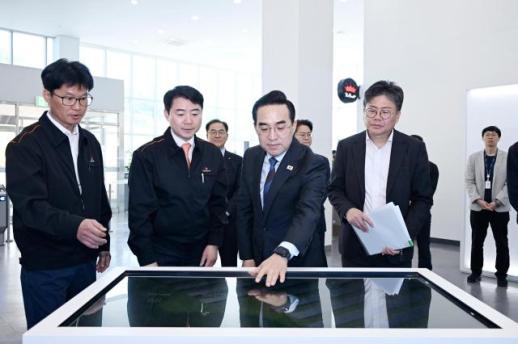 Minister Park Hong-keun Calls for Strengthened Central-Local Cooperation to Revive Solar Industry Park Hong-keun, the Minister of Economy and Finance, stated on May 8 that strengthening cooperation between the central government and local governments is essential for reviving the solar industry ecosystem. During his visit to Hanwha Solutions Q CELLS, a domestic solar cell manufacturer in Jincheon, Minister Park toured the production facilities for solar cells and modules and gathered feedback from officials. He highlighted the significance of the veranda solar power supply project in terms of securing energy supply chains and achieving carbon neutrality. However, he emphasized the need for the smooth implementation of energy transition projects, amounting to approximately 600 billion won, which are reflected in the supplementary budget for this year. An official from the company suggested that increased support is necessary to enhance the technological competitiveness of domestic firms, particularly in next-generation solar cells. In fact, the market share of domestic solar cell manufacturers dropped from about 50% in 2019 to around 25% in 2023, and it has recently fallen to just over 4%, highlighting the crisis facing the domestic industry. The Ministry of Economy and Finance believes that collaboration among the central government, local governments, manufacturers, and private associations is crucial for securing technological competitiveness and restoring the solar industry ecosystem. Minister Park plans to review the feedback gathered during the visit with relevant departments and consider it for the 2027 budget. He stated, "In addition to renewable energy supply projects like solar panels, we will implement various support measures, including research and development (R&D) and financial assistance, to enhance the global competitiveness of domestic producers." Additionally, Minister Park visited the Jincheon National Training Center to encourage athletes preparing for the Aichi-Nagoya Asian Games. He noted that 3 billion won has been allocated in the supplementary budget for the construction of an 'air mat' facility that allows for year-round winter training, pledging to improve the training environment for athletes.* This article has been translated by AI. 2026-05-08 14:33:26
 -
 Daewoong Pharmaceutical Partners with Tion Lab Therapeutics to Develop Monthly Obesity Treatment Daewoong Pharmaceutical and Tion Lab Therapeutics are officially launching the development of a monthly injectable treatment for obesity, utilizing their proprietary platform technologies. The two companies aim to begin patient dosing in domestic clinical trials within the year.The global obesity treatment market is projected to grow at an annual rate of over 30%, potentially reaching $200 billion by 2030. This growth is expected to intensify competition around 'shortened dosing intervals and convenience of administration' in the obesity market.On May 8, Daewoong Pharmaceutical announced that it has signed a strategic partnership agreement with Tion Lab Therapeutics for the global development and commercialization of a monthly obesity injection. The collaboration combines Tion Lab's Qject Sphere platform with Daewoong's Cure platform to develop a long-acting injectable based on semaglutide.Qject Sphere is noted for its ability to suppress initial drug release through specialized formulation and microparticle coating. Cure enhances particle homogeneity by manufacturing microspheres of uniform size, achieving consistent and low-variance release rates.Daewoong Pharmaceutical stated, "The Qject Sphere technology controls the initial release rate, while the Cure technology maintains a stable and consistent release rate over the desired duration. This synergy allows for rapid release suppression and long-term release patterns, while minimizing variability in product quality during mass production."Currently, Daewoong is also developing an obesity treatment option that utilizes a 'microneedle patch' technology to maintain the efficacy of injections while reducing pain and administration burden. This agreement enables Daewoong to complete a comprehensive treatment strategy in the obesity sector, encompassing oral medications, microneedle patches, and long-acting injectables.Daewoong Pharmaceutical CEO Park Seong-soo remarked, "This partnership has allowed us to establish a portfolio that ranks among the best in the industry for obesity treatment."Industry experts predict that if an injectable product can maintain effectiveness while reducing dosing frequency, it could significantly change patient adherence and prescribing patterns.* This article has been translated by AI. 2026-05-08 14:31:34
 -
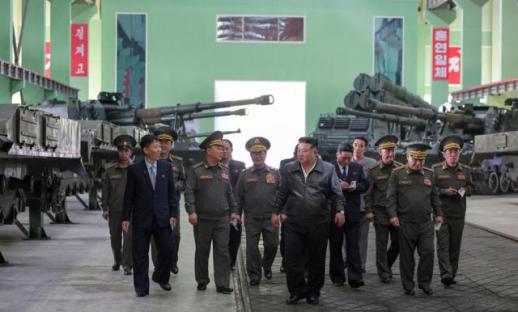 North Korea to 'deploy new self-propelled howitzers along border within this year' SEOUL, May 8 (AJP) - North Korea will deploy new self-propelled howitzers along the border with South Korea "within this year," state media reported on Friday. According to the state-run Korean Central News Agency, its leader Kim Jong-un visited a munitions factory earlier in the week where he "learned about the production of new-type self-propelled gun-howitzers for three battalions to be deployed at the long-range artillery unit in the southern borderline within this year." Assessing the "new-type 155mm self-propelled gun-howitzer" being produced at the factory, Kim expressed great satisfaction at the "successes in manufacturing new-generation artillery weapons with very high mobility and striking power," which means it has enough range to hit targets in South Korea, posing a direct threat to Seoul. Kim's comments suggest the howitzer has enough range to hit targets in the South, posing a direct threat to Seoul. "The striking range of this large-caliber rifled gun for the frontline units to newly equip themselves, along with various operational and tactical missile systems and powerful multiple rocket launcher systems, is over 60 km and such rapid extension of striking range and remarkable improvement of striking capability will provide a great change and advantage in the land operations of our army," he added. During Wednesday's visit, Kim also inspected a "new-type main battle tank and various launchers," urging officials and munitions industry workers to upgrade them to an "ultra-modern level in the shortest period." Shin Jong-woo, secretary-general of the Korea Defense and Security Forum, said North Korea appears to "show off the modernization of its conventional forces" by disclosing a mass production system for what appears to be a North Korean version of the South's K9 self-propelled howitzer, as part of a broader push to "strengthen its naval forces" after unveiling the 5,000-ton multipurpose destroyer Choe Hyun in April last year. 2026-05-08 14:17:09
 -
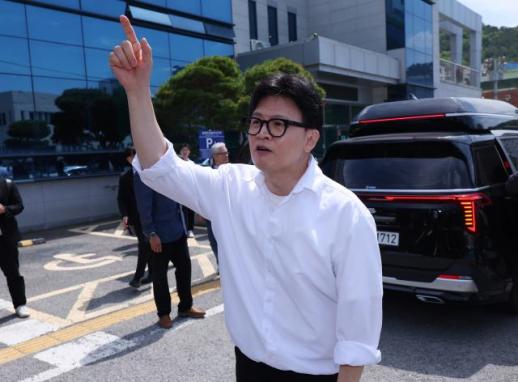 Han Dong-hoon Requests Supporters to Send Their Hearts Instead of Attending Campaign Opening Han Dong-hoon, a former leader of the People Power Party, stated that regarding the opening of his campaign office in Busan on May 10, he has asked lawmakers who expressed their intention to attend to "send their hearts from afar this time." Running as an independent candidate for the Busan North Gap seat in the June 3 local elections, Han made these comments during an appearance on MBC Radio's "Kim Jong-bae's Focus" on the morning of May 8. When asked if it would be awkward since the People Power Party's Park Min-sik is also holding an opening ceremony on the same day, he replied, "I want to make it a festive occasion for local residents rather than a display of central political power struggles unrelated to the region." Earlier, lawmakers Han Ji-a and Jin Jong-o expressed their intention to attend Han's opening ceremony. In response, Han noted, "There are many lawmakers who plan to come, not just Han Ji-a and Jin Jong-o," and emphasized that he wants to enjoy the event with local residents this time. Meanwhile, Park's opening ceremony is expected to be attended by party leaders, including Jang Dong-hyuk and Song Eon-seok. Regarding this, Han remarked, "The Jang Dong-hyuk faction is showing a stance that they will block Han Dong-hoon even if the Democratic Party takes over here," calling it "very strange politics." On the appointment of Jeong Hyung-geun as his campaign chair, Han clarified, "He is not the one to determine the direction of my election campaign," adding, "This shows that former lawmaker Jeong, who has a strong conservative inclination, agrees with my vision for conservative reconstruction. This election is about electing me, not about the campaign chair." Finally, Han expressed his intention to return to the party, stating, "When I was unjustly expelled, my first words were, 'I will definitely return.' I will return to change the party, conservatism, and South Korea." 2026-05-08 14:02:22