
Journalist

Lee Hugh
-
 French Prosecutors Intensify Pressure on Elon Musk Amid Expanded Investigation French prosecutors have escalated their investigation into Elon Musk and the social media platform X, transitioning the case into a judicial inquiry. The scope of the investigation now extends beyond the platform to include the artificial intelligence service Grok. According to Reuters on May 8, the Paris prosecutor's office has moved the case related to X into the judicial investigation phase. This means that a judge will now oversee the proceedings. Prosecutors are in the process of formally including X.AI Holdings, X, xAI, Musk, and Linda Yaccarino, the former CEO of X, as subjects of the investigation. This action signifies a shift to a more serious stage of inquiry, moving beyond preliminary investigations. Reuters reports that if the individuals do not comply with summonses, the investigating judge may issue warrants for their arrest. The allegations have broadened as well. According to the Associated Press, French authorities are examining issues related to the distribution of child sexual exploitation material, the dissemination of non-consensual sexual deepfakes, conspiracy to deny crimes against humanity, and suspicions of manipulating automated systems. The investigation also includes concerns that Grok generated sexually explicit deepfakes and Holocaust denial responses. Musk and Yaccarino were previously summoned for voluntary questioning in April but did not respond. Both Reuters and AP have reported that neither attended the summons. This investigation illustrates that French regulatory scrutiny is extending beyond X to Musk's AI ventures. Given that X and xAI are developing both a platform and generative AI, analysts suggest that the outcome of this investigation could increase operational burdens in Europe for Musk's businesses. 2026-05-08 14:00:18
 -
 Trump to Address Nation Early May 9 Amid Rising U.S.-Iran Tensions President Donald Trump is set to make a public address. The timing comes shortly after renewed tensions in the U.S.-Iran conflict, raising questions about whether he will discuss military actions, ceasefire management, or issues related to the Strait of Hormuz. The White House announced that Trump will speak at noon on May 8 in the Rose Garden. This translates to 1 a.m. on May 9 in South Korea. The specific topics or key messages of his address have not been disclosed. This speech coincides with heightened tensions between the U.S. and Iran. Just a day prior, three U.S. Navy destroyers were attacked in the Strait of Hormuz, prompting the U.S. to respond with retaliatory strikes. Despite this, Trump has maintained that a ceasefire is still in effect. Observers in Washington anticipate that the Iranian issue may be addressed during this speech, given the ongoing concerns about the ceasefire, subsequent negotiations, and navigation issues in the Strait of Hormuz. However, since the topics have not been made public, it is uncertain whether Trump will directly mention military actions against Iran. Markets are also closely watching the tone of this address. According to Reuters, concerns over disruptions to oil transport in the Strait of Hormuz due to renewed U.S.-Iran conflict have pushed Brent crude prices above $100 per barrel. Analysts suggest that the content of Trump's remarks could lead to increased volatility in oil prices and financial markets. 2026-05-08 13:53:05
 -
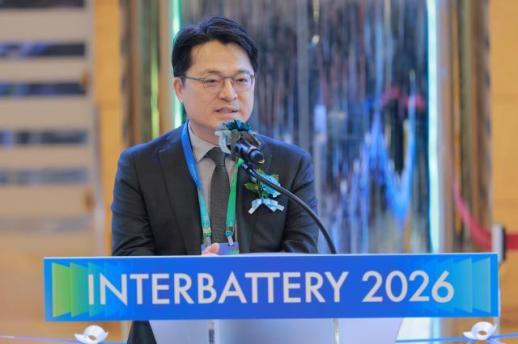 Deputy Minister Warns of Risks in AI Transition for Manufacturing Sector Deputy Minister Moon Shin-hak of the Ministry of Trade, Industry and Energy emphasized that the transition to artificial intelligence in manufacturing is not optional but essential, stating, "If we fall behind in competition with companies from other countries, we will inevitably be eliminated." He acknowledged the ongoing strike movements by the unions at Samsung Biologics and Samsung Electronics, saying, "While it is not appropriate to comment directly on specific corporate issues, the impact on the domestic industry is significant," and added that both labor and management must engage in discussions with a shared understanding. The sense of crisis is evident. However, what is needed now is not just warnings but refined solutions. Tensions in the field have already become a reality. The Samsung Biologics union has launched a full strike demanding wage increases, expanded performance bonuses, and fair personnel standards, while the Samsung Electronics union has announced a total strike, seeking performance bonuses linked to operating profits and the abolition of caps on bonuses. Although the specifics of their demands differ, the essence remains the same: how to share the productivity gains brought about by AI transition and automation, and how to ensure employment and future security in the process. As Deputy Minister Moon diagnosed, the AI transition is an unavoidable trend. Global manufacturing is already being reshaped around data and algorithms, and automation and unmanned operations have become fundamental conditions for competitiveness. Falling behind in this trend could lead not only to losing market share but also to destabilizing the industrial foundation itself. Therefore, speed is crucial. However, speed alone is not sufficient. When speed overwhelms conflict, it can lead to fractures within the industry. The current debate is not about 'speed versus distribution.' It is about whether we can design both speed and distribution simultaneously. Simply leaving this issue to labor-management negotiations is unrealistic. The existing wage-centered negotiation structure cannot accommodate the structural changes brought about by the AI transition. A new framework is necessary. First, the AI transition should be approached with a phased strategy. Initially, it is important to maintain speed for competitiveness while simultaneously implementing measures to mitigate employment shocks. Without retraining, job transitions, and internal mobility programs, automation will quickly lead to conflict. The key is to create a structure that maintains speed while absorbing shocks. Second, performance distribution should be approached not merely as profit-sharing but as a comprehensive issue of risk-reward structure. The AI transition requires substantial capital investment. Companies must bear losses in the event of failure. Demands to share only the gains without acknowledging this reality are unsustainable. Conversely, companies cannot justify avoiding distribution solely on the grounds of investment burdens. The solution is clear: a compensation system linked to medium- and long-term performance, along with a structure that shares some degree of volatility. Third, the agenda for labor-management negotiations should be expanded to encompass industrial structure. Companies must transparently present their technology adoption plans, employment impacts, and investment directions, while labor should negotiate not to reject change but to adjust conditions and speeds. This is not easy, but it is an unavoidable direction. The AI transition is not merely a wage negotiation issue; it is a matter of redesigning the entire production system. Fourth, the role of the government must also be clearly redefined. Deputy Minister Moon's emphasis on the necessity of industrial policy is valid. However, the costs and shocks of the transition should not be left solely to the private sector. At the same time, unconditional financial support could lead to moral hazard. Therefore, government intervention should be based on conditional principles. It is desirable to provide support for retraining, tax benefits, and partial subsidies for transition costs, while holding companies accountable for maintaining investments and job stability. Ultimately, the question raised by this situation is clear: Is South Korea ready for the AI transition? The technology is already in place. What is lacking are the systems, agreements, and design capabilities. The strikes at Samsung Electronics and Samsung Biologics are not just issues for specific companies; they signal a structural transition affecting the entire South Korean industry. Deputy Minister Moon's warning about "elimination" is valid. However, industries can also collapse when conflicts are not managed. What is needed now is to create a structure that can maintain speed while absorbing shocks. That is the true industrial competitiveness. 2026-05-08 13:50:51
 -
 Korean Kolmar Reports Record Q1 Operating Profit of 78.9 Billion Won Amid K-Beauty Export Surge Korean Kolmar, a cosmetics contract manufacturer, reported its highest-ever quarterly performance in the first quarter of this year, driven by a surge in global demand for sun care products in anticipation of early summer heat. According to the Financial Supervisory Service's electronic disclosure system on May 8, Korean Kolmar's consolidated operating profit for the first quarter reached 78.9 billion won, a 31.6% increase compared to the same period last year. Sales rose to 728 billion won, up 11.5% year-on-year, while net profit soared by 158.7% to 60 billion won. Both operating profit and sales marked the highest figures ever recorded for a single quarter. This performance is particularly noteworthy given that the first quarter is traditionally considered a slow season in the cosmetics industry. Korean Kolmar, the first ODM company designated as a large business group by the Fair Trade Commission, has secured numerous global indie brand clients in the sun care and skincare sectors. Notable clients include Gudai Global's 'Joseon Beauty' and Skin Angel's 'Skin1004.' In collaboration with Gudai Global, Korean Kolmar has co-developed sun care products such as 'Clear Rice Sunscreen' and 'Birch Juice Moisturizing Sunscreen,' surpassing cumulative sales of 100 million units over the past five years. The company is recognized as an ODM that has simultaneously secured competitive sun care formulations and a strong indie brand client base amid the expanding K-beauty export landscape. A representative from Korean Kolmar stated, "The record performance in the first quarter was achieved due to increased orders for skincare and sun care products driven by rising summer demand, along with strong exports of indie brands." 2026-05-08 13:49:18
 -
 Korea-Vietnam Business Forum Strengthens Green Economy Cooperation The Vietnam Eco-Friendly Product Manufacturing Association (EPMA) and the Korea-Vietnam Economic and Cultural Association (KOVECA) signed a memorandum of understanding to enhance cooperation in the green economy during the Korea-Vietnam Business Forum. The signing took place as part of the official schedule of the economic delegation at the forum held in Hanoi, Vietnam. The event was attended by Minister of Trade, Industry and Energy Kim Jeong-kwan and Minister of Finance Nguyen Van Thanh. Through this agreement, the two organizations have identified key cooperation areas including the green economy, smart agriculture, eco-friendly industries, and net-zero transitions. They plan to establish a phased cooperation roadmap from 2026 to 2030. Attendees at the signing ceremony included KOVECA President Kwon Seong-taek, Advisor Park Jong-nam, Vice President Lee Jong-hyun, and Ambassador Dinh Thi Tai My, along with EPMA Vice President Bu Minh Li, Secretary Bu Thi Van Hoa, and Deputy Director Nguyen Thi Trang of the Green Production Technology Research and Development Center (GREEN TECH). Kwon Seong-taek, President of KOVECA, stated, "This agreement marks a practical starting point for both Korea and Vietnam to move toward a shared future in the green economy. KOVECA will leverage Korea's technology, investment, and networks to create a sustainable industrial cooperation model combined with Vietnam's growth potential." Bu Minh Li, Vice President of EPMA, noted, "Vietnam is currently pursuing the transition to a green economy and achieving net-zero as a national strategy. Through this collaboration, we aim to implement concrete projects in the eco-friendly product industry, smart agriculture, and circular economy, enhancing the competitiveness of Vietnam's industry through international cooperation." KOVECA, established in 2014, is a non-profit organization that serves as a private cooperation platform connecting economic, cultural, educational, and industrial collaborations between Korea and Vietnam. It has facilitated investment attraction, technology cooperation, and official development assistance (ODA) projects by linking governments, local authorities, businesses, and research institutions. EPMA is a non-profit social and professional organization that connects companies and institutions related to Vietnam's eco-friendly product industry. It is an officially recognized entity approved by the Ministry of Home Affairs, providing policy advice, industrial support, and international cooperation. Its subsidiary, GREEN TECH, is responsible for technical implementation tasks such as energy diagnostics, carbon emission measurement, eco-friendly certification, and carbon credits. This collaboration is significant as it aims for action-oriented cooperation beyond mere exchanges. The two organizations plan to gradually advance technology transfer and joint projects in smart agriculture, circular economy, eco-friendly production, and carbon neutrality. Particularly, the collaboration will combine Korea's smart farm, smart factory, and new energy technologies with Vietnam's production base and market. The goal is to create specific industrial outcomes, such as adding value to agricultural by-products, producing eco-friendly materials, and establishing digital carbon management systems. The two organizations expect that this cooperation will also help enhance the international market competitiveness of businesses in both countries amid the strengthening of ESG standards and the expansion of carbon regulations. 2026-05-08 13:45:01
 -
 Samsung Electronics Launches Development of Humanoid Robots Samsung Electronics is re-establishing its focus on robotics. The company is bolstering its Future Robotics Team and has created a new execution organization within its Device Experience (DX) division to oversee AI-based future projects, accelerating preparations for the commercialization of manufacturing robots and humanoids. According to industry sources on May 8, Samsung's DX division has recently conducted internal recruitment for the Future Robotics Team, with applications accepted until today. Prior to the recruitment, Samsung held a briefing for employees to share the team's roles and responsibilities. The Future Robotics Team was established after Samsung secured a major stake in the robotics platform company Rainbow Robotics, and it is responsible for overseeing the development of next-generation robotic technologies, including humanoids. This workforce expansion is seen as a strategic move to transition the robotics business roadmap into the execution phase rather than merely expanding the organization. During a recent earnings call, Samsung outlined its plan to first develop manufacturing robots before expanding into home and retail sectors. The company also indicated it would consider internalizing key robotic components and collaborating with domestic firms, as well as being open to investments and acquisitions if necessary. Samsung's renewed focus on robotics is not a recent development. In 2021, the company formed a task force for robotics commercialization, which evolved into a formal robotics team the following year. In January 2023, Samsung invested approximately 59 billion won in Rainbow Robotics, securing its position as the largest shareholder. Rainbow Robotics, known for its bipedal and collaborative robot technologies, has been viewed as a crucial external technology partner for accelerating Samsung's humanoid development. Within the DX division, there is also a visible effort to integrate robotics as a core aspect of AI transformation. Last August, Samsung established the InnoX Lab, a dedicated organization for key strategic projects within the DX division. This execution-focused team is responsible for the expansion of digital twin solutions, logistics operation innovations, manufacturing automation, and the development of core technologies for humanoid robots. Industry experts interpret the establishment of InnoX Lab as a signal that Samsung aims to approach robotics not merely as a standalone product but as part of an AI-based platform business connecting factories, logistics, homes, and retail. As the smartphone, TV, and home appliance markets mature, robotics is emerging as a new growth axis that can integrate hardware, AI, sensors, semiconductors, and appliances. Samsung's initial focus on manufacturing robots is seen as a strategic choice that considers both quality verification and potential for profitability. However, significant challenges remain before commercialization can be achieved. The humanoid market is rapidly advancing, with global companies like Tesla and Figure AI leading the way. To mitigate the burden of being a latecomer, the speed at which Samsung can combine technologies with Rainbow Robotics, internalize its own components, and integrate with the DX division's product ecosystem will be crucial. An industry insider noted, "The alignment of organization, personnel, external investment, and AI transformation systems has become clearer. The strategy of first achieving results with manufacturing robots and then expanding into humanoids and home robots is likely to be a realistic roadmap." 2026-05-08 13:03:39
 -
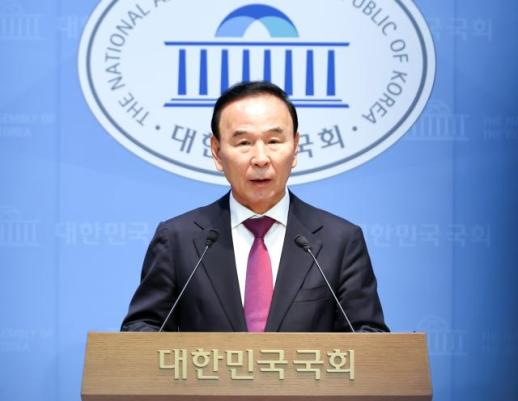 People Power Party's Jo Bae-sook and Park Deok-heum Announce Candidacy for National Assembly Vice Speaker People Power Party lawmakers Jo Bae-sook and Park Deok-heum declared their candidacies for the position of National Assembly Vice Speaker on May 8, stating, "The National Assembly must change." During a press conference at the National Assembly's communication hall, Park emphasized the importance of maintaining open dialogue, saying, "We must show the public that we will not close the door to conversation, even if there are differences between the ruling and opposition parties." He added, "Gaining the trust of the people is the only way for our National Assembly to stand tall." If elected as Vice Speaker, Park pledged to lead efforts to reach consensus through dialogue and compromise with the ruling party. He expressed his determination to restore trust between the parties and overcome political skepticism to create a National Assembly that offers hope to the public. Referencing his political philosophy of 'Ubo Cheonri' (taking steady steps), Park stated, "I will focus on the people and take one step at a time in my legislative activities." Jo also announced his candidacy for Vice Speaker at the same venue. He pointed out, "In the face of the ruling party's legislative dominance and extreme confrontations, the voices of the people have been silenced," adding, "The National Assembly should not be a place of conflict but a place for problem-solving." He pledged to utilize his experience as a five-term lawmaker as a tool for cooperation aimed at improving the lives of citizens. "As 'the daughter of Honam,' I will be a catalyst for integration across regions and generations," he said, vowing to dedicate all his political resources to regaining the trust of the people by abandoning outdated habits and vested interests. Meanwhile, the People Power Party plans to select its candidate for Vice Speaker on May 13. In addition to Park and Jo, Jo Kyung-tae, a six-term lawmaker, is also considered a potential candidate for the position. 2026-05-08 12:38:51
 -
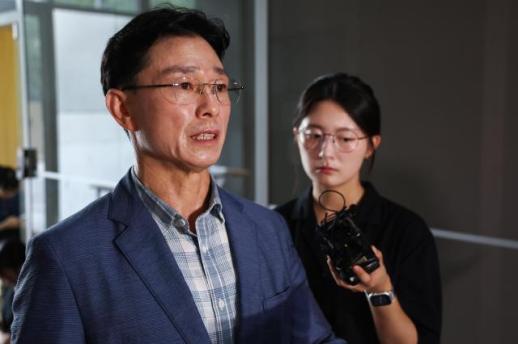 Im Sung-keun Sentenced to 3 Years for Duty-Related Death of Marine Im Sung-keun, the former commander of the Marine Corps 1st Division, has been sentenced to three years in prison for his role in the duty-related death of Corporal Chae Soo-geun during a rescue operation in July 2023. On May 8, the Seoul Central District Court's Criminal Division 22, led by Judge Jo Hyung-woo, found Im guilty of duty-related manslaughter and violating military law. This sentence is two years lighter than the five-year term sought by the special prosecutor's team investigating the case. Co-defendants Park Sang-hyun, former commander of the 7th Brigade, and Choi Jin-kyu, former artillery battalion commander, received prison sentences of one year and six months each. Lee Yong-min, another former artillery battalion commander, was sentenced to ten months in prison, while Jang Soo-man, the on-site commander, received an eight-month sentence with a two-year probation. Im was charged for failing to provide safety equipment, such as life jackets, to his troops, including Corporal Chae, who died during a submerged search operation in Yecheon, North Gyeongsang Province. The court found all major charges against Im to be valid. It stated, "If the defendant had simply instructed through Park not to enter the water, the Marines would not have conducted the underwater search. Had they been equipped with the proper gear, the victims could have been rescued quickly." The court emphasized that there was a clear causal link between Im's negligence and the tragic outcome. Additionally, the court ruled that despite a command transferring operational control to the Army, Im continued to exercise command authority by directing the search methods and on-site guidance. The court noted, "Im's directive to 'probe suspicious areas' rather than conducting reconnaissance from the road was interpreted by subordinate commanders as a direct order to enter the water." The court criticized Im for being aware of the underwater search but failing to prohibit it or secure safety equipment, stating, "His focus on results disregarded the lives and safety of his troops, leading to a horrific accident." In explaining the sentencing, the court highlighted a troubling trend where only lower-ranking commanders are held accountable for such incidents. It pointed out that in this case, a senior commander recognized specific risks yet issued orders that exacerbated those dangers. The court noted that Im attempted to shift blame to subordinates and destroy evidence after the incident, causing significant distress to the victims' families, which warranted a severe penalty. In contrast, the court considered Jang's position as difficult due to the unreasonable orders from superiors and noted that the victims' families did not seek punishment for him. This case marks the first trial initiated by the special prosecutor's team since its establishment. It is also the first instance of a ruling in a case investigated by the Marine Corps special prosecutor's office. While Im received a prison sentence, the Marine Corps Reserve Association expressed disappointment over the lighter sentence compared to the special prosecutor's request. Following the verdict, the association held a press conference outside the courthouse, stating, "Considering the irreparable damage to the deceased and their families, the public outrage, and the tarnishing of the Marine Corps' honor and trust in national defense, this ruling cannot be seen as severe enough." They added, "The Marine Corps is respected and admired by the public because it does not abandon its comrades. If the Marine Corps is characterized by shifting blame for a comrade's death, attempting to save oneself, and betraying fellow soldiers, then we no longer wish to be part of it. We urge the Marine Corps Command to reflect deeply on this disgraceful incident and offer a sincere apology." 2026-05-08 12:36:51
 -
 OpenAI Added to List of Companies Required to Disclose Information Security Practices OpenAI has been newly included in the list of companies required to disclose information security practices due to a surge in domestic users. Platforms such as AliExpress, Musinsa, Tving, and CJ Olive Young, which have rapidly expanded their user bases in South Korea, are also on the list. On May 8, the Ministry of Science and ICT announced the 693 companies that are obligated to disclose their information security practices for 2026. This requirement, established under the Information Protection Industry Promotion Act, aims to encourage corporate investment in information security and enhance user protection by mandating disclosures regarding security investments, dedicated personnel, and related activities. Companies are selected annually based on criteria such as business sector, revenue, and user numbers. This year, the number of obligated companies increased by 27 compared to the previous year, totaling 693. Notably, 13 companies were added based on revenue criteria, and 10 companies met the requirement of having over one million users. The new additions include OpenAI, AliExpress, Musinsa, Tving, and CJ Olive Young. The inclusion of OpenAI is attributed to the rapid increase in domestic users of its generative AI services. According to Mobile Index, the number of ChatGPT users in South Korea surged by 341% from January to December last year, with active devices totaling 19.49 million. ChatGPT was also the most installed app on smartphones in South Korea last year, with 16.57 million installations. Companies required to disclose their information security practices must submit their security status to the comprehensive disclosure portal by June 30. Lim Jeong-kyu, Director of Information Security Network Policy at the Ministry of Science and ICT, stated, "The information security disclosure system is an important framework that allows the public to verify companies' information security status through transparent disclosures. We will continue to promote the right to know for the public and encourage voluntary investments in information security by companies, striving to enhance the overall level of information security in the country." 2026-05-08 12:35:17
 -
 U.S. Court Ruling Limits Impact of Global Tariffs on South Korea The recent ruling by a U.S. court against President Donald Trump's global tariffs suggests a potential shift in U.S. trade policy. However, experts believe the direct impact on South Korea, particularly regarding completed U.S.-South Korea tariff negotiations and investments, will be limited. According to relevant authorities, the U.S. Federal International Trade Court ruled on May 7 (local time) in favor of plaintiffs, including Washington state and some importers, against the 10% global tariff imposed on all trading partners under Section 122 of the Trade Act. The court did not expand the ruling's scope to include other states or all companies. Previously, the Trump administration had imposed the global tariff in February after the U.S. Supreme Court ruled that reciprocal tariffs based on the International Emergency Economic Powers Act (IEEPA) were invalid. The global tariff was enacted under Section 122, which grants the president the authority to impose tariffs for up to 150 days to address severe trade deficits. With the court's intervention on both reciprocal tariffs and global tariffs, speculation arises about changes in U.S. trade policy. However, the prevailing view is that the framework of the tariff negotiations with South Korea and related investments will remain largely unchanged. Section 122 of U.S. trade law originally allowed the president to impose emergency tariffs, but its application period is limited and set to expire in July, raising questions about the sustainability of such policies. It is seen as a temporary measure in the process of restoring the tariff system. In response, the Trump administration has sought to restore the tariff system using Sections 301 and 232 of the Trade Act. The U.S. is already conducting investigations under Section 301 against South Korea and others, citing unfair trade practices related to overproduction in the manufacturing sector and goods produced through forced labor. While the tariff imposition system is changing, it is likely that the overall framework of negotiations between South Korea and the U.S. will not be significantly affected. Therefore, current government investment projects in the U.S. are expected to remain largely unaffected. The ongoing negotiations led by Minister of Trade, Industry and Energy Kim Jung-kwan during his visit to the U.S. may also experience limited impact. The government has stated it will monitor the situation closely. A spokesperson from the Blue House noted, "The ruling's effect appears to be limited to some plaintiffs, and the government plans to respond calmly while continuing to ensure a balance of benefits under our existing tariff agreements." 2026-05-08 12:32:42