
Journalist

Lee Hugh
-
 President Lee Honors Parents on Parents' Day, Emphasizes Support for Families On Parents' Day, May 8, President Lee Jae-myung expressed deep respect for all parents dedicated to their families and the nation. He stated, "The heartfelt desire to leave a better world for our children is the root of this country and the driving force behind its prosperity and growth. Today's South Korea stands on that silent dedication." In a Facebook post, he said, "On this 54th Parents' Day, I extend my sincere gratitude and respect to all parents who are devoted to their families and the nation." Lee reflected on his own experience, saying, "A parent carries the weight of the world for each child. I truly realized this only after becoming a father of two." He emphasized the need for a society that does not rely solely on parental sacrifice but rather fosters a nation where the community shares responsibility, stating, "We will strive for a 'country where the people are happy,' so everyone can look forward to a better future." The president asserted that parents who have dedicated their lives deserve to enjoy a worry-free and happy retirement. He pledged to provide more attentive care and expand practical support for parents. He outlined initiatives by the people's sovereignty government, including 'community-integrated care,' 'dementia asset management services,' and a record 1.15 million senior job opportunities, along with reforms to unfair pension systems to ensure healthy and vibrant retirements. Lee concluded by wishing for a warm day where gratitude and love can be shared with those who may not have heard it before. 2026-05-08 11:33:36
 -
 KOSPI retreats after historic rally as foreign investors dump shares SEOUL, May 8 (AJP) - South Korea's KOSPI took a breather on Friday after a strong three-day rally that saw the benchmark index gain more than 13 percent, weighed down by heavy foreign selling. As of around 11 a.m., the KOSPI stood at 7,378.17, down 1.49 percent, from the previous session. The retreat came just a day after the index briefly crossed the 7,500 mark for the first time in its history, having surpassed the 7,000 threshold in the previous session, as foreign investors, who had aggressively fueled the recent artificial intelligence (AI)-driven rally through heavy buying of KOSPI-listed chip stocks, sharply reversed course. After recording a net purchase of 3.13 trillion won on May 6, the largest daily foreign inflow on record that helped push KOSPI above the 7,000 mark, foreign investors dumped more than 7 trillion won worth of shares in the previous session and extended heavy selling with another 3.45 trillion won in net sales in the day's morning trade. Investor sentiment also weakened as uncertainty resurfaced over ceasefire negotiations between the U.S. and Iran, reviving concerns that the prolonged conflict in the Middle East could escalate again. Market jitters deepened further after reports that Washington was considering restarting "Project Freedom," an operation aimed at helping commercial ships stranded near the Strait of Hormuz leave the region safely. Overnight on Wall Street, the Dow Jones Industrial Average fell 0.63 percent, while the S&P 500 and Nasdaq Composite declined 0.38 percent and 0.13 percent, respectively. The Philadelphia Semiconductor Index dropped 2.72 percent as investors locked in gains in chip stocks after recent rallies. British chip designer Arm Holdings plunged 10.1 percent overnight amid renewed doubts over the production capacity of its artificial intelligence chips, further weighing on global semiconductor sentiment. In Seoul, large-cap semiconductor shares led the decline after posting record highs a day earlier. Samsung Electronics fell 2.67 percent to 264,250 won, while SK hynix slipped 0.97 percent to 1,638,000 won. SK Square, the largest shareholder of SK hynix, also declined 1.36 percent to 1,084,000 won. Defense and heavy industry shares were broadly weaker, with Hanwha Aerospace down 1.59 percent to 1,296,000 won, HD Hyundai Heavy Industries falling 6.35 percent to 649,000 won, and Doosan Enerbility sliding 4.99 percent to 129,600 won. Battery and electronics shares also traded lower, with LG Energy Solution down 1.66 percent to 475,000 won and Samsung Electro-Mechanics falling 1.64 percent to 902,000 won. Automakers outperformed the broader market, led by Hyundai Motor, which jumped 8.04 percent to 618,000 won, while Kia gained 4 percent to 163,900 won. But the junior KOSDAQ outperformed the main board as foreign buying shifted into smaller growth stocks. The index rose 0.42 percent to 1,204.19. Foreign and institutional investors bought a net 380.2 billion won and 73 billion won worth of KOSDAQ shares, respectively, while retail investors sold a net 445.3 billion won. Robotics and biotech shares continued to lead gains on the KOSDAQ. Rainbow Robotics surged 14.35 percent to 797,000 won, while Kolon TissueGene jumped 12.30 percent to 128,700 won. Among biopharmaceutical stocks, Samchundang Pharm rose 1.38 percent to 405,000 won, ABL Bio gained 2.85 percent to 130,000 won and LigaChem Biosciences climbed 6.79 percent to 195,100 won. In contrast, secondary battery shares remained weak, with EcoPro BM falling 1.70 percent to 231,500 won and EcoPro sliding 3.57 percent to 154,000 won. Healthcare and semiconductor-related shares also traded lower, as HLB fell 2.18 percent to 58,200 won, while Alteogen edged down 0.42 percent to 355,000 won. The South Korean won weakened slightly against the U.S. dollar, trading at 1,464.60 per dollar compared with 1,454 previously. Meanwhile, the sell-off spread across major Asian markets. Japan's Nikkei 225 also fell 0.62 percent to 62,446.81 amid broader profit-taking in technology and semiconductor-related shares, Hong Kong's Hang Seng Index dropped 1.20 percent to 26,308.99 and China's Shanghai Composite slipped 0.19 percent to 4,172.13 reflecting a broader risk-off mood as investors reassessed geopolitical and valuation risks. 2026-05-08 11:33:00
 -
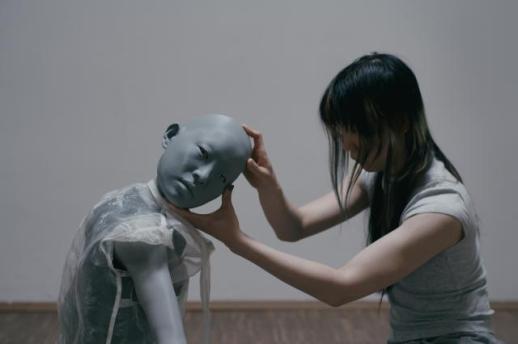 Korean Performance Captivates Audience at Venice Biennale Taiwan Pavilion "Bravo!" During the opening of the Taiwan Pavilion at the Venice Biennale on May 7, the performance titled "She seemed devastated, when I was weeping with joy" captivated the audience, drawing enthusiastic applause. The performance featured South Korean artist Hong Eun-joo and performer Kim Yi-soo, who presented a 30-minute act as part of the exhibition "Screen Melancholy: Li Yi-Pan," curated by Raphael Fonseca. The event attracted over 200 attendees, exceeding the pavilion's capacity of 170, indicating significant interest. Two additional performances are scheduled. The performers engaged in a dynamic interplay, intertwining their movements. They approached each other, engaged in physical tussles, and alternated between gentle gestures and striking actions. The doll, crafted to resemble the artist, evoked a peculiar tension, oscillating between the realms of life and inanimate existence. In an interview, Hong Eun-joo shared, "In 2024, I encountered traditional puppet theater during my residency in Taipei, Taiwan. I learned that Korea's traditional puppet theater form has largely disappeared due to the Japanese colonial period." She added, "This intrigued me, leading to the creation of a performance utilizing puppets." The doll was created using a 3D scan of the artist's own face and body. "The doll sat in my home for months. My face was rolling around. I saw my face while passing by. It was a strange experience, almost like an out-of-body feeling," she explained. Hong has been collaborating with Li Yi-Pan since 2024, believing their works resonate at the point of 'melancholy.' Their connection led to an invitation from the Taiwan Pavilion curator to perform at the Venice Biennale. Through her work, Hong aims to pose the question, "What makes us human?" She remarked, "The doll represents a suffering body, discarded on the floor. Although it is plastic, I hope the audience feels compassion when they see it." "Even if it is not a real body, if we can feel compassion for a being that is dragged on the floor, suffering and wounded, that seems to be one of the conditions that make us human. If we can witness war or the suffering of others without feeling anything, that is inhumane," she added. The doll could symbolize a human body devoid of all fluids. Hong recalled how her grandfather shed sticky tears before passing away. "Before dying, a person expels all liquids. Both feces and tears are released. In contrast, the plastic doll is a body entirely unrelated to any fluids." Currently based in Germany, Hong frequently visits the Venice Biennale, often thinking, "Someday, I will be here." Now that her dream has come true, she expresses a desire to one day have a formal solo exhibition. "I never imagined I would present my work here so quickly. The weight of the Biennale's name was significant. However, I felt surprisingly calm today," she said. The live performances will take place at the Palazzo delle Prigioni near St. Mark's Square in Venice on May 8 and 9 at 5 PM. 2026-05-08 11:31:28
 -
 Chip boom feeds record C/A surplus streak in March, overseas stock invest eases SEOUL, May 08 (AJP) -The black in South Korea's current-account balance stretched to new record high of $37.33 billion in March and $73.78 billion for the first three-month period, both more than quadrupled from a year-ago period in line with double-digit growth in exports that more than offset gain in imports from higher U.S. dollar and energy cost amid a war outbreak in the Middle East. Despite the record surplus and exports surge streak, overwhelming demand for oversea stocks – mostly in Wall Street – by South Koreans posed as structural setback for the recovery in the Korean won. According to Bank of Korea (BOK) data Friday, the March current-account surplus sharply widened from $23.19 billion in February and from $9.58 billion a year earlier, extending the surplus streak to 35 consecutive months. The first-quarter surplus of $73.78 billion compared with $19.49 billion during the same period last year. The goods account posted a record $35.07 billion surplus in March, widening from $23.36 billion in February and $9.69 billion a year earlier, as exports jumped 56.9 percent on-year to $94.32 billion. Imports also increased 17.4 percent to $59.24 billion, accelerating from the 4 percent gain recorded in February. The AI-fueled semiconductor cycle remained the overwhelming engine. Semiconductor exports soared 149.8 percent on a customs-clearance basis in March following a 157.8 percent jump in February, while electric and electronic product exports surged 112.7 percent after rising 104.7 percent a month earlier. Information-technology device exports climbed 78.1 percent. Regional demand strengthened across nearly all major markets. Exports to China rebounded 64.9 percent on-year in March from a 34.2 percent rise in February, while shipments to Southeast Asia accelerated to 68 percent growth from 54.9 percent. Exports to the United States climbed 47.3 percent and exports to the European Union rose 19.3 percent. Petroleum product exports swung to a 69.2 percent gain from a 0.7 percent decline in February as refining margins improved despite Middle East tensions. Chemical exports rebounded 9.1 percent after falling 7.1 percent, while shipbuilding exports extended gains by 11.4 percent. By contrast, machinery and precision instrument exports slipped 0.2 percent and auto parts exports declined 5.3 percent. Imports also accelerated as Korean firms continued expanding AI-related production and facilities. Capital goods imports rose 23.6 percent in March from 16.8 percent in February, while semiconductor imports accelerated to 34.5 percent growth from 19.1 percent. Imports of semiconductor-manufacturing equipment increased 6.7 percent. Raw material imports returned to growth, rising 8.5 percent after declining 1.9 percent in February. Non-energy imports surged 18.7 percent, while energy imports still fell 5.6 percent despite elevated geopolitical tensions surrounding the Strait of Hormuz. The services account remained in deficit for a 46th consecutive month at $1.29 billion, improving from a $1.86 billion shortfall in February. The travel account swung to a $140 million surplus from a $1.26 billion deficit a month earlier as outbound travel demand softened. Primary income surplus widened to $3.58 billion from $2.48 billion on increased dividend income from overseas assets. Still, the historic trade and current-account boom continues to fail to generate meaningful support for the Korean won as capital flows increasingly move in the opposite direction. Korean investors’ appetite for U.S. technology and AI-related equities remained intact, although sharply eased from the previous months amid strong U.S. dollar and capital reshoring incentives. March financial-account data showed foreign portfolio investment liabilities — foreign investment into Korean equities and bonds — plunged by $34.04 billion following an already sharp $11.94 billion decline in February. The outflow was overwhelmingly driven by foreign net selling of Korean stocks, with equity investment liabilities alone sinking $29.33 billion after falling $13.27 billion a month earlier. At the same time, Korean residents continued pouring money into overseas markets. Portfolio investment assets rose another $4 billion in March, although halved from an $8.64 billion increase in February. Overseas equity investment by residents climbed $3.94 billion during the month, slowing from a gain of $10.39 billion. The BOK has maintained that the current-account structure remains fundamentally solid and noted that refined-product exports and still-contained energy imports helped cushion the impact of Middle East tensions through March. Still, officials acknowledged that portfolio flows and global risk sentiment are now exerting greater influence on the won than trade surpluses alone. Whether the record surplus streak will be sustained remains uncertain amid prolonged conflicts in the Middle East that has caused energy shock across manufacturing front. 2026-05-08 11:23:13
 -
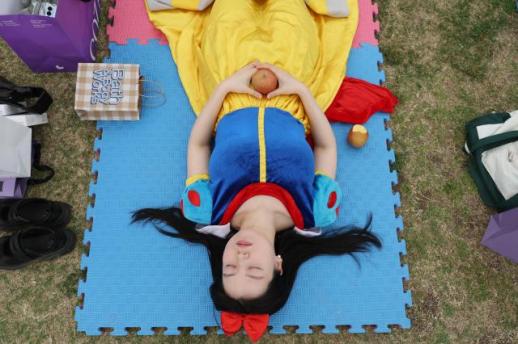 2026 Han River Napping Championship Draws Hundreds Amid Sleep Crisis Last weekend, a peculiar scene unfolded at Yeouido Hangang Park as hundreds gathered for the '2026 Han River Napping Championship.' Amid the bustling 'Seoul Spring Festa,' over 170 participants laid down on mats, soon filling the air with synchronized breathing and the occasional soft snore. In this open space, free from chatter or music, they embraced the tranquility of the outdoors. Now in its third year, the napping championship may seem lighthearted, but participants faced a competitive ratio of 70 to 1 to secure a spot. Each came prepared, armed with sleep masks labeled 'Offline,' mosquito repellent, ergonomic neck pillows, and even plush toys. One participant, dressed in a princess costume, had a sign that read, "Do not wake me unless you are a prince," while another, dressed as Jesus, peacefully closed his eyes. Before the competition began, a brief commotion arose when members of the idol group ONF, E-shon and Seung-jun, appeared, momentarily breaking the silence with soft gasps and camera clicks. However, once the event commenced, fans and idols alike lay side by side on the mats, united in their quest for rest. I was fortunate to join the event as a reporter after a spot opened up due to a no-show. Assigned number 58, I was surrounded by a weary college student and a fatigued office worker. Despite the uneven ground beneath my thin mat, a sense of calm washed over me as the noise from a pre-event yoga session faded away, leaving a heavy silence as 170 people closed their eyes together. However, this was no ordinary nap. Every 30 minutes, the announcer's voice pierced the silence, and sounds of mosquitoes played over the speakers as staff members gently tickled participants' feet with feathers, attempting to rouse them. Any movement or opened eyes resulted in immediate disqualification, leading to a growing number of dropouts as time passed. Those who remained had their heart rates monitored every half hour, with the participant maintaining the lowest, most stable heart rate declared the winner. This transformation of the basic act of sleeping into a quantified performance highlighted a societal shift. A pressing question arises: when did we start learning how to 'sleep well'? Sleep was once a natural response to fatigue, but now many rely on sleep-inducing apps, white noise, melatonin, and sleep journals just to fall asleep. The heart rate monitoring during the napping contest starkly illustrates this change. While each participant had their own story, a common thread emerged: exhaustion. "I can only sleep 3 to 4 hours a day," said 30-year-old office worker Nam Ji-soo, who attended with her team leader, both aware of each other's burnout. The irony of choosing a napping contest by the Han River as a form of rest was bittersweet. College student Park Jun-seok, dressed in traditional attire inspired by the film 'The King's Man,' identified social media and smartphone notifications as modern-day sleep thieves. "Even when I lie down to rest, I end up scrolling through reels for hours. With exams approaching, I'm completely drained, so I actually feel confident about winning today," he said, his playful tone masking genuine fatigue. Another participant, 53-year-old Hwang Doo-sung, clutched a blanket given to him by his girlfriend, who had come to support him. "I’m exhausted from work all week, and today I really want to win. My girlfriend is watching from outside, so I feel motivated," he shared, smiling at the thought of her cheering him on. The high turnout for this event reflects a growing concern. In the past five years, the number of sleep disorder patients has increased by 1.3 million, and prescriptions for insomnia medications have quadrupled. South Koreans average just 6 hours and 58 minutes of sleep, ranking among the lowest in the OECD. In a country known for its hard work, sleep is becoming a luxury. Professor Kim Jae-hwi from Chung-Ang University analyzed this phenomenon, noting that sleep, which should be a private act, has turned into a public performance. The liberating atmosphere of the Han River and the unusual experience of napping among strangers can help alleviate stress. Some participants remarked, "I can't sleep at home, but I fell asleep quickly here," suggesting that the permission to simply lie down is comforting. Conversely, Professor Kim Yoon-tae from Korea University emphasized the need for structural changes that allow young people and workers to genuinely rest. He pointed out that while government-sponsored events like this are significant, they also highlight the paradox of many people struggling to find real relaxation. The napping contest, while festive, carries an underlying sense of melancholy. The two-hour competition concluded with Kim Jong-pil maintaining the most stable heart rate, earning him first place. Hwang Doo-sung proudly secured second place, likely buoyed by the blanket from his girlfriend. Park Jun-seok also received recognition as the second-best dressed participant. I, however, did not finish the competition. Although I could ignore the mosquito sounds, I instinctively flinched when a feather brushed my hand, leading to my disqualification. Yet, I felt no regret. The time spent napping under the guise of reporting was a sweet reprieve from a society that never stops producing. In a world where productivity never pauses, even the act of doing nothing requires events, equipment, and justification. Regardless of who won, for me, number 58, that time spent napping was a rare and cherished moment of rest. 2026-05-08 11:14:08
 -
 Lee discusses semiconductor and AI cooperation in first phone call with Dutch PM SEOUL, May 8 (AJP) - President Lee Jae Myung spoke with Dutch Prime Minister Rob Jetten over the phone, Cheong Wa Dae said on Friday. The call the previous day was their first conversation since Jetten took office last February. In a written press briefing, presidential spokesperson Kang Yu-jung said the two leaders agreed to strengthen cooperation in advanced industries including artificial intelligence, semiconductors and other technologies. According to Kang, Lee expressed hope for expanding practical cooperation to mark the 65th anniversary of diplomatic relations between South Korea and the Netherlands, praising the growth of their strategic partnership. Rob Jetten was quoted as stressing that the two countries would continue close cooperation in the strategically important semiconductor sector, while also expanding collaboration in areas such as batteries and offshore wind power. Kang said the two leaders also agreed that their partnership is important as global uncertainty grows and that they would keep in close communication. Later in the day, Lee wrote on X, formerly Twitter, that continued cooperation between South Korea, "a semiconductor-manufacturing powerhouse," and the Netherlands, which he said has a major strength in advanced chip equipment, could make a significant contribution to stabilizing the global semiconductor supply chain. 2026-05-08 10:47:22
 -
 AI and Employment: Adapting Education and Workplaces for Coexistence At 11 p.m. in a law office in Jongno, the sound of typing fills the air. First-year attorney Kim James, 37, substitutes a sandwich for dinner as he continues working late into the night. "These days, if you can't get work done, it's not that you get scolded; you just don't get assignments. If that happens repeatedly, you could lose your job," he said. Balancing corporate advisory and litigation, late nights have become routine for him. "Even at 1 a.m., the atmosphere in the office is intense," he explained. He actively uses AI for issue organization and case law research. Kim noted, "With clients using AI, if lawyers don't, they can't keep up." AI has deeply penetrated South Korea's professional sectors, threatening entry-level jobs. He observed, "As research tasks are increasingly replaced by AI, law firms are hiring fewer new associates." According to the Bank of Korea, from July 2022 to July 2025, about 211,000 jobs for young people were lost, with 98% concentrated in sectors highly exposed to AI. By February 2026, employment in professional, scientific, and technical services saw a decline of approximately 105,000, marking the largest drop since records began. Kim considers himself fortunate to have found a job. "For my juniors, it's more about 'escaping' than finding employment. They attend bar association training while repeatedly submitting applications," he said. He feels threatened by the rapidly evolving AI landscape, describing the change as "an opportunity for a few but a crisis for many." He emphasized that the gap between lawyers will widen based on their ability to utilize AI, stating, "Ultimately, what matters is the questions you ask AI, which requires fact-finding and communication skills with clients." "Results remain, but learning disappears" "The way new professionals grow into experts is changing," said Professor Kwon Hyuk-koo from Nanyang Technological University in Singapore. In the past, newcomers learned judgment criteria through repetitive research and drafting, but AI is replacing that process, creating a structure where "only results remain, and learning disappears." Kwon described the repetitive tasks assigned to junior staff as a "training ground" for learning the industry. He warned that companies treating AI merely as a cost-cutting tool might achieve short-term efficiency but weaken their talent pipeline in the long run. As AI rapidly spreads, the roles of humans and AI are becoming increasingly distinct. Architect Kwon Mo, 37, who leads an AI department, noted, "In recent years, the way we work in design has changed significantly due to increased AI utilization." He remarked that initial tasks like image generation and design alternatives are now much faster, greatly enhancing efficiency. However, he added, "Even with tools like Nano Banana or Midjourney, refining prompts and translating requirements into actual designs still requires human judgment." Joshua Yoo, a lawyer at a Seoul law firm, observed that as contract review and research tasks are replaced by AI, the process for new hires to learn "ways of thinking" has vanished. Kwon believes these changes are reshaping the hiring market. "The industry has cut entry-level hiring by about half, while demand for professionals with 5 to 10 years of experience is rising. Now, the ability to use AI and digital tools, along with collaboration and planning skills, are crucial hiring criteria," he explained. Challenges in Education and the Rise of 'Verification Skills' Kwon pointed out that if AI takes over tasks previously handled by junior staff, the key challenge will be how young professionals develop their judgment skills. He emphasized that universities must teach not only AI utilization but also critical verification and the integration of human judgment. Additionally, he noted that adult learning participation rates are lower than the OECD average, highlighting the need to strengthen lifelong learning and retraining systems. Professor Lyse Langlois from Laval University in Canada agreed that the automation of entry-level tasks has weakened the traditional pathway for skill development. She warned that failing to critically review AI results could lead to a state of "autopilot," where individuals follow results without independent judgment. Erik Cambria, also from Nanyang Technological University, predicted that the ability to understand concepts and relationships will become more important than simple task-oriented learning, emphasizing that the capacity to critically verify AI results based on context and human understanding will be crucial. In contrast, the healthcare sector is experiencing a "soft landing" with AI, as it reduces repetitive tasks and allows medical staff to focus on judgment. In March 2026, South Korea's employment trends indicated that the health and social welfare services sector added 294,000 jobs, the largest increase among industries, while professional, scientific, and technical services saw a decrease of 61,000 jobs during the same period. The relatively smooth integration of AI in healthcare is attributed to its role as an augmentation tool that assists rather than replaces human capabilities. As demand for healthcare rises due to aging, employment remains stable or increases, with AI helping to streamline repetitive tasks, allowing medical professionals to concentrate on patient care. Benjamin Lee, a 36-year-old resident at a university hospital in the capital region, stated, "AI has definitely made my job easier." He noted that fields like radiology and emergency medicine have seen significant changes, with AI quickly assisting in analysis and prioritization, automating tasks like patient scheduling and record-keeping, enabling doctors to focus more on clinical judgment. Proposed Solution: 'AI Apprenticeship Model' Experts suggest that universities should enhance the 'AI apprenticeship' model in education. Kwon stated, "Instead of simply submitting AI-generated results, we need to teach students what prompts they used, what they verified, and why they accepted or rejected certain outputs." Langlois emphasized that whether innovation is maximized or if AI serves as a supportive tool for everyone ultimately depends on human choices. Cambria added that education should be redesigned to go beyond technical skills, fostering a critical understanding of the relationship between humans and AI to protect oneself. As the clock nears 2 a.m., a design office in Gangnam remains lit. Monitors display design materials and AI tools, while coffee cups pile up on desks. Amid the rapidly generated outputs, the responsibility for choices still rests with human judgment. 2026-05-08 09:12:15
 -
 Chinese EV Brand Zeekr Enters South Korea Market Chinese premium electric vehicle brand Zeekr, a subsidiary of Geely Automobile, has officially entered the South Korean market by opening its first brand gallery in Gangnam's Daechi-dong. Following BYD's entry, Zeekr's arrival marks a rapid expansion of Chinese automotive brands in South Korea. On May 8, Zeekr Korea announced the opening of its gallery, which will operate until the end of the month to introduce the brand to local consumers. The gallery will later transition into a regular showroom, with plans to establish a total of 14 showrooms nationwide. Launched in April 2021, Zeekr is part of the Geely Holding Group and has global R&D centers in Sweden, Hangzhou, and Shanghai, along with design centers in Sweden and China. The brand's entry into South Korea follows the establishment of its local subsidiary in February 2022, led by former Audi Korea President Im Hyun-ki. The first model to be sold in South Korea will be the mid-size SUV '7X,' set for release in the second half of this year. The 7X, a five-seater family SUV unveiled in 2024, has gained popularity, surpassing 400,000 global sales within 37 days of its launch. This success influenced Zeekr's decision to introduce the 7X as its initial model in South Korea. Currently, the gallery features only four models: the large SUV '9X,' the premium MPV 'MIX,' the all-electric MPV '009 Grand,' and the sedan shooting brake '001 FR.' The 7X is expected to be displayed after its official launch. The 9X is a hybrid, while the others are all-electric, all equipped with Level 2 autonomous driving technology. Since its launch in October 2022, the 9X has sold approximately 50,000 to 60,000 units globally, gaining attention in markets including China, Saudi Arabia, and Central Asia. Zeekr Korea's marketing manager stated, "The 9X uses a world-first super electric hybrid drive system, allowing for battery charging of up to 80% while driving." He noted that one in three SUVs sold in China is a 9X, with about 10,000 units sold monthly in the country. Zeekr Korea plans to expand its lineup with various models following the 7X. The manager emphasized, "While these cars are not yet available in South Korea, we will strive to bring what consumers want." The influx of Chinese automotive brands in South Korea is expected to accelerate. BYD, which entered the market with the electric SUV 'Atto 3' in January 2022, ranked fourth in cumulative sales among imported car brands by March this year.* This article has been translated by AI. 2026-05-08 09:09:19
 -
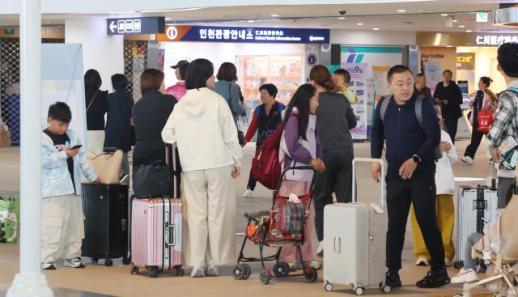 Over 220,000 Chinese and Japanese Tourists Visit South Korea During Super Holiday During the overlapping 'Super Holiday' of China's Labor Day and Japan's Golden Week, South Korea welcomed approximately 220,000 tourists from both countries, surpassing government forecasts. This success is attributed to targeted regional marketing strategies that align with the trend of short-distance travel. According to the Ministry of Culture, Sports and Tourism and the Korea Tourism Organization, about 112,000 Japanese and 108,000 Chinese tourists visited South Korea during this period. This total exceeds initial estimates of 180,000 to 200,000. Compared to last year, Japanese visitors increased by 52.9% and Chinese visitors by 29.9%, resulting in an overall rise of over 40%. The first quarter of this year also saw record-high arrivals, with 940,000 Japanese and 1.42 million Chinese tourists. Targeting Families in Japan and Regional Tourism in China The government implemented consumer-focused marketing strategies during the holiday. For the Japanese market, it highlighted the geographical advantage of short flight times. Discounts on flights and ferry fares were offered to residents of the Kyushu region, and baggage allowances were increased to ease travel for families with young children. Conversely, efforts were made to alleviate the concentration of tourists in the capital region from China by promoting regional tourism. Collaborating with national airlines, the government aimed to distribute arrivals from southern regions like Guangzhou to local airports such as Gimhae and Daegu. A special welcome booth was set up at Gimhae International Airport to promote tourism infrastructure in four southeastern cities: Busan, Ulsan, Pohang, and Changwon, encouraging longer stays and spending. Plans to Sustain Tourism Growth The Ministry aims to maintain the upward trend in inbound tourism throughout the year. In Japan, new specialized travel packages will be developed that incorporate local traditional festivals, such as the Hamann Nakha Festival and Andong Seonyujul Fire Festival, reflecting the trend of visiting smaller cities. For Chinese tourists, the recently relaxed multiple visa issuance policy will be leveraged. The government plans to enhance promotions for tailored travel packages through major online travel platforms and social media channels. Minister of Culture, Sports and Tourism, Choi Hwi-young, stated, "We will fully support the tourism industry based on the proven competitiveness of K-tourism during this holiday. We will respond swiftly to global travel trends and develop precise strategies for target countries to sustain inbound demand through the end of the year."* This article has been translated by AI. 2026-05-08 09:06:38
 -
 SK hynix Launches Initiative to Restore Salmon Migration Path in South Korea SK hynix is partnering with government and local agencies to restore the aquatic ecosystem of the Namdaecheon River in Yangyang, Gangwon Province. The initiative aims to enhance its water-positive activities by returning more water to nature than the company uses in semiconductor production. On May 8, SK hynix announced its collaboration with the Ministry of Climate, Energy and Environment, Gangwon Special Self-Governing Province, Yangyang County, Korea Water Resources Corporation, and Korea Environment Corporation to improve aging weirs along the Namdaecheon. Water-positive refers to the concept where a company returns more water to the environment than it withdraws, contributing to sustainable water management. This initiative will be driven by government policies, public agency projects, and corporate participation. The Namdaecheon is known as a key salmon migration river in South Korea. However, outdated weirs and altered waterways have hindered salmon from reaching their spawning grounds. SK hynix plans to enhance the weirs from 2026 to 2037 to ensure adequate water flow and facilitate fish movement. The company believes this project will help restore the disrupted salmon migration path and improve the continuity of the aquatic ecosystem. It also aims to enhance the living environment for local residents and increase the ecological and tourism value of the Namdaecheon. Previously, SK hynix engaged in environmental improvement activities near its facilities, including a partnership with Cheongju City for the 'One Company, One Stream Love Movement,' focusing on cleaning a 2-kilometer stretch of the Gagyeong Stream. To reduce water usage in semiconductor processes, SK hynix has implemented a wastewater recycling system and set a goal to recycle an average of 138,000 tons of water daily by 2030. Lee Byeong-gi, Chief Production Officer at SK hynix, stated, "This project will demonstrate how corporate water-positive activities can serve as a tool for mutual growth with local communities and the natural environment. SK hynix will continue its sincere efforts to protect water resources."* This article has been translated by AI. 2026-05-08 09:02:54