
Journalist

Lee Hugh
-
 Seoul Apartment Jeonse Listings Plunge, With Sharpest Drop in Outer Districts Jeonse listings for Seoul apartments have fallen by nearly 40% over the past year, with outer districts seeing the steepest declines, according to market data. Analysts said further tightening of rules targeting nonresident owners of a single home could prompt more landlords to move in or pull rentals from the market, worsening housing insecurity for lower-income tenants. As of May 7, the real estate big-data platform Asil counted 16,052 jeonse listings in Seoul, down 38.9% from 26,247 on May 6 last year. The drop was far sharper on the city’s outskirts. Jungnang-gu fell to 67 listings from 407, an 83.6% plunge, the largest decline among districts. Seongbuk-gu dropped 82.6% to 179 from 1,025. Gwanak-gu fell 80.3% to 100 from 507, and Nowon-gu fell 80.0% to 210 from 1,046. Guro-gu (498 to 118, down 76.4%), Geumcheon-gu (249 to 63, down 74.7%) and Gangbuk-gu (228 to 58, down 74.6%) also posted declines of more than 70%. By contrast, Seoul’s three affluent southern districts recorded declines in the teens. Songpa-gu fell 11.4% to 1,781 from 2,010, the smallest drop in Seoul. Seocho-gu fell 14.9% to 4,886 from 5,741, and Gangnam-gu fell 19.4% to 4,192 from 5,196. The pullback has been linked to the government’s Oct. 15 measures last year, which expanded land-transaction permit zones across Seoul and parts of the greater capital area and tightened owner-occupancy requirements and lending limits. Some investment money also shifted to less-regulated areas or to regions outside the capital, the report said. According to the Korea Real Estate Board, the share of Seoul apartment purchases by nonlocal buyers averaged 18.81% over the four months from November, immediately after the Oct. 15 measures, through February, the lowest level in about nine years. The report cited tougher conditions for so-called gap investment, along with the end of a temporary suspension of heavier capital gains taxes for multi-home owners and limits on loan extensions, as additional factors reducing rental supply. Pressure on jeonse prices is rising. Seoul Housing Information Plaza data showed Gangbuk-gu had the highest jeonse-to-price ratio at 67.9%, followed by Jungnang-gu at 67.5%, Gwanak-gu at 66.3%, and Eunpyeong-gu and Geumcheon-gu at 66.1% each. The ratio compares jeonse deposits with sale prices; it is often viewed as a threshold that can start to push up home prices when it exceeds 60%. With the government signaling tougher rules for nonresident one-home owners and additional lending curbs, the market is increasingly concerned that instability in the jeonse market could outweigh protections for end users. If pressure rises on nonresident owners who keep homes with jeonse tenants, landlords may be more likely to switch to living in the home or withdraw it from the rental market. Park Won-gap, senior real estate specialist at KB Kookmin Bank, said outer districts such as Jungnang-gu and Geumcheon-gu are already above 60%. “We need to watch whether the price stimulus that began in mid- to low-priced apartments spreads to Seoul’s high-priced areas,” he said. Park added that higher holding taxes could stabilize the sales market, but the burden could be passed on to tenants through higher rents. “Policies are needed to guide a soft landing so it does not spill over into housing insecurity for low-income households without homes,” he said.* This article has been translated by AI. 2026-05-07 15:24:18
 -
 Tesla extends lead over BMW to top imported car market for third consecutive month SEOUL, May 7 (AJP) - American electric vehicle maker Tesla continued its dominance in South Korea's imported car market in April, selling more than 10,000 vehicles to retain the top spot for a third consecutive month after overtaking Germany's BMW for the first time in February. According to the Korea Automobile Importers & Distributors Association (KAIDA), Tesla led with 13,190 registrations, followed by BMW with 6,658 and Mercedes-Benz with 4,796. China's BYD ranked fourth with 2,023 registrations, while Sweden's Volvo placed fifth with 1,105. Lexus (1,079), Audi (918), Toyota (829), Mini (696) and Porsche (679) rounded out the top 10. Among April's best-selling models were Tesla's Model Y Premium with 9,328 units, and the Model 3 Premium Long Range with 1,481 units. The number of registered foreign passenger vehicles stood at 33,993 in April, up 58.1 percent from 21,495 a year earlier and 0.1 percent from 33,970 in March, bringing the cumulative total for the first four months of this year to 116,113, up 41.3 percent from 82,152 in the same period last year. Electric vehicles accounted for more than half of the total with 18,319 units, followed by hybrids with 12,777, gasoline vehicles with 2,734 and diesel vehicles with 163. Individuals purchased 22,089 units, compared with 11,904 bought by companies. Among individual motorists, those in Gyeonggi Province led with 7,427 units, followed by Seoul with 4,075 and Incheon with 1,732. For corporate purchases, the country's second-largest city of Busan led with 3,798, followed by Incheon with 3,458 and South Gyeongsang Province, which includes several industrial cities, with 2,067. "With some ups and downs among brands, sales remain steady due to strong sales of electric vehicles along with new releases by some automakers," said KAIDA's vice chairman Jeong Yun-young. 2026-05-07 15:17:28
 -
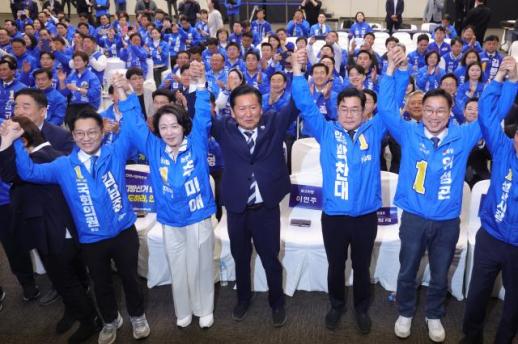 South Korea’s Democratic Party Vows June 3 Local Election Win to Back Lee Jae-myung Government The Democratic Party on May 7 reaffirmed its determination to win the June 3 local elections, saying victory is needed to “end the insurrection” and ensure the success of the Lee Jae-myung government. The party also urged its candidates for Incheon mayor, Gyeonggi governor and Jeju governor — Park Chan-dae, Choo Mi-ae and Wi Seong-gon — to give their all. At a nomination rally for Incheon, Gyeonggi and Jeju held at KINTEX in Goyang, the party said voters should deliver a stern judgment against the People Power Party, accusing it of repeatedly making “Yoon Again” nominations, and said an overwhelming win would help support the Lee government’s state affairs. Party leader Jung Cheong-rae said, “Winning the local elections and ensuring the success of the Lee Jae-myung government is the spirit of the times and a mission for those living in 2026.” He added, “The embers of the insurrection are still stirring in places,” and said the People Power Party, which he said has not yet reflected on the insurrection, would face “the people’s stern judgment.” Jung said the election would be “another challenge” to fully realize what he called President Lee’s agenda of locally led growth, balanced national development and the Lee government’s governing philosophy. He said he hoped the party’s pledge to build a country where people “live well across the board” would be reflected in an election victory. Jung called for strong support for the party’s candidates, saying, “With Choo, we can trust Gyeonggi’s future,” and that Park would reopen Incheon’s “growth potential,” while Wi would make Jeju’s future “brighter than ever.” He added, “The Democratic Party will also mobilize all its capabilities to support the candidates. I ask you to win without fail.” Choo responded, “Only a desperate mindset and effort can protect democracy and subdue the insurrection forces,” adding that winning in border areas would be “more valuable” than any other victory. Park said he was campaigning with the resolve to “win without fail” and show the Lee government’s philosophy and competence in Incheon. “With that sense of responsibility and expectation of victory, we will win,” he said. Wi said, “Today we came here for the Lee Jae-myung government and a Republic of Korea where everyone is happy,” and urged a united push to win the local elections and build a country where “everyone lives well.” The candidates adopted a resolution calling for: uniting as “one team” by region to promote national unity; acting as responsible ruling-party candidates to drive the Lee government’s success and national development; and winning a landslide in the local elections to support state affairs by following “the people’s command.” Also attending were by-election candidates Lee Kwang-jae (Hanam-gap), Kim Yong-nam (Pyeongtaek-eul), Kim Nam-kuk (Ansan-gap), Song Young-gil (Yeonsu-gap) and Kim Nam-jun (Gyeyang-eul). Song and Kim Nam-jun reiterated their determination to win, saying they would work so “everyone can win” as Democratic Party candidates, and, “Kim Nam-jun will keep Lee Jae-myung’s promise.”* This article has been translated by AI. 2026-05-07 15:16:57
 -
 About 50,000 BTS Fans Crowd Mexico’s National Palace After Presidential Invite BTS, which is scheduled to hold comeback concerts at Mexico City’s GNP Stadium on the 7th, 9th and 10th, met with Mexico President Claudia Sheinbaum. News that BTS had been invited to the National Palace to pay a courtesy call drew an estimated 50,000 fans to the Zocalo plaza outside the palace. According to Yonhap, Sheinbaum appeared with BTS on a palace balcony and greeted the crowd, which erupted in cheers. The BTS members waved back and filmed the packed plaza on their phones, the report said. Leader RM told fans, “Nice to meet you, and thank you so much for inviting us,” adding, “I’m looking forward to tomorrow’s show. Let’s have a fun time. I love you.” V, speaking in Spanish, said, “Mexico fans, I really missed you so much. The energy here is unbelievably amazing,” prompting another roar from the crowd. Earlier, Sheinbaum posted on her official social media: “We welcome BTS, one of the groups most loved by Mexican youth. Their music and values bring Mexico and Korea together.” As the members spoke to fans, Sheinbaum applauded. When V said, “We’ll come back next year,” she replied, “I already said you must come back next year.” BTS’ three-day comeback run in Mexico is sold out. The group is set to continue its global tour in 34 cities across Japan, Europe, Central and South America, and Asia.* This article has been translated by AI. 2026-05-07 15:15:16
 -
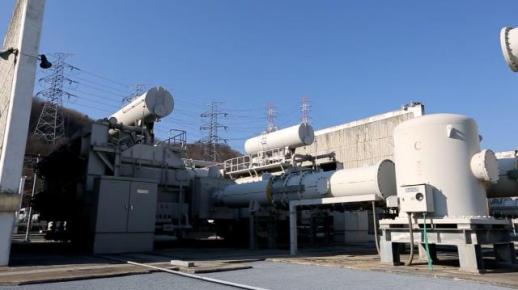 HOT STOCK: Hyosung Heavy takes breather after 50% near-nonstop rally SEOUL, May 07 (AJP) - Hyosung Heavy Industries, a Seoul-based transformer and switchgear maker, has emerged as one of the KOSPI’s standout AI infrastructure plays outside chip behemoths, with its shares soaring more than eightfold from a year earlier. The stock rose as high as 4,742,000 won ($3,267) on Thursday before easing to 4,558,000 won as of 2 p.m. Hyosung Heavy has gained nearly 50 percent in just two weeks from 2,990,000 won on April 16, and more than eightfold from 516,000 won a year ago. Its market capitalization has swelled to 42.49 trillion won, ranking No. 11 on the KOSPI. The rally has been driven largely by expectations for surging power demand from artificial intelligence. Training and operating large language models require data centers that consume far more electricity than conventional facilities, adding pressure to aging grids and prompting utilities to place massive orders for high-voltage transformers, circuit breakers and substation equipment — Hyosung Heavy’s core products. The shortage is most acute in North America, where waiting times for large transformers now range from 2.3 to 2.5 years, according to Wood Mackenzie’s second-quarter 2025 survey. Hyosung Heavy has become one of the clearest beneficiaries of the bottleneck. The company posted record annual results last year, with sales of 5.97 trillion won and operating profit of 747 billion won. North American revenue alone surpassed 1 trillion won, while its order backlog jumped 34 percent on-year to 11.9 trillion won, giving analysts confidence that earnings momentum can extend into next year. But the speed of the rally has raised valuation questions. The stock trades at roughly 80 times trailing earnings and 53 times forward earnings, well above the average for most global power-equipment peers. Brokerages remain broadly constructive on the long-term outlook. Naver Finance’s consensus 12-month target price stands at 4,620,000 won with a “buy” rating, implying analysts still see room for further upside. Trading volume reached more than 39,000 shares by mid-morning, heavy for a stock at this price level, with turnover topping 176.5 billion won. For now, the bull case remains intact — as long as hyperscalers keep pouring capital into AI data centers and U.S. utilities continue ordering transformers. 2026-05-07 14:58:09
 -
 Korea Technology Finance Corp. Named First Public-Sector AI Ethics Compliance Body Korea Technology Finance Corp. said it signed an agreement with the National Information Society Agency, or NIA, to promote a trusted public-sector shift to artificial intelligence. The agency said it was also designated the first public institution to be recognized as an “AI ethics compliance organization,” a status that acknowledges its AI use. 7일 기보에 따르면 the agreement was pursued under the “Framework Act on Artificial Intelligence,” which took effect in January, as KOTEC moved to build an AI ethics implementation system in advance and spread a trust-based AI culture to small and venture businesses. Under the agreement, the two organizations will jointly work on AI ethics education and consulting for small and venture firms; publicity and awareness efforts; identifying best practices in public-sector AI transformation cooperation; complying with AI ethics guidelines and establishing AI adoption processes; and running AI ethics training for employees. KOTEC, a technology finance institution under the Ministry of SMEs and Startups, supports innovation and growth among small and venture businesses and has expanded AI use across its work, including technology evaluation, guarantees and corporate support. NIA has operated the AI ethics compliance designation for private-sector organizations since 2024. KOTEC said selection requires at least 70% of employees to complete AI ethics training and for AI ethics principles to be codified. A KOTEC official said the agency has operated its own AI ethics standards since 2024 and met the designation requirements after conducting employee training last month. KOTEC said it will work with NIA’s AI ethics policy and training expertise to systematically manage key risks that can arise in AI use, including bias, personal data protection, explainability and accountability, and to strengthen internal compliance. It said it aims to set an example for public-sector AI transformation as an AI ethics compliance organization. The agency also said it plans to use its support network for small and venture businesses to expand AI ethics education and consulting in the field. Park Ju-seon, KOTEC executive director, said the designation would be used to advance its ethics framework and pursue a responsible AI transition across the agency’s operations.* This article has been translated by AI. 2026-05-07 14:58:08
 -
 ADOR Says Talks on NewJeans’ Minji Returning Are ‘Moving in a Positive Direction’ Speculation has grown that NewJeans member Minji could resume activities, and her agency, ADOR, said discussions are continuing “in a positive direction.” ADOR told this outlet on the 7th that it is “continuing internal discussions” regarding Minji’s future activities. The company said it cannot share details at this time, adding, “Please understand that talks are generally continuing in a positive direction.” Online, attention increased after reports said Minji made a surprise visit to a birthday-themed cafe organized by fans. Witnesses said she handed out handwritten letters and cookies to fans. Later, NewJeans’ official social media accounts posted several photos showing Minji making cookies with the message “HAPPY MINJI DAY,” and a celebratory image also appeared on the main screen of the group’s Weverse fan platform account. After ADOR marked her birthday through official channels, some fans predicted her return to activities could be near. NewJeans has been in a dispute with its agency. In November last year, Hanni, Haerin and Hyein returned to ADOR and have continued activities, but Minji’s status had not been finalized. Danielle left the group and has continued a legal dispute with ADOR. If Minji confirms her return through talks with the agency, it could speed up efforts to normalize the group’s activities.* This article has been translated by AI. 2026-05-07 14:57:17
 -
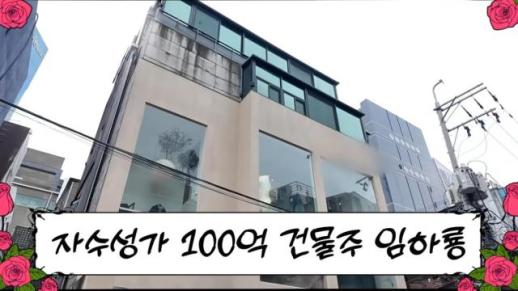 Comedian-Actor Im Ha-ryong’s Cheongdam-dong Property Grows From $500,000 Home to 10 Billion-Won Building Comedian and actor Im Ha-ryong’s real estate story has drawn wide attention online. A video posted April 30 on the YouTube channel 'Sunpung Sunwoo Yong-yeo' titled “First reveal of Sunwoo Yong-yeo’s 40-year friend Im Ha-ryong’s 10 billion-won Cheongdam-dong building” sparked strong reactions. In the video, Im said he bought a two-story detached home in Seoul’s Cheongdam-dong in 1991 for about 500 million won, including taxes. He said that in the 2000s he sold an apartment in Mok-dong and put about 600 million won into expanding the property into a five-story building. Im said the purchase was not solely for investment. “I started it to set up a cafe for my wife and live together,” he said, adding that he planned to place his wife’s cafe on the first floor and live upstairs. The building is now said to be worth in the 10 billion-won range. By simple calculation, that is more than nine times the roughly 1.1 billion won he said he initially put in, combining the purchase price and construction costs. His approach to rent also drew notice. Im said he still charges the same rent as “26 years ago,” raising only part of the first-floor rent. “Celebrities can’t raise it carelessly. You could get criticized,” he added. Real estate industry officials view the case as an example of long-term holding in a prime Gangnam-area location. They said areas like Cheongdam-dong, where both retail activity and residential demand have strengthened, tend to become more scarce over time. One industry official said it is often treated as a celebrity building investment story, but “in reality it is closer to a long-term holding case that stayed put for more than 30 years.”* This article has been translated by AI. 2026-05-07 14:55:07
 -
 Samsung Electronics CEOs Urge Staff to Avoid Loss of Competitiveness Ahead of Union Strike Samsung Electronics Vice Chairman Jun Young-hyun and President Roh Tae-moon, the company’s co-CEOs, issued a formal message to employees as the labor union prepares for a general strike. Samsung Electronics said the two CEOs posted the statement on the company intranet on the 7th, outlining the status of wage talks. They said the company has negotiated with the union since last December and has presented alternatives after considering employee interests, the company’s future competitiveness and business conditions, while seeking to broaden mutual understanding through dialogue. They said they regretted that the sides have not yet reached a final agreement and acknowledged that prolonged negotiations have likely left many employees concerned and frustrated. The CEOs also urged staff to help prevent damage to the company’s future competitiveness. “In a severe global business environment, all management, including myself, will approach this with a responsible attitude so we do not lose future competitiveness,” they wrote, asking employees to do their best in their respective roles. They added that the company would continue discussions with an open attitude and work toward an outcome employees can support. Samsung and the union have negotiated since last December over 2026 wages, but talks were suspended after failing to narrow differences over performance-bonus standards. The union plans to begin an 18-day general strike starting on the 21st. With the strike about 14 days away, concerns have grown that the dispute could spill into a broader economic issue. If a strike occurs, Samsung’s losses are estimated at about 30 trillion won. Samsung Electronics board chairman Shin Je-yoon wrote on the company intranet on the 5th that a strike would hurt the company’s business competitiveness, erode customer trust and cause losses for shareholders and investors, with serious negative effects on the national economy. He said it could reduce exports by tens of billions of dollars and cut tax revenue by tens of trillions of won, while triggering a weaker currency and lowering GDP. * This article has been translated by AI. 2026-05-07 14:53:39
 -
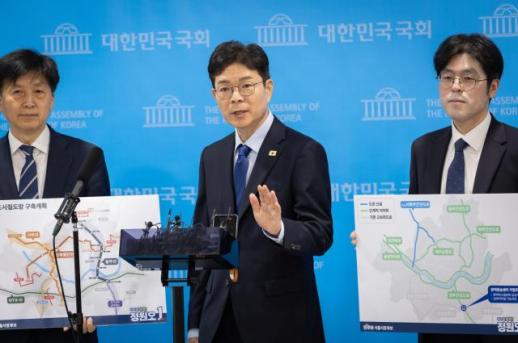 Seoul mayoral candidates clash on transit: card merger vs. free bus fares for 70+ Jung Won-oh, the Democratic Party candidate for Seoul mayor, on May 7 proposed expanding rail service in northern Seoul and merging the city’s Climate Companion Card with the government’s K-Pass. Rival candidate Oh Se-hoon of the People Power Party said savings from a merger should be used to subsidize bus fares for residents 70 and older. Jung announced the plan at the National Assembly press center as part of his “30-minute commute” pledge. His proposals include building a new Dongbu Line linking Suyu-dong in northern Seoul with the Sports Complex in Gangnam, expanding rail networks in the north, creating a grid-style rail system across Seoul, and setting up an express-bus transfer hub at the Man-nam Square area in Yangjae-dong. “We will connect Seoul’s rail lines more tightly and link roads without bottlenecks, tying Gangbuk and Gangnam together and starting a transportation revolution toward a 30-minute commute city,” Jung said. He also pledged to create a nationwide transit card by integrating Seoul’s Climate Companion Card with the government’s “Everyone’s Card” (K-Pass), under the name “K-Everyone’s Climate Companion Card,” to reduce the burden of public transportation costs. Jung said the existing Climate Companion Card benefits would be maintained while expanding the usable area nationwide, adding that he would build a system in which benefits increase with heavier use. Oh raised the issue of merging the Climate Companion Card while presenting housing pledges earlier May 7, outlining how he would use the savings. Oh, who introduced the Climate Companion Card during his time as Seoul mayor, said the Lee Jae-myung government rolled out a card using the same system, forcing residents to weigh which card offers better value. After reviewing whether the two needed to coexist, he said, he concluded they should be integrated to spare residents that inconvenience. Oh said a merger would cut Seoul’s budget and free up 70 billion won to as much as more than 100 billion won, which he plans to use to support bus fares for seniors 70 and older. He said he would announce details soon.* This article has been translated by AI. 2026-05-07 14:52:29