
Journalist

Lee Jaeho
-
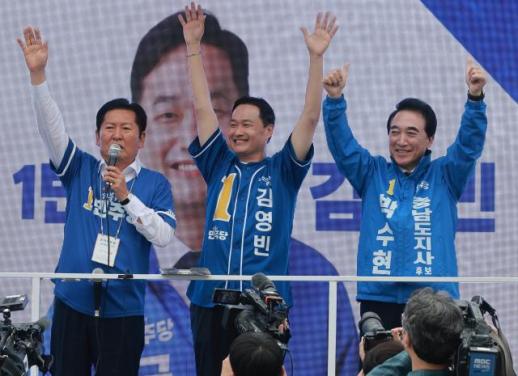 Jung Cheong-rae Supports Park Soo-hyun and Kim Young-bin in Chungnam Elections Jung Cheong-rae, the chief election officer of the Democratic Party, visited Chungnam on May 21, the first day of the official campaign for the June 3 local elections and National Assembly by-elections. He urged voters to choose candidates who can lead legislation and budget management, specifically supporting Park Soo-hyun for Chungnam governor and Kim Young-bin for the Gongju, Buyeo, and Cheongyang National Assembly seat. At a joint campaign rally held in Gongju, Jung stated, "For Chungnam to prosper, the government and local leaders must work in harmony." He praised Park, saying, "Among the lawmakers I have met, he is the most capable and attentive. He always carries a notebook, as if he has a tape recorder running, and he will consider everything the residents of Chungnam need." Jung also encouraged support for Kim, stating, "Help Kim continue Park's legacy in his district. If supporters of President Lee Jae-myung turn out to vote, both Park and Kim will win overwhelmingly." He added, "A harmonious household leads to effective management, so please assist in fostering cooperation between the governor and the National Assembly member for the development of Chungnam." Furthermore, he highlighted the progress made since overcoming the December 3 emergency martial law, asserting that South Korea is becoming increasingly normalized. He noted that during the Yoon Suk-yeol administration, the KOSPI index did not even reach 3,000, but it has more than doubled in the year since Lee Jae-myung's government took office. Jung remarked, "This indicates that the world recognizes South Korea, and it is evidence of restored national trust and democracy."* This article has been translated by AI. 2026-05-21 15:57:36
 -
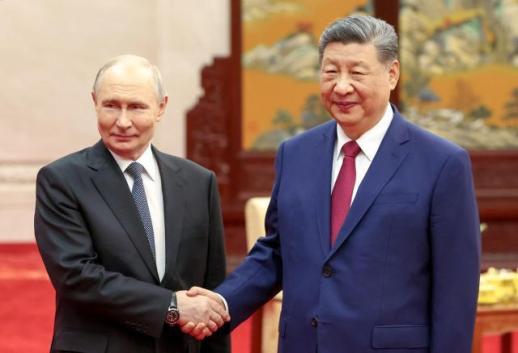 China and Russia Formalize Joint Front Against U.S. with Enhanced Military and Economic Cooperation China and Russia have agreed to expand their joint front against the U.S.-led international order across military, economic, and technological sectors. The two nations extended their existing friendship treaty and criticized U.S. missile defense plans and sanctions against Russia. They also aligned their positions on issues concerning Taiwan, the Ukraine war, and Iran, while agreeing to enhance joint military exercises and naval and air patrols. On May 20, Chinese President Xi Jinping and Russian President Vladimir Putin held a summit in Beijing, where they signed a joint statement on strengthening comprehensive strategic cooperation and deepening friendly ties. Putin visited China for two days starting May 19, and both leaders attended the opening ceremony of the 2026-2027 'China-Russia Year of Education.' Security Cooperation Aimed at the U.S. The core focus of the China-Russia partnership is its long-term sustainability. Both countries emphasized that this year marks the 30th anniversary of their strategic partnership and the 25th anniversary of the 'China-Russia Treaty of Good-Neighborliness and Friendly Cooperation.' They agreed to extend the treaty, stating that their relationship is characterized by non-alignment, non-confrontation, and not targeting third countries. However, the statement included language that appeared directed at the U.S. and the West regarding security, economic, and regional issues. The language targeting the U.S. was particularly strong. The statement declared opposition to “hegemonism and unilateralism,” as well as to unilateral and secondary sanctions, discriminatory tariffs, and restrictive measures. It also criticized actions that freeze, seize, or divert the national assets of other countries, interpreted as a reference to Western moves to use frozen Russian assets for aid to Ukraine and the U.S.-led sanctions regime. In the security domain, the statement directly criticized the U.S. 'Golden Dome' missile defense initiative. China and Russia argued that this plan, which combines ground and space-based defense systems, undermines strategic balance and increases the risk of an arms race in space. They effectively defined the U.S.-led next-generation missile defense system as a common security threat to both nations. Military cooperation was also specifically outlined. The two countries agreed to enhance mutual trust in military affairs and improve their cooperation framework. They committed to expanding joint exercises and naval and air patrols, as well as strengthening security coordination within bilateral and multilateral frameworks. Unified Stance on Taiwan, Ukraine, and Middle East Issues On the Taiwan issue, Russia fully supported China's position, reaffirming its commitment to the One China principle and stating that “Taiwan is an inseparable part of Chinese territory.” Russia opposed any form of “Taiwan independence” and expressed support for China's national unification efforts. China, in turn, affirmed its support for Russia's national security, sovereignty, and territorial integrity. Regarding the Ukraine war, the statement echoed Russian claims, asserting that the “root causes of the Ukraine crisis must be addressed” and emphasizing the need for “long-term and sustainable peace.” Russia praised China for taking an “objective and fair stance” on the Ukraine issue. The joint statement also addressed Northeast Asian issues, criticizing NATO's expansion into the Asia-Pacific and the AUKUS security pact involving the U.S., the U.K., and Australia. On the Korean Peninsula, they opposed diplomatic isolation, economic sanctions, and military pressure on North Korea, calling for a political and diplomatic resolution. In the Middle East, the statement directly criticized the U.S. and Israel, stating that “the military attacks by the U.S. and Israel against Iran violate international law and fundamental principles of international relations, undermining stability in the Middle East.” They called for a sustainable ceasefire and humanitarian access in Gaza and emphasized that the Palestinian issue should be resolved based on a two-state solution. Expanding Economic Cooperation in Response to Sanctions; Gas Pipeline Agreement Fails In the economic sphere, the focus was on responding to sanctions and stabilizing supply chains. The two nations agreed to expand cooperation in sectors such as automotive, shipping, civil aviation, digital economy, artificial intelligence, e-commerce, and mineral development. They also committed to increasing transactions in their national currencies and enhancing cooperation in banking and capital markets. Energy cooperation was also a major agenda item. Both countries agreed to strengthen collaboration in oil, gas, coal, civilian nuclear power, and renewable energy, ensuring stable operation of energy transport networks. However, the anticipated major gas pipeline project, 'Power of Siberia 2,' did not reach a final agreement. The Kremlin stated that there was a broad consensus, but key conditions such as pricing and timelines remain unresolved. Norms for AI and space cooperation were also included in their strategic partnership. They stated their opposition to using AI as a geopolitical tool for maintaining hegemony. Russia welcomed China's proposal to establish a global AI cooperation organization. In the space sector, they agreed to promote international lunar research bases and deep space exploration cooperation, as well as enhance the integration of the BeiDou and GLONASS satellite navigation systems.* This article has been translated by AI. 2026-05-21 15:55:46
 -
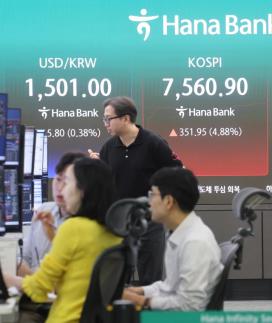 Korean capital return to home stock market a trickle versus Wall Street rush SEOUL, May 21 (AJP) - A South Korean government account designed to lure retail capital home from overseas markets has drawn nearly 2 trillion won ($1.33 billion) in its first two months, with investors cashing out of Nvidia and Tesla to buy Samsung Electronics and SK hynix, according to the Korea Financial Investment Association Thursday. Impressive in isolation, the return however is paltry against the roughly 300 trillion won Koreans now hold in Wall Street, a record set this month despite migration to Seoul. The Reshoring Investment Account, or RIA, held a cumulative 1.94 trillion won across 242,856 accounts as of Tuesday, up about 1.02 trillion won a month earlier, the association said. The account was introduced on March 23 as part of a package of currency-stabilization measures, offering investors who sell foreign stocks and reinvest at home a temporary exemption from the 22 percent capital gains tax on overseas equities, capped at 50 million won in sale proceeds per person. The U.S. dollar hovering above 1,500 won suggests the account scheme has helped little to bolster the local currency. The flows show a clear rotation out of U.S. big tech and into Korean semiconductors. From the program's launch through May 8, RIA users sold the most Nvidia, at 180.1 billion won, and Tesla, at 50.4 billion won, along with leveraged products such as the Direxion Daily Semiconductor Bull 3X fund. Their favorites were Samsung Electronics at 78 billion won and SK hynix at 66.7 billion won, with index funds such as the KODEX 200 also among the top buys. Of the total balance, 1.21 trillion won has moved into domestic assets. The scale relative to overseas holdings underscores how early the shift remains. When the account held about 1.02 trillion won in late April, that represented roughly 0.38 percent of the 260 trillion won Koreans then held in U.S. stocks, and the average account balance of 6.36 million won was just 12.7 percent of the per-person cap. By mid-May, total Korean holdings of U.S. stocks had climbed to a record $200.3 billion, or about 300 trillion won, as AI and chip strength drew fresh money back to Wall Street even as RIA channeled some of it home. Older investors have led the inflows, reflecting larger accumulated overseas portfolios and bigger tax bills to shelter. As of May 8, Koreans in their 40s made up 31 percent of RIA holders and those in their 50s 26 percent, together a majority, followed by investors in their 30s at 21 percent and those 60 and older at 12 percent. By balance, investors in their 50s held 32 percent and those in their 40s 27 percent, nearly 60 percent of the total between them. The benchmark KOSPI has shot up nearly 80 percent this year, while the U.S. dollar rose nearly 5 percent to 1,506.8 won as of Wednesday from December-end. Korean retail net purchases of U.S. stocks had fallen to about $400 million in the first 20 days of March, roughly one-tenth of January's $5 billion, before reversing again in May. The incentive however loses appeal from next month. The capital gains deduction is 100 percent through the end of May, but they fall to to 80 percent from June through July and 50 percent from August through year-end, after which the program is set to expire. Because overseas trades carry a gap between execution and settlement, investors seeking the full exemption must complete settlement by the end of May. Only stocks held as of December 23, 2025 qualify, and proceeds must remain in domestic stocks, equity funds or deposits within the account for one year after settlement to avoid a clawback of the benefit. "The Reshoring Investment Account is significant in that it created an occasion for liquidity that had stayed in overseas markets to flow into the domestic capital market," said Han Jae-young, a department head at the association. He said the body would continue working with the industry to develop attractive domestic products so the account can serve as a channel for currency stability and productive finance. 2026-05-21 15:55:33
 -
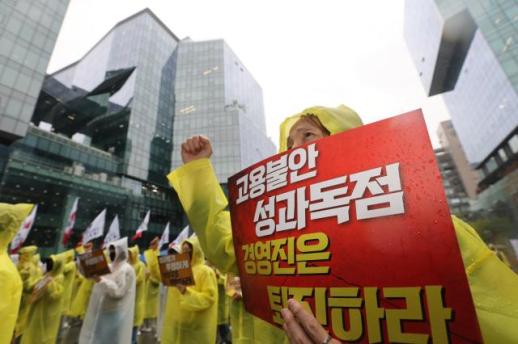 Kakao Union Votes for Strike Amid Ongoing Labor Dispute The ongoing labor dispute between Kakao and its employees has escalated, putting the company at risk of its first headquarters strike since its founding. The Kakao Union, part of the Korean Chemical Fiber Food Industry Workers' Union, has approved a strike vote, increasing pressure on the company as the second mediation session with the Gyeonggi Provincial Labor Relations Commission is set for May 27. According to the IT industry on May 21, Kakao's headquarters, along with Kakao Pay, Kakao Entertainment, DK Tech, and XL Games, held a "2026 Collective Bargaining Victory Rally" at Seongnam's Pangyo Station on May 20, where members voted in favor of a strike. The two sides extended the mediation period until May 27 after failing to reach an agreement during the first mediation session on May 18. If the second mediation also fails, the Kakao headquarters union will secure the right to strike. Some subsidiary unions have already obtained strike rights due to a decision to halt mediation. The union and management remain at an impasse over performance compensation and job security. The union argues that employees have significantly contributed to Kakao's profitability and deserve fair distribution of rewards. Meanwhile, the company is cautious about expanding compensation due to uncertainties surrounding increased investments in artificial intelligence (AI) and business restructuring. During the rally, the Kakao Union presented joint demands including management reform and accountability, job security and community safety nets, fair performance rewards and profit distribution, and the establishment of universal labor conditions and welfare systems. Industry observers note that the current actions of the Kakao Union carry more weight than last year's events. Last year, the Kakao Mobility Union announced a phased strike after wage negotiations broke down, conducting a two-hour partial strike, followed by discussions of a four-hour partial strike and a full strike. However, no further actions materialized during the negotiations. This time, the involvement of Kakao's headquarters and major subsidiaries is seen as having greater scale and impact. The headquarters oversees key operations, including KakaoTalk, advertising, commerce, and AI strategies, drawing significant industry attention. Should a strike occur, it could affect the stability of major services like KakaoTalk and the timeline for AI project developments. Unlike manufacturing, the likelihood of an immediate service disruption due to a strike at an IT company like Kakao is considered low. The platform operates on automated server systems and a continuous response organization, making it unlikely that a short-term strike would immediately paralyze services like KakaoTalk. However, prolonged labor disputes could hinder the development of new services and project timelines. Kakao is currently transitioning KakaoTalk from a simple messaging app to an AI agent platform that integrates conversation, search, recommendations, and payments. A prolonged gap in development personnel could delay the rollout of new AI features and service enhancements. Similarly, while the likelihood of a strike halting Kakao Pay's payment and remittance services is low, it could create pressures regarding operational stability and external trust management. Kakao Enterprise and DK Tech, which handle cloud and AI-based B2B operations and internal development and support, respectively, may also face impacts on technical support, maintenance, and new project implementations if the strike extends. Kakao has stated that it is focused on labor negotiations. A company representative said, "Since both sides agreed to extend the mediation period on May 18, we will continue to strive for a smooth agreement during the remaining time."* This article has been translated by AI. 2026-05-21 15:53:02
 -
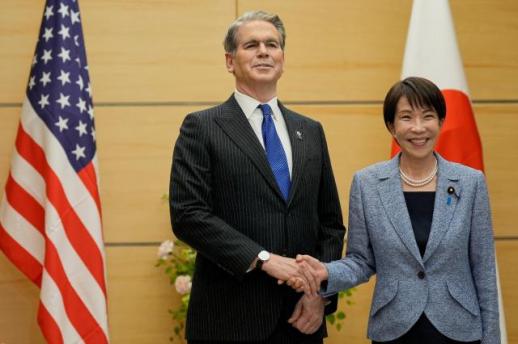 U.S. Treasury Secretary Bessent Supports BOJ's June Rate Hike Scott Bessent, the U.S. Treasury Secretary, expressed support for the Bank of Japan's (BOJ) policy decisions following a meeting with BOJ Governor Kazuo Ueda, drawing attention to the possibility of an additional rate hike in June. As the yen weakens and Japanese long-term interest rates rise, analysts suggest that U.S. remarks may exert indirect pressure on the cautious Japanese government regarding rate increases. The Nihon Keizai Shimbun reported that Ueda met with Bessent in Paris on May 19, marking a rare direct meeting between the BOJ governor and the U.S. Treasury Secretary. The discussions reportedly included financial policy, adding significance to the encounter. Ueda described the meeting as an opportunity that arose, without disclosing specific details of their conversation. He noted that he has known Bessent for a long time and has met him whenever possible. In an interview with Reuters on the day of their meeting, Bessent stated, "I am confident that if given the necessary conditions, he will implement excellent monetary policy." The Nihon Keizai Shimbun interpreted this statement as backing the BOJ's independent decision-making regarding interest rate hikes, considering the political pressures from the cautious Takaichi administration. After the meeting, Bessent posted on social media platform X, expressing that the fundamentals of the Japanese economy are solid and that excessive currency fluctuations are undesirable. The U.S. Treasury has previously indicated in its foreign exchange policy reports that ongoing rate hikes by the BOJ could help alleviate yen depreciation. This has led to speculation within the Japanese government that the U.S. may be indirectly urging the BOJ to raise rates again, according to the Nihon Keizai Shimbun. The Trump administration had pursued a weaker dollar, and an expanding yen depreciation could lead to a stronger dollar, potentially hindering that goal. The market also sees a high likelihood of a BOJ rate hike in June. As of May 20, the probability of a rate increase at the BOJ's monetary policy meeting was reported to be 80%. Mari Iwashita, chief interest rate strategist at Nomura Securities, noted, "We can confirm that Bessent continues to support the BOJ's rate hike stance." The yield on Japan's 10-year government bonds, a key indicator of long-term rates, reached 2.8% on May 18, marking its highest level in nearly 29 years. Concerns are growing in the market that the BOJ may fall behind the curve in responding to inflation and interest rate trends due to Japan's fiscal expansion and potential delays in rate hikes. Within the BOJ, support for rate hikes is gaining momentum. At the previous monetary policy meeting in April, three out of nine policy board members opposed keeping rates unchanged. Kazuyuki Masu, a board member who supported the freeze, expressed a positive attitude toward early rate hikes in a speech on May 14. If he supports a rate increase, the pro-hike faction within the BOJ could approach a majority. Bessent had previously visited Japan from May 11 to 13, meeting with Prime Minister Takaichi and Finance Minister Satsuki Katayama, but did not meet with Ueda at that time. The recent meeting in Paris has positioned the BOJ's June rate decision as a key variable in addressing yen depreciation.* This article has been translated by AI. 2026-05-21 15:49:32
 -
 Act Calls for Strict Review of Huons Lab Merger as New Form of Backdoor Listing Act, a platform for minority shareholders, has urged financial authorities to conduct a strict review of the merger between Huons Global and its unlisted subsidiary, Huons Lab, calling it a new form of backdoor listing. On May 21, Act announced the launch of a petition drive to gather signatures for a letter to the Financial Supervisory Service and the Korea Exchange. The merger involves Huons Global, which holds a 64.1% stake in the unlisted Huons Lab, absorbing the listed company Huons. Minority shareholders argue that Huons Lab, which possesses the key growth asset of the subcutaneous injection platform technology 'High Diffuse,' is being merged in a manner that avoids scrutiny typically applied to backdoor listings. They point out that while unlisted subsidiaries are usually subject to regulations regarding 'splitting listings,' merging with an already listed affiliate may exempt the transaction from backdoor listing reviews due to the lack of a change in the largest shareholder.Minority shareholders also contend that the estimated corporate value of Huons Lab at 129 billion won, as assessed by an external agency, does not reflect its future growth potential and is undervalued. Act's representative, Lee Sang-mok, stated, "This structure effectively resembles a subsidiary listing, and the exchange should conduct a qualitative review equivalent to that of a backdoor listing." He added, "If this method is allowed, it could set a precedent for holding companies to circumvent regulations on dual listings." The absence of shareholder protection measures has also been raised as a concern. Minority shareholders of Huons Global are unable to exercise their rights, such as the right to demand stock buybacks, because the merger does not require a vote at the holding company's general meeting. Investors reacted swiftly; from May 11, when rumors of the merger began circulating, to May 18, just before the announcement, Huons Global's stock price fell by 50%, while Huons' stock rose by 18.3%. Lee Sang-mok emphasized, "The method of merging an unlisted affiliate into a listed one exploits a loophole in the system, and we will do our utmost to ensure this matter does not set a bad precedent in the capital market." Meanwhile, Huons has stated that the merger aims to expand its pipeline of biopharmaceuticals being developed by Huons Lab, in addition to its existing synthetic drug candidates, thereby securing high-value future growth drivers. * This article has been translated by AI. 2026-05-21 15:48:22
 -
 HanAll Biopharma Hits Daily Limit Up Following Partner's Clinical Results HanAll Biopharma reached its daily trading limit after a surge in buying interest following the announcement of clinical results from its global partner. According to the Korea Exchange, as of 2:09 PM, HanAll Biopharma's stock rose by the maximum allowable limit of 11,700 won (29.85%) to trade at 50,900 won. Market analysts noted that Immunovant, HanAll Biopharma's partner, released interim clinical data for its drug candidate, imlifidase (IMVT-1402), for the treatment of refractory rheumatoid arthritis ahead of schedule. The efficacy results exceeded market expectations. Immunovant previously reported that, in a 16-week interim analysis involving patients with refractory rheumatoid arthritis, the ACR20 response rate was 72.7%, ACR50 was 54.5%, and ACR70 was 35.8%. ACR measures the improvement in rheumatoid arthritis symptoms, with ACR70 indicating the percentage of patients showing over 70% improvement. This significant symptom improvement in a patient group that had not responded to multiple existing therapies, including first-generation DMARDs, anti-TNF agents, and JAK inhibitors, has drawn attention. Reports also indicated that the treatment demonstrated overall good tolerability without new safety signals. Imlifidase works by inhibiting FcRn to reduce pathogenic autoantibodies and is currently undergoing global clinical trials for various autoimmune diseases, including myasthenia gravis, CIDP, Sjögren's syndrome, and Graves' disease, in addition to rheumatoid arthritis. Jung Yi-soo, a researcher at IBK Investment & Securities, stated, "Given that competing FcRn inhibitors have shown poor results in rheumatoid arthritis trials, this positive data could prompt a reevaluation of IMT-1402's potential as a Best-in-Class treatment."* This article has been translated by AI. 2026-05-21 15:45:49
 -
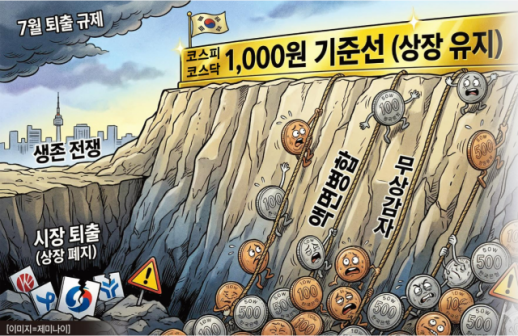 Despite Leaving Penny Stock Status, Companies Face Fresh Declines As financial authorities intensify efforts to expel poorly performing companies from the stock market, many firms are opting for stock consolidations. However, despite the numerical boost in stock prices from these consolidations, many companies are experiencing significant declines shortly after their re-listing, leading to concerns that simple consolidation is insufficient for long-term stability.According to the Korea Exchange, from May 18 to 20, ten companies listed on the KOSPI and 21 on the KOSDAQ underwent stock consolidations. All of these companies recorded declines compared to their consolidation reference prices. The average drop for KOSPI stocks was 14.7%, while KOSDAQ stocks saw an average decline of 15.86%. Most of these stocks plummeted on their first day of re-listing, with investor sentiment rapidly cooling.On the previous trading day (May 20), among the KOSPI stocks that underwent consolidation, Korea Electronics Holdings closed at 2,950 won, down 26.34% from its reference price. KEC fell by 29.92%, Bohae Brewery by 20.62%, and Enex by 14.95%. Ontide also dropped by 5.02%.Stock consolidation typically involves merging multiple shares to reduce the total number of shares and increase the price per share. Recently, companies have been using this strategy to shed their 'penny stock' image and avoid delisting requirements. For instance, consolidating five shares priced at 500 won each into one share raises the price to around 2,500 won.In February, the Financial Services Commission announced a reform plan aimed at the swift and strict delisting of underperforming companies. Starting July 1, any stock trading below 1,000 won for 30 consecutive trading days will be designated as a management stock. If it remains below that threshold for more than 45 out of the next 90 trading days, it will face delisting procedures.The recent declines in the stock prices of companies that have undergone consolidation suggest that fears of delisting persist. The Financial Services Commission is also tightening market capitalization criteria. From July, companies with a market capitalization below 30 billion won on the KOSPI and below 20 billion won on the KOSDAQ will be subject to delisting reviews. By January of next year, these thresholds will be further lowered to 50 billion won for KOSPI and 30 billion won for KOSDAQ companies. Many of the recently consolidated stocks have market capitalizations below 50 billion won.Market analysts note that stock consolidation alone does not enhance a company's value, and without improvements in performance or financial stability, regaining investor confidence will be challenging.A securities industry representative stated, "Stock consolidation is merely a technical adjustment of share quantity and price; it does not change a company's fundamentals. To alleviate delisting concerns, substantial changes such as performance improvement, financial stability, and shareholder return policies are essential."* This article has been translated by AI. 2026-05-21 15:43:14
 -
 Semtech Shares Surge 20% Amid Semiconductor Sector Optimism Semtech shares have seen a significant increase, rising nearly 20% as investor sentiment improves amid strong performances from major domestic semiconductor companies like Samsung Electronics and SK Hynix. As of 1:56 PM on May 21, Semtech's stock was trading at 124,000 won, up 24,000 won (19.69%) from the previous trading day, according to the Korea Exchange. On the same day, shares of Samsung Electronics and SK Hynix also experienced substantial gains, reflecting a broader buying trend across the semiconductor value chain. The positive sentiment followed the resolution of labor negotiations at Samsung Electronics, which improved investor confidence in the semiconductor sector. At that time, Samsung Electronics rose by 7.79%, while SK Hynix surged by 11.12%, indicating a widespread buying interest in major semiconductor stocks. Samsung Electronics and its labor union signed a tentative agreement on wage negotiations for 2026 just before a planned strike. Han Ji-young, an analyst at Kiwoom Securities, noted that "the easing of strike risks could lead to a favorable supply-demand environment centered around semiconductor stocks." Additionally, strong earnings from Nvidia have further stimulated investor interest. Nvidia reported that its revenue for the first quarter of the fiscal year (February to April) reached $81.62 billion (approximately 122 trillion won), marking a nearly 20% increase from the previous quarter and setting a record for the twelfth consecutive quarter. Analysts suggest that the growing demand for high-bandwidth memory (HBM) driven by increased investments in AI servers is positively impacting the entire domestic semiconductor sector.* This article has been translated by AI. 2026-05-21 15:40:36
 -
 Controversy Surrounds '21st Century Great Prince Consort' Over Historical Distortion "It's faster to send emails to the members of the National Assembly's Culture, Sports and Tourism Committee. They will raise a fuss during the audit. The Minister of Culture, Sports and Tourism will have to face their wrath. Let's send emails regardless of party affiliation." (From a community post) As controversy over historical distortion in the drama '21st Century Great Prince Consort' intensifies, calls for the recovery of production funds have emerged following revelations that the show received support from the Korea Creative Content Agency (KOCCA), a government agency under the Ministry of Culture, Sports and Tourism. On May 21, various online communities in South Korea reported a growing movement to share the email addresses of committee members to voice concerns about the issue. '21st Century Great Prince Consort' was selected as a finalist for KOCCA's 2025 'OTT-Specialized Content Production Support (IP Acquisition)' program in the long-form drama category. While the exact amount of funding allocated to the project has not been disclosed, long-form dramas can receive up to 2 billion won. According to KOCCA, '21st Century Great Prince Consort' has received the full amount of funding in two installments. However, a performance evaluation is scheduled for this month to determine the success of the project. Under Article 55 of KOCCA's content support project management regulations, if the evaluation is deemed unsuccessful, the full amount of funding and accrued interest must be returned within 30 days. Critics argue that it is problematic for government funds to be allocated to a drama that has already sparked controversy over historical inaccuracies. Some community members have filed requests for information disclosure with KOCCA. One user stated, "KOCCA should disclose the evaluation criteria and the assessment details for 'Great Prince Consort.' We need to know why historical accuracy was not addressed in the evaluation for a historical drama and whether there are regulations for compensation or fund recovery if issues arise in future productions." Meanwhile, in the 11th episode, a coronation scene depicted officials shouting 'Cheonse' instead of 'Manse,' and the king wore a crown of a vassal state rather than the imperial style. Viewers have criticized this portrayal as inappropriate, even considering the show's fictional setting, as it misrepresents the royal customs of the Joseon dynasty.* This article has been translated by AI. 2026-05-21 15:39:00