
Journalist

Lee Jaeho
-
 Russia and Ukraine Exchange Strikes Amid Accusations of Foreign Involvement Russia and Ukraine are engaged in intense fighting following large-scale airstrikes targeting each other's capitals. Tensions have escalated as both nations accuse neighboring countries of supporting their adversaries. According to Reuters and AFP, the Dnipro region in southeastern Ukraine was hit by Russian drone and missile attacks overnight on May 20, resulting in two deaths and six injuries. In addition, 13 people, including three children, were injured in the northern Sumy region and southeastern Zaporizhzhia. The previous day, attacks on Ukrainian cities including Pryluky and Kharkiv left four civilians dead. Ukraine has also intensified its counterattacks targeting Russian territory. Industrial areas in Russia's southern Stavropol region were struck, and two drones were shot down over the northwestern region of St. Petersburg. These attacks appear aimed at oil facilities and export ports. Ukrainian drones were also detected near Moscow and in the Tula region. The clashes have intensified following a massive air assault on Kyiv and other locations on May 15, when Russia deployed over 1,500 drones, resulting in 27 fatalities. Two days later, Ukraine retaliated with strikes on Moscow, killing four and injuring dozens. Recently, Ukraine has been using long-range drones to target Moscow and Russian oil facilities in the rear. On April 29, Ukrainian forces struck an oil pumping station near Perm, located 1,500 kilometers from Ukraine, for two consecutive days. According to Reuters, sources indicated that these attacks have led to production halts or reductions at major oil facilities in central Russia. Ukrainian President Volodymyr Zelenskyy stated on social media that there have been favorable changes for Ukraine on the front lines this month and announced the approval of a long-range operational plan for June. Both sides are also exchanging accusations regarding the potential involvement of neighboring allies in the conflict. Ukraine claims that Russia is attempting to draw Belarus into the war. Belarus shares a border with Ukraine to the north and is located approximately 100 kilometers from Kyiv. Zelenskyy noted, "We have identified five scenarios in which Russia seeks to escalate the war through the northern region," adding that Ukraine will reinforce its troops in the north and increase diplomatic pressure on Belarus. Conversely, Russia alleges that Ukraine is planning to deploy drone units in Latvia to attack Russian territory. Russia reiterated this claim during a recent United Nations Security Council meeting in New York, warning of retaliation against Latvia. In response, Latvia's UN Ambassador Sanita Pavluta-Deslandes dismissed the allegations as "completely unfounded fabrications." As the clashes escalate, peace negotiations that were stalled due to the situation in the Middle East are losing ground. U.S. Secretary of State Marco Rubio stated during a visit to Rome on May 8 that while he is prepared to play a mediating role regarding the Russia-Ukraine war, he does not want to waste time if no progress is made.* This article has been translated by AI. 2026-05-21 11:12:00
 -
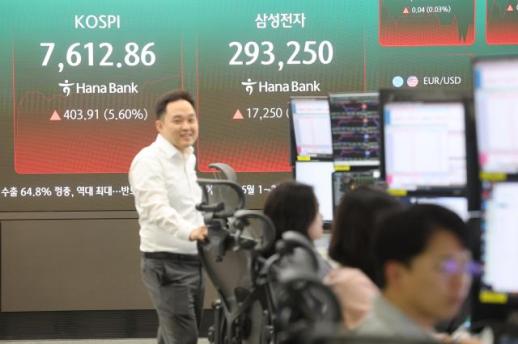 KOSPI recovers above 7,600 as Samsung averts strike SEOUL, May 21 (AJP) - South Korean stocks sharply rebounded on Thursday as investor sentiment improved on growing optimism over artificial intelligence and easing geopolitical tensions. Sentiment was also boosted after Samsung Electronics struck a tentative deal following marathon last-minute negotiations over wages and performance bonuses, easing concerns over a possible large-scale strike at the country's biggest chipmaker. The benchmark KOSPI surged 6.62 percent to 7,685.96 points as of around 10:30 a.m., while the junior KOSDAQ jumped 5.06 percent to 1,109.46. The sharp early gains triggered sidecar curbs on trading. Samsung Electronics' shares climbed 6.16 percent to 293,000 won, helping drive gains in the broader market. The South Korean won also strengthened as external uncertainties eased, trading at 1,499.5 won against the greenback, compared with the previous session’s close of 1,507.80 won. Investor sentiment improved after global oil prices and U.S. Treasury yields retreated overnight. WTI crude fell below the US$100-per-barrel mark to around $98, while the benchmark U.S. 10-year Treasury yield slipped back into the 4.5 percent range after U.S. President Donald Trump said negotiations with Iran were in the "final stages," raising hopes for a diplomatic breakthrough. The decline in oil prices and yields weakened demand for safe-haven assets and helped lift risk appetite across global markets from New York to Seoul. Chip stocks also surged, with SK hynix climbing 6.88 percent to 1,865,000 won and SK Square rising 7.48 percent to 1,106,000 won amid continued optimism over the AI-driven semiconductor boom. Automakers and industrial shares posted strong gains as well. Hyundai Motor advanced 7.43 percent to 636,000 won, Kia jumped 9.37 percent to 163,400 won and HD Hyundai Heavy Industries added 3.30 percent to 657,000 won. Battery and electronics-related shares moved higher across the board. LG Energy Solution rose 3.38 percent to 397,500 won, while Samsung SDI surged 11.12 percent to 1,179,000 won. Financial and biotech shares also joined the rally. Samsung Life Insurance soared 10.10 percent to 343,500 won, Samsung C&T climbed 7.96 percent to 400,000 won, Samsung Biologics gained 4.11 percent to 1,392,000 won and KB Financial rose 2.11 percent to 154,900 won. Defense shares were also firmer, with Hanwha Aerospace advancing 3.12 percent to 1,288,000 won. But much of the market's early gains were driven by Samsung after its management and labor union reached the deal the previous day through government-mediated talks, averting a planned strike and putting it to a union vote through May 27. The agreement eased concerns over labor unrest and addressed key union demands including bonuses and the removal of caps on incentive payments. Markets, however, would remain cautious ahead of the vote, with investors closely watching whether the deal will hold at the country's largest chipmaker, which makes up about one-fifth of the KOSPI by market capitalization. Meanwhile, across Asia, markets broadly moved higher, with Japan's Nikkei 225 surging 3.39 percent to 61,834.74, China's Shanghai Composite Index rising 0.84 percent to 4,196.94 and Hong Kong's Hang Seng Index adding 0.61 percent to 25,807.79 amid improving global risk sentiment. 2026-05-21 11:05:34
 -
 Samsung Electro-Mechanics flies on renewed AI frenzy after US silicon capacitor deal SEOUL, May 21 (AJP) - Samsung Electro-Mechanics stock on Wednesday drew a flurry of price upgrades after it signed a 1.56 trillion won ($993 million) contract to supply silicon capacitors to a U.S. big tech company developing AI chips, its first large-scale order in a business it designated a strategic priority in 2024. The components affiliate of Samsung Electronics disclosed the two-year contract on Tuesday, with deliveries running from January 1, 2027 through December 31, 2028. Shares surged as much as 10 percent to end Tuesday 9.42 percent up at 1,060,400 won to rejoin the "emperor stock" level — a Korean term for shares trading above 1 million won apiece. They roared on, jumping 10.93 percent to 1,177,000 won as of 11:00 a.m., with brokerages rushing to raise target prices up to 1.6 trillion won. The stock has risen more than tenfold from its 52-week low near 110,000 won last December, lifted by the AI component cycle. The buyer of the silicon capacitors was not identified, though analysts expect the components to go into next-generation neural processing units and advanced packaging at a top North American hyperscaler. The order is the clearest signal yet that Samsung Electro-Mechanics has broken into a supply chain long dominated by a few incumbents. The silicon capacitor market has been concentrated among suppliers including Japan's Murata Manufacturing and U.S.-based Empower Semiconductor, with the top five holding an estimated 63 percent of 2024 revenue, because of high technical barriers and lengthy customer certification cycles. The contract, while modest against the company's roughly 3 trillion won in quarterly revenue, marks its entry as a qualified supplier to the AI hardware market. KB Securities maintained a "buy" rating and raised its target price 14 percent to 1.6 million won from 1.4 million won, lifting its five-year operating profit compound annual growth rate estimate to 61 percent from 53 percent. DB Securities also moved its target to 1.6 million won and said the company's long-term market capitalization could reach 120 trillion won. Daol Investment & Securities raised its target to 1.5 million won from 1.05 million won, projecting 2027 revenue of 15.9 trillion won and operating profit of 3 trillion won. Silicon capacitors are next-generation passive components built on silicon wafers through thin-film processes. They can be made as thin as 50 micrometers, against 200 micrometers or more for the ultra-compact multilayer ceramic capacitors, or MLCCs, that have been Samsung Electro-Mechanics' mainstay, sharply reducing the area and thickness constraints inside a semiconductor package. Their equivalent series inductance — a property that impedes alternating current in high-frequency conditions — is roughly 100 times lower than conventional MLCCs, at 2 to 3 picohenries. That makes them the leading option for stabilizing voltage in AI processors, where clock speeds reach several gigahertz and power fluctuations occur faster than MLCCs can physically correct. As AI chips process surging volumes of data, their power draw has risen sharply, raising the risk that momentary voltage swings degrade performance or cause errors — the gap silicon capacitors are designed to fill. Samsung Electro-Mechanics runs the business on a fabless model, performing chip design and testing in-house while outsourcing wafer production to foundries in Taiwan and elsewhere. The structure allows margins in the 30 percent range without the burden of large capital expenditure on manufacturing facilities. DB Securities cited the silicon capacitor revenue alongside detected price increases for the company's mainstay MLCCs as the basis for its estimate upgrade. KB Securities analyst Lee Chang-min said embedded substrates — in which silicon capacitors are built directly into packaging boards — are a product unique to Samsung Electro-Mechanics and stand to benefit strongly from the AI super-cycle. Daol analyst Kim Yeon-mi described the company as the only global player holding both top-tier flip-chip ball grid array, or FC-BGA, substrate capability and ultra-fine capacitor technology, an advantage she said would persist as the company adds customers. FC-BGA substrates are high-end boards that connect advanced processors to circuit boards, a segment Samsung Electro-Mechanics also supplies for AI chips. The deal lands as Samsung Electro-Mechanics pivots its portfolio toward higher-margin AI components and away from legacy products, a shift brokerages expect to accelerate through the second half of the year as MLCC shortages and price increases coincide with the ramp-up of the new silicon capacitor business. 2026-05-21 11:03:14
 -
 Google's Transformation and the Rise of AI Natives In childhood, if you wanted to find a song but didn’t know its title, you had to hum and ask, “Do you know this song? Hmm hmm~~ hmm hmm hmm.” If no one could help or if you weren’t a good singer, you had to wait for the DJ on the radio to announce the title. With the advent of the internet, the world changed dramatically. Instead of humming, you could type a few lyrics into a search engine to find the song you were looking for. Now, you can simply open an AI app on your smartphone, play a snippet, or hum it, and it will remarkably identify the song, even confirming it through YouTube. Before the AI era, the keyboard was the primary interface connecting us to the internet, and text was the main medium. The generation that learned to combine search terms effectively to get the desired results is known as the 'internet natives.' However, we have now entered an era where we ask questions of AI instead of searching. Google has redesigned its single-line text search box into a query interface for AI, adding multimodal search capabilities that include images, voice, and video. This shift symbolizes the transition from the internet age to the 'AI native' era. In the past, obtaining desired knowledge required careful consideration and combination of relevant words. This was our method of 'searching' for information. Now, instead of typing text, we can use all types of data we encounter—photos, videos, sounds—to instantly retrieve the information we need. The format of answers has also changed. Previously, Google analyzed user keywords and prioritized the most relevant answers. Now, AI focuses on understanding context and user intent. Instead of sifting through a long list of search results, users can read a complete answer from AI and refine their requests if the information is not satisfactory. It is time to redefine the act of 'searching.' While traditional searching was a skill to find fragmented information on the internet, AI-powered 'multimodal search' acts more like an auxiliary memory for humans. Consider how we think: starting with abstract questions, we refine them to find the most suitable information. Interacting with AI is similar. Unlike the past, where we presented clear terms, we can now pose abstract questions and requests, and AI analyzes and visualizes them in real time. This process allows us to collaboratively build ideas. It transcends simple searching through a window and approaches the synchronization of AI with the human brain. AI can be seen as a guide to accessing the cloud filled with all the world's information. Even while we sleep, AI continues to search for and create new information in the cloud. Knowledge has shifted from being something we memorize to something we look up when needed, now fully established as an auxiliary memory in the cloud. Imagine being curious about a famous building you see for the first time at a tourist site. By simply pointing your smartphone camera or smart glasses, AI can instantly provide over an hour's worth of in-depth information. Even when users are unsure of what they want, AI observes the surrounding context and delivers the necessary information. AI serves a role beyond that of a simple information storage device. As technology aligns so closely with human intuition, the lives and thought processes of the AI native generation are fundamentally different from those of previous generations. At this point, AI has evolved from a mere search tool to a bridge that continuously connects humans with the cloud and acts as an extension of our brains.* This article has been translated by AI. 2026-05-21 11:00:23
 -
 Lotteria to Raise Menu Prices by Average 2.9% Starting May 28 Lotteria will increase prices for some menu items starting at the end of this month. Lotteria GRS announced on May 20 that it will raise prices by an average of 2.9% beginning May 28. The price adjustments will affect 22 types of individual burgers, with increases ranging from 100 to 300 won per item. The popular 'Ria Bulgogi' and 'Ria Shrimp' burgers will each see a 100 won increase, bringing their prices to 5,100 won. The company cited rising exchange rates due to domestic and international instability, global raw material supply issues, and increased logistics costs as reasons for the price hike. However, it noted that the increases are lower than the recent hikes in minimum wage and delivery fees to minimize the burden on consumers. A Lotteria GRS representative stated, "We decided to adjust prices after discussions with franchisee associations to protect franchise profitability. We also plan to implement discount promotions to alleviate the burden on consumers." Earlier this year, Burger King raised its burger prices by 200 won and side menu items by 100 won in February. McDonald's also increased prices for 35 menu items by an average of 2.4% during the same month, while Mom's Touch raised prices for 43 individual items by an average of 2.8% starting in March.* This article has been translated by AI. 2026-05-21 10:58:22
 -
 Samsung Electro-Mechanics Shares Surge After $1.5 Billion Silicon Capacitor Deal Samsung Electro-Mechanics shares rose by over 10% in early trading following news of a supply contract for silicon capacitors worth 1.557 trillion won ($1.5 billion) with a major U.S. tech company. As of 9:46 a.m. on May 21, the company’s stock was trading at 1,169,000 won, up 108,000 won (10.18%) from the previous day. During the session, the stock peaked at 1,219,000 won, setting a new all-time high. The surge in share price appears to be driven by investor optimism following the company’s first large-scale supply achievement in its silicon capacitor business, which it has been cultivating as a new growth engine. Samsung Electro-Mechanics announced the contract in a regulatory filing the previous day, stating that the deal is valued at 1.557 trillion won, equivalent to 13.8% of its recent revenue. The contract period runs from January 1, 2027, to December 31, 2028. The company did not disclose the name of the client or key contract terms due to business confidentiality. Silicon capacitors are miniature electronic components essential for high-performance semiconductor package substrates. They allow for thinner package designs and can be positioned closer to high-performance system semiconductors, facilitating stable transmission of high-speed data. Analysts are raising their price targets for Samsung Electro-Mechanics based on this contract. KB Securities and DB Securities have increased their target prices to 1,600,000 won, while Daol Investment and iM Securities have set their targets at 1,500,000 won and 1,400,000 won, respectively. DB Securities analyst Cho Hyun-ji stated, "The silicon capacitor business is expected to contribute significantly to earnings after 2027. While this year's revenue is projected to be around 30 billion won, it is expected to grow to approximately 550 billion won in 2027 and reach 1 trillion won by 2028." He added, "The average selling price (ASP) is estimated to be more than ten times that of general MLCCs, and profitability is expected to improve rapidly with enhancements in mass production. By 2028, the operating profit margin could exceed 30%."* This article has been translated by AI. 2026-05-21 10:55:06
 -
 Samsung Life Shares Surge 10% Following Samsung Electronics Labor Agreement Samsung Life's stock price is experiencing a significant rise in early trading. This surge is attributed to the resolution of labor negotiations at Samsung Electronics, which has boosted the company's stock value due to Samsung Life's holdings in Samsung Electronics. According to the Korea Exchange, as of 9:55 a.m. on May 21, Samsung Life shares were trading at 345,500 won, up 33,500 won (10.74%) from the previous trading day. Market analysts cite the strong performance of Samsung Electronics' stock, which rose 6.7% to 295,400 won, as a key factor behind Samsung Life's price increase. Samsung Life is classified as a stock that is sensitive to changes in the stock price and dividends of Samsung Electronics, given its substantial ownership stake. Recently, Samsung Life reported strong first-quarter results, with a consolidated net profit of 1.2036 trillion won, marking an 89.5% increase compared to the same period last year, exceeding market expectations. The improvement was significantly aided by a reversal of provisions amounting to approximately 425.7 billion won from a victory in an immediate annuity lawsuit and the impact of a special dividend from Samsung Electronics. Analysts believe that Samsung Life's stock price is likely to continue to be linked to the value of its Samsung Electronics holdings. Seol Yong-jin, a researcher at iM Securities, stated, "In the future, Samsung Life's stock price movements will be more closely tied to the value of its Samsung Electronics shares rather than its core business competitiveness or dividend expectations."* This article has been translated by AI. 2026-05-21 10:54:00
 -
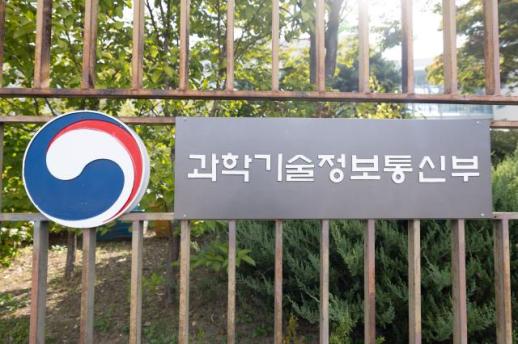 South Korea Launches NEST to Connect Public Research Outcomes with Startups and Investments The Ministry of Science and ICT has officially launched a consortium to support deep tech startups aimed at expanding the market reach of public research outcomes. On May 20, the ministry held a ceremony at the Peace and Park Convention Center in Seoul to inaugurate the "Deep Tech Commercialization Support Consortium (NEST)." NEST is a collaborative network of key support organizations that connects outstanding public research outcomes from universities and research institutes with startups, incubation, and investment opportunities. The consortium includes 13 institutions, comprising three newly selected comprehensive specialized companies and ten company builders. The consortium's primary role is to facilitate joint startup initiatives, investment projects, and technology discovery among member organizations. By pooling their investment capabilities, personnel, and networks, the 13 institutions aim to establish a collaborative commercialization model and enhance the overall capacity of the public technology commercialization ecosystem. For NEST to achieve tangible results, effective coordination of interests among institutions and the practicality of investment connections will be crucial. Past government-led startup support consortia have often struggled to move beyond mere networking. Attendees at the launch included Koo Hyuk-chae, the First Vice Minister of Science and ICT, representatives from the 13 participating organizations, and Kim Byeong-guk, the Director of the Korea Technology Commercialization Promotion Agency. The event featured the presentation of plaques to selected institutions, followed by a networking session to discuss collaboration strategies. Koo emphasized the importance of connecting good technology with the market to foster startups, investment, and growth, expressing hope that NEST would become a new successful model for deep tech commercialization.* This article has been translated by AI. 2026-05-21 10:48:54
 -
 LG Electronics Launches 'Housewarming' Pop-Up in Southeast Asia to Showcase K-Lifestyle LG Electronics is launching an experiential marketing campaign centered around the Korean-style "housewarming" concept in Southeast Asia. The initiative aims to connect local interest in K-culture with LG's home appliances to expand its premium customer base. On May 21, LG Electronics announced that it will sequentially roll out the "Housewarming by LG" campaign in three major Southeast Asian countries: Vietnam, Thailand, and Indonesia. The campaign invites local customers to pop-up stores that recreate Korean living culture and daily life, allowing them to experience LG's artificial intelligence (AI) appliances alongside K-lifestyle elements. The first event kicked off on May 19 at the brand experience space "Another Saigon" in Ho Chi Minh City, Vietnam. The pop-up store is designed to resemble a real home, featuring areas such as an entrance, kitchen, living room, and dressing room. Customers can move through these spaces to experience popular local lifestyles, including learning, beauty, home training, relaxation, and social interaction, all integrated with LG products. In the kitchen, visitors can use an ice and water dispenser refrigerator to prepare Korean-style drinks and dishes. The living room showcases air conditioning and air purification systems, while the LG StanbyME 2 offers home training and content viewing experiences. The dressing room features the WashTower, which analyzes the weight, dirt level, and fabric type of laundry to provide customized washing and drying, along with the Styler for clothing management. This event focuses on demonstrating the practical uses of appliances within real-life scenarios rather than merely displaying products. As K-culture consumption, including Korean dramas, music, fashion, and food, continues to grow among young consumers in Southeast Asia, LG Electronics aims to enhance brand intimacy by combining these interests with premium appliance experiences. Following the launch in Vietnam, LG Electronics plans to open pop-up stores in Thailand and Indonesia. In addition to the offline events, the company will share on-site videos through social media channels like YouTube to expand its online reach. Previously, LG Electronics garnered attention at the "LG InnoFest 2026 Asia-Pacific" event held in Busan last month, where it created an exhibition space inspired by settings from K-dramas, attracting interest from regional partners and media. An LG Electronics representative stated, "We will continue to expand customer experience spaces so that overseas customers can naturally experience LG products and lifestyles, feeling the convenience in their daily lives."* This article has been translated by AI. 2026-05-21 10:46:07
 -
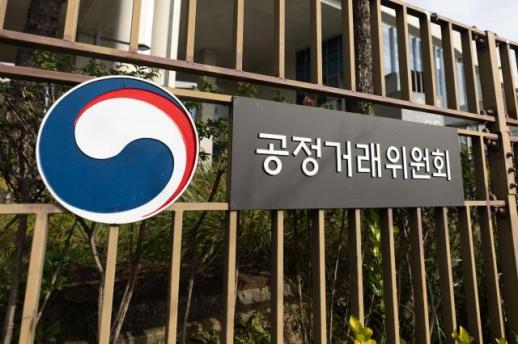 KFTC Holds Briefing on Subcontract Payment Disclosure System and Linkage System The Fair Trade Commission (KFTC) is set to assess the implementation of the subcontract payment disclosure system and linkage system for large business groups.On May 21, the KFTC announced it will hold a briefing at the DMC Tower for representatives from 102 designated business groups regarding the 'Subcontract Payment Disclosure System and Linkage System.'The briefing will cover the expansion of the application of the subcontract payment linkage system and the prohibition of unlawful activities.According to Article 13-3 of the Act on Fair Transactions in Subcontracting, primary contractors within designated business groups are required to disclose information biannually via the electronic disclosure system (DART). This includes payment amounts by payment method and period, as well as details regarding dispute resolution bodies related to subcontract payments.The subcontract payment disclosure system was introduced to transparently reveal the status of subcontract payments in the market, encouraging primary contractors to improve their payment practices voluntarily. This system has been in effect since January 2023 to facilitate smoother negotiations between subcontractors and primary contractors based on disclosed information.During the briefing, the KFTC will provide detailed explanations of the disclosure targets, procedures, and important considerations to assist companies in understanding the system. Additionally, training will be conducted to prevent recurrence of issues identified during disclosure checks, such as false or delayed disclosures, simple omissions, and errors.Furthermore, the KFTC will also provide guidance on the linkage system following the subcontract payment disclosure system. Since the formal implementation of the subcontract payment linkage system in October 2023, the KFTC has been continuously supporting the establishment of a linkage culture in transaction sites. The briefing will outline the overview of the linkage system, implementation procedures, and key amendments to the law.A KFTC official stated, "We will continue to monitor the overall operation of the subcontract payment disclosure system and linkage system to ensure they are faithfully implemented in the field. We plan to promote various support activities, including holding briefings and providing materials."* This article has been translated by AI. 2026-05-21 10:45:43