
Journalist

Lee Jaeho
-
 Credit Card Companies Expand Loan Services Amid Declining Profitability As the credit card industry faces declining profitability due to reduced merchant fees, companies are expanding their financial services focused on credit loans, resulting in increased funding levels. Samsung Card, in particular, has shown aggressive growth, recording the largest increases in both credit loans and funding balance. In contrast, Shinhan Card, the industry leader, has adopted a strategy emphasizing asset efficiency, leading to a different trend. According to the financial sector on May 19, the average funding balance for eight major credit card companies (Shinhan, Samsung, Hyundai, KB Kookmin, Lotte, Woori, Hana, and BC Card) reached 174.42 trillion won at the end of the first quarter, marking a 2.2% increase from 170.73 trillion won in the same period last year. Unlike banks, credit card companies cannot accept deposits, so they rely on corporate bonds, asset-backed securities (ABS), and commercial paper (CP) for operational funding. The decline in profitability from their core payment business, due to ongoing reductions in merchant fees, has prompted these companies to accelerate their expansion into interest-based financial services such as credit loans, cash services, and installment financing. According to the Korea Credit Finance Association, the credit loan balance for the eight card companies increased from 39.29 trillion won to 39.68 trillion won, a rise of 1.0% or 394.8 billion won during the same period. Notably, Samsung Card's credit loan balance grew by 452.7 billion won over the past year, the largest increase in the industry. Its funding balance also rose by 2.28 trillion won, marking the most significant expansion. Industry analysts attribute this growth to Samsung Card's relatively stable delinquency rate, which allows for aggressive expansion in credit loans and installment financing. As of the first quarter, Samsung Card maintained the lowest delinquency rate in the industry at 1.00%, down 0.12 percentage points from the previous year. This lower risk profile has enabled the company to pursue credit loan expansion more actively. A Samsung Card representative stated, "We are providing stable funding to mid- to low-credit customers through mid-interest loans and plan to manage our credit loan balance based on risk management moving forward." Conversely, Shinhan Card experienced a decrease in its funding balance by 1.18 trillion won, the largest decline among its peers. Its credit loan balance also fell by 161.9 billion won over the year. This shift is interpreted as a focus on maintaining asset quality and efficiency rather than aggressive growth. In the first quarter, Shinhan Card's credit loan transactions totaled 2.22 trillion won, slightly down from 2.21 trillion won in the same period last year, while cash services dropped by 9.2% to 2.89 trillion won. A Shinhan Card spokesperson commented, "In the face of increasing domestic and international uncertainties, we are focusing on optimizing our portfolio by reducing low-efficiency businesses and expanding high-efficiency ones. We are also committed to proactive risk management to continue improving our asset structure." 2026-05-19 15:19:30
 -
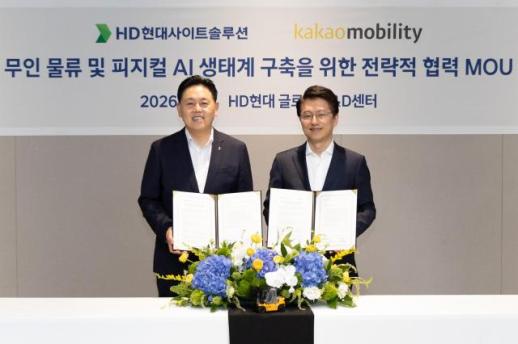 Kakao Mobility and HD Hyundai Site Solutions Expand Collaboration on Physical AI in Logistics Kakao Mobility is partnering with HD Hyundai Site Solutions to expand the Physical AI ecosystem focused on logistics operations. On May 19, Kakao Mobility announced that it has signed a strategic memorandum of understanding (MOU) with HD Hyundai Site Solutions to build a next-generation unmanned logistics and Physical AI ecosystem. The two companies plan to jointly promote automation and unmanned operations across logistics sites in line with the industry's shift from hardware-centric automation to software-based operational systems. Physical AI combines digital AI with physical equipment in the real world to perform actual tasks. The market for this technology is rapidly expanding, particularly in areas such as robotics, autonomous driving, and smart logistics. In this collaboration, Kakao Mobility will handle platform capabilities, including integrated control of heterogeneous mobile units and transport management systems (TMS). HD Hyundai Site Solutions will provide technology for unmanned autonomous industrial vehicles (forklifts) and logistics control solutions. The companies aim to jointly pursue platform integration and technology proof of concept (PoC) in logistics, utilizing data collected during the validation process to identify new business models and global expansion opportunities. Kakao Mobility intends to extend its operational experience from existing robot delivery and valet parking services into the industrial logistics sector. The strategy includes creating an environment where various industrial vehicles can be integrated and operated on a single platform, thereby broadening the application of Physical AI. Specifically, the focus will be on establishing a "seamless operational optimization environment" that connects the entire logistics process, from order receipt to middle-mile transportation and internal warehouse operations. The company expects this will reduce data silos and delays caused by system separations in existing logistics operations. Ryu Geung-seon, CEO of Kakao Mobility, stated, "This collaboration marks a significant starting point for Kakao Mobility to expand its integrated capabilities for heterogeneous mobile units into industrial settings. By combining Kakao Mobility's software capabilities with HD Hyundai Site Solutions' industrial vehicle and logistics solution expertise, we will enhance the logistics AX model and continuously expand the application of Physical AI technology."* This article has been translated by AI. 2026-05-19 15:16:43
 -
 Hyundai Engineering & Construction Shares Plummet for Third Consecutive Day Amid Rebar Shortage Hyundai Engineering & Construction is experiencing a decline in stock prices for the third consecutive trading day due to the fallout from a rebar shortage in the GTX-A Samsung Station construction project. Concerns over the financial burden of reinforcement costs and potential administrative penalties are weighing heavily on investor sentiment. As of 2:20 PM on May 19, the Korea Exchange reported that Hyundai Engineering & Construction shares were trading at 139,700 won, down 5,200 won (3.59%) from the previous trading day. The stock had already dropped 8.45% on May 15 and fell another 6.52% on May 18, totaling a decline of over 14% in just two days. This marks three consecutive days of falling prices. The recent drop is attributed to the confirmation of a significant rebar shortage at the GTX-A Samsung Station construction site. According to the Ministry of Land, Infrastructure and Transport, 50 out of 80 columns in the underground fifth-floor platform failed to meet load-bearing standards, with approximately 178 tons of main rebar missing. Hyundai Engineering & Construction stated that it discovered the issue during an internal quality inspection last year and reported it to the Seoul city government. The company is currently undertaking safety reinforcement work using steel plate reinforcement methods. However, market sentiment is more concerned about the potential for penalties and restrictions on future bidding rather than the reinforcement costs themselves. In fact, the Seoul city government has reportedly initiated procedures to impose penalties on Hyundai Engineering & Construction. Industry analysts suggest that if penalties are enforced, they could negatively impact the company's ability to bid on public projects and its construction capability assessments.* This article has been translated by AI. 2026-05-19 15:15:00
 -
 Huhons Surges Over 17% Following Merger Announcement with Subsidiary Huhons Lab Huhons shares surged more than 17% during trading on news of its subsidiary merger, attracting significant buying interest. According to the Korea Exchange, as of 2:17 PM, Huhons shares were trading at 38,050 won, up 5,650 won (17.44%) from the previous day. The company announced that its board of directors approved a plan to absorb its subsidiary, Huhons Lab, into the holding company Huhons Global. As a result of the merger, Huhons will continue to exist while Huhons Lab will be dissolved. The dissolved entity, Huhons Lab, is known for its subcutaneous injection (SC) formulation platform, 'High Diffuse,' and its capabilities in peptide drug development. The merger ratio is set at 1 to 0.4256893 for Huhons and Huhons Lab, with the merger values determined at 34,062 won for Huhons and 14,500 won for Huhons Lab. An extraordinary general meeting to approve the merger will be held on July 16, with plans to finalize the merger by August 18. The listing date for the new shares is scheduled for September 4. Huhons stated that the purpose of the merger is to address the lack of new drug pipelines and the downward pressure on profitability due to government drug pricing reforms, while also strengthening its biopharmaceutical value chain and research and development (R&D) capabilities. Previously, on April 22, Huhons decided to enhance management efficiency by merging with its wholly-owned subsidiary, Huhons Life Science, in a small-scale merger.* This article has been translated by AI. 2026-05-19 15:12:22
 -
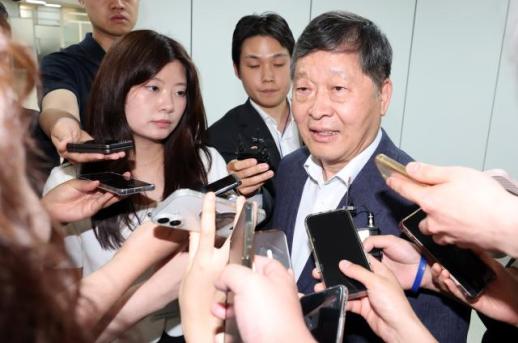 Samsung Electronics Labor Negotiations Continue Amid Stalemate Samsung Electronics' labor negotiations entered their second day on May 19, with Park Soo-geun, chairman of the Central Labor Relations Commission, stating that while both sides are making concessions, two key issues remain unresolved. He noted, "There is a possibility of reaching an agreement, but it is difficult to say at this point." Speaking to reporters as he entered the meeting room after a break, Park commented on the ongoing difficulties in reaching a consensus, saying, "The two most important issues have not been narrowed down." The Central Labor Relations Commission has been conducting the second day of negotiations for Samsung Electronics since 10 a.m. at the government complex in Sejong. The meetings are closed to the public. During the break, Park indicated that a proposal might be forthcoming, saying, "It should come out. It’s still uncertain, but there is a possibility this evening." He added that there has been some progress in narrowing the differences between the two sides and that negotiations on distribution rates by sector are ongoing. Choi Seung-ho, chairman of the Samsung Electronics Union's joint action headquarters, who had not made any statements before entering the meeting, expressed his commitment to creating a proposal that would satisfy union members. When asked if they were maintaining their stance on institutionalizing performance bonuses, he replied, "Yes," before entering the meeting room without further comments. Lee Myung-gu, head of the People Team for Samsung Electronics' Device Solutions (DS) division, stated before the meeting, "We will do our best until the end," before proceeding into the meeting. Samsung Electronics and its labor union began the second round of negotiations at the request of Minister of Employment and Labor Kim Young-hoon. In the previous day's meeting, both sides outlined their positions and engaged in discussions on key issues, including the criteria and caps for performance bonuses. The Central Labor Relations Commission plans to listen to both sides and find common ground to prepare a mediation proposal. However, if the meetings extend, they may continue until May 20. The first round of negotiations held on May 11-12 also concluded in the early hours of May 13. The government has indicated it may invoke emergency mediation rights if a strike at Samsung Electronics materializes. The union has announced that a strike could begin on May 21. 2026-05-19 15:09:28
 -
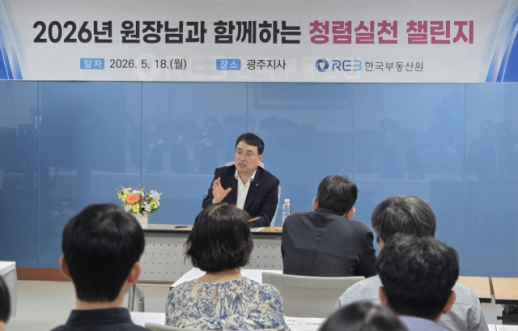 Corruption in Passive Administration: Lee Heon-wook Launches Nationwide Integrity Campaign The Korea Real Estate Agency has launched an "Integrity Campaign" led by Lee Heon-wook, who will visit various locations across the country to share a culture of integrity with employees. He emphasized the importance of consumer protection in real estate and balanced national development as new values of integrity, advocating for proactive administration focused on fieldwork. On May 19, the Korea Real Estate Agency reported that Lee Heon-wook held the first event of the "Integrity Campaign" at the Honam Regional Headquarters on May 18, where he discussed strategies for promoting a culture of integrity among employees. The "Integrity Campaign" is a program initiated by Lee, involving visits to regional headquarters and branches to communicate with staff. The agency plans to spread the values of "New Integrity" starting from the Honam Regional Headquarters and continuing to major regional offices and branches nationwide. During the event, Lee encouraged field staff and highlighted the significance of enhancing measures for balanced national development and consumer protection in real estate, which are key anti-corruption initiatives for the agency this year. He defined not only traditional corruption, such as bribery and illicit solicitation, but also passive administration—administrative errors and neglect of practices—as a form of corruption, urging a proactive work attitude. Lee stated, "Branch staff are the face of our agency, proving our level of integrity at the closest point to the public. We will do our best to create an environment where employees can work with conviction to achieve the goals of housing stability for the public and consumer protection in real estate." Lee Heon-wook was appointed as the 17th president of the Korea Real Estate Agency on February 25. He graduated from Seoul National University’s College of Engineering and passed the 40th National Bar Examination. He has worked as a public interest lawyer and served as the president of the Gyeonggi Housing and Urban Corporation (GH). His term lasts for three years from the date of appointment.* This article has been translated by AI. 2026-05-19 15:06:54
 -
 Hanwha Aerospace Shares Rise 5% Amid Canadian Military Vehicle Replacement News Shares of Hanwha Aerospace are on the rise, attributed to uncertainties surrounding the U.S.-Iran conflict and news of the Canadian Ministry of Defense's plans to replace aging armored vehicles. As of 2:12 PM on May 19, Hanwha Aerospace's stock was trading at 1,292,000 won, up 65,000 won (5.30%) from the previous trading day, according to the Korea Exchange. The surge in Hanwha Aerospace's stock appears to be influenced by recent reports that the Canadian Ministry of Defense is moving forward with a modernization program for its outdated tanks and armored vehicles. Local media in Canada reported that the ministry has issued a request for information (RFI) to major defense contractors. The Canadian next-generation tank program aims to enhance the performance of existing tanks and select a new main battle tank (MBT) model by 2030. The program targets achieving initial operational capability (IOC) by 2035 and full operational capability by 2037, with an estimated budget of $620 million (approximately 920 billion won). Jae-ho Seo, a researcher at DB Securities, noted, "Despite expectations for continued solid earnings growth, Hanwha Aerospace is entering a correction phase due to declining multiples among its European peers. However, with ongoing growth in orders from Rheinmetall through the first quarter, the K-defense premium is expected to stand out when production capacity is leveraged to fulfill these orders." Yong-jin Byun, a researcher at iM Securities, mentioned, "Following a collaboration agreement signed in February, we have established a partnership this month with Malem Robotics and Hanwha Aerospace Romania for joint participation in the unmanned ground vehicle (UGV) business at the BSDA in Romania. We anticipate actively responding to the increasing demand for unmanned systems from European and NATO countries in the post-war context."* This article has been translated by AI. 2026-05-19 15:04:30
 -
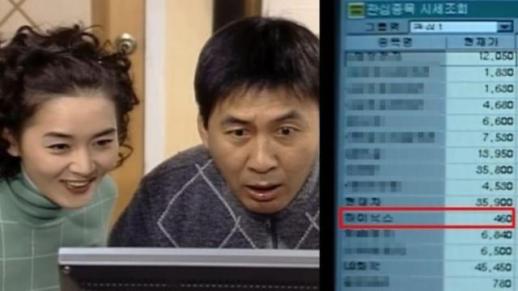 Hynix Stock Price at 460 Won Featured in 2002 Sitcom Scene A scene from the 2002 sitcom "Live Right" featuring Hynix's stock price has sparked online interest. On May 17, various online communities and social media platforms shared a clip from the December 5, 2002, episode of the SBS sitcom. The notable scene shows characters Park Young-kyu and Lee Eung-kyung checking stock prices on a computer screen, where Hynix's stock is listed at 460 won. The prices of other major stocks at the time, including Hyundai Motor at 35,900 won and LG Chem at 45,450 won, are also displayed. At that time, Hynix was not the leading AI semiconductor company it is today. Following the Asian financial crisis, the company faced significant financial burdens, compounded by a semiconductor market downturn and liquidity crisis, leading to a restructuring under creditor management. Hynix changed its name from Hyundai Electronics Industries to Hynix Semiconductor in March 2001 and entered a joint management procedure with creditor financial institutions in October of the same year due to liquidity issues. After undergoing restructuring and financial improvement, the company graduated from its workout program early in 2005. During this period, existing shareholders suffered substantial losses. Hynix underwent a 21-for-1 stock consolidation in 2003, significantly reducing its capital and the number of shares issued. As of May 15, SK Hynix's stock closed at 1,819,000 won, reaching a peak intraday price of 1,995,000 won. Comparing the two prices, 460 won and 1,819,000 won, shows an increase of approximately 3,954 times, equating to a return of about 395,000%. However, this is a simple stock price comparison that does not account for capital changes such as the consolidation. Given the 21-for-1 consolidation in 2003, the actual investment return for those who held shares at that time would differ from this straightforward comparison. Once a company concerned about its survival, Hynix has strengthened its memory semiconductor competitiveness since joining the SK Group. Recently, it has established itself as a leading semiconductor stock on the domestic market, driven by growing demand for AI servers and the expansion of the high-bandwidth memory (HBM) market. This transformation highlights the significant changes in the status of the South Korean semiconductor industry and SK Hynix over the past two decades.* This article has been translated by AI. 2026-05-19 15:02:06
 -
 AXA Insurance Seeks New Revenue Stream in Rental Car Accident Handling As the burden of auto insurance policies accumulates, the profitability of insurance companies focused on auto coverage is being challenged. With pressures to lower premiums, rising repair costs, and delays in improving the treatment system for minor injuries, AXA Insurance is now seeking new revenue sources in the rental car accident handling market. According to the Financial Supervisory Service on May 19, AXA has recently reported a subsidiary business that provides and mediates accident reporting, investigation, and repair cost assessment services for rental car operators. When an accident occurs with a vehicle owned by a rental car company, AXA will handle everything from accident reporting to on-site investigation and assessment of repair costs, earning a commission for these services. This move is seen as an attempt to expand its accident handling capabilities, developed through its existing auto insurance compensation operations, into external services. AXA's actions are closely tied to the declining profitability of auto insurance. The company reported an operating loss of 39.986 billion won last year, marking a return to the red. Its net loss also reached 33.784 billion won. The audit report identified a decrease in auto insurance revenue as a major reason for the poor performance, with auto insurance revenue dropping by 45.938 billion won compared to the previous year. However, this issue is not unique to AXA. Auto insurance is heavily regulated, making premium adjustments subject to significant policy considerations. After lowering premiums for over four years, the industry raised them this year, while repair and treatment costs have continued to rise. Additionally, the introduction of the 'eight-week rule' to reduce excessive treatment for minor injuries has been indefinitely postponed, and policies like the vehicle five-part discount, which reduce premium income, are being pursued, further narrowing the profitability margins for insurers. The limitations of specialized auto insurance models are also evident in the case of Carrot Insurance. Carrot grew by promoting per-mile auto insurance but continued to incur losses since its inception, ultimately being absorbed by Hanwha General Insurance. Before the merger, Carrot recorded annual losses of around 60 billion won. Industry experts suggest that without being integrated into Hanwha, it would have been challenging for Carrot to continue operating independently due to its high dependency on auto insurance, which limits its ability to offset losses with other lines of business. Major insurance companies are also struggling with poor auto insurance performance. In the first quarter of this year, Samsung Fire & Marine, Hyundai Marine & Fire, DB Insurance, and KB Insurance collectively reported a deficit of 39.7 billion won in auto insurance. The loss ratio for auto insurance exceeded the breakeven point of 80%. Following last year's auto insurance losses that soared to around 700 billion won, the trend of deficits is likely to continue this year due to ongoing policy shifts. However, it remains to be seen whether AXA's new subsidiary business will lead to immediate profitability. An AXA representative stated, "We are still in the preparation stage," adding that "no specific timeline has been confirmed."* This article has been translated by AI. 2026-05-19 15:00:00
 -
 Emart Shares Drop Over 6% Amid Starbucks Controversy Emart's stock price fell over 6% during trading on May 19, influenced by the controversy surrounding a promotion by Starbucks Korea. According to the Korea Exchange, as of 2:07 PM, Emart shares were trading at 92,800 won, down 6,400 won (-6.45%) from the previous trading day. The stock opened at 98,200 won and briefly dropped to 90,400 won, widening its losses. Market analysts attribute the decline in stock price to weakened investor sentiment following the promotional wording controversy involving Starbucks Korea. On May 18, Starbucks Korea used phrases such as 'Tank Day' and 'On the Desk' during a tumbler promotion event. This sparked criticism on online communities and social media, with claims that the expressions belittled the May 18 Democratic Movement and the 1987 torture and death of activist Park Jong-cheol. As the controversy grew, Shinsegae Group Chairman Chung Yong-jin issued a public apology on the morning of May 19, stating, "This is an inappropriate marketing strategy that should not exist and cannot be tolerated. This matter trivializes the pain and sacrifice of all those who have dedicated themselves to this country's democracy, and it is an inexcusable mistake." The company had previously dismissed CEO Son Jeong-hyun and related executives the day before and has initiated disciplinary procedures for all involved employees.* This article has been translated by AI. 2026-05-19 14:57:00