

Journalist

Lester Munson
-
 Korean shares hold ground amid thin Asian trade ahead of long holiday SEOUL, February 13 (AJP) — South Korean shares held firm Thursday despite broad losses and subdued trading across Asia ahead of the Lunar New Year holiday, supported by renewed optimism over the semiconductor sector. Wall Street tech stocks fell overnight on concerns that artificial intelligence could disrupt the traditional software industry, dampening regional sentiment. However, strong earnings from Japan’s chipmaker Kioxia lifted investor confidence in South Korea, fueling hopes of a recovery in the global memory market. Kioxia, a major producer of NAND flash memory, reported third-quarter sales of 543 billion yen and issued fourth-quarter revenue guidance of 890 billion yen, both exceeding market expectations. The company also said its average selling price rose more than 10 percent from the previous quarter, signaling improving profitability. The upbeat outlook boosted local semiconductor shares. Samsung Electronics climbed above 180,000 won for the first time, pushing the KOSPI to a new intraday high above the 5,500 level before trimming gains on profit-taking. The stock was up 1.82 percent at 181,850 won ($126) in morning trade. As of 11:00 a.m., the benchmark KOSPI stood at 5,540.66, up 0.33 percent, after drifting lower earlier in the session. The KOSDAQ fell 1.55 percent to 1,108.57, pressured by new rules tightening delisting requirements for penny stocks. The won edged lower against the U.S. dollar, snapping a four-day winning streak. The exchange rate stood at 1,443.20 per dollar at 10:00 a.m., up 0.70 won from the previous session. Investor flows were mixed. Individual investors bought a net 490 billion won worth of shares, while foreigners and institutions sold a net 188.5 billion won and 316.2 billion won, respectively. Broader sentiment remained cautious despite gains in Samsung Electronics. Chipmaker SK hynix slipped 0.39 percent to 884,500 won, while battery maker LG Energy Solution fell 3.17 percent to 397,000 won. Financial and biotech shares showed mixed performance. Samsung Life Insurance rose 0.73 percent, while Samsung Biologics declined 0.81 percent. Automaker shares moved lower, with Hyundai Motor down 1.38 percent and affiliate Kia falling 1.56 percent to 499,000 won and 163,700 won, respectively. Defense-related shares softened, as Hanwha Aerospace slid 2.48 percent to 1,103,000 won. Shipbuilders showed mixed performance. HD Hyundai Heavy Industries gained 1.11 percent to 545,000 won, while Hanwha Ocean dropped 1.97 percent to 129,200 won. Elsewhere in the region, Japan’s Nikkei 225 fell 0.97 percent to 57,080.44, Hong Kong’s Hang Seng Index slipped 1.45 percent to 26,640.16, and China’s Shanghai Composite edged down 0.44 percent to 4,115.92 in morning trading. Business will be usual at the Tokyo exchange next week while Seoul opens Thursday, Hong Kong Friday, and Shanghai on Feb. 24. 2026-02-13 11:24:43
 -
 OPINION: The collapse of a narrative - Bithumb's "ghost coin" episode Winter has returned to crypto. But this is not merely a period of falling prices. It is also a period of thinning confidence. In recent feature, The Economist observed that the latest “crypto winter” feels colder than previous downturns not because the numbers are worse, but because the story has weakened. Bitcoin, once framed as a symbol of decentralization and defiance, now stands in an ambiguous position. Its outsider image has faded, yet it has not fully earned the confidence of central banks or conservative institutional investors. The aura has dimmed, but stability has not taken its place. Markets can withstand volatility. They find it harder to navigate disillusionment. The current downturn highlights several structural features that are not unique to digital assets, but are particularly visible in this market. One is leverage. During rallies, borrowed capital amplifies returns. During corrections, it accelerates losses. Margin trading and derivatives exposure expanded rapidly in the recent boom and have since unwound in predictable fashion. Forced liquidations occur not because sentiment suddenly shifts, but because positions reach mechanical limits. This pattern has appeared repeatedly throughout financial history. Another feature is the double-edged nature of institutional participation. The launch of spot exchange-traded funds was widely seen as a step toward legitimacy. Global asset managers’ involvement was interpreted as validation. Yet liquidity does not imply commitment. Capital that enters quickly can also exit quickly. ETFs facilitate access, but they do not guarantee stability. A third, more subtle factor is the weakening of collective enthusiasm. Assets such as Bitcoin derive much of their value from shared expectations rather than cash flows. When confidence softens, valuation becomes more exposed. The loss of momentum may appear intangible, but in narrative-driven markets it can have material consequences. If these were only global trends, they would already warrant attention. Developments in South Korea, however, have added a more concrete dimension. The so-called “ghost coin” incident at Bithumb, one of the country’s largest cryptocurrency exchanges, reportedly involved internal records showing assets that did not exist. Whether caused by operational error or systems failure, the episode raised questions about internal controls and governance. Blockchain technology emphasizes distributed verification. Centralized exchanges, by contrast, rely on internal accounting systems and corporate oversight. Between decentralization in principle and centralized custody in practice lies a reliance on trust. When that trust weakens, confidence in the broader ecosystem can be affected. In traditional finance, similar discrepancies would trigger immediate scrutiny of risk management, reconciliation procedures, and capital adequacy. Over time, banks and securities firms developed standards — external audits, asset segregation, and regulatory reporting — often in response to past crises. These mechanisms are not obstacles to innovation, but foundations of credibility. The Bithumb episode reflects a broader transition. Crypto markets are no longer confined to early adopters. They now intersect with household savings, institutional portfolios, and regulatory frameworks. With greater scale comes greater responsibility. Internationally, the contrast is notable. Central banks continue to accumulate gold as a hedge against uncertainty. Digital assets, once promoted as “digital gold,” remain peripheral to reserve management. Institutional investors typically treat crypto as a supplementary allocation rather than a core holding. Regulatory recognition, including ETF approvals, signals growing acceptance, but not full integration. None of this diminishes the technological potential of blockchain. Tokenization, cross-border settlement, and programmable finance continue to develop. Stablecoins are gradually finding roles in payment systems. Yet technical innovation alone cannot substitute for institutional reliability. Bull markets tend to obscure vulnerabilities. Bear markets make them visible. If crypto is to evolve into a more durable asset class, certain conditions will become increasingly important: clearer reporting of leverage, stronger segregation of client assets, adequate capital buffers, regular audits, and consistent regulatory standards across jurisdictions. Such measures need not constrain innovation. In many cases, they enable it. The current downturn may eventually give way to recovery. Financial cycles are recurrent, and investor interest rarely disappears permanently. But without institutional strengthening, future rallies risk repeating familiar patterns. The lesson of this period is not that crypto lacks value, nor that traditional finance is immune to failure. It is that markets — digital or otherwise — respond to incentives, governance, and transparency in similar ways. Excess leverage increases fragility. Weak oversight invites disruption. Overreliance on narrative creates vulnerability when conditions change. In that sense, the “ghost coin” incident serves as more than an operational anomaly. It illustrates how confidence depends on verification. Assets must exist not only on screens, but in substance. Crypto now faces a choice familiar to many emerging industries: remain driven primarily by momentum and symbolism, or continue the slower process of building institutional trust. Winter can test markets. It can also refine them. If this period encourages greater emphasis on transparency, governance, and resilience, the next recovery — when it comes — may rest on firmer ground than those before it. *The author is a columnist for AJP. 2026-02-13 11:23:11
 -
 Hyundai's Palisade, Kia's EV9 win Canadian vehicle of the year awards SEOUL, February 13 (AJP) - Two South Korean vehicles have receive top awards at this year's Canadian International AutoShow in Toronto, which wraps up its weeklong run this weekend. According to Hyundai Motor Group, the Palisade was named the Canadian Utility Vehicle of the Year, while affiliate Kia's EV9 won the Canadian Electric Utility Vehicle of the Year award, presented by the Automobile Journalists Association of Canada (AJAC). "Our expert jurors scored the Palisade highly for its interior styling, its overall quality, and for the high consumer appeal this SUV brings to the Canadian marketplace," said Evan Williams, president of AJAC. "Earning this recognition for a fourth time in since 2022 underscores the importance of applying customer and journalistic feedback we've gained over the years, while continuing the strong momentum and leadership of our SUV portfolio in Canada," said Steve Flamand, president and CEO of Hyundai' operations in Canada. The annual awards "recognize excellence across four categories: Canadian Car of the Year, Canadian Utility Vehicle of the Year, Canadian Electric Car of the Year, and Canadian Electric Utility Vehicle of the Year." This year's AJAC winners were voted by a jury of 53 auto experts and journalists. 2026-02-13 11:21:46
 -
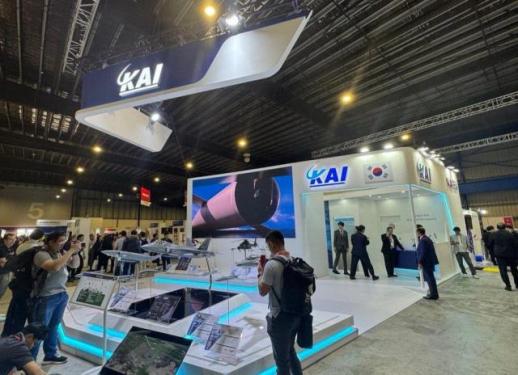 KAI explores space industry cooperation with Saudi Arabia at WDS 2026 Korea Aerospace Industries, known as KAI, said Feb. 13 it discussed potential cooperation on space projects with Saudi Arabia’s Ministry of Investment at the World Defense Show WDS 2026 in Riyadh. KAI CEO Cha Jae-byeong met Feb. 10 (local time) with Saudi Investment Minister Khalid Al-Falih to discuss cooperation in future industries that could align with the Saudi government’s Vision 2030 project, including space, satellite communications and aviation. KAI said it has been steadily strengthening cooperation with Saudi Arabia in space and aviation, and expects the latest talks to broaden collaboration. In October 2023 in Riyadh, KAI signed an MOU with the Saudi Space Agency to build a cooperative relationship in the space sector. It has pursued technology development and operations to expand the space market, joint commercialization, and investment in new startups. KAI said it also met with the Saudi Space Agency during the exhibition to reaffirm their strategic partnership. “Saudi Arabia can be a strategic partner for K-Space’s overseas expansion beyond K-defense, including the KF-21,” Cha said. “We will prepare the best proposal to expand cooperation in space and aviation linked to Saudi Vision 2030.” KAI said it built the country’s first private space center in 2020 and is preparing to commercialize mass production and exports of satellites, a key part of the New Space era, based on platforms such as next-generation mid-sized satellites, 6G communications satellites and nanosatellites. The company has participated in government-led satellite development projects over the past 40-plus years, including multipurpose satellites, geostationary composite satellites, next-generation mid-sized satellites, nanosatellites and the 425 satellite program, helping drive commercialization of the private space industry. KAI said the next-generation mid-sized satellites No. 2 and No. 4, for which it served as lead developer, are scheduled for launch this year. 2026-02-13 11:18:00
 -
 Winter Olympics '26: Asia shines on snow and ice with teen snowboarder's gold SEOUL, February 13 (AJP) -Asian athletes continued to command attention on the eighth day of competition at the Winter Olympics in Milan and Cortina d’Ampezzo, highlighted by South Korean snowboarder Choi Ga-on’s landmark gold medal and podium finishes by skaters from China and Japan. Choi delivered the defining moment of the day in the women’s snowboard halfpipe final. After qualifying in sixth place, she rose to the occasion with a decisive final run, scoring 90.25 points to claim gold. American favorite Chloe Kim, who had topped qualification, settled for silver with 88.00, while Japan’s Ono Mitsuki surged from 11th in qualifying to take bronze with 85.00. The halfpipe final emerged as the day’s standout Asian showcase. In short track speed skating, China’s Sun Long claimed silver in the men’s 1,000 meters, while South Korea’s Rim Jong-un secured bronze in 1 minute 24.611. Gold went to the Netherlands’ Jens van ’t Wout, who clocked 1 minute 24.537. Rim’s podium finish added to Korea’s tally, reinforcing its depth in short track competition. In curling, South Korea’s women’s team — Gim Eun-ji, Kim Min-ji, Kim Su-ji, Seol Ye-eun and Seol Ye-ji — fell 4-8 to the United States in round-robin play before rebounding with a 7-2 victory over host nation Italy. As of Day 8, Japan stands 10th overall in the medal table with two gold, two silver and six bronze medals. South Korea ranks 11th with one gold, one silver and two bronze, while China sits 16th with two silver and two bronze. Choi’s triumph in Livigno, which stole the Olympic spotlight, also marked a turning point in South Korea’s winter sports history. Long dominant in skating disciplines, the country is now expanding its presence in snow events, signaling a broader and more balanced Olympic profile. 2026-02-13 11:10:44
 -
 Renault Korea's new hybrid SUV receives 5,000 pre-orders in about a month SEOUL, February 13 (AJP) - Renault Korea said on Friday that orders for its new crossover sport utility vehicle have exceeded 5,000 units since pre-orders began last month. According to the France-based automaker, the midsize hybrid Filante, which combines features of a sedan and an SUV, boasts 250 horsepower and artificial intelligence (AI)-based connectivity services. It comes with a price tag of about 43.32 million Korean won (about US$30,000) after tax incentives for eco-friendly vehicles. Deliveries are set to begin next month. The automaker is also preparing promotional events during the Lunar New Year holiday, offering gifts such as mini bags, umbrellas and maintenance coupons to 2,026 customers who visit showrooms for purchase consultations or test drives. 2026-02-13 10:39:41
 -
 T’way Air Sets Up Special Transport Control Center for Lunar New Year Travel Rush T’way Air said Thursday it will operate a “special transport control center” to handle higher demand and heavier airport congestion during the Lunar New Year holiday travel period. The airline said it will strengthen its response system, assign essential staff by department and move to a 24-hour emergency duty schedule to improve passenger convenience and ensure safe operations. T’way Air also highlighted its “easy boarding pass” feature, which lets passengers view their boarding pass immediately from the app’s main screen after completing online check-in. The feature allows boarding-pass access using saved information even for nonmembers or when offline. The airline said it also provides a “boarding guidance” function that offers real-time, day-of-departure information at the airport, including congestion levels, gate details and remaining time to the flight, to help passengers manage routes and waiting times more efficiently. A T’way Air official said, “In preparation for the increase in airport passengers during the Lunar New Year holiday period, we are continuously upgrading our digital services so customers flying with T’way Air can start their trips more conveniently and efficiently.”* This article has been translated by AI. 2026-02-13 10:27:00
 -
 SK Multi Utility Begins Full Operations at 300-MW LNG-LPG Cogeneration Plant in Ulsan SK Multi Utility (SKMU) said Thursday it has completed efficiency verification and entered stable operations at its 300-megawatt LNG-LPG cogeneration plant in Nam-gu, Ulsan. The project began construction in July 2022 and, after about 40 months of work, finished trial runs that started in late 2025. Cogeneration, or combined heat and power (CHP), produces electricity and steam from a single fuel source to boost energy efficiency. The SKMU plant was built on a site of about 39,000 square meters and includes one gas turbine, one steam turbine and one heat recovery steam generator (HRSG). The 300-MW facility can supply 2,412,000 megawatt-hours of electricity and 1.82 million tons of steam a year, SKMU said. The electricity output is enough for about 670,000 four-person households for a year, roughly comparable to the number of households in Daejeon (690,000). The steam output is intended to support petrochemical processes at the Ulsan Mipo National Industrial Complex. The plant uses two fuels, LNG and LPG, and SKMU said it has built a low-carbon energy system that reduces environmental burdens compared with coal-based facilities. SKMU said the new facility uses a dual-fuel system that can switch between LNG and LPG depending on seasonal and market price swings and supply conditions, allowing more stable and predictable energy costs for customers. If LNG prices surge, the gas turbine can run on LPG, and it can switch back to LNG when LPG supply is tight. SKMU said it expects to supply electricity and steam to existing customers including SK Chemicals, Toray Advanced Materials and KET, as well as other companies in the Ulsan Mipo National Industrial Complex. The company said it aims to improve production stability and cost efficiency for local businesses by ensuring reliable power and steam. "As economic slowdowns and uncertainty increase across industries, cutting power costs such as electricity is an important factor in improving manufacturing efficiency and cost competitiveness," SKMU CEO Kim Nam Gyu said. He said the company will use the dual-fuel system, strategic fuel operations and continued efficiency upgrades to build a sustainable energy ecosystem in the industrial complex.* This article has been translated by AI. 2026-02-13 10:18:00
 -
Hyundai Palisade, Kia EV9 win top honors at Canada Car of the Year awards Hyundai Motor Group said Friday that the Hyundai Palisade won 2026 Canadian Utility Vehicle of the Year and the Kia EV9 won 2026 Canadian Electric Utility Vehicle of the Year at the 2026 Canadian International AutoShow in Toronto. The Canadian Car of the Year awards are decided by a 53-member jury of Canadian auto experts and journalists, who test-drive vehicles and vote in four categories: passenger car, utility vehicle, electric passenger car and electric utility vehicle. With the Palisade and EV9 wins, Hyundai Motor Group said it has taken two awards at the Canadian Car of the Year program for four straight years. The group has also won Canadian Utility Vehicle of the Year five times in the past six years: the GV80 in 2021, Tucson in 2022, Ioniq 5 in 2023, Santa Fe in 2025 and the Palisade this year. One local outlet previously described the run as a “dynasty,” the company said. Jurors said the Palisade stands out for “an appealing balance of performance and fuel efficiency” from its next-generation hybrid powertrain, along with a range of safety systems. They praised the EV9 as “the best three-row electric vehicle,” citing its styling, an available GT option with more than 500 horsepower, and overall value, price and size. The Palisade was also selected as the utility winner at last month’s 2026 North American Car of the Year awards, scoring 270 points to finish well ahead of the Nissan Leaf (135) and Lucid Gravity (85). Hyundai Motor Group said the model posted its highest annual global sales since its 2018 launch last year, with 211,215 units sold on an IR basis. The EV9 won two titles at the 2024 World Car Awards: World Car of the Year and World Electric Vehicle. It has also been recognized by major organizations and media outlets, including 2024 North American Utility Vehicle of the Year and the 2024 Women’s Worldwide Car of the Year, the company said. A Hyundai Motor Group official said the dual wins in Canada show the company’s innovation and product competitiveness as it seeks to lead future mobility.* This article has been translated by AI. 2026-02-13 10:09:00
-
 Korean Heritage Campaign Brings Performances, Media Art to Times Square South Korea’s Korea Heritage Service and its affiliated National Heritage Promotion Agency, working with the Korean Cultural Center New York, opened a promotional event for the “Visit Korean Heritage” campaign in New York on Feb. 11 (local time) under the title “Korea on Stage in New York.” Organizers themed the program “Golden Blessings: Discovering Korean Cultural Heritage,” launching it in Times Square with heritage videos on major screens and a special performance. The event also features media art, traditional arts performances and a temple-food experience to promote the value of South Korea’s national heritage. Since Feb. 9, advertising videos highlighting South Korea’s national heritage have been running on Times Square’s large electronic billboards. The videos feature national heritage sites, traditional crafts and court dance, presenting what organizers described as the roots of today’s globally popular K-culture. At 3 p.m. Feb. 11 in Times Square, the Chumnuri Korean Traditional Dance Company (KTDOC) and the National Heritage Promotion Agency’s arts troupe staged a roughly 30-minute special performance, “Wishes in Motion Times Square.” The program included performances with the modeumbuk drum, the sogo drum dance and the Jindo bukchum drum dance. Afterward, hat-shaped promotional items were handed out and quickly ran out. An opening ceremony followed at 7 p.m. at the Korean Cultural Center New York, attended by about 250 people, including Korea Heritage Service Administrator Heo Min, National Heritage Promotion Agency Director Lee Gui Young, Korean Cultural Center New York Director Kim Cheon Su, South Korea’s ambassador to the United Nations, Cha Ji Hoon, and Lee Sang Ho, acting consul general in New York, along with local arts and culture figures. At the ceremony, Heo presented Kevin Woo — who played the lead vocalist of “Saja Boys” in the film “K-pop Demon Hunters” — with a “Visit Korean Heritage Passport,” which organizers said symbolized an invitation to visit South Korea and experience K-heritage firsthand. Guests also exchanged Lunar New Year greetings for Seollal. In opening remarks, Heo said it was meaningful to introduce South Korea’s national heritage in New York, calling it a center of global culture. He said the event would help show that K-culture’s popularity is rooted in the depth and beauty of Korean heritage built over thousands of years. With the launch, performances and hands-on programs promoting Korean heritage also began. Starting Feb. 12, traditional arts performances by the agency’s arts troupe and a temple-food class with Venerable Jeong Kwan, a master of temple cuisine, drew more than 1,700 applicants as soon as reservations opened. A “Visit Korean Heritage Passport” produced for the event also proved popular. Participants who collected stamps after visiting experiences on each floor received K-heritage goods such as a saekdong key ring and a gat key ring. Participants said they wanted to visit South Korea with the passport after experiencing the programs. More information is available on the official Visit Korean Heritage campaign website and the Korean Cultural Center New York website. The Korea Heritage Service and the National Heritage Promotion Agency said they plan to expand programs following “Korea on Stage in New York” to promote the value of South Korea’s national heritage worldwide and strengthen it as a signature cultural content.* This article has been translated by AI. 2026-02-13 10:06:00