

Journalist

Lester Munson
-
 Asian equities swing flat in post-FOMC early trade; KOSDAQ unfazed SEOUL, January 29 (AJP) - Asian equities traded unevenly in early Thursday sessions following the Federal Open Market Committee (FOMC) decision, with key indices swinging between gains and losses as investors struggled to digest a flood of corporate earnings alongside a renewed rebound in the U.S. dollar. The previous rally in South Korea and Taiwan gave way to choppy, directionless trading, while mainland China and Japan remained clouded by uncertainty, making it difficult for investors to establish a clear near-term trend. As of 10:30 a.m. Seoul time, the Korean won strengthened, with the dollar down 4 won at 1,429.50. As widely expected, the Federal Reserve on Wednesday entered a new holding pattern on interest rates, signaling little urgency to resume cuts following contentious reductions at its previous three meetings. The decision to keep the benchmark federal funds rate unchanged at 3.50–3.75 percent was approved by a 10–2 vote. Fed Chair Jerome Powell said recent data had painted a somewhat brighter picture than at the last meeting, citing firmer economic growth and tentative signs of stabilization in the labor market. Despite U.S. President Donald Trump’s continued endorsement of a weaker dollar as “great,” the greenback found firm support in offshore trading. This followed Treasury Secretary Scott Bessent’s emphatic “Absolutely not” when asked whether Washington was deliberately encouraging yen strength to prevent an unwinding of yen-carry trades. The remarks caused the won’s early gains to fade. South Korea’s benchmark KOSPI was trading at 5,143 as of 10:30 a.m., down 0.54 percent, as the market took a breather after a monthlong record-setting rally. After hitting all-time highs for two consecutive sessions on Tuesday and Wednesday, the index appeared to have entered a consolidation phase. Performance among South Korea’s semiconductor blue chips diverged. Samsung Electronics fell 1.7 percent to 159,600 won, as its record fourth-quarter and full-year chip earnings were overshadowed by those of its local rival. SK Hynix, by contrast, rose 0.5 percent to 845,000 won, continuing to benefit from record earnings and a stronger fundamental valuation. Hyundai Motor climbed 2.5 percent to 505,000 won ahead of its earnings release and conference call later in the day, where it is expected to outline its robotics roadmap. Market attention remained focused on the 2 p.m. announcement, with investors cautious after its key subsidiary Kia reported a nearly 30 percent year-on-year drop in operating profit. Secondary battery stocks came under heavier selling pressure. LG Energy Solution plunged 4.3 percent to 412,500 won, once again relinquishing its position as South Korea’s third-largest company by market capitalization to Hyundai Motor. Samsung SDI also slid 4.0 percent to 380,500 won. In contrast, the tech-heavy KOSDAQ defied the broader cautious mood, rising 1.2 percent to 1,147, buoyed by government stimulus expectations and renewed momentum in robotics-related shares. Rainbow Robotics, in which Samsung Electronics is the largest shareholder, surged 11.0 percent to 772,000 won after Samsung publicly reaffirmed its commitment to the humanoid robot market. Robotics optimism also lifted EcoPro BM, which jumped 6.1 percent to 243,000 won, reclaiming the top spot in KOSDAQ market capitalization for the first time in four months. In Tokyo, the Nikkei 225 hovered in positive territory, up 0.2 percent at 53,480. After a weak open, the index reversed course following Bessent’s dismissal of bets against the yen. The yen stood at 153.30 per dollar, up 0.15 yen, though it is expected to weaken again as the dollar regains momentum offshore. Japanese exporters rallied on the currency shift. Toyota Motor rose 2.1 percent to 3,417 yen, while Honda Motor gained 1.5 percent to 1,522 yen. Among semiconductor stocks, Advantest stood out, surging after reporting operating profit of 78.7 billion yen, beating market consensus by 65 percent. Taiwan’s TAIEX slipped 0.6 percent to 32,610, paring part of Wednesday’s 2 percent surge. TSMC edged down 0.55 percent to 1,810 Taiwan dollars, while Foxconn fell 1.1 percent to 223 Taiwan dollars. MediaTek, however, rose 0.85 percent to 1,795 Taiwan dollars on forecasts that it will remain the world’s top mobile chip shipper through 2026. Mainland Chinese markets were mixed. The Shanghai Composite eased 0.15 percent to 4,145, while the Shenzhen Composite added 0.35 percent to 14,396. In Hong Kong, the Hang Seng Index slipped 0.4 percent to 27,707, cooling after the previous session’s nearly 3 percent rally driven by safe-haven demand for gold. 2026-01-29 11:23:11
 -
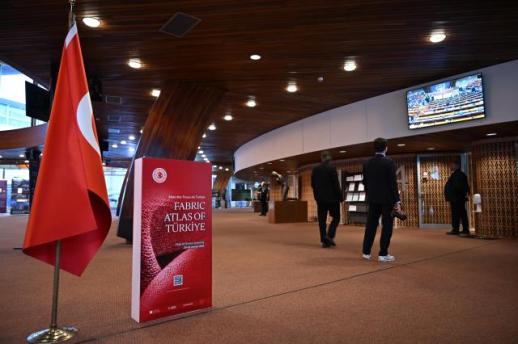 Turkish textile heritage exhibition opens at the Council of Europe SEOUL, January 29 (AJP) - The exhibition titled Fabrics Atlas of Türkiye, The Memory of Fabric officially opened yesterday at the Council of Europe in Strasbourg, France. Hosted by the Turkish Delegation to the Parliamentary Assembly of the Council of Europe (PACE), the event is scheduled to run through January 30 to coincide with the assembly’s winter session. The exhibition is designed to introduce the international community to the long-standing weaving traditions of Türkiye. It features a collection of textiles created using natural fibers and local raw materials, emphasizing production methods that prioritize environmental sustainability. In addition to finished fabrics, the display includes traditional weaving tools and miniature looms. Organized as part of the broader Fabrics Atlas of Türkiye project, the initiative operates under the auspices of First Lady Emine Erdoğan. During the opening, a message from the First Lady was shared, noting that the exhibition serves as a bridge to share the artistic and historical depth of Anatolian weaving heritage. She noted that such projects are essential for the preservation of shared cultural values and the promotion of dialogue between different societies. The event highlights traditional weaving as a sustainable, zero-waste practice that avoids industrial chemical processes. The items on display represent regional techniques from across the country, serving as a record of cultural identity and historical craftsmanship. Bjorn Berge, Deputy Secretary General of the Council of Europe, attended the opening and remarked on the significance of the traditional patterns and cultural diversity represented in the collection. Fatih Dönmez, Head of the Turkish Delegation to the Parliamentary Assembly of the Black Sea Economic Cooperation (PABSEC), stated that the exhibition reflects the country’s commitment to protecting cultural heritage while maintaining environmental responsibility. Zeynep Yıldız, a member of the Turkish Delegation to the Council of Europe and a member of parliament for Ankara, described the exhibition as a synthesis of centuries of cultural interaction that aligns with the founding principles of the Council of Europe. The opening ceremony was attended by members of parliament and international guests, marking the first time these diverse regional weavings have been brought together for an international showcase of this scale. The exhibition remains open to visitors at the Council of Europe building through the end of the week. 2026-01-29 11:21:21
 -
 South Korea ranks fifth in military power — but the list tells only half the story SEOUL, January 29 (AJP) - South Korea, as U.S. President Donald Trump often puts it, is fully capable in conventional warfare — and its global ranking largely backs that claim. Strip away nuclear weapons, and North Korea is no match. According to the 2026 Military Strength Ranking released by U.S.-based Global Firepower (GFP), South Korea placed fifth out of 145 countries, behind only the U.S., Russia, China and India. North Korea ranked 31st. GFP aggregates more than 60 indicators — ranging from the size of military units and defense spending to logistics and geography — into a composite index of conventional military power. Rather than spotlighting a single “wonder weapon,” the ranking aims to measure how much usable force a country can generate and sustain in a major conflict. The U.S. tops the list with a Power Index (PwrIndx) score of 0.0741, where a theoretical score of 0.0000 represents “perfect” capability. South Korea’s score of 0.1642 places it fifth overall. Modernization beyond today’s arsenal Beyond its current inventory, Seoul is pushing ahead with a series of flagship modernization programs designed to anchor its conventional edge into the 2030s and beyond. These include the Korean Next-Generation Destroyer (KDDX) program, which will deliver large, stealthy destroyers equipped with domestically developed radars and missiles; the homegrown KF-21 Boramae fighter, scheduled to enter service from 2026; a multibillion-dollar upgrade of the F-15K fleet; and the AKJCCS project to rebuild the Korea-U.S. joint command-and-control system with AI-enabled decision-support tools. Still, South Korea’s day-to-day military strength rests on a set of core platforms on land, at sea and in the air — the systems that translate budgets and plans into tangible combat power. Ground forces: tanks and big guns On the ground, South Korea relies on modern tanks and heavy artillery to support large conscript and reserve forces. Together, they allow the Army to hold defensive lines in rugged terrain and, if required, mount large-scale counterattacks. At the center of its armored units is the K2 Black Panther, a domestically built main battle tank roughly the size of a city bus, combining heavy armor, a powerful gun and advanced sensors that enable accurate fire on the move. Artillery provides the other half of the Army’s heavy punch. K9 self-propelled howitzers can rapidly move into position, fire on distant targets and relocate before counterfire arrives, while towed artillery remains largely assigned to fixed defenses and rear areas. Multiple-launch rocket systems such as Chunmoo add wide-area and long-range strike capability, creating a dense, layered wall of fire when combined with tanks and guns. Air power: a three-layer fighter fleet In the air, South Korea fields a three-tier fighter structure: stealth aircraft at the top, multirole fighters in the middle and upgraded workhorses at the base. At the high end is the F-35A, a fifth-generation stealth fighter designed to evade radar, gather intelligence and strike high-value targets while acting as a flying sensor hub for other forces. Below it, the F-15K — often described as a “missile truck in the sky” — carries heavy payloads for air-to-air combat and long-range strike missions. The KF-16, the Air Force’s most numerous fighter, handles routine patrols, interceptions and precision strikes. Ongoing upgrades to its radar and avionics are allowing older airframes to perform closer to modern standards. Over the next decade, the KF-21 will slot between the stealthy F-35A and upgraded fourth-generation fighters, further reinforcing South Korea’s qualitative edge. Naval power: big ships and silent submarines At sea, South Korea pairs large surface combatants with quiet submarines to protect its coastlines and sea lanes and to deter regional threats. The KDX-III Sejong the Great-class destroyers, each roughly the length of a football field and displacing more than 8,500 tons, are equipped with powerful Aegis radars and more than 120 vertical launch cells. They can track multiple targets simultaneously, intercept incoming missiles and aircraft, and serve as floating command centers for fleet operations. Newer FFG-III Chungnam-class frigates, displacing about 3,600 tons, add a stealthier, more versatile layer. Their four-sided integrated sensor masts provide 360-degree coverage, while modern anti-air and anti-submarine weapons make them well suited for routine patrols, submarine hunting and convoy protection closer to home. Below the surface, 214-class submarines and the larger 3,000-ton KSS-III Dosan Ahn Changho-class boats can remain submerged for extended periods, quietly tracking enemy vessels or positioning to launch torpedoes, cruise missiles and even ballistic missiles. Seoul continues to upgrade these high-end platforms while retiring older vessels to steadily raise overall fleet quality. A conventional ranking — with clear limits GFP’s ranking places North Korea in the low 30s for conventional strength, up several spots from last year. But the index is not designed to fully capture nuclear weapons, long-range missiles, cyber operations or special forces. South Korea’s fifth-place ranking therefore reflects its non-nuclear conventional capacity rather than the full balance of power on the peninsula. “Those rankings provide a useful snapshot of conventional forces, but they focus primarily on quantifiable metrics like the number of tanks and do not fully capture asymmetric factors such as nuclear weapons, cyber capabilities, or how a real war would unfold,” said Chun In-bum, a retired South Korean Army lieutenant general. Experts note that such indices, by design, focus on conventional capabilities and leave out the nuclear and strategic factors that would shape any real conflict on and around the Korean Peninsula. For Seoul, any serious assessment of security must account not only for North Korea’s nuclear and missile forces, but also for the strategic weapons fielded by neighboring powers — including China, Japan and the U.S. 2026-01-29 10:32:26
 -
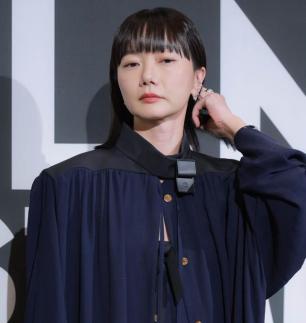 S. Korean actress Bae Doona appointed to Berlin International Film Festival competition jury SEOUL, January 29 (AJP) - South Korean actress Bae Doona has been appointed as a member of the international jury for the 76th Berlin International Film Festival. The festival organizers announced on Wednesday that Bae will join a panel of six other cinema professionals to determine the winners of the Golden and Silver Bears in the main competition category. The jury is led by German director Wim Wenders, who was previously named jury president. Bae will serve alongside a diverse group of international filmmakers, including Nepali director Min Bahadur Bham, Indian documentarian Shivendra Singh Dungarpur, American filmmaker Reinaldo Marcus Green, Japanese director HIKARI, and Polish producer Ewa Puszczynska. Together, they will evaluate 22 films selected for this year's competition. The appointment solidifies Bae's standing as a prominent figure in global cinema. Since her early roles in Bong Joon-ho's "Barking Dogs Never Bite" in 2000 and Park Chan-wook's "Sympathy for Mr. Vengeance" in 2002, she has maintained a prolific career in both South Korean and international productions. Her recent work includes the 2022 film "Broker," directed by Hirokazu Kore-eda, which also competed at major international festivals. Bae is expected to expand her international presence further with the upcoming sci-fi comedy "Alpha Gang," directed by David and Nathan Zellner, which is scheduled for a 2026 release. According to the Berlin International Film Festival's official website, the jury will be responsible for awarding the Golden Bear for Best Film to the winning producers. They also select recipients for several Silver Bears, including the Grand Jury Prize, Jury Prize, Best Director, Best Leading Performance, Best Supporting Performance, Best Screenplay, and Outstanding Artistic Contribution. The 76th edition of the Berlin International Film Festival is scheduled to take place from February 12 to February 22. 2026-01-29 09:58:13
 -
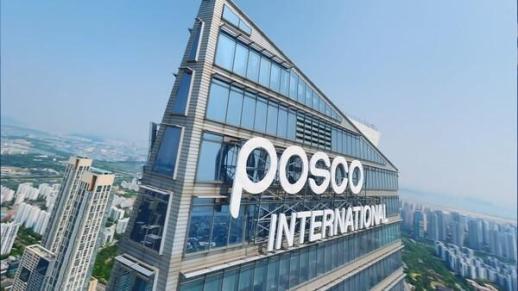 POSCO International posts record operating profit in 2025 SEOUL, January 29 (AJP) - POSCO International said on Thursday that its consolidated operating profit rose 4.3 percent in 2025 from a year earlier to a record 1.17 trillion won, supported by stronger results from its energy and food businesses. Revenue edged up to 32.37 trillion won, while net profit climbed 26.5 percent to 636.8 billion won, the company said in a regulatory filing. The company has reported operating profit of more than 1 trillion won for three consecutive years since its 2023 merger with POSCO Energy. Operating profit from the energy segment totaled 623 billion won, accounting for about 54 percent of the group’s total. The increase reflected higher sales from the Myanmar gas field and expanded production at Australia’s Senex gas field, the company said. In the food segment, revenue surged 58 percent to 357 billion won, driven by the acquisition of a palm oil company and firm palm oil prices. Operating profit in the segment rose 23 percent to 101 billion won. In the materials business, the drive motor core unit returned to profit, posting operating profit of 19.0 billion won after improving its product mix and cutting costs. Operating profit from power generation, however, fell 33 percent to 114 billion won, weighed down by lower wholesale electricity prices and reduced utilization rates. POSCO International said its net debt ratio stood at 62.8 percent at the end of 2025, down 3 percentage points from a year earlier. Total assets rose by about 1.4 trillion won to 18.75 trillion won. * This article, published by Aju Business Daily, was translated by AI and edited by AJP. 2026-01-29 09:57:36
 -
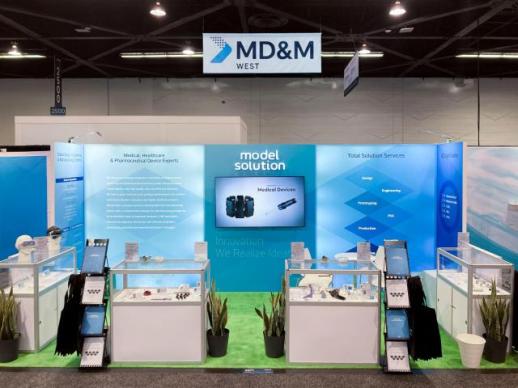 Model Solution to Exhibit at MD&M West 2026 in Anaheim Model Solution said Wednesday it will take part in Medical Design & Manufacturing West 2026 (MD&M West), a medical-device trade show running Feb. 3-5 in Anaheim, California. MD&M West is North America’s largest specialized exhibition covering medical-device design, manufacturing and engineering. Medtech companies and medical-device manufacturers and supply-chain officials from around the world attend to share technology trends and industry developments. Model Solution is an affiliate tasked with advancing “Rising Tech” under the mid- to long-term portfolio plan “STREAM (S.T.R.E.A.M),” which the chairman of Korea & Co. Group, Cho Hyun-bum, planned and designed. The company has participated in MD&M West every year since 2017 to find global medical-device clients, with a focus on the U.S., and to deepen its market understanding. At this year’s show, it plans to highlight its “total hardware solution” capabilities for medical devices, spanning product planning, development, production and mass manufacturing, built on a combination of design and precision manufacturing. It also plans to display medical devices for diagnostics and analysis, gene-therapy-related devices and diabetes management devices, for which it has participated in development and currently supplies key components. “Demand is rising for manufacturing partners that can deliver design and engineering capabilities while also ensuring stable mass production and quality response,” CEO Yoo Hyung-min said. “Model Solution will strengthen its role as a partner that supports global medical-device customers in both development and production, based on an integrated manufacturing solution spanning design, prototypes and mass production.”* This article has been translated by AI. 2026-01-29 09:06:13
 -
 KOSPI Tops 5,200 for First Time South Korea’s benchmark KOSPI index topped 5,200 points for the first time, extending a rally into a third straight session after closing above 5,000 on Jan. 27. According to the Korea Exchange, the index rose 2.61 points, or 1.40%, from the previous session to trade at 5,243.42 shortly after the open, pushing past the 5,200 mark.* This article has been translated by AI. 2026-01-29 09:06:00
 -
 South Korea’s Kospi Opens Up 1.40% to 5,243.42; Kosdaq Rises 1.76% South Korea’s Kospi opened up 72.61 points, or 1.40%, at 5,243.42. The Kosdaq opened up 19.91 points, or 1.76%, at 1,153.43.* This article has been translated by AI. 2026-01-29 09:03:00
 -
 SK Securities Raises Samsung C&T Target Price on Earnings, Shareholder Returns Outlook SK Securities said Wednesday it raised its target price for Samsung C&T to 370,000 won from 350,000 won, citing improving results and the likelihood of stronger shareholder returns. It maintained its “buy” rating. Choi Kwan Soon, an analyst at SK Securities, said Samsung C&T’s revenue fell 3.2% last year, but the firm forecasts revenue of 44.5 trillion won this year, up 9.3%. He said the goal is achievable given rising orders in the construction unit’s high-tech segment and higher utilization in the biotech business. Choi said improved internal cash flow is likely to support expanded shareholder returns. He added that with the company set to cancel all treasury shares it holds, additional buybacks this year are possible, and expectations remain for a new dividend policy scheduled to be announced next month. Choi said Samsung C&T trades at a 54.6% discount to its net asset value, meaning gains in subsidiary share prices have not been fully reflected. He said the new shareholder-return policy expected next month could be a trigger to narrow that discount. Samsung C&T’s fourth-quarter revenue and operating profit rose 8.4% and 29.6% from a year earlier to 10.8 trillion won and 822.3 billion won, respectively. The company confirmed a dividend of 2,800 won per share, up 200 won from the previous year, and decided to cancel 4.6% of its treasury shares.* This article has been translated by AI. 2026-01-29 09:00:17
 -
 Gwangju Police Book 50-Something Woman for Drunk Driving After Red-Light Violation Gwangju Bukbu Police Station said Thursday it booked a woman in her 50s, identified only as A, on suspicion of driving under the influence in violation of the Road Traffic Act. Police said she is accused of driving about 2 kilometers while intoxicated, leaving a restaurant in Yongbong-dong, Buk-gu, at about 4 p.m. Wednesday and heading to an area near the Unam 2-dong Administrative Welfare Center. Officers said she ran a red light while driving through an intersection and was caught by nearby patrol police who witnessed the violation. Her blood alcohol concentration measured between 0.03% and 0.08%, a level that triggers license suspension, police said. Police said they are investigating the circumstances of her drinking.* This article has been translated by AI. 2026-01-29 09:00:00