

Journalist

Lester Munson
-
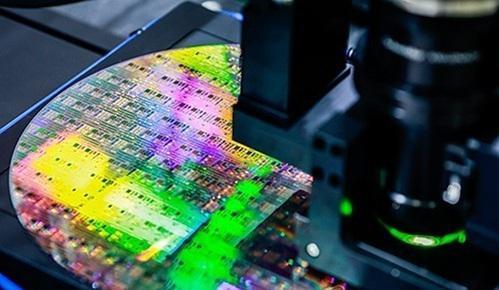 South Korea Approaches $1 Trillion in Exports, Must Prepare for Post-Semiconductor Era South Korea's exports are on the brink of a historic milestone. Projections indicate that this year's exports will exceed $900 billion for the first time. The Korea Institute for Industrial Economics and Trade recently forecast that exports will reach $924.4 billion in 2026, a 30.3% increase from the previous year. The trade balance is also expected to show a record surplus of around $220 billion. Some analysts predict that the country could soon enter the "trillion-dollar export era."This achievement is particularly significant given the current global economic uncertainties, including the prolonged Middle East conflict, high oil prices, rising protectionism, and the U.S.-China tech rivalry. Exports remain a crucial pillar of the South Korean economy and one of the most important indicators of national competitiveness.The primary driver behind this export growth is undoubtedly the semiconductor sector. As the competition for artificial intelligence (AI) investments intensifies, demand for high-bandwidth memory (HBM) and AI server semiconductors has surged, benefiting South Korea's semiconductor industry, led by Samsung Electronics and SK Hynix. The institute projects that semiconductor export growth will exceed 100% this year, with semiconductors accounting for about 40% of total exports.As the global industrial landscape shifts towards AI, the strategic value of South Korea's semiconductor industry is rising. Major U.S. tech companies are investing heavily in building AI data centers, increasing their reliance on South Korean memory semiconductors. This current export boom is not merely a recovery but is intertwined with the broader AI industrial revolution, marking a departure from past trends.However, a significant portion of the current export success relies on semiconductors. The Korea Institute for Industrial Economics and Trade has noted that the recent export increase is largely due to rising prices rather than expanded production volumes. Indeed, the sharp rise in prices for DRAM and NAND flash has significantly boosted export figures, but this does not necessarily indicate a structural leap in the overall competitiveness of South Korea's industry.The risks of an economy dependent on semiconductors are not new to South Korea. When the semiconductor market is strong, the entire national economy benefits, but downturns can simultaneously disrupt growth rates, investments, and stock markets. A structure where a single industry accounts for most of the export increase is not sustainable in the long term.The key issue is not the $924.4 billion in exports but what comes next. South Korea must enhance its manufacturing capabilities based on its AI semiconductor competitiveness. The industrial ecosystem needs to expand into robotics, autonomous driving, biotechnology, energy infrastructure, next-generation power grids, defense, and smart factories. In the AI era, the winners will likely be those countries that effectively integrate AI across all sectors, not just those that excel in semiconductor production.The government must not become complacent with these numbers. It needs to aggressively pursue increased research and development investments, regulatory innovation, expansion of power infrastructure, and the cultivation of advanced talent. In the AI era, semiconductor competitiveness alone will not suffice; data, energy, talent, and software capabilities must also be strengthened.While a $1 trillion export target is undoubtedly a commendable goal, it is not the final destination. What is needed now is not celebration over record-breaking figures but a strategic approach to prepare for the next industrial revolution. The semiconductor supercycle presents an opportunity, but if this opportunity does not translate into a structural leap in national competitiveness, the current boom may eventually fade away. What South Korea truly needs to prepare for is not just $1 trillion in exports but the "post-semiconductor era." 2026-05-31 10:21:00
 -
 Hana Financial Group Successfully Hosts First Money Show Hana Financial Group's inaugural asset management event, the 'Hana Financial Money Show,' was a resounding success. Pre-registration closed within a day, and seats for the event were quickly filled, confirming the strong demand for asset management services.The first 'Hana Financial Money Show' took place on May 28 at the group's headquarters in Myeongdong, Seoul, and was reported to be a success on May 31.Registration for the event was conducted through Hana Financial's main mobile application, 'Hana OneQ,' and attracted approximately 1,500 participants, leading to an early closure of sign-ups.The Hana Financial Money Show featured participation from major subsidiaries, including Hana Bank, Hana Securities, Hana Life Insurance, and Hana General Insurance. Unlike previous seminars that were held separately by each subsidiary, this event provided a unified asset management service at the group level.The event included specialized lectures on various aspects of asset management, one-on-one personalized consulting, and an event zone. Consultation booths covered topics such as asset succession, gift and inheritance tax, investment strategies, domestic and international stock market outlooks, and insurance coverage analysis.The lecture program featured experts from Hana Bank discussing real estate succession and tax-saving strategies, as well as a market outlook presentation by analysts from Hana Securities.Hana Financial Group Chairman Ham Young-joo stated, "This Money Show will serve as an opportunity to become a reliable lifelong partner in our customers' asset management journey, safeguarding their dreams and their families' futures."* This article has been translated by AI. 2026-05-31 10:21:00
 -
 AJP joins World News Media Congress as AI takes center stage in Marseille SEOUL, May 31 (AJP) - Artificial intelligence has moved from a supporting theme to a central pillar of the global news industry's annual summit, as publishers, editors and media executives gather in southern France this week to navigate a rapidly changing information landscape. The 77th World News Media Congress, organized by the global news publishers association WAN-IFRA, opens Monday in Marseille, bringing together about 1,000 media leaders from more than 60 countries for three days of discussions on journalism, technology and business sustainability. For the first time, the Congress features a dedicated "AI in Media" track alongside its traditional Future of Journalism and Revenue and Growth programs, reflecting how generative AI has evolved from an experimental newsroom tool into a strategic priority for publishers worldwide. Aju Media, which has integrated AI across editorial production, translation, video creation and multi-platform distribution, has been invited to share its experience on newsroom transformation and audience growth in the AI era. The gathering marks WAN-IFRA's return to France for the first time in more than three decades. The event is being held at Marseille's Palais du Pharo, a 19th-century palace overlooking the Mediterranean that was built by Emperor Napoleon III. Founded around 600 BC, Marseille is France's oldest city and one of Europe's most diverse ports, linking Europe, Africa and the Middle East. WAN-IFRA said the choice reflects a deliberate effort to move beyond traditional media capitals and highlight emerging voices shaping the future of journalism. The annual Congress traces its roots to 1948, when delegates of the first FIEJ Congress — the predecessor to WAN-IFRA — gathered in Paris. Since then it has become the world's largest annual meeting of news publishing executives, rotating among cities across five continents. Previous editions have been held in Seoul, Cape Town, Taipei and Krakow. WAN-IFRA today represents more than 3,000 news publishing companies and 60 publishers' associations covering approximately 18,000 publications in 120 countries. This year's theme, "Rising Voices. Emerging Risks. Inspiring Futures," reflects the industry's struggle to adapt to disruptive technologies, shifting audience behavior, platform dependency and declining public trust. The AI emphasis marks a notable evolution from previous gatherings. The 2025 Congress in Krakow addressed artificial intelligence within the broader framework of media transformation under the banner "Mastering Media's New Playbook." The previous year's 75th anniversary edition in Copenhagen focused on "Shaping the Future of News Media in the AI Era." This year, however, AI has been elevated into a standalone strategic agenda. WAN-IFRA described AI as a "defining pillar" of its activities in its latest annual review. Its Newsroom AI Catalyst accelerator, developed in partnership with OpenAI, has involved 145 news organizations worldwide in experimenting with and deploying AI-powered newsroom tools. The Congress will also feature pre-conference workshops on technology, innovation, editorial strategy and business development, while industry-led roundtable discussions will examine media sustainability, revenue diversification, the future of print and the growing creator economy. All sessions will be conducted in English with AI-powered live translation available in more than 50 languages. The event will conclude with the presentation of WAN-IFRA's Golden Pen of Freedom Award, the organization's highest honor for press freedom, and the Digital Media Awards Worldwide, which now include categories recognizing the best use of artificial intelligence in newsroom operations and revenue generation. Following the Congress, delegates will visit leading Paris-based media organizations on a study tour scheduled for June 4 and 5. 2026-05-31 10:17:04
 -
 Netmarble's 'Soul: Enchant' Character Name Reservation Closes in 15 Minutes, Second Round Announced Netmarble's new massively multiplayer online role-playing game (MMORPG) "Soul: Enchant" saw its character name reservation event close just 15 minutes after it began, demonstrating significant user interest. On May 29 at 8 p.m., the first round of character name reservations ended early, prompting Netmarble to expand server capacity and announce a second round on May 31. The second round of character name reservations will run until June 5 at 8 p.m. It will cover the same six worlds and 30 servers as the first round, allowing users to claim a unique character name on a first-come, first-served basis across all servers. To participate in the character name reservation, users must register in advance and log in through the Netmarble integrated authentication process on the official "Soul: Enchant" brand site. Additionally, Netmarble released a teaser video for a live broadcast scheduled for June 11 on its official YouTube channel. A pre-question board has also been established on the official site to gather user inquiries. Meanwhile, "Soul: Enchant" is currently accepting pre-registrations ahead of its official launch on June 18 at noon. Users can register through the official brand site and app markets, with participants receiving various in-game rewards, including an "Infinite Stamina Potion." Netmarble plans to sequentially release game information and in-game videos through its official site and YouTube channel in the coming weeks.* This article has been translated by AI. 2026-05-31 10:15:00
 -
 LG Uplus Transitions Corporate Network to Wi-Fi 7, Enhancing Smart Office Capabilities LG Uplus announced on May 31 that it will fully transition its corporate wireless network to the next-generation communication standard, Wi-Fi 7 (802.11be), while also restructuring its authentication methods and network architecture. Wi-Fi 7 offers theoretical speeds up to 4.8 times faster than its predecessor, Wi-Fi 6/6E, along with ultra-low latency. To enhance the wireless environment at its main office, which experiences high traffic, LG Uplus has adopted key technologies from Wi-Fi 7. The company has implemented a "320MHz ultra-wideband channel," doubling the previous data transmission bandwidth of 160MHz. This expansion allows for seamless connectivity even in crowded environments where many users are accessing the network simultaneously. Additionally, LG Uplus has introduced multi-frequency simultaneous connection technology and the "4K-QAM" technology, which improves transmission efficiency by over 20%. This upgrade aims to stabilize video conferencing and cloud-based virtual desktop infrastructure (VDI) to wired LAN standards. A new "Unified IP System" has been established, integrating the wireless authentication framework with an automatic IP allocation system (DHCP). Previously, wireless networks were separated by office locations, requiring re-authentication each time employees moved between buildings. Now, employees can transition between locations such as Yongsan, Magok, and Sangam without interruption, maintaining a consistent network environment. The introduction of a "certificate-based automatic connection system" eliminates cumbersome login procedures, enhancing user convenience. Furthermore, a new "guest-only wireless network" has been created to improve collaboration with external partners while enhancing security. To maximize wireless scalability and management efficiency, LG Uplus designed this infrastructure based on a central data center. The system will first be applied to major offices this year, with plans to gradually expand the Wi-Fi 7 environment to regional branches and business sites nationwide. Kwak Hyo-shin, head of the architecture lab at LG Uplus, stated, "The transition to Wi-Fi 7 is not just about speed improvement; it represents a complete transformation of our corporate infrastructure to a wireless-centric model. We will continue to enhance our network competitiveness, optimized for AI and cloud-based work environments."* This article has been translated by AI. 2026-05-31 10:09:00
 -
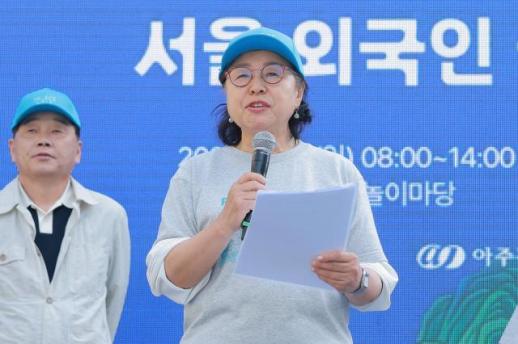 Seoul's Palace Walking Event Promotes Global Tourism, Says Tourism Chief Jo Tae-sook, the head of the Seoul Tourism Association, emphasized the importance of experiential tourism content utilizing Seoul's palaces while pledging to enhance the global competitiveness of the city's tourism industry on May 31. Speaking at the '2026 Seoul Foreign Palace Walking Event' held in Gwanghwamun Square, Jo stated, "Seoul's palaces are not just cultural heritage; they are valuable tourism resources that embody South Korea's history, tradition, and the unique charm of Seoul." He noted, "This event is particularly meaningful as it allows foreign participants to walk and experience the beauty of the palaces and Korean culture firsthand. The world is changing rapidly, and this type of global tourism content is essential." Jo added, "In this context, the palace walking event is a special occasion to enjoy Seoul's historical and cultural tourism, serving as an opportunity to showcase the city's new attractions to both domestic and international tourists." He also mentioned that the Seoul Tourism Association continues to collaborate with the tourism industry to support the development of Seoul's tourism sector and activate the global tourism industry. "We will do our utmost to ensure that Seoul becomes a sought-after tourist destination for people around the world," he said. Organized by Aju Economy, the foreign palace walking event features a route of approximately 7 kilometers that includes major historical sites such as Gyeongbokgung Palace, Changdeokgung Palace, Changgyeonggung Palace, and Jogyesa Temple, returning to Gwanghwamun Square. It was designed to allow both citizens and foreigners to experience Seoul's traditions and charm together. The event attracted over 1,200 foreign participants from various countries, including China, Japan, the United States, France, India, Vietnam, and Mexico, along with around 800 local residents, demonstrating a strong response. 2026-05-31 09:54:00
 -
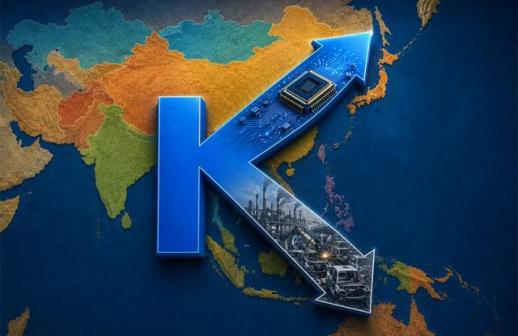 Transforming South Korea: The AI Semiconductor Revolution History does not offer the same opportunities to every nation. Some countries remain peripheral for centuries, while others decline after missing a single chance. However, there are rare instances where nations seize new opportunities at pivotal moments in history. South Korea is currently in such a situation. In the 1960s and 1970s, South Korea laid the foundation for economic growth through steel and shipbuilding. In the 1980s and 1990s, it entered the global market with its electronics and automotive industries. Since the 2000s, South Korea has risen to developed nation status through semiconductors and information and communication technology (ICT). Now, it stands once again at a monumental civilizational turning point, this time with artificial intelligence (AI). Many people perceive AI as merely a technology or service, often thinking of conversational AI like ChatGPT, image generation AI, or autonomous driving technology. However, AI is not just a technology; it represents a new industrial order and, more profoundly, a new operating system for civilization. Just as the steam engine replaced human muscle during the Industrial Revolution, electricity transformed factories and cities, and the internet revolutionized the flow of information, AI is reshaping human intellectual labor itself. The ways doctors diagnose, lawyers work, researchers conduct studies, and journalists gather information are all changing. AI is permeating factories, finance, defense, education, administration, and urban management. Humanity is on the brink of the most significant technological transition since the Industrial Revolution. To understand AI, one crucial fact must be acknowledged: AI is not solely a software industry. It requires vast amounts of data to be stored and processed, necessitating immense computational power, memory, data centers, communication networks, and energy. While the world of AI may appear virtual, it is firmly rooted in the real economy. Ultimately, the essence of the AI revolution is a semiconductor revolution, and the core of the AI power struggle is a battle for semiconductor supremacy. The trends in global capital markets in 2025 and 2026 illustrate this clearly. The leading companies on the U.S. stock market are no longer traditional manufacturing firms. AI-related companies like NVIDIA, Microsoft, Amazon, Alphabet, Meta, and Apple are at the forefront of the global capital market. Notably, NVIDIA has emerged as a symbol of the AI era. Once known primarily as a gaming graphics card company, it has now captured the attention of global investors. The reason is straightforward: NVIDIA's GPUs are the essential devices for AI computations. However, many overlook a critical fact: no matter how advanced a GPU is, it cannot function without memory to store and supply data. Just as the human brain cannot think without memory, AI cannot exist without it. If the GPU is the brain of AI, then memory is its memory. This is where South Korea's strategic value comes into play. South Korea currently stands at the center of the global memory semiconductor market. Samsung Electronics and SK Hynix are dominant players in the DRAM market and have achieved world-class competitiveness in the HBM (high-bandwidth memory) sector, which has emerged as a key product in the AI era. HBM is not just any memory; it is a critical component that determines the performance of AI servers. As AI models grow larger, the speed of data transfer between GPUs and memory becomes crucial, and ultimately, HBM performance dictates AI performance. In fact, the scale of AI models is increasing explosively. Early generative AI models utilized billions of parameters, while the latest models reportedly use hundreds of billions, with some exceeding one trillion parameters. This is not merely a technological advancement; it reflects the need for AI to understand complex contexts like humans and retain long-term information. The ability to analyze documents with hundreds of thousands of characters, learn from vast databases, and maintain long-term conversations is becoming increasingly important. Consequently, the competitiveness of AI is shifting from computational power to memory capacity, leading to a dramatic rise in the value of memory semiconductors. Recent forecasts from global market research firms and investment banks predict that the AI memory market will continue to grow at an annual rate of around 30%. Some projections suggest that the HBM market could reach approximately $100 billion by 2030. Currently, SK Hynix holds about 70% of the global HBM market share, while Samsung Electronics continues to make aggressive investments. As the AI revolution persists, South Korea's strategic importance will inevitably increase. The growth of AI data centers is also noteworthy. Today, the AI industry has effectively become synonymous with the data center industry. Global tech giants like Microsoft, Amazon, Google, and Meta are investing astronomical sums into building AI infrastructure. Recent analyses indicate that the investment scale for top hyperscaler companies in AI infrastructure has expanded to hundreds of trillions of won annually. Each AI data center houses tens of thousands of GPUs, necessitating a corresponding vast amount of HBM. Securing semiconductor production capacity for AI servers has become a key element of global competitiveness. This is not merely a growth in the IT industry; it is the construction of the infrastructure for a new industrial revolution. If railroads were the lifeblood of the Industrial Revolution in the 19th century, AI data centers are the lifeblood of digital civilization in the 21st century. Just as the countries that built railroads led the Industrial Revolution, those that establish AI infrastructure are likely to lead the new era. Interestingly, the AI industry does not only benefit semiconductor companies. As AI data centers proliferate, electricity demand surges. Industries related to transformers, wiring, cooling systems, and power distribution also experience growth. A power supply system is needed to operate AI servers, leading to an expansion of energy infrastructure. This is why the global power industry is gaining renewed attention. AI thrives on semiconductors but also consumes vast amounts of electricity. The International Energy Agency (IEA) and various research institutions forecast that power demand from data centers will increase sharply in the coming years. Some projections suggest that power demand from U.S. data centers could nearly double within a few years. This is why there are calls for countries to be both semiconductor powerhouses and energy powerhouses in the AI era. South Korea occupies a uniquely advantageous position amid these changes. It boasts world-class memory semiconductor competitiveness and advanced manufacturing capabilities. The battery and energy infrastructure industries are also strong. Most importantly, it is already deeply embedded in the core supply chain of the AI revolution. While the U.S. leads in AI platforms, it relies on South Korea for memory. China is pushing for AI self-sufficiency but still faces limitations in advanced memory. Europe is ahead in AI regulation and ethical discussions but lacks semiconductor production capacity. Ultimately, South Korea is at the center of the key supply chain in the AI era. The South Korean stock market reflects this reality. Recently, much of the rise in the KOSPI index has been driven by Samsung Electronics and SK Hynix. This is not merely an increase in specific companies' stock prices; it signifies a reassessment of the strategic value of South Korea's semiconductor industry by global capital. The semiconductor industry is not just a single company; it is a vast ecosystem. The materials, equipment, chemicals, logistics, finance, and research and development sectors all grow together. When a semiconductor factory is established, numerous partner companies and related industries move in tandem. Thus, semiconductors are not just an export industry but the growth engine of the entire South Korean economy. Of course, there are points of caution. The world has experienced numerous technology bubbles in the past. There was the dot-com bubble, and excessive optimism about certain industries has existed. Therefore, AI cannot be viewed through rose-colored glasses. However, the key issue is not the bubble but the structure. Currently, AI is not a temporary trend; it is fundamentally changing industrial structures. Companies that do not adopt AI will struggle to maintain competitiveness, and nations that do not leverage AI will find it challenging to secure growth drivers. This trend is unlikely to end in the short term. South Korea is now in a very special position. It has semiconductor technology, manufacturing competitiveness, and a highly educated workforce. Most importantly, it is already part of the core supply chain of the AI revolution. The question is whether it will stop here. Semiconductors are just the beginning. No matter how important semiconductors are, they alone cannot guarantee a nation's future. The true challenge lies in applying AI to real industries—transforming factories, automobiles, shipbuilding, logistics, and cities. Looking back at history, great nations have always prepared for the next stage. Britain moved from coal to railroads, and the United States transitioned from automobiles to the internet. South Korea must also leap from semiconductors to the next stage. It needs to evolve from an AI semiconductor powerhouse to an AI industrial powerhouse, and from an AI industrial powerhouse to an AI civilization state. What we are witnessing in the AI semiconductor supercycle is not merely an industrial boom. It could be a historical starting point for South Korea to once again enter the center of world history. The next phase of that starting point is physical AI and manufacturing AX. The moment AI moves beyond screen-based technology to influence real-world industries, factories, automobiles, robots, ports, and cities, a new industrial revolution will begin. South Korea's future may very well be determined at that juncture. And this is not just a matter of economic growth; it is a question of what kind of nation South Korea will become over the next century.* This article has been translated by AI. 2026-05-31 09:51:00
 -
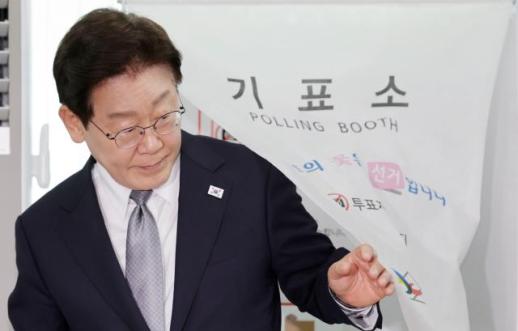 President Lee: Voter Apathy Gives Power to Self-Serving Individuals President Lee Jae-myung stated on May 31 that "the silence and apathy of voters give opportunities to those who deceive the public, abuse power for personal gain, and ruin the lives of themselves and their families." In a post on X (formerly Twitter), he quoted the Greek philosopher Plato, saying, "The cost of political indifference is being ruled by the worst of the worst." He urged citizens to actively participate in voting to demonstrate that the residents of this country are the people, to clarify where power should be directed, and to express the will of the sovereign. "I hope you will seek out and give opportunities to those who will use the power entrusted by the people solely for the people's will, with loyalty and competence," he added. Lee emphasized that "the world can become hell or heaven depending on the mindset and attitude of elected officials," asserting that "the power of voting is stronger than one might think. Whether those elected become loyal servants who enrich our lives or malignant rulers who destroy the world and inflict suffering on the people depends on the hands of the sovereign." He pointed out, "If there are politicians or political groups uncomfortable with this statement, they are precisely the entrenched vested interests that the sovereign must overcome through voting." Earlier, on the second day of early voting for the June 3 local elections, he had also appealed for voter participation, stating, "Abandoning your vote is akin to abandoning the future of yourself and your family." With the early voting turnout for this local election reaching a record high of 23.51%, he appears to be urging citizens to pay attention to the upcoming main voting day. 2026-05-31 09:30:00
 -
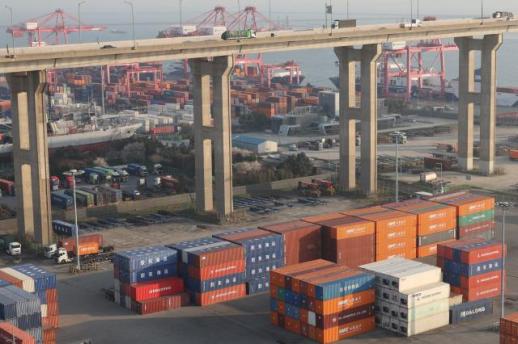 South Korea eyes record $900 billion in exports, aims for top-five trade power SEOUL, May 31 (AJP) - South Korea is on course to ship about $900 billion in goods this year, a surge that would vault Asia's fourth-largest economy into the world's top five trading nations, the trade ministry said. According to data from the Ministry of Trade, Industry and Resources on Sunday, exports reached $709.3 billion last year, the sixth country ever to clear the $700 billion mark and a milestone hit just seven years after crossing $600 billion in 2018. Through April this year, shipments soared 40.9% from a year earlier to a record $306.5 billion. The blistering pace has prompted the government, state researchers and brokerages alike to sharply lift their forecasts, far above the ministry's February target of $740 billion. "There are other variables, so I am cautious, but exports are expected to top $900 billion this year," Minister Kim Jung-kwan told reporters on May 27, adding that breaking into the top five was within reach. Kim stressed the boom was not propped up by chips alone. While semiconductor exports jumped about 140 percent, he said other sectors were growing a sturdy 14 percent to 15 percent, and small-business shipments climbed 10 percent. Beauty, fashion and food exports also advanced briskly, while shipments to emerging markets widened. Some experts forecast that the $1 trillion threshold may be within striking distance. Meritz Securities forecasts exports of $1.02 trillion, a 44.2 percent leap, as analyst Lee Seung-hoon projected chip and computer-component shipments would balloon 160 percent and 212 percent respectively on swelling AI infrastructure. From the second half, the ministry will mount an all-out push, channeling a record 275 trillion won in trade insurance, courting China and India, and nurturing 500 promising small exporters to cement what it called a robust, diversified trade structure. 2026-05-31 09:19:14
 -
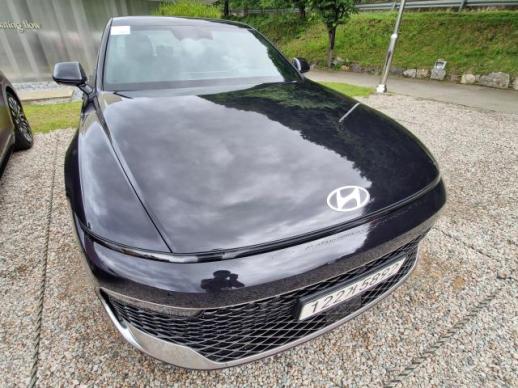 Test Drive: The New Grandeur, a Symbol of Success Hyundai's Grandeur, long regarded as a symbol of success, has returned with a facelift model after approximately three years and five months. This update marks a significant shift towards a software-defined vehicle (SDV). On May 28, I took a round trip of about 140 kilometers from the Godeok Business Valley in Gangdong-gu, Seoul, to Floating Flow in Chuncheon, Gangwon Province, with a passenger in the New Grandeur. The most striking feature from the driver's seat was the 17-inch display that filled the center of the dashboard. The interface has been simplified compared to previous models, replacing complicated buttons with an intuitive layout that mimics the experience of using smart devices. The traditional instrument cluster has been virtually eliminated, replaced by a box-shaped monitor that naturally comes into view beyond the steering wheel. A 'multi-function switch' that integrates turn signal and wiper functions has been added to either side of the steering wheel. The electronic gear shift lever has been moved to the right side of the steering wheel for easier shifting without taking hands off the wheel. As I exited the parking lot, I was pleasantly surprised by the expansive forward visibility. Although it is a sedan, it felt almost like an SUV in terms of openness. The larger side mirrors and the low dashboard design contributed to this improved sightline. In the urban section of Seoul, the quietness was impressive. Even at low speeds, road vibrations and external noise were minimal. The vehicle's body movements were also well-controlled. At the turnaround point, I experienced the true capabilities of the New Grandeur. The Smartstream 2.5-liter gasoline engine provided a natural and consistent response, as expected from a naturally aspirated engine. Switching to sport mode transformed the vehicle's character. Acceleration response became sharper, and the exhaust sound was more pronounced. The engine's RPM and the sound transmitted into the cabin felt more dynamic compared to the previous Grandeur. On the highway and through curves, the driving stability was particularly notable. The steering response was relatively immediate in cornering situations. The lane-keeping assist system operated reliably, helping to maintain the vehicle's center. Hyundai has implemented optimizations such as a cowl crossbar structure, enhanced front strut rigidity, and hydraulic rebound stoppers in the New Grandeur. These measures aim to reduce road impacts and improve ride comfort. A key feature of this model is the transformation of the vehicle's software experience. Hyundai has introduced its first next-generation infotainment platform, Pleos Connect. I tested the generative AI-based voice assistant, Gleo AI, within the vehicle. When I asked, "Play the latest news," it provided updates on domestic political news. It also responded immediately to the command, "Turn off the air conditioning." Gleo AI is based on a large language model (LLM) system. It supports not only basic vehicle control but also knowledge searches, schedule recommendations, and natural conversation capabilities. Hyundai developed Pleos Connect based on the Android Automotive Operating System (AAOS) and is working to expand the in-car app ecosystem. Currently, 11 third-party apps, including video and music streaming and gaming, are available. A Hyundai representative stated, "As we aim for an open ecosystem, the current apps are just the beginning," adding that the goal is to add more than ten new apps by the end of the year. The Smart Vision Roof, a first for Hyundai, also caught attention. It features polymer-dispersed liquid crystal (PDLC) film that allows for adjustable transparency of the roof. The market response to the New Grandeur has been enthusiastic, with over 10,000 units contracted on the first day of its launch. 2026-05-31 09:03:00