

Journalist

Lester Munson
-
 U.S. and South Korea to Launch Working Group on Nuclear Submarine Discussions South Korea and the United States will establish a working group on June 2 to discuss follow-up measures regarding nuclear-powered submarines, as outlined in the joint fact sheet from their recent summit.The Ministry of Foreign Affairs announced on May 29 that the inaugural meeting for the working group will take place in Seoul from June 2 to 3 to address security-related follow-up actions from the joint fact sheet.The South Korean delegation will include Deputy Foreign Minister Park Yoon-joo and representatives from various government agencies, including the National Security Office, Ministry of Foreign Affairs, Ministry of National Defense, Ministry of Climate and Energy, Ministry of Science and ICT, Ministry of Trade, Industry and Energy, and the Nuclear Safety and Security Commission.The U.S. delegation will be led by Assistant Secretary of State for Political-Military Affairs, Alison Hooker, and will include representatives from the National Security Council, Department of State, Department of Energy, and Department of Defense.* This article has been translated by AI. 2026-05-29 09:06:00
 -
 LG Uplus and Samsung Electronics Collaborate on 6G and ISAC Technology Research LG Uplus and Samsung Electronics are embarking on joint research focused on communication and sensing convergence technologies aimed at the 6G era. The primary goal is to validate research-stage technologies in real communication network environments to establish a foundation for commercialization. On May 29, LG Uplus announced that it signed a memorandum of understanding (MOU) with Samsung Electronics on May 27 to collaborate on the research and development of communication and sensing convergence technologies. The joint research will focus on communication and sensing convergence technology (base station-based sensing) and AI-6G integration technology, with plans to cooperate on future 6G technology standardization and the exploration of new services. Communication and sensing convergence (ISAC) utilizes existing communication infrastructure, such as base stations, as sensors to perceive the surrounding environment. LG Uplus identified ISAC as a core element of 6G in its 6G white paper published last year. The roles of each company are clearly defined. LG Uplus will leverage its accumulated network operation experience and validation environments as a telecommunications operator to verify the applicability of research outcomes in actual communication networks. Samsung Research, the advanced research organization within Samsung Electronics' DX division, will enhance the technology's completeness by incorporating the operational environment and requirements of telecommunications companies into the research. Previously, LG Uplus also signed a joint research agreement with LG Electronics on next-generation communication core technologies, including semantic communication and post-quantum cryptography (PQC). Following its partnership with Samsung Electronics, LG Uplus is accelerating its efforts to secure advanced technologies in the 6G research landscape. Lee Sang-yeop, CTO of LG Uplus, stated, "In the 6G era, the effectiveness of implementing research technologies in actual communication networks will be crucial. Through our collaboration with Samsung Research, we aim to validate and verify technologies from the perspective of telecommunications companies and steadily secure our competitive edge in future communication technologies."* This article has been translated by AI. 2026-05-29 09:04:00
 -
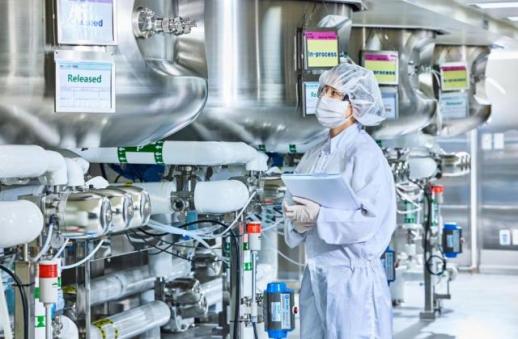 Celltrion Expects Growth Momentum Following Strong Q1 Performance Celltrion has reported its highest-ever quarterly performance in the first quarter of this year, raising expectations for continued growth in the second quarter. Although the biosimilar industry typically experiences a slowdown in the first quarter, Celltrion demonstrated improved performance driven by the rapid market acceptance of high-revenue new products and stable prescription growth for existing products. Analysts suggest that the strong performance in the first quarter could serve as a starting point for annual growth, considering that major European tenders are concentrated in the second and third quarters, with initial supply volumes expected to be reflected in the second half of the year. Additionally, the operational effects of the Branchburg plant in the U.S. are expected to further enhance growth prospects in the second quarter. ◆ Q1 Performance Driven by Existing and New Product Growth… European Market Prescription Expansion Continues In the first quarter, Celltrion recorded consolidated sales of 1.145 trillion won and an operating profit of 321.9 billion won, marking increases of 36% and 115.5%, respectively, compared to the same period last year. The operating profit margin improved to 28.1%. Excluding temporary impacts from regular maintenance of U.S. production facilities, the actual operating profit margin is expected to reach the 30% range. The growth in performance was driven by an expansion in prescriptions in the European market. Celltrion's flagship autoimmune disease treatment, the Remsima product line, achieved a combined market share of 70% in Europe as of the fourth quarter of 2025. Notably, Remsima SC has absorbed the demand for transitioning patients from intravenous (IV) prescriptions, continuing to expand prescriptions in major countries such as Germany (50%) and France (36%). New products have also established a foothold in the market. Omliclue, a treatment for chronic spontaneous urticaria and allergic asthma launched in Europe in September last year, secured significant market shares shortly after its release, achieving 98% in Denmark, 80% in Spain, and 70% in the Netherlands within four months. The autoimmune disease treatment Aptozma, which was sequentially launched in major European countries from late last year to January this year, has also seen an expansion in prescriptions within the European market. The introduction of subsequent biosimilar products has rapidly reshaped the product portfolio to focus on high-revenue items. Celltrion reported that five new biosimilars launched last year generated a combined revenue of 581.2 billion won in the first quarter, accounting for about 60% of total product sales. This product line's revenue increased by 67% compared to the same period last year, indicating a shift into a sales expansion phase. As initial supply volumes from European tenders will be reflected in the second half of the year, the trend of expanding sales for new products is expected to become more pronounced. ◆ Branchburg Plant Operations Enhance Production Capacity Celltrion is expanding its global production infrastructure and strengthening new business initiatives through its Branchburg plant in New Jersey. The facility, with a capacity of 66,000 liters, has resumed normal operations following regular maintenance, and contract manufacturing (CMO) and validation of its own products are expected to begin contributing to revenue in the second quarter. While the initial contribution to short-term profits from the Branchburg plant may be limited due to startup costs, it is viewed as a strategic base for enhancing supply responsiveness and mitigating tariff risks through local production. Celltrion plans to expand its production capacity from the current 316,000 liters to 571,000 liters through the expansion of its Songdo plants 4 and 5 and additional expansions at Branchburg. The CMO business is also a new growth pillar. Celltrion has surpassed 1 trillion won in cumulative orders based on contracts with global pharmaceutical companies. The Branchburg plant is expected to serve as a key infrastructure for expanding its own product production and contract development and manufacturing (CDMO) business. This aligns with the global sales expansion of high-revenue new products and is anticipated to support long-term cost competitiveness and profitability improvements. ◆ Analysts Predict Growth from New Products and Profitability Improvements Analysts are viewing Celltrion's performance trends positively. Major securities firms have assessed that the company's first-quarter results reflect a significant change in its performance structure, driven by revenue growth from high-revenue new products, synergies in European sales, and cost improvement effects. Daishin Securities noted that Celltrion has entered a phase of profitability improvement by eliminating one-time costs following its merger and leveraging its own production and direct sales systems. With improvements in the global biosimilar product mix and growth from new products, the EBITDA margin is expected to rise to the high 30% range, and the benefits of an expanded product portfolio will also begin to materialize. Currently, the biosimilar product portfolio consists of 11 items, with plans to expand to 18 by 2030 and 41 by 2038. As fixed cost leverage increases, profitability improvements are expected to continue alongside the growing share of new high-revenue products. Industry experts believe that the combination of stable market dominance from existing flagship products, growth from new products, and the effects of expanded production infrastructure will further strengthen Celltrion's leading position in the global biosimilar market. In particular, the operationalization of the Branchburg plant and the expansion of high-revenue product sales are expected to sustain growth momentum beyond the second quarter.* This article has been translated by AI. 2026-05-29 09:02:00
 -
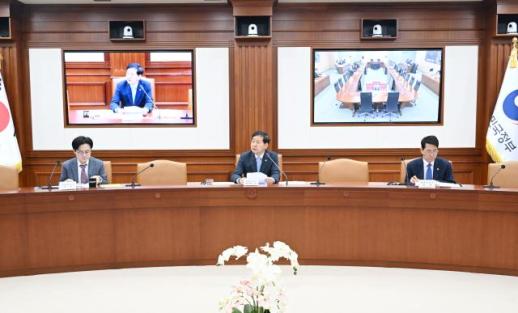 Deputy Prime Minister Koo Yoon-cheol: April Industrial Production Adjusted, Improvement Expected Koo Yoon-cheol, Deputy Prime Minister and Minister of Economy and Finance, stated on May 29 that "April's industrial production experienced a temporary adjustment due to high growth rates in previous months." He added, "In May, both consumer sentiment and business confidence have risen significantly, and the positive trend in exports is expected to continue, leading to a resumption of improvement." Koo made these remarks while presiding over a meeting of the Emergency Economic Headquarters and the Economic and Industrial Competitiveness Enhancement Ministerial Meeting at the Government Seoul Building. He noted that as the Middle East conflict persists, major institutions are revising their growth forecasts for South Korea upward. The Bank of Korea recently adjusted its GDP growth forecast for this year to 2.6%, an increase of 0.6 percentage points from the previous estimate of 2.0% made in February. The Korea Development Institute (KDI) also raised its growth forecast to 2.5%, up by 0.6 percentage points from its prior projection. However, the impact of the Middle East conflict has begun to manifest, with declines in industrial production, retail sales, and investment reported last month. According to the National Data Agency's "April Industrial Activity Trends" report, overall industrial production, retail sales, and facility investment fell by 0.6%, 3.6%, and 3.6%, respectively. In light of these developments, Koo interpreted the situation as a temporary adjustment phase, given the signs of economic recovery. He emphasized, "The government will do its utmost to minimize the burden on the public caused by high oil prices while injecting new vitality into the economy. We will also extend the current ban on hoarding urea and urea water until July to stabilize supply and demand." During the meeting, discussions included the response to the Middle East conflict, strategies for re-establishing and promoting return investments, measures to expand fuel costs for farmers and fishermen, innovations in marine safety culture, and support plans for medium-sized shipbuilders. Koo announced, "Starting today, we will increase the subsidy limit for fuel tax-exempt oil for agricultural and fisheries vehicles, following adjustments made for freight and passenger vehicles. The subsidy will rise from 12.9% to 16.4%, increasing by 36 to 42 won per liter compared to the base price." He also stated, "We will flexibly assess the similarity of products and services produced overseas to domestic production, considering core technologies and supply chains. We will improve support methods to attract large-scale investments, particularly in regional areas." Regarding innovations in marine safety culture, Koo mentioned that high-risk vessels will be required to disclose their safety investment records, and a 'Safety Rating System for Shipping Companies' will be introduced for tailored management. He expressed a commitment to expanding opportunities for the public to experience marine safety in their daily lives. As the global shipbuilding industry experiences a boom, discussions also focused on supporting the issuance of refund guarantees (RG) for medium-sized shipbuilders. Koo concluded, "Based on today's discussions, we will swiftly establish measures for the leap forward of K-shipbuilding and the creation of a healthy industrial ecosystem."* This article has been translated by AI. 2026-05-29 09:00:00
 -
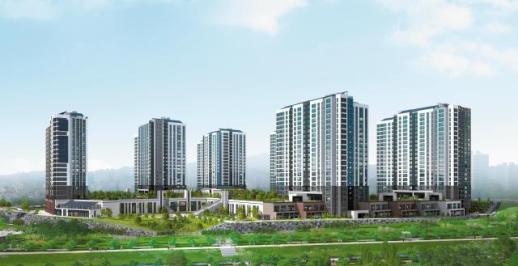 LH Announces Public Housing Supply of 473 Units in Hwaseong Dongtan 2 C-27 Block The Korea Land and Housing Corporation (LH) announced on May 29 that it has opened applications for 473 public housing units in the C-27 block of the Hwaseong Dongtan 2 development area. This supply marks the first public housing offering in the Hwaseong Dongtan 2 area in nearly seven years, following the A104 block in 2019. The C-27 block will consist of 473 public housing units and 90 officetel units, with the public housing units being offered first. The C-27 block was previously acquired by a private developer but was returned to LH due to deteriorating business conditions. LH is now proceeding with the public housing supply, with construction reportedly being handled by Seohui Construction. The complex will feature eight buildings, each rising up to 20 stories. All units will have a standard area of 84 square meters, with the distribution being 371 units of type 84A, 38 units of type 84B, 58 units of type 84C, and 6 units of type 84T. The sale price will be subject to a price ceiling, averaging around 600 million won for the 84 square meter units. The average price per 3.3 square meters is approximately 17.76 million won. A three-year resale restriction will apply, but there is no residency requirement. Applications for special supply will be accepted from June 9 to 10, followed by general supply from June 11 to 12. Winners will be announced on June 25, with contracts to be signed in September. Occupancy is expected in June 2029. A housing exhibition center has been established at 519-1 Cheonggye-dong, Dongtan-gu, Hwaseong-si, Gyeonggi-do. Visitors can view a model home of type 84A, along with site plans and models of the complex. Additional types can be checked on the sales website. Kwon Woon-hyuk, head of LH's Southern Gyeonggi Regional Headquarters, stated, "As this is the first public housing offering in Hwaseong Dongtan 2 in seven years, we expect significant interest from actual homebuyers. We will continue to supply housing to stabilize the housing market in the metropolitan area and ensure residential stability."* This article has been translated by AI. 2026-05-29 09:00:00
 -
 Korean Air and Asiana Conduct Joint Emergency Evacuation Drill Korean Air is verifying the safety response capabilities of its cabin crew ahead of the launch of the integrated airline. On May 29, Korean Air announced that it successfully completed a joint emergency evacuation drill with Asiana Airlines the previous day.This drill is part of the implementation plan for the integrated Air Operator Certificate (AOC) that both airlines have been collaborating on under the supervision of the Ministry of Land, Infrastructure and Transport for the past two years. It aimed to comprehensively assess whether cabin crew from both airlines can perform safety duties at the same level.The drill involved two aircraft types: the Boeing 787-9 and the Boeing 737-900. This marked the first instance of conducting a drill with two different aircraft types simultaneously. A total of 28 cabin crew members, 14 from each airline, participated, with eight operational crew members from Korean Air providing support.The drill consisted of four main components. First, at the Korean Air cabin training center, crew members underwent verbal assessments on emergency landing and flotation devices, followed by a lifeboat boarding drill. Under the supervision of Ministry officials, the cabin and operational crew demonstrated their ability to use emergency equipment and perform procedures for boarding lifeboats and requesting rescue after an emergency landing.Next, at Korean Air's headquarters hangar, the crew conducted aircraft-specific emergency evacuation drills using actual aircraft. For the Boeing 737-900, they simulated an aborted takeoff due to an engine fire, testing the procedures for opening doors and guiding passengers to evacuate. Additionally, they performed an evacuation drill simulating an emergency water landing with the Boeing 787-9.A Korean Air official stated, "This drill confirmed that the crew from both airlines can respond reliably in an integrated operational environment. We plan to continue systematic training and verification, prioritizing safety as our utmost value after the launch of the integrated airline."Meanwhile, Korean Air is accelerating its final preparations for the integrated airline set to launch in December.* This article has been translated by AI. 2026-05-29 09:00:00
 -
 Snowflake Acquires Natoma to Strengthen Governance in AI Systems Global AI data cloud company Snowflake announced on May 29 that it has acquired Natoma, a company specializing in the Enterprise Model Context Protocol (MCP) platform. This acquisition aims to establish a governance layer for the integrated management of AI agents' access to corporate systems. With this acquisition, Snowflake will embed a native identity governance and access management framework into its platform, which will govern how AI agents access applications, databases, APIs, and tools within organizations. The MCP serves as a standard protocol for AI agents to connect and interact with external systems, rapidly gaining traction in enterprise AI environments. However, as agents become more interconnected with corporate systems, concerns about governance fragmentation, shadow AI, and data leakage risks have been raised. A recent survey by Snowflake revealed that 96% of companies face challenges in scaling AI across their enterprises. Natoma's platform provides reliability, visibility, and audit tracking for agent access across various enterprise environments, including SaaS, cloud, VPC, and on-premises setups. It also supports integration with a range of business systems such as Slack, email, CRM, and Jira. The Natoma team possesses expertise in MCP, gateway infrastructure, and privileged access management (PAM), having already supplied agent systems to major global corporations in operational environments. Snowflake plans to integrate Natoma's capabilities into its AI data cloud, establishing an enterprise-grade control system across its AI platforms, including Cortex Agent, Snowflake Intelligence, and Cortex Code. The timeline for customer rollout following the acquisition will be announced later. Pratiyus Panayak, co-founder and CEO of Natoma, stated, "For AI agents to be truly utilized at an enterprise level, organizations must secure governance over how agents operate across systems, applications, and tools. Natoma and Snowflake will work together to build a governance and connectivity layer that allows companies to leverage AI safely and at scale."* This article has been translated by AI. 2026-05-29 08:58:00
 -
 New Book Explores the Art of Communication in Business and Everyday Life New Book Explores the Art of Communication in Business and Everyday Life=Written by Baek Joo-hwan, Snowfox Books P. Baek Joo-hwan, currently the Director of Public Relations at OB Beer, has compiled his 20 years of experience in corporate communication into a new book. Drawing from his experiences navigating numerous crises and addressing challenging questions, he proposes a novel approach to applying corporate communication strategies to everyday conversations and speaking engagements. The book begins with the question, "Why do we handle corporate messaging so strategically, yet invest less effort in our personal speaking?" From there, Baek integrates the techniques of corporate communication into various everyday scenarios, such as interviews, presentations, and unexpected questions. Readers can refine their communication skills through the strategies presented in the book. Baek asserts that the ways individuals and corporations communicate are fundamentally similar. He states, "We face moments where we must respond to sharp questions, clarify misunderstandings, and prove our worth. From how corporations manage these significant challenges, we can learn a powerful framework for communication applicable in both personal and professional contexts." The book also delivers a message to practitioners quietly working in corporate public relations. It emphasizes the importance of each choice made in crafting press releases or hesitating over a single line during a phone call, highlighting how these decisions can significantly influence outcomes. "Each of those choices may seem inconspicuous, but they are undoubtedly shifting the direction of situations bit by bit. The line you choose to say today may be protecting more than you realize." * This article has been translated by AI. 2026-05-29 08:58:00
 -
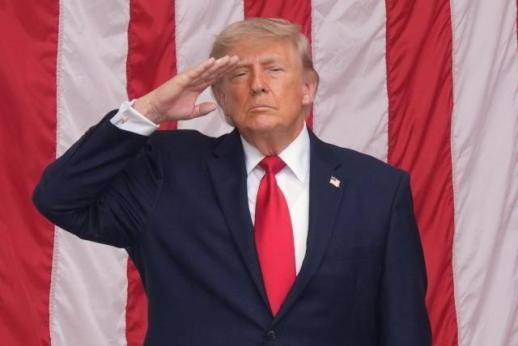 Trump Shares Draft Agreement to End War with Iran with Allies President Donald Trump has shared a draft agreement aimed at ending the war with Iran with allied nations, including Israel. This marks a significant step as discussions on a ceasefire move into the document review phase. However, the draft does not immediately resolve the Iranian nuclear issue and retains control over the Strait of Hormuz, suggesting that final agreement may face challenges. According to The Guardian on May 28, the ceasefire proposal was shared with allies amid concerns that further violations could derail negotiations. The U.S. and Iran continue to engage in talks mediated by Pakistan and Qatar. Pakistani Foreign Minister Mohammad Ishaq Dar is scheduled to meet with U.S. Secretary of State Marco Rubio in Washington on May 29. The key focus of the agreement is the normalization of the Strait of Hormuz. The draft includes provisions to reopen the strait to commercial shipping and lift U.S. port blockades on Iran. It also allows Iran access to up to $12 billion in frozen assets held abroad due to sanctions. The goal is to restore commercial operations to pre-war levels within 30 days. The nuclear issue has been set aside for separate negotiations. The draft outlines a plan for discussions lasting up to 60 days regarding the future of Iran's nuclear program. Topics include stockpiles of enriched uranium, a temporary halt on further enrichment, oversight by the International Atomic Energy Agency (IAEA), and Iran's commitment not to pursue nuclear weapons. For Israel, the terms are difficult to accept. The draft does not demand immediate and definitive nuclear commitments from Iran and reportedly includes Lebanon within the scope of a permanent ceasefire, placing a significant burden on Israel. The scope of sanctions relief remains unclear. The Guardian reported that the draft is less specific than Iran's proposals regarding the lifting of oil and petrochemical export sanctions. Iran insists on the unconditional release of frozen assets. The issue of tolls in the Strait of Hormuz also presents a point of contention. The draft reportedly allows for passage through Hormuz without tolls. However, Iran is negotiating separately with Oman to impose fees under the guise of 'navigation services.' President Trump has publicly warned of a strong response if Oman reaches an agreement with Iran that includes tolls. The U.S. has placed sanctions on Iran's maritime organization, the Persian Gulf Maritime Authority. Treasury Secretary Scott Besant has warned that countries involved in toll collection, including Oman, could face sanctions. The Iranian Revolutionary Guard Corps (IRGC) has reaffirmed its control over the Strait of Hormuz. The IRGC stated, "In the last 24 hours, we have granted passage to 26 commercial and oil tankers," and warned that any unauthorized navigation would be considered a hostile act. They also reported intercepting four vessels attempting to pass while turning off their Automatic Identification Systems (AIS) the previous night. The ceasefire remains unstable. The U.S. has reported striking Iranian drone operations near Hormuz, while Iran has targeted U.S. bases in Kuwait. Limited clashes between the two sides have not yet halted indirect communications. However, there are concerns that if shipping companies attempt to transit Hormuz without Iranian permission, the ceasefire established on April 8 could collapse. While sharing the ceasefire proposal has advanced negotiations, key issues blocking a final agreement remain unresolved. The nuclear issue has been deferred to future discussions, and the control of Hormuz, tolls, the scope of sanctions relief, and the inclusion of Lebanon in the ceasefire have yet to be clarified.* This article has been translated by AI. 2026-05-29 08:56:00
 -
 Samsung Electronics Makes Strategic Investment in Anthropic, Boosting Foundry Prospects Samsung Electronics has made a significant investment in Anthropic, the developer of the artificial intelligence model 'Claude.' This investment not only enhances Samsung's potential to supply advanced high-bandwidth memory (HBM) but also lays the groundwork for securing big tech clients in its foundry business. On May 28, Anthropic announced it raised $65 billion in its Series H funding round. This capital infusion values the company at $965 billion, making it the most valuable AI startup in the world, surpassing its competitor OpenAI, which is valued at $852 billion. Notably, Samsung Electronics, along with SK Hynix and Micron, has been named a 'strategic infrastructure partner.' In its official statement, Anthropic noted, "The technologies of these companies play a crucial role in the global supply of memory, storage, and logic chips," formalizing their collaboration to expand its computing capabilities. Industry observers are particularly focused on Anthropic's mention of 'logic chips.' Unlike SK Hynix and Micron, which specialize in memory, Samsung operates its own foundry division based on advanced process technology. This suggests that Samsung's foundry may produce the core chips needed for Anthropic's next-generation Claude AI model. Recently, Samsung has successfully secured contracts for AI chips from major global tech firms, establishing a strong foundation for its foundry revival. This includes contracts for Tesla's next-generation AI chips, 'AI5' and 'AI6,' as well as collaboration on NVIDIA's inference-specific language processing unit (LPU) 'Grok' chip. If Samsung's foundry secures Anthropic as a client, it could further validate its advanced process technology and strengthen its position in the global foundry market. 2026-05-29 08:56:00