

Journalist

Lester Munson
-
 Vietnam Emerges as a ‘Second Home Market’ for South Korean Food Companies South Korean food companies are stepping up investment in Vietnam, a country of about 100 million people, treating it as a “second home market” by expanding local production and tailoring products for Vietnamese consumers. Backed by annual growth in the 6% range and a large young consumer base, the companies aim to strengthen their foothold while using Vietnam as an export base. Industry officials said April 22 that major South Korean food makers have expanded in Vietnam since the late 1990s, drawn by its growth potential. Vietnam’s 2025 economic growth rate was provisionally estimated at about 8.02%, and per capita GDP was about $5,026, placing it in the upper-middle-income category. With the middle class projected to reach 75% of the population by 2030, companies are shifting from simple exports to strategies centered on local manufacturing to gain market share. Daesang, which established a local unit in 1994, is accelerating a shift from bio and starch sweeteners into a broader food business. In 2016, it entered Vietnam’s meat-processing market by acquiring local company Duc Viet Food, the first such move by a South Korean food company. Daesang has since expanded its base, maintaining the top market share in Vietnam’s seaweed products and strengthening its K-food lineup, including tteokbokki and kimchi seasoning. Daesang’s Vietnam sales totaled 235.9 billion won last year, nearly double the 2018 level. It recently invested 30 billion won to expand its Hai Duong and Hung Yen plants, boosting capacity. Orion, which set up its Vietnam unit in 2005, has focused on localization for nearly 20 years. Using marketing tied to the local concept of “Tinh,” and products tailored to local tastes — including “Bong Bang,” inspired by traditional folktales, and the rice snack “An” — Orion posted 514.5 billion won in sales in 2024, topping 500 billion won for the first time. Orion has designated Vietnam as a key market in its “post-China” strategy and is investing a total of 130 billion won. It plans to expand its Yen Phong plant in Hanoi and build a third factory scheduled for 2026, lifting local production capacity to the equivalent of 900 billion won. Ramen makers are also intensifying their push. Vietnam leads the world in per capita instant noodle consumption, at 81 servings in 2024. Paldo completed a second factory in Tay Ninh province in southern Vietnam in 2024, building a system that can produce 700 million ramen units a year across its two plants. Paldo plans to keep expanding the second plant and use Vietnam as a production and export hub and a springboard into other Southeast Asian markets. Ottogi operates two manufacturing plants, in Binh Duong near Ho Chi Minh City and in Bac Ninh in the north. It has sustained average annual growth of more than 18% over the past five years and posted 89 billion won in sales last year. The company produces about 770 items, including “Mini Jin Ramen” and “Oppa Ramen,” reflecting local eating habits. It has also obtained halal certification and is moving to expand exports to Muslim markets. In alcoholic beverages, HiteJinro is making a major bet. Vietnam was HiteJinro’s first export market for soju, and about 60% of soju exported from South Korea to Vietnam is HiteJinro products. The company is building its first overseas production plant in Thai Binh province, targeting completion this year. Designed as a smart factory and covering an area about 11 soccer fields, the plant is expected to produce up to 5 million cases of soju a year. HiteJinro aims to improve logistics efficiency and cost competitiveness through local production and extend Jinro’s dominance — the top-selling distilled spirit brand in Vietnam — across Southeast Asia. “Vietnam has cultural similarities with Korea and a solid base of food consumption, so barriers to entry are relatively low,” an industry official said. “Securing cost competitiveness through local production and close-to-market marketing is raising Vietnam’s value as a forward base for global expansion.” 2026-04-22 16:16:01
 -
 Park Hong-geun says government's 'Vision 2045' plan will differ from past strategies Minister Park Hong-geun of the Ministry of Planning and Budget said April 22 that the government’s mid- to long-term national development strategy, “Vision 2045,” being prepared for release by year’s end, will “clearly differentiate itself from existing mid- and long-term plans.” Park made the remarks at a full meeting of the 7th Mid- to Long-Term Strategy Committee at the Korea Press Center in Jung-gu, Seoul. It was his first time attending the committee since taking office. He said South Korea is facing “complex and structural crises,” including a major shift driven by artificial intelligence, low growth, the climate crisis and regional population decline. Responding to structural problems, he said, requires setting clear directions and goals and pursuing them consistently. Park also cited “Vision 2030,” announced in 2006, saying it produced results that carried into actual policies such as child allowances and the earned income tax credit, but had limits, including in its timing and fiscal investment plans. “It is important to build a mid- to long-term national development strategy that looks 20 to 30 years ahead through a whole-of-government approach by bringing together the public’s capabilities,” Park said. He added that detailed steps for policy tasks now being discussed by the 7th committee will later be reflected in the national strategy. Kwon Oh-hyun, chair of the 7th committee, said the current system was effective through the industrialization era and in helping the country join the ranks of advanced nations, but has limits in enabling a leap to become a global leading country. He urged the government to step up regulatory reform.* This article has been translated by AI. 2026-04-22 16:14:56
 -
 South Korea’s Kospi Closes Above 6,400, Sets Fresh Record a Day After New High South Korea’s Kospi broke above the 6,400 mark on expectations of improving semiconductor conditions and continued foreign inflows, setting a fresh record just one day after reaching an all-time high for the first time in about two months. The benchmark closed April 22 at 6,417.93, up 29.46 points, or 0.46%, from the previous session, according to the Korea Exchange. The index opened lower at 6,387.57, quickly turned higher and rose as far as 6,400.11 before finishing with gains after choppy trading. Retail investors bought a net 1.7821 trillion won, while foreigners and institutions sold a net 750.7 billion won and 923.8 billion won, respectively, as they took profits. Large-cap shares were mixed. SK hynix rose 0.25%, LG Energy Solution gained 1.26%, Doosan Enerbility added 0.09% and Hanwha Aerospace climbed 1.80%. Samsung Electronics fell 0.46%, Hyundai Motor slipped 0.92% and Samsung Biologics dropped 1.39%. By sector, moves were also mixed. Electronics rose 0.27%, transportation equipment and parts jumped 2.71%, chemicals gained 1.56%, machinery and equipment added 0.56%, IT services rose 0.66%, metals climbed 3.00% and distribution gained 0.27%. Financials fell 0.32%, pharmaceuticals dropped 0.95%, insurance slid 1.76% and brokerages fell 0.21%. The Kosdaq also ended higher. It opened down 2.20 points, or 0.19%, at 1,176.83, then rebounded to close up 2.09 points, or 0.18%, at 1,181.12. On the Kosdaq, individuals and foreigners were net buyers of 405.4 billion won and 97.6 billion won, while institutions sold a net 374.3 billion won. Most Kosdaq heavyweights fell, with the exceptions of EcoPro, up 0.06%, and Lino Industrial, up 1.43%. EcoPro BM fell 1.13%, Alteogen dropped 2.44%, Rainbow Robotics slipped 0.67%, Samchundang Pharm plunged 15.88%, Kolon TissueGene fell 2.16%, ABL Bio dropped 3.66%, HLB fell 2.72% and LigaChem Bio slid 2.89%. Analysts said the market’s downside has held up despite external uncertainties. Lee Kyung-min, a researcher at Daishin Securities, said the Kospi stayed in a narrow range despite uncertainty over Iran talks and fading expectations for rate cuts. “External factors are stirring risk-off sentiment, but earnings and order momentum are supporting the market’s lower bound,” Lee said, adding that early losses widened before the index rebounded and moved sideways near flat levels. Overnight, U.S. stocks fell as uncertainty grew over a second round of talks between the United States and Iran. The Dow Jones Industrial Average closed down 0.59%, while the S&P 500 and Nasdaq fell 0.63% and 0.59%, respectively. Microsoft rose 1.46% and Amazon gained 0.66%, while Nvidia fell 1.08% and Tesla dropped 1.55%, leaving major tech shares mixed. The Philadelphia Semiconductor Index rose 0.50%, as skepticism spread over the resumption of U.S.-Iran negotiations, weakening expectations for an end to the conflict.* This article has been translated by AI. 2026-04-22 16:14:03
 -
 OCI posts 28.9 billion won Q1 operating profit, up 171.4% on year OCI said in a regulatory filing on Tuesday that it posted first-quarter consolidated revenue of 506.6 billion won ($?) and operating profit of 28.9 billion won. Revenue fell 6% from a year earlier, while operating profit jumped 171.4%. OCI attributed the profit gain to higher selling prices for key carbon chemicals products and restructuring effects, including the merger with P&O Chemical and the liquidation of OJCB, its carbon black production unit in China. By segment, the basic chemicals division, which includes semiconductor materials, reported revenue of 184.7 billion won and operating profit of 1.4 billion won. Results fell from the previous quarter due to lower sales volume of polysilicon for semiconductors tied to customer delivery schedules, as well as scheduled maintenance for products including caustic soda (CA) and TDI. The carbon chemicals division posted revenue of 336.1 billion won and operating profit of 31.7 billion won. OCI said higher product prices amid stronger oil prices, along with increased pitch sales volume, drove sharp gains in both revenue and profit. It said it expects solid profitability to continue in the second quarter, supported by firm oil prices and stable supply and demand based on the use of steelmaking raw materials. OCI said it aims to make this year a turning point for improving profitability and strengthening its mid- to long-term growth base. In semiconductor materials, it plans to pursue earnings growth by expanding sales of key products including polysilicon, hydrogen peroxide and phosphoric acid, supported by capacity expansion. The company said a 5,000-ton expansion of phosphoric acid capacity is scheduled to be completed in the third quarter of 2026, and it is also reviewing additional expansion to prepare for longer-term demand growth. OCI also plans to ramp up mass production in the second half for specialty materials used in silicon anode materials for secondary batteries, based on a long-term supply contract with Nexeon. Vice Chairman Kim Yushin said external uncertainty remains high due to geopolitical risks such as the recent war in the Middle East, but the company will sustain its recovery by responding flexibly to markets and diversifying raw material sourcing. “Based on stable profits from basic materials and carbon chemicals, we will generate results in new businesses such as semiconductor materials,” Kim said.* This article has been translated by AI. 2026-04-22 16:13:11
 -
 Prosecutors Indict Park Wang-yeol, Alleged Philippines-Based Drug Kingpin, on Meth Smuggling Charges Prosecutors have indicted Park Wang-yeol, who is accused of smuggling and distributing drugs worth about 13 billion won ($13 billion won) into South Korea from a Philippine prison. The Suwon District Prosecutors Office’s government joint investigation unit on drug crimes said Tuesday it indicted Park in custody on charges including violating the Act on the Aggravated Punishment of Specific Crimes (psychotropic drugs). Investigators said Park imported 317 grams of methamphetamine in four shipments from the Philippines and Mexico in 2020. They said that in June 2024 he conspired with his nephew, identified only as A and nicknamed “white-bearded whale,” to smuggle about 1,482.7 grams of methamphetamine from the Philippines into South Korea. The unit also said it found evidence Park smuggled 3,079 grams of methamphetamine from South Africa. Prosecutors said Park used so-called “drop” deliveries in South Korea, hiding drugs at set locations and sending buyers coordinates to avoid detection. They said he maintained bases in major cities including Seoul, Busan and Daegu to manage the drugs. They also said they identified allegations that he received, through intermediaries, 1,575 ecstasy pills and quantities of cocaine and synthetic cannabis that had been hidden in areas including Incheon. The joint unit said an on-site investigation in the Philippines found indications Park’s group used mobile phones freely inside a detention facility and directed associates in South Korea. It said it secured five mobile phones used by the group and confirmed indications they generated tens of billions of won in criminal proceeds while operating from the facility. Prosecutors said they plan additional indictments, in consultation with the Philippine government, over remaining allegations including suspected stockpiles prepared for smuggling. They also said they will work with a special task force on transnational crime to bring A and three alleged distribution ringleaders back to South Korea, and will launch an asset recovery team led by a senior police officer to track down and seize hidden proceeds.* This article has been translated by AI. 2026-04-22 16:12:18
 -
 Battery maker CEO gets far reduced sentence in appeals court over deadly factory fire SEOUL, April 22 (AJP) - Lithium battery maker Aricell's CEO was sentenced to four years in prison over a deadly fire in an appeals court in Suwon, Gyeonggi Province on Wednesday. It was a far lower sentence than the 15 years handed down in the first trial over the fire at the company's plant last year, which claimed about two dozen lives. The Suwon High Court delivered the far more lenient sentence to Aricell CEO Park Soon-kwan, who was indicted on several charges including violations of occupational safety and health-related laws and work-related negligence resulting in death or injury among others. His initial 15-year sentence was the heaviest since the enactment of relevant laws in 2022, which allow for the punishment of company owners or CEOs with at least one year in prison or fines of up to 1 billion won (about US$7000,000) for fatal industrial accidents. The reduced ruling at the appellate court comes about two years after the fire at the plant killed 23 workers, including 18 foreigners and injured eight others in June 2024. Separately, the court sentenced Park's son, who served as the de facto head of the company, to seven years in prison and a 1 million won fine, which was also lower than the 15-year prison sentence handed down in the first trial. Prosecutors had earlier sought 20 years and 15 years in prison against Park and his son, arguing that the accident was a disaster waiting to happen as the company failed to provide proper evacuation routes, making it difficult for its workers to escape the blaze. 2026-04-22 16:11:01
 -
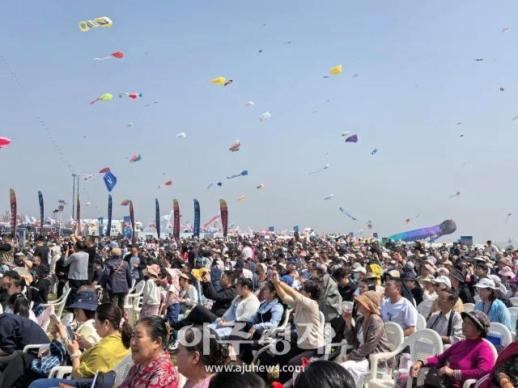 43rd Weifang International Kite Festival Opens in Shandong, Expands as Culture-Tourism Event The 43rd Weifang International Kite Flying Competition and the 2026 Weifang Kite Festival opened April 18 in Weifang, a city in China’s Shandong Province. Organizers described the event as a key program in the city’s tourism-themed year. Tourists and other participants from around the world attended the spring festival. First held in 1984, the Weifang competition has expanded beyond a traditional event into a global platform that includes cultural exchange and friendship cooperation, as well as economic exchange. This year’s festival is themed, “Leaping beyond mountains and seas, moving toward a trillion-yuan city.” It features 56 programs that combine kite culture with tourism, sports, the economy and consumer activity, aiming to promote a new consumption model that integrates culture, tourism, sports and commerce. Weifang officials said the event is intended to boost the local economy and advance the city’s goal of becoming a “trillion-yuan city,” while strengthening its standing as a regional hub.* This article has been translated by AI. 2026-04-22 16:08:52
 -
 Taiwan’s Delta Briefly Tops NT$5 Trillion Market Cap as Shares Hit Record Taiwan power supply unit maker Delta (Taidah Electronics Inc.) saw its shares rise to NT$1,980 on the Taiwan stock market on April 20, briefly pushing its market capitalization above NT$5 trillion, the Economic Daily reported April 21. The report said buying spread after moves by institutional investors. Delta is the second company in Taiwan to exceed a NT$5 trillion market cap, after Taiwan Semiconductor Manufacturing Co., the world’s largest foundry chipmaker. Delta reported consolidated March revenue of NT$59.77999 billion, up 37.6% from a year earlier. A securities industry official said Delta’s results are benefiting from surging demand for high-voltage direct current power equipment for cloud solution providers, lifting both average selling prices and gross margin.* This article has been translated by AI. 2026-04-22 16:08:22
 -
 Why South Korea Sees the Global South as a Supply-Chain Lifeline, Not an ‘Alternative Market’ “Alternative market” is the label often attached to the Global South. But it no longer fits. India and Vietnam are no longer just low-cost production bases meant to replace China. With U.S.-China tensions, war in the Middle East and U.S. tariff pressure colliding, the Global South is increasingly where South Korea must operate to keep its economy resilient. In India, the shift is already visible in the numbers. POSCO’s planned 10 trillion won steel mill with JSW is hard to view as a routine investment. With China shaking markets through pricing, the move reflects a choice to absorb demand through local production and change the structure of competition. HD Hyundai’s push for shipyard cooperation, and Samsung and Hyundai Motor’s expansion in manufacturing and mobility, point in the same direction. With AI and digital technology added to the mix, India is becoming less a destination for entry and more a place to co-design industry — where India’s scale meets South Korea’s speed. Vietnam matters in a different way. President Lee Jae-myung, in Hanoi, stressed that “the relationship between the two countries is truly special,” a message rooted in years of accumulated ties beyond headline figures. South Korea is Vietnam’s largest investor and is already deeply embedded as a production base. The question is what comes next. The message of building supply chains together through nuclear power, infrastructure and science and technology cooperation is directionally sound, but it remains closer to “potential.” For Vietnam to move beyond assembly into a supply-chain pillar combining energy and technology, South Korea will also need to change how it approaches the partnership. That is where the limits of South Korea’s strategy show. The country has not fully moved beyond the model of “make well and export.” But the world no longer works that way. The United States is using tariffs to restrict market access, China is disrupting order through pricing, and the Middle East remains a variable that can halt supplies at any time. In that structure, South Korea cannot endure on its own. The core of a Global South strategy, then, is not market expansion but shared risk management. Cooperation with India on naphtha and LNG, and talks with Vietnam on a nuclear-power supply chain, can be starting points. But if they remain one-off efforts, their value diminishes. What is needed is a framework that links energy, industry and finance. Japan built pathways long ago through official development assistance and policy finance, and China has combined infrastructure and resources to shape the playing field. South Korea is still at a stage of relying on the capabilities of individual companies. The Global South should be treated not as a place to “enter,” but as a partner for joint design. Beyond a simple exchange — South Korea providing technology and speed, and local partners providing markets and resources — the goal should be a structure in which both sides produce together and consume together. That is how they can better withstand U.S. tariff risks and Middle East supply instability. The Global South is no longer an option. From where South Korea stands now, it is already a direction that cannot be reversed. The question is not how fast South Korea gets there, but what kind of relationship it builds once it does. * This article has been translated by AI. 2026-04-22 16:07:29
 -
 PPP Floor Leader Song Eon-seok Calls for Major Shift in Housing Policy, Urges Unification Minister’s Dismissal Song Eon-seok, floor leader of the People Power Party, on the 22nd took aim at what he called risks tied to the Lee Jae-myung government’s real estate policy and Unification Minister Jeong Dong-young. He urged a fundamental shift in housing policy and called for Jeong’s immediate dismissal. At a news conference at the National Assembly, Song said the government’s efforts to curb housing demand have reduced listings and transactions and produced “various side effects.” He pointed to the period after the government tightened household lending rules in the so-called June 27 measures last year. Over the following nine months, Seoul’s apartment sales price index rose 11.1%, more than double the 4.9% increase in the nine months before the rules were tightened, he said. Over the same period, Seoul’s jeonse supply-demand index and monthly rent price index rose 18.1% and 5.8%, respectively, which he said signaled a sharp deterioration in rental-market indicators. “In a market structure of demand suppression, delayed supply and weakened transactions, we are only seeing adverse effects: higher prices, fewer jeonse leases and heavier monthly rent burdens,” Song said. He added that “balloon effects” were spreading beyond Gangnam to areas such as Dongjak, Seodaemun and Gangseo, and into nearby cities including Gwangmyeong, Seongnam and Hanam. Song called for a major easing of loan restrictions for would-be homeowners without a house, and for withdrawing what he described as signals that fuel instability, including abolishing long-term holding tax deductions and strengthening property holding taxes. He also urged supply measures such as speeding up redevelopment of multi-family homes in central areas and easing regulations in height-restricted zones. The People Power Party said it plans to pursue an expanded supply policy in Seoul if Oh Se-hoon, its candidate for Seoul mayor in the June 3 local elections, wins, aiming to enable groundbreaking for 310,000 housing units in the city by 2031. Song also demanded personnel action against Jeong over remarks about “North Korea’s constituent nuclear facilities.” “A minister should not make uncertain statements based on claims raised in the private sector,” Song said, adding that only officially recognized information should be cited. He said Jeong had ended up acting “not as the Republic of Korea’s unification minister, but like North Korea’s United Front Department minister.” Song called on the government to disclose in detail whether the commander of U.S. Forces Korea and a U.S. assistant secretary of state visited South Korea’s defense and foreign ministries, respectively, to protest Jeong’s remarks. “This issue will not be resolved by blindly defending Minister Jeong,” Song said. “He should be dismissed immediately.” Lawmakers from the People Power Party on the National Assembly’s Foreign Affairs and Unification Committee also held a separate news conference, calling for an emergency committee inquiry, Jeong’s immediate removal, and efforts to restore the South Korea-U.S. alliance and normalize diplomacy and security policy. Rep. Kim Geon, a former diplomat, told reporters afterward that when citing private-sector claims, a minister must be clear, but Jeong spoke as if it were an objective fact. He said imprecision in discussing intelligence was a serious problem. Separately, asked about calls in some quarters for an early floor leader election, Song said the party should focus its strength on key tasks such as nominating candidates for National Assembly by-elections held alongside the local elections. He said he would serve out his term and devote his remaining time to winning the elections.* This article has been translated by AI. 2026-04-22 16:06:25