

Journalist

Lester Munson
-
 JWorld Industry’s Alzip Mat Begins China CCC Certification Factory Audit JWorld Industry, a maker of playroom mats and blocks, has begun the process to obtain China’s compulsory certification, known as CCC, for its premium infant mat brand Alzip Mat. The company said the Alzip Mat production plant in Hwaseong, south of Seoul, underwent a two-day on-site audit from April 20 to 21 as part of the CCC process. The review covered raw-material controls, production processes, finished-product inspections and the overall quality management system. CCC is a mandatory Chinese government certification program intended to ensure the safety and quality of products sold in China. Without it, sales and imports in China are restricted. The system requires not only document screening but also factory inspections and follow-up oversight. Infant mat products fall under child safety rules and must be evaluated on multiple criteria, including material safety, control of harmful substances and shock-absorption performance. In South Korea, infant products must also obtain KC certification under the Special Act on the Safety of Children’s Products, and the company said China’s CCC is viewed as a similar safety framework. JWorld Industry said the audit is intended to verify consistency in its manufacturing process and its quality controls, laying groundwork for entry into the Chinese market, where safety certification is widely seen as a key factor for distribution. The company cited industry views that the infant mat market has continued to grow as interest rises in reducing noise between floors and improving indoor safety. Demand has also been increasing for mats using high-density foam and products with antibacterial and water-resistant features. “This CCC audit is a process to have our product quality confirmed against global standards,” a company official said, adding that the company plans to consider expanding overseas markets, including China, after obtaining certification. JWorld Industry produces and sells infant mats and play products centered on Alzip Mat and operates a quality management system based on domestic production.* This article has been translated by AI. 2026-04-22 15:39:20
 -
 Noryangjin Redevelopment Premiums Jump as New-Home Prices Hit $25 Million Won Level "With Noryangjin Zone 6 (Ra Clarte Zide Fine) posting a 2.5 billion won presale price for a standard-sized unit, expectations are rising for Zone 1 as well. Most Zone 1 listings were gone by last week, and inquiries keep coming in from buyers trying to secure the few units that can still be transferred," said the head of a real estate office in Noryangjin-dong. Banners hung across Seoul’s Noryangjin New Town redevelopment area on April 22 after Noryangjin Zone 1 received approval of its management and disposition plan from Dongjak-gu on April 21. Zone 3 received the same approval in February. Large contractor banners promoting high-end brands were also visible, and brokerage windows were covered with flyers advertising imminent approvals and low initial cash requirements. Momentum has been building as projects move through permits and approvals, following strong demand for Zone 6’s general presales despite a price of 76 million won per 3.3 square meters. Zone 1 has been among the slower-moving projects in the New Town. Although it was designated a redevelopment promotion district in 2003, it faced setbacks and only secured the management and disposition approval this year. Local industry officials said listings in Zone 1 were quickly snapped up through mid-April even with premiums in the mid-1 billion won range. According to the Transport Ministry’s public real estate transaction system, a detached home on 172 square meters of land in Zone 1 sold for 3.29 billion won on April 7. A small villa on 27.91 square meters of land changed hands for 1.95 billion won on April 8. On April 17, a multi-family home with 72.59 square meters of floor area and a 49-square-meter land share sold for 2.2 billion won. In Zone 3, which received approval earlier this year, a 23.5-square-meter villa sold for 1.8 billion won on Feb. 19, just ahead of the Feb. 26 public notice date. A broker at a Zone 1 office said villa appraisals are typically 300 million to 400 million won, but many deals added premiums of at least 1.5 billion won. Brokers said the approval blocks transfers of cooperative membership status, but premiums on the limited number of transferable units in Zones 1 and 3 are still expected to rise by at least several hundred million won. A broker near Zone 3 said Zone 6’s sales helped cement the idea that “new Noryangjin apartments cost 2.5 billion won,” and predicted transferable units would trade at prices several hundred million won above the existing 1.5 billion won premium. The broker added that transferable villas in approved Zone 3 have risen by about 100 million to 200 million won over the past two months. Zone 6’s presale price for an 84-square-meter unit reached as high as 2.5532 billion won. The cooperative-member price for the same size is 671 million won, a gap of more than 1.8 billion won. Cooperative-member prices for 84-square-meter units in Zones 1 and 3 are said to be around 1.08 billion won and 1.03 billion won, respectively, implying a roughly 1.5 billion won “safety margin” versus general presale prices. A broker said buyers can still calculate that paying a 1.5 billion won premium secures move-in rights below general presale prices, and that asking prices for those rights tend to rise as presale prices climb. Brokers also pointed to last-minute competition for properties eligible for “1+1 move-in rights,” which allow two cooperative-member allotments when a property’s appraisal exceeds a set threshold. A flyer seen at a brokerage listed a Zone 1 “1+1” package for 84 and 59 square meters with an initial cash requirement of 2.1 billion won on a 3.2 billion won purchase price. Brokers said the structure can amplify gains because price appreciation could apply to both units once market prices form after move-in. A representative at a brokerage near Noryangjin Station said about half of Zone 1 cooperative members applied for “1+1” units, reflecting demand from retired, cash-rich buyers who plan to live in one smaller unit and rent out the other as an income-producing asset. The representative added that recent transactions have been active, led by middle-aged buyers with substantial cash holdings. * This article has been translated by AI. 2026-04-22 15:35:44
 -
 Busan, South Gyeongsang governors deny plan for separate election in southeast Busan Mayor Park Heong-joon rejected reports that incumbent governors from the ruling People Power Party in the southeastern region of Busan, Ulsan and South Gyeongsang planned to pursue a separate election effort, calling the claim untrue. He also dismissed reports that they were pushing the party not to field a candidate in the Busan Buk-gu A by-election after Han Dong-hoon declared he would run as an independent. In a statement issued Tuesday, Park said local leaders in the region had no plan to release any declaration about holding an independent election. He added that the governors had not discussed any request for the party to forgo nominating a candidate in the Busan Buk-gu A by-election. South Gyeongsang Gov. Park Wan-su also denied the report Tuesday, saying he had not held any discussions with the mayors of Busan and Ulsan about a statement related to an independent election. The People Power Party has nominated the incumbent mayors and governor in the region as its candidates for the nationwide local elections set for June 3. Earlier Tuesday, a media outlet reported that incumbent People Power Party leaders in the region were moving to issue a statement on running the June 3 local elections in an independent manner, and that it could include a call for the party not to nominate a candidate in the Busan Buk-gu A by-election. 2026-04-22 15:34:20
 -
 Korean Builders Expand AI Use, but Adoption Still Centered on Drones and Video Safety South Korean builders are expanding the use of artificial intelligence technologies such as drones, video analytics and robots to improve job-site safety and quality, but their applications largely remain focused on video-based safety management, industry officials said. Overseas competitors, by contrast, are extending AI across the full construction process, widening the gap. As of April 22, the industry said domestic firms are gradually broadening AI-based tools, but remain at an early stage in building an ecosystem that includes data sharing and collaboration with subcontractors. GS Engineering & Construction is applying a real-time translation app for foreign workers, a four-legged walking robot and video analytics systems at sites. It has introduced the AI translation program “Xi Voice,” “Xi Book,” which updates standard specifications in real time, and an AI system for reviewing design drawings to strengthen safety and quality control. A GS E&C official said, “A translation application for communication with foreign workers and drone video analysis technology are already being used at sites, and the four-legged walking robot is being applied at some pilot sites.” Samsung C&T is using floor construction robots for automated finishing, anchor robots for automatic bolt installation and video analytics systems as it pushes job-site automation. It has also introduced autonomous forklifts and material-transport robots, along with cleaning robots, water-spraying drones and wearable robots. A Samsung C&T official said the company is currently placing more emphasis on development and verification to advance the technology than on broad deployment at active sites. Hyundai Engineering & Construction is using drones for infrastructure safety inspections, four-legged walking robots and video analytics systems. It also plans to apply an AI-based smart around-view monitor, or SAVM, and an overload warning device, or OWD, to equipment such as excavators to strengthen worker-approach detection and overload-risk alerts. Daewoo Engineering & Construction and Hyundai Engineering are using video analytics and robotics, while DL E&C and POSCO E&C are applying AI in design and crack management. Lotte Engineering & Construction, SK ecoplant and HDC Hyundai Development Co. are also expanding AI use, mainly for safety management and quality analysis. Even so, the industry’s AI use is still largely limited to adopting individual technologies. Analysts say gaps between large and smaller firms, and a structure centered on site-by-site use, have kept it from spreading into broader digital transformation and AI transformation across the sector. Overseas, construction companies are expanding AI across all stages — from design and construction to operations — based on a common data environment, or CDE. In the United States, firms are focusing on process optimization using generative AI and data analytics; Bechtel is using neural-network-based process planning, and Turner is boosting productivity through equipment-operation analytics systems. In Japan, Obayashi Corp. is advancing AI-driven design automation and Shimizu Corp. is actively building robot-based “smart sites.” In Europe, data-driven applications stand out, including Hochtief’s analysis of construction errors and Strabag’s risk prediction. Jeon Young-jun, a research center director at the Korea Research Institute for Construction Policy, said AI use at domestic construction sites has started first with video analysis based on safety CCTV. “Drones have spread relatively widely, and four-legged walking robots have also been introduced in some cases, but overall it is still at an early stage,” he said. Jeon said the faster shift in the United States and Japan toward “intelligent AI,” such as process optimization, reflects not so much a technology gap as whether an integrated ecosystem has been built to include subcontractors. “A structure in which prime contractors and subcontractors share and use data together, based on a common data platform, is important,” he said, adding that South Korea remains focused on technology development led by individual companies and lacks an integrated system that includes partner firms. 2026-04-22 15:33:21
 -
 Korea Fire Agency Warns of Extinguisher Sales Scams Using Fake Fine Threats The National Fire Agency warned that scams are spreading in which criminals impersonate firefighters or fire agencies to pressure businesses into buying fire extinguishers or to induce proxy purchases of equipment. The agency said Tuesday that 1,309 attempted fire-agency impersonation scams were identified nationwide over the past year. Of those, 161 businesses suffered financial losses totaling about 2.95 billion won, nearing 3 billion won. The tactics have grown more sophisticated. What once centered on simple requests to buy items on someone else’s behalf has evolved into coercive sales pitches that exploit owners’ fears of administrative penalties. In one scheme, scammers pose as senior fire station officials and call gas stations or factories, warning that a scheduled inspection will result in heavy fines if lithium-ion fire extinguishers are not on site. They then send fake guidance messages steering targets to buy from specific vendors, taking tens of millions of won. A separate “no-show” scam also persists: criminals send forged official documents using a fire station’s name to hardware stores, request proxy purchases of items such as first-aid kits or ladders, take the money and disappear. The agency stressed that fire authorities do not recommend or broker purchases of firefighting equipment by phone or text under any circumstances. It also said it never instructs private businesses to buy items on its behalf or asks for transfers to personal bank accounts. “Any case that mentions fire inspections or fines while forcing a purchase or requesting a proxy purchase is 100% a scam,” the agency said, urging people to end suspicious calls immediately and report them to 119 or 112.* This article has been translated by AI. 2026-04-22 15:29:44
 -
 Five Deer Escape From Farm in Gwangmyeong, South Korea At about 12:32 p.m. on the 22nd, five deer escaped from a deer farm in Okgil-dong, Gwangmyeong, south of Seoul, authorities said. Fire officials responded after the farm owner reported that 10 deer had gotten out, but nearby closed-circuit television footage showed the actual number was five, they said. Of the five, three were adults and two were fawns, officials said. Gwangmyeong city sent an emergency text alert at 2:33 p.m., urging residents to use caution and to report any sightings to 119 or city hall. The farm is believed to be raising about 30 deer, including those that escaped, officials said. A city official said personnel had been dispatched to the area to search for the animals. The incident has heightened safety concerns among residents after a recent controversy over a prolonged search for a wolf named "Neukgu" that escaped from Daejeon O-World before it was captured.* This article has been translated by AI. 2026-04-22 15:29:03
 -
 Jipyeong Holds Seminar on Legal, Data Risks in Public-Sector AI Transition Law firm Jipyeong said it held a seminar on April 21 in Seoul on strategies for the public sector’s AI transition, focusing on legal frameworks and practical cases. The event, held at the Grand Central complex in Jung-gu, was designed to broadly review policy direction, legal issues, data governance and responses to infringement incidents tied to public-sector AI transition, also referred to as AX. Moderated by Heo Jong, a Jipyeong partner attorney and head of the firm’s IP and IT group, the seminar opened with remarks by Jipyeong Managing Partner Kim Ji-hong and featured four presentations followed by a Q&A session. Gong Jin-ho, director of the AI Policy Planning Division at the Ministry of Science and ICT, presented first on the government’s AX policy direction. “The government is building a pan-government AX common foundation based on core infrastructure such as AI training data and GPUs, and is pushing a wide-ranging AI transition linked to ministry-specific projects,” Gong said. Song Do-young, a Jipyeong partner attorney, spoke on how to achieve a successful public-sector AI transition from a legal and institutional perspective. “To succeed, it is important to secure legal grounds and a liability structure proactively from the pre-adoption stage,” Song said. He added that beyond the Framework Act on Artificial Intelligence and guidelines, organizations should analyze the many laws being revised or enacted and the national basic cybersecurity guidelines, and manage legal risks systematically across AI development, procurement, contracting and operations. Shin Yong-woo, also a Jipyeong partner attorney, addressed the issue from a data-governance perspective. “Public-sector AI transition is not just about adopting technology; establishing a data-governance system that covers personal information, copyright and standards for data use is essential,” Shin said. He said proactive legal-risk management must accompany governance to produce sustainable AX results. Park Yu-hyeon, a partner at PwC Consulting, presented on practical cases and challenges. Park said AI adoption must move beyond a technology-centered approach and be backed by clear business goals and redesigned work processes that can collaborate with AI, as part of an organization-wide AX strategy. In the Q&A session, moderated by Choi Jeong-gyu, a Jipyeong partner attorney and head of the firm’s IP and IT group, participants including Jeon Su-nam, a team leader at the National IT Industry Promotion Agency, discussed the status of policy efforts, legal issues and practical ways to apply AI in the public sector. Choi said the seminar provided an opportunity to comprehensively review the policy and legal environment and data-governance issues surrounding public-sector AI transition, and to discuss practical challenges facing public institutions and companies. “As the adoption of AI technology accelerates, proactive review of legal and institutional risks is becoming more important,” he said, adding that Jipyeong will offer practical solutions across the full AX process in both the public and private sectors.* This article has been translated by AI. 2026-04-22 15:27:58
 -
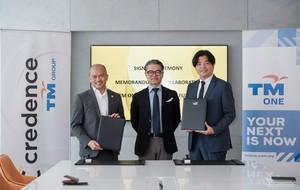 Fujifilm Malaysia Partners With Telekom Malaysia Unit on Cloud Medical Imaging Fujifilm Malaysia said on April 20 it signed a partnership with Credence, a cloud and digital services company and a subsidiary of Malaysian telecommunications firm Telekom Malaysia (TM), to roll out a cloud-based medical imaging information system in the country. Under the memorandum of understanding, the companies plan to combine TM’s cloud infrastructure, nationwide telecommunications network and cybersecurity capabilities with Fujifilm’s medical imaging and diagnostic technology. The aim is to standardize and enable sharing of imaging information across Malaysian health care institutions, improving access to imaging records for medical staff and supporting faster diagnoses and more consistent patient care. The plan calls for operating Fujifilm’s vendor-neutral archive system, Synapse VNA, on TM’s Cloud Alpha Edge platform to centrally manage medical images and data stored across imaging management systems from different manufacturers and across hospital department systems.* This article has been translated by AI. 2026-04-22 15:27:14
 -
 Lee Jae-myung Pledges Expanded Strategic Cooperation With Vietnam on Nuclear, Infrastructure Lee Jae-myung said April 22 (local time) that South Korea will expand cooperation with Vietnam in strategic areas including nuclear power, infrastructure and science and technology innovation, while stepping up coordination on global challenges such as supply chain stability, sustainable growth and climate change. Speaking at a luncheon meeting with Koreans in Vietnam at a hotel in Hanoi, Lee, who is on a state visit, said he aims to use the trip to develop what he called the two countries’ already top-level cooperation into a more future-oriented and strategic partnership. Lee noted that since establishing diplomatic relations in 1992, the two countries have become each other’s top three trading partners within a generation. He said Vietnam is South Korea’s largest destination for investment, with about 10,000 South Korean companies operating there. The two countries upgraded ties to a comprehensive strategic partnership in 2022, marking the 30th anniversary of diplomatic relations. Lee said South Korea and Vietnam have much in common, citing shared historical, cultural and economic bonds. He pointed to long periods of foreign domination, efforts to overcome hardship through their own strength, and the pain of division and war, adding that both societies share emotional ties rooted in the Confucian cultural sphere. Lee also encouraged athletes, singling out Kim Sang-sik, head coach of Vietnam’s national soccer team, who attended the luncheon. Noting that soccer is called the “king sport” in Vietnam, Lee joked that Kim would then be the “king of kings,” calling it “something to be truly proud of.” Lee, who said he once served as owner of Seongnam FC while he was mayor of Seongnam, added, “I also was once a soccer club owner, and while trying to make it succeed, I ended up being accused of a strange crime and am now on trial.” Turning to the Korean community in Vietnam, Lee said it has grown to about 200,000 people, making it the largest among ASEAN countries and the world’s fifth-largest Korean community. He expressed support for the community and said about 100,000 South Korea-Vietnam multicultural families are a valuable foundation linking the two countries by blood but face various difficulties. He pledged that the “people’s sovereignty government” would closely examine those challenges and do its best to resolve them quickly to build an inclusive South Korea. Lee began his state-visit schedule with the meeting and was set to hold a summit later that afternoon with To Lam, the Communist Party general secretary and state president. It will be Lee’s first meeting with Lam since August last year, eight months ago. Lam also assumed the post of Vietnam’s state president in April this year. An official welcoming ceremony was to be held beforehand in the main garden of the Presidential Palace in Hanoi. The schedule was to include a small-group summit, expanded talks, an exchange of memorandums of understanding, and a joint press statement. A state banquet was planned after the summit.* This article has been translated by AI. 2026-04-22 15:24:02
 -
 Villa Sales Jump in Seoul School Districts as Apartment Lease Listings Dry Up As apartment jeonse (lump-sum deposit leases) listings tighten in Seoul’s top school districts, more families are turning to villas — low-rise multi-family and row-house homes — in areas such as Mok-dong and Daechi-dong. Data from the Transport Ministry’s real estate transaction disclosure system showed that villa purchases and new lease contracts rose ahead of the new school term in key education hubs including Mok-dong, Daechi-dong and Junggye-dong in Nowon District. In Mok-dong, a major private academy area, villa sales totaled 400 as of the reporting date, with 347 deals concentrated from January through March. That was up 82.6% from 190 in the same period a year earlier. New jeonse and monthly-rent contracts also increased. The total reached 534 as of the reporting date, with 453 signed from January through March. That was an 11.0% rise from 408 a year earlier, suggesting school-term demand lifted both sales and rentals. Daechi-dong in Gangnam District and Junggye-dong showed similar patterns. In Daechi-dong, jeonse and monthly-rent transactions rose 7.8% to 250 in January-March from 232 a year earlier; the cumulative total was 277 as of the reporting date. Villa sales in January-March came to 23, up 35.3% from 17 a year earlier, with 28 sales recorded in total. In Junggye-dong, January-March sales jumped to 16 from seven a year earlier, a 128.6% increase; the cumulative total was 17. New lease contracts totaled 33 as of the reporting date, with no transactions recorded in April. That was more than triple the 10 contracts in the same period last year. The villa market in school districts began to warm after March last year, when the Gangnam three districts and Yongsan District were designated land transaction permit zones, adding owner-occupancy requirements. In Daechi-dong, row-house and multi-family sales rose from 17 in 2023 to 29 in 2024 and 90 in 2025. The trend continued through tighter lending rules and an expansion of regulated areas last year, and analysts said worsening lockups in jeonse supply further boosted villa demand. In Daechi-dong, row-house and multi-family sales in the second half of last year (58) were nearly double the first half (32). Rising apartment prices in school districts also pushed demand toward villas. Apartment sale prices in the Gangnam three districts rose about 6%, or 2.6 times Seoul’s overall average increase of 2.29%. The apartment rental market has tightened as multi-home owners put properties up for sale, reducing lease supply, while more tenants renew existing contracts, creating a chain reaction of shortages. According to the real estate platform Asil, Mok-dong jeonse and monthly-rent listings have been declining, and the market says the supply crunch is being felt. Jin Chang-ha, a professor in Hanyang University’s economics department and president of the Korea Housing Association, said the shift reflects structural change as investment-driven ownership declines and owner-occupancy rises amid tighter rules. “With moves to regulate loan maturities on top of restrictions on non-resident single-home owners and new jeonse loan guarantee rules, the market structure is being reshaped, leading to a structural transition,” he said. 2026-04-22 15:22:50