

Journalist

Lester Munson
-
 Yeosu petrochemical workers protest government-led plan to cut naphtha cracker output Yeosu industrial complex workers on Tuesday criticized a government- and creditor-led plan to voluntarily cut output at naphtha crackers, warning it could lead to mass layoffs and damage the local economy. They said it is unfair to push ahead with talks between the government (creditors) and companies without agreement from workers and the community. According to political circles, the labor-led Joint Countermeasures Committee for responding to petrochemical restructuring at the Yeosu National Industrial Complex held a news conference at the National Assembly press room and called for a halt to additional NCC cuts in Yeosu and the creation of a multi-party consultative body. The committee includes the Korean Confederation of Trade Unions’ South Jeolla headquarters, the Federation of Korean Trade Unions’ South Jeolla headquarters, the Yeosu Industrial Complex Labor Union Council, the KCTU Chemical, Fiber, Food Industries Union’s Gwangju-South Jeolla branch, and the FKTU Chemical Workers Federation’s South Jeolla headquarters. The committee said the government’s output-cut target for NCC facilities at three major industrial complexes is 2.7 million to 3.7 million tons, and about 3.43 million tons of cuts are already underway. It noted, however, that Ulsan is expanding capacity as S-Oil pursues its 1.8 million-ton Shaheen project. Yeosu’s cut volume is 1.67 million tons, about half of the nationwide reduction, the committee said. With the government seeking an additional 900,000 to 1.1 million tons in cuts, Yeosu’s total could rise to as much as 2.77 million tons — about 60% of the national total, it said. The committee said additional cuts by Yeocheon NCC and Lotte Chemical are expected to bring restructuring for regular workers and could trigger mass layoffs among subcontracted workers as downstream volumes fall. It warned of ripple effects across related industries and the broader regional economy. It also said employment at the Yeosu National Industrial Complex fell about 30% year over year as of the second quarter of 2025, down by about 7,000 workers, and argued that workers and the local community have been excluded from the restructuring process. The committee said a petrochemical special law enacted last year lacks sufficient measures to protect jobs and the regional economy, and that a recently announced enforcement decree does not adequately reflect views from industrial sites or broader social discussion. It urged the government to immediately stop unilateral plans for additional cuts. It also called for Yeosu to be upgraded to a higher-level “employment crisis area” designation and demanded legislation to establish a four-party joint committee involving the government, local governments, companies and labor to guarantee participation by workers and the community. The committee said policy should address what it called an imbalance of “maximum cuts in Yeosu, maximum expansion in Ulsan,” and it urged revisions to the special law and enforcement decree to ensure labor rights, regional balance and participation in governance. Rep. Jeon Jong-deok of the Progressive Party said, “A one-sided restructuring that excludes the field is not a solution but the start of another crisis,” and called for a multi-party consultative body with workers as key participants to protect jobs and develop practical alternatives to support the region. 2026-03-18 14:48:20
 -
 BLACKPINK's Jennie to headline Lollapalooza Chicago as K-pop presence expands SEOUL, March 18 (AJP) - The organizers of Lollapalooza Chicago announced the 2026 festival lineup on Tuesday (local time), confirming that South Korean soloist Jennie will headline the four-day event at Grant Park. Scheduled to run from July 30 to August 2, the festival marks a significant milestone for the singer as she transitions from group performances to a solo mainstay on the global circuit. She joins a premier roster of headliners for the summer season including Lorde, Charlie XCX, and The Smashing Pumpkins. The announcement follows her successful appearances at previous international festivals where she garnered critical acclaim for her stage presence and vocal range. This appearance in Chicago is part of a broader summer tour for the performer, who is also slated to headline the Governors Ball in New York this June. Following her engagement in the United States, she will travel to Spain to lead the Mad Cool Festival in Madrid before concluding her summer schedule at Summer Sonic in Japan. These bookings solidify her standing as a primary draw for major Western music events, reflecting a strategic shift toward individual global branding. Her previous experience at the Coachella Valley Music and Arts Festival in California served as a precursor to this expansive 2026 festival run. The 2026 iteration of the Chicago festival continues a trend of heavy investment in South Korean talent, with several other prominent acts confirmed for the lineup. The girl groups aespa and (G)I-DLE are scheduled to perform, alongside the rising male quintet Cortis. This collective presence underscores the sustained demand for Seoul-based artists within the American live music market. Each group brings a distinct choreographed style and discography that has already seen substantial commercial success on domestic and international streaming charts. Jennie follows a lineage of South Korean artists who have broken through at the historic Chicago venue since 1991. The trail was blazed by J-Hope in 2022, who became the first Korean headliner at the event, followed by Tomorrow X Together in 2023. Subsequent years saw Stray Kids and Twice take top billing, demonstrating a growing institutional comfort with K-pop as a headline attraction. More than 400,000 attendees are expected to gather in the Illinois city this year to witness the 170 scheduled acts. 2026-03-18 14:47:00
 -
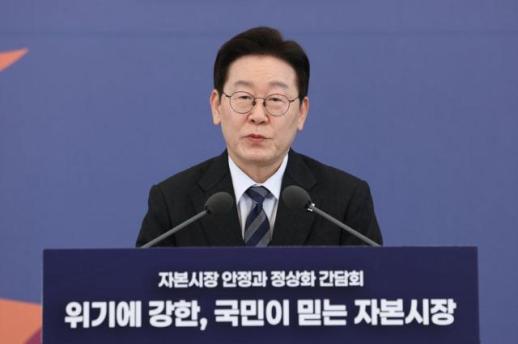 Lee thanks Japan, Qatar, and Saudi Arabia for helping evacuate South Koreans from Middle East SEOUL, March 18 (AJP) - President Lee Jae Myung has sent letters to the leaders of Japan, Qatar, and Saudi Arabia to thank them for their cooperation in evacuating South Korean nationals from the Middle East, Cheong Wa Dae said on Wednesday. In a written press briefing, presidential spokesperson Kang Yu-jung said that Lee sent the letters the previous day to Japanese Prime Minister Sanae Takaichi, Qatar's Tamim bin Hamad Al Thani Al and Saudi Arabia's Crown Prince Mohammed bin Salman Al Saud. In his letter to Takaichi, Lee expressed gratitude for Japan allowing about a dozen South Koreans to board Japanese‑chartered flights from Saudi Arabia, and Oman, enabling them to safely arrive in Japan. "I am glad that the friendship between our two countries has grown even stronger through cooperation in the Middle East," Lee wrote, adding that he hopes to "continue working even more closely to protect the lives and safety of our citizens." Lee thanked Qatar for arranging an emergency flight in Doha, which helped about 322 South Koreans arrive safely in Incheon earlier last week. Lee said Qatar's active support demonstrated the close ties between the two countries as "comprehensive strategic partners," and expressed hope that discussions would continue on ways to expand cooperation. Lee also conveyed gratitude to Saudi Arabia for its cooperation last weekend, which helped about 204 South Koreans return home from Riyadh aboard a South Korean military transport aircraft. According to Kang, Lee previously sent similar letters to Turkmenistan President Serdar Berdimuhamedow and Singapore Prime Minister Lawrence Wong for their assistance in helping South Koreans leave high-risk areas in the Middle East. 2026-03-18 14:33:32
 -
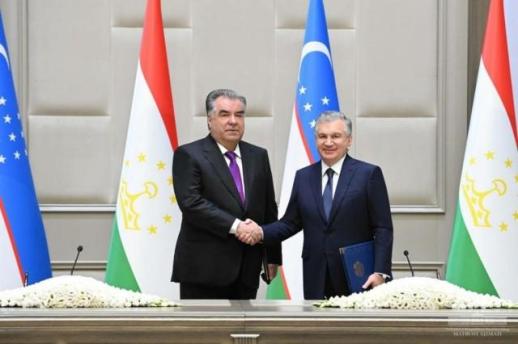 Uzbekistan and Tajikistan expand cultural ties through new diplomatic initiatives SEOUL, March 18 (AJP) - Uzbekistan and Tajikistan have entered a more active phase of cultural cooperation, the Uzbekistan Embassy in South Korea announced on Wednesday, March 18, 2026. This partnership is driven by a surge in festivals, film screenings, and theater tours designed to bring the two nations closer together. The relationship between the leaders of the two states has been a primary catalyst for this growth. Mutual visits and joint participation in cultural events have deepened friendship and mutual respect, providing fresh momentum to long-standing ties between the neighboring countries. A solid legal foundation supports these efforts, starting with an agreement signed on January 16, 1994, between the Republic of Uzbekistan and the Republic of Tajikistan. This has been followed by the Cultural Cooperation Programme for 2024–2026 adopted by the ministries of culture of both countries to implement joint projects. Direct communication between high-level officials has become frequent over the last four years. Uzbekistan Minister of Culture and his deputies have visited Tajikistan 11 times, while Tajikistan Minister of Culture and her deputies have made eight visits to Uzbekistan. Flagship events such as the Days of Uzbek Culture in Dushanbe and the Days of Tajik Culture in Tashkent are now held regularly. Tajik performers have also found success at international festivals in Uzbekistan, including the Lola dance ensemble, which recently won an award at the International Dance Festival "Lazgi." Cooperation has also expanded into the film industry through a memorandum between the Cinematography Agency of the Republic of Uzbekistan (CA) and the state institution Tojikfilm. The two organizations are currently finalizing the feature film "Starry Sky: Jami and Navoi," which is in the editing phase. In 2025, the city of Khujand hosted a major Navruz celebration attended by the leaders of Uzbekistan, Tajikistan, and Kyrgyzstan. The event featured a joint concert with artists from all three countries, showcasing regional unity through music and performance. Future plans include signing a new cultural cooperation program for 2026–2027. Upcoming initiatives involve theater tours and a gathering for multiple generations titled "Navro'zi olam," ensuring the steady development of cultural relations between the two peoples. 2026-03-18 14:31:09
 -
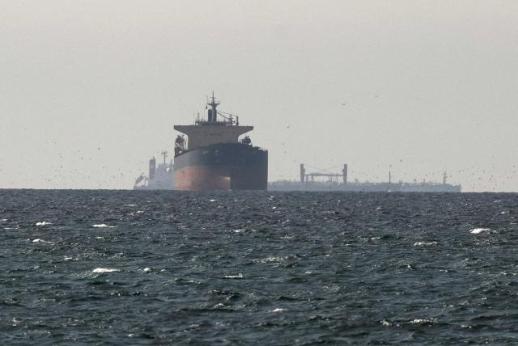 UAE pledges priority oil supply to Korea amid global supply concerns SEOUL, March 18 (AJP) - The United Arab Emirates (UAE) has pledged to prioritize crude oil supply to South Korea amid global supply uncertainties, Seoul’s presidential office said Wednesday. Presidential Chief of Staff Kang Hoon-sik, who returned earlier in the day from a visit to the UAE as a special envoy of President Lee Jae Myung, told a briefing that Abu Dhabi had assured Seoul it would be given top priority in crude shipments. “The UAE made it clear that no country will receive oil ahead of South Korea. Korea is their number one priority in crude supply,” Kang said. The two sides also agreed to allow South Korea to make emergency crude purchases from the UAE whenever necessary, he added. As part of the agreement, Seoul secured an additional 18 million barrels of crude oil through multiple supply channels. Of the total, 6 million barrels will be transported by three UAE-flagged tankers, while another 12 million barrels will be shipped via six South Korean vessels. An additional tanker carrying naphtha is currently en route to South Korea, Kang said. The latest deal follows an earlier emergency purchase of 6 million barrels from the UAE, bringing the total secured volume to 24 million barrels. The move comes amid rising tensions involving Iran, which have heightened concerns over the security of maritime traffic through the Strait of Hormuz — a critical chokepoint for global oil shipments. The escalating geopolitical risks have fueled uncertainty in global energy markets, prompting countries heavily reliant on Middle Eastern crude to secure alternative or emergency supplies. South Korea, which depends on imports for the vast majority of its energy needs, is particularly vulnerable to disruptions in Middle Eastern supply routes. The UAE has long been one of Seoul’s key crude suppliers, with bilateral energy cooperation further strengthened through strategic projects such as the Barakah nuclear power plant. Kang said the agreement is expected to help stabilize the domestic oil supply amid ongoing uncertainties. Beyond short-term supply measures, the two countries also agreed to strengthen long-term cooperation to guard against potential disruptions in energy supply chains. They plan to sign a memorandum of understanding (MOU) on crude supply chain cooperation in the near future, which will include efforts to explore alternative supply routes and enhance joint response mechanisms in times of crisis. 2026-03-18 14:21:25
 -
 South Korea’s National Pension Service hit by fan backlash after ENHYPEN’s Heeseung exits Some overseas fans angry over ENHYPEN member Heeseung’s announced departure and move to solo work directed their frustration at an unlikely target: South Korea’s National Pension Service, a major shareholder in HYBE. Kim Seong-ju, chairman of the National Pension Service, said in a social media post on the morning of March 18 that the agency’s International Pension Support Center was briefly overwhelmed after its contact information spread online. The backlash began after HYBE subsidiary Belift Lab announced on March 10 that Heeseung would leave the group and pursue solo activities. Some overseas fans, opposing the decision, organized efforts to pressure the pension fund as a key HYBE investor to push for a reversal. Posts on X, formerly Twitter, and other platforms circulated the center’s phone number, urging users to “make things difficult” for the pension fund and to demand answers on whether it had been notified in advance and whether it understood potential losses in market value. As a result, the center received a surge of calls from overseas last week, temporarily disrupting operations. Kim said about 1,500 emails arrived in just two hours. “The International Pension Support Center provides pension counseling in multiple languages, including English, Chinese and Japanese, for foreign workers in Korea and Koreans living abroad,” Kim wrote, adding that people who urgently needed pension assistance were inconvenienced. Kim said the National Pension Service is a long-term investor managing retirement funds and invests in many companies worldwide, but does not intervene in individual firms’ management or personnel matters. “Of course, we have no authority to be involved in the formation of a K-pop group or its membership,” he said. He added that while the incident spread through social media as a “happening,” it prompted reflection on the pension fund’s public role, and he pledged to stay focused on managing citizens’ assets in a stable manner. Belift Lab has said Heeseung will continue as a solo artist under the label, including plans such as releasing a personal album. The company faces continued pushback from parts of the global fan base. * This article has been translated by AI. 2026-03-18 14:12:11
 -
 Korea Zinc Develops Technology to Recover Rare Earth Mix From Discarded Products Korea Zinc said March 18 it has developed a technology to recover a rare earth mixture from discarded products. The company described the material as an intermediate product in which 17 rare earth elements are mixed. In advanced and defense industries, the mixture is separated and refined, then converted into oxides for use. Korea Zinc said its technology research institute at the Onsan smelter and its headquarters engineering team developed the process over three years. The method extracts mixed rare earths, including light and heavy rare earth elements, from waste rare earth magnets obtained by dismantling and separating discarded motors. Rare earth magnets, used as energy-conversion components in products such as motors and generators, smartphones, missile sensors and drones, contain large amounts of rare earths. Korea Zinc said it developed a way to recover the rare earth mixture from those magnets. Rare earths are considered essential materials for advanced industries, drawing investment from major countries and companies. Korea Zinc noted that one country holds overwhelming influence across the value chain from mining to production and consumption, raising the risk of supply disruptions and weakened future industrial competitiveness for others. Korea Zinc said it will continue developing technology for commercial production and plans to work with the government, the city of Ulsan and industry associations to build a system to secure stable raw materials. The company said it aims to contribute to greater technological self-reliance, stronger resource security and a more stable global supply chain. "Rare earth production is currently dominated by a few countries, leading to severe supply instability and price volatility, which directly affects the competitiveness of advanced industries not only in Korea but worldwide," a company official said. "Korea Zinc's participation in rare earth production, as the world's leading nonferrous metal smelter and a critical minerals hub, will help improve technological self-reliance and stabilize supply chains."* This article has been translated by AI. 2026-03-18 14:06:16
 -
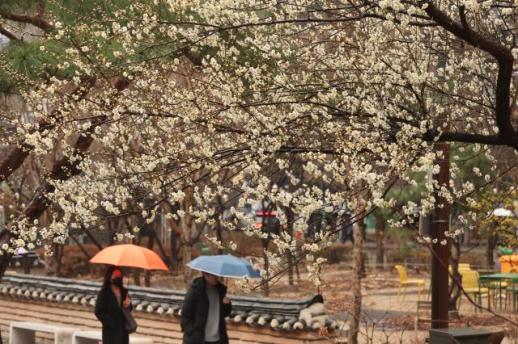 Light drizzles wash away fine dust SEOUL, March 18 (AJP) - Scattered showers fell over Seoul and nearby metropolitan areas on Wednesday. According to the Korea Meteorological Administration (KMA), about 5–10 millimeters of rain fell in the morning and tapered off in the afternoon, helping wash away fine dust that had lingered earlier in the week. Morning temperatures in Seoul hovered around 7.1 degrees Celsius, above the seasonal average, but the wet weather kept them from rising further. Clear skies will return on Thursday, though the cold is expected to linger. The full arrival of spring looks delayed, with temperature fluctuations continuing for the time being, reflecting typically fickle and unpredictable spring weather. 2026-03-18 13:56:41
 -
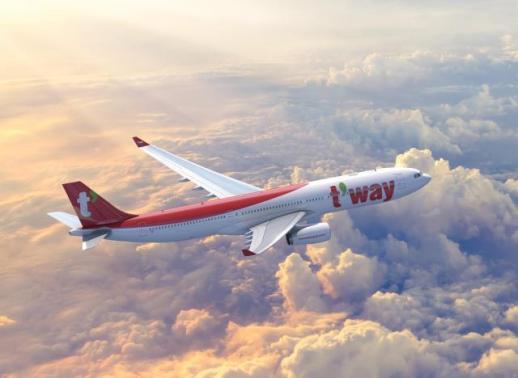 T’way Air Triples April Fuel Surcharges, Up to 213,900 Won One-Way T’way Air said Tuesday it has set fuel surcharges on one-way international tickets departing South Korea and issued in April at 30,800 won to 213,900 won. The fees are about triple this month’s levels of 10,300 won to 67,600 won. Under the new schedule, the shortest routes, including Incheon and Busan to Fukuoka, will carry a 30,800-won surcharge. Midrange routes such as Incheon to Da Nang and Cebu will be charged 87,900 won, while long-haul routes including Incheon to Paris, Rome and Sydney will be charged 213,900 won. T’way said the benchmark for April surcharges — the average Singapore jet fuel price (MOPS) from Feb. 16 to March 15 — was 326.71 cents per gallon, placing it at level 18 out of 33 (320 to 329 cents per gallon) amid the impact of the Middle East war. That is 12 levels higher than this month’s level 6 (200 to 209 cents per gallon), marking the steepest one-month jump since the current surcharge system was introduced in 2016. Korean Air, Asiana Airlines, Jin Air and Eastar Jet have also raised April fuel surcharges by up to about threefold in a month. Jeju Air is expected to announce its April fuel surcharges soon. * This article has been translated by AI. 2026-03-18 13:36:18
 -
 Asian markets edge up as Strait of Hormuz fears ease SEOUL, March 18 (AJP) - Asian stock markets opened higher Wednesday as concerns over supply chain disruptions involving the Strait of Hormuz eased slightly amid the prolonged Middle East conflict. South Korea's benchmark KOSPI extended its gains from the previous session as improving sentiment toward chipmakers outweighed concerns over volatile oil prices. Market sentiment remained fragile overnight amid rising crude oil prices and the ongoing U.S. Federal Open Market Committee (FOMC) meeting. Bust several reports that oil tankers have begun passing through the strategically important waterway helped ease supply concerns. Kevin Hassett, a White House official said tanker traffic is resuming through the critical chokepoint for roughly one-fifth of the world's oil supply. Geopolitical tensions remain high, however. U.S. President Donald Trump signaled a tougher stance on Iran as the Middle Eastern country continues retaliatory attacks including strikes near the UAE's Fujairah port, an alternative export route. Oil prices rose on the lingering uncertainty. West Texas Intermediate crude gained 3.32 percent to settle at $95.53 per barrel, while Brent crude climbed 3.20 percent to $103.42. At 9:41 a.m., Samsung Electronics surged 5.08 percent to 203,750 won, reclaiming the 200,000-won level for the first time since Feb. 27 before the outbreak of the conflict. SK hynix also rose 3.61 percent to 1,005,000 won, crossing the 1 million-won mark for the first time since the war began. Other chip-related stocks traded higher as well, with SK Square gaining 5.45 percent, Hanmi Semiconductor rising 1.33 percent and Samsung Electro-Mechanics advancing 1.34 percent. The rally followed gains in U.S. chip stocks, led by Micron Technology, which jumped 4.5 percent to a record high ahead of its earnings report, with expectations of a beat further boosting sentiment across the sector and spilling over into Korean equities. In South Korea, Samsung Electronics is holding its annual shareholders' meeting at its headquarters in Suwon, Gyeonggi Province. Key agenda items reportedly include a special dividend worth 1.3 trillion won, along with amendments to its articles of incorporation aimed at strengthening minority shareholder rights. Among other large-cap stocks, Samsung C&T rose 7.51 percent to 300,500 won, and Samsung Life Insurance advanced 12.67 percent to 244,500 won. SK Square climbed 5.96 percent to 622,000 won, and Samsung Biologics gained 2.52 percent to 1,627,000 won. Automakers also traded higher, with Hyundai Motor up 3.93 percent at 542,500 won and Kia advancing 4.24 percent to 174,400 won, and Hyundai Mobis rising 4.12 percent to 429,500 won. In the financial sector, KB Financial Group gained 2.52 percent to 154,500 won and Shinhan Financial Group rose 2.96 percent to 93,900 won. Among other notable movers, Doosan Enerbility added 2.97 percent to 107,500 won, HD Hyundai Electric jumped 4.19 percent to 970,000 won, and Korea Zinc climbed 3.29 percent to 1,665,000 won. The gains were supported by expectations for alternative energy demand as oil prices fluctuated above $100 amid prolonged Middle East tensions. As of 10:13 a.m., the benchmark KOSPI rose 3.72 percent to 5,850.28, and the tech-heavy KOSDAQ gained 1.16 percent to 1,150.17. The Korean won strengthened to 1,487.00 per dollar from the previous close of 1,492.5. Elsewhere in Asia, Tokyo stocks advanced, with the Nikkei 225 gaining 1.38 percent to 54,442.94 as easing concerns over oil supply disruptions prompted bargain buying. Semiconductor-related shares led the gains, tracking overnight strength in the Nasdaq. Advantest surged 4.16 percent to 24,525 yen, and Tokyo Electron rose 1.39 percent to 39,320 yen. Sentiment was further supported by a report from the Mainichi Shimbun that Japan could signal increased imports of U.S. crude at an upcoming summit between Trump and Japanese Prime Minister Sanae Takaichi in Washington, D.C. later this week, easing supply concerns. Hong Kong's Hang Seng Index rose 0.21 percent to 25,923.03. China's Shanghai Composite Index edged up 0.03 percent to 4,051.29. Taiwan's TAIEX also climbed 1.53 percent to 34,355.76 in the morning. 2026-03-18 11:49:08