

Journalist

Lester Munson
-
 Korea’s Hwarang Art Fair to Open at Record Scale With 169 Galleries South Korea’s longest-running art fair, the Hwarang Art Fair, will return this spring at its largest scale yet, with 169 leading domestic galleries taking part. Lee Seong-hoon, chairman of the Korea Galleries Association, said at a news conference Tuesday at the Seoul Press Center that the fair will “spotlight 19 artists through expanded solo booths.” He added, “We have prepared docent programs and special exhibitions so visitors can appreciate the works more deeply.” The fair, now in its 44th year, is widely seen as a bellwether for the country’s art market and a major event that helps set the tone for the year. It will run April 8-12 at COEX in Seoul. Tickets have been on sale since March 9 through the fair’s official website. Major galleries including Gana Art, Kukje Gallery, Gallery Hyundai, Johyun Gallery, Hakgojae and PKM will participate, joined by newer galleries that opened after the 2010s, organizers said. Gallery Hyundai will show works by Dansaekhwa master Chung Sang-hwa, who died earlier this year, and by Lee Kang-so, regarded as a leading figure in experimental art. Samter Gallery will present works by Dansaekhwa masters Park Seo-bo and Yun Hyong-keun, along with pieces by young Chinese abstract painter Chen Lizhu. Kukje Gallery plans to show works by Zhang Peili, who held a solo exhibition at its Seoul space last year, as well as Korean Canadian artist Lotus Kang and emerging Korean artists including Park Jin-a, Kim Se-eun and Kim Young-na. Gallery Sklo will present works by Shin Sang-ho, described as a pioneer of contemporary ceramics, along with Lee Sang-min, Kim Nam-doo and Park Sung-hoon. Sun Gallery will show works by Woo Byung-yoon, and Keumsan Gallery will present works by Lee Yoon-jung. The association is also marking its 50th anniversary with added programming aimed at drawing more visitors. The “solo booth” section, launched last year and drawing strong interest, will feature 19 galleries focusing on a single artist each. Participating artists include Jung Hyun, Moon Hyung-tae, Gil Woo-jung, Woo Byung-chul, Huai Ying and Patrick Hughes. A separate special exhibition will look back at the Korea Galleries Association’s history and the evolution of the country’s art market. Organizers said it will display materials including the association’s magazine Hwarang Chunchu, early Hwarang Art Fair catalogs, press clippings on the art market and previously unreleased photographs. The exhibition will also feature interviews with seven former association chairmen, tracing the group’s growth, changes in the art market and key turning points. Meanwhile, the association will participate for a second straight year in Expo Chicago 2026, running April 9-12. Twelve major Korean galleries will present more than 250 works by artists representing contemporary Korean art. In Chicago, the second stop of the overseas traveling exhibition of the Lee Kun-hee Collection, titled “Korean National Treasures: Korean Art 2000 Years,” is currently on view at the Art Institute of Chicago. Lee said of the second consecutive year of participation that he felt “Korean galleries raised the level of the Chicago art fair.” He said the association is exploring ways to expand into overseas markets including Singapore. “It’s true that going overseas comes with a heavy financial burden,” he said, adding that he expects government support to expand once the Art Promotion Act takes effect. * This article has been translated by AI. 2026-03-17 15:06:55
 -
 South Korea to Inspect 2,100 Restaurants Near BTS Event Sites Ahead of Comeback South Korea’s Ministry of Food and Drug Safety said March 17 it will conduct advance hygiene inspections and food-poisoning prevention outreach at about 2,100 restaurants near BTS comeback event sites, including Gwanghwamun, Namdaemun and Dongdaemun Design Plaza (DDP), through March 21. The ministry said the effort is aimed at raising sanitation standards ahead of an expected surge in visitors during the events and preventing consumer harm, including overcharging. Inspectors will focus on hygienic handling of food and kitchens, whether expired food is stored or used, and compliance with price-display rules, the ministry said. The ministry said it will also distribute sanitation supplies such as disinfectant and hygienic gloves to nearby restaurants and promote basic food-safety practices, including handwashing, to visitors. It said it plans to continue inspections around BTS concert venues in Goyang and Busan. The ministry said it will keep strengthening inspections of food and beverage facilities and education on preventing food poisoning to help ensure food-safety incidents do not occur at large gatherings.* This article has been translated by AI. 2026-03-17 14:27:00
 -
 FM tight-lipped over possible warship dispatch to Middle East SEOUL, March 17 (AJP) - There has been growing speculation about a possible deployment of South Korean troops to the Middle East, after U.S. President Donald Trump urged allies to dispatch warships to the Strait of Hormuz earlier this week. In a parliamentary session at the National Assembly in Seoul on Tuesday, when asked whether the U.S. formally asked Seoul to deploy warships to the strategically important waterway, he declined to elaborate, ambiguously saying "It may or may not be considered a request." Regarding the troop deployment, he said, "At this time, it is very difficult for me to answer." Remaining cautious, Cho merely said that Seoul and Washington are "closely communicating through various channels" over the situation of the ongoing conflict in the Middle East, which began with U.S.-led airstrikes on Iran late last month. He added that the government is also closely monitoring relevant developments including remarks and social media posts by Trump. The previous day, Cho spoke with U.S. Secretary of State Marco Rubio by phone, with Rubio reportedly stressing that cooperation among countries is essential for keeping the strategically important waterway open and safe. Cho said he was invited to attend the upcoming G7 foreign ministers' meeting scheduled to be held next week near Paris, adding that he is likely to meet with Rubio there. 2026-03-17 14:18:19
 -
 IBK Industrial Bank of Korea launches dedicated review team for productive finance IBK Industrial Bank of Korea said Tuesday it will operate a dedicated review team for “productive finance” to support innovative growth among small and midsize companies. The new team was created to respond quickly to funding needs at innovative firms in semiconductors, secondary batteries, biotech and artificial intelligence, the bank said. It is staffed by 40 specialists, including credit reviewers, certified public accountants and analysts, to speed and streamline lending decisions. The bank said it has introduced a system to complete reviews within three business days and will reflect consulting results from expert technology evaluators in its screening. The goal is to provide faster funding to companies with strong technology even if their financial statements are limited. IBK also said it will run a “head office re-review process” to re-examine loans that were rejected or delayed at review centers, aiming to ensure technology companies are not left out. “By launching this dedicated review team, we will support the expansion of productive finance and help technology-capable small and midsize firms build a foundation to grow through rapid funding,” an IBK official said. 2026-03-17 14:00:00
 -
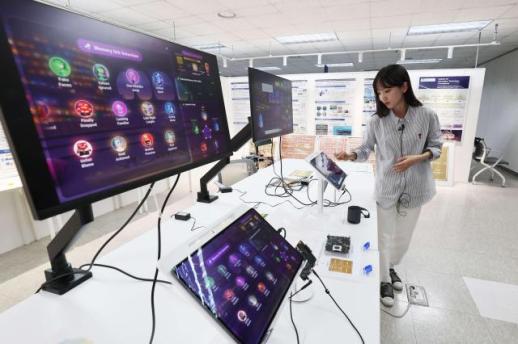 KAIST researchers develop world first personalized AI semiconductor SoulMate SEOUL, March 17 (AJP) - Researchers in South Korea have developed a specialized artificial intelligence chip capable of learning a user’s specific speaking style, preferences, and emotions in real time. The Korea Advanced Institute of Science and Technology (KAIST) announced on March 17 that a team led by Professor Yoo Hoi-jun at the Graduate School of AI Semiconductors has created SoulMate, an ultra-personalized Large Language Model (LLM) accelerator. While popular AI services like ChatGPT can answer general questions, they often lack awareness of a specific user’s daily habits or past conversation contexts. SoulMate overcomes these limitations by functioning as a digital companion that evolves through direct interaction. The system utilizes on-device AI technology, meaning all data is processed locally on the hardware rather than being sent to external cloud servers. To achieve this, the research team integrated Retrieval-Augmented Generation (RAG) to recall past conversations and Low-Rank Adaptation (LoRA) to reflect user feedback instantly. These technologies allow the chip to respond and learn simultaneously in just 0.2 seconds. This speed ensures that the interaction feels natural and fluid for the user, as delays longer than 400 milliseconds typically disrupt the flow of human-like conversation. The semiconductor is designed for extreme energy efficiency, consuming only 9.8 milliwatts of power. This is approximately 1/500th of the power typically consumed by a standard smartphone processor. This low power requirement enables mobile devices to run complex AI learning and inference tasks for 24 hours a day without significantly draining the battery. Privacy is a central feature of the new design. Because all personal data remains on the device, the risk of sensitive information leaking from a server is eliminated. The researchers expect this technology to be integrated into future smartphones, wearables, and personal AI devices to provide secure, tailored services. "This research establishes the technical foundation for AI to become a true companion by mimicking the way humans build friendships," said Professor Yoo Hoi-jun. "Future AI will move beyond being a mere tool to become a "best friend" that understands the user best while perfectly protecting their privacy." The study, featuring lead author and doctoral researcher Hong Seong-yeon, was recognized as a Highlight Paper at the International Solid-State Circuits Conference (ISSCC) held in San Francisco last month. The research team successfully demonstrated the chip at the conference, showing the AI’s speaking style changing in real time based on user reactions. SoulMate is expected to be commercialized around 2027 through the faculty-led startup OnNeuro AI. (Reference Information) Journal/Source: IEEE Xplore / 2024 IEEE International Solid-State Circuits Conference (ISSCC) Title: SoulMate: A 9.8mW Mobile Intelligence System-on-Chip with Mixed-Rank Architecture for On-Device LLM Personalization Link/DOI: https://ieeexplore.ieee.org/document/11409048 2026-03-17 13:57:22
 -
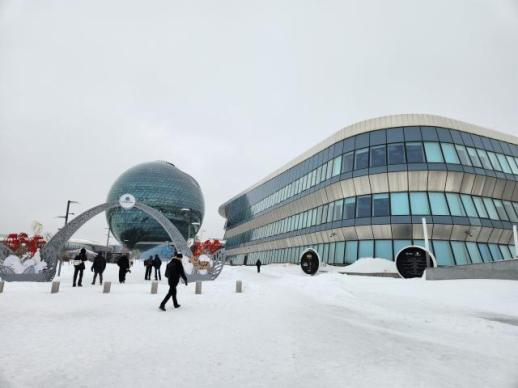 Kazakhstan's innovation cluster targets Seoul developers to build Central Eurasian technology corridor ASTANA, March 17 (AJP) - Kazakhstan's international innovation cluster, Astana Hub, is actively inviting South Korean developers and startups to help construct a high-technology corridor across Central Eurasia. Operating out of the capital, the state-backed facility offers an absolute zero-tax regime to foreign entities willing to relocate. Director of the Office of International Relations and Investments Daniyar Zhumagulov extended a direct invitation to Seoul's technology sector during a March 13 interview at the center. "South Korean startups should know they can soft land here with their ideas, opening their branches here, and in turn, we can propose to our startups to try to investigate the South Korean market with their solutions," he stated. The facility currently hosts more than 2,000 participating companies and supports a workforce exceeding 30,000 employees. Approximately a quarter of these enterprises were founded by foreign nationals, drawing talents from Azerbaijan, Mongolia, and Eastern Europe. The ecosystem has already proven capable of scaling global enterprises, recently producing its first unicorn startup. In the venture capital industry, a unicorn designates a privately held startup valued at over 1 billion dollars, a rare milestone achieved by the artificial intelligence video generation platform Higgsfield AI late last year. History and operation of the hub Astana Hub was officially launched in November 2018 as a cornerstone of the Digital Kazakhstan state program. According to both the director's presentation and a recent report by The Korea Herald, the center was established using the futuristic pavilions left over from the 2017 international energy exposition, transforming a former event space into a permanent technological nexus. While created by the government and benefiting from state financial backing, it operates with the business-first mindset of a private enterprise. Zhumagulov explained this unique structure by noting their approach is deliberately distinct from traditional bureaucracies. "You see, we are a quasi-state organization because we were created with the support of the government first, but we work with the business and IT community, and we are very flexible," the director said. By eliminating corporate, individual, and value-added taxes until 2029, the facility has attracted significant foreign participation. "We are serving as a bridge every time between big companies and small startups," he added. Shifting away from an extractive economy Historically reliant on its vast mineral and hydrocarbon wealth, the nation is executing a deliberate shift toward a digital economy. This macroeconomic realignment requires legacy sectors to modernize rather than shut down entirely. A national mandate currently forces subsoil operators to allocate 1 percent of their annual revenue to research and development. The hub acts as a central operator connecting these massive mining conglomerates with domestic startups to integrate automation and predictive models. For example, developers are building digital twins, which are highly detailed virtual replicas of physical mines or oil rigs. These digital models allow engineers to run safety and efficiency simulations before deploying expensive equipment in the real world. Backing this nationwide transition is the comprehensive Law on Artificial Intelligence, enacted in January 2026, establishing a strict risk-based classification system for machine learning deployments. Geopolitical alignment with Seoul This legislative framework aligns closely with the technological trajectory currently being charted in South Korea. The administration of President Lee Jae Myung has prioritized the integration of machine learning across all demographics. His government champions an initiative designed to make artificial intelligence accessible to both the youth and the elderly. Both nations recognize that advanced computing infrastructure requires centralized backing rather than relying entirely on private venture capital. Graphics processing units, commonly known as GPUs, are specialized computer chips required to process the massive datasets necessary for training artificial intelligence. Because they are incredibly complex and expensive to manufacture, they have become a major financial bottleneck for independent developers. "I think that in terms of AI, governments must take the lead because, as you have seen, GPU capacity could not be built only with private money," Zhumagulov noted. To bypass this hurdle, the Kazakhstani state deployed a two-exaflop supercomputer cluster near the capital, distributing its processing power evenly across governmental services, scientific research, and the startup community. Cultivating a global workforce Comparing their operational style to neighboring technology parks, the director emphasized their tactical efficiency. "We are the Marine Corps of the IT and AI sector," he said. "We are very agile. Let us do this like professionals." Cultivating a specialized workforce remains the central pillar of the institution's long-term strategy to sustain this operational speed. The administration operates educational facilities, including the TUMO school, which provides tuition-free programming instruction specifically for children aged 12 to 18. For adults, the Tomorrow School model offers peer-to-peer coding education, requiring only a two-year physical relocation commitment to the capital. Zhumagulov explicitly invited international participation in these educational and incubation programs, noting, "We have created it for all the people in the world." The institution aims to utilize these diverse talent pipelines to reach 5 billion dollars in annual technology exports by 2030. 2026-03-17 13:44:46
 -
 S-OIL, Samsung SDS Launch Integrated IT Outsourcing Partnership S-OIL said Tuesday it held a kickoff event with Samsung SDS to mark the full launch of their integrated ITO (IT outsourcing) project. The event was organized to commemorate the recent completion of S-OIL’s IT infrastructure data center migration and to signal the start of the joint ITO effort. The gathering was held Monday at Samsung SDS’ Sangam data center, with S-OIL CEO Ryu Yeol and Samsung SDS CEO Lee Jun-hee among the executives attending. The companies said they have successfully moved S-OIL’s key IT infrastructure to a Samsung SDS data center. The large-scale migration, the first in about 10 years, allowed S-OIL to reorganize its IT operating environment and strengthen system stability and operational efficiency. The move also laid groundwork for a future shift to a cloud-based IT environment, supporting faster digital transformation. Ryu said the data center migration and the start of the integrated ITO project will be an opportunity to further advance S-OIL’s IT infrastructure operations. “Through cooperation with Samsung SDS, we will strengthen a stable foundation for IT operations and continue to drive digital innovation,” he said. Lee said Samsung SDS will support stable IT service operations through the integrated ITO project and will actively back S-OIL’s transition to a cloud-based IT environment and its digital innovation efforts. S-OIL signed an integrated ITO contract with Samsung SDS last year and selected Samsung SDS as its integrated IT outsourcing provider for three years starting in March 2026. Samsung SDS will provide services across IT operations, including application and IT infrastructure operations, security, IT diagnostics and cloud transition consulting.* This article has been translated by AI. 2026-03-17 13:39:15
 -
 Seoul readies "wartime" contingency plans including export curb option and extra budget SEOUL, March 17 (AJP) - South Korean President Lee Jae Myung on Tuesday ordered the government to prepare for worst-case scenarios, including "wartime" extra budget, export curbs, and nationwide energy-saving measures, as the Middle East conflict threatens to disrupt global oil supplies. “The Middle East situation is expanding beyond expectations,” Lee said in a cabinet meeting. “At this rate, gasoline prices — which have stabilized under price control measures — could turn volatile again and send shockwaves through people’s daily lives.” Lee warned that prolonged instability following U.S. strikes on Iran could reignite energy price volatility, calling for contingency planning on the assumption that the crisis may drag on. Seoul has imposed a temporary price cap on wholesale and retail fuel prices for the first time in nearly 30 years when prices at gas stations surged last week. The president urged ministries to prepare a broad range of emergency responses, including demand control and supply-side measures. “If necessary, we must consider curbing exports and increasing the operating rates of nuclear power plants,” Lee said.He also called for a nationwide energy-saving campaign, suggesting the revival of vehicle restriction schemes such as leaving cars at home once a week or adopting odd-even driving systems. His remarks mark one of the strongest signals yet that Seoul is preparing for deeper disruptions in energy markets as the Strait of Hormuz — a key global oil transit route — remains under threat. South Korea is among key users of the Strait of Hormuz under pressure by the Trump administration to join a maritime coalition to restore the waterway crippled by Iranian attacks. Lee emphasized the need to mobilize diplomatic resources to secure alternative crude supplies, citing recent efforts to procure additional oil from the United Arab Emirates. “We must make all-out efforts to discover additional supply lines by leveraging our diplomatic capabilities and assets,” he said. South Korea imports virtually all of its crude oil, with more than 70 percent sourced from the Middle East, leaving the economy highly exposed to geopolitical shocks in the region. The president also instructed the government to accelerate the preparation of a supplementary budget, describing it as a “war-time” fiscal response aimed at cushioning the economic impact. 2026-03-17 13:27:28
 -
 Daehan Shipbuilding Wins $1.3 Billion Won Order for One Suezmax Crude Oil Tanker Daehan Shipbuilding said it is continuing a strong run of new orders since the start of the year. The company said Tuesday it signed a shipbuilding contract on March 16 with an Oceania-based shipping company to build one Suezmax-class crude oil tanker worth about 130 billion won. Including the latest deal, Daehan Shipbuilding said it has won orders for a total of nine vessels so far this year, surpassing 82% of its annual order target. The customer first signed with Daehan Shipbuilding in 2023 and has placed additional orders each year since then, the company said. It described the latest order as an example of turning global geopolitical risks into business opportunities, as rising tensions in the Middle East, including Iran, have pushed ships onto longer detour routes and sharply increased crude transport distances. Daehan Shipbuilding said that trend is driving demand and prices higher for Suezmax tankers, which are suited to long-haul operations, and is supporting new orders for the company, which it said has strong competitiveness in the segment. "The fact that an existing customer returns every year shows the market fully recognizes our shipbuilding capabilities and premium value," a Daehan Shipbuilding official said. The official added that demand for high-efficiency Suezmax vessels is expected to rise amid recent Middle East-driven changes in logistics conditions, making it possible to reach the company’s annual order goal early. 2026-03-17 11:48:16
 -
 Asian markets broadly higher, KOSPI led by Nvidia partners SEOUL, March 17 (AJP) — Asian stock markets traded higher Tuesday as easing oil prices and renewed optimism over AI-driven semiconductor demand boosted investor sentiment across the region. All members of the “Magnificent Seven” closed higher overnight. Nvidia rose 1.65 percent, Tesla gained 1.11 percent, Amazon advanced 1.96 percent, Meta Platforms climbed 2.33 percent, Alphabet added 1.09 percent, Microsoft rose 1.11 percent and Apple edged up 1.08 percent. Sentiment was buoyed after Nvidia CEO Jensen Huang projected that demand for its Blackwell and Vera Rubin AI platforms could reach as much as $1 trillion by 2027, reinforcing expectations for sustained semiconductor demand driven by artificial intelligence. The Philadelphia Semiconductor Index rose 1.96 percent, while Micron Technology gained 3.68 percent after announcing plans to build a second semiconductor fabrication facility in Taiwan. Nvidia’s key memory partners also shared the momentum. SK hynix rose 2.26 percent to 996,000 won, approaching the 1 million won mark and the highest level in 11 sessions, while Samsung Electronics gained 3.90 percent to 196,050 won, nearing the 200,000 won level. Also riding the Nvidia wave, Hyundai Motor and Kia said they will expand cooperation with Nvidia in autonomous driving and software-defined vehicles. The companies plan to apply Level 2+ autonomous driving technologies to selected models and aim to extend collaboration toward Level 4 robotaxis. The partnership is also expected to strengthen AI integration, with the group building an end-to-end data and learning system to enhance its autonomous driving capabilities. Reflecting the optimism, Hyundai Motor rose 4.55 percent to 529,000 won and Kia gained 3.58 percent to 167,800 won in morning trading. As of 10:51 a.m., the benchmark KOSPI rose 2.49 percent to 5,688.22, while the tech-heavy KOSDAQ gained 1.07 percent to 1,150.49. Institutions were net buyers, purchasing 180.5 billion won ($135 million), while individuals and foreign investors were net sellers, offloading 109.0 billion won and 58.6 billion won, respectively. Among other heavyweights, SK Square surged 6.05 percent to 596,000 won, HD Hyundai Electric rose 3.87 percent to 940,000 won and Hyundai Mobis gained 3.24 percent to 414,000 won. Internet and biotech stocks also moved higher, with Naver advancing 2.29 percent to 223,000 won, Celltrion climbing 2.75 percent to 205,500 won and Samsung Biologics adding 1.21 percent to 1,587,000 won. Financial shares posted modest gains, with KB Financial rising 0.94 percent to 150,700 won, Shinhan Financial gaining 0.78 percent to 90,700 won and Samsung Life Insurance up 1.65 percent to 215,500 won. Meanwhile, a few stocks bucked the broader trend. Hanwha Aerospace fell 5.42 percent to 1,396,000 won and Mirae Asset Securities slipped 1.41 percent to 69,900 won. The Korean won strengthened to 1,493.20 per dollar from the previous close of 1,497.6 as oil prices eased. Elsewhere in Asia, Japanese equities opened higher with the Nikkei 225 rising 0.21 percent to 53,862.79. Hong Kong’s Hang Seng Index gained 0.79 percent to 26,038.31, China’s Shanghai Composite Index edged up 0.09 percent to 4,088.46 and Taiwan’s TAIEX advanced 1.66 percent to 33,897.30. 2026-03-17 11:31:48