

Journalist

Lester Munson
-
 National Museum, HYBE Team Up on BTS Goods Inspired by Korean National Treasure Korean national treasures are increasingly being recast through K-pop, with the 1,250-year-old Bell of King Seongdeok now serving as inspiration for BTS-linked merchandise aimed at global fans. The “Hip Tradition” trend that has spread in South Korea in recent years is moving onto the international stage through K-pop, broadening interest from K-content to Korean culture more broadly, including traditional heritage. Industry officials said Wednesday that the National Museum of Korea has become a key venue for collaborations between K-pop and traditional culture. A leading example is “Mu:ds,” the museum’s cultural merchandise line. Reinterpreting heritage through a modern lens, Mu:ds topped 40 billion won in annual sales last year. Its reach has grown further through partnerships with globally recognized K-pop, helping bring traditional culture to a wider audience. Riding the popularity of the Netflix animation “K-pop Demon Hunters,” a “magpie and tiger” badge sold about 90,000 units over the year, prompting “open-run” lines for purchases. This year, BTS is set to take over the Mu:ds spotlight. The National Museum Foundation of Korea said it will begin selling products developed with HYBE starting on the 20th to mark the release of BTS’ fifth full-length album, “ARIRANG.” The collaboration draws on patterns from the Bell of King Seongdeok, a national treasure held by the Gyeongju National Museum. Designers developed graphics based on donor figures and cloud motifs engraved on the bell’s surface and applied them to items including hairpins, shoulder bags, card holders and layered skirts. With BTS set to stage a comeback performance blending tradition and modernity at Gyeongbokgung Palace on the 21st, to be livestreamed worldwide on Netflix, the foundation expects the new Mu:ds products to draw interest from ARMY fans around the world. The Hip Tradition wave has been driven in large part by K-pop. After years of emphasizing a more borderless image, K-pop artists over the past five years have increasingly incorporated traditional elements such as hanbok, helping spark interest in heritage among Generation Z. BTS leader RM has also been credited with boosting Mu:ds’ visibility. Public attention grew after it became known that he owns a Mu:ds miniature modeled on the gilt-bronze pensive bodhisattva, a national treasure. Performances and videos have reinforced the trend, including BTS wearing reinterpreted hanbok while performing in front of Geunjeongjeon Hall at Gyeongbokgung Palace, and Blackpink featuring a jeogori jacket in a music video, the report said. Collaborations are also expanding into museum spaces. The National Museum of Korea and Blackpink recently set up a listening zone inside the museum timed to the group’s new album release, allowing visitors and fans to hear tracks from the album. The museum also offered a docent program in which Thai member Lisa introduced museum artifacts in Thai, the report said, as a way to present Korean heritage to overseas K-pop fans. Experts said the synergy between K-pop and traditional culture is a positive development. Pop culture critic Jeong Deok-hyeon said, “We are moving from the era of K-content to the era of K-culture,” adding that events featuring globally recognized K-pop artists at the National Museum of Korea can be “highly effective” in promoting K-culture. Reinterpreting heritage through goods, he said, has become a channel for showing that “our culture is hip.” 2026-03-11 10:21:32
 -
 Toss Bank faces FSS investigation after transaction glitch SEOUL, March 11 (AJP) — The Financial Supervisory Service (FSS) is set to conduct an on-site inspection of online banking platform Toss Bank on Wednesday. The inspection comes a day after an error in Toss's foreign exchange system that resulted in massive financial losses. At around 7:30 p.m. the previous day, a glitch in its mobile app allowed users to exchange yen at a rate of roughly 470 Korean won per 100 yen. Given that the actual market rate was approximately 934 won, the currency was traded at about half its market value. While Toss Bank immediately suspended transactions upon discovering the error, the glitch reportedly incurred losses of approximately 10 billion won. Some users who had set up automated buy orders found transactions already processed, while others rushed to purchase yen after receiving alerts of the sudden price drop. Transactions resumed at 9:00 p.m. after a suspension of around two hours. The financial watchdog seeks to investigate the cause of the system failure, the total volume of transactions, and the potential impact on users. This is not the first time Toss Bank has mismanaged exchange rate settings. In September 2022, the bank displayed the FX rate at 1,290 per dollar for nearly 30 minutes, despite the actual rate exceeding 1,400 at the time. The incident adds to a string of clerical errors across the financial sector. In February last year, Hana Bank mistakenly posted the Vietnamese dong at one-tenth of its actual value, leading to the cancellation of transactions. In January this year, cryptocurrency exchange Bithumb failed to recover approximately 13 billion won ($9.8 million) worth of assets after a clerical error led to the over-distribution of 620,000 bitcoins. 2026-03-11 10:14:40
 -
 Hyundai Glovis wins CDP Korea Award for carbon management in industrials sector Hyundai Glovis said March 11 it won the industrials-sector “Carbon Management Sector Honors” at the 2025 CDP Korea Awards, held March 10 at the Ambassador Seoul Pullman Hotel by the Korea committee of the Carbon Disclosure Project. CDP is a U.K.-based nonprofit that evaluates environmental, social and governance performance. Each year it assesses about 20,000 companies in roughly 90 countries on carbon emissions, climate risks and response strategies, selectively disclosing results. The information is published in annual reports and used by financial institutions in investment decisions. CDP grades companies’ climate-change response across eight levels, including Leadership A, Leadership A- and Management B, and recognizes top performers. Hyundai Glovis received the top “Leadership A” grade in the 2025 CDP climate-change assessment released late last year. The company has maintained a high grade for nearly 10 years after earning Leadership A- in its first assessment in 2016. With that result, Hyundai Glovis won the Carbon Management Sector Honors for the eighth time, the most among South Korean logistics companies, it said. The company said it was recognized for carbon-management efforts including its 2045 carbon-neutral strategy, adoption of low-carbon transport, expansion of renewable energy and building a system to calculate supply-chain emissions. Hyundai Glovis has declared a goal of reaching carbon neutrality by 2045, five years earlier than the International Maritime Organization’s 2050 target, and said it is carrying out a roadmap to meet that goal. In land transport, it is preparing to shift its fleet through pilot operations of low-carbon vehicles such as hydrogen trucks. In maritime transport, it began introducing five LNG dual-fuel car carriers in 2024 and plans to expand to more than 30 ships by 2028. On renewable energy, the company said it signed a virtual power purchase agreement totaling 127 GWh with a power brokerage firm, and is gradually switching electricity use at sites nationwide to renewable energy based on the renewable energy certificates it has secured. It has also set a mid- to long-term reduction roadmap to convert electricity used at overseas sites in the Americas and Asia to 100% renewable energy by 2030, and at sites in Europe and at its headquarters in South Korea by 2040. “Based on global top-level leadership in responding to climate change, we will continue to actively pursue environmental management,” a Hyundai Glovis official said. * This article has been translated by AI. 2026-03-11 10:09:21
 -
 Hana Bank, Jeju Province Sign Deal to Attract and Support Relocating Companies Hana Bank said Wednesday it signed a memorandum of understanding with Jeju Special Self-Governing Province to build a public-private base for attracting companies to the island. The agreement is aimed at helping companies that want to relocate to Jeju settle in and at boosting investment by using the bank’s financial infrastructure. The two sides said they will work together to identify strong companies, share information and strengthen regional economic competitiveness. Hana Bank said it will provide relocating companies with temporary office space, business consultations and investor briefings, and venues for workshops and seminars, free of charge. It also plans to offer company-tailored financial services and connect firms with nonfinancial support such as management, tax and investment services, along with information on policy funds, investment funds and subsidies. Jeju Province said it will pursue efforts to find and support companies moving to Jeju, run joint business consulting, link customized financial and nonfinancial services, and cooperate on networks to promote corporate attraction and investment. Hana Bank CEO Lee Ho-seong called the agreement “a first step toward our shared goal of strengthening Jeju’s economic self-reliance.” He said the bank will work with the province to identify and nurture promising companies seeking to move to Jeju and serve as a “reliable financial partner” to help them become a new growth engine for the local economy. * This article has been translated by AI. 2026-03-11 10:06:00
 -
 BYD Korea Launches Nationwide Roadshow for Dolphin Electric Hatchback BYD Korea said Tuesday it is launching a nationwide traveling exhibition program, the “BYD Dolphin Roadshow.” The roadshow is designed to let people see and experience the small electric hatchback Dolphin, which was released in February, in everyday settings. The vehicle is carried in a specially made transparent showcase trailer that tours major cities as a “mobile showroom.” Running from Tuesday through April 4, the tour starts in the Seoul metropolitan area and will travel to Daegu, Busan, Daejeon, Gwangju and Jeju. The trailer will move among high-traffic locations such as areas near train stations and local landmarks. BYD Korea is also holding promotional events. Anyone who scans a QR code on the trailer and enters basic information will receive a mobile coffee coupon. The company will also hold a drawing for Dolphin buyers, offering prizes including airline tickets, a coffee machine and a hair dryer. “This roadshow was prepared to deliver the appeal of the BYD Dolphin, which is loved in global markets, in a closer and more friendly way,” a BYD Korea official said.* This article has been translated by AI. 2026-03-11 09:57:54
 -
 Geely Auto Group Becomes First Chinese Automaker Named to S&P Global Sustainability Yearbook Geely Auto Group, the parent company of Zeekr, said Tuesday that S&P Global has recognized the company’s sustainability performance in environmental, social and governance, or ESG, areas. The company said Geely Auto Group was included in S&P Global’s “2026 Sustainability Yearbook,” announced Feb. 28, becoming the first Chinese automaker to be listed. The yearbook is based on S&P Global’s Corporate Sustainability Assessment, or CSA, and is widely used as a benchmark for corporate sustainability performance. This year, more than 9,200 companies took part, including 78 automakers worldwide. Only eight automakers, including Geely Auto Group, were selected for inclusion. Geely said it ranked fifth among the eight automakers, which it described as evidence of long-term commitment and systematic investment in ESG. It also received the “Industry Mover” designation, awarded to the company showing the most notable year-over-year improvement within its sector in the CSA. Geely said the results reflect the “One Geely” five-year strategy set by its holding company, Geely Holding Group. The plan aims to strengthen groupwide coordination and global cooperation through 2030 and build strategic capabilities to become a leader in the global auto industry. The strategy includes strengthening sustainable governance; advancing eco-friendly and energy-saving technologies and product innovation; improving sustainability across products’ full life cycle over the next five years; expanding the use of environmentally friendly materials; reducing the carbon footprint of finished vehicles; and achieving carbon neutrality at key plants. Geely also said it plans to support hundreds of partner companies in developing carbon-reduction road maps through green procurement and technology sharing. “Today, ESG has become a standard for evaluating the global competitiveness of automakers, so it is meaningful that Geely Auto Group has been certified for sustainability by S&P Global,” a company official said. “We will continue ESG management across various areas through eco-friendly electrified brands such as Zeekr.”* This article has been translated by AI. 2026-03-11 09:54:07
 -
 Celltrion launches Remsima liquid formulation in Europe, wins Nordic tenders SEOUL, March 11 (AJP) - South Korean biosimilar giant Celltrion announced Wednesday it has launched a liquid formulation of its flagship infliximab treatment Remsima IV in Europe, securing government tender contracts in Denmark and Norway in an early push to tighten its grip on the continent's infliximab market. The new formulation, which received European Commission approval in November, is the world's only liquid version of intravenous infliximab. Available in 100 mg and 350 mg vials, it eliminates the reconstitution step required for conventional freeze-dried preparations, cutting drug preparation time by about 50 percent and reducing associated labor and supply costs by about 20 percent. Celltrion's Nordic subsidiary kicked off sales in Norway immediately after winning the national tender and will supply the product through January 2028. The company said it expects to capture about 35 percent of Norway's intravenous infliximab market through the contract. Storage space requirements for the liquid formulation are also up to 70 percent smaller than those for the powder version, an advantage that Celltrion said resonated with European hospital procurement officials. The rollout marks the latest step in Celltrion's drive to build what it calls a full lineup of infliximab delivery options spanning intravenous powder, intravenous liquid and subcutaneous formulations. The company has filed patents on the liquid formulation and completed registrations in major European markets including Britain, Germany and France. Remsima's combined IV and subcutaneous product lines held a 68 percent share of European infliximab prescriptions as of the third quarter of 2025, according to data firm IQVIA. Celltrion said it plans to extend the liquid formulation's commercial reach to France, the Netherlands and the Czech Republic later this year. "The liquid formulation has proved its competitiveness by winning tenders immediately after launch," said Baek Seung-du, regional manager of Celltrion's Nordic affiliate. "We will continue field-driven sales and marketing efforts to broaden prescriptions and offer better options to European patients and clinicians." 2026-03-11 09:50:10
 -
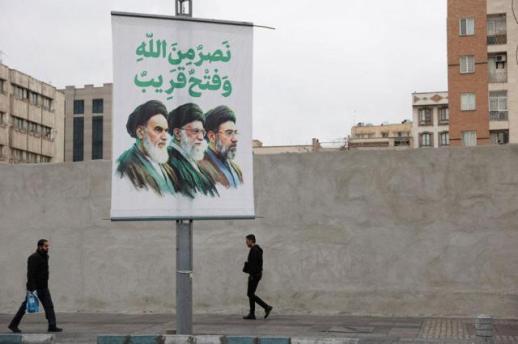 North Korea says it 'respects' Iran's choice of new leader SEOUL, March 11 (AJP) - North Korea said on Wednesday it "respects" the election of Iran's new leader Mojtaba Khamenei, who was named to succeed after his father was killed in U.S.-Israeli airstrikes early this month. According to the state-run Korean Central News Agency (KCNA), the country's Foreign Ministry said in a question-and-answer session the previous day that it "respects the rights and choice of the Iranian people to elect their supreme leader." Mojtaba, widely regarded as a hard‑liner, is the second-eldest son of late former leader Ali Khamenei, who ruled Iran with an iron fist for decades. Iranian clerics chose him despite prior warnings from the U.S. and Israel, a decision widely seen as a message that Iran will not yield to external pressure. "We express serious concern over and strongly denounce the acts of aggression by the U.S. and Israel that are destroying the regional peace and security foundations and escalating instability worldwide by mounting illegal military attack on Iran," the ministry fumed. "U.S. and its vassal forces are getting undisguised in their intervention into the internal affairs of Iran over the recent election of its new leader of the Islamic Revolution," it added, though it did not directly denounce U.S. President Donald Trump. Since establishing diplomatic ties in 1973, North Korea and Iran are believed to have begun cooperating on missiles and other weapons technology in the 1980s, when Iran turned to Pyongyang for help developing its missile capabilities during its war with Iraq. 2026-03-11 09:38:21
 -
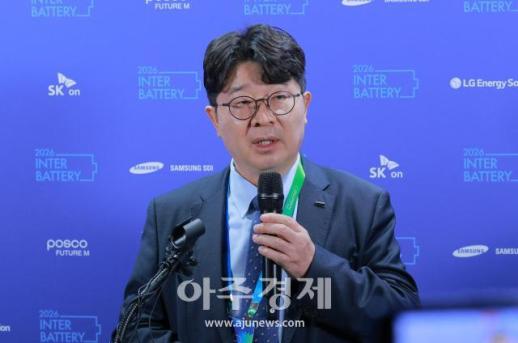 POSCO Future M CEO says LFP cathode mass production to start this year, targeting EV slowdown Eom Gi-cheon, CEO of POSCO Future M, outlined the company’s LFP (lithium iron phosphate) cathode material plans on March 11, speaking with reporters ahead of the opening of InterBattery 2026. “Major domestic battery materials companies plan to roll out mass-produced LFP cathode products within this year,” Eom said. He said POSCO Future M will complete its production line by July or August, go through certification in the third quarter, and supply mass-produced products to domestic customers by year’s end. Eom said battery makers’ utilization rates have fallen as growth in the electric vehicle market has slowed. But he said demand is shifting as markets such as energy storage systems and AI data centers “are opening up on a larger scale than EVs.” Eom also voiced confidence that solid-state battery technology could help South Korea’s battery industry overtake China. “Solid-state batteries are a next-generation technology that can allow Korea’s battery industry to surpass China in the future,” he said. He added that the company has made an equity investment in solid-state battery startup Factorial, and said POSCO Future M’s cathode materials could potentially be used in solid-state batteries for supercars. As chairman of the Korea Battery Industry Association, Eom stressed the need to strengthen competitiveness across the sector. “K-battery is facing a crisis due to global supply chain restructuring and the spread of protectionism,” he said. He said materials, parts and equipment companies will work as “one team” on technology development and process innovation, while coordinating closely with the government to boost competitiveness. Eom said Europe’s recently announced industrial acceleration policy and North American automakers’ strategies to build supply chains less dependent on China could create opportunities for South Korea’s battery industry. He said the industry will strengthen its global competitiveness based on technology, quality and reliability. The Korea Battery Association is holding InterBattery2026 from March 11 to 13 at COEX in Seoul. The exhibition theme is “Original Innovator, Creating the Future of Energy.”* This article has been translated by AI. 2026-03-11 09:37:36
 -
 Renault Group Targets 36 New Models by 2030, Pushes Electrification and Global Growth Renault Group has laid out a mid- to long-term strategy targeting 36 new vehicle launches by 2030 and annual sales of 2 million units. The plan centers on accelerating the shift to electrification, led by electric and hybrid models, while expanding in global markets. Renault Korea said March 11 that the group announced the “Future Ready Plan” on March 10 local time at its headquarters in France. Built around key brands including Renault, Dacia and Alpine, the plan calls for 36 new models from this year through 2030. The group also set targets of a 5% to 7% operating profit margin and average annual cash flow of more than 1.5 billion euros, aiming to fund new-model development and electrification investment. Renault Group has been pursuing restructuring under its “Renaulution” strategy announced in 2021. The Future Ready Plan is seen as the next phase, moving more fully into electrification and global business expansion. The Renault brand aligned its priorities with the group plan around three drivers: strengthening its position in Europe, expanding electrification across its lineup, and boosting markets outside Europe. It set a goal of launching 26 new models by 2030 and selling more than 2 million vehicles a year across Europe and other markets. In Europe, Renault plans to introduce 12 new models by 2030, expanding electric and hybrid offerings not only in its core A and B segments but also in the C and D segments. Its electrification push will be led by both battery-electric vehicles and its E-Tech hybrid lineup. Renault said it will keep its hybrid lineup in Europe even after 2030. Renault also introduced a new RGEV Medium 2.0 platform aimed at the European C and D segment EV market. The modular architecture is designed to cover B-plus through D segments and support multiple body types. The company said it features extended driving range, an 800-volt architecture for ultra-fast charging, advanced technology and optimized efficiency. Renault said it aims to sell more than 2 million vehicles annually by 2030, with half of that volume coming from outside Europe. It added that it will maximize the potential of five global hubs: South Korea, India, Morocco, Turkey and Latin America. Under its International Game Plan 2027, Renault said it will add 14 new models in markets outside Europe by 2030, following five models already introduced: Kardian, Duster, Grand Koleos, Boreal and Filante. It also said it will continue developing vehicles tailored to market conditions by actively using strategic partnerships, including with Geely Group. 2026-03-11 09:36:00