

Journalist

Lester Munson
-
 Korean sovereign wealth fund reaps 13.91% return in 2025, AUM at record high SEOUL, February 23 (AJP) -Korea Investment Corporation (KIC) posted a double-digit investment return in 2025 thanks to global equity rally that bolstered its assets under management to a record high. The sovereign wealth fund said Monday that it recorded an annual return of 13.91 percent last year, while its 10-year annualized return from 2016 to 2025 stood at 7.07 percent. Total assets under management (AUM) rose to $232 billion, driven by net investment gains of $28.5 billion. Cumulative net investment gains since inception reached $122.4 billion, exceeding entrusted principal of $118.6 billion for the first time, marking a symbolic milestone for the state-run fund. By asset class, traditional assets — equities and fixed income — accounted for 78.1 percent of total AUM, while alternative assets, including private equity, real estate, infrastructure and hedge funds, made up 21.9 percent. Traditional assets generated a return of 15.1 percent, led by equities at 22.24 percent and fixed income at 7.46 percent. Alternative assets posted a 10-year annualized return of 8.48 percent, reflecting their long-term investment nature. KIC said disciplined portfolio management helped lift returns, with traditional assets outperforming benchmarks by 24 basis points. Fixed income strategies generated 47 basis points of excess return through currency and duration management, while equities delivered 16 basis points of excess performance. “Despite persistent global interest-rate volatility and geopolitical uncertainty, KIC delivered balanced performance through disciplined analysis and rigorous risk management,” said Il Young Park, chief executive officer of KIC. “With market volatility expected to persist, we will focus on enhancing long-term portfolio stability and resilience,” Park said, adding that KIC will implement its Total Portfolio Approach this year to strengthen sustainable returns. Still, the fund, which is restricted to relatively conservative strategies and overseas assets as part of managing the nation’s foreign exchange reserves, performed modestly when compared to the National Pension Service (NPS), which reaped investment return rate of 20 percent last year. 2026-02-23 12:11:29
 -
 EastSoft's AI dubbing platform surpasses 460,000 users, with 90% from overseas SEOUL, February 23 (AJP) - South Korean software firm EastSoft said that its artificial intelligence dubbing and AI human video generation platform, Perso AI, has surpassed 460,000 registered users, with about 90 percent of sign-ups originating from markets in North America and Europe. The milestone announced Monday underscores Perso AI's rapid pivot toward a global user base. While Korean-to-English dubbing dominated early adoption, the platform has since seen a surge in multilingual demand, particularly for English-to-French and English-to-Spanish conversions. EastSoft said it has identified untapped potential in the Japanese and Spanish-speaking markets and plans to sharpen its international strategy accordingly. The company pointed to a series of technical upgrades as key drivers of its competitive edge, including prompt optimization tailored to Google's latest large language model Gemini, performance benchmarking against leading global audio engines, and the adoption of a content delivery network to bolster service stability. The company said it plans to continue refining the platform based on usage patterns from paying subscribers while lowering the entry barrier for new users through hands-on trial content. An EastSoft spokesperson said the platform's strength lies in its accessibility, noting that users can generate AI human video content as simply as building a presentation by entering prompts and making minor adjustments, while also creating digital characters with distinct identities as standalone intellectual properties. "With language demand expanding well beyond French and Spanish into a growing number of countries, we will strengthen our foothold in the global AI dubbing market through continued technological advancement and user experience optimization," the spokesperson said. 2026-02-23 12:05:11
 -
 Korean shipbuilders mull local and robotic options instead of foreign hires SEOUL, February 23 (AJP) - Two out of every 10 workers at shipyards across South Korea are foreigners, but major builders are increasingly looking to scale back overseas hiring by expanding domestic recruitment and accelerating automation, industry officials said. Leading the shift is HD Hyundai, the world's largest shipbuilder by order backlog, which plans to prioritize replacing departing foreign workers with Korean nationals as labor contracts expire. As of the end of 2025, HD Hyundai's shipbuilding units employed about 11,300 foreign workers, including subcontractors, accounting for roughly 19.8 percent of its 47,000-strong workforce. The industry's reliance on foreign labor has grown steadily in recent years. The number of overseas workers at Korean shipyards surged from 4,640 in 2021 to about 20,200 by the end of 2024, quadrupling in three years, as yards struggled to attract domestic workers to physically demanding jobs with relatively modest pay. However, a prolonged shipbuilding supercycle has strengthened the sector's finances, enabling companies to absorb the higher costs of local hiring and invest aggressively in artificial intelligence and robotics. The combined order backlog of Korea's three major builders stood at about $124 billion in late 2025, near record highs. Vessel exports reached $31.2 billion last year, up 22 percent, driven by demand for LNG carriers and large container ships, according to the Korea Chamber of Commerce and Industry. The boom has also been supported by geopolitical tailwinds. Seoul and Washington's "Make American Shipbuilding Great Again" initiative has opened new opportunities, with Korea pledging about $150 billion in shipbuilding-related investments to upgrade U.S. facilities. Domestic political pressure has added momentum. President Lee Jae Myung publicly questioned in January whether foreign workers were displacing Korean job seekers. Yet domestic hiring is only one pillar of a broader transformation. Korean builders are simultaneously pouring resources into AI, digital twins and robotics to offset rising labor costs and chronic shortages of skilled technicians. Earlier this month, HD Hyundai selected Siemens Xcelerator as the backbone of an integrated digital platform spanning its global shipyards under its "Future of Shipyard" program, targeting completion by 2030. "The selection of Siemens Xcelerator represents an important milestone in advancing HD Korea Shipbuilding & Offshore Engineering's digital shipbuilding strategy," said Lee Tae-jin, executive vice president at HD Hyundai. The group has also expanded its partnership with Palantir Technologies to deploy AI-driven analytics across its operations. Hanwha Ocean is investing about 160 billion won to turn its Geoje yard into a smart facility, targeting automation of up to 70 percent of production processes. The company is deploying drones and internet-of-things sensors to collect real-time data, while expanding the use of welding and fabrication robots. Hanwha is also applying its proprietary smart-yard technology to its Philadelphia shipyard in the United States as it seeks to expand in the North American maintenance, repair and overhaul market. Meanwhile, Samsung Heavy Industries has tested a wall-climbing quadruped robot developed by KAIST spinoff Diden Robotics for welding and inspection, with commercial deployment planned for the second half of 2026. The company has also partnered with Rainbow Robotics to co-develop AI-equipped welding robots and mobile dual-arm systems. Industry officials say the parallel push for domestic hiring and automation reflects a calculated strategy to maintain Korea's competitiveness against Chinese rivals, which now control about 63 percent of global new vessel orders. By pairing a more stable workforce with advanced digital tools, Korean shipbuilders are betting they can preserve their technological edge and long-term leadership in the global market. 2026-02-23 11:59:36
 -
 KOSPI unfazed in record-setting solo rally despite U.S. tariff flip-flop SEOUL, February 23 (AJP) — Korean stocks extended their record-setting rally on Monday, showing little sign of disruption from renewed U.S. tariff uncertainty as the benchmark index moved closer to the 5,900 mark while several major Asian markets remained closed. The main KOSPI briefly tested 5,900, extending its roughly 40 percent advance in the first two months of the year. As of 10:54 a.m., the index was up 1.17 percent at 5,875.12. The tech-heavy KOSDAQ rose 1.16 percent to 1,167.41. The Korean won strengthened amid a broad retreat of the U.S. dollar, reflecting growing uncertainty over Washington’s trade policy. The dollar was down 4.40 won at 1,143.60. Investor sentiment remained resilient despite renewed tariff pressure from Washington. President Donald Trump said he would raise a blanket U.S. import tariff to 15 percent after the Supreme Court of the United States struck down much of his second-term tariff regime last week. The administration has since relied on Section 122 of the Trade Act of 1974, which allows temporary tariffs of up to 15 percent for balance-of-payments purposes. For Korea, which runs persistent trade surpluses with the United States, the move suggests that Washington’s tariff policy is entering a new legal phase rather than winding down, keeping external uncertainty elevated. Investor flows were mixed. Individual investors bought a net 423.9 billion won ($320 million), while foreign and institutional investors sold a net 382.1 billion won and 69.9 billion won, respectively. Among heavyweight stocks, Samsung Electronics and SK hynix rose 2.68 percent and 2.42 percent to 195,200 won and 972,000 won, respectively. LG Energy Solution fell 0.87 percent to 398,000 won. Samsung Electronics gained after reports that it reclaimed the No. 1 position in the global DRAM market in the fourth quarter. Optimism over artificial intelligence investment also supported chipmakers. Chey Tae-won, chairman of SK Group, recently warned that while AI demand could push SK hynix’s operating profit beyond $100 billion, the sector also faces unprecedented volatility. Speaking at the Trans-Pacific Dialogue 2026 in Washington last week, Chey said AI is reshaping global industrial structures, creating extraordinary opportunities alongside rising uncertainty. Elsewhere, nuclear and defense shares were mixed. Doosan Enerbility climbed 0.68 percent, while Hanwha Aerospace fell 0.97 percent. Financial stocks led gains after a third amendment to the Commercial Act passed the National Assembly’s Legislation and Judiciary Committee. Samsung Life Insurance rose 4.34 percent, while DB Insurance, Heungkuk Fire & Marine Insurance and Lotte Insurance posted strong gains. In biotech, Samsung Biologics advanced 0.46 percent. Automakers also outperformed. Hyundai Motor rose about 3.93 percent to around 529,000 won on reports of a multi-trillion-won investment plan in Saemangeum, with Kia gaining 1.28 percent. Shipbuilders showed mixed performance, with HD Hyundai Heavy Industries edging up and Hanwha Ocean declining. Construction shares drew attention as Hyundai Engineering & Construction jumped 6.08 percent on expectations of U.S. nuclear reactor investment decisions between 2026 and 2029. In the region, Japanese equity markets were closed for the Emperor’s Birthday holiday. Hong Kong’s Hang Seng Index rose 1.46 percent, while China’s Shanghai market is set to resume trading on Tuesday. 2026-02-23 11:24:50
 -
 Exports in February soar to record high on AI chip demand SEOUL, February 23 (AJP) - Exports in February have hit a record high, fueled by strong demand for semiconductor chips. According to preliminary data released by the Korea Customs Service on Monday, outbound shipments for the first 20 days of this month stood at US$43.52 billion, up 23.5 percent from a year earlier, the highest for the period. The previous record was $43 billion, set during the same period in December last year. Semiconductors led the increase as artificial intelligence (AI)-related demand continued to grow. Chip exports surged 134.1 percent to $15.12 billion, accounting for 34.7 percent of total exports, up 16.4 percentage points from a year earlier. Exports rose for petroleum products, computer peripherals, ships, and wireless communications equipment, but fell for passenger cars, auto parts, and precision instruments. By destination, shipments rose to China (up 30.8 percent), the U.S. (up 21.9 percent), Viet Nam (up 17.6 percent), the EU (up 11.4 percent) and Taiwan (up 76.4 percent). Imports during the period totaled $38.57 billion, up 11.7 percent, led by semiconductors, crude oil, semiconductor manufacturing equipment and gas. Imports rose from China, the EU, Taiwan and Viet Nam, but declined from Japan and the U.S. With exports surpassing imports, South Korea posted a trade surplus of $4.95 billion for the period. 2026-02-23 11:17:49
 -
 Firefighters struggle to contain wildfire in small town of Hamyang SEOUL, February 23 (AJP) - Firefighters are still struggling to contain a wildfire in the small town of Hamyang, South Gyeongsang Province. According to the Korea Forest Service, the fire has burned some 190 hectares of land and forest as of early Monday morning since the fire broke out around 9 p.m. last Saturday. More than 100 fire trucks and 600 personnel have been deployed to prevent the blaze from spreading to nearby residential areas, but strong winds and rugged terrain have hampered efforts to contain it. No casualties have been reported. 2026-02-23 10:46:36
 -
 Seoul assesses impact and uncertainty after US tariff ruling SEOUL, February 23 (AJP) - South Korea will continue discussions with the U.S. on tariff-related issues "in an amicable manner," Trade, Industry and Energy Minister Kim Jeong-gwan said on Monday. The trade chief said the government will ensure that the terms of a tariff deal finalized late last year are not undermined, after U.S. President Donald Trump threatened a new temporary global tariff of 15 percent following the U.S. Supreme Court's nullification of reciprocal tariffs. Kim's remarks came during an emergency meeting at the Korea Chamber of Commerce and Industry in Seoul, attended by relevant government ministries and agencies, as well as business groups. The meeting was convened after the U.S. Supreme Court struck down the use of the International Emergency Economic Powers Act (IEEPA) for tariffs, prompting Trump to announce follow-up measures including global tariffs under Section 122 of the Trade Act and a Section 301 investigation. Participants assessed the potential impact on South Korea's industries and exports and discussed possible response measures. Kim added that the government will work with relevant agencies and industry groups to keep companies informed amid global trade uncertainty. "We will unwaveringly pursue policies to strengthen the competitiveness of companies and diversify export channels in response to potential changes in trade conditions," he said. 2026-02-23 10:24:43
 -
 Korea Creative Content Agency Opens Applications for 2026 Korea Indie Game Dev Camp The Ministry of Culture, Sports and Tourism and the Korea Creative Content Agency said they will accept applications for the 2026 “Korea Indie Game Dev Camp” from Feb. 23 to March 23. The program will be run on a 6 billion won scale this year, with two tracks: companies and individuals. Projects selected in the final stage will receive development incentive grants of up to 140 million won per project for companies and up to 85 million won per project for individuals. In the first-stage planning track, the organizers plan to support 130 projects: 70 in the company track and 60 in the individual track. The initiative uses a step-by-step competition format: Stage 1 for strong planning, Stage 2 for an early build, Stage 3 for a prototype, and Stage 4 for an enhanced “vertical slice” focusing on core gameplay. Seven companies will participate as partners: Neowiz, Discord, Smilegate, Com2uS Holdings, Krafton, Toss (Viva Republica) and Pearl Abyss. The partners plan to provide stage-by-stage advice, invitations to company events and networking opportunities, support for participation in major exhibitions in and outside South Korea, and investment reviews. The organizers said the public-private effort is intended to help indie developers overcome technical and management constraints and move toward commercialization and global expansion. A “2026 Game Content Production Support” briefing will be held Feb. 24 starting at 2 p.m. in the conference room on the 16th floor of the CKL Corporate Support Center in Gwanghwamun. Details on how to apply and required documents are available in the notice posted on the agency’s website. * This article has been translated by AI. 2026-02-23 09:48:21
 -
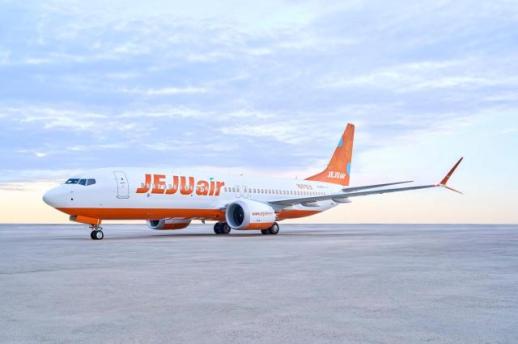 Jeju Air to Launch Incheon-Yichang and Daegu-Guilin Flights Twice Weekly Jeju Air said Sunday it will begin twice-weekly service in April on the Incheon-Yichang route and the Daegu-Guilin route. The Incheon-Yichang route will operate twice a week, on Tuesdays and Saturdays, from April 4 to May 30. The Daegu-Guilin route will run as a twice-weekly charter service, on Thursdays and Sundays, from April 30 to May 28. Yichang, a city associated with the historical novel "Romance of the Three Kingdoms," is known for major temples and the Three Gorges Dam, and is a popular gateway for Yangtze River Three Gorges cruises. Guilin, a major tourist destination in southern China, is known for its scenery, including the Li River, as well as attractions such as Guanyan, where visitors explore caves by monorail, and the Longji rice terraces. Jeju Air also said it will resume service during the summer schedule period starting next month on the Incheon-Shijiazhuang route (twice weekly, Mondays and Fridays), the Busan-Shijiazhuang route (twice weekly, Tuesdays and Saturdays) and the Jeju-Beijing Capital route (three times weekly, Mondays, Wednesdays and Fridays). It will double Incheon-Weihai service to 14 flights a week from seven. The airline plans to start Busan-Zhangjiajie flights twice weekly, on Tuesdays and Saturdays, from next month 3, and to resume Incheon-Guilin service four times weekly, on Wednesdays, Thursdays, Saturdays and Sundays, from March 11. Incheon-Yanji service was increased last month to six flights a week, on Mondays, Wednesdays, Thursdays, Fridays, Saturdays and Sundays, as the carrier continues to expand its China network. Jeju Air’s China-route passenger numbers have continued to rise, from about 305,000 in 2023 to about 493,000 in 2024 and about 573,000 last year. A Jeju Air official said travel demand is expected to keep growing as travel becomes more convenient, including through visa-waiver policies by the South Korean and Chinese governments. The official said the airline will work to expand China routes to improve travel options for passengers in both countries. * This article has been translated by AI. 2026-02-23 09:46:10
 -
 Soprano Jung Chan-hee Says She Won’t Perform at Jeon Han-gil Concert Soprano Jung Chan-hee said she will not appear at a concert hosted by Jeon Han-gil, a hard-line conservative YouTuber who previously worked as a Korean history instructor. Jung wrote on social media on the 22nd, “I had decided not to appear in this performance and hadn’t said anything separately, but I’m posting this because so many people have contacted me. I will not appear in this performance.” She said she had verbally been asked to perform at a March 1 music concert and agreed, but learned about the poster only after an acquaintance sent it to her two days earlier. “I contacted them and decided not to appear,” she added. Jung said she initially thought no explanation was needed because she had already decided not to participate, but chose to clarify after hearing from many supporters. Earlier, Tae Jin-ah’s agency, Jina Entertainment, also issued a statement the same day saying he would not perform. The agency said it had only received an inquiry describing it as a general event, not a political one. It said an event official visited days earlier and asked whether Tae could appear at an event at 2 p.m. March 2 at KINTEX, and the agency replied that his schedule was available. The agency said it asked whether it was related to politics given the upcoming local elections, but was told it was “just a general event at KINTEX.” The agency added, “Tae Jin-ah has never accepted countless invitations from the political world, and he has absolutely no intention of appearing at political events in the future.” * This article has been translated by AI. 2026-02-23 09:42:15