
Journalist

Lim, Kwu Jin
-
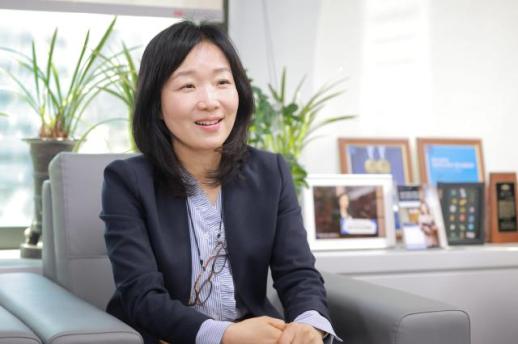 IBK Research Chief Warns Small Firms Face Failures; Calls for More Productive Lending 최근 고환율·고유가 등 대외 여건이 악화되면서 한국 경제의 허리인 중소기업들이 전례 없는 위기에 직면했다. 조달 비용 상승으로 마진은 줄고 이자조차 감당하기 어려운 한계기업이 속출하고 있다. Seo Gyeong-ran, head of the IBK Economic Research Institute, said the biggest challenge facing South Korea is what she called a “downward chain reaction of polarization.” She said global bloc tensions are widening the gap between export industries and domestic-demand industries, deepening differences in companies’ ability to recover and ultimately affecting people’s livelihoods. “Small firms’ survival is the banks’ survival,” Seo said, calling on lenders to balance productive finance and inclusive finance by learning to assess value beyond financial statements. The following is a Q&A with Seo. -최근 대내외 경제 여건이 녹록지 않다. 한국 경제를 짓누르는 가장 큰 부담 요인은 무엇인가. “Rising exchange rates and oil prices,” she said. Companies that import raw materials to process and export face higher procurement costs, squeezing already thin margins. More firms cannot cover interest with operating profit, which can lead to loan delinquencies, she said. Zombie firms with an interest coverage ratio below 1 have increased for three straight years since 2023 and are expected to rise again this year, she said. -기업 가운데 중소기업의 연체율이 급등하고 있다. 원인은 무엇인가. Seo cited three structural problems: shrinking scale, aging and polarization. Large companies are export-oriented, while small and medium-sized enterprises rely on domestic demand, she said, making it hard to build resilience and lowering survival rates. The average lifespan of long-lived companies has recently fallen to 10 years, she said. She also pointed to aging industrial infrastructure and management. Industrial complexes built for small firms in the late 1960s are now 50 to 60 years old, with high vacancy rates and weak productivity, she said. Many CEOs are 60 or older, but succession and business shifts are difficult, and young workers are no longer coming in, she said. As conditions worsen, corporate lending has concentrated in stronger, high-tech sectors, creating a financing divide that contributes to small-firm failures, she said. -올해 중소기업들의 건전성 회복은 어려울까. Small firms’ distress was delayed for about two to three years during the COVID-19 period due to government support, but delinquencies began rising again in 2022, she said. With Middle East war-related risks and tariff policy issues added this year, a prolonged period could increase pressure on soundness and delinquency rates, she said. -이런 상황에도 은행권은 생산적 금융 차원에서 기업 대출을 늘려야 한다. 어떻게 해야 기업에 도움이 되고 은행도 건전성을 지킬 수 있을까. Seo said companies can be grouped into four levels by technology: high, upper-middle, lower-middle and low. Bank funding is concentrated in upper-middle and lower-middle firms because that ecosystem is largest and often has collateral such as real estate and factories, she said. High-level firms include many technology-driven companies, while low-level firms include declining sectors such as textiles and apparel, she said. She said the institute’s role is to identify where funding is concentrated and where it is lacking and to encourage financial support accordingly. She added that the institute is also focusing on research to help banks find ways to support the upper-middle and lower-middle segments while appropriately hedging risk. -정부와 금융권, 중소기업이 어떻게 역할을 분담해야 시너지가 커질까. Seo said productive finance and inclusive finance should be pursued together in corporate lending. Narrowly, inclusive finance supports credit recovery for low-income borrowers, she said, but broadly it can include companies facing temporary difficulties due to credit ratings or the business cycle — including firms that temporarily struggle to pay interest. She said the government should design support systems that reflect these varied situations. The financial sector, she said, should be able to provide funding by assessing nonfinancial factors such as technological capability and CEO competence even when financial ratings are low. Companies also need to present long-term visions, concrete business plans and future directions such as industry shifts, she said. Firms should first seek consulting to raise productivity, with financing attached to build a sustainable structure, she said. -생산적 금융 싱크탱크 역할을 하며 어떤 것을 최우선 과제로 보고 있나. Seo said the Industrial Bank of Korea was founded in 1961 and evolved into a specialized lender for small firms as the need for SME support grew. Its creation itself marked the start of inclusive finance, she said. SMEs that were once the target of inclusive finance have grown into key players in productive finance, while some still need inclusion, she said. Finding the right balance between productive and inclusive finance is IBK’s core task, she said. -기업은행만의 차별화된 지원책은. Seo said IBK operates the largest corporate consulting center, providing free management diagnostics and connecting companies to policy funds. Based on the belief that small firms’ fortunes are tied to the bank’s, IBK is investing in nonfinancial services, she said. She added that IBK carries a heavy responsibility because it is, in her words, unique worldwide as a listed company dedicated to SME finance that reinvests its profits back into small firms. -올해 경제성장률은 어떻게 전망하나. Seo said the International Monetary Fund’s estimate for South Korea’s economic growth this year is 1.9%, below the global average of 3.1%. Many research institutions are warning of downside risks, she said. The institute analyzed five industries closely tied to energy supply chains — coal and petroleum products, electricity, chemical products, nonmetallic minerals, and transportation and warehousing — and found their sales all fell from a year earlier and by more than the overall industry average, she said. She said restoring potential growth should start with raising productivity and innovation capacity across the broader corporate ecosystem, rather than relying on the performance of a few strong companies. -앞으로 한국 경제가 집중해야 할 과제는. Seo said South Korea is already an advanced economy by GDP size and trade volume, but still has unresolved issues in business efficiency, including labor-related challenges. The most urgent issue is demographics, she said. The working-age population began declining in 2020, and low birthrates are constricting the supply of human capital, she said. She called for considering measures such as expanding women’s participation in the workforce, adopting flexible work systems and using foreign labor.* This article has been translated by AI. 2026-05-06 17:07:28
 -
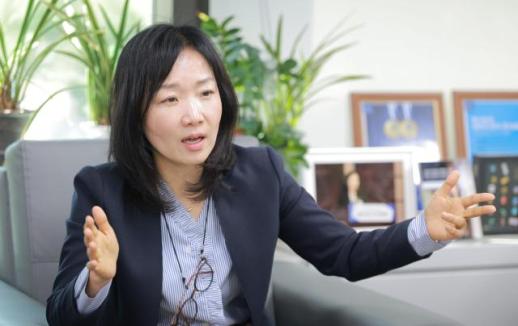 IBK Economic Research Chief: AI-Driven Industry Shift Could Be Turning Point for SMEs Seo Gyeong-ran, head of the IBK Economic Research Institute, is known as a specialist with experience across finance and industry. Building on that background, she is pushing research beyond economic analysis to examine the role of policy finance and link it to the bank’s growth strategy. Seo earned a doctorate in business administration from the University of Seoul and began her career as a researcher at the Korea Development Institute, or KDI. For more than 20 years, she has analyzed financing for small and midsize enterprises and the broader business environment, offering policy recommendations to government and the financial sector. Last year, she also worked as an expert member of the current administration’s state affairs planning committee, gaining firsthand policy experience. She is now deeply involved in setting policy direction and mid- to long-term strategy at IBK, a policy lender specializing in SMEs. Her top research focus recently has been the sweeping changes artificial intelligence is bringing to finance. With global economic uncertainty persisting and AI-driven industrial restructuring accelerating, she said the moment could be a major turning point for both the South Korean economy and its SMEs. Seo said AI should be viewed not merely as a workplace tool but as a foundation for expanding finance’s role. She argued AI can create new industries while also being integrated into manufacturing, reshaping it. Korea’s shipbuilding, auto and steel sectors, she said, should not decline in the face of AI but instead build new competitiveness by adopting it — a shift she sees as essential to sustaining the country’s potential growth rate. She expects finance to expand toward supporting corporate decision-making as AI adoption spreads. Using AI-based evaluation systems, lenders could more precisely assess growth potential and risks based on sales trends and productivity data, then design and supply tailored financial products. More customized consulting that reflects a company’s specific situation would also become possible. Seo said the success of the AI transition will hinge on data. “We are focusing on building a system that selects useful information from the vast amount of continuously generated data and links it organically,” she said. She added that “beyond simple adoption, developing business models that can generate profitability is essential,” underscoring IBK’s deliberations over its artificial intelligence transformation, or AX, roadmap.* This article has been translated by AI. 2026-05-06 17:06:08
 -
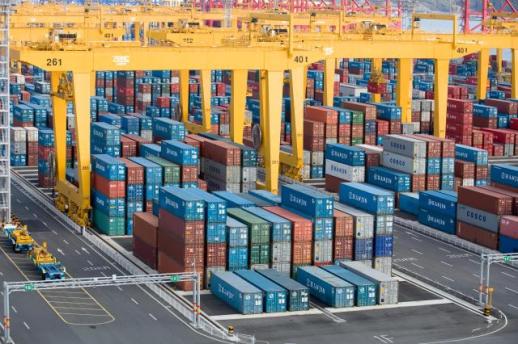 South Korea’s Q1 Exports Hit Record as Semiconductor Shipments Jump 139% South Korea posted its strongest first-quarter exports on record, helped by an artificial intelligence investment boom and a rebound in the semiconductor cycle. But the surge was heavily concentrated in chips — especially memory — raising concerns about the stability of the country’s export structure. The Ministry of Trade, Industry and Energy said Tuesday that first-quarter exports rose 37.8% from a year earlier to $219.9 billion, the highest ever for the period. The ministry cited expanding investment in AI servers and strong semiconductor demand. Semiconductor exports jumped 139% to $78.5 billion, underscoring the long-running risk of overreliance on a narrow set of products. Within semiconductors, growth diverged sharply between memory and system chips. With rising demand for high-bandwidth memory, exports of DRAM and NAND surged 249.1% and 377.5%, respectively. But system semiconductors, including foundry output, grew 13.5%. Across the broader export basket, the chip dominance was even clearer. Exports increased in 13 of the top 20 items, but semiconductors accounted for 35.7% of total exports. Exports excluding semiconductors rose 11.6%, less than half the overall growth rate. Other key industries slowed or slipped. Auto exports totaled $17.2 billion in the first quarter, down 0.3% from a year earlier. Truck exports rose, but shipments of passenger cars and vans fell. Passenger-car exports declined 2.2% to $16.3 billion, while van exports plunged 31.7%. In batteries, overall secondary-battery exports increased on strong lithium-ion battery shipments, but exports of cathode materials fell 5.5%. Steel and textiles were also weak. Steel exports were tallied as down 18.1% from the previous standard after some items were reclassified as other steel and metal products during an MTI revision. Textile exports slipped 0.6% due to weakness in fabrics and raw materials, though finished textile products held up on demand for K-fashion. Markets are increasingly wary that heavy dependence on a memory-led semiconductor supercycle could amplify volatility. The article cited uncertainty over U.S.-driven tariffs and expanding oil and supply-chain risks tied to a prolonged Middle East war as factors that could turn a concentrated export structure into a liability. Domestic risks are also in focus, including a threatened general strike by Samsung Electronics’ union. If production disruptions hit semiconductor output, the broader economy could face a significant shock. The Korea Development Institute has estimated that a 10% drop in exports due to semiconductor production disruptions would cut gross domestic product by 0.78%. The government said it is watching the risks closely. A ministry official said semiconductors are taking on the characteristics of a core industry and are closely linked to IT devices and supply chains, adding that the direction of the Middle East war is the biggest variable and that a negative scenario could hurt overall exports. * This article has been translated by AI. 2026-05-06 17:05:07
 -
 South Korea’s Q1 Exports Hit Record as DRAM and NAND Shipments Surge AI server chip exports surged in the first quarter, pushing South Korea’s DRAM exports up 249.1% and NAND flash exports up 377.5%, according to newly compiled government data. With exports reaching a record high for the period, officials and analysts said South Korea could rise to fifth in the global export rankings, ahead of Japan and Italy. The Ministry of Trade, Industry and Energy said Tuesday it revised its MTI product codes for export-import analysis and released an assessment of 2026 first-quarter trade using the updated system. The MTI codes reclassify the globally used HS codes to better reflect South Korea’s industrial structure. It was the first revision since 2020. The ministry expanded its list of major export items to 20 from 15, adding five categories including electrical equipment, nonferrous metals, agricultural and fisheries foods, cosmetics and household goods, to provide more consistent statistics and make trends easier to track. It also refined subcategories for key sectors including semiconductors, autos and biohealth. Semiconductor data now separate memory and system chips, with memory broken down into DRAM and NAND. Autos are classified by vehicle type, such as passenger and cargo vehicles. A separate MTI code was created for biohealth, with subcategories for pharmaceuticals and medical devices. Based on the revised statistics, first-quarter exports totaled $219.9 billion, up 37.8% from a year earlier, the highest on record for the period. Exports rose in 13 of the 20 major categories. Semiconductor exports jumped 139% to $78.5 billion. With memory prices rising, DRAM exports climbed to $35.79 billion and NAND flash to $5.39 billion. System semiconductors increased 13.5% to $12.11 billion. Auto exports slipped 0.3% to $17.2 billion. Cargo vehicle exports rose 63.9% to $710 million, but passenger car exports fell 2.2% to $16.3 billion and vans dropped 31.7% to $70 million. Biohealth exports rose 0.6% to $4.2 billion, and electrical equipment exports increased 2.5% to $4.05 billion. South Korea’s global export ranking could also improve. Under World Trade Organization data, South Korea ranked fifth in exports in January and February, behind China, the United States, Germany and the Netherlands. With Japan, the sixth-ranked exporter for the two-month period, trailing South Korea by about $12.9 billion, the ministry said South Korea’s chances of holding fifth place for the full first quarter improved once March results are included. A ministry official said Japan’s Ministry of Economy, Trade and Industry reported March exports in yen that, when converted to dollars, were estimated at about $189.5 billion, roughly $30 billion less than South Korea. The official said it would be the first time South Korea ranks fifth in quarterly global exports if confirmed. The ministry cited risks including the war in the Middle East. It said a negative scenario in which the conflict affects conditions through the second half of the year and influences oil prices into next year would make export trends difficult to predict. It also noted that a strike issue involving Samsung Electronics’ labor union remains unresolved. Trade Minister Kim Jeong-gwan said export conditions ahead would not be easy, citing higher oil prices from the Middle East war, global supply-chain instability and uncertainty over U.S. tariffs. He said the government would expand trade finance and export insurance to ease companies’ funding burdens and continue measures to stabilize transport and supply chains to guard against logistics disruptions and support the first-quarter export momentum.* This article has been translated by AI. 2026-05-06 17:04:42
 -
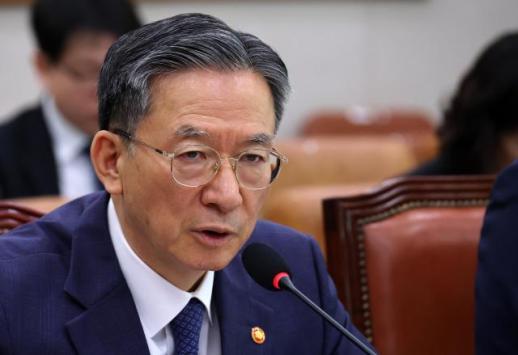 Justice Minister Jeong Seong-ho urges caution on special counsel bill over alleged prosecutorial fabrication The ruling Democratic Party is pushing a bill to appoint a special counsel to investigate allegations of fabricated investigations and indictments by prosecutors, but Justice Minister Jeong Seong-ho said the measure requires a cautious approach. Speaking at a full meeting of the National Assembly’s Legislation and Judiciary Committee on May 6, Jeong responded to a question from People Power Party lawmaker Yoon Sang-hyun, who asked whether Jeong, “as a conscientious legal professional,” would tell President Lee Jae-myung the bill should not proceed. Jeong said he agreed with the bill’s “basic legislative purpose,” but added that the special counsel’s powers and the scope of cases should be decided through deliberations in the Assembly. Jeong said suspicions were raised during a previous parliamentary investigation that the prosecution, the National Intelligence Service and the Board of Audit and Inspection abused their authority, and that prosecutors in particular may have committed significant illegal or improper acts during investigations. He said evidence had emerged that was difficult to explain away, and that the intent was to review the matter broadly. He added that, as President Lee has said, decisions on the special counsel’s authority and targets should be made through Assembly deliberations. On April 30, the Democratic Party submitted to the Assembly a bill titled the “Act on the Appointment of a Special Prosecutor to Uncover the Truth of Allegations of Fabricated Investigations and Fabricated Indictments by the Yoon Suk Yeol administration,” saying it would reexamine investigations and indictments carried out by the Supreme Prosecutors’ Office, the NIS and the audit agency during the Yoon government. The bill lists 12 cases for investigation, including seven cases that were subjects of the parliamentary investigation, such as the Daejang-dong development corruption allegations and the Ssangbangwool remittances-to-North-Korea case involving President Lee. It also includes a provision stating the special counsel would handle the maintenance of prosecutions in cases transferred to it, including decisions on whether to maintain them — language that effectively provides a basis for the special counsel to cancel indictments. After the Democratic Party submitted the bill, the opposition accused it of creating a special counsel aimed at canceling indictments to shield President Lee from criminal cases. In response to the criticism, Lee said on May 4 that the Democratic Party should decide the “specific timing and procedures” after gathering public opinion and going through a deliberative process. * This article has been translated by AI. 2026-05-06 17:03:16
 -
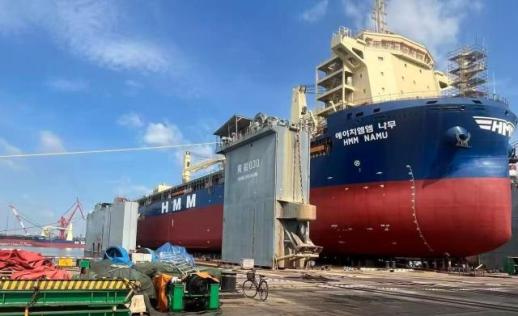 Seoul at a strategic crossroads as Hormuz crisis deepens SEOUL, May 06 (AJP) - A third Korea-bound tanker has begun a longer but safer voyage through the Red Sea to carry much-needed crude home, while an HMM cargo carrier damaged by an explosion in the heart of the Strait of Hormuz is being towed toward port — two parallel scenes underscoring the growing price South Korea is paying for its heavy dependence on Middle Eastern energy supplies. With both Washington and Tehran claiming the upper hand over the strategic chokepoint, uncertainty over who truly controls the Strait of Hormuz has intensified. As of Wednesday, 26 Korea-related vessels carrying 173 crew members remained stranded inside the Persian Gulf on dwindling resources, adding urgency to Seoul’s strategic calculations. The possibility that Iranian militant forces may have been involved in the latest maritime incident has fueled calls for Korea to reconsider its cautious stance toward Washington’s repeated requests to join “Project Freedom,” the U.S.-led naval operation aimed at restoring safe passage through Hormuz. Seoul has simultaneously been courted by both the U.S. and a separate Europe-led framework seeking to reopen the waterway responsible for roughly one-fifth of global energy flows. The focal point of the latest tensions is the Namu, an HMM-operated cargo ship that suffered an explosion near the port of Umm Al Quwain in the United Arab Emirates at around 3:40 p.m. Monday. The Ministry of Oceans and Fisheries said 24 crew members — including six Koreans and 18 foreign nationals — were aboard. No casualties were reported. An HMM official said Wednesday the company had secured a tugboat and expected towing operations to begin later in the evening. “The schedule remains subject to several variables, but if the operation proceeds quickly, the vessel could arrive in Dubai by Thursday night,” the official said. A full investigation into the cause of the explosion is expected once the vessel docks in Dubai. HMM said Iran had expanded its control zone in the Strait of Hormuz on the day of the accident, although the Namu itself was not inside the restricted area. Four other HMM vessels remained anchored near the control line alongside hundreds of ships awaiting passage clearance. Speculation over a possible external strike quickly emerged, but industry officials and union representatives cautioned against premature conclusions, noting the absence of visible structural damage consistent with a missile or drone attack. “If a fire had been caused by an external factor, there would have to be signs of damage to the hull, but no such signs have been reported,” said Jeon Jeong-geun, head of HMM’s seafarers’ union. “Nearby vessels have also reported no major visible damage.” Jeon added that further inspection would still be required to determine whether the vessel sustained damage below the waterline. “Whether a strong shock wave was transmitted can only be determined after checking the condition of the underwater hull,” he said. He also directly challenged U.S. President Donald Trump’s characterization of the incident. “President Trump’s remarks are far from the facts,” Jeon said. “Our vessels were anchored, not sailing, when the damage occurred.” South Korea’s Foreign Ministry said the exact cause would only be determined after the vessel undergoes inspection at port. The Iranian Embassy in Seoul on Wednesday denied any involvement by Iranian armed forces in the incident, saying Tehran “firmly rejects and categorically denies” allegations linked to the damage to the Korean vessel. It said safe passage through the Strait of Hormuz requires compliance with Iranian regulations, warnings and designated routes, adding that disregarding such requirements “may lead to unintended incidents.” Trump, however, has repeatedly used the incident to intensify pressure on Seoul. “Their ship was smashed yesterday. But the ships protected by the U.S. were not attacked,” Trump said on Tuesday, arguing that South Korea should join Project Freedom. The U.S. launched Project Freedom on Sunday to escort commercial vessels trapped in the Strait of Hormuz. A merchant ship operated by Danish shipping giant Maersk became the first stranded vessel to successfully transit the strait under U.S. naval escort. Yet the operation’s future quickly became uncertain after Trump abruptly announced its suspension on the second day, fueling questions over Washington’s next move. Some analysts interpreted the reversal as part of Trump’s familiar negotiating strategy of maximizing pressure before pursuing talks, while others suggested the mission may have imposed greater operational burdens on the U.S. military than initially anticipated. For Seoul, the crisis presents a far more complex challenge than previous overseas naval deployments. Unlike South Korea’s anti-piracy missions near Somalia under the Cheonghae Unit in 2020, the Hormuz situation involves an active war environment, including risks from Iranian drone attacks and naval mines whose locations may not be fully identified. Trump has repeatedly singled out South Korea while calling for allied naval participation, and U.S. Defense Secretary Pete Hegseth has also publicly urged allies, including Seoul, to shoulder greater military responsibilities. But joining U.S.-commanded operations carries significant diplomatic risks. If South Korean naval forces operate directly under U.S. command in the strait, Seoul could be perceived as assuming a more active role in the conflict itself, according to an industry official. At the same time, South Korea has been participating in a separate U.K.-French initiative involving roughly 40 countries aimed at supporting the eventual postwar reopening of the strait. Discussions began with a France-hosted virtual meeting of military chiefs in March and have since continued at the general officer level, with broad agreement on the need for international coordination to maintain freedom of navigation. Domestic politics pose another obstacle. Expanding the Cheonghae Unit’s operational mandate from the Gulf of Aden to Hormuz — or altering its mission area entirely — would likely require parliamentary approval, transforming the issue into a politically sensitive national debate rather than a purely military decision. For now, Seoul appears inclined toward more limited contributions, such as dispatching liaison officers to multinational headquarters or strengthening intelligence-sharing arrangements. Such measures would allow South Korea to respond to allied pressure while minimizing direct military exposure. Still, the European-led framework remains largely focused on postwar maritime stabilization, leaving unresolved the immediate dangers facing Korean crew members and vessels trapped inside the Gulf. With the U.S.-Iran standoff continuing, market expectations suggest normalization of Hormuz shipping traffic could take far longer than initially hoped. As of 4 p.m. Wednesday Korean time, prediction market Kalshi estimated a 60.8 percent probability that shipping operations through Hormuz would return to normal by Oct. 1. Analysts say the crisis has evolved beyond a simple question of naval deployment into a broader test of South Korea’s diplomatic balancing strategy between its alliance obligations with Washington and its preference for multilateral risk management. “For Trump, this is an incident that is very easy to use politically at a time when no country other than Israel is openly siding with the war,” said Jeong Kyung-woon of the Korea Military Studies Association. Jeong added that any deployment of South Korean military assets would likely remain limited for now. But if tensions in the Middle East worsen or the blockade drags on, pressure on Seoul to assume a more active military role is expected to intensify. 2026-05-06 16:57:21
 -
 Japan Begins Talks to Export Used Destroyer Escorts to the Philippines Japan has begun full-scale talks with the Philippines on exporting used Maritime Self-Defense Force destroyer escorts, the first such ship-export discussions since Tokyo effectively allowed exports of defense equipment with lethal capability last month. The move comes as Japan accelerates defense sales and security ties in Southeast Asia, raising the prospect of competition with South Korean defense firms. The Yomiuri Shimbun, Nikkei and Asahi Shimbun reported Tuesday that Japanese Defense Minister Shinjiro Koizumi met Monday in Manila with Philippine Defense Secretary Gilberto Teodoro. They agreed to set up a working-level group to discuss exporting used MSDF destroyer escorts and signed a joint statement to expand cooperation on defense equipment and technology. The ships under consideration include the Abukuma-class destroyer escorts, a six-ship class commissioned from 1989 to 1993. The multipurpose vessels can carry anti-submarine and anti-ship missiles and torpedoes. With more than 30 years in service, Japan’s Defense Ministry is moving to retire them in stages. The working group will also discuss the transfer of the MSDF’s TC-90 training aircraft, along with training, maintenance and operations support. The talks follow Japan’s April 21 revision of guidelines for its “Three Principles on Transfer of Defense Equipment and Technology,” which had limited exports to five categories — rescue, transport, warning, surveillance and minesweeping — known as the “five types.” With that restriction removed, exports of destroyer escorts with lethal capability became possible in principle. Asahi said that if the export is realized, it would be the first case since the rules were eased. Koizumi said the revision would “further strengthen Japan’s contribution to peace and stability in the region and the world,” and Teodoro expressed support and expectations, the reports said. Japan and the Philippines have been tightening security cooperation amid China’s expanding maritime activities. In their joint statement, the two sides named China and said they shared “serious concerns” about “coercive activities” in the East China Sea and South China Sea. They also reaffirmed strong opposition to attempts to unilaterally change the status quo by force. Nikkei said the cooperation could extend beyond arms exports to Japan’s broader strategic posture. If the Philippines adopts Japanese destroyer escorts, Japan could build local facilities capable of maintaining MSDF ships, expanding its operational base in Southeast Asia. It could also help disperse MSDF forces in an emergency, the paper said. Japan has rapidly expanded security cooperation with the Philippines. Coastal surveillance radar provided through Japan’s Official Security Assistance program has been deployed in the Philippines this year, and the two sides are coordinating a possible export of information processing and command-and-control systems, Asahi reported. The Philippines is also said to be interested in the Ground Self-Defense Force’s Type 03 medium-range surface-to-air missile, which intercepts enemy aircraft and cruise missiles. Institutional hurdles remain before any ship transfer. The Philippine side is reported to want a free or low-cost transfer, which would require revising Japan’s Self-Defense Forces law. Yomiuri and Asahi said the Japanese government plans to pursue legal changes in next year’s regular Diet session. Japan’s push to broaden security ties is not limited to the Philippines. Prime Minister Takaichi held a summit in Australia on Sunday and agreed to proceed smoothly with a project to jointly develop new Australian Navy ships based on an improved version of Japan’s Mogami-class destroyer escort. Also Sunday in northern Philippines, the Self-Defense Forces took part in a large-scale U.S.-Philippine exercise, Balikatan, in what was described as its first full participation. A total of 17,000 personnel from seven countries — Japan, the United States, the Philippines, Australia, New Zealand, France and Canada — joined the drills, with Japan dispatching about 1,400 troops. As Japan expands defense exports, some analysts see likely competition with South Korea’s defense industry. Renato De Castro, a professor at De La Salle University in the Philippines, told Asahi that Japanese products are expensive and that South Korean firms already have a foothold in the Philippines, making competition unavoidable. He also cited the challenge of building maintenance systems for exported weapons. South Korea has expanded defense cooperation with the Philippines by exporting FA-50 light attack aircraft and warships, among other items. In Japan, critics have also voiced concern about a government more willing to export weapons. Asahi reported that at a pro-constitution rally held Saturday on Japan’s Constitution Memorial Day, Japanese Communist Party leader Tomoko Tamura criticized Japan for becoming a “merchant of death” nation. Some participants also warned that Japan’s postwar principle of exclusively defense-oriented policy under its pacifist constitution is being undermined.* This article has been translated by AI. 2026-05-06 16:57:20
 -
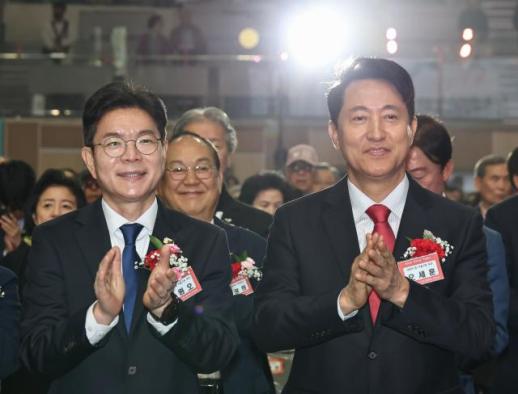 Seoul mayoral rivals Jung Won-oh and Oh Se-hoon trade barbs over housing supply Democratic Party candidate Jung Won-oh and People Power Party candidate Oh Se-hoon, both running for Seoul mayor, campaigned for older voters on May 6 by each calling himself “Seoul’s eldest son,” while continuing to clash over housing supply. The two appeared together in the morning at the Seoul chapter’s 54th Parents’ Day event of the Korea Senior Citizens Association at Jangchung Arena in Jung-gu. Oh arrived first, and Jung came in slightly after the opening time. They greeted each other with smiles and a handshake, but competed in their remarks. Jung said he remembered seniors’ contributions to the country and society, adding, “When I was Seongdong district mayor, you called me Seongdong’s eldest son. Now I will become Seoul’s eldest son.” After Jung left for another schedule, Oh told the audience, “The real eldest son of Seoul greets you,” and said his first pledge was a “healthier, higher-quality-of-life special city, Seoul.” He said he would pursue “healthy longevity” and make Seoul “the world’s longest-living city.” The rivals also kept up their dispute over how to expand housing supply in Seoul. Oh announced an afternoon pledge he called a “comprehensive plan to expand a housing mobility safety net” aimed at stabilizing housing for residents without homes. The plan’s centerpiece is supplying 123,000 public rental units and 6,500 public for-sale units by 2031. For the public for-sale portion, Oh proposed a “Baro Nae Jip” model that includes land-lease apartments priced at about half of nearby market levels and installment-plan apartments requiring a 20% upfront payment. He also pledged to expand long-term jeonse housing — which he said carries no risk of jeonse fraud — from 37,000 units to 106,000 by 2031. “With an overwhelming expansion of supply, we will lower the barriers for residents without homes to enter homeownership and greatly increase safe housing options without worries about jeonse fraud,” Oh said. Oh also launched what he called a “Real Estate Hell Citizens Countermeasures Committee,” criticizing the real estate policies of the Lee Jae-myung government and Jung. At the committee’s kickoff news conference, Oh took aim at Jung’s pledge to expand non-apartment supply, including villas, saying many Seoul residents want newly built apartments. “Policies that ignore reality are bound to fail,” he said. Jung’s campaign quickly pushed back. Kim Gyuhyun, a spokesperson for Jung’s election committee, said in a statement that Oh’s side was “recklessly trying to divide” residents who live in apartments and those who do not. Kim questioned whether an apartment supply plan that takes 10 years until move-in could address the urgency of residents facing jeonse contract expirations as soon as next year. Kim said Jung would shorten redevelopment project timelines to within 10 years and use villas, urban lifestyle housing and purchased rental housing together to pursue long-term supply while responding in the short term. He also said Jung would build “high-quality villa models” with safety, security and community features to broaden stable housing options for young people, newlyweds, one-person households and older single-person households. Jung’s campaign also criticized Oh’s “Real Estate Hell” committee. Spokesperson Park Kyung-mi pointed to Oh as responsible for what she called failures in Seoul’s real estate policy, saying, “The more he tries to mislead public opinion with provocative words, the noose will only tighten around himself.” She added, “Distorting facts and blaming others cannot cover up the failures of a four-term mayor.”* This article has been translated by AI. 2026-05-06 16:55:34
 -
 Korea Mint’s ‘Money Pollock’ Magnet Draws Buzz for Upcycled Banknote Dust A currency-themed merchandise item released by the Korea Minting and Security Printing Corp. is drawing attention online. Posts on online communities and social media have highlighted a “money magnet” sold through the mint’s online store, with particular focus on the “money pollock magnet.” Pollock has long been regarded as a symbol of protection, with its clear eyes said to watch over the home and its open mouth associated with welcoming good fortune. A tradition of wrapping pollock with silk thread is also described as a folk practice wishing for physical and mental well-being. The product is made as a magnet that can be attached to refrigerators or other metal surfaces. The mint operates an upcycling brand that uses currency byproducts generated during banknote production, including defective notes, offcuts and leftover paper. The product is said to contain about 2 grams of dust from 50,000-won notes. Online commenters wrote, “I bought it as a gift — it’s cute and seems meaningful,” “Recycling real money makes me feel like I’m doing something good,” and “I’ll keep it as a talisman.” Others said they waited a long time to buy it, were disappointed it was already sold out, or said they would wait for a sixth round of sales. The mint’s online store sells not only gold and silver products but also commemorative coins and medals, along with a range of goods using currency designs.* This article has been translated by AI. 2026-05-06 16:52:08
 -
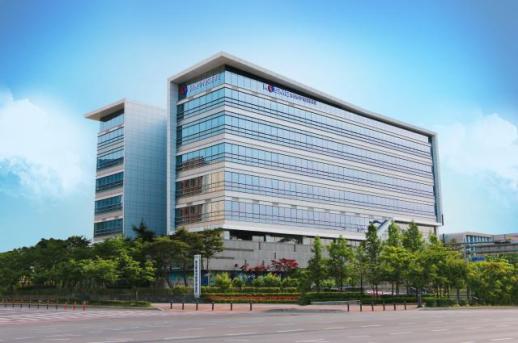 KOSME Selects 10 Teams for In-House AI Transformation Challenge The Korea SMEs and Startups Agency, known as KOSME, said it is stepping up efforts to strengthen employees’ artificial intelligence skills and data-use capabilities as organizations move into an era of AI transformation. KOSME said Tuesday that 10 teams have advanced to the finals of its in-house AI transformation, or AX, challenge. The selected teams will begin developing AI-based services aimed at solving on-the-job problems. The AX challenge is an internal innovation competition in which employees identify inefficiencies in their work and build AI-based services to address them, or use AI coding tools to improve tasks. KOSME said the program is designed so nonprofessional developers can lead service development. The challenge is being held in two categories — improving work efficiency and enhancing customer service — and drew 41 submissions. After an internal review, KOSME selected 10 projects it said showed strong creativity and potential for practical use and wider adoption. Selected projects include an “AI-based program to check performance indicators for policy loans,” an “AI-based assistant for corporate evaluation work,” and an “upgrade of the safety and health management system through AI-based ad hoc risk assessments.” KOSME said it will run an intensive training program from May through August to improve AI skills for the 10 teams and provide one-on-one coaching by experts to support implementation and service upgrades. It plans to conduct user testing and verify service stability through October, then select and reward four best cases in November. KOSME previously received the top rating in the Ministry of the Interior and Safety’s “2025 data-based administration evaluation.” It also won a minister’s award at a government innovation competition and received a citation for contributions to promoting the data industry. Lee Byeong-cheol, KOSME’s vice president, said the agency will “strengthen employees’ ability to use AI and continue to produce tangible results in work innovation that the public can feel in everyday life.”* This article has been translated by AI. 2026-05-06 16:51:17