

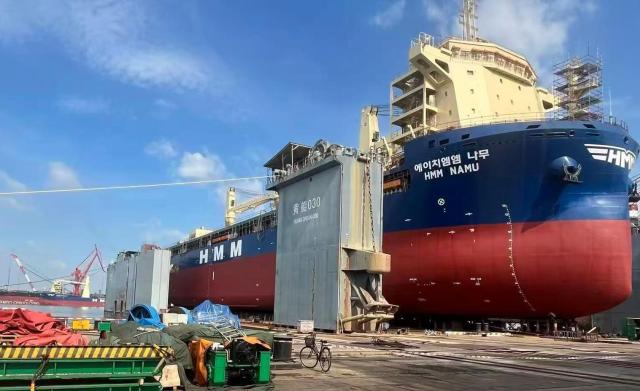
With both Washington and Tehran claiming the upper hand over the strategic chokepoint, uncertainty over who truly controls the Strait of Hormuz has intensified.
As of Wednesday, 26 Korea-related vessels carrying 173 crew members remained stranded inside the Persian Gulf on dwindling resources, adding urgency to Seoul’s strategic calculations.
The possibility that Iranian militant forces may have been involved in the latest maritime incident has fueled calls for Korea to reconsider its cautious stance toward Washington’s repeated requests to join “Project Freedom,” the U.S.-led naval operation aimed at restoring safe passage through Hormuz.
Seoul has simultaneously been courted by both the U.S. and a separate Europe-led framework seeking to reopen the waterway responsible for roughly one-fifth of global energy flows.
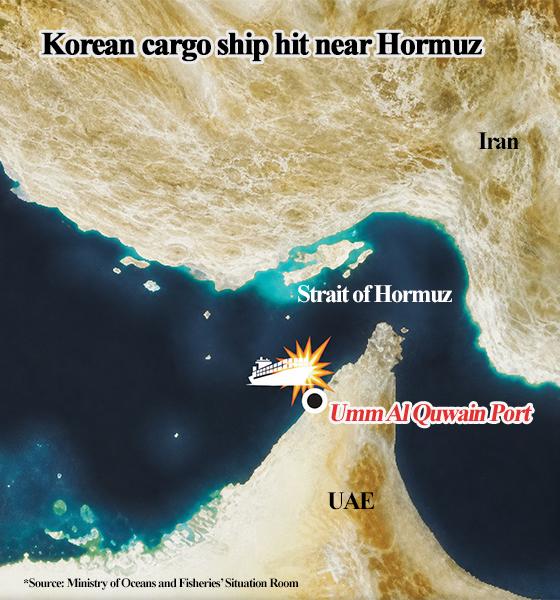
An HMM official said Wednesday the company had secured a tugboat and expected towing operations to begin later in the evening.
“The schedule remains subject to several variables, but if the operation proceeds quickly, the vessel could arrive in Dubai by Thursday night,” the official said.
A full investigation into the cause of the explosion is expected once the vessel docks in Dubai. HMM said Iran had expanded its control zone in the Strait of Hormuz on the day of the accident, although the Namu itself was not inside the restricted area. Four other HMM vessels remained anchored near the control line alongside hundreds of ships awaiting passage clearance.
Speculation over a possible external strike quickly emerged, but industry officials and union representatives cautioned against premature conclusions, noting the absence of visible structural damage consistent with a missile or drone attack.
“If a fire had been caused by an external factor, there would have to be signs of damage to the hull, but no such signs have been reported,” said Jeon Jeong-geun, head of HMM’s seafarers’ union. “Nearby vessels have also reported no major visible damage.”
Jeon added that further inspection would still be required to determine whether the vessel sustained damage below the waterline.
“Whether a strong shock wave was transmitted can only be determined after checking the condition of the underwater hull,” he said.
He also directly challenged U.S. President Donald Trump’s characterization of the incident.
“President Trump’s remarks are far from the facts,” Jeon said. “Our vessels were anchored, not sailing, when the damage occurred.”
South Korea’s Foreign Ministry said the exact cause would only be determined after the vessel undergoes inspection at port.
The Iranian Embassy in Seoul on Wednesday denied any involvement by Iranian armed forces in the incident, saying Tehran “firmly rejects and categorically denies” allegations linked to the damage to the Korean vessel. It said safe passage through the Strait of Hormuz requires compliance with Iranian regulations, warnings and designated routes, adding that disregarding such requirements “may lead to unintended incidents.”
Trump, however, has repeatedly used the incident to intensify pressure on Seoul.
“Their ship was smashed yesterday. But the ships protected by the U.S. were not attacked,” Trump said on Tuesday, arguing that South Korea should join Project Freedom.
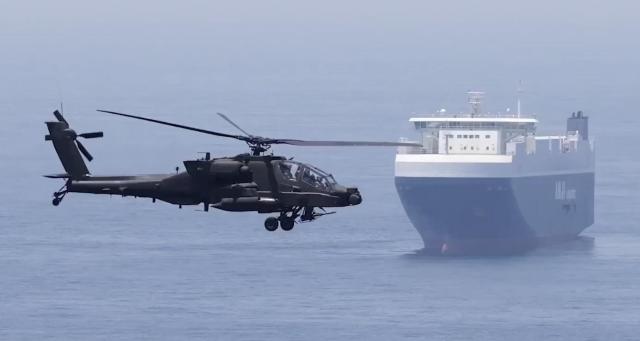
Yet the operation’s future quickly became uncertain after Trump abruptly announced its suspension on the second day, fueling questions over Washington’s next move.
Some analysts interpreted the reversal as part of Trump’s familiar negotiating strategy of maximizing pressure before pursuing talks, while others suggested the mission may have imposed greater operational burdens on the U.S. military than initially anticipated.
For Seoul, the crisis presents a far more complex challenge than previous overseas naval deployments.
Unlike South Korea’s anti-piracy missions near Somalia under the Cheonghae Unit in 2020, the Hormuz situation involves an active war environment, including risks from Iranian drone attacks and naval mines whose locations may not be fully identified.
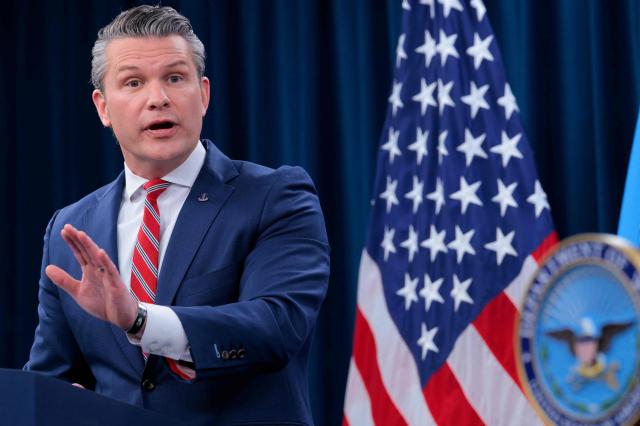
But joining U.S.-commanded operations carries significant diplomatic risks.
If South Korean naval forces operate directly under U.S. command in the strait, Seoul could be perceived as assuming a more active role in the conflict itself, according to an industry official.
At the same time, South Korea has been participating in a separate U.K.-French initiative involving roughly 40 countries aimed at supporting the eventual postwar reopening of the strait.
Discussions began with a France-hosted virtual meeting of military chiefs in March and have since continued at the general officer level, with broad agreement on the need for international coordination to maintain freedom of navigation.
Domestic politics pose another obstacle. Expanding the Cheonghae Unit’s operational mandate from the Gulf of Aden to Hormuz — or altering its mission area entirely — would likely require parliamentary approval, transforming the issue into a politically sensitive national debate rather than a purely military decision.
For now, Seoul appears inclined toward more limited contributions, such as dispatching liaison officers to multinational headquarters or strengthening intelligence-sharing arrangements.
Such measures would allow South Korea to respond to allied pressure while minimizing direct military exposure.
Still, the European-led framework remains largely focused on postwar maritime stabilization, leaving unresolved the immediate dangers facing Korean crew members and vessels trapped inside the Gulf.
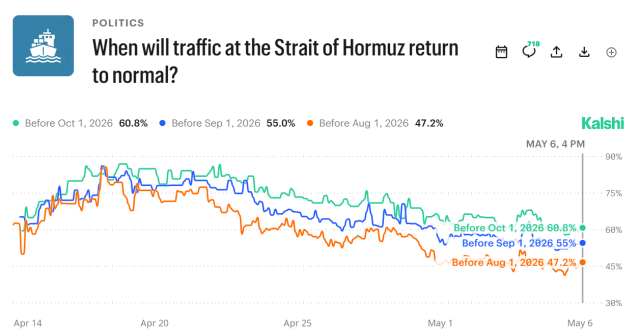
Analysts say the crisis has evolved beyond a simple question of naval deployment into a broader test of South Korea’s diplomatic balancing strategy between its alliance obligations with Washington and its preference for multilateral risk management.
“For Trump, this is an incident that is very easy to use politically at a time when no country other than Israel is openly siding with the war,” said Jeong Kyung-woon of the Korea Military Studies Association.
Jeong added that any deployment of South Korean military assets would likely remain limited for now. But if tensions in the Middle East worsen or the blockade drags on, pressure on Seoul to assume a more active military role is expected to intensify.

Copyright ⓒ Aju Press All rights reserved.
