
Journalist

Lim, Kwu Jin
-
 Kim Jong Un Tells Youth ‘Steel-Like Fighting Strength’ Is Source of National Pride Kim Jong Un, North Korea’s chairman of the State Affairs Commission, met with young people and urged them to play a larger role in advancing the state and strengthening loyalty to the system. According to Yonhap, the Korean Central News Agency reported May 3 that Kim met the previous day with participants in the 11th congress of the Socialist Patriotic Youth League, a youth organization affiliated with the ruling Workers’ Party, and posed for a commemorative photo. KCNA said Kim was accompanied by Workers’ Party Central Committee secretaries Kim Jae Ryong, Ri Il Hwan and Ju Chang Il, as well as Kim Song Gi, director of the Korean People’s Army General Political Bureau. Kim said “new and vast tasks of struggle” facing the party and the revolution require “more active advance and courageous roles” from young people, urging them to take part more actively in party work. He praised what he called youths’ heightened patriotism and revolutionary zeal, saying, “The noble spirit and steel-like fighting strength of our youth — found in no other country in the world — are a proud symbol of our national power.” The 11th congress, held for the first time in five years, took place in Pyongyang from April 28 to 30. KCNA described the meeting as an important step in making the youth league “an elite organization” and a “loyal vanguard” of the Workers’ Party. The youth league is one of the party’s four major mass organizations, along with the General Federation of Trade Unions, the Socialist Women’s Union and the Union of Agricultural Workers. After concluding the 9th party congress earlier this year, North Korea has been holding congresses of mass organizations, including leadership reshuffles, to reinvigorate them as it pursues goals under a new five-year plan.* This article has been translated by AI. 2026-05-03 08:24:15
 -
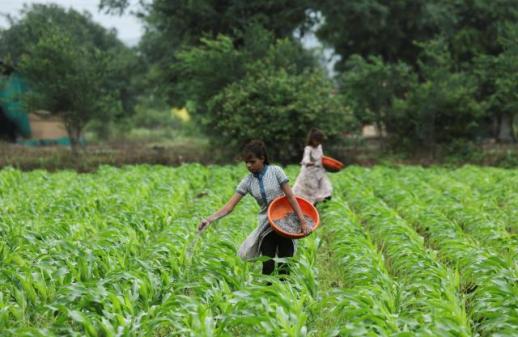 How the Iran conflict is building into Asia's economic crisis SEOUL, May 02 (AJP) - The U.S. congressional deadline to end an unauthorized combat operation has closed in, but President Donald Trump remains unmoved. In letters sent Friday to House Speaker Mike Johnson and Senate president pro tempore Chuck Grassley, Trump reiterated his administration's position that a cease-fire declared on April 7 had stopped the clock on the war — and that "Operation Economic Fury" is still squeezing Iran toward implosion through a naval blockade that has turned the Strait of Hormuz into a chokepoint for Iran's only meaningful export. Iran has not blinked. Brent crude is hovering near $120 a barrel — double its price at the end of December. Under the 1973 War Powers Resolution, presidents must end unauthorized combat operations after 60 days without congressional authorization, with a single 30-day extension permitted only to withdraw troops safely, not to extend fighting. The Trump administration's cease-fire argument remains legally contested. But for Asia's factories, central banks and households, the debate in Washington is almost beside the point. The economic war is already spreading. The toll falls hardest on a region structurally dependent on energy it does not produce. South Korea, Japan, China, India and most of Southeast Asia are not merely consumers of Middle Eastern oil and gas — they are processors. Energy becomes semiconductors, ships, steel, chemicals, pharmaceuticals, fertilizers, electricity and the logistics infrastructure that binds global supply chains together. When prices rise, the effect moves far beyond the pump. The Asian Development Bank has cut its Asia-Pacific growth forecast for this year from 5.1% to 4.7% and raised its 2026 inflation forecast from 3.6% to 5.2%. The World Bank projects energy prices will surge 24% this year — the highest since Russia's invasion of Ukraine. The United Nations Development Programme estimates the escalation could cost the region between $97 billion and $299 billion in lost output and push 8.8 million people into poverty. The inflation trajectory is the most immediately dangerous variable. A jump of that magnitude narrows central banks' room to support growth, raises debt-servicing burdens and forces governments to choose between protecting households and protecting public finances — a choice that, made badly, converts a price shock into a fiscal crisis. The region has absorbed energy shocks before. The oil crises of the 1970s reshaped industrial policy across Asia. The Gulf War jolted prices. Russia's invasion of Ukraine accelerated the renegotiation of liquefied natural gas contracts and strategic reserves. But each of those shocks arrived when the underlying conditions were more forgiving. This one has landed when Asia is already carrying high debt, elevated interest rates, post-pandemic fiscal pressure and slowing trade. What makes the current disruption structurally distinct is where it hits. Asian production networks are optimized for efficiency, not redundancy. More than half of the naphtha entering Asia by sea passes through the Middle East, feeding the petrochemical plants that supply plastics, fertilizers and pharmaceutical inputs across the region. Disruption at the Strait of Hormuz does not merely raise prices — it introduces uncertainty into systems built on precision timing. Uncertainty, in turn, is poison for capital expenditure and procurement planning. The Gulf is also a fertilizer artery, not just an energy one. Natural gas underpins the production of nitrogen fertilizer, and the region is a significant exporter of both. The United Nations has warned that as much as 45% of the world's seeds and fertilizers depend on Strait of Hormuz access. A prolonged disruption threatens not only current food prices but next year's harvests — a lagged catastrophe that will register in malnutrition and agricultural output long after the guns stop. The UNDP's most alarming scenario — six weeks of major supply disruption followed by eight months of elevated costs — would push 32.5 million people globally below the poverty line. In development economics, that is a projection. In human terms, it means children eating less, farmers planting less, clinics rationing power and households liquidating assets to survive a shock they had no hand in creating. G. Kent Fellows, an economist at the University of Calgary, notes that global crude inventories are "running down quickly" and that prices are likely to keep rising until supply and demand rebalance. Even if the Strait reopens, he cautions, prices will remain elevated while production capacity is rebuilt and inventories restocked. The short-term pressure has already begun reshaping trade relationships: Canada recently eliminated its 3% crude tariff on exports to South Korea, an early signal of the supply diversification that importing economies will pursue regardless of how the conflict ends. Aidan Hollis, also of Calgary, sees a longer-term demand reversal in the making. "While oil prices are elevated today," he says, "the long-term impact on oil prices is clearly negative: there will be massive destruction of demand for oil and natural gas as consumers and industry look for alternative sources of energy, including especially solar and wind.” Higher petrol prices, Fellows adds, will accelerate electric vehicle adoption — a structural shift that was already underway. For Zhiyuan Li, an economist at Fudan University, the deepest consequence of the war may be perceptual rather than material. "Trade, finance, energy, technology and logistics are no longer viewed simply as channels of efficiency and growth," he says. "They are increasingly viewed through the lens of security, vulnerability and strategic leverage." The danger, Li argues, is that governments draw the wrong lesson — that interdependence itself is the problem. His research suggests the opposite: greater bilateral trade raises the cost of military confrontation and can reduce both the likelihood and severity of interstate conflict. "Trade can be weaponized, but trade can also pacify," he says. "The task is not to abandon globalization, but to rebuild a global trade system that protects countries from coercion while preserving the peace-enhancing effects of economic exchange." The fiscal reckoning for governments is already taking shape. Policymakers face three basic choices: let prices pass through to consumers and absorb the political cost; subsidize broadly, cushioning households while straining budgets; or provide targeted, temporary support — economically superior but administratively demanding. The UNDP estimates that protecting the most vulnerable households across developing countries would cost roughly $6 billion, modest against the scale of potential output loss, but requiring coordination that stretched aid systems may struggle to deliver. The more durable fiscal risk is that governments repeat the errors of past shocks: universal fuel subsidies that create constituencies too politically entrenched to dismantle, emergency measures that become permanent, health and education spending quietly cut to fund price support. For high-debt developing economies, that path transforms a short-term energy crisis into a long-term development setback. The Iran war is a demonstration that modern conflict does not respect the boundaries of the battlefield. Missiles fall in the Middle East; the economic blast radius reaches South Korean petrochemical plants, Indian fertilizer importers, Thai factories and Myanmar fuel queues — and a poverty projection that will show up in educational attainment and labor productivity a decade from now. Asia-Pacific's integration into global energy and trade networks made it the engine of world growth. That same integration now makes it acutely vulnerable to a war on the other side of the world. The Trump administration may yet claim the clock has stopped. But the economic consequences are still moving. 2026-05-03 07:32:29
 -
 Pastor Jeon Kwang-hoon Holds Weekly Seoul Rally After Visiting Yoon; U.S. Warns on Hormuz Fees 'Yoon visit' Pastor Jeon Kwang-hoon holds weekly Gwanghwamun rally, says martial law possible On May 2, Pastor Jeon Kwang-hoon held a rally in central Seoul after visiting former President Yoon Suk Yeol, according to Yonhap News Agency. Jeon’s group, the Korea Restoration National Movement Headquarters, began the rally at 11:30 a.m. near the Dongwha Duty Free Shop in the Gwanghwamun area. About 6,000 people attended, based on an unofficial police estimate, waving South Korean and U.S. flags. From the stage, Jeon referred to his visit with Yoon. Jeon’s visit to Yoon at the Seoul Detention Center on April 30 had been reported earlier. “We have to make a decision. The preamble of the Constitution says to inherit the spirit of April 19,” Jeon said, arguing it means citizens should invoke a right to resist when the country is in turmoil. He added that “martial law is one of the president’s governing powers,” and said that if 10 million people gather in what he called “nonviolent armed” action, “we can rebuild the Republic of Korea.” Oh Se-hoon warns of Seoul real estate 'hell'; Jung Won-oh says Oh has been mayor Democratic Party Seoul mayoral candidate Jung Won-oh and People Power Party candidate Oh Se-hoon traded accusations May 2 over housing, as political sparring intensified a month ahead of the June 3 local elections. Speaking at a party rally at Seodaemun Cultural and Sports Center, Jung criticized Oh for, he said, staying silent “when Yoon Suk Yeol was ruining the country” and then attacking President Lee Jae-myung, whom Jung called a leader who “works well.” Jung said Oh should have spoken up “even once” when Yoon was “ruining the country.” Jung also pushed back on Oh’s recent claims that young people face “a monthly rent and deposit hell” and “a real estate hell” because of the current government. “Wasn’t the Seoul mayor you?” Jung said, arguing that after five years as mayor, Oh failed to increase housing supply and manage rental measures and is now blaming the government. Oh, for his part, said Seoul real estate would become “hell” if Jung is elected. U.S. warns shipping firms against paying Iran for Hormuz passage; Trump says, 'We are pirates' The U.S. government warned shipping companies that paying Iran fees to pass through the Strait of Hormuz could expose them to sanctions. According to Reuters and The Associated Press, the Treasury Department’s Office of Foreign Assets Control said in an advisory issued May 2 local time that it was warning of “the risk of sanctions” if companies pay the Iranian regime for safe passage or seek guarantees that they will not be attacked. Iran has promoted a detour route closer to its coast while pursuing passage charges, and the United States has moved to block Iran’s revenue for war funding through a maritime blockade, the report said. OFAC said prohibited payments could include not only cash but also digital assets, barter, informal swaps and in-kind payments. It also said attempts to route payments through Iranian embassies or disguise them as charitable donations are strictly banned. Jung Jin-suk nomination dispute deepens; People Power Party abruptly cancels ethics meeting Tensions are rising within the People Power Party over former National Assembly Deputy Speaker Jung Jin-suk’s application to seek the party nomination for a by-election in Gongju-Buyeo-Cheongyang, South Chungcheong Province. The party’s ethics committee abruptly canceled a meeting scheduled for May 2 that was to discuss Jung’s request to rejoin the party. Jung applied for reinstatement alongside his nomination bid. The committee had planned to review whether to grant an exception allowing a candidate under indictment to run. The report noted that exceptions were previously granted in similar cases involving Seoul mayoral candidate Oh Se-hoon and Daegu mayoral candidate Choo Kyung-ho, even while they were under investigation or indictment. That history had fueled expectations that Jung could receive the same treatment as he is being investigated over allegations of destroying evidence tied to a “martial law incident” involving the presidential office. With the meeting canceled, the nomination process has become less clear, the report said, and internal opposition has surfaced publicly. South Chungcheong gubernatorial candidate Kim Tae-heum issued a statement suggesting he could leave the party if Jung is nominated. BTS album 'ARIRANG' ranks No. 17 in U.K., No. 4 on Billboard 200; holds charts for sixth week BTS’ fifth full-length album, “ARIRANG,” stayed on the U.K. Official Charts Top 100 for a sixth straight week, according to Yonhap and other reports May 2. “ARIRANG” ranked No. 17 on the Official Albums Chart Top 100, down four spots from the previous week. The title track, “SWIM,” placed No. 41 on the Official Singles Chart Top 100, down seven. In the United States, “SWIM” fell 10 places to No. 22 on Billboard’s Hot 100. “ARIRANG” slipped three spots to No. 4 on the Billboard 200. Hybe described the album as reflecting BTS’ identity and universal emotions, combining traditional symbolism with a modern sensibility to highlight the group’s message.* This article has been translated by AI. 2026-05-02 22:03:19
 -
 South Korea’s Cho Hyun urges safe passage for ships in Strait of Hormuz in call with Iran South Korea’s Foreign Ministry said Foreign Minister Cho Hyun spoke by phone Friday with Iranian Foreign Minister Seyed Abbas Araghchi to discuss the situation in the Middle East. It was the third call between the two ministers since the U.S.-Iran war began Feb. 28. The ministry said the call was made at Iran’s request. The two exchanged views on regional developments. Araghchi outlined Iran’s position on talks between the United States and Iran. Cho said he hoped peace and stability would be restored quickly, noting that stability in the region affects global security and economic conditions. Cho also pointed to the continued presence of ships from South Korea and other countries still anchored in the Strait of Hormuz, and stressed the need to resume safe passage for all vessels, including South Korean ships. The two agreed to stay in close communication on related issues.* This article has been translated by AI. 2026-05-02 21:45:16
 -
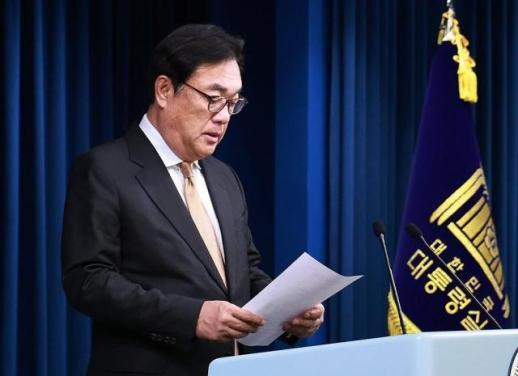 People Power Party Scraps Ethics Meeting as Jeong Jin-seok Nomination Dispute Grows The People Power Party is facing widening internal conflict over former National Assembly Deputy Speaker Jeong Jin-seok’s application to seek the party’s nomination in the Chungnam Gongju-Buyeo-Cheongyang by-election. The party’s ethics committee had planned to meet on May 2 to discuss Jeong’s request to rejoin the party, but abruptly canceled the session. Jeong applied for the nomination and also filed to be reinstated. The committee had been expected to review whether to grant an exception allowing a candidate under indictment to run. The committee has previously granted exceptions in similar cases even when candidates were under investigation or indicted, including Seoul Mayor Oh Se-hoon and Daegu mayoral candidate Choo Kyung-ho. That history fueled expectations that Jeong, who is being investigated over allegations of destroying evidence tied to the presidential office in connection with the “martial law incident,” could receive the same treatment. With the meeting canceled, party officials and observers said the nomination process has become more uncertain. Opposition inside the party also surfaced publicly. Kim Tae-heum, a candidate for South Chungcheong governor, issued a statement suggesting he could leave the party if Jeong is nominated. “Have we forgotten where we are after the miserable and bleak 1 year and 6 months since the Dec. 3 martial law?” Kim said, urging the leadership to listen to public sentiment. “If they act against the public conscience without restraint and reflection, I will have no choice but to leave.” Rep. Cho Eun-hee also called for reconsideration on social media, saying a nomination tied to “Yoon Again” would be like “setting fire again to a house where the lights have gone out.” She said that if the public turns away from the party at a time when it is fighting what she called the Lee Jae-myung administration’s “self-clearing” special counsel probe, “even the momentum to fight will disappear.” Jeong, however, questioned the procedural handling. “We agreed to proceed with the nomination committee process after the ethics committee’s decision, but the meeting didn’t happen, so it’s hard to accept,” he said. “They should at least give a chance for a primary.”* This article has been translated by AI. 2026-05-02 21:30:16
 -
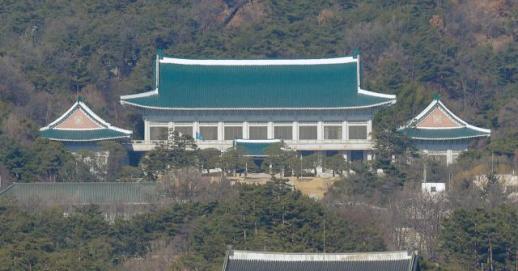 South Korea to Assess Impact of Trump Plan to Raise U.S. Tariffs on EU Cars The presidential office said Friday it is tracking developments after U.S. President Donald Trump announced plans to raise tariffs on passenger cars and trucks from the European Union, and that it will analyze any impact on South Korea and respond accordingly. An official said the government has been continuously monitoring follow-up steps to the U.S.-EU tariff agreement. The official said Seoul is also in frequent, close communication with Washington on follow-up measures tied to the South Korea-U.S. tariff agreement, and will work to keep bilateral trade relations stable. Asked about possible effects on the market competitiveness of South Korean products, the official said it would be inappropriate for the government to assess tariff agreements between other countries. The official said Seoul will respond based on the principles of maintaining a balance of benefits under the existing South Korea-U.S. agreement and ensuring treatment that is not disadvantageous compared with other countries. Earlier Friday, Trump said the EU was not properly implementing trade negotiations and announced he would raise tariffs on passenger cars and trucks to 25% starting next week. Some observers have interpreted the move as retaliation after European countries, including Germany, declined U.S. requests to dispatch warships and otherwise cooperate with U.S. operations in the Iran war. Separately, the presidential office said it is paying close attention to a Pentagon announcement that about 5,000 U.S. troops stationed in Germany would be withdrawn, citing a global review and possible changes in U.S. force posture. It said it is working closely with the United States so U.S. Forces Korea can remain stationed stably and contribute to a strong combined South Korea-U.S. defense posture.* This article has been translated by AI. 2026-05-02 21:24:16
 -
 Korean Court Sentences Teen to Prison for Newborn’s Death After Toilet Birth A teenager who gave birth in a toilet at her home and then left the newborn unattended, leading to the baby’s death, has been sentenced to prison. Yonhap News Agency reported Friday that the Suwon District Court’s Criminal Division 11, presided over by Chief Judge Song Byeong-hun, sentenced the girl, identified only as A, to an indeterminate term of 2 years to 2 years and 6 months for child abuse resulting in death. The court also ordered her to complete 40 hours of a child-abuse treatment program. A was indicted without detention over an incident in 2024, when she was 17. Prosecutors said she gave birth in the master bedroom bathroom at her residence in Gyeonggi Province, and the baby fell into the toilet and died. The court said A did not tell her family she was pregnant and was unable to prepare properly, and that she gave birth suddenly without help from her boyfriend. It said she appeared to have failed to respond appropriately due to shock immediately afterward. “Human life is a precious value that cannot be exchanged for anything, and a newborn’s life is no exception,” the court said. It added that although A was still a minor, she had a mother’s duty to raise and protect the child, but took no minimum steps and abandoned the baby, resulting in death.* This article has been translated by AI. 2026-05-02 20:54:15
 -
 Online Reactions Follow Reported Prison Update on Jeon Cheong-jo, Jailed for Fraud An update on Jeon Cheong-jo, who is imprisoned on fraud charges involving about 3 billion won, has drawn a wave of online reaction. A video titled “Reading updates on notorious criminals in prison” was posted April 30 on the YouTube channel “Ilkda.” The video includes accounts from inmates who said they lived with Jeon. One source, identified as A, claimed Jeon introduced themself as bisexual and said they had previously been pregnant and had lived with a man. The source also alleged Jeon would remove their shirt for about an hour after hot showers, which are allowed twice a week, and appeared to do so to show their chest after a mastectomy. The source said Jeon received testosterone injections and grew facial hair, keeping an electric razor in the room and shaving frequently. The source claimed Jeon believed they were male and repeatedly approached women, and that Jeon was later moved to a cellblock where foreign inmates stay. The report also said Jeon, early in detention, showed strong possessiveness and resentment when another inmate drew more attention, and at times clashed with others after being unable to tolerate gossip. Online commenters responded with remarks such as, “Put them in the men’s unit and they’ll cover up,” and “They show that dating and marriage are about confidence, regardless of gender or looks.” Others posted stock-related jokes, including, “If I had bought Nvidia back then, I could have graduated from stocks,” “So did Jeon buy Nvidia?” and “What should we buy next?” Jeon was sentenced to 13 years in prison for fraud under the Act on the Aggravated Punishment of Specific Economic Crimes and is serving the term at Cheongju Women’s Prison.* This article has been translated by AI. 2026-05-02 20:48:17
 -
 U.S. Warns Shipping Firms Paying Iran for Hormuz Passage Could Face Sanctions; Trump Says 'We Are Pirates' 미국 정부가 호르무즈 해협을 통과하기 위해 이란에 통행료를 지불하는 해운사들을 향해 제재 대상이 될 수 있다고 경고했다. 2일(현지시간) 로이터통신, AP 통신 등에 따르면 미국 재무부 해외자산통제국(OFAC)은 공지를 통해 “안전 통항을 위해 이란 정권에 자금을 지불하거나 (공격하지 않겠다는) 보장을 요청하면 제재당할 위험이 있다는 경고를 하려고 주의보를 발령한다"고 전했다. 이란은 자국 해안에 가까운 우회 항로를 제안하며 선박들에 통행료 징수를 추진하고 있으며, 미국은 이란 정권의 전쟁자금 수입을 막기 위한 해상봉쇄에 나선 상태다. 재무부는 로이터에 이런 간접 지불을 한 국가나 기업에 대한 구체적인 정보를 제공하지 않았다. 다만 로이터는 적어도 한 척의 선박이 해협을 통과하기 위해 200만 달러를 지불했다는 보도가 있었다고 전했다. OFAC은 제재 대상이 될 수 있는 지급 형태로 현금뿐 아니라 디지털 자산, 상계 거래, 비공식 스와프, 현물 지급 등을 열거했다. 또 각국이 자국 내 이란 대사관을 통해 결제하거나 자선 기부금 형태로 우회 지급하는 것 역시 엄격히 금지된다고 강조했다. OFAC은 비미국 개인과 법인이 미국 개인과 법인에 예외적으로 허용된 경우가 아닌 방식으로 이란 정부나 이란혁명수비대와 거래에 참여하면 제재 위험에 노출될 수 있다고 밝혔다. 또 참여하는 외국 금융기관에 대한 2차 제재가 포함될 수 있으며, 해당 기관은 미국 금융체계 접근이 금지되거나 제한될 수 있다고 경고했다. 한편 이날 미국 플로리다주에서 열린 행사에서 도널드 트럼프 미국 대통령은 미 해군의 선박 나포를 언급한 뒤 “우리는 해적과 같다. 어느 정도 해적 같지만 장난은 아니다”라고 말했다.* This article has been translated by AI. 2026-05-02 20:36:15
 -
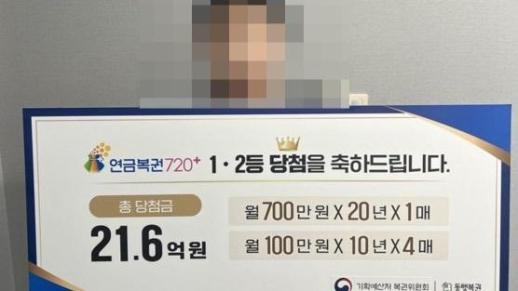 Lottery Interest Builds as Lotto 1222 Numbers Near; Pension Lottery Winner Shares Story "I had been going through a time when the tears never seemed to stop because several sad and difficult things happened at once, and this win has been a great comfort and a new turning point in my life." With interest building in Donghaeng Lottery’s Lotto draw No. 1222 on May 2, a personal account posted to the company’s winners’ bulletin board has drawn attention. The writer said they won Pension Lottery 720+ round 303 with one first-prize ticket and four second-prize tickets. The winner said they decided to buy the pension lottery after noticing cash left inside their car while parking and getting out. A few days later, the winner said they stopped by a nearby lottery retailer as usual to buy Lotto tickets and saw the shop owner hanging a banner announcing a pension lottery first-prize winner. The winner said they checked the round number and realized it matched the ticket they had bought. "I went home and checked, and the person I had dreamed of being was me," the winner said, adding that it felt unreal and they lost sleep for several nights. The winner said they bought the ticket at a lottery shop in Buk-gu, Busan, and that they sometimes buy Lotto, Pension Lottery and Speetto scratch tickets. Asked about plans for the winnings, the winner said they would first buy a car and plan to purchase a home. Donghaeng Lottery said the winning numbers for Lotto draw No. 1222 can be checked after 8:35 p.m. on May 2.* This article has been translated by AI. 2026-05-02 20:27:18