
Journalist

Lim, Kwu Jin
-
 South Korea to Overhaul 2027 R&D Budget, Shift Funds to Strategic Technologies The government is moving to restructure funding for 2027 research and development, concentrating investment on national strategic technologies such as semiconductors, artificial intelligence, advanced bio and quantum technology. It also plans to streamline R&D spending across ministries by cutting discretionary outlays by about 15% and mandatory spending by about 10%. The Ministry of Science and ICT and the Office of Budget Planning said they held a budget strategy meeting on the afternoon of April 30 to discuss the “2027 R&D investment strategy.” The meeting was chaired by Park In-gyu, head of the Science and Technology Innovation Office at the ministry, and attended by more than 30 ministries and agencies that run R&D programs. Under the Framework Act on Science and Technology, the ministry’s Science and Technology Innovation Office draws up a plan each year to allocate and adjust the next year’s national R&D budget, after deliberation and approval by the National Science and Technology Advisory Council by the end of June. The budget office then compiles and considers the plan in drafting the final government budget proposal. The government said the 2027 allocation and adjustment plan will focus on: strengthening strategy through cross-government “one-team” cooperation; restructuring government R&D and reinvesting in priority areas; overhauling programs through broad evaluation and feedback; and introducing an equity-investment approach to R&D support to build a virtuous investment cycle. To improve efficiency and consistency, the government said it will reduce barriers between ministries and allocate R&D budgets from an integrated national perspective. It will also set shared goals and expand cooperation, including strengthening “inter-ministerial collaborative R&D.” It will also pursue spending restructuring for government R&D. More than 30 ministries and agencies will work on budget efficiency and spending adjustments, using benchmarks of 15% for discretionary spending and 10% for mandatory spending across fiscal programs. With resources secured through the restructuring, the government said it will reinvest in national strategic technologies in line with its “direction for advancing the national strategic technology system.” It previously selected 12 strategic technologies, including manufacturing and energy areas such as semiconductors, secondary batteries and hydrogen; mobility, aerospace and communications; and AI, bio and quantum. It also said it would foster the areas systematically by designating 50 detailed priority technologies. The government also plans to hold a “National Strategic Technology Leading Next Project Promotion Conference” (tentative name) in May to select target projects. It will also move to fix inefficient R&D programs. The innovation office said it will strengthen evaluation and inspections and reorganize programs around areas with higher potential to produce results. In addition, the government said it will newly pursue an equity-investment model for R&D support, shifting away from a grant-centered structure to one that can recover investments. Park said the 2027 R&D budget would be a “golden-time budget” to meet goals over the next four years. “We will thoroughly block waste factors and prepare a performance-centered budget that boldly invests in areas that are truly necessary,” he said, adding that the government would work as “one team” to drive technology-led growth. 2026-04-30 15:33:19
 -
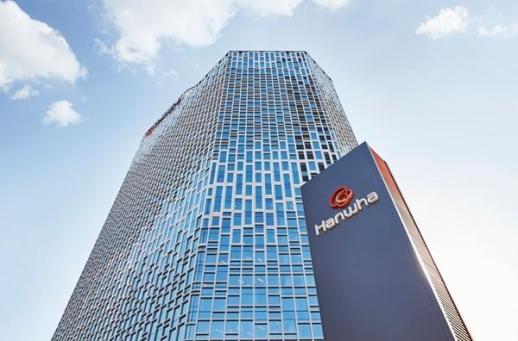 Hanwha Aerospace posts solid Q1 earnings, record-high order backlog SEOUL, April 30 (AJP) - Hanwha Aerospace reported solid first-quarter earnings on the back of improved performance in its aerospace division and key subsidiaries, while its order backlog reached a record high amid steady growth in overseas contracts. The company said Thursday that its consolidated revenue rose 5 percent year-on-year to 5.751 trillion won ($3.9 billion) in the January–March period, while operating profit climbed 21 percent to 638.9 billion won. By segment, the ground defense division posted revenue of 1.2211 trillion won and operating profit of 208.7 billion won. While revenue rose 5 percent on-year, operating profit fell 31 percent. Its order backlog reached a record high of about 39.7 trillion won, supported by overseas deals including a 1.3 trillion won Chunmoo export to Norway. The aerospace division reported revenue of 661.2 billion won and operating profit of 22.6 billion won. Revenue increased 25 percent, while operating profit surged more than fivefold on higher military demand and a greater share of high-margin businesses. Hanwha Ocean posted revenue of 3.2099 trillion won and operating profit of 441.1 billion won, up 2 percent and 71 percent, respectively, driven by more high-value ships such as LNG carriers and favorable exchange rates. A company official said the firm “maintained solid growth in the first quarter, supported by strong performance in the aerospace division and Hanwha Ocean,” adding that it would “continue to deliver new orders and maximize shareholder value on the back of a record-high backlog.” During an earnings conference call held on Thursday, Han Sang-yoon, executive vice president in charge of IR at Hanwha, said only part of the Polish order for Chunmoo launchers was reflected in the first-quarter results, adding that earnings momentum is expected to accelerate from the second quarter. “From the second quarter, deliveries to Poland, Australia and Egypt will begin to be reflected, leading to improved performance compared with the first quarter,” Han said. “Demand for air defense systems is rising in the Middle East, and projects such as Spain’s self-propelled howitzer program are expected to further support growth.” Meanwhile, Hanwha Aerospace said it signed a memorandum of understanding on Wednesday in Ontario, Canada, with the Automotive Parts Manufacturers’ Association and Hanwha Ocean to establish a joint venture for the production of military vehicles, including the K9 self-propelled howitzer. The agreement comes as Hanwha Ocean and HD Hyundai Heavy Industries are jointly bidding for Canada’s submarine program known as the CPSP. The two companies have formed a consortium to compete against Germany’s TKMS, with the preferred bidder expected to be announced in June. 2026-04-30 15:31:51
 -
 Kim Gyeong-bae Named President of Korea Craft and Design Foundation Culture, Sports and Tourism Minister Choi Hwi-young appointed Kim Gyeong-bae, a professor at Kyonggi University’s Graduate School of Hallyu Culture, as president of the Korea Craft · Design Culture Promotion Agency, effective April 30, and presented him with a letter of appointment. Kim’s term is three years. Kim earned a master’s degree in industrial design from the Royal College of Art in the United Kingdom and has built more than 30 years of experience in the convergence of design and cultural content, the ministry said. He previously led Design Icon and served as executive vice president overseeing design at Inno Design Co., developing his own design philosophy while building practical expertise and management experience in industry. He is currently a professor at Kyonggi University, working to expand the cultural content industry and train talent for K-culture convergence. Choi called Kim “an expert in the convergence of design and cultural content,” and said he expects Kim to drive innovation to expand the use and industrialization of crafts, traditional culture and public design — and to help them enter global markets — based on his experience leading projects spanning design, technology and culture. * This article has been translated by AI. 2026-04-30 15:28:20
 -
 Krafton posts record Q1 on surging PUBG franchise revenue SEOUL, April 30 (AJP) - Krafton, the South Korean gaming giant behind the PUBG franchise, posted record first-quarter results as its flagship battle royale series and a newly consolidated advertising subsidiary propelled revenue to all-time highs. The company reported through regulatory filings Thursday consolidated revenue of 1.37 trillion won ($924 million) and operating profit of 561.6 billion won for the three months ended March, up 56.9 percent and 22.8 percent from a year earlier, respectively. First-quarter operating profit alone accounted for 53 percent of Krafton's full-year 2025 earnings, underscoring the pace of the company's momentum. The PUBG intellectual property franchise was the principal engine of growth, with quarterly revenue surpassing the 1 trillion won threshold for the first time, a 24 percent jump from the year-ago period. On PC, the ninth-anniversary Aston Martin collaboration drove strong sales, while PUBG Mobile benefited from a premium tie-up with German hypercar maker Apollo Automobil. Battlegrounds Mobile India saw a 17 percent year-on-year rise in paying users following server expansion investments. Krafton said it would continue scaling up inZOI, its life simulation title launched in early access last year, through content upgrades, console porting and AI-powered modding tools aimed at transforming it into a platform-driven franchise. The company also flagged the upcoming early access launch of open-world survival game Subnautica 2. "We are accelerating our 'AI for Game' strategy," the company said, adding that it plans to deploy its Raon multimodal AI models across titles and introduce PUBG Ally, a co-playable AI character, in a beta service for Battlegrounds Arcade later this year. Shares of Krafton were trading at 263,500 won per stock, 5.05 percent lower than the day before. 2026-04-30 15:27:32
 -
 South Korea Welcomed 4.74 Million Visitors in Q1, Up 123% From 2019; China Led South Korea drew 4.74 million foreign visitors in the first quarter, surpassing pre-COVID-19 levels, with arrivals surging in March as inbound tourism continued to rebound. ◆ Q1 visitors hit 4.74 million; Chinese tourists lead at 1.42 million According to Korea Tourism Organization statistics, cumulative inbound visitors from January to March totaled 4.74 million, up 22.6% from a year earlier. The figure represents a 123.4% recovery compared with the same period in 2019, exceeding pre-pandemic demand. China ranked first in visitor numbers, with 1.42 million arrivals in the quarter. Japan followed with 940,000, then Taiwan with 540,000, the United States with 310,000 and the Philippines with 150,000. ◆ March alone jumps to 2.05 million; sharp growth in the Americas and Southeast Asia The monthly rise was steeper in March, when arrivals reached 2,045,992, up 26.7% from 1,614,596 a year earlier. That was 133.2% of the March 2019 level. By country in March, China led with 501,000 visitors, followed by Japan with 482,000, Taiwan with 192,000, the United States with 152,000 and Vietnam with 75,000. Compared with March 2019, China and Japan reached 102.8% and 128.4%, respectively. Taiwan (195.0%), the United States (180.9%) and Vietnam (159.3%) were near double their pre-pandemic levels. By region, the Asia-Middle East market recovered to 141.2% of 2019 levels, while Europe and the Americas reached 169.2%, pointing to broad-based growth beyond Asia. ◆ Q1 outbound Koreans total 8.33 million; market recovers to 106% Outbound travel by South Koreans also climbed. From January to March, the number of Korean overseas travelers totaled 8.33 million, or 105.9% of the first quarter of 2019, indicating a full return to pre-pandemic activity. In March alone, outbound travelers totaled 2,293,716, up 4.4% from 2,197,971 a year earlier and recovering to 98.3% of the March 2019 level.* This article has been translated by AI. 2026-04-30 15:27:17
 -
 Democratic Party Picks Ha Jeong-woo, Jeon Eun-su for June 3 By-Elections The Democratic Party on the 30th made strategic nominations of Ha Jeong-woo, a former senior presidential secretary for AI Future Planning, in Busan’s Buk-gu Gap district and Jeon Eun-su, a former presidential spokesperson, in South Chungcheong Province’s Asan Eul district for the June 3 by-elections. Senior party spokesperson Kang Jun-hyeon told reporters at the National Assembly that Ha is a Busan native who spent his school years there, calling him the right person to carry on the constituency of Jeon Jae-su, the party’s Busan mayoral candidate. Ha and Jeon are high school alumni, with Ha the junior. Kang added that the party expects Ha to help address pressing issues in Busan and to “raise the level of AI legislation by one step” in the National Assembly. On Jeon, Kang said Asan, home to many large companies, draws voters with varied local ties, making careful education and child care policies essential. He said Jeon, a former teacher, is expected to show strong expertise in those areas. The party held a welcome event the previous day for Ha and Jeon and had signaled their nominations. 2026-04-30 15:24:18
 -
 Credit card spending rises in Q1 despite weak consumer sentiment SEOUL, April 30 (AJP) - Credit card spending rose despite weakening customer sentiment due to the prolonged conflict in the Middle East. According to data compiled by the Credit Finance Association of Korea on Thursday, people went plastic with 322 trillion won (about US$220 billion) worth of purchases, or 7.2 billion transactions, in the first quarter, up 7.2 percent and 5.1 percent, respectively, compared to the same period last year. Personal card spending rose 6.8 percent to 264.4 trillion won while corporate card spending climbed 8.7 percent to 57.8 trillion won. Online shopping remained strong, rising 8.5 percent from a year earlier to 46.7 trillion won, largely driven by food delivery and travel bookings. A rebound in travel demand also boosted card spending, with the number of air passengers rising 12.6 percent in the first three months of this year, while spending by foreign tourists surged 37.1 percent. The association also cited higher oil prices in March, which drove up spending on fuel. 2026-04-30 15:20:33
 -
 Gwangju to Cover Vacation Fund Share for Small-Firm Workers, a First in South Korea Gwangju Metropolitan City will become the first local government in South Korea to use its own budget to directly subsidize vacation funds for workers at small and midsize companies in the city. The Korea Tourism Organization said it signed a business agreement on Wednesday with the Gwangju city government and the Gwangju Chamber of Commerce and Industry for the “Vacation Plus” program for small-company workers in the region. The program will cover 350 manufacturing workers in Gwangju. Under the existing Worker Vacation Support Program, a total of 400,000 won is saved, with workers contributing 200,000 won, their companies 100,000 won and the government 100,000 won. Under the new agreement, Gwangju will pay the full worker share (200,000 won) and half of the company share (50,000 won). As a result, workers can secure 400,000 won in vacation funds with no out-of-pocket spending. Kim Seok, head of the KTO’s National Tourism Office, said the partners plan to expand the cooperation model to other regions in the second half of this year. Jeon Eun-young, a director at the Gwangju Chamber of Commerce and Industry, said the effort is the first attempt to strengthen worker welfare through cooperation between a local government and a regional economic group, and is expected to improve the quality of life for manufacturing workers. * This article has been translated by AI. 2026-04-30 15:20:00
 -
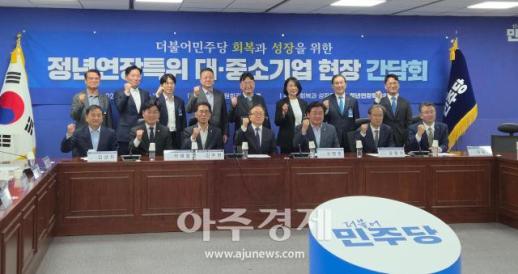 Business groups say raising retirement age to 65 must include wage system overhaul The government is accelerating plans to raise the mandatory retirement age to 65, and business groups are urging that wage adjustments for workers 60 and older be recognized as an exception to age-discrimination rules. The government says it plans to submit legislation in the first half of the year, but no agreement has been reached on wages or employment arrangements. On the 30th, the Democratic Party’s special committee on extending the retirement age held a meeting with business representatives from large and small companies to discuss directions for overhauling wage systems. Business groups say they can accept a higher retirement age, but only if wage systems are restructured. The Korea Employers Federation said it recently interviewed many Japanese companies, where continued employment after age 60 has been established earlier than in South Korea, to review how the policy was introduced and how it operates in practice. The federation is calling for a compromise that allows voluntary implementation reflecting each company’s personnel system. It also wants to ease the added labor-cost burden of keeping older workers by shifting to job- and performance-based pay. A uniform wage cut, it argues, could weaken motivation and reduce productivity, so compensation should be differentiated based on expertise and results. According to the federation, Japan shares the social costs of extending older-worker employment among labor, management and government. Companies employ all applicants, but wages upon rehire are adjusted to about 20% to 30% below previous levels, with the government covering a substantial portion. Japan keeps the legal retirement age at 60 but requires measures to secure employment through 65. Companies choose one of three options: rehiring, extending retirement, or abolishing retirement. Japan has also reduced corporate burdens by allowing changes to work rules deemed socially reasonable without going through labor-management agreement procedures. Nissan Motor, for example, provides differentiated incentives to workers over 60 who deliver performance or have strong technical skills. Lee Dong-geun, vice chairman of the Korea Employers Federation, told Aju Business that because Japan’s industry and employment structure are similar, “the most desirable approach is a company-choice model following Japan’s precedent.” He added that if the retirement age is extended, “the wage system must also be reformed” to address concerns about reduced youth hiring. Shin Chang-hoon, a managing director at Lotte Holdings, said problems tied to seniority-based pay are serious, adding that if flexibility in seniority and employment is secured, extending the retirement age “would not be a big issue.” An industry official said no agreement was reached at the meeting. “It was simply a chance to hear companies’ situations,” the official said, adding that discussions would likely become more substantive after local elections. With labor and management far apart on wage cuts, conflict is expected to continue during the legislative process. Participants included the Korea Employers Federation, the Korea Federation of SMEs, Samsung Global Research, Hyundai Motor, SK Supex Council, LG Electronics and Lotte Holdings.* This article has been translated by AI. 2026-04-30 15:18:19
 -
 Samsung Electro-Mechanics tops 3 trillion won in quarterly sales for first time, sees Q2 growth Samsung Electro-Mechanics said it surpassed 3 trillion won in quarterly revenue for the first time, driven by a surge in artificial intelligence-related demand that lifted sales of high-value products for industrial and automotive uses. The company said the growth trend is expected to continue in the second quarter as well. In a regulatory filing on Wednesday, Samsung Electro-Mechanics reported first-quarter consolidated revenue of 3.2091 trillion won and operating profit of 280.6 billion won. Revenue rose 470.5 billion won, or 17%, from a year earlier, while operating profit increased 80.1 billion won, or 40%. The company said results improved as it expanded supply of products such as multilayer ceramic capacitors, or MLCCs, for AI servers and advanced driver-assistance systems, and flip-chip ball grid array, or FC-BGA, substrates, supported by solid demand for high-value industrial and automotive components. It said demand strength is expected to persist for high-value MLCCs and FC-BGA products used in AI servers and data centers, citing upgrades to data center infrastructure and rising power consumption by AI servers. On FC-BGA, the company said demand for high-performance semiconductors is surging as adoption of agentic AI spreads. It said existing customers are asking for more supply and that overall demand exceeds the company’s production capacity. Samsung Electro-Mechanics said it is discussing price increases with major customers to reflect higher raw material prices and supply conditions for materials such as gold and copper. It said its full-year outlook remains cautious given external variables, but added that the FC-BGA business could post a sharp revenue increase on rising demand tied to expanded AI investment by big tech companies. MLCC demand is also surging, the company said, with a growing trend toward long-term supply contracts. It said second-quarter MLCC demand is expected to grow from the first quarter across all applications. The company said it has launched new products with twice the capacity for graphics processing units and power modules as power consumption rises on next-generation AI server platforms, and that customers have responded positively. It added it is pursuing long-term contracts to ensure stable supply. The company said it is also expanding MLCC sales into the aerospace sector. For ground terminals, it said, similar products to those used for AI servers — including small, high-temperature and high-capacity MLCCs — are used, and the company is participating as a key supplier. It said it is doing business with leading global customers and aims to secure an early position in the growing aerospace MLCC market and strengthen its mid- to long-term growth base. Looking ahead, Samsung Electro-Mechanics said it expects performance growth in the second quarter from both the previous quarter and a year earlier. It said AI data center investment is expected to continue in the second half and automotive demand to remain steady, which could lead to a larger expansion in results. The company also said it plans to supply camera modules for robotaxis and humanoid robots. It said it will expand its lineup for high-resolution sensing based on its camera technology for IT devices and its capabilities to internalize key components, and will further develop specialized technologies such as all-weather camera products. It said it plans to supply new camera module products for robotaxis in the second quarter and for humanoids in the second half. It added it plans to secure new solutions for next-generation physical AI in a timely manner to respond proactively to new product needs and future markets. * This article has been translated by AI. 2026-04-30 15:16:38