
Journalist

Lim, Kwu Jin
-
 Yen Breaks Past 160 per Dollar as Japan Holds Rates and Bond Yields Hit 29-Year High “You must not say that.” After an economic and fiscal advisory meeting at the prime minister’s office on the 13th, Prime Minister Sanae Takaichi summoned Economy, Trade and Industry Minister Ryosei Akazawa for a private reprimand. The day before, Akazawa told NHK that “a rate hike is also an option” to respond to the yen’s weakness. While the stated reason was the principle that monetary policy is the BOJ’s domain, markets took it as a signal that the government does not want higher rates. The Nikkei business daily reported that this mood was clearly felt inside the prime minister’s office. A little more than two weeks later, on the 29th in New York trading, the yen slid into the mid-160s per dollar, breaking the widely watched “160 line.” On the 30th in Tokyo, it failed to rebound from the low 160s, as a level long seen as a likely trigger for Japanese intervention gave way with little resistance. At the same time, Japan’s bond market delivered its own warning: the 10-year government bond yield, a benchmark for long-term rates, rose as high as 2.52% intraday on the 30th, the highest since 1997. With the BOJ holding its policy rate at 0.75%, market rates surged, underscoring a widening gap between policy and markets. The immediate catalyst was the BOJ’s pause. At its policy meeting on the 28th, the BOJ kept rates unchanged. The number of members arguing for the need to raise rates increased to three, and the bank raised its inflation outlook, but it did not move to hike. Analysts cited the government’s cautious stance and instability in the Middle East as factors making it difficult for the BOJ to act quickly. Political scrutiny also weighed on decision-making. Nikkei reported that Economic and Fiscal Policy Minister Minoru Kiuchi, seen as a cautious voice, attends BOJ meetings “in principle every time” to monitor deliberations. The BOJ’s restraint was also linked to frustration within the government after Ueda’s advance signaling ahead of a rate increase last December was priced in by markets, narrowing policymakers’ room to maneuver, the report said. Meanwhile, external pressures intensified. With Middle East tensions persisting, concerns grew that a closure of the Strait of Hormuz could drag on, and oil prices became entrenched above $100 a barrel. For Japan, which relies heavily on energy imports, that translated quickly into inflation pressure. In the bond market, selling spread as investors priced in higher inflation, pushing yields up. U.S. developments added to the strain. The Federal Reserve held rates steady at its April 29 Federal Open Market Committee meeting, but three regional Fed bank presidents opposed keeping dovish language in the statement, signaling continued tightening. As U.S. long-term yields rose, upward pressure spilled into Japan, and expectations that the U.S. would not pivot easily toward easing supported a stronger dollar. In currency markets, those forces converged. Keiko Ninomiya, a senior analyst at SMBC Trust Bank, said expectations of a worsening trade balance from higher oil prices and a widening U.S.-Japan rate gap were working at the same time, adding that the yen could weaken further into the 161 range in the short term. Tsuyoshi Ueno, chief economist at NLI Research Institute, said current volatility alone was not enough to justify intervention, and that authorities would be more likely to respond if the yen moved quickly toward 162 per dollar. Speculative money also piled in. According to U.S. Commodity Futures Trading Commission data, as of the 21st speculators’ net short yen position expanded to about 94,460 contracts, worth roughly 1.18 trillion yen, the largest in about 1 year and 9 months and the biggest since Japan’s government and the BOJ intervened in July 2024. Rinto Maruyama, a strategist at SMBC Nikko Securities, said hedge funds and others were increasing yen-selling positions as they judged that fundamentals were strengthening pressure for a weaker yen. Bond investors voiced a more direct concern. Tadashi Matsukawa, a portfolio manager at PineBridge Investments, said that even as more BOJ members favored rate hikes and the inflation outlook was raised, policy was not following through. The remark was seen as reflecting worries that the central bank is “behind the curve.” Shotaro Gugo, a researcher at the International Monetary Institute, said a July rate hike was most likely at this point, but added that a June hike could not be ruled out if uncertainty clears. Nikkei said Japan’s market dynamics are increasingly reinforcing each other: high oil prices lift inflation expectations and spur bond selling, while also deepening yen weakness through expectations of a deteriorating trade balance. The longer policy responses are delayed, the paper warned, the greater the risk of market volatility. The paper also contrasted the BOJ’s response during the first oil shock, when it focused on stimulating the economy and fell behind on inflation control, with the second oil shock, when pre-emptive tightening reduced the impact. It warned that delaying hikes could raise the risk of stagflation, with surging prices and an economic downturn arriving together. Authorities’ room to act is narrowing. Finance Minister Satsuki Katayama has repeatedly said Japan can take “firm and strong measures” against speculative moves, but skepticism about the effectiveness of intervention remains. Toru Sasaki, chief strategist at Fukuoka Financial Group, said the recent yen weakness reflects fundamentals as well as speculation, which could limit the impact of intervention. Yujiro Goto, a strategist at Nomura Securities, said that even if intervention occurs, its effect would likely last only a few weeks, at most until the next BOJ meeting in June. Officials also face the risk that further yen weakness could fuel import-driven inflation and provide grounds for trade pressure from the Trump administration. The break below 160 yen per dollar and the move above 2.5% in long-term yields have become twin markers of Japan’s shifting financial landscape — a sign that markets and money are moving ahead while policy hesitates.* This article has been translated by AI. 2026-04-30 14:31:03
 -
 Google Signals Possible Ads for Gemini, but No Immediate Plans Google has left open the possibility of adding advertising to its AI assistant, Gemini, though it has not confirmed any immediate rollout. On April 29 (local time), Google Senior Vice President and Chief Business Officer Philipp Schindler said in a post-earnings Q&A that the company is currently focused on the Gemini app’s free tier and subscriptions. “Advertising can be a way to expand a product to a broader user base, and if designed appropriately it can be useful commercial information,” Schindler said. He added that Google is “not rushing,” and said the company would share plans “at the right time” if it has them. Business Insider reported that Google is already running advertising and commerce experiments centered on AI Mode and AI Overviews, the AI-generated summaries shown at the top of search results, and said Gemini could also become part of longer-term monetization discussions. Alphabet, Google’s parent company, reported first-quarter revenue of $109.9 billion, up 22% from a year earlier. CEO Sundar Pichai said the Gemini app delivered “the biggest quarter ever” for a consumer AI product. Alphabet’s total paid subscribers reached 350 million, including YouTube and Google One. AI spending is also rising quickly. Alphabet’s first-quarter capital expenditures topped $35 billion, and its full-year capital spending outlook is as high as $190 billion. As AI infrastructure investment grows, market pressure may increase for clearer monetization plans for services such as Gemini. 2026-04-30 14:29:47
 -
 Top court upholds guilty verdicts for all protesters in violent court intrusion case SEOUL, April 30 (AJP) - Some 18 die-hard supporters of disgraced former President Yoon Suk Yeol including far-right YouTubers, were handed prison terms or suspended sentences on Thursday, as the Supreme Court upheld the lower court's rulings on charges of trespassing, causing a disturbance, and other offences. Some 59 people were convicted after breaking into the Seoul Western District Court in Mapo in January last year in a protest against Yoon's arrest over his botched martial law debacle a month earlier. They received prison terms, suspended sentences, or fines in the first trial. Of these, 35 appealed and received similar or slightly reduced penalties, and 18 cases were taken to the top court. The court also found filmmaker Jung Yoon-suk guilty, upholding his 2 million won fine. He had claimed he stormed the courthouse with a camera to document the incident. 2026-04-30 14:29:02
 -
 Samsung Posts Record Q1 Results, but Profits Rely Heavily on Semiconductors Samsung Electronics posted record first-quarter results, but the company’s growing reliance on semiconductors underscored weakness in its device businesses, including mobile, TVs and home appliances. In its finalized earnings release on Wednesday, Samsung said first-quarter revenue rose to 133.9 trillion won and operating profit to 57.2 trillion won, the highest quarterly performance ever recorded by a South Korean company. Most of the operating profit, however, came from the semiconductor (DS) division, widening the gap in contributions across businesses. The DS division reported revenue of 81.7 trillion won and operating profit of 53.7 trillion won, supported by expanding investment in artificial intelligence infrastructure and rising memory prices. Demand for high-value products such as high-bandwidth memory, or HBM, led results, and continued mass production of next-generation products strengthened its technology edge. Outside chips, performance was weaker. The mobile (MX) business did not see as much profitability improvement as expected despite higher flagship sales, as rising component prices, a weak won and tariff burdens limited gains. Intensifying competition in midrange and low-end models and softer replacement demand also weighed on results. The TV business (VD) faced similar conditions. Premium sales held up, but a global consumption slowdown and tougher price competition limited its earnings contribution. Home appliances also saw only modest margin improvement due to higher costs and tariff effects. Samsung said its network business struggled as telecom carriers cut investment, while its display business weakened on softer demand for small and mid-sized panels. Harman’s profit declined due to seasonal factors and cost pressures. The company’s results reflected diverging cycles: semiconductors benefited from structural demand tied to AI servers and data centers, while device businesses faced pressure from slower global consumption, interest-rate burdens, higher costs and tariff uncertainty. Samsung is also pursuing changes to its business mix, including expanding business-to-business operations. It aims to strengthen corporate-focused areas such as network equipment, displays and heating, ventilation and air conditioning, or HVAC, to build earnings that are less sensitive to economic swings. For new growth, Samsung is diversifying around Harman, which handles automotive and audio. The company cited in-vehicle infotainment, premium audio and automotive solutions as potential long-term profit sources, while also developing AI-based data center cooling solutions and smart home-linked businesses as mid- to long-term growth engines. Samsung said it plans to broaden its profit base through a premium-product strategy, cost efficiency and a larger B2B footprint. Industry observers said the pace of restructuring outside semiconductors will be a key factor for longer-term earnings stability. 2026-04-30 14:23:12
 -
 Naver Q1 revenue jumps 16.3% on commerce and AI growth; operating profit up 7.2% Naver posted double-digit first-quarter revenue growth on expanding commerce and artificial intelligence-driven businesses, and said it will move to strengthen its commerce competitiveness in the second half, including introducing membership-based unlimited free shipping. Naver said Wednesday that first-quarter consolidated revenue rose to 3.2411 trillion won and operating profit to 541.8 billion won. Revenue increased 16.3% from a year earlier and operating profit rose 7.2%. The company said results were driven by growth in core businesses through AI integration and an expansion of its consumer-to-consumer, or C2C, operations. It said it maintained profitability despite infrastructure investment to bolster AI capabilities. Naver also reorganized its business structure, shifting from five areas — search platform, commerce, fintech, content and enterprise — to three pillars: Naver Platform, Financial Platform and Global Challenge. Revenue by segment was 1.8398 trillion won for Naver Platform, 459.7 billion won for Financial Platform and 941.6 billion won for Global Challenge. Naver Platform revenue rose 14.7% from a year earlier. Advertising revenue grew 9.3%, which the company attributed to its AI-based targeting enhancement solution, “AdBoost,” adding that AI accounted for more than half of advertising revenue growth. Service revenue climbed on commerce, rising 35.6% from a year earlier, led by Naver Plus Store, membership and N Delivery, the company said. Naver Plus Store’s app has become a key transaction channel, CEO Choi Soo-yeon said on an earnings conference call. “Transaction volume on the Naver Plus Store app rose 28% from the previous quarter, outpacing overall growth,” Choi said, adding that the purchase conversion rate also increased meaningfully. She said time spent in the app has more than doubled since its launch, and that its purchase conversion rate is 84% higher than on the web. Naver said it is accelerating efforts to improve delivery competitiveness. “We will push to convert key products to N Delivery and expand direct fulfillment contracts,” Choi said. “In the second half, we plan to introduce unlimited free shipping linked to membership.” Financial Platform revenue rose 18.9% from a year earlier to 459.7 billion won. Naver Pay payment volume in the first quarter totaled 24.2 trillion won, up 23.4% from a year earlier. Naver said it plans to strengthen its online-to-offline competitiveness by linking offline payment data with place data, centered on “Npay Connect.” Global Challenge revenue rose 18.4% from a year earlier to 941.6 billion won, driven by growth in its C2C business. C2C revenue — including Poshmark, Kream, Soda and Wallapop — jumped 57.7% from a year earlier, the company said. The enterprise business also grew 18.8% on expansion of AI and digital twin operations. “Naver is a platform that holds search, commerce and payment infrastructure in a single flow,” Choi said. “Through our action-oriented AI strategy, we will strengthen both user experience and monetization while expanding global business opportunities.” * This article has been translated by AI. 2026-04-30 14:21:51
 -
 Sanil Electric shares jump more than 20% on $33.9 million U.S. data center transformer deal Sanil Electric shares surged more than 20% after the company disclosed a large transformer supply contract with U.S. energy company Bloom Energy for data centers. According to the Korea Exchange, Sanil Electric was trading at 275,000 won as of 2 p.m. on Wednesday, up 54,000 won, or 24.43%, from the previous session. The stock rose as high as 281,500 won intraday, marking a record high. The rally followed a filing that Sanil Electric signed a 50.3 billion won contract at 12:50 p.m. to supply transformers for U.S. data centers. Buying accelerated immediately after the disclosure. The contract equals 10.02% of the company’s 2025 revenue of 501.9 billion won. The contract period runs from April 24 to March 29, 2027. The contract amount was listed as $33.875 million, converted using the exchange rate on the contract date of 1,484.20 won per dollar. Sanil Electric, founded in 1994, is a transformer specialist. Transformers and reactors accounted for 97.4% of its revenue last year. Lee Min-jae, an analyst at NH Investment & Securities, said demand for transformers is expected to rise as demand for renewable energy expands following the U.S.-Iran war. He said Sanil Electric has a product lineup capable of supplying transformers suited to all voltage levels in power grids built around renewable energy, and has secured a stable customer base and profitability, making profit growth possible as sales expand. * This article has been translated by AI. 2026-04-30 14:18:31
 -
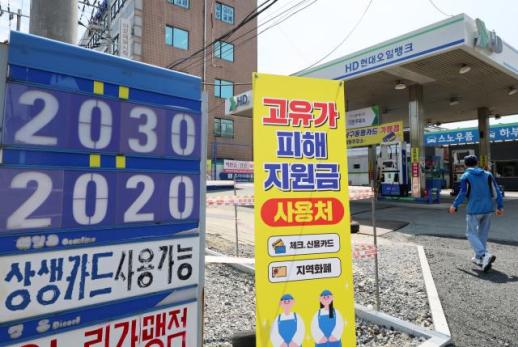 South Korea Expands High-Fuel-Price Relief to All Gas Stations, Regardless of Sales 행정안전부는 30일 '고유가 피해지원금 범정부 TF' 제3차 회의를 열어 연 매출액이 30억원을 초과하는 주유소를 고유가 지원금 사용처로 추가하기로 했다고 밝혔다. 이번 조치는 서민경제 지원 등을 위해 마련한 '고유가 지원금'이 사용처 제한으로 전국 주유소 상당수에서 쓸 수 없다는 지적이 나온 데 따른 것이다. 전국 주유소의 약 58%가 연매출 30억원을 넘는 것으로 파악된 바 있다. 개선 조치에 따라 주유소에서는 연 매출액과 관계없이 고유가 지원금을 사용할 수 있게 된다. 신용·체크카드 및 선불카드로 지원금을 받은 경우 5월 1일부터 주소지 관할 지자체에 있는 주유소에서 연 매출액과 관계없이 지원금 사용이 가능하다. 다만 주유소와 인근 대형매장이 사업자등록번호를 공유하면서 같은 단말기를 사용하는 경우에는 해당 주유소가 사용처에 포함되지 않을 수 있다. 지역사랑상품권으로 지원금을 받은 경우 기존 지역사랑상품권 가맹점인 주유소와 고유가 지원금 사용을 위해 한시적으로 추가 등록된 주유소에서 연 매출액과 관계없이 지원금을 사용할 수 있다. 가맹점 등록 여부는 지방정부별로 다를 수 있어 지역사랑상품권 앱이나 지방정부 누리집 등에서 가맹점 목록을 미리 확인할 필요가 있다. 윤호중 행정안전부 장관은 “이번 조치를 통해 국민들의 유류비 등 가계비 부담이 완화되고, 보다 편리하게 고유가 피해지원금을 사용하실 수 있게 되길 바란다”며 “정부는 앞으로도 사용 과정에서 불편함이 없는지 세심히 살피고, 국민의 눈높이에서 제도를 운영해 나가도록 하겠다”고 말했다. * This article has been translated by AI. 2026-04-30 14:15:33
 -
 HappyTalk Named No. 1 AI Customer Service Platform for Brand Loyalty for Second Straight Year Blumn AI, an AI customer communications solutions company led by co-CEOs Kim Beom-su and Park Jin-young, said on the 30th that its AI chatbot and live-chat platform HappyTalk was selected No. 1 in the AI customer service platform category of the “2026 Brand Customer Loyalty Awards.” It ranked first in the same category for a second consecutive year. The Brand Customer Loyalty Awards are run jointly by the Korea Consumer Forum and U.S. brand evaluation firm Brand Keys. Winners are chosen by category based on measures including consumers’ emotional attachment to a brand, intent to repurchase and willingness to recommend. This year’s survey drew 380,000 participants and more than 1.96 million responses. HappyTalk is an AI-based customer service platform that supports corporate contact center operations. It allows companies to manage multiple inquiry channels in one place, including KakaoTalk, Naver TalkTalk and web chat, and offers real-time agent support, chatbot auto-replies, AI-generated consultation summaries and other tools to assist agents. Blumn AI said it has been upgrading HappyTalk’s AI capabilities as demand grows for generative AI in customer service. Beyond FAQ-based chatbots, the company has strengthened an AI assistant that supports agents and AI agent functions designed to handle inquiries in line with a company’s policies and workflows. The HappyTalk AI agent is built as a hybrid that combines scripted scenarios with AI decision-making, the company said. It is designed to identify customer intent and, using a prebuilt knowledge base and links to external systems, handle repetitive tasks such as order lookups, reservation checks and information guidance. The company attributed its two-year top ranking to a steady base of repeat users, stable service operations and continued upgrades to AI counseling functions. It said automation and agent-support features usable in real service settings helped raise client satisfaction. “Being selected No. 1 for two consecutive years in a survey with more than 380,000 consumers is the market’s assessment of our customer-centered technology innovation,” Park said. “We will continue advancing our AI technology to help improve operational efficiency for corporate customers and the user communication experience.” Blumn AI said it also plans to accelerate work on an open, integrated AI customer service infrastructure that lets companies choose and use AI technologies suited to their needs. The company said it aims to provide a “BYOA” environment that enables customers to connect external AI models with its solutions, including HappyTalk and CallBridge. BYOA stands for “Bring Your Own AI,” meaning a company links its own or preferred AI models to its business systems. Blumn AI operates HappyTalk, the AI phone counseling platform CallBridge and CRM marketing solutions, and is expanding an AI-based SaaS business aimed at integrating customer communications.* This article has been translated by AI. 2026-04-30 14:12:33
 -
 Seoul Apartment Prices Rise 0.14%; Seocho Joins Songpa in Turning Up High-end apartment districts in Seoul saw their declines ease, while gains also cooled in areas dominated by mid- to lower-priced homes. After Songpa-gu turned positive a week earlier, Seocho-gu also shifted to gains, as bargain listings dried up following the end of a suspension of heavier capital gains taxes on multiple-home sellers. According to the Korea Real Estate Board’s weekly apartment price trend report released Thursday for the fourth week of April, Seoul’s weekly apartment sale prices rose 0.14%. In northern Seoul, gains slowed in districts including Dongdaemun, Gangbuk and Nowon. The 14 districts in the area rose 0.15% from a week earlier. Dongdaemun-gu increased 0.21%, down from 0.25% the previous week. Gangbuk-gu slowed to 0.16% from 0.24%, Nowon-gu to 0.18% from 0.22%, and Seongbuk-gu to 0.21% from 0.27%. Yongsan-gu was the only district in the area to fall, slipping 0.03%, a move attributed to a short-term surge that tightened listings and pushed end-users to the sidelines. In southern Seoul, the 11 districts rose 0.13% in the fourth week of April, narrowing the gap with the north. Seocho-gu edged up 0.01% from a week earlier, ending a slide that had continued since the last week of February. Songpa-gu, which turned positive at 0.07% the previous week, rose 0.13%. Gangnam-gu fell 0.02%, but the decline narrowed from -0.06%. Nam Hyuk-woo, a real estate researcher at Woori Bank, said a series of transactions in discounted listings that began in Songpa-gu has continued steadily into Gangnam and Seocho, and that slightly higher asking prices have been reflected in some price movements. He said, however, that major variables remain — including a second-half tax overhaul plan and the possibility of renewed rate hikes amid inflation — and that prices could stay range-bound for the time being. Gyeonggi Province rose 0.06%, easing from 0.07% a week earlier. Gwangmyeong climbed 0.31%, led by large complexes in Cheolsan and Haan; Guri rose 0.29%, driven by smaller units in Inchang and Gyomun; and Anyang’s Dongan district gained 0.22%, centered on Pyeongchon and Hogye. Nationwide, weekly apartment sale prices rose 0.03% in the fourth week of April. The five major metropolitan cities fell 0.02%, and Sejong fell 0.05%. Eight provinces that had been flat for two straight weeks posted a slight 0.01% increase. * This article has been translated by AI. 2026-04-30 14:08:50
 -
 LG Chem swings to Q1 operating loss amid EV slowdown, chemical headwinds SEOUL, April 30 (AJP) - LG Chem, South Korea's largest chemical maker, reported a first-quarter operating loss of 49.7 billion won ($33.4 million), swinging from a profit a year earlier, as weakening demand across its core businesses and raw material cost volatility eroded margins. The company posted consolidated revenue of 12.25 trillion won for the January-March period, down 2.6 percent from a year ago, but up 6.2 percent from the preceding quarter, according to a regulatory filing on Thursday. "Despite uncertainties stemming from raw material supply instability, profitability improved quarter-on-quarter thanks to positive inventory lagging effects from rising feedstock prices and one-off revenue recognition in the petrochemical segment," CFO Cha Dong-seok said. Cha added that LG Chem would accelerate its pivot toward high-value, high-margin businesses to build a more resilient structure against volatile economic cycles. The petrochemical division, long the company's cash cow, recorded revenue of 4.47 trillion won and operating profit of 164.8 billion won, with the European tariff refund and naphtha lagging effects bolstering an otherwise tepid quarter. The advanced materials segment posted revenue of 843.1 billion won and an operating loss of 43.3 billion won, though the deficit narrowed as cathode material shipments grew and new semiconductor materials began contributing to sales. The life sciences division brought in revenue of 312.6 billion won and operating profit of 33.7 billion won, with lower research and marketing expenses offsetting a dip in export shipment timing. Its subsidiary LG Energy Solution, the nation's largest battery maker, logged revenue of 6.56 trillion won but posted an operating loss of 207.8 billion won, dragged down by ramp-up costs at new ESS production facilities and a weaker product mix from declining North American EV pouch cell volumes. Shares of LG Chem traded at 397,000 won per stock at 1:49 p.m., 2.58 percent lower than the day before. 2026-04-30 14:08:43