
Journalist

Lim, Kwu Jin
-
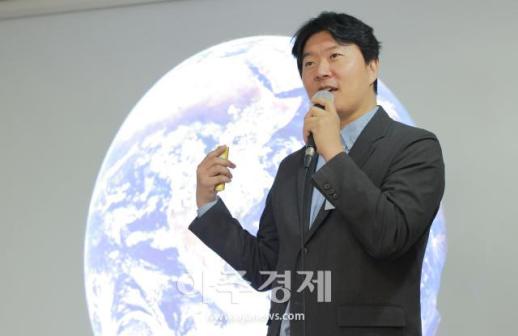 KAIST’s Kim Hyeongjun says energy sector is central driver of climate change “Because humanity has produced energy while developing society and the economy — and inevitably emitted greenhouse gases — the core cause of climate change lies in the energy sector. To solve it, we have to break one of the links in the chain somewhere along the way.” Kim Hyeongjun, a chair professor at KAIST’s Moon Soul Graduate School of Future Strategy and Department of AI Futures Studies, made the remarks Tuesday while delivering a lecture titled “The Climate Crisis, Energy Security and South Korea” at the 2026 Aju Economic Daily 2nd Energy Forum, held at the Korea Press Center in central Seoul. Kim divided climate response strategies into “mitigation” and “adaptation.” He described mitigation as cutting carbon dioxide and other greenhouse gas emissions through measures such as carbon neutrality, and adaptation as reducing damage as climate change progresses. In energy policy, he said, mitigation is the central pillar, including lowering emissions by improving energy efficiency. He said climate change is also expanding the ways it shocks the energy industry, pointing to the interdependence of energy and water. About 10% of the world’s water use, he said, goes to cooling during energy production. “When heat waves hit, cooling becomes less efficient and more water is needed. When droughts occur, it means not only hydropower but also nuclear and thermal plants that require cooling are affected,” Kim said, adding that Europe has already seen cases where droughts forced power plants to halt operations. “With climate risk now directly tied to the stability of energy supply, energy and water are a structure that cannot be viewed separately,” he said. Kim also highlighted the growing link between energy and carbon. Of the roughly 50 gigawatts of carbon humanity emits each year, he said, about 37 to 40 gigawatts come from the energy sector — one factor behind compound disasters driven by climate change. He said renewable energy also interacts with climate. As an example, he said solar power panels, because they are dark, absorb heat and can raise local temperatures; that can create updrafts that form clouds and bring rain, promoting plant growth. On the demand side, Kim said pressure is rising as electricity use increases, driven by higher cooling demand during heat waves. He said that trend is being compounded by data centers, shifts in industrial structure tied to artificial intelligence, and electrification policies, pushing power demand higher each year. At the same time, he said, climate change is increasing uncertainty on the supply side and threatening the stability of the overall energy system. In South Korea, he noted, thermal power plants are concentrated along the west coast, where rising seawater temperatures could reduce cooling efficiency — a case in which climate change driven by energy use feeds back into energy production. “Energy is no longer a problem of a single industry but a complex systems problem, and if we do not respond from an integrated perspective, the crisis will grow,” Kim said. “Climate action is not a cost but an investment. If we curb warming, we can reduce massive economic damage.” Citing the case of the ozone hole over Antarctica being closed, he added that “the energy transition is not a burden but a new opportunity,” and called for an active response strategy. 2026-04-29 17:24:18
 -
 US Targets Iran’s ‘Shadow Banking’ Network With Sanctions on 35 People, Firms The United States is stepping up economic pressure on Iran by expanding sanctions aimed at what it calls a “shadow banking” network that Washington says serves as a funding lifeline for Iran’s military, as talks on ending the war remain stalled. Reuters reported that the Treasury Department’s Office of Foreign Assets Control said Monday it had designated 35 individuals and companies for their alleged involvement in sanctions evasion and terrorism financing. OFAC said the targets helped Iran’s military — including the Islamic Revolutionary Guard Corps — gain access to the international financial system to collect proceeds from illicit oil sales, procure sensitive components needed for missiles and other weapons systems, and transfer funds to regional proxy forces. Those designated include private companies known as “Ravar” that worked with banks including Sina Bank, which the report said is controlled by Iran’s supreme leader; the military-linked Sepah Bank; and Shahr Bank, which was involved in oil sales. Iran’s banks, cut off from Western financial networks, have used such private networks to run thousands of shell companies abroad to process payments, the report said. Treasury Secretary Scott Bessent said in a statement that Iran’s shadow financial system is “a critical financial lifeline” for the military and enables activities that disrupt global trade and fuel violence across the Middle East. He said illicit funds moving through the network support Iran’s “ongoing terrorist operations” and pose a direct threat to the United States, regional allies and the global economy. The Treasury Department also warned that financial institutions dealing with China’s small independent “teapot” refineries could face sanctions, citing concerns that the refineries pay Iran transit fees to pass through the Strait of Hormuz. Bessent wrote on social media platform X earlier Monday that the Treasury Department, through an “Economic Fury” operation, targeted Iran’s international shadow financial infrastructure and access routes to cryptocurrency, the so-called “shadow fleet,” weapons procurement networks, funding channels for regional proxy forces, and China’s independent “teapot” refineries that support Iran’s oil trade. He said the measures blocked “tens of billions of dollars” in revenue that could be used for terrorism, and added that under the president’s “maximum pressure” policy, prices in Tehran have doubled and the currency has sharply weakened. Bessent also said Iran’s main crude export terminal on Kharg Island is expected to near its storage capacity limit, forcing Iran to cut oil production. He said that could lead to additional revenue losses of about $170 million a day and cause permanent damage to Iran’s oil infrastructure. He said the Treasury Department would continue maximum pressure and warned that individuals, ships and institutions that help illicit funds flow to Tehran risk U.S. sanctions. Bessent had also warned the previous day that sanctions could be imposed on individuals or companies that do business with an Iranian airline already under U.S. sanctions.* This article has been translated by AI. 2026-04-29 17:22:33
 -
 South Korea Trains 10 UAE Presidential Guard Officers in Four-Week Protection Course The Presidential Security Service said it provided four weeks of commissioned training for 10 protection officers from the UAE Presidential Guard Command, running from late last month through April 24. The service said on April 29 the program was held at its Security and Safety Training Institute in Seoul’s Gangseo District and other sites. It said the curriculum was tailored to UAE requests while incorporating the agency’s protection capabilities. Weeks 1 and 2 covered protection theory and core skills, while weeks 3 and 4 focused on advanced training and response drills. The Presidential Security Service and the UAE Presidential Guard Command have conducted commissioned training 14 times since 2010, the service said, building a close cooperation framework. Including those sessions, the institute has provided 55 commissioned training programs since 2006 for overseas protection agencies, including those from Uzbekistan, Cambodia, Qatar, Kuwait, Vietnam, Indonesia, Jordan, Russia and Mongolia, it said. A UAE Presidential Guard Command official said, “We express our deep gratitude to the Presidential Security Service for providing an excellent course through systematic planning and high-quality operation.” The official added, “Based on the cooperation and exchanges of experience built so far, we hope the scope of cooperation between the two countries’ protection agencies will further expand and develop.” PSS Chief Hwang In-kwon said the UAE is a key partner that has a “special strategic partnership” with South Korea, and he hoped the training would further strengthen security cooperation. He said the service would continue “protection diplomacy” by sharing “K-security” capabilities to help build trust between countries. * This article has been translated by AI. 2026-04-29 17:21:39
 -
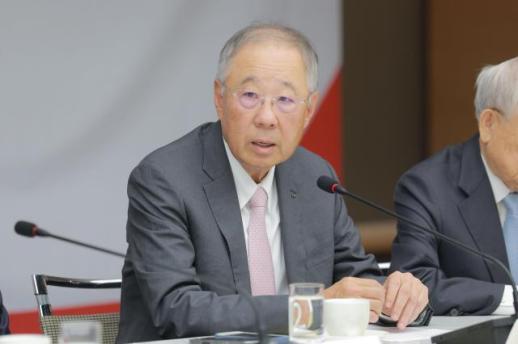 FKI Chairman Ryu Jin Says Two-Thirds of Top 10 Groups’ New Hires Will Be Entry-Level Ryu Jin, chairman of the Federation of Korean Industries, said on the 29th that he would help address youth employment as young people struggle to find jobs. Speaking at the 2026 Korea Shared Growth Job Fair, Ryu said the country’s 10 largest business groups plan to hire a total of 52,000 people this year, up 2,500 from last year. He said about two-thirds of those hires will be entry-level young workers. In congratulatory remarks, Ryu said it is time for the government and companies to act as “one team” to craft solutions for youth employment. “The global job market is being shaken by the AI revolution and industrial restructuring,” he said, adding that new hiring has already fallen sharply in some fields. He said conditions at home are also difficult. “Recent employment indicators show total employment increased, but youth employment fell by about 140,000,” he said, adding that young people’s perceived job conditions remain worsening. Ryu called the joint response by the government and the business community an appropriate step. He said the job fair is the largest ever, with seven business groups, seven government agencies, 15 conglomerate groups and 700 companies taking part, calling it a venue that offers young people practical opportunities. He also pointed to shifting corporate views, saying a survey of the top 500 companies found more than 70% said hiring should be expanded regardless of economic conditions. “The business community will work with the government to build a foundation where young people can pursue their dreams,” Ryu said. “We will keep working to the end for a Korea where young people can smile.”* This article has been translated by AI. 2026-04-29 17:21:00
 -
 South Korea names Coupang founder Bom Kim as controlling shareholder for antitrust rules South Korea’s antitrust regulator has designated Coupang Inc. Chairman Bom Kim as the company’s “same person,” a status used to identify the controlling figure of a large business group. The Fair Trade Commission said it concluded Kim’s brother, Coupang Vice President Youseok Kim, effectively participated in management and exercised influence, triggering disclosure and other obligations under the Fair Trade Act. The commission said Tuesday it will change Coupang’s designation from the “Coupang corporation” to Chairman Kim. Since Coupang was classified as a large business group in 2021, Kim had avoided being named the “same person,” citing his U.S. citizenship and the absence of relatives in management. However, after it became known last year that his brother was serving as a Coupang vice president, critics said Kim should be designated. Ahead of this year’s decision, the FTC conducted an on-site inspection of Coupang. The FTC said it determined Coupang did not meet the enforcement decree’s exception conditions for “same person” designation. It said the vice president’s position was at the top tier within Coupang, comparable to the level of chief executive officers at major affiliates. Choi Jang-gwan, director general of the FTC’s Corporate Group Supervision Bureau, said at a briefing that the vice president’s annual pay was in line with the average for registered executives at the same level and that he received treatment comparable to registered executives, including an assigned secretary. Choi said the vice president hosted “hundreds” of regular and ad hoc meetings on logistics and delivery policy and “in effect” influenced specific directions for executing work on major businesses. With Kim designated, Coupang must disclose overseas affiliates in which relatives and other related parties hold stakes above a certain level. The designation also brings a ban on unfairly providing benefits to related parties. If an overseas affiliate directly or indirectly holds shares in a domestic affiliate, Coupang must disclose the “same person’s” shareholding status in the overseas affiliate. Some have argued the FTC’s standards for making such designations have shifted from the past. Choi said large business group designations are based on materials submitted by companies, with after-the-fact accountability when problems such as false submissions are found. He said issues were raised during a Coupang hearing and a report was filed on the vice president’s management participation, leading the FTC to identify matters it had not previously found. The FTC also said the “same person” designation changed for Jungheung Construction, from Chairman Chang-sun Jung to his eldest son, Vice Chairman Won-ju Jung, following the chairman’s death. Dunamu remained designated as a “corporation” because it met exception conditions under the enforcement decree. The FTC said it designated 102 business groups with total assets of 5 trillion won or more — comprising 3,538 affiliated companies — as large business groups. It said the number of large business groups increased from last year’s 92. Newly designated groups include Line, the Korea Teachers’ Credit Union, Woongjin, Shieldus, Daemyung Chemical, Toss, Kolmar Korea, Heesung, Orion, QCP Group and Iljin Global, the FTC said. Youngone was excluded after its total assets fell. Among large business groups, 47 with total assets of 12 trillion won or more — equal to 0.5% of the latest confirmed nominal gross domestic product figure of 2,408.7 trillion won — were designated as cross-shareholding-restricted groups, up one from last year. Kyobo Life Insurance and Daou Kiwoom were upgraded to that category, while E-Land was downgraded to a large business group.* This article has been translated by AI. 2026-04-29 17:20:08
 -
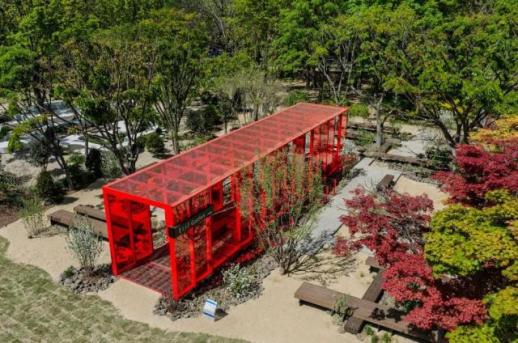 Gyeryong Construction to Unveil ELIF Garden at 2026 Seoul International Garden Show Gyeryong Construction said Tuesday it will take part in the 2026 Seoul International Garden Show, running May 1 through Oct. 27 at Seoul Forest, where it will present a corporate garden called ELIF Garden. The garden was planned around the theme of “harmony among people, nature and space,” reflecting the values of the company’s ELIF housing brand through a garden setting. Inspired by the “madang,” a courtyard central to traditional Korean gardens, the space is designed to let city residents linger and share moments of rest. Red tempered glass used on the pavilion’s exterior is intended to recast familiar scenery and visually underscore the brand’s design philosophy. To coincide with the opening, the company plans to run interactive programs for 10 days starting May 1, offering pavilion content meant to engage the senses. Participants will receive ELIF sachets and coffee drinks, the company said. “Through ELIF Garden, we want to share the value of living in coexistence with nature,” a company official said, adding that Gyeryong Construction will “continue to strengthen its role as an eco-friendly construction company through sustainable landscaping technology and differentiated design.”* This article has been translated by AI. 2026-04-29 17:19:06
 -
 KOSPI Hits Record 6,690.90 for Third Straight Session Despite OpenAI Jitters South Korean stocks pushed to fresh highs for a third straight session, shaking off overnight weakness on Wall Street tied to concerns about OpenAI and the pace of artificial intelligence growth. The benchmark KOSPI closed at 6,690.90, setting another all-time high, according to the financial investment industry on April 29. In the main board market, individual investors bought a net 167.4 billion won, and institutions were net buyers of 477.7 billion won. Foreign investors sold a net 613.6 billion won, taking profits. U.S. stocks fell overnight, led by technology shares, as uncertainty around OpenAI weighed on sentiment. Reports said OpenAI failed to meet internal targets ahead of a planned initial public offering, and investors also raised concerns that slower revenue growth could make it harder to cover AI data center costs. OpenAI said its business was operating normally, but the comments did not fully ease market worries. AI-related shares were hit. Nvidia fell 1.6%, while Oracle and CoreWeave, key cloud partners for OpenAI, slid 4.1% and 5.8%, respectively. The Philadelphia Semiconductor Index dropped 3.58%. South Korean shares also came under pressure early. Samsung Electronics and SK hynix fell 1.13% and 1.23% at the open, and the KOSPI started the session down 0.33% at 6,619.00. Buying demand picked up later, lifting the index into positive territory. Lee Kyung-min, an analyst at Daishin Securities, said, “Despite OpenAI-related concerns, Samsung Electronics maintained a solid price trend, keeping the KOSPI strong.” Brokerages at home and abroad have been increasingly vocal about expectations for the index to reach 7,000. Hana Securities projected the KOSPI’s upper range in the second half at 7,540 to 8,470 depending on scenarios. Goldman Sachs set a 12-month target of 8,000, and JPMorgan left room for as high as 8,500. Japan’s Nomura Securities also set a first-half target of up to 8,000. Some analysts, however, warned of a pullback after a sharp run-up. The KOSPI has surged more than about 30% in April, quickly building technical 부담. May is often seen as seasonally weak under the “Sell in May” pattern, which could strengthen a wait-and-see stance among investors. Byun Jun-ho, an analyst at IBK Investment & Securities, said, “The KOSPI’s monthly gain in April is around 31%, the biggest surge since January 1998,” adding, “The market is nearing, or has already entered, a 부담 zone, and short-term profit-taking demand could grow.” 2026-04-29 17:15:23
 -
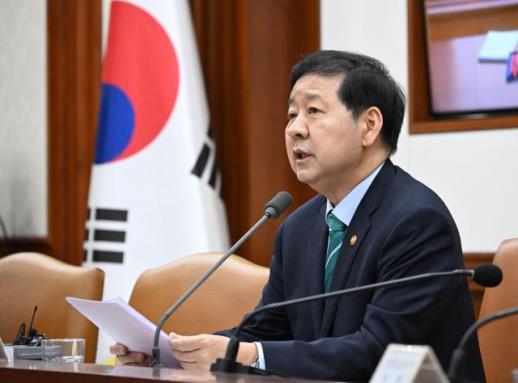 South Korea’s Treasury Bond Issuance Tops 200 Trillion Won for First Time; Foreign Share Hits Record South Korea’s issuance of Treasury bonds topped 200 trillion won for the first time last year, setting a record high. The Ministry of Economy and Finance said Tuesday it published a government bond white paper, Government Bonds 2025, summarizing last year’s Treasury bond market trends and key statistics. According to the report, Treasury bond issuance totaled 226.2 trillion won last year, up 68.5 trillion won from 157.7 trillion won a year earlier. It was the first time annual issuance exceeded 200 trillion won. Foreign investment in government bonds was tallied at 58.7 trillion won, the largest on record. The foreign share of government bond holdings rose to a record 25.7%, and foreign holdings of Treasury bonds reached an all-time high of 297.4 trillion won. In a foreword, Deputy Prime Minister and Minister of Economy and Finance Koo Yun-cheol said the government “successfully issued 226.2 trillion won in Treasury bonds last year, surpassing 200 trillion won in annual issuance for the first time,” adding that the issuance served as “a solid backstop” for efforts to support the economy, including a supplementary budget and rapid fiscal execution. Koo said the government worked to attract foreign funds ahead of inclusion in the World Government Bond Index, citing overseas investor briefings and institutional changes to improve convenience for foreign investors. The government said it will focus in 2026 on upgrading market infrastructure to ensure foreign investment tied to WGBI inclusion proceeds smoothly. It also said it will set up a dedicated team to analyze market trends and respond to risks, strengthening risk management to support stable bond issuance and oversight of the government bond market.* This article has been translated by AI. 2026-04-29 17:14:06
 -
 Lee orders review to allow high-oil-price aid at gas stations with over 3 billion won in sales President Lee Jae-myung on April 29 ordered a review of allowing high-oil-price relief funds to be used at gas stations with annual sales of more than 3 billion won. Lee Kyu-yeon, the presidential office’s senior secretary for public relations and communication, said in an afternoon interview on KBS radio’s “All Politics in the World” that Lee directed aides to consider easing the rules. “Because it’s high-oil-price relief funds, we thought people should at least be able to put in gas, so he told us to review a direction to loosen it,” he said. The relief funds are currently limited mainly to small merchants such as traditional markets and neighborhood shops, and can be used only at businesses with annual sales of 3 billion won or less. Complaints were raised over restrictions at some gas stations, prompting the president to order a review of possible changes. Lee said the sales cap was designed to support small businesses and struggling people, adding that “if that’s the purpose, it’s right not to use it at gas stations with more than 3 billion won” in sales. But he said the program’s name could invite criticism: “Because it’s ‘high-oil-price’ relief funds, people can say, ‘Why can’t I buy gas?’” He said that as complaints emerged, the president asked senior secretaries to share their views. A presidential office official told reporters at the Chunchugwan press center that media reports highlighted the issue and that the president “accepted in a forward-looking way” that people could misunderstand it. The official said the program is livelihood support related to high oil prices, not a fuel subsidy, but that the name could still cause confusion. The president therefore asked aides to review a temporary easing of the criteria so the funds could be used regardless of business size. * This article has been translated by AI. 2026-04-29 17:13:12
 -
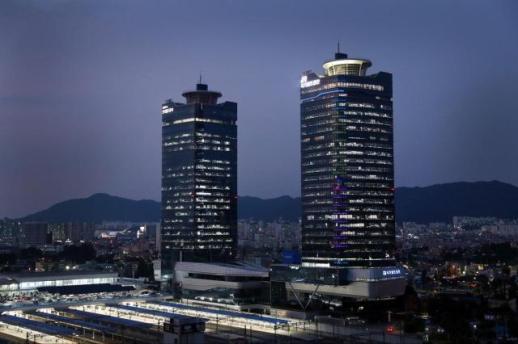 Korea Rail Network Authority to Auction Two Commercial Parcels in Suseo Station District The Korea Rail Network Authority said Tuesday it will supply two commercial parcels in the Suseo Station public housing district through competitive bidding. The sites are Block C1-1 (1,663 square meters) and Block C1-3 (759 square meters). Both allow building coverage of up to 60% and a floor area ratio of up to 800%, enabling high-density development. Based on appraisals, the planned supply prices are 41.1 billion won for C1-1 and 18.2 billion won for C1-3. Payments will be made in interest-free installments over two years and six months. After a 10% down payment, the remaining interim and final payments can be split into five equal payments every six months. Early payment before the scheduled date qualifies for a prepayment discount at an annual rate of 5% under current standards. The Suseo Station area is described as a major transportation hub in southeastern Seoul, linking the SRT high-speed rail, the GTX-A line, Seoul Subway Line 3 and the Suin-Bundang Line, with the planned Suseo-Gwangju Line expected to make it a "five-line" transfer area. A complex transfer center at Suseo Station is also planned, with facilities such as a department store, hotel and offices, the authority said. The schedule begins with a notice Wednesday, followed by bid applications on May 18, bid opening on May 19 and contract signing on May 26. Details are available on the authority’s website and on OnBid. Lee An-ho, acting chairman of the Korea Rail Network Authority, said the Suseo Station area combines a strong regional transport network with significant development potential. He said he hopes the offering will help energize the station area and strengthen local competitiveness, providing an opportunity for end users focused on future value.* This article has been translated by AI. 2026-04-29 17:08:59