
Journalist

Lim, Kwu Jin
-
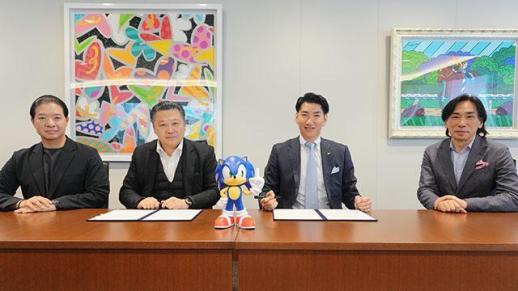 Sega Signs MOU With Thailand’s CP Group to Explore Entertainment Collaboration Japan’s game company Sega said it signed a memorandum of understanding on the 27th with Thailand’s CP Group (Charoen Pokphand Group) to explore entertainment collaboration in Thailand and nearby areas. The companies aim to combine Sega’s intellectual property and content-creation capabilities with CP Group’s broad business ecosystem to offer new, locally rooted entertainment in the region. The review will proceed in stages. In the initial phase, the companies will examine business development using Sega IP such as “Sonic” and “Angry Birds,” and consider a collaboration framework aimed at sustained growth. Later, they plan to pursue wider cooperation, including joint IP development targeting the Association of Southeast Asian Nations, business expansion using merchandise licensing and distribution networks, and potential expansion beyond Thailand. Sega President Haruki Satomi said in a statement, “Through this collaboration, we will further accelerate the global rollout of Sega IP and create new entertainment experiences for the ASEAN region and the world.” 2026-04-29 16:05:21
 -
 U.S. Blocks Chipmaking Equipment Exports to China’s Hua Hong, Tightening AI Chip Curbs U.S. authorities have moved to block equipment exports to Hua Hong, China’s No. 2 semiconductor foundry, raising pressure in the race over artificial intelligence chips. The step comes at a sensitive time ahead of President Donald Trump’s planned visit to China in May. U.S. blocks equipment exports over concerns about advanced processes Reuters reported on April 28 that the Commerce Department recently sent letters to U.S. equipment makers including Lam Research, Applied Materials and KLA, directing them to stop shipping certain tools to Hua Hong. The letters restrict exports of semiconductor equipment and other materials tied to two manufacturing facilities that U.S. officials believe could be used to produce China’s most sophisticated chips. Reuters described the move as the latest U.S. step to slow China’s advanced-chip development and an extension of policies aimed at protecting U.S. technological advantages in AI and other leading-edge chipmaking. The action follows reports of progress at Hua Hong. The company is China’s second-largest foundry after SMIC, and has been reported to be developing manufacturing technology for advanced chips, including AI semiconductors. Its affiliate, HLMC, has been reported to be preparing to introduce a 7-nanometer process at a Shanghai plant. SMIC is effectively the only company in China seen as capable of producing chips on a 7-nanometer process. Analysts say Washington is concerned that if Hua Hong also commercializes advanced production, China’s drive for semiconductor self-reliance could accelerate. There has also been speculation that Huawei is working with Hua Hong to shift some AI chip production that has been made through SMIC. Congress moves to tighten export-control laws, aiming to institutionalize China curbs The Hua Hong step fits into a broader U.S. effort to restrict technology flows to China on national security grounds, particularly in AI and advanced semiconductors. The House Foreign Affairs Committee recently approved a package of bills that includes the “Multilateral Alignment for China Technology Controls Act,” or MATCH Act, aimed at strengthening export controls in coordination with allies. The push has been viewed as Congress seeking to constrain the Trump administration after it signaled it could ease some China-related export restrictions ahead of an expected U.S.-China leaders’ meeting in May. Bloomberg called it “the most significant legislative attempt” to overhaul export-control policy since 2018, reflecting congressional dissatisfaction with what it described as a cautious approach by the administration. Pressure is not limited to semiconductors. The Wall Street Journal reported that dozens of Democratic House members recently urged Trump to ban Chinese automakers from producing and selling vehicles in the United States. They also called for maintaining existing tariffs and blocking Chinese companies from building U.S. production facilities. The request followed Trump’s recent comments that Chinese companies could be allowed to enter if they build factories in the United States and create jobs, as the possibility of Chinese electric-vehicle makers entering the U.S. market is being discussed ahead of the expected summit. Manus dispute adds to tech tensions ahead of expected summit With tensions rising across advanced industries including semiconductors and autos, observers say the expected May U.S.-China summit is likely to focus more on competition than cooperation. A recent dispute involving the Chinese AI startup Manus has underscored that trend. U.S. tech company Meta announced in December that it would acquire Manus for about $2 billion, but the Chinese government moved to block the deal, saying it would review whether the transaction fell under technology export controls. On April 27, it ultimately decided to ban the investment. The move was widely seen as part of China’s effort to prevent the overseas transfer of AI talent and technology assets. Some observers, however, say the two leaders may choose to emphasize more practical issues, such as purchases of Boeing aircraft or agricultural trade, rather than putting advanced-technology disputes at the center of the talks. * This article has been translated by AI. 2026-04-29 16:04:11
 -
 Korea Construction Groups Clash Over Expiring Small-Project Protections South Korea’s construction industry is heading toward a direct clash as a sunset clause approaches for a “protected segment” in the cross-entry market system. Specialty contractors are calling for permanent safeguards for their right to perform work directly, while general contractors argue the current framework should remain to promote fair competition. According to the Korea Research Institute for Construction Policy on Tuesday, Japan has maintained an “exclusive right” structure in which civil engineering and building contractors hold only oversight authority over specialty contractors, while construction rights require specific experience and qualifications. In the United States, California has also maintained exclusive rights for about 40 specialty building trades when general contractors take on single-trade projects. The institute said that in major overseas markets, specialty contractors — the main actors in direct construction — play a central role, while in South Korea, even after cross-entry was allowed, an unfair registration system has kept specialty firms in a vertical prime-subcontractor relationship. It said a fundamental review of the current production system is urgent. South Korea’s cross-entry system gradually allows general and specialty contractors to enter each other’s markets. To protect small specialty firms, general contractors are barred from winning specialty projects worth less than 430 million won. That protected segment is set to expire in December, and bidding is expected to be allowed starting next year. Specialty contractors say the change could accelerate general contractors’ entry into the specialty market because barriers differ sharply. General contracting licenses cover five categories, while specialty contracting licenses cover 14. Holding a general civil engineering and building license allows a firm to perform 11 of the 14 specialty categories, while specialty licenses — such as for ground formation and paving — have narrower scopes. The institute said the average competition rate for public bids on specialty projects in 2022 rose 3.91 times from 2020. The Korea Specialty Contractors Association and the Korea Mechanical Facilities Construction Association held a news conference Monday outside the Government Complex Sejong and submitted 408,391 petitions from member companies to the Ministry of Land, Infrastructure and Transport. The specialty contractors association said that since the system took effect, general contractors have entered “indiscriminately” into a specialty market where 99% of projects are under 1 billion won, and that the specialty sector is being encroached upon. In the National Assembly, a proposed amendment to the Framework Act on the Construction Industry has been introduced that would raise the protected threshold from 430 million won to 1 billion won. The Korea Construction Association, representing general contractors, is gathering petitions in opposition. It argues the system was introduced to eliminate harmful market segmentation and encourage sound competition, and that the market should not be distorted solely to protect specialty firms. The ministry has been conducting an analysis of the effects of market opening for specialty and general contractors since October last year, commissioning the Korea Research Institute for Human Settlements to carry out the study. * This article has been translated by AI. 2026-04-29 16:01:33
 -
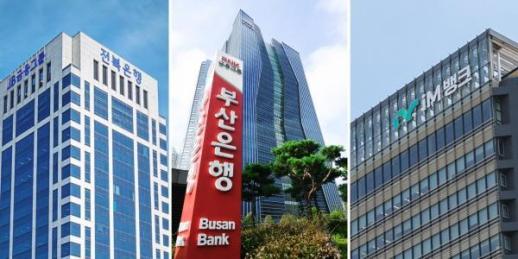 Regional Korean Banks Post Higher Profit as Delinquency Rates Surge Regional financial holding companies posted improved first-quarter results, but warning signs are flashing on asset quality as delinquency rates climbed to as much as four times the level at major commercial banks. According to the financial industry on April 29, BNK Financial Group is expected to report first-quarter net profit of 224.6 billion won, up 30.7% from a year earlier. JB Financial Group posted 166.1 billion won, up 2.1%, and iM Financial Group reported 154.5 billion won, up 0.1%. All three improved results on the back of noninterest businesses, but they are also facing rising delinquencies. JB Financial’s first-quarter delinquency rate rose to 1.63%, up 0.50 percentage points from the end of last year. iM Financial’s rate also increased to 0.86%. By bank, Jeonbuk Bank’s delinquency rate reached 1.65% and Gwangju Bank’s rose to 1.27%. BNK Financial has also been on an upward trend, posting a 1.14% delinquency rate in the fourth quarter of last year. That compares with an average 0.40% for five major commercial banks — KB Kookmin, Shinhan, Hana, Woori and NH NongHyup — meaning regional groups are running as high as four times that level. The strain is building in both household and corporate lending. At Jeonbuk Bank, the household-loan delinquency rate rose to 1.74%, while corporate-loan delinquencies jumped to 1.67%. Gwangju Bank’s corporate-loan delinquency rate climbed to 1.27%. Analysts link the trend to structural features of regional banks. Their small- and midsize-business lending accounts for about half of total loans, and their operations are concentrated outside the Seoul metropolitan area, making them more sensitive to local economic conditions. With weakness in real estate project financing and a manufacturing slowdown overlapping, the recovery in regional economies has been delayed, feeding into higher delinquencies. Rather than a new risk, the rise in delinquencies is being seen as a clearer expression of existing vulnerabilities during a regional slowdown. Delinquency rates have topped 1% across major industries including real estate and leasing, manufacturing and construction, with some sectors exceeding 2%. Financial industry officials expect conditions could worsen in the near term. If the slowdown persists and regional recoveries lag, delinquency rates may continue to rise. “Rising delinquency rates are unavoidable for the time being,” a financial industry official said. “There is a need to increase provisions to prepare for additional bad loans.”* This article has been translated by AI. 2026-04-29 15:56:12
 -
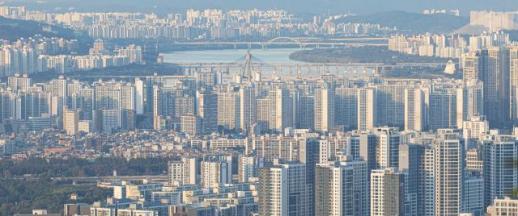 South Korea’s Capital Gains Tax Surcharge Returns, but Many Landlords Hold On With the end of South Korea’s temporary suspension of heavier capital gains taxes just 10 days away, analysts say the market is tilting toward holding rather than selling. With tax burdens expected to approach an effective top rate of 80%, many multiple-home owners are seen choosing gifts to family members or long-term holding instead of listing properties. Government officials have signaled additional steps, including changes to the long-term holding deduction and a broader overhaul of property taxes. But many in the market doubt those measures will be enough to reverse tightening supply. Attention is focused on whether the government will move to raise the cost of holding homes through further tax changes. Industry officials said that starting May 10, multiple-home owners selling homes in regulated areas will face surtaxes added to the basic capital gains tax rate of 6% to 45%: an extra 20 percentage points for owners of two homes and 30 percentage points for owners of three or more. With local income tax of 10% added, the effective top rate is expected to near 80%. The long-term holding deduction, up to 30% during the grace period, will also be excluded. Based on a 500 million won capital gain and a 10-year holding period, the tax burden is estimated to rise to about two to three times the level during the grace period. If a sales contract and down payment are completed by May 9, sellers can still receive a grace period through closing and registration: four months for Gangnam’s three districts and Yongsan, and an additional six months for newly designated regulated areas. Even so, market participants said options are narrowing for multiple-home owners, likely deepening the longer-term lockup of listings. Data from the real estate big-data platform Asil show that after President Lee Jae-myung suggested at a Cabinet meeting on April 6 that the grace period could be extended, the weekly decline in Seoul apartment listings briefly eased in the first week of April to minus 0.87% from minus 2.52% the prior week. The effect did not last more than two weeks. In the third week of April (April 20-26), the decline widened again to minus 2.55%. If a transaction freeze takes hold, the government’s next move is likely to be stronger property holding taxes, analysts said. In October last year, Deputy Prime Minister and Minister of Economy and Finance Koo Yun-cheol said, “Holding taxes are low and capital gains taxes are high, so the lockup of listings is large,” signaling a direction of higher holding taxes and lower transaction taxes. The government is also reviewing a tax package after the June local elections, centered on reducing the long-term holding deduction and strengthening differentiated holding taxes for nonresident-owned homes. Still, with official assessed values rising this year and holding taxes already expected to increase 30% to 50%, further hikes could trigger taxpayer backlash, critics said. They also said that as holding costs rise, more multiple-home owners may choose tax-minimizing alternatives such as gifting homes to children or switching to joint ownership rather than selling, limiting the policy’s impact. Court statistics show about 650 gift transactions in Gangnam’s three districts in the first quarter, indicating a continued shift toward gifting instead of selling despite tighter taxes. The trend is expected to deepen a split within Seoul’s housing market. In outer Seoul, fewer listings from multiple-home owners are appearing, while end-users squeezed by a tight rental market continue absorbing lower-priced homes. Experts are also watching whether demand spreads into nearby parts of Gyeonggi Province as monthly and long-term rental listings remain scarce. With limited alternatives due to a shortage of non-apartment supply, analysts said anxiety about being priced out of Seoul could spread across the greater capital region, fueling a “price matching” pattern in which outlying areas rise to catch up. Nam Hyuk-woo, a researcher at Woori Bank’s real estate research center, said homes that come to market due to government policy tend to be tenant-occupied, meaning that even if total listings rise, homes available for immediate move-in remain scarce, limiting any supply effect in mid- to lower-priced areas. He said the current price strength in Seoul’s mid- and lower-tier areas could extend to 600 million to 1 billion won apartments and to nearby parts of Gyeonggi Province where rental supply is tight, continuing the “price matching” trend. * This article has been translated by AI. 2026-04-29 15:54:54
 -
 Singapore Logistics Firm Eneco Energy to Buy Union Steel Unit Fastweld Singapore logistics company Eneco Energy said on April 27 it agreed to acquire Fastweld Engineering Construction Pte Ltd from Singapore-based Union Steel Holdings, which is involved in metal recycling and engineering. Fastweld, a unit of Union Engineering under Union Steel, provides procurement, maintenance and construction services. Through its investment holding company Eneco Singapore, Eneco Energy will buy all shares of Fastweld for S$4.3 million (about 536 million yen). Because Union Steel holds a 25% stake in Eneco Energy, the deal is considered a related-party transaction and requires approval at an extraordinary general meeting, Eneco Energy said. Union Steel said in February it had reached a basic agreement to sell Fastweld to Eneco Energy as part of a group restructuring and a shift of management resources to its core businesses. 2026-04-29 15:54:07
 -
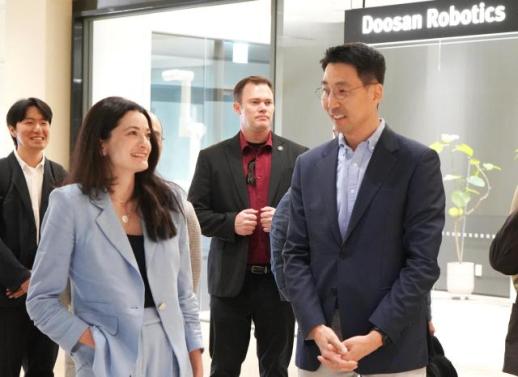 Nvidia Executive Visits Doosan Robotics to Discuss Industrial Humanoid Commercialization Doosan Robotics and Nvidia are teaming up to prepare for the next phase of humanoid robotics. Doosan Group said on the 29th that Madison Hwang, Nvidia’s senior director for Omniverse and robotics product marketing, visited the Doosan Robotics Innovation Center in Bundang-gu, Seongnam, and met with Doosan Robotics CEO Kim Min-pyo to discuss technical cooperation between the two companies. The visit was arranged to explore how Nvidia’s AI and robotics ecosystem could be applied to Doosan Robotics’ intelligent robot solutions and industrial humanoids now under development. At the center of the talks is linking Doosan Robotics’ robot-dedicated execution software, the “Agentic Robot O/S,” with Nvidia’s AI and robotics simulation and training infrastructure. The companies said they aim to build a robot execution platform that can be deployed in real industrial workplaces. Doosan Robotics described the Agentic Robot O/S as software that uses AI to understand a work environment, optimize routes and support safe, precise operations. To advance the operating system, the company said it is reviewing steps including building a robot-to-AI interface, developing standard robot-control protocols, connecting specialized task models and applying technical guardrails for safety control, with plans to flesh out those efforts through cooperation with Nvidia. Doosan Robotics said it plans to roll out an intelligent robot solution based on the Agentic Robot O/S in 2027, followed by an industrial humanoid product in 2028. It also said it is pursuing a plan to present the results of the collaboration with Nvidia at major global exhibitions such as CES in 2027. “The success of physical AI depends not only on how smart the AI model is, but also on the stability of the execution platform that runs it in the field without error,” Kim said. “Based on today’s discussions, we will combine Doosan’s hardware manufacturing capabilities with Nvidia’s software ecosystem to push commercialization of intelligent robot solutions and industrial humanoids.”* This article has been translated by AI. 2026-04-29 15:52:49
 -
 Philip Morris Korea Names Heated-Tobacco Specialist Lee Hong-seok as New CEO Philip Morris Korea has appointed an internal marketing and strategy executive to lead its push for a “smoke-free future,” naming Lee Hong-seok, head of its smoke-free products business, as its next chief executive. The company said Tuesday that Lee, currently director in charge of smoke-free products, will become CEO effective May 1. Lee joined Philip Morris Korea in 1999 and has spent more than 25 years across key roles, the company said, earning recognition for results in domestic commercial operations and marketing. The company also cited his overseas leadership. Lee worked in Singapore and Hong Kong before becoming head of Philip Morris’ Taiwan unit in 2018, where he led efforts to develop business models and drive organizational changes amid a rapidly shifting market. After returning to Korea in 2021, he led commercial operations and later oversaw smoke-free products. Philip Morris Korea said he expanded its lineup of smoke-free products, including heated tobacco, and strengthened customer satisfaction, supporting qualitative growth in its local business. Lee said he will deepen cooperation with the government, public health experts and other stakeholders so that efforts to shift to smoke-free products can contribute to Korea’s broader public health goals. He also pledged to play a constructive role in Korean society through “open and scientific dialogue” and continued innovation.* This article has been translated by AI. 2026-04-29 15:47:25
 -
 Japan Pushes Defense Spending Hike While Pursuing Tax Cuts, Subsidies Japan is pursuing an unusual fiscal course: sharply increasing defense spending while also pushing consumption-tax cuts and continuing subsidies, according to a report by the Nihon Keizai Shimbun, or Nikkei, on April 28. With the Donald Trump administration pressing allies to spend more on defense, many major countries are seeking new revenue or cutting other outlays to pay for it. Japan, by contrast, is trying to do both — fund “guns” and “butter” at the same time, the report said. According to Nikkei, the Takaichi Cabinet on April 27 launched an expert panel on strengthening defense capabilities. The government plans to pursue revisions this year to the “three security documents,” with expanded defense spending emerging as a central issue alongside policies such as the use of drones and artificial intelligence. The report said the backdrop is strong pressure from Washington. The United States is calling on allies to raise “core defense spending” to 3.5% of gross domestic product and total security-related spending, including infrastructure, to 5%. Japan is maintaining its position that it will not present a single total defense-spending figure, instead adding up individual budget items. But as NATO, South Korea and Australia announce plans aligned with U.S. demands, Japan faces a tougher environment for holding out, Nikkei said. Other countries have already begun tightening budgets. France has moved to strengthen taxation on the wealthy and curb increases in some spending, including education, to support military expansion. Britain has decided to allocate cuts in its foreign aid budget to higher defense spending. Nikkei said the moves reflect deepened awareness of fiscal discipline after the so-called “Truss shock,” which triggered a surge in interest rates. Australia, too, has announced plans to nearly double defense spending from 59 billion Australian dollars (about 55 trillion won) to 112.1 billion Australian dollars (about 105 trillion won) by fiscal 2035, while considering restraint in spending for a large disability insurance program used by 760,000 people. Japan is taking a different approach. Under what it calls “responsible, proactive fiscal policy,” the Takaichi administration has kept alive discussions of cutting the consumption tax and has continued gasoline subsidies, citing higher oil prices tied to instability in the Middle East. Spending is estimated at about 500 billion yen a month, the report said, and there are no parallel steps aimed at curbing demand. With both ruling and opposition parties broadly favorable to tax cuts and expanded spending, political checks are not functioning, Nikkei said. The approach runs against the classic economic “guns versus butter” tradeoff, in which military spending and domestic programs compete for limited resources. Nikkei noted that there is little domestic pushback against Takaichi’s election pledge to “catch both rabbits at once.” Concerns about fiscal sustainability remain. When the three security documents were drawn up in 2022, a government advisory body listed “stability of the fiscal foundation” as a precondition for strengthening defense capabilities and stressed the importance of maintaining market confidence. Keishi Ono, a senior researcher at the National Institute for Defense Studies, told Nikkei that Japan must consider defense, public finances and the economy in an integrated way. He said a strategy is needed that goes beyond simple spending increases, including steps tied to productivity gains such as investment in defense-sector startups. Nikkei said whether Japan’s “guns and butter” approach can become a sustainable growth model — or instead weaken another pillar of security by undermining fiscal health — is expected to come into clearer view during the planned revisions to the three security documents later this year. * This article has been translated by AI. 2026-04-29 15:46:30
 -
 Korea FTC Names Coupang Chair Kim Beom-seok as Group Head, Raising Regulatory Stakes South Korea’s Fair Trade Commission has designated Coupang’s “same person” — the group head for oversight purposes — as Kim Beom-seok, chair of Coupang Inc., replacing the current designation of the company as a corporate entity. The FTC said its assessment that Kim’s younger brother, Kim Yu-seok, is involved in management was a decisive factor. The change is expected to tighten governance scrutiny as Coupang also faces multiple pending FTC investigations. According to industry officials on Tuesday, Kim Yu-seok’s role inside the company was widely seen as the key variable behind the shift. The FTC first designated Coupang as a large business group subject to disclosure in 2021, but named the corporation — not Kim — as the group head. While the agency viewed Kim as effectively controlling Coupang, it cited the lack of precedent for naming a foreign national as group head and concerns that enforcement tools, including curbs on self-dealing, would be less effective in such cases. In May 2024, the FTC revised and implemented an enforcement decree under the Monopoly Regulation and Fair Trade Act to set exception requirements for corporate group-head designations, and it concluded Coupang met them. However, during a National Assembly hearing last year, the FTC said it determined the company no longer satisfied the exception conditions — including the requirement that relatives not participate in management of domestic affiliates — after Kim Yu-seok was identified as holding the title of vice president. The FTC is also reported to have confirmed his status through on-site inspections, including checking compensation for other registered executives. Choi Jang-gwan, director general of the FTC’s Corporate Group Monitoring Bureau, said at a briefing that what mattered was not “formal aspects” such as title or pay, but whether the person’s involvement and compensation were comparable to registered executives who substantially take part in management. He said Coupang has internal tiers for participation in major decisions and that Kim Yu-seok was “almost at the top level” by that measure. The redesignation is expected to significantly increase regulatory requirements across Coupang’s governance structure. Disclosure obligations will expand to include overseas affiliates. Once a year, Coupang must disclose general and shareholder information for foreign affiliates in which Kim and his relatives together hold at least 20% of total issued shares. Coupang must submit related materials to authorities by the end of next month. The company is also expected to fall under Article 47 of the fair trade law, which bans unfair provision of benefits to related parties, often described as restrictions on self-dealing. When the corporation was designated as group head, Coupang was not subject to that provision. With Kim designated as the individual group head, regulators are expected to closely monitor whether group companies provide business opportunities or improper benefits on favorable terms to firms controlled by relatives. Analysts also said pressure could rise on Kim to shoulder social responsibility as the group’s de facto controller. They said that in the event of major issues such as serious safety accidents or labor disputes, it would be harder to justify refusing requests to appear before the National Assembly, and scrutiny could intensify. With the designation process completed, the FTC may also accelerate deliberations on sanctions in major pending cases involving Coupang. Those include allegations of tying related to the Wow membership program and allegations that Coupang Eats demanded most-favored treatment. 2026-04-29 15:45:29