

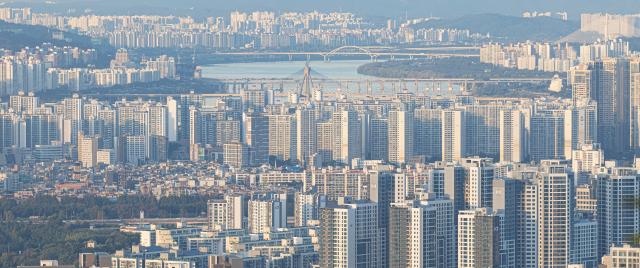
With the end of South Korea’s temporary suspension of heavier capital gains taxes just 10 days away, analysts say the market is tilting toward holding rather than selling. With tax burdens expected to approach an effective top rate of 80%, many multiple-home owners are seen choosing gifts to family members or long-term holding instead of listing properties.
Government officials have signaled additional steps, including changes to the long-term holding deduction and a broader overhaul of property taxes. But many in the market doubt those measures will be enough to reverse tightening supply. Attention is focused on whether the government will move to raise the cost of holding homes through further tax changes.
Industry officials said that starting May 10, multiple-home owners selling homes in regulated areas will face surtaxes added to the basic capital gains tax rate of 6% to 45%: an extra 20 percentage points for owners of two homes and 30 percentage points for owners of three or more. With local income tax of 10% added, the effective top rate is expected to near 80%. The long-term holding deduction, up to 30% during the grace period, will also be excluded. Based on a 500 million won capital gain and a 10-year holding period, the tax burden is estimated to rise to about two to three times the level during the grace period.
If a sales contract and down payment are completed by May 9, sellers can still receive a grace period through closing and registration: four months for Gangnam’s three districts and Yongsan, and an additional six months for newly designated regulated areas. Even so, market participants said options are narrowing for multiple-home owners, likely deepening the longer-term lockup of listings.
Data from the real estate big-data platform Asil show that after President Lee Jae-myung suggested at a Cabinet meeting on April 6 that the grace period could be extended, the weekly decline in Seoul apartment listings briefly eased in the first week of April to minus 0.87% from minus 2.52% the prior week. The effect did not last more than two weeks. In the third week of April (April 20-26), the decline widened again to minus 2.55%.
If a transaction freeze takes hold, the government’s next move is likely to be stronger property holding taxes, analysts said. In October last year, Deputy Prime Minister and Minister of Economy and Finance Koo Yun-cheol said, “Holding taxes are low and capital gains taxes are high, so the lockup of listings is large,” signaling a direction of higher holding taxes and lower transaction taxes. The government is also reviewing a tax package after the June local elections, centered on reducing the long-term holding deduction and strengthening differentiated holding taxes for nonresident-owned homes.
Still, with official assessed values rising this year and holding taxes already expected to increase 30% to 50%, further hikes could trigger taxpayer backlash, critics said. They also said that as holding costs rise, more multiple-home owners may choose tax-minimizing alternatives such as gifting homes to children or switching to joint ownership rather than selling, limiting the policy’s impact. Court statistics show about 650 gift transactions in Gangnam’s three districts in the first quarter, indicating a continued shift toward gifting instead of selling despite tighter taxes.
The trend is expected to deepen a split within Seoul’s housing market. In outer Seoul, fewer listings from multiple-home owners are appearing, while end-users squeezed by a tight rental market continue absorbing lower-priced homes.
Experts are also watching whether demand spreads into nearby parts of Gyeonggi Province as monthly and long-term rental listings remain scarce. With limited alternatives due to a shortage of non-apartment supply, analysts said anxiety about being priced out of Seoul could spread across the greater capital region, fueling a “price matching” pattern in which outlying areas rise to catch up.
Nam Hyuk-woo, a researcher at Woori Bank’s real estate research center, said homes that come to market due to government policy tend to be tenant-occupied, meaning that even if total listings rise, homes available for immediate move-in remain scarce, limiting any supply effect in mid- to lower-priced areas. He said the current price strength in Seoul’s mid- and lower-tier areas could extend to 600 million to 1 billion won apartments and to nearby parts of Gyeonggi Province where rental supply is tight, continuing the “price matching” trend.
* This article has been translated by AI.
Copyright ⓒ Aju Press All rights reserved.