
Journalist

Lim, Kwu Jin
-
 Daewoo E&C hits 52-week high as surprise Q1 profit jump lifts shares 17% Daewoo Engineering & Construction shares surged after the company reported a surprise earnings beat. According to the Korea Exchange, Daewoo E&C was trading at 39,000 won as of 1:25 p.m. on the 28th, up 17.47% (5,800 won) from the previous session. The stock earlier climbed to 39,850 won, setting a new 52-week high. Daewoo E&C said its first-quarter operating profit rose 68.9% from a year earlier to 255.6 billion won. Revenue fell 6% to 1.9514 trillion won, while net profit jumped 237.6% to 195.8 billion won. The operating profit topped market expectations, marking the first time in 14 quarters the company posted operating profit in the 200 billion-won range. The company said profitability in its building construction business improved as projects launched during a period of rising construction costs were completed in sequence. Daewoo E&C said it plans to expand orders centered on energy infrastructure such as nuclear power plants and liquefied natural gas (LNG), as well as overseas urban development, data centers and urban renewal projects. Lee Eun-sang, an analyst at NH Investment & Securities, said Daewoo E&C is the most likely to participate as a construction partner in Team Korea. He added that with additional construction cooperation in the United States and Vietnam in mind, cost negotiations in the Czech Republic will be important, and Daewoo E&C has leverage because few domestic builders have lead-underwriter construction experience.* This article has been translated by AI. 2026-04-28 13:36:16
 -
 From stillness to spectacle: spring festivals at palaces in Seoul SEOUL, April 27 (AJP) -Once defined by stillness, Seoul’s royal palaces are learning how to absorb noise and hordes of outsiders. At Gyeongbokgung Palace, the gravel crunches not under a lone guard’s step but beneath waves of visitors — cameras raised, hanbok skirts sweeping past sneakers, languages overlapping in the spring air. What was once a space of restraint now pulses with movement. The 2026 Spring Royal Culture Festival has made that shift unmistakable. Across the palaces and Jongmyo Shrine, heritage is no longer observed at a distance. It is entered, performed, photographed — and shared. At Changgyeonggung Palace and Gyeonghuigung Palace, performances unfold where court life once followed rigid protocol. At Jongmyo, the solemn strains of ancestral ritual music now meet the gaze of an audience, not just the spirits they were meant to honor. The question is not whether the palaces have changed — they have — but what they are becoming. They are no longer sanctuaries of quiet history. Nor are they merely tourist sites. They sit somewhere in between: cultural stages, memory factories, shared spaces where history is continuously reinterpreted. In a city moving at relentless speed, the palaces have not resisted change. They have absorbed it — trading solitude for relevance, and silence for life. 2026-04-28 13:31:41
 -
 South Korea’s Q1 CD Exports Top $100 Million for First Time; U.S. Shipments Surge 506% This year’s first-quarter exports of music albums (CDs) topped $100 million for the first time, setting a record high for any quarter. The Korea Customs Service said April 28 that CD exports in the first quarter totaled $120 million, up 159.0% from a year earlier. Annual CD exports totaled $300 million last year, but this was the first time quarterly exports exceeded $100 million. With quarterly results continuing to set new highs since the third quarter of last year, the agency said the annual record could also be broken. The surge is being attributed to the global popularity of K-pop, including BTS, and to fandom culture in which fans buy physical albums to own them and support artists. Demand is also rising among listeners who bypass major streaming-service algorithms and seek out physical CDs. By destination, the United States accounted for $36 million, or 28.8% of the total, followed by Japan at $31 million (25.3%), the European Union at $21 million (16.5%), China at $18 million (14.4%) and Taiwan at $9 million (6.9%). Exports to the United States jumped 506.4% from the first quarter of last year, the fastest growth rate. Shipments to the EU rose 461.9%, while Japan increased 157.4% and China 38.2%. Growth was strongest outside Asia. First-quarter exports to non-Asian markets rose 408.3%, far outpacing the 71.9% increase to Asian markets. North America climbed 449.2% and Europe 397.7%. Exports went to 131 countries, and 94 of them — 72% — posted their best first-quarter results.* This article has been translated by AI. 2026-04-28 13:31:12
 -
 Seoul’s Low-Sugar ‘Seoul Bread’ Tops 10,000 Sold in 10 Days SEOUL — Seoul’s new “Seoul Bread,” developed with a private bakery company, has sold more than 10,000 units in just 10 days, the city government said. Officials credited the strong response to a “less sweet, clean-tasting” health concept that aligns with growing consumer interest in low-sugar foods. Seoul said on the 28th that “Seoul Sweet Red Bean Bread” and “Seoul Whole-Wheat Bread,” jointly planned with Koryodang, an 80-year-old bakery company, recorded cumulative sales of 10,339 as of the 25th after going on sale on the 15th. Average daily sales topped 1,000, with some stores selling out early and customers waiting to buy. The products have been sold at Koryodang stores inside Lotte Department Store’s main branch and Shinsegae Department Store’s Gangnam branch. With sellouts continuing since launch, the city said the items are emerging as another Seoul-branded food souvenir following “Seoul Ramen.” Seoul pointed to the recipes as a key driver. The sweet red bean bread uses a fermentation process to boost flavor while cutting the sweetness of the filling by 36% compared with existing products. The whole-wheat bread uses no sugar or butter. Consumers have responded with comments such as, “It’s less sweet, so it’s not heavy,” and “It’s filling enough for a meal.” Packaging also helped, the city said, featuring major Seoul landmarks including Gwanghwamun, Dongdaemun Design Plaza and Namsan Tower, drawing souvenir demand among foreign tourists. Based on the early results, Seoul plans to expand the lineup. Starting in late May, it will roll out castella, madeleines, rice twisted doughnuts, and cookie-and-yanggaeng sets. In the second half of the year, it plans to broaden distribution to convenience stores and duty-free shops. The city will also run a pop-up store May 1-5 at the Seoul Gallery inside Seoul City Hall to sell the products to visitors during the Children’s Day holiday period. “Seoul Bread is drawing strong interest from both residents and tourists and is becoming a new Seoul food content,” said Min Su-hong, Seoul’s director general for public relations planning. “Through private-sector partnerships, we will continue to expand the Seoul brand experience,” he said. * This article has been translated by AI. 2026-04-28 13:27:18
 -
 NgeneBio shares plunge 25% on capital reduction and $224 million stock offering plan Shares of NgeneBio tumbled after the company announced it will pursue a capital reduction and a stock offering at the same time. According to the Korea Exchange, NgeneBio was trading at 1,226 won on the KOSDAQ as of 1:18 p.m. on the 28th, down 419 won, or 25.47%, from the previous session. The drop was widely attributed to concerns that a large capital reduction and a new share sale would dilute shareholder value and weigh on sentiment. NgeneBio said it decided at a board meeting the previous day to issue 7.15 million common shares in a paid-in capital increase. The company aims to raise about 22.4 billion won, allocating about 17.3 billion won for working capital and 5.1 billion won to repay debt. The deal will be structured as a rights offering to existing shareholders, with any unsubscribed shares sold in a public offering. The company will also carry out a free capital reduction to cover accumulated losses. The reduction ratio is 66.67%, consolidating three existing common shares into one. As a result, the number of shares outstanding will fall to 8,936,583 from 26,809,750. The record date for the capital reduction is June 24, and the listing of new shares is scheduled for July 13. Market participants said the capital reduction is intended to improve the company’s financial structure, but the follow-on stock offering makes dilution of existing stakes unavoidable, adding pressure to the share price. They also noted that the heavy allocation to working capital and debt repayment suggests a focus on financial stability rather than growth investment.* This article has been translated by AI. 2026-04-28 13:25:13
 -
 ST Pharm Shares Rebound After Early Profit-Taking Despite Strong Q1 Results ST Pharm, which recently posted strong earnings, fell early on profit-taking but later rebounded. According to the Korea Exchange, ST Pharm was trading at 168,400 won as of 1:16 p.m. on the 28th, up 0.54% from the previous session. The stock had slid as much as 3.34% intraday to 161,900 won before recovering. In a filing the previous day, the company said preliminary first-quarter consolidated revenue rose 27.7% from a year earlier to 67.0 billion won, while operating profit surged 1,024.6% to 11.5 billion won. Revenue came in slightly below market expectations, but operating profit beat forecasts by more than 30%, prompting brokerages to maintain or raise target prices. Kim Seon-a, an analyst at Hana Securities, said, “In the first half of this year, we will confirm second-quarter earnings growth, and in the second half there will be many events as well as earnings growth through the fourth quarter.” She maintained her target price of 210,000 won and reiterated a “buy” rating. Lee Ji-su, an analyst at Daol Investment & Securities, cited multiple second-half research and development catalysts, including “an imminent PDUFA approval for olezarsen (severe hypertriglyceridemia), phase 3 for pelacarsen, and topline results for STP0404 (AIDS).” She said she was raising her fair value estimate to 210,000 won to reflect “mid- to long-term profitability leverage from CMO growth and improved yields.” Ha Hyeon-su, an analyst at Yuanta Securities, also raised his target price to 200,000 won, saying the company appears to be entering a stable growth phase as the share of commercialized project CDMO in total revenue increases.* This article has been translated by AI. 2026-04-28 13:24:31
 -
 South Korea to Cut Virgin Plastic Use by 30% by 2030 in Shift to Circular Economy The government will step up its shift to a “plastic-free circular economy,” aiming to cut plastic waste by 2030 and reduce the use of virgin plastic made from oil and naphtha by at least 30%. Climate, Energy and Environment Minister Kim Seong-hwan reported the “Action Plan for Transition to a Plastic-Free Circular Economy” to a Cabinet meeting on Monday, outlining measures to expand recycling and curb demand for new plastic. The plan is being pushed as a key national policy task as the recent war in the Middle East has made supplies of oil and naphtha — key plastic feedstocks — more uncertain. The government said it aims to build a sustainable circular economy ecosystem and strengthen industrial competitiveness. Recycled-content mandates expanded to curb virgin plastic The government will gradually expand mandatory use of recycled materials. The current requirement for PET bottles — 10% recycled content starting this year — will be raised to 30% by 2030. The government also plans to introduce internationally aligned recycled-content target rates for food and cosmetics containers and plastic film products made from polyethylene (PE) and polypropylene (PP). It will support equipment replacement and shifts to smart manufacturing processes, starting with pay-as-you-throw garbage bags, which were among key response items during the Middle East conflict. Officials also said they will review steps to stabilize the market if recycled materials cost more than virgin, petroleum-based inputs. Policies to reduce plastic products will be strengthened. The government will assess items such as cosmetics containers and plastic bags for reusability and ease of recycling, and will encourage switching to alternatives such as paper where plastic is not necessary. Delivery containers and parcel packaging will also face tighter rules. For delivery containers, the government will encourage weight reductions by optimizing structural design while keeping overall size and shape. For parcel packaging, it will limit excessive packaging to reduce plastic use. Packaging that is hard to recycle or that disrupts recycling of other products will face limits on market entry through industry agreements. For major product categories such as clothing and electrical and electronic goods, the government will flesh out a “Korean-style eco-design system” to ensure recyclability is considered from the design and production stages. The waste charge system will also be revised. Rates will be differentiated to reflect varying product lifespans, such as for disposable goods and furniture, and fee reductions for using recycled materials will be expanded. Recycling expanded to plastics now incinerated; reuse pushed The government also plans to bring plastics that have typically been incinerated into the recycling loop, building collection and recycling systems for items long considered blind spots, including clothing and disposable plastic cups. Working with the National Police Agency, the government will collect police uniforms that were previously burned, extract recycled polyester, or use the material as filling and insulation. It plans to expand the program later to other uniforms, including military clothing. Disposable cups, currently subject to waste charges, will be brought under the extended producer responsibility recycling system so they can be managed and recycled together with containers made of the same material. The government will expand preprocessing facilities that open and sort pay-as-you-throw bags and increase deployment of artificial intelligence and optical sorting equipment to recover plastic waste that has been burned or buried. For waste plastic film, it will promote pyrolysis to extract recycled naphtha by building wider-area collection systems and diversifying feedstocks. It will also accelerate a shift to reusable containers, focusing on multiuse facilities where disposable items are heavily used. Funeral halls will switch to reusable tableware through agreements starting with facilities run by public institutions nationwide, with a phased expansion to private facilities based on implementation results. The government will also seek to establish a culture of reusable containers at workplace cafeterias and cafes, sports stadiums, and cafes near public institutions. It plans to expand personal-cup discount programs already used by some coffee chains and to sign agreements to refrain from using mixed-material packaging. The ministry said it plans to extend the source-reduction and circular-use approach beyond plastics to future waste resources across sectors, including used electric vehicle batteries and discarded solar panels. Kim said the Middle East war is a crisis but also an opportunity to address “the structural vulnerability of a linear economy that depends on imported resources while mass-producing and discarding products.” He said the government will push “source reduction and circular use” quickly and forcefully to build a sustainable, plastic-free economy that is resilient to external shocks. 2026-04-28 13:21:25
 -
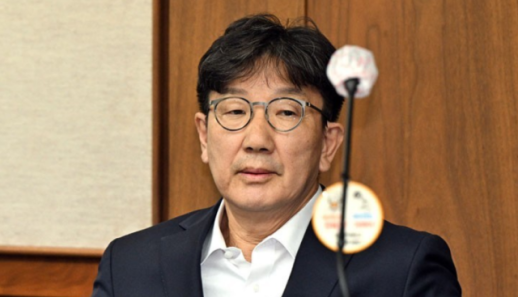 Court Upholds Rep. Kwon Seong-dong’s 2-Year Sentence for Illegal Political Funds A South Korean appeals court on Monday upheld a two-year prison sentence for People Power Party lawmaker Kwon Seong-dong for taking illegal political funds from figures linked to the Unification Church. The court rejected appeals by both Kwon and the special prosecutor, leaving the lower court ruling intact. The Seoul High Court’s Criminal Division 2-1 maintained the original sentence of two years in prison and forfeiture of 100 million won for violating the Political Funds Act. Kwon was indicted and detained on charges that in January 2022, ahead of the 20th presidential election, he received 100 million won from Yoon Young-ho, a former global headquarters chief of the Unification Church, along with requests for support for the group. The trial court found all charges proven and imposed the two-year term and forfeiture. In the appeal, the special prosecutor sought a four-year sentence. On the key dispute over admissibility, the appeals court said it was difficult to view the collection and use of evidence as illegal, rejecting the defense claim. It also dismissed the argument that derivative evidence based on illegally obtained material should be excluded, saying it could be used to prove the charges. The court also agreed with the first ruling on the credibility of Yoon’s statements, saying it was hard to conclude he made false claims to frame Kwon. Citing KakaoTalk messages and the political circumstances at the time, the court said Kwon’s influence continued. Even if he resigned from an election committee post, the court said it was a temporary step to ease internal party conflict and that the church side still approached him on the premise of his political clout. The court interpreted references in the chats to “Yongsan” as pointing to Yoon Suk Yeol, considering the situation surrounding the relocation of the presidential office at the time. In sentencing, the court strongly criticized the nature of the offense. It said receiving political funds can go beyond support for political activity and become a means for a specific religious group to gain access to state power, adding that entanglement between politics and religion can threaten the principle of separation of church and state and undermine core democratic values. The court said Kwon, a five-term lawmaker and prominent politician with constitutional responsibilities, accepted illegal funds, making the crime serious. It noted mitigating factors, including his long public service and lack of a criminal record, but concluded the original sentence was appropriate within the court’s discretion. Kwon has denied the allegations, saying he met for a meal but did not take money. He also argued key evidence was illegally obtained and that the case was not within the special prosecutor’s mandate, but the appeals court did not accept those claims. Yoon, who was also tried in the case, was sentenced the previous day in his own appeal to 18 months in prison. * This article has been translated by AI. 2026-04-28 13:18:23
 -
 South Korea to Expand Employment Retention Subsidies Nationwide, Speed Wage Recovery The government will expand the scope of employment retention subsidies from designated regions and industries to the entire country when nationwide employment conditions sharply deteriorate. It will also curb support for employers with repeated wage arrears and move faster to collect repayments tied to unpaid wages. The Ministry of Employment and Labor said April 28 that the Cabinet reviewed and approved amendments to the enforcement decrees of the Employment Insurance Act and the Wage Claim Guarantee Act. Until now, expanded employment retention subsidies have been limited to special employment support industries and employment crisis areas. The revised decree allows broader support even when job conditions worsen markedly nationwide. Eligibility requirements for the subsidy, previously set differently by type such as temporary shutdowns or leave, will be unified under a single standard: measures in which workers do not provide labor. The ministry said the change is intended to simplify complex application rules and improve understanding and use in the field. The government will also restrict access to programs under the Employment Insurance Act — including employment promotion and employment stability subsidies — for employers deemed habitual wage delinquents. The ministry said amendments to the Labor Standards Act created a legal basis to limit government subsidies and support for such employers, a step expected to encourage payment of overdue wages and reduce harm to workers. When the state pays workers unpaid wages on an employer’s behalf, it will collect the repayment using procedures for delinquent national taxes. Previously, collections followed civil enforcement, but critics said the process took a long time until a court ruling and lacked coercive power, leaving the cumulative recovery rate at 30%. Labor authorities said the change will allow compulsory collection without a final court judgment, sharply shortening recovery time and improving the recovery rate. The ministry said it expects the measure to heighten employers’ awareness of their ultimate responsibility for wage arrears and help operate the advance payment system more stably.* This article has been translated by AI. 2026-04-28 13:15:27
 -
 Seoul to Open One-Stop Center to Help International Students Find Jobs and Settle Seoul is shifting policy to move foreign students from “potential talent” to long-term residents, aiming to link study with employment and settlement rather than simply increasing arrivals. The city said April 28 it will open the Seoul Global International Student Support Center in the Sinchon university district and begin full operations in May. The center is designed as a one-stop platform offering integrated help with jobs, startups and daily life, positioning Seoul as a hub where global talent gathers and stays. The move responds to a surge in international students. Over the past decade, the number of foreign students in South Korea rose from about 90,000 to 250,000, but officials and others have said pathways to jobs and long-term settlement remain weak. A survey found 65.5% of international students want to remain in South Korea, while only 13.8% end up employed. To close what the city called a gap between “inflow” and “settlement,” Seoul plans an integrated model connecting education → employment → settlement, with the new center serving as the main base for delivering services. The center includes counseling space, a shared office, classrooms and community facilities. It will provide job support, startup support, visa and residency counseling, and help with adapting to life in Seoul. The city remodeled an existing youth startup facility, shifting its function to meet changing policy demand. Employment links are a major focus. Programs include training for trade marketers, business Korean courses and on-site work-experience programs. The center will also provide foreigner hiring information, resume and interview consulting, and “career fairs” aimed at connecting students to jobs. Support for stable settlement will run in parallel. A “30 days around Seoul” program will offer cultural and company experiences, while TOPIK preparation classes and Korean-language meetups will help students adjust. The center will also provide information on visas, housing and daily life and support community activities to encourage local integration. Seoul said it will expand the support system with universities and related organizations, including job programs linked with the Korea SMEs and Startups Agency, and will develop demand-based policies through communication with university international offices and international student associations. Lee Young-mi, head of Seoul’s foreign residents and immigration office, said international students are “already proven global talent.” She said the city will build “systematic support that leads to employment and long-term settlement” to make Seoul a place where global talent gathers and remains. 2026-04-28 12:42:17