
Journalist

Lim, Kwu Jin
-
 Korea to Tighten Oversight of Green Claims in Online Platform Ads With Industry Training The Ministry of Climate, Energy and Environment and the Fair Trade Commission will provide training to strengthen oversight of environmental labels and advertising in the online retail market, aiming to improve the credibility of green claims. The ministry and the FTC said on April 28 they will hold an “environmental labeling and advertising” training session on April 29 at the Korea Environmental Industry & Technology Institute auditorium in Eunpyeong-gu, Seoul, for major mail-order brokerage operators and sellers on online distribution platforms. As green consumption spreads and interest in eco-friendly values grows, labels and ads highlighting the environmental benefits of products and services have increased rapidly. In online platform sales involving many sellers, the accuracy and consistency of environmental information has become a key factor affecting consumer trust and market integrity. Environmental labeling and advertising are overseen by the climate ministry under the Environmental Technology and Environmental Industry Support Act and by the FTC under the Act on Fair Labeling and Advertising. Industry has called for clearer, more unified guidance on how the rules are interpreted and how investigations are conducted. The training was designed to meet that demand by improving companies’ understanding of the system and strengthening practical compliance capabilities. The Korea Environmental Industry & Technology Institute and the Korea Online Shopping Association will run the program. The agenda includes trends and key issues in the mail-order brokerage system, an overview of environmental labeling and advertising rules, major review cases under the labeling and advertising law, and guidance on proper environmental claims. To allow participation by sellers nationwide, the session will be offered both in person and via live online streaming. The two agencies also plan to prepare and distribute a joint guideline on environmental labeling and advertising by the end of the year. The guide is intended to provide integrated direction on the standards used by both agencies, support companies’ understanding and compliance, reduce unfair green claims, and strengthen consumer protection and market trust. Jeong Seon-hwa, the climate ministry’s director general for green transition policy, said, “We hope this training helps companies accurately understand the environmental labeling and advertising system and use it properly,” adding that the agencies will continue working together to improve consistency and effectiveness in oversight. Information Reum, director general of the FTC’s Consumer Policy Bureau, said the session was arranged so companies do not face difficulties from legal and institutional uncertainty as they pursue “environmental management.” She said the government plans to strengthen monitoring while improving rules on environmental labels and advertising that are closely tied to people’s everyday consumption. * This article has been translated by AI. 2026-04-28 12:05:23
 -
 South Korea Renames ‘Job Basic Skills’ as ‘Job Common Skills,’ Cuts Framework to Seven Areas The Ministry of Employment and Labor and the Human Resources Development Service of Korea said on 28일 they will rename “job basic skills” as “job common skills” and overhaul the framework into seven areas. The ministry described job common skills as core competencies all workers need regardless of occupation, such as communication, numeracy and problem-solving. The broader system consists of three parts: job-specific skills under the National Competency Standards (NCS), job common skills and general foundational competencies. NCS and job common skills are used as key indicators for human resources development. Introduced in 2003, the framework has not been revised for more than 20 years, prompting calls to update it. The government said it will pursue a major restructuring after gathering feedback from workplaces. The ministry said the name change is intended to avoid the misunderstanding that the framework measures only basic academic ability and to clarify that it covers universal competencies required of all workers. The existing structure of 10 areas and 34 sub-skills will be reorganized into seven areas and 21 sub-skills. Items seen as less useful amid labor market changes will be eliminated, while new areas will be added, including artificial intelligence use, digital responsibility and industrial safety and health awareness. The seven areas are communication, numeracy, problem-solving, self-management, interpersonal skills, digital skills and work ethics. Sub-skills include: communication (written, oral and foreign-language communication); numeracy (calculation, use of statistics and use of charts); problem-solving (problem analysis, identifying alternatives and decision-making); self-management (career development, adaptive learning and time management); interpersonal skills (collaboration, leadership and conflict management); digital skills (digital use, AI use and digital responsibility); and work ethics (work ethic, workplace community awareness and industrial safety and health awareness). The ministry said it will also expand field-oriented learning content. It plans to produce and distribute instructor guides and learner workbooks within the year, reflecting demand for practical materials. It will also develop video lectures to allow learning regardless of time and place and release them through the Korea University of Technology and Education’s STEP portal. “In the AI era, companies want talent with job common skills that can flexibly adapt to rapidly changing technology and see essential problems through to the end,” said Pyeon Do-in, director general for job skills policy at the ministry. He said the government will quickly distribute the revised standards and related content and “fully support” job seekers so they can strengthen fundamentals and remain competitive in the workplace.* This article has been translated by AI. 2026-04-28 12:04:17
 -
 South Korea to Pay ‘Fair Allowance’ to Short-Term Public Workers, Ban Sub-1-Year Contracts The government will introduce a new “fair allowance” for short-term fixed-term workers in the public sector after a survey found that about half of such workers were hired on contracts of less than one year. The plan also calls for, in principle, banning fixed-term contracts shorter than one year and tightening rules to prevent abuse of ultra-short-hour workers. The Ministry of Employment and Labor reported the measures at a Cabinet meeting on the 28th as part of a “public-sector nonregular worker treatment improvement plan.” The ministry said it had confirmed unfair practices such as repeated sub-one-year contracts used to avoid paying severance, along with concerns over low pay and allowances. After launching a joint interagency task force on nonregular workers late last year, the government surveyed about 2,100 public entities — including central government agencies, public institutions and local governments — on contracts and wages. The survey found about 146,000 fixed-term workers in the public sector, including 73,000 on contracts shorter than one year. Workers on sub-one-year contracts earned less than fixed-term workers overall, and they were less likely than regular employees to receive welfare points, meal allowances and holiday bonuses. Wage gaps also varied by institution. As a “model employer,” the government said it would pay fair compensation to reflect labor value and job insecurity. Under the plan, public institutions will pay a flat “fair allowance” equal to 10% to 8.5% of a base amount to fixed-term workers employed for less than one year. The base amount is set at 118% of the minimum wage, reflecting the average living wage. The plan applies higher compensation rates for shorter contracts. Based on next year’s 기준, payments would be 382,000 won for 1-2 months of work; 846,000 won for 3-4 months; 1.26 million won for 5-6 months; 1.622 million won for 7-8 months; 2.055 million won for 9-10 months; and 2.488 million won for 11-12 months. To narrow wage gaps within the public sector, the government will also pay an “appropriate wage” and include a one-time budget item in next year’s budget proposal so workers whose monthly fixed pay falls below that level can receive support. The appropriate wage is also set at 118% of the minimum wage. A ministry official said using the average living wage set by local ordinances would have the effect of partially raising and leveling pay for low-wage workers. The ministry said it will also review and gradually improve benefits and allowances, including meal costs, welfare points and holiday bonuses. To establish fair hiring practices, the plan would, in principle, prohibit contracts shorter than one year. Exceptions would require a prior screening process for public-sector nonregular hiring, and the government plans to require outside members on screening committees to strengthen the system. For work that is routine and ongoing, the government said workers should be hired as regular employees. It will also provide guidance to institutions that have not made conversion decisions under the 2017 regularization guidelines. As of this month, 52 public institutions had not made such decisions. To curb misuse of ultra-short-hour fixed-term workers — those working fewer than 15 hours a week — the government will restrict such hiring. Where unavoidable, employers must undergo a necessity review and meet conditions such as additional proportional payments, including weekly holiday pay, to prevent hiring for cost-cutting purposes. The government will conduct regular surveys to track employment and wage conditions for nonregular workers in the public sector. If unfair practices are found during surveys — such as 364-day contracts aimed at avoiding severance — it will guide institutions to guarantee a one-year contract. To ensure implementation, the government will strengthen nonregular employment indicators in management evaluations of public institutions and local public enterprises. A ministry official said detailed evaluation items and indicators will be prepared based on the results of an ongoing research project. The government also plans to draft and expand a tentative “guideline for improving treatment of nonregular workers.” With a committee for public-service workers set to be established starting in September this year, further discussions on public-sector treatment improvements will be handled through that body. Labor Minister Kim Young-hoon said the public sector should take the lead in correcting unfair hiring practices affecting nonregular workers and set an example through reasonable improvements in treatment. He said the government would work to ensure the public sector’s progress spreads to the private sector so all working people are respected and treated in line with the value of their labor.* This article has been translated by AI. 2026-04-28 12:03:18
 -
 Jipyeong Soju expands offline retail reach with Lotte Mart listing SEOUL, April 28 (AJP) - Jipyeong announced that its premium distilled spirit Jipyeong Soju has secured shelf space at Lotte Mart, expanding its offline retail footprint after an earlier listing at E-Mart. Unlike conventional rice-distilled spirits, the company explained that Jipyeong Soju blends three grains — rice, barley and sorghum — in what is described as an optimized ratio, yielding a layered flavor profile that balances the spice of sorghum, the nuttiness of barley and the clean finish of rice. The product has drawn strong interest among younger consumers, the company said, particularly for use in highballs — a cocktail format gaining traction in South Korea. "Through our entry into Lotte Mart, more consumers will be able to experience the depth of flavor that sets Jipy eong Soju apart," said a company spokesperson, adding that the brand aims to establish itself as one of the top three players in the domestic premium distilled spirits segment. 2026-04-28 12:01:05
 -
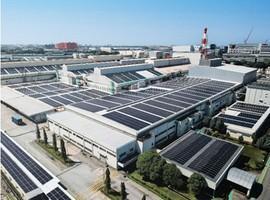 Nippon Electric Glass Installs Large Rooftop Solar System at Malaysia Site Nippon Electric Glass said April 27 that it installed a solar power system on the rooftop of a building at its subsidiary Nippon Electric Glass in Selangor state, Malaysia, and began operating it March 17. It is the subsidiary’s first solar installation, with a maximum output of 7.6 megawatts-peak (MWp). All electricity generated will be used on-site, and the company expects it to cut carbon dioxide (CO2) emissions by 6,900 tons a year. Local solar company Samaiden Group participated as a partner, handling design and construction of the facility, the company said. In 2024, Nippon Electric Glass signed a virtual power purchase agreement, or VPPA, with LSS Hijau, a special-purpose company established by Malaysian renewable power developer Ditrolic Energy. The company said the new rooftop system is expected to further accelerate its use of renewable energy.* This article has been translated by AI. 2026-04-28 12:00:12
 -
 Cho Eung-cheon Announces Run for Gyeonggi Governor as Reform Party Candidate Cho Eung-cheon, a former Reform Party lawmaker, announced on April 28 that he will run for governor of Gyeonggi Province, urging voters to “put down the wrong answer sheets of bad and strange candidates” and choose him as a “good candidate.” Speaking at a news conference at the National Assembly, Cho said he has lived by “principles and conviction.” He criticized eight years of Democratic Party leadership in the province, from Lee Jae-myung to Kim Dong-yeon, asking what had changed for residents. Cho noted the population rose by 1 million, from 13 million to 14 million, and the province’s main budget expanded from 20 trillion won to 40 trillion won, more than doubling, but questioned how much residents’ lives improved. Cho said the Democratic Party now treats Gyeonggi residents like “fish already caught,” and took aim at Democratic Party candidate Choo Mi-ae, saying it was arrogant to nominate someone with no ties to the province who had not lived there and had focused on political fights in the National Assembly. He also criticized the People Power Party, saying its “bullying politics” of using Gyeonggi as a sacrifice for personal political advancement must end. He said the party still had the race vacant because no senior figure stepped forward despite encouragement and it failed to find a competitive candidate even after additional recruitment. “The two major parties have taken away Gyeonggi residents’ right to choose,” Cho said, adding, “Gyeonggi needs administration, not politics. What matters is competence and experience, not a party label.” Cho called the long-standing gap in living conditions between southern and northern Gyeonggi a key challenge. He said the southern belt should be further strengthened as a foundation for South Korea’s growth and innovation, and that the results should be shared more evenly with northern Gyeonggi and the country as a whole. He pledged a denser, more rational transportation network for residents who moved from Seoul to Gyeonggi, and said new momentum is needed for first-generation new towns where 300,000 households in Bundang, Ilsan, Pyeongchon, Sanbon and Jungdong are aging at the same time. Cho also said he is the only candidate who can fight “with conviction and professional capability” against the ruling party’s push to move a semiconductor industrial complex to what he called an uncompetitive, remote area. Cho pointed to Hwaseong’s Dongtan, saying residents showed in the last general election that they can make a better choice by electing Rep. Lee Jun-seok. “Now it’s time to make the Dongtan miracle happen across all of Gyeonggi,” he said, calling for a political upset. Asked about the possibility of a conservative alliance with the People Power Party, Cho said his party has no reason to unify candidacies, but added, “If a proposal comes, we’ll listen.” * This article has been translated by AI. 2026-04-28 11:54:51
 -
 Ruling, Opposition Parties Clash Over Claim Witness Met Committee Chair Before Hearing Rival parties clashed April 28 at the National Assembly over allegations that Kim Seong-tae, a former Ssangbangwool chairman testifying as a witness, entered committee Chair Seo Yeong-gyo’s office before the hearing. Rep. Kim Hyeong-dong, floor secretary for the People Power Party, asked during the special committee’s comprehensive hearing that officials confirm whether Kim entered the chair’s office before 10 a.m., before proceedings began. If the witness met the chair in advance, Kim said, the testimony “could have been tainted.” Fellow PPP lawmakers Kwak Gyu-taek and Shin Dong-wook said the matter could be settled by checking CCTV footage. Seo denied the claim, saying Kim had not entered her office and calling it “nonsense.” Democratic Party lawmaker Park Sun-won said that when he entered Seo’s office at 9:18 a.m., no one was there except Rep. Cha Gyu-geun of the Rebuilding Korea Party. Cha also said he was the first to enter and that Park arrived a minute later. Kim said he did not know whether the place was the chair’s office, but said he had gone somewhere to drink a cup of water from a purifier. He added that he saw Seo for the first time at the hearing. Kim declined to answer most questions, saying he could not speak because he is on trial, but he acknowledged coercive investigations by prosecutors. On the case involving alleged remittances to North Korea, he said he is acquainted with former Gyeonggi Province peace vice governor Lee Hwa-young but “doesn’t even know” President Lee Jae-myung. Later, PPP lawmaker Na Kyung-won pressed Kim, saying that if a future special prosecutor is appointed, prosecutors could drop charges against President Lee while also holding Kim responsible for illegal gambling. Kim replied that he is already on trial on 28 charges and said, “If there’s more to do, they’ll do it.” 2026-04-28 11:51:21
 -
 India’s Prasada Urges Skoda Auto to Expand Investment in Indian Auto Sector India’s Minister of State for Commerce and Industry Prasada met with executives of Czech automaker Skoda Auto and urged the company to expand investment in India’s automotive industry, PTI reported on the 23rd. Prasada held the talks while on an official visit to the Czech Republic from the 22nd to the 23rd. Skoda’s vehicle sales in India in January-March rose 17% from a year earlier to 20,028 units. During his stay, Prasada also visited leading local companies in automobiles, transport equipment and advanced engineering.* This article has been translated by AI. 2026-04-28 11:49:00
 -
 South Korea Envoy Says North Korea Nuclear Issue Is Top Challenge to NPT Jeong Yeon-du, South Korea’s senior representative for North Korea nuclear diplomacy, reaffirmed the government’s goal of the “complete denuclearization of the Korean Peninsula” and stressed the urgency of resolving the North’s nuclear issue at a meeting of the Nuclear Non-Proliferation Treaty, the Foreign Ministry said. In a keynote address on April 27 (local time) at the 11th NPT Review Conference in New York, Jeong, director-general of the ministry’s Foreign Strategy and Information Bureau, said North Korea is “the only case” to have benefited from the NPT system, then declared its withdrawal and openly continued developing nuclear weapons. He called it “the most urgent challenge” to the nonproliferation regime. Jeong said all countries seeking to uphold the NPT must send a clear message that returning to the treaty is the only path that can guarantee security and prosperity. He also urged Russia to halt what he described as illegal military cooperation with North Korea. The ministry said Jeong outlined Seoul’s plan to pursue a phased denuclearization process moving from suspension to reduction and then dismantlement. Jeong said today’s unstable international security environment is undermining the NPT’s credibility and effectiveness, and proposed that nuclear-armed states engage in dialogue to increase transparency and build mutual trust. * This article has been translated by AI. 2026-04-28 11:48:17
 -
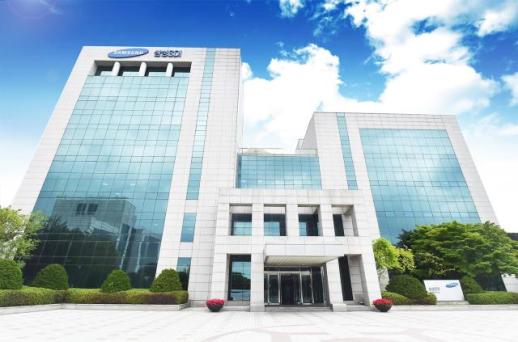 Samsung SDI narrows Q1 loss, eyes profit turnaround in H2 SEOUL, April 28 (AJP) - Samsung SDI reported an operating loss of 155.6 billion won ($105.5 million) for the first quarter of 2026, sharply narrowing its deficit from 434.1 billion won a year earlier. The South Korean battery maker disclosed Tuesday in a regulatory filing that revenue climbed 12.6 percent year-on-year to 3.576 trillion won, while net profit swung to a positive 56.1 billion won. The battery segment, which accounts for the bulk of revenue at 3.354 trillion won, cut its operating loss by 61 percent as demand recovered across energy storage systems, power tools and battery backup units. The electronics materials unit posted an operating profit of 21 billion won on revenue of 222 billion won, buoyed by resilient semiconductor materials sales and a rebound in display materials demand. Samsung SDI said it secured a multi-year supply agreement with Mercedes-Benz during the quarter, completing its lineup of all three major German premium automakers as clients. The company also unveiled its first pouch-type all-solid-state battery sample developed for physical AI applications. "Uncertainty in the global business environment is expected to persist into the second quarter," said a Samsung SDI spokesperson. "We will execute our response strategies by segment and work to achieve a quarterly profit turnaround in the second half." The company said it expects upstream demand to continue recovering through the rest of the year, with ESS battery sales in the United States set to expand alongside growth in AI data center construction, while European EV demand is projected to improve on the back of broader subsidy programs. Shares of Samsung SDI traded at 688,000 won per stock on 11:40 a.m., 8.35 percent higher than a day ago. 2026-04-28 11:44:12