

Journalist

Lim Byung-sik
-
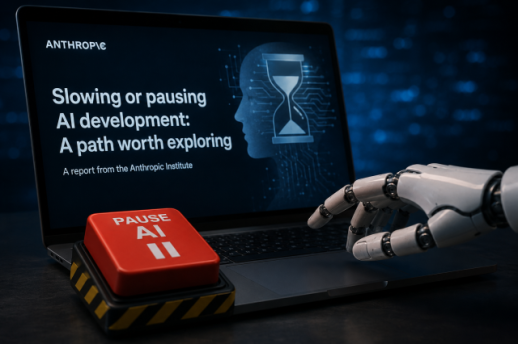 Anthropic Calls for Slowing AI Development Amid Recursive Self-Improvement Concerns Anthropic has urged leading global artificial intelligence (AI) developers to consider slowing or pausing their AI model development. The company argues that as AI becomes increasingly involved in the development of subsequent AI systems, managing risks could become more challenging, necessitating mechanisms to control the pace of development. In a blog post published on June 4, Anthropic stated, "The world should have the option to slow down or pause frontier AI development." The company's primary concern centers on the concept of "recursive self-improvement," where AI takes on a significant role in developing future AI systems, leading to stronger AI being utilized in the creation of the next generation of AI. Anthropic believes that while this could accelerate development, it may also reduce the time available to identify and manage risks. Anthropic explained that AI is already increasing the speed of development in the field. According to the company, its engineers are currently incorporating eight times more code per quarter compared to the average from 2021 to 2025. As of May, over 80% of the code merged into Anthropic's codebase was generated by its AI model, Claude. The company noted that it would be ineffective for only certain companies to halt their development. If one organization slows down, less cautious companies or countries could gain an advantage, potentially lowering overall safety. Anthropic emphasized that for any meaningful slowdown or pause to occur, major AI research institutions and companies across multiple countries must act under the same conditions. There must also be a way to verify whether development has indeed slowed and to establish the conditions under which a pause would begin and end. The biggest challenge lies in verification. AI training tasks are easy to conceal, and the equipment and data used for training are highly versatile. This creates a strong incentive for someone to continue development secretly to gain a technological edge. Through its research organization, the Anthropic Institute, the company plans to conduct studies to support a slowdown and pause framework. It aims to discuss the risks of recursive self-improvement and international coordination methods with policymakers, researchers, civil society, and other AI companies.* This article has been translated by AI. 2026-06-05 13:36:00
 -
 Oman Rejects U.S. Demand to Distance from Iran, Continues Hormuz Discussions Reports indicate that Oman has rejected U.S. pressure to distance itself from Iran. Amid escalating tensions between the U.S. and Iran regarding navigation issues in the Hormuz Strait, Oman has expressed its intention to maintain communication channels with Iran. According to The Guardian on June 4, Oman is resisting U.S. demands to cease its discussions with Iran. The Wall Street Journal (WSJ) previously reported that the U.S. is urging Oman to sever ties with Iran and align more closely with American interests. Citing U.S. and Arab officials, the WSJ noted that Washington has begun to view Oman's neutral stance as contrary to U.S. interests. The core issue revolves around navigation in the Hormuz Strait. Iran has been advocating for a management and toll system for passage through the strait, which the U.S. perceives as a threat to the freedom of navigation in international waters. The U.S. is concerned that Oman may cooperate with Iran's proposal. Oman has clarified that it does not support Iran's toll proposal. It stated that discussions with Iran are aimed at addressing future management of the Hormuz Strait within the framework of international law and the United Nations' International Maritime Organization (IMO). Oman has also reaffirmed its commitment to upholding the principle of free navigation in the strait. While maintaining security cooperation with the U.S., Oman has kept diplomatic channels open with Iran. It has served as a point of contact for both sides, even when direct dialogue between the U.S. and Iran has been challenging. This conflict highlights the growing diplomatic tensions surrounding the Hormuz Strait. While the U.S. demands that Oman distance itself from Iran, Oman remains committed to facilitating discussions on strait management and acting as a mediator between the U.S. and Iran.* This article has been translated by AI. 2026-06-05 13:27:00
 -
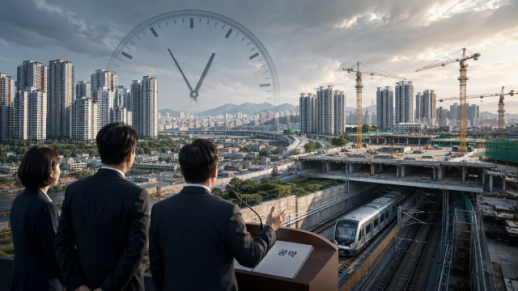 Will Elected Officials Keep Their Real Estate Promises? The real estate market is difficult to read, and securing a home is equally challenging. The government's policies are no exception. This is where the complexity of real estate begins. The June 3 local elections have concluded, with 16 metropolitan leaders elected. Changes in administration occurred in 13 regions, while only three—Seoul's Oh Se-hoon, Gyeongbuk's Lee Cheol-woo, and Gyeongnam's Park Wan-soo—will continue their current policies. Most elected officials will soon take office, but the transition teams are already at work. During their campaigns, promises were evaluated based on whether they were included in plans. Now that they are elected, the focus shifts to what they are doing to ensure those promises are incorporated. The real estate market operates on actions, not just promises. Unfulfilled Rail Promises; Efforts for Inclusion in Fifth Plan Have Begun The most urgent issue is rail development. Key projects proposed by elected officials are not included in the currently established Fourth National Rail Network Construction Plan. These include the new GTX-E, F, G, and H lines proposed by Gyeonggi's Choo Mi-ae, the BuTX and TRX connections to the new Gadeok Airport proposed by Busan's Jeon Jae-soo, and extensions of the CTX main line in the Chungcheong region, among others. Many of these projects are outside the Fourth Plan. For these lines to commence, they must be included in the forthcoming Fifth National Rail Network Construction Plan, which is expected to be outlined soon. The Ministry of Land, Infrastructure and Transport is currently assessing candidate routes through preliminary feasibility studies and demand forecasts, meaning the transition teams must act quickly. Without organizing feasibility studies and consulting with government departments, it will be difficult to get on the candidate list. The Fifth Plan will likely yield the fastest results in the first year of their terms. A prime example is the southeastern region. Elected officials Jeon Jae-soo from Busan and Kim Sang-wook from Ulsan are from the Democratic Party, while Park Wan-soo from Gyeongnam represents the People Power Party. Given the political divide, collaboration is not automatic. The Ulsan-Yangsan-Busan metropolitan railway, initiated under the previous administration, passed preliminary feasibility in July 2025, while the southeastern circular metropolitan railway (Jin-yeong to Ulsan Station) is currently undergoing feasibility studies. Jeon Jae-soo's BuTX and TRX proposals add to the mix. Conflicts may arise over routes, budgets, and priorities within the same southeastern region. Whether these three metropolitan areas cooperate or compete will determine the future of the southeastern mega-city rail network. 'No Tax Burden' Underground Development; Real Estate Projects Start Now The underground development follows a similar structure. Under the 'Integrated Development of Underground Railways Special Act' enacted in 2024, the first pilot projects in Busan, Daejeon, and Ansan were selected in February 2025. However, the comprehensive plan for underground development has yet to be announced. For additional segments promised by many elected officials in Seoul, Incheon, and Cheonan to move forward, they must first be included in the comprehensive plan. The changes citizens will feel in the next term are likely to be more about 'plan confirmation' rather than 'groundbreaking.' The goal for the first pilot project is set for 2030. The true nature of the SOC promises lies elsewhere. The structure of the underground rail projects promised by six elected officials is as follows: land contribution for railway sites → issuance of bonds by project implementers to finance construction costs → underground development and above-ground site preparation → high-density development above ground → repayment of bonds through development profits. This means costs will be covered not by taxes, but through sales and rental income from buildings and commercial spaces developed above ground. According to estimates from Seoul City, the project cost is 25.6 trillion won, while the above-ground development profit is projected at 31 trillion won. The development profit exceeds the project cost by 121%. If the development profit decreases by 20%, it will fall to 24.8 trillion won, which would be below the project cost. Estimating development profits is crucial for assessing project viability. The phrase 'no tax burden' implies a lower financial obligation, not the absence of costs. The real estate market must cover these costs. Elected officials will need to decide on changes to the floor area ratio and zoning for above-ground development, as well as the structure of contributions from project implementers. The essence of new airport projects is similar. Gyeongbuk Governor Lee Cheol-woo's TK New Airport, Daegu Mayor-elect Choo Kyung-ho's development of the former airport site, the relocation of Gwangju Airport, the Saemangeum Airport, and Busan's Gadeok New Airport all superficially appear to be transportation infrastructure projects. However, the core issue from a real estate perspective is the development of the former airport site and surrounding areas. How the relocated airport site will be utilized remains a key question. Supply Dwindles While Unsold Units Pile Up; Speed and Scale Will Determine Success The residential market facing elected officials is at the center of polarization. According to housing statistics from the Ministry of Land, Infrastructure and Transport for April 2026, housing permits in Seoul from January to April totaled 12,760, a 24% decrease from the previous year (16,787). Nationwide, completions dropped to 75,230, a 45.9% decline from the previous year (139,139). A decrease in permits now means fewer move-ins in two to three years. Completions have already halved. Meanwhile, of the 65,179 unsold units at the end of April, 47,881 (73%) were in provincial areas, and of the 29,504 completed but unsold units, 25,166 (85.3%) were also in provincial areas. A critical signal is that while unsold units in the metropolitan area decreased by 1,314 in April, they increased by 1,210 in provincial areas, indicating a deepening divide where new constructions are drying up in the metropolitan area while unsold homes accumulate in provincial regions. The first task for the new city and provincial administrations is clear. How will they prevent the cliff of permits and groundbreaking in the metropolitan area, and how will they address the growing unsold inventory in provincial areas? The solutions to these two issues are not the same. In the metropolitan area, accelerating the processing of permits for redevelopment projects, regulating sale prices, and revitalizing urban redevelopment projects are immediate strategies. Incheon Mayor-elect Park Chan-dae has promised urban projects like Camp Market mixed-use development and Dongincheon administrative center development, while Gyeonggi Governor-elect Choo Mi-ae's GTX and new town supply, along with Seoul Mayor Oh Se-hoon's push for faster redevelopment projects, should all respond to the permit cliff. Conversely, addressing unsold inventory is the priority in provincial areas. This requires activating rental programs for unsold units, adjusting sales timelines, urban renewal in provincial metropolitan areas, and reallocating supply to areas with confirmed demand. The first reality facing elected officials Jeon Jae-soo from Busan, Heo Tae-jung from Daejeon, and Kim Sang-wook from Ulsan is the unsold inventory that has already accumulated before their new promises. New housing models are one of the tools to address this issue. Oh Se-hoon's land lease apartments and support for non-apartment construction, Park Chan-dae's citizen REITs and Incheon-style social housing, Jeon Jae-soo's public SPC land lease, and Sejong Mayor-elect Cho Sang-ho's basic housing for youth are all part of the solution. However, if these models take 2-3 years to be implemented in a market already facing permit and unsold unit issues, they will not provide answers to the diagnosis. The restructuring of SH, LH, and urban corporation regulations, the establishment of funding, land acquisition, and the initiation of pilot projects must all begin concurrently from the transition team stage. The speed and scale of implementation will determine the market's fate. Models providing 1,000 to 2,000 units annually will fall short of addressing the declining move-in volume in Seoul.* This article has been translated by AI. 2026-06-05 13:24:00
 -
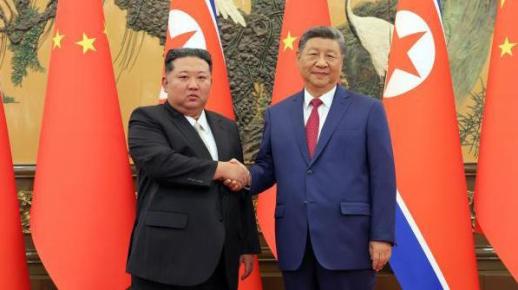 Xi Jinping to Visit North Korea for First Time in Seven Years Chinese President Xi Jinping will make a state visit to North Korea on June 8-9, marking his first trip to Pyongyang in seven years. This announcement comes shortly after North Korean leader Kim Jong Un unveiled a new nuclear material production facility, reaffirming his commitment to strengthening the country's nuclear capabilities. On June 4, North Korea revealed that Kim had inspected the newly operational nuclear material production plant. Photos released showed numerous centrifuges used for uranium enrichment. Kim claimed that the production capacity for nuclear materials has more than doubled compared to the past, reiterating his policy to expand the nuclear arsenal. The announcement of Xi's visit came just a day later from both China and North Korea. This will be Xi's second visit to Pyongyang since Kim took power. The two leaders are expected to discuss bilateral relations and the situation in Northeast Asia, coinciding with the 65th anniversary of the North Korea-China Friendship Treaty. The timing of Xi's visit is drawing significant international attention. While North Korea has been strengthening military cooperation with Russia in recent years, this summit signals China's renewed central role in addressing issues on the Korean Peninsula. Particularly noteworthy is Xi's visit occurring immediately after Kim's unveiling of nuclear facilities, which may serve as a litmus test for the level of strategic consensus between North Korea and China regarding nuclear issues. North Korea has consistently stated that it will not relinquish its status as a nuclear power. During this inspection, Kim declared his intention to qualitatively and quantitatively enhance the country's nuclear deterrent. This North Korea-China summit holds significance beyond mere diplomatic gestures. With nuclear facilities being showcased in Pyongyang and the Chinese leader visiting directly, there are growing speculations that the North Korea-China relationship is entering a phase of strategic closeness amid the most complex international order since the Cold War.* This article has been translated by AI. 2026-06-05 13:24:00
 -
 China Highlights North Korea Ties Ahead of Xi Jinping's Visit Chinese state media is emphasizing the friendly relations between China and North Korea ahead of President Xi Jinping's state visit to North Korea scheduled for June 8-9. On June 5, shortly after the International Liaison Department of the Communist Party of China announced Xi's itinerary, Xinhua News published an article and a one-minute video recalling Xi's first state visit to North Korea in 2019. The report highlighted Xi's metaphor of the China-North Korea relationship as a "towering tree," stating, "Despite the changes of time and fluctuations in the international situation, the friendship between China and North Korea remains strong and becomes even more solid over time." Xi also expressed a strong sense of kinship, saying, "Wherever I go, I feel that China and North Korea are one family." The People's Daily, the official newspaper of the Communist Party, shared the visit video on its official Weibo account, noting, "An unprecedented scene unfolded as hundreds of thousands of North Koreans took to the streets to welcome President Xi," which it described as a testament to the enduring friendship between the two nations. Comments on the post included phrases like "Long live China-North Korea friendship," and news of Xi's upcoming visit trended as the top search on Baidu, China's largest search engine, on the morning of June 5. The International Liaison Department announced that Xi would visit North Korea at the invitation of Kim Jong Un, Chairman of the Workers' Party of Korea and Supreme Leader of North Korea. Specific details of the visit have not been disclosed. This will be Xi's second visit to North Korea since taking office. He previously visited in June 2019 and last met Kim in September 2022 during a Victory Day celebration in Beijing. The choice of North Korea as Xi's first overseas destination this year is seen as highly symbolic. The visit comes just weeks after U.S. President Donald Trump and Russian President Vladimir Putin held talks in Beijing. The South China Morning Post reported that Xi's visit aims to showcase the strong ties between China and North Korea, noting that the two countries are cautiously restoring their relationship after a period of estrangement due to the COVID-19 pandemic, North Korea's dissatisfaction with China's stance on denuclearization, and concerns over expanding military cooperation between North Korea and Russia. This year marks the 65th anniversary of the China-North Korea Mutual Aid and Cooperation Treaty, and the two countries have been gradually resuming exchanges. In April, Wang Yi, a member of the Political Bureau of the Communist Party and Foreign Minister, visited North Korea, where Kim expressed his willingness to strengthen high-level exchanges and enhance strategic communication with China. Experts suggest that given the diplomatic significance of Xi's first overseas trip, this visit may carry a strategic message that goes beyond merely managing China-North Korea relations or mediating the resumption of U.S.-North Korea dialogue. The Singapore-based Lianhe Zaobao analyzed that through Xi's visit to North Korea following the recent visits by U.S. and Russian leaders, China aims to demonstrate its continued influence on the Korean Peninsula to neighboring countries, including the U.S., Russia, South Korea, and Japan. 2026-06-05 13:24:00
 -
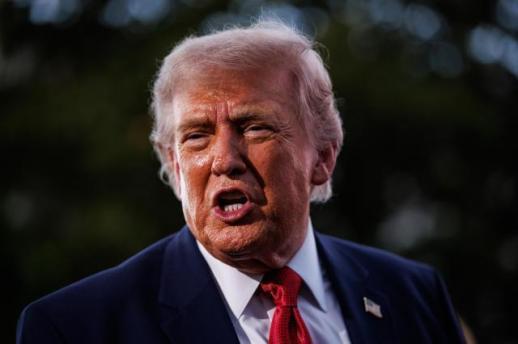 Trump Administration Considers Acquiring Stakes in AI Companies Like OpenAI The Trump administration is reportedly exploring the possibility of acquiring stakes in major artificial intelligence (AI) companies, including OpenAI. As these companies prepare for initial public offerings (IPOs), discussions are underway regarding how the government can share in the economic benefits of AI growth. On June 5, Reuters cited the U.S. internet outlet NOTUS, reporting that senior officials have engaged in preliminary discussions about the potential for government equity in key AI firms. The talks are still in the early stages, and Reuters noted it could not independently verify the report. The proposed structure involves AI companies voluntarily transferring shares to the government. Revenue generated from these shares would be used for public purposes or distributed to American households in the form of dividends. The Wall Street Journal also reported that U.S. officials are considering a plan for the federal government to hold stakes in major AI companies. This idea is said to have been proposed by OpenAI CEO Sam Altman to the administration last year and is currently under review. The discussions are taking place against the backdrop of AI companies moving toward public listings. OpenAI is preparing to submit confidential documents for an IPO, while Anthropic, the developer of Claude, has already filed confidential paperwork for a U.S. IPO. It remains uncertain whether the plan for government equity will materialize into actual policy. While there are advantages to channeling some of the profits from AI growth into the public sector, there are also concerns about the government assuming the volatility and business risks associated with specific tech companies.* This article has been translated by AI. 2026-06-05 13:18:00
 -
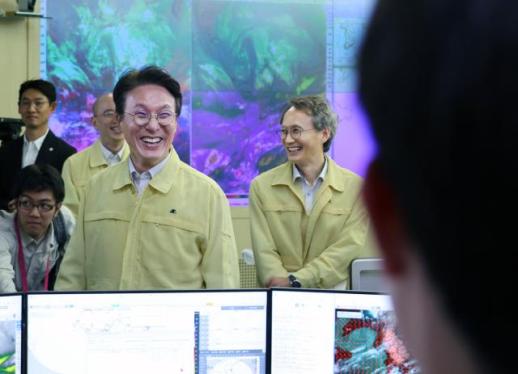 Prime Minister Kim Min-seok Calls for Investigation into Ballot Shortage Prime Minister Kim Min-seok addressed the shortage of ballots for the June 3 local elections on June 5, stating, "I have directed that all means, including investigations, be used to uncover the truth behind this situation, and those responsible will be held accountable."In a post on X (formerly Twitter), he described the ballot shortage as "an unacceptable incident and a serious challenge to K-Democracy."He emphasized, "If necessary, we must ensure thorough clarification and institutional improvements through a National Assembly investigation or a special prosecutor."* This article has been translated by AI. 2026-06-05 12:54:00
 -
 Homeplus Closes 37 Stores, Signaling Shift in Retail Landscape Homeplus has decided to close 37 stores nationwide, marking a significant restructuring for a company that once played a major role in South Korea's retail industry. The closures will affect over 3,500 employees, and the repercussions will extend to local economies and partner businesses. However, this situation should not be viewed solely as a crisis for Homeplus. The underlying issues are much deeper. The troubles facing Homeplus are indicative of a broader crisis in offline retail and symbolize the changes in industrial structures in the digital age. Homeplus has not collapsed; rather, the offline-centric retail model is under threat. Customers have shifted away from physical stores, and the market has moved online. Just two decades ago, hypermarkets were a symbol of consumer culture in South Korea. Families would visit these stores on weekends to buy groceries, browse electronics, dine, and watch movies. The competition was about securing larger spaces and better locations. However, consumer behavior has changed. People no longer drive to stores for shopping; instead, they can order products with just a few taps on their smartphones, with options for early morning, same-day, or instant delivery becoming commonplace. The focus of consumption has shifted from offline stores to online platforms. Leading this change is Coupang, followed by Naver Shopping, Kurly, AliExpress, and Temu. These companies have not just sold products; they have transformed consumer lifestyles by integrating logistics, data, platforms, and artificial intelligence. In contrast, traditional retailers have relied on large stores and real estate assets for growth. What was once a strength has now become a financial burden. While the market has evolved, their business models have remained stagnant, leading to the current crisis. Interpreting Homeplus's troubles solely as a management failure is misleading. The hypermarket sector has long faced restrictions such as mandatory closing days, limited operating hours, and site regulations. While these policies aimed to protect traditional markets, they have significantly altered the competitive landscape with online platforms. Offline retailers have been constrained by regulations while online businesses have thrived. The COVID-19 pandemic further accelerated the shift to online shopping, with consumers prioritizing delivery speed over store size. Ultimately, Homeplus is a result of these changes, not the cause. In the 1990s, traditional markets struggled against department stores, which later faced competition from hypermarkets in the 2000s. Now, hypermarkets are being outpaced by online platforms. This is a natural phenomenon in the shifting dynamics of the industry. This trend is not unique to South Korea. Globally, companies like Walmart, Tesco, and Carrefour once dominated retail, but now Amazon leads the market. What is unfortunate is that the costs of this transformation often fall on the most vulnerable. The thousands of employees affected by these closures are not responsible for the changes in the retail environment. They are the frontline workers who have supported the company by serving customers and stocking shelves. Yet, they bear the brunt of the corporate crisis. While voluntary retirement and employment stability support programs have been proposed, there are concerns about the actual implementation of these measures, given uncertainties surrounding funding and creditor support. Companies may struggle to adapt to market changes, but minimizing the social costs that arise during this process is their responsibility. Large corporations, in particular, must prioritize worker protection and community support during crises. Corporate social responsibility is not just about making donations during prosperous times; it is about how to protect employees in times of crisis. That said, it is not necessary to declare the end of the offline era. However, it is clear that survival will not be possible through past methods. Physical stores must evolve from mere sales spaces to places that offer experiences. Retail companies must also transition from being store-centric to leveraging data and platforms. Today, competitiveness is defined not by the number of stores but by customer data, not by the size of buildings but by the efficiency of logistics, and not by location but by technology. AI will further accelerate this change, enabling companies that analyze consumer preferences, predict inventory needs, and optimize logistics to gain a competitive edge. This serves as a warning for all industries, including manufacturing, finance, media, broadcasting, and education. Customers are constantly evolving, and technology is changing even faster. The issue lies not in market changes but in the speed of corporate responses. The fundamentals are customer focus, the principle is adaptability to change, and the common understanding is that only those companies preparing for the future will survive. The closure of 37 Homeplus stores is not merely a restructuring announcement; it is a signal of the transition from an offline-centered economy to a platform-centered economy. What we need now is not to lament the past but to prepare for the new era. This is the most significant lesson that Homeplus has imparted.* This article has been translated by AI. 2026-06-05 12:24:00
 -
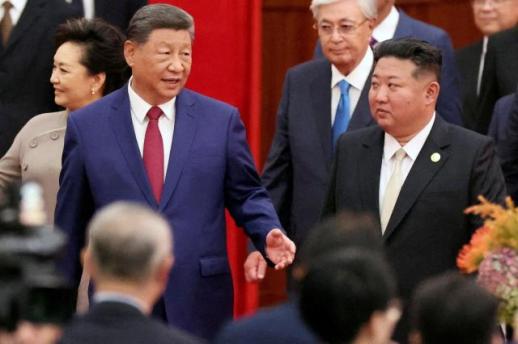 Xi Jinping's Visit to Pyongyang: North Korea's Nuclear Ambitions and Global Tensions On June 8, 2026, the world's attention will turn to Pyongyang as Chinese President Xi Jinping visits North Korean leader Kim Jong Un at his invitation. This marks Xi's first visit to North Korea in seven years, since 2019. On the surface, the summit aims to reaffirm the friendly relations between the two countries. However, the timing of this visit suggests deeper implications.North Korea has recently showcased its uranium enrichment facilities, signaling its intent to bolster its nuclear capabilities. Meanwhile, the United States continues to emphasize its commitment to complete denuclearization. The ongoing war between Russia and Ukraine has become protracted, and the Middle East remains mired in unstable ceasefires and military tensions. The U.S. and China are engaged in a strategic competition over AI, semiconductors, advanced industries, and military technology.Xi's visit to Pyongyang is not merely a bilateral summit; it symbolizes the current state of a shifting global order following the Ukraine war and highlights that the Korean Peninsula remains a central stage in international politics. Today, Pyongyang is not just a local issue; it has become a nexus of international relations connecting Washington, Beijing, Moscow, Tokyo, Seoul, and Brussels. The world is returning to an era dominated by geopolitics.Since the end of the Cold War, there was a belief that free trade and globalization would reduce conflicts between nations. It was thought that economic development would lead to fewer wars. However, the reality has proven otherwise. The war in Ukraine, which began in 2022, has fundamentally challenged this belief. Russia attempted to alter borders through military force, while the U.S. and Europe responded with extensive military aid and economic sanctions. The world is shifting back to a period dominated by power politics. The war is not merely a European issue; it has disrupted energy markets, caused grain prices to soar, and reshaped global supply chains. International financial markets now face new uncertainties. Most importantly, there has been a polarization in international politics, with a new strategic alliance forming around China and Russia, contrasted with the Western bloc led by the U.S. and Europe. While the divisions are not as stark as during the Cold War, it is clear that the world is once again moving based on strategy, security, national interests, and power. In this changing landscape, North Korea is also redefining its position.North Korea has long viewed nuclear weapons as a means of ensuring regime survival. Recent actions indicate that it seeks to establish nuclear weapons not just as a deterrent but as part of its national identity. North Korea is moving towards solidifying its status as a nuclear power, regardless of international recognition. However, the international community, including the U.S., South Korea, Japan, and the United Nations, does not recognize North Korea as an official nuclear state. Nonetheless, North Korea continues to enhance its nuclear capabilities to increase its bargaining power. Some international relations experts suggest that one reason for North Korea's strengthened cooperation with Russia is to elevate its international standing amid the Ukraine conflict. Particularly, North Korea may aim to highlight that it is no longer an isolated nation but strategically connected to major powers like Russia and China. While this does not guarantee recognition of its nuclear status, there is a plausible strategic calculation at play.For Kim Jong Un, this summit is not just a diplomatic event. North Korea faces the urgent challenge of economic recovery. International sanctions remain in place, and its industrial base is fragile. Therefore, economic cooperation with China is crucial for North Korea. China is North Korea's largest trading partner and essentially serves as its economic lifeline. Kim is likely to seek expanded economic cooperation and political support during this summit, while also sending a message to the international community that North Korea is not isolated. Managing stable relations with China, especially in the context of strengthening ties with Russia, is a key diplomatic objective for North Korea.Xi's calculations are also complex. China cannot afford to abandon North Korea, not merely for ideological reasons but for geopolitical ones. From China's perspective, North Korea serves as a strategic buffer directly adjacent to the U.S. alliance system. China does not desire rapid changes or chaos on the Korean Peninsula, nor does it want the collapse of the North Korean regime or excessive military provocations. Stability is what China seeks: a stable North Korea, a predictable Korean Peninsula, and a controllable state of tension are fundamental to China's strategy. Xi's visit to Pyongyang reflects these strategic objectives. Moreover, China is currently engaged in a comprehensive competition with the U.S. across various domains, including semiconductors, AI, batteries, electric vehicles, military technology, and space industries. In this context, the Korean Peninsula is a strategic space that China cannot afford to overlook.At the center of contemporary international politics is AI. While 20th-century international relations revolved around oil, 21st-century dynamics are increasingly centered on semiconductors and AI. The competition between the U.S. and China can ultimately be viewed as an AI competition. Military power, industrial competitiveness, and national strength are now determined by AI. South Korea possesses the world's leading memory semiconductor production capacity and stands at the core of the AI revolution's supply chain. Consequently, issues on the Korean Peninsula are no longer merely security concerns; they have evolved into complex matters intertwined with semiconductors, AI, supply chains, data centers, advanced manufacturing, and national strategies. This complexity explains why both China and the U.S. regard South Korea as a crucial partner.The Middle East adds another variable to this equation. The global economy remains heavily reliant on energy. Conflicts in the Middle East can lead to fluctuations in international oil prices, which in turn can destabilize the global economy. Just as the Ukraine war has impacted energy markets, the Middle East continues to pose risks to global economic stability. China is one of the world's largest energy importers, making stability in both the Middle East and Northeast Asia essential for its interests. This is why China does not want excessive tensions to escalate on the Korean Peninsula. Ultimately, the upcoming North Korea-China summit is interconnected with three significant international phenomena: the North Korean nuclear issue, the Ukraine war, and the Middle East crisis. While these may seem like separate events, they are all part of a larger process of restructuring the global order.South Korea also faces new challenges. It is no longer a peripheral player in international politics. As the world's 10th largest economy and a key player in the global semiconductor industry, South Korea has successfully achieved both democracy and industrialization. However, with increased power comes greater responsibility. The U.S.-South Korea alliance remains a cornerstone of South Korea's security, while China is one of its largest trading partners. Despite military tensions with North Korea, South Korea cannot afford to abandon peace. In this complex reality, South Korean diplomacy cannot simply lean toward one side. It must become a nation that is not forced to choose between great powers but one that is essential to them. This is the path South Korea must take today.Historically, the Korean Peninsula has experienced numerous crises but has also created new opportunities amid those challenges. The current world stands at another significant turning point. The AI revolution is transforming industrial structures, the Ukraine war is shaking the international order, and conflicts in the Middle East are altering energy landscapes. North Korea is enhancing its nuclear capabilities, China is expanding its strategic space, and the U.S. is restructuring its alliance network. All these changes are occurring simultaneously on the Korean Peninsula. Therefore, Xi Jinping's visit to Pyongyang is not merely a diplomatic engagement; it is a microcosm of a changing global order and a symbolic event that underscores the Korean Peninsula's continued significance in global strategy.We are witnessing a pivotal moment in history. History always poses the same question: Will we become a nation that is swayed between great powers, or will we become a nation that is indispensable to them? South Korea now faces an era where it must answer that question. The future of the Korean Peninsula will not be determined solely by geopolitics; rather, it will be shaped by how geopolitics is leveraged. The most significant lesson from the meeting between Xi Jinping and Kim Jong Un lies here. The world is once again in motion, and at the center of that movement stands the Korean Peninsula. The future of history will be written simultaneously in Pyongyang, Seoul, Beijing, and Washington. The crucial question is whether we will remain mere observers of history or become its protagonists. The Korean Peninsula is once again at the heart of history.* This article has been translated by AI. 2026-06-05 12:12:00
 -
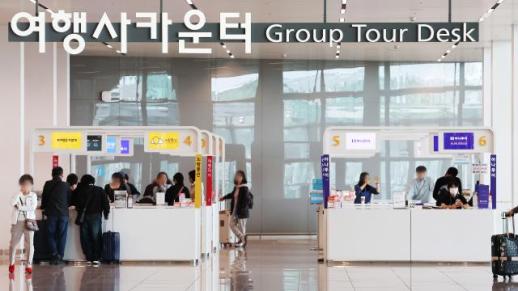 Overseas Card Spending Reaches $6.1 Billion, Surpassing $6 Billion for Two Consecutive Quarters In the first quarter of this year, domestic residents' overseas card spending exceeded $6 billion for the second consecutive quarter. According to the Bank of Korea's report on "Overseas Card Usage by Residents in the First Quarter," the total amount spent by domestic residents on overseas cards (credit, debit, and prepaid) was $6.1 billion. This figure is similar to the previous quarter's $6.11 billion but represents a 14.2% increase compared to the same period last year. A Bank of Korea official stated, "While the number of departing residents has increased, the decline in overseas direct purchases through online shopping has kept spending levels stable compared to the previous quarter." The amount spent on overseas direct purchases through online shopping decreased from $1.55 billion in the fourth quarter of last year to $1.35 billion in the first quarter of this year. In contrast, the number of domestic residents traveling abroad rose from 7.89 million in the fourth quarter of last year to 8.33 million in the first quarter of this year. By card type, credit card spending amounted to $4.1 billion, a 1.3% decrease from the previous quarter, while debit card spending increased by 2.4% to $200.3 million. The spending by non-residents using cards in South Korea was $3.57 billion, down 5.4% from the previous fourth quarter but up 30.2% compared to the same period last year. The number of foreign tourists visiting South Korea in the first quarter reached 4.76 million, the highest on record for that period, although their spending decreased.* This article has been translated by AI. 2026-06-05 12:03:00