

Journalist

Lim Byung-sik
-
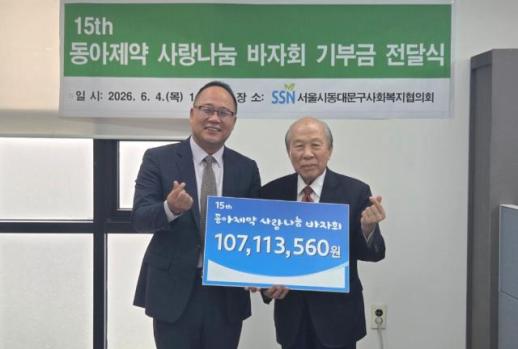 Dong-A Pharmaceutical Completes 15th Charity Bazaar, Donates All Proceeds Dong-A Pharmaceutical announced on June 5 that it donated 107 million won to the Dongdaemun District Social Welfare Council, which includes contributions from sponsors such as Seonghyun International, All For You, Dongmun Enterprise, Eve's Place, Rewind, and Gyeongdong Market, during the donation ceremony for its 15th Charity Bazaar held on June 4. The ceremony took place at the Dongdaemun District Social Welfare Council, attended by Baek Sang-hwan, President of Dong-A Pharmaceutical, and Kim Young-seob, Chairman of the council, among other officials. Launched in 2009, the Charity Bazaar has reached its 15th edition this year, accumulating approximately 1.7 billion won in donations. The proceeds will be used to support low-income and marginalized communities through emergency living expenses, scholarships, and heating and cooling supplies. Dong-A Pharmaceutical continues its commitment to social responsibility under the principle of fulfilling its corporate duties in accordance with social justice. A company representative stated, "The donations will be used to support marginalized and low-income individuals, and Dong-A Pharmaceutical plans to contribute to the spread of a culture of giving through ongoing social contribution activities."* This article has been translated by AI. 2026-06-05 15:54:00
 -
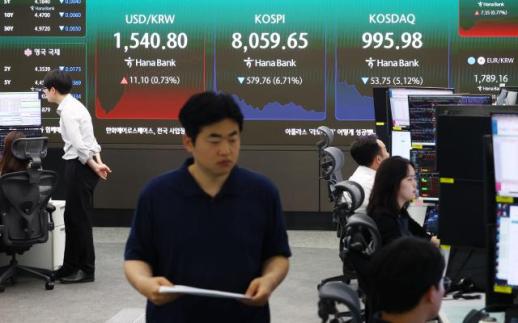 KOSPI Plummets 5.5% Amid Broadcom Shock, KOSDAQ Falls Below 1000 South Korea's stock market fell sharply on June 5, driven by a decline in U.S. semiconductor stocks and foreign selling. The KOSPI dropped over 5%, while the KOSDAQ fell below the 1000 mark for the first time in three months, sliding into the 900s. According to the Korea Exchange, the KOSPI closed at 8,160.59, down 478.82 points (-5.54%) from the previous trading day. The index opened at 8,323.20, down 316.21 points (-3.66%), and further widened its losses. A sell-side circuit breaker was activated at 9:08:25 AM due to a sharp decline in the KOSPI 200 futures index, halting sell orders for five minutes. The decline was primarily driven by selling from foreign and institutional investors. In the main stock market, foreign and institutional investors sold a net 35.39 trillion won and 9.39 trillion won, respectively, while individual investors bought a net 39.44 trillion won. Most of the top market capitalization stocks also showed weakness. Samsung Electronics fell 6.69%, SK Hynix dropped 10.53%, SK Square declined 7.71%, Hyundai Motor slipped 0.14%, LG Energy Solution decreased 1.90%, Samsung Life fell 5.59%, and Samsung C&T plummeted 14.02%. However, Samsung Electro-Mechanics rose 2.56%, and HD Hyundai Heavy Industries gained 2.15%. The KOSDAQ also experienced a significant decline, closing at 1,002.44, down 47.29 points (-4.50%) from the previous day. During trading, it fell as low as 992.80, down 56.93 points (-5.42%), breaking below the 1000 mark for the first time since March 4. Although buying interest emerged, the index closed just above the 1000 level. In the KOSDAQ market, foreign investors led the decline with a net sell of 178.1 billion won, while individual and institutional investors bought a net 33.9 billion won and 144.8 billion won, respectively. Most of the top KOSDAQ stocks also saw declines. Alteogen fell 4.18%, EcoPro BM dropped 8.56%, EcoPro decreased 7.84%, Rainbow Robotics slipped 6.72%, Juseong Engineering plummeted 16.17%, Kolon TissueGene fell 9.41%, Rino Technology dropped 5.72%, Samchundang Pharmaceutical decreased 5.82%, and HLB fell 3.81%. In contrast, Wonik IPS rose 4.17%. The sharp decline in the stock market is attributed to a correction in U.S. semiconductor stocks. On the previous night, shares of Broadcom fell 12.59%, Micron Technology dropped 7.74%, SanDisk declined 3.92%, and Western Digital fell 3.13%. Lee Kyung-min, a researcher at Daishin Securities, noted, "Broadcom provided third-quarter AI revenue guidance of $16 billion, falling short of the expected $17.2 billion. This disappointing guidance has dampened investor sentiment in the semiconductor sector, leading to profit-taking in domestic semiconductor stocks and an overall decline."* This article has been translated by AI. 2026-06-05 15:51:00
 -
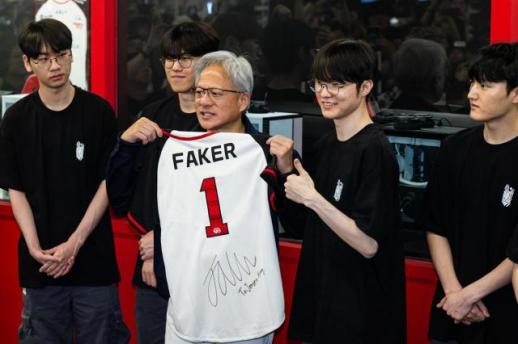 NVIDIA CEO Jensen Huang Praises Korean Esports After Meeting Faker Jensen Huang, CEO of NVIDIA, visited South Korea for the first time in seven months and began his official schedule by meeting pro gamer Faker, also known as Lee Sang-hyeok, showcasing his affection for Korean gaming culture and the esports industry. According to Yonhap News, on June 5, Huang visited T1's esports PC cafe, T1 Base Camp, located near Hongdae in Mapo-gu, Seoul, where he met with Faker and the T1 team. T1 is a leading esports organization in South Korea, known for its association with the globally recognized League of Legends star, Faker. During the meeting, Huang stated, "Gaming was the starting point for NVIDIA," and added, "South Korea is the optimal market for esports." He noted that Korean gamers choose the best graphics processing units (GPUs) to secure victories, which he identified as NVIDIA GPUs. Huang also referred to South Korea as the birthplace of esports, expressing, "I am also a fan of you (T1)." He had previously mentioned Faker during a public event in South Korea last year, demonstrating his admiration. After conversing with Faker, Huang gifted him a signed GeForce RTX 5090 graphics card. He also engaged warmly with fans present, shaking hands and posing for photos. Business circles are noting Huang's choice to visit the esports scene first, rather than meeting with major corporate leaders or semiconductor factories immediately after arriving in South Korea. This move is interpreted as a symbolic gesture, highlighting that while NVIDIA is currently a dominant player in the AI semiconductor market, its roots lie in the PC gaming sector. Upon his arrival, Huang emphasized the importance of collaboration with South Korea, stating, "Core semiconductor production will become even more critical in the future," and pledged to strengthen partnerships with South Korean semiconductor companies. During his visit, Huang is scheduled to meet with key figures from major companies such as Samsung Electronics, SK Hynix, Hyundai Motor Group, LG, and Naver to discuss cooperation on AI semiconductors, high-bandwidth memory (HBM), and AI infrastructure. This meeting with Faker symbolizes both NVIDIA's origins and its future as the company evolves from gaming into a leader in the AI era.* This article has been translated by AI. 2026-06-05 15:51:00
 -
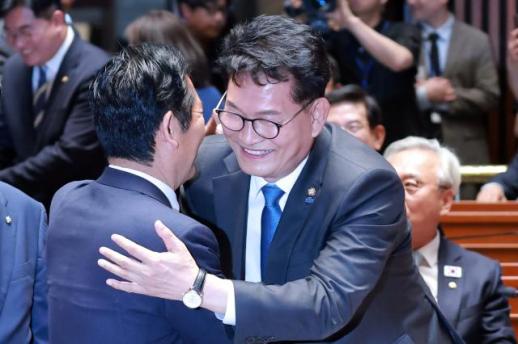 Newly Elected Lawmakers Vow to Serve the Public Following their victories in the recent by-elections, newly elected lawmakers from the Democratic Party, including Song Young-gil, Kim Nam-jun, and Kim Nam-kook, expressed their commitment to finding ways to serve the public. Song, who won in Incheon Yeonsu-gap, spoke to reporters after a party meeting on June 5, stating, "During the four years I was away from the National Assembly, I felt the pain and injustices faced by many ordinary citizens. This experience will serve as a valuable asset in my legislative work. As I have emphasized before, I will engage in politics that alleviates the tears of the people." He also noted the importance of securing the support of younger voters, saying, "If we do not win their hearts, there is no future for our Democratic Party. We need a turning point to regain the support of those in their 20s and 30s who are drifting away from us." Kim Ui-gyeom, representing Jeonbuk Gunsan-Gimje-Buan-gap, remarked, "This is a moment to start anew after the tumultuous period under the Yoon Suk-yeol administration. I will work calmly and productively. With new opportunities arising in Saemangeum, I hope to successfully attract investments from companies like Hyundai Motor." Kim Nam-kook, from Gyeonggi Ansan-gap, stated, "I will find a role within the party and engage in legislative activities for the benefit of the public." Notably, Kim Nam-kook congratulated Han Dong-hoon, an independent lawmaker with whom he had previously clashed over cryptocurrency trading allegations in 2023. When asked if he planned to visit Han, he replied, "I believe we will naturally greet each other." The 14 newly elected lawmakers, including Song, Han, Kim Ui-gyeom, and Kim Nam-kook, officially began their legislative activities with the National Assembly session on this day.* This article has been translated by AI. 2026-06-05 15:51:00
 -
 Telecom Companies Accelerate AI Energy Strategies Amid Power Consumption Surge The focus of AI competition is shifting from language models and graphics processing units (GPUs) to power efficiency. The concept of "intelligence per watt" is emerging as a new competitive edge in AI services, prompting South Korea's three major telecom companies to accelerate their energy strategies. According to the International Energy Agency (IEA), global data center electricity consumption is projected to more than double from 415 terawatt-hours (TWh) in 2024 to a maximum of 945 TWh by 2030. The power density of NVIDIA GPU racks has surged from 13 kilowatts (kW) in 2020 to 130 kW in 2025, with forecasts suggesting it could reach 600 kW in the future. Without sufficient power to operate these GPUs, maintaining competitiveness becomes increasingly difficult. A recent report by the Harvard Business Review (HBR) analyzed the shift of scarce resources in the AI industry in three stages. It noted that access to frontier models and GPU and cloud capacity has now given way to electricity itself as the key bottleneck. The report termed this a "value cycle" and emphasized that "AI strategies can no longer be separated from energy strategies." In response to this power bottleneck, South Korea's telecom companies are unveiling their strategies. They are differentiating their approaches through advancements in cooling technology, infrastructure efficiency, and renewable energy procurement. SK Telecom Reduces Cooling Power by 93% with Liquid Cooling SK Telecom (SKT) is leading in investments in cooling technology. In collaboration with SK Enmove and U.S. liquid cooling specialist GRC, the company has demonstrated that liquid cooling in its data centers can reduce cooling power by 93% and server power by over 10%. This method involves submerging heat-generating devices in a non-conductive special liquid, lowering the Power Usage Effectiveness (PUE) from over 1.5 for air-cooled data centers to around 1.1, resulting in more than a 30% reduction in power loss. The company is also enhancing its infrastructure operations. SKT has invested $200 million in Smart Global Holdings (SGH), a U.S. AI infrastructure firm, to combine SGH's AI cluster development and operational capabilities with its data center management systems and liquid cooling solutions. Since last year, SKT's investments in the AI sector have exceeded $300 million. KT Cloud Launches Korea's First Commercial Liquid Cooling KT Cloud opened Korea's first commercial liquid cooling AI data center in November 2025. This system directly circulates cooling water over GPU chips, improving cooling efficiency by about 40% compared to air cooling and reducing overall power consumption by an average of 15%. The PUE improved from the previous range of 1.4-1.6 to below 1.2, and carbon emissions decreased by approximately 20%. Liquid cooling can operate at high temperatures (over 45 degrees Celsius), facilitating pre-cooling (natural cooling) and integration with renewable energy. KT Cloud believes that securing energy efficiency in its infrastructure will be key to long-term competitiveness as demand for AI data centers rapidly increases. LG Uplus Implements Dual-Track Strategy with Cooling and Renewable Energy LG Uplus has adopted a dual-track strategy, pursuing both cooling technology and renewable energy procurement. In partnership with LG Electronics, it has introduced a Direct to Chip (D2C) liquid cooling method, which attaches a dedicated metal plate (cold plate) to GPU chips to directly remove heat using a cooling water distribution unit (CDU). Internal tests showed a 24% improvement in energy efficiency compared to air cooling. LG Electronics has already begun supplying liquid cooling solutions to the Pyeongchon 2 Center, and mixed cooling scenario tests are underway at the Anyang data center. On the procurement front, LG Uplus signed a Power Purchase Agreement (PPA) with GS Engineering & Construction in January. This contract will supply approximately 17 gigawatt-hours (GWh) of renewable energy from a solar power plant in Taean, Chungcheongnam-do, over 20 years, starting in September. The agreement aims to replace up to 50% of the power used with renewable energy, potentially reducing annual greenhouse gas emissions by about 7,000 tons. From 2027, the company plans to pursue an additional procurement of approximately 10 megawatts (MW) annually for three years.* This article has been translated by AI. 2026-06-05 15:48:00
 -
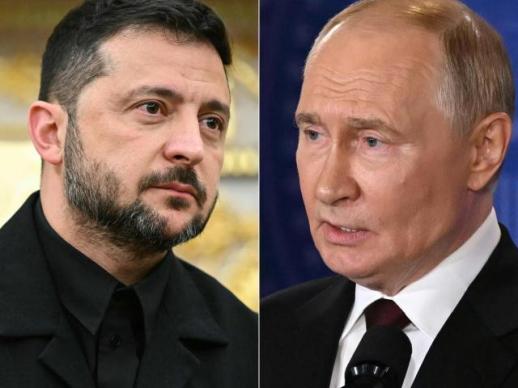 Zelensky Proposes Direct Talks with Putin Amid Drone Warfare Volodymyr Zelensky, the President of Ukraine, has proposed direct talks with Russian President Vladimir Putin. This offer comes as Ukraine intensifies its long-range drone warfare, targeting Russian territory and supply lines. While President Putin has left the door open for negotiations, he has not wavered from his demand for full control of the Donbas region. On June 4, Zelensky made the proposal in an open letter, stating, "Peace is only possible through direct engagement between Ukraine and Russia." He suggested Switzerland or Turkey as potential venues for the summit and called for a ceasefire during the negotiation period. This proposal highlights the need for direct negotiations amid shifting U.S. attention toward issues in Iran. The backdrop to this proposal is a change in the dynamics of the war. According to an analysis by the Institute for the Study of War (ISW), Ukrainian forces have reclaimed 282 square kilometers more territory than they lost to Russia last month. Over the two months of April and May, Ukraine regained a total of 403 square kilometers. While this represents only about 0.4% of the territory currently occupied by Russia, it is significant as it indicates that Russian forces have lost more ground than they gained during this period. Despite the scale of these recoveries not being sufficient to turn the tide of the war, it confirms that Ukraine is applying pressure on both the front lines and in the rear. The ISW noted that Ukraine's medium-range drone attacks are limiting the mobility and supply capabilities of Russian forces. Ahead of the St. Petersburg International Economic Forum, key facilities, including oil terminals in the St. Petersburg area, have come under attack, revealing vulnerabilities in Russia's air defense systems. Russia continues to assert its military dominance. In a meeting with foreign journalists in St. Petersburg, President Putin claimed, "The Russian military is advancing every day." He stated that Russia has taken control of the Luhansk region and more than 85% of Donetsk and 80% of Zaporizhzhia. However, he acknowledged the increasing threat from Ukrainian drones, indicating a need to improve air defenses. Putin has left the possibility of negotiations open, suggesting that a peace plan discussed with former U.S. President Donald Trump in Alaska last year could serve as a basis for ending the war. He stated that "Russia has agreed to certain concessions," and that Ukraine must also accept these terms. Trump has responded positively to the idea of a meeting between the two leaders. The challenge lies in the specifics of the concessions Russia is proposing. Putin remarked, "The demand for full control of Donbas and a peace agreement are not mutually exclusive," maintaining his stance that Ukraine must cede the remaining areas of the eastern Donbas. He also suggested that the legitimacy of Zelensky's representation of Ukraine should be reconsidered. Zelensky countered by specifically mentioning Donetsk, a key area in Donbas, criticizing Putin for repeatedly postponing deadlines for occupying parts of Ukraine. He asserted, "You will not be able to occupy it," indicating his refusal to negotiate under the condition of territorial concessions. Despite the proposal for talks, the conflict continues unabated. Bloomberg reported that Ukraine has recently requested Patriot missile support from Germany in preparation for Russian missile attacks. Russia, in turn, continues to launch rear attacks using supersonic and cruise missiles. Experts view Zelensky's proposal for direct talks not as a signal that discussions for peace are advancing, but rather as a struggle over the terms of negotiation, where Ukraine's drone warfare pressure meets Russia's territorial demands. The gap between the two sides regarding territory, ceasefire, and Zelensky's legitimacy as a representative remains significant.* This article has been translated by AI. 2026-06-05 15:45:00
 -
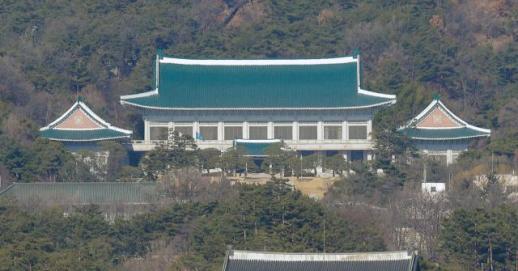 South Korea and U.S. Discuss Nuclear Submarine and Enrichment Agreements On June 5, the Blue House announced that South Korea and the United States have resumed discussions on security agreements related to the introduction of nuclear-powered submarines and the acquisition of rights for uranium enrichment and spent fuel reprocessing. A senior official from the Blue House described the recent talks as "very productive and beneficial."During a briefing with reporters at the Chunchugwan, the official stated, "We will accelerate the discussion process and aim to achieve concrete results by the end of the year."The official noted that representatives from various sectors participated in discussions regarding enrichment reprocessing and nuclear submarines, as well as umbrella (nuclear umbrella) agreements. "We intend to expedite discussions to make progress," the official added.Regarding nuclear submarines, the official emphasized, "There has been no significant change regarding the construction of nuclear submarines in South Korea. This issue has been discussed under the same premise, and there are no plans for a reconfiguration of this matter."The official also mentioned that amending the Korea-U.S. nuclear agreement would require new frameworks for enrichment reprocessing and nuclear submarines. "We aim to reach necessary agreements and make adjustments as needed to facilitate progress," the official stated.The discussions on nuclear submarines and enrichment reprocessing are based on South Korea's commitment to denuclearization, and there are no additional denuclearization conditions, the official clarified. "We must, of course, uphold our denuclearization commitments and seek further cooperation with the United States on that basis," the official concluded.* This article has been translated by AI. 2026-06-05 15:45:00
 -
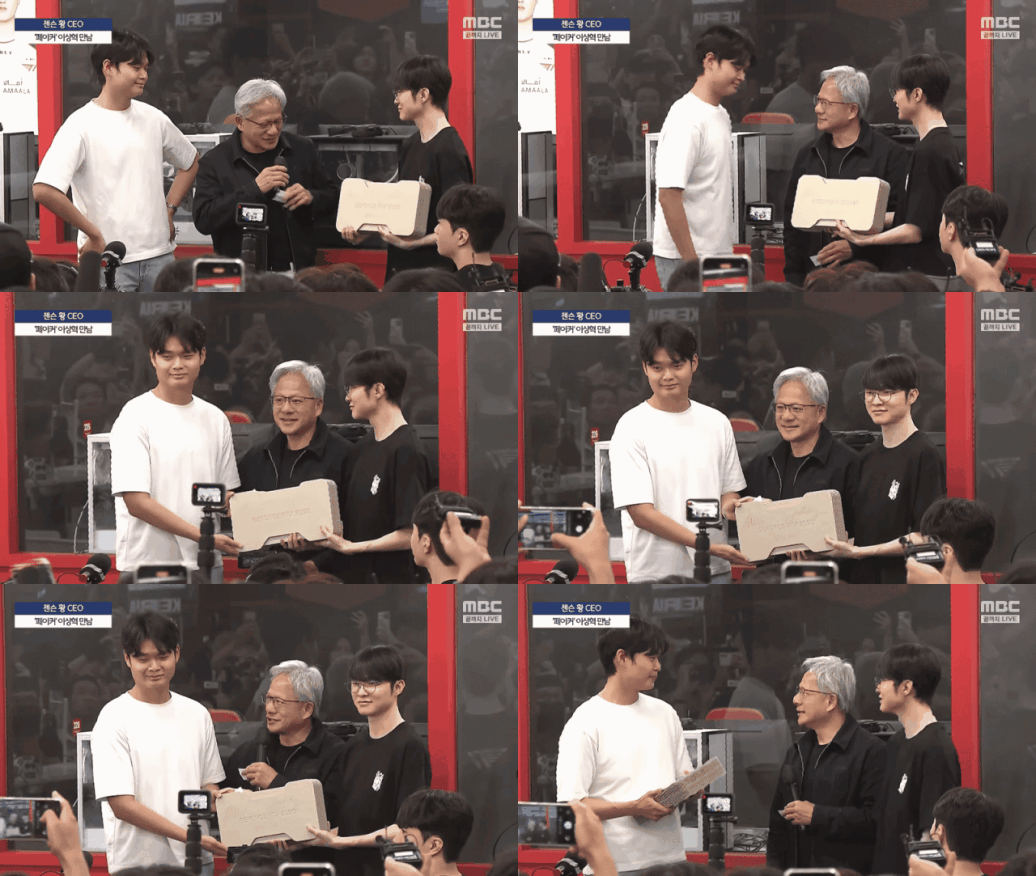 Value of GeForce RTX 5090 Signed by Jensen Huang and Faker What would be the value of an NVIDIA GeForce RTX 5090 featuring the signatures of CEO Jensen Huang and eSports star Faker (Lee Sang-hyeok)? On June 5, Huang visited the T1 Base Camp in South Korea as part of his first schedule during his trip, where he presented the RTX 5090, NVIDIA's top-tier graphics card, to a fan through a lottery. A video released that day captured a man receiving the graphics card adorned with both Huang's and Faker's signatures, which drew admiration from viewers. The product showcased the signatures side by side, generating excitement online. The video quickly spread across various online communities and social media platforms, garnering significant attention. Users commented, "It's something you can't buy with money," "It's practically one of a kind in the world," "I'm really jealous," and "This should be kept as a memento, not sold." Typically, graphics cards depreciate over time due to performance competition and new product releases. However, the addition of signatures from renowned figures changes the narrative. The RTX 5090 is regarded as one of the highest-performing gaming graphics cards available, giving it substantial inherent value. With Huang's signature, the item transforms from a mere electronic device into a historical artifact of the AI industry. Huang is a symbolic figure in the AI semiconductor market, and his historical significance may increase as the AI sector continues to evolve. Faker's presence is also noteworthy. He is considered one of the greatest players in eSports history by numerous experts and fans. Just as autographs from legendary athletes in traditional sports hold high value, Faker's signature carries significant collectible worth within the global eSports fandom. What stands out is that both signatures exist on a single item. While Huang symbolizes the AI industry, Faker represents the eSports sector. Industry insiders believe this combination could be valued not merely as two signatures but as a rare asset that merges the significance of two different industries. In the collectibles market, items featuring the joint signatures of figures representing specific eras often sell for much higher prices than expected. Given that AI and gaming are central to modern technology industries, the joint signatures of Huang and Faker are considered a uniquely significant case. However, there have been no confirmed public sales of the RTX 5090 featuring both signatures to date. Therefore, accurately assessing its market value is virtually impossible. Experts predict that if this product were to undergo official certification and enter the global auction market, it could command a premium far beyond that of standard graphics cards. Ultimately, the value of this item is likely to be determined by the rarity of having the "symbol of the AI revolution" and the "legend of eSports" coexisting on a single object. As time passes, it may be regarded not just as an IT device but as a historical memento.* This article has been translated by AI. 2026-06-05 15:42:00
 -
 Naver and NVIDIA Highlight AI Factory Partnership Following Jensen Huang Meeting Naver's artificial intelligence (AI) infrastructure capabilities are gaining renewed attention following a meeting between Jensen Huang, CEO of NVIDIA, and Lee Hae-jin, chairman of Naver's board. The partnership is expected to play a significant role in NVIDIA's Sovereign AI and AI Factory strategies. According to the IT industry, Huang arrived at Gimpo Airport around 1 p.m. on June 5 and is scheduled to engage in various activities during his visit. That evening, he is expected to meet with Lee, Hyundai Motor Group Chairman Chung Eui-sun, SK Group Chairman Chey Tae-won, and LG Group Chairman Koo Kwang-mo at a pork belly restaurant near Hongdae in Mapo-gu, Seoul. Industry observers are keenly watching whether this meeting will solidify the collaboration between Naver and NVIDIA in AI infrastructure, Sovereign AI, and Physical AI. Naver is strengthening its partnership with NVIDIA based on Naver Cloud, focusing on the AI Factory and Sovereign AI as common areas of interest. The company is expanding its business as a full-stack AI provider that connects data centers, cloud, and AI applications. Notably, during his keynote at 'GTC Taipei 2026' on June 1, Huang highlighted Naver Cloud as a key partner in the global AI native cloud, emphasizing the cooperative relationship between the two companies. Kim Yoo-won, CEO of Naver Cloud, also unveiled plans for a full-stack AI partnership with NVIDIA and the vision for a global AI Factory. The AI Factory is a dedicated infrastructure that integrates data centers, cloud, AI models, training and inference environments, and enterprise AI services. Naver Cloud aims to target the AI Factory market with its data centers in Chuncheon and Sejong, the Naver Cloud platform, and HyperClovaX. Technological collaboration with NVIDIA is also expanding. Naver Cloud is advancing HyperClovaX based on NVIDIA's Nemo framework and NeMoTron. The company is collaborating on data preprocessing, training, and optimization using 4,224 Blackwell B200 GPUs and has joined NVIDIA's open model alliance, the NeMoTron Coalition. Since introducing NVIDIA's DGX SuperPOD in 2020, Naver has expanded its business into the B2B AI infrastructure sector, gaining extensive experience in large-scale AI infrastructure operations. The company provides AI models and GPU as a Service (GPUaaS) to various enterprises and institutions, including Hyundai, Korea Hydro & Nuclear Power, and the Bank of Korea, and is participating in the establishment of a national AI computing center. Naver envisions building and operating a global AI Factory in partnership with NVIDIA, aiming to become a hub for AI infrastructure in Asia. To achieve this, the company plans to broaden its business scope to include GPUaaS, AI platforms, and applications, with a long-term goal of becoming a global AI Factory provider. The Physical AI sector is also a noteworthy aspect of the collaboration. Naver Cloud has developed the 'Seoul World Model' based on NVIDIA's Physical AI model, 'Cosmos,' incorporating high-resolution map data of Seoul. Additionally, Huang is scheduled to visit Naver's 1784 headquarters on June 8. Industry insiders believe this visit will provide an opportunity to assess Naver Cloud's AI infrastructure and its capabilities in robotics and Physical AI technologies. Analysts suggest that Huang's visit could lead to a reevaluation of Naver as a candidate for an AI infrastructure hub in Asia. From NVIDIA's perspective, Naver is seen as a partner that can showcase a Sovereign AI model combining local language, data, and cloud infrastructure outside of major tech players in the U.S. and China. An industry source stated, "This meeting could be a pivotal moment for Naver to establish itself as a reference point for the expansion of non-English AI factories through its strengthened partnership with NVIDIA."* This article has been translated by AI. 2026-06-05 15:42:00
 -
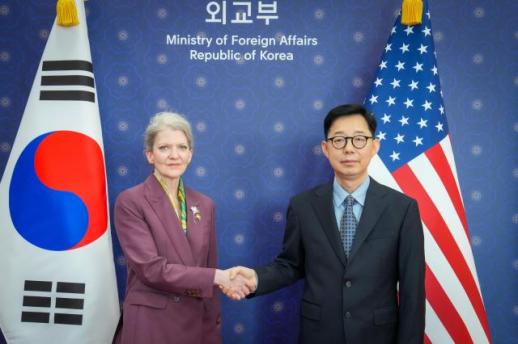 S. Korea, US to track progress in nuclear submarine, enrichment talks SEOUL, June 05 (AJP) - South Korea and the U.S. have agreed to track progress in follow-up talks on Seoul’s push for nuclear-powered submarines, uranium enrichment and spent fuel reprocessing, Seoul's Foreign Ministry said Thursday. The agreement came after government delegations from the two countries held a launch meeting at the Foreign Ministry in Seoul from Tuesday to Wednesday to begin implementing security-related commitments included in a joint fact sheet issued after last year’s summit between the two leaders. A Foreign Ministry official said the review system is aimed at assessing the progress of negotiations at certain points and identifying issues that require further discussion. “When the time comes, the two sides will review and evaluate the progress made up to that point,” the official told reporters. “They will then identify areas that need more discussion and reflect them in the next round of negotiations.” The move appears to reflect Seoul’s push to make as much progress as possible before political uncertainty grows in Washington, where the ruling Republican Party faces the possibility of losing control of Congress in the November midterm elections. Park described the launch meeting as successful and said U.S. Under Secretary of State for Political Affairs Allison Hooker, who led the U.S. delegation, had expressed the same view. In a post on X on Wednesday, Hooker called her trip to Seoul “a brief but very productive visit,” saying the two sides’ initial discussions on U.S.-ROK nuclear cooperation were “a success” and had set the stage for “continued technical conversations.” Hooker also wrote that in meetings with South Korean officials, she emphasized the need for the two allies to stay aligned on issues ranging from freedom of navigation in the Strait of Hormuz to strengthening critical supply chains and responding to regional threats. Asked whether the U.S. side raised South Korea’s possible participation in efforts related to the Strait of Hormuz or its role in countering China in the Indo-Pacific, Park said such issues were not discussed during the security negotiations. He added that Foreign Minister Cho Hyun and Hooker had broadly discussed issues related to the Korean Peninsula and the Middle East during a breakfast meeting. But he said specific matters, such as South Korea’s participation in a U.S.-led maritime security initiative, were not discussed in detail. 2026-06-05 15:40:09