

Journalist

Lim Kwu-jin
-
 Homebuyers Spend Average of 2.4 Months Searching for Properties Recent data from Danggeun Real Estate reveals that users who completed transactions spent an average of 2.4 months searching for homes. Before finalizing a deal, they visited an average of 3.8 properties in person. The survey, released on June 1, was conducted among 971 users who completed transactions through Danggeun Real Estate between May 11 and May 17. The results highlight varying search durations based on contract types. Homebuyers looking to purchase took the longest, averaging 3.6 months, and visited about 4.3 properties before making a decision. In contrast, renters seeking monthly leases spent an average of 1.8 months and checked around 3.5 listings. Those looking for jeonse (a type of lease in South Korea) took an average of 2.5 months to find suitable properties, visiting about 4.1 listings. This longer duration is likely due to the higher costs and longer commitment associated with jeonse agreements, prompting renters to compare multiple options. When broken down by age group, individuals in their 30s dedicated the most time to their home search, averaging 2.7 months and visiting about 4.1 properties. Conversely, those in their 20s had the shortest search duration at an average of 1.4 months, likely influenced by a higher proportion of rental transactions in that demographic. The primary reasons for moving included job changes and reducing commuting distances, accounting for 40.2% of responses. Other reasons included alleviating housing costs at 17.8%, moving to a better neighborhood at 13.1%, and changing transaction types at 10.5%. Additionally, 9.1% cited marriage or starting cohabitation, while 8.8% mentioned school districts for children as factors. In the process of searching for homes and finalizing contracts, detailed property descriptions and photographs were identified as the most helpful information, with 62.0% of respondents highlighting their importance. Other valuable resources included actual resident reviews at 35.6%, verified listings at 34.6%, and broker reviews at 19.8%. A representative from Danggeun Real Estate stated, "This survey confirms that the duration of home searches and the information needed vary by generation and contract type." Danggeun Real Estate allows users to list properties or search for local listings through its app, facilitating communication for scheduling visits and finalizing contracts. While direct transactions can reduce costs, users are advised to verify property ownership and conduct basic checks, such as reviewing the property registration certificate, for safety.* This article has been translated by AI. 2026-06-01 13:57:00
 -
 CJ Olive Young Expands U.S. Presence with New Store in Century City, LA CJ Olive Young is accelerating its entry into the U.S. market with the opening of a new store in Century City, Los Angeles, scheduled for this month, following the launch of its first U.S. location in Pasadena. According to CJ Olive Young, the Century City store will be located in the Westfield Century City shopping mall, a prominent commercial hub in Los Angeles known for attracting young professionals, high-income consumers, and global tourists. While the Pasadena store targets customers interested in K-culture and experiential shopping, the Century City location aims to expand K-beauty access to premium consumers and a global clientele. Starting with its West Coast expansion, Olive Young plans to gradually open stores in key regions across the U.S., including the East Coast and the Midwest. The company intends to establish a strong market presence by tailoring store operations and product offerings to local consumer preferences, while also enhancing its omnichannel strategy that integrates offline stores with its online platform. The Pasadena store, which opened on May 29, generated significant interest, with lines forming the day before its launch. The opening event featured remarks from Lee Sun-jung, CEO of Olive Young, and Kwon Ga-eun, head of Olive Young's U.S. operations. Local employees also performed to the hit song 'APT.' by BLACKPINK's Rosé. Notable attendees included Pasadena Mayor Victor Gordo and city council members Steve Madison and Tyrone Hampton. Lee Sun-jung stated, "The Pasadena store symbolizes the vision of Olive Young as a global platform and will serve as a new milestone for the collaborative growth of outstanding domestic indie brands on the global stage." In conjunction with the opening of its physical stores, Olive Young has also launched a U.S.-specific online store, reducing delivery times from the previous average of 5-7 business days to 3-5 days. 2026-06-01 13:57:00
 -
 Doosan Robotics Shares Surge Amid Jensen Huang's Visit Speculation Shares of Doosan Robotics soared on June 1 as speculation arose about Jensen Huang, CEO of NVIDIA, potentially throwing the first pitch for the Doosan Bears in the Korean Baseball Organization (KBO). According to the Korea Exchange, as of 1:47 PM, Doosan Robotics shares were trading at 138,400 won, up 31,900 won (29.95%) from the previous trading day. The stock opened at 106,500 won and peaked at 138,800 won during the session, marking a new 52-week high. The surge in stock price is attributed to growing expectations surrounding Huang's visit, which could include a ceremonial first pitch at a Doosan Bears game. Industry sources indicate that Huang is expected to arrive in South Korea after attending NVIDIA's annual AI conference, GTC Taipei 2026, from July 1 to 4. This will be Huang's first visit to South Korea in about seven months, following the APEC CEO Summit held in Gyeongju last October. During his stay, Huang is reportedly set to meet with Kwang-mo Koo, chairman of LG Group, and discuss AI collaboration with major domestic IT companies, including Naver. Previously, Huang gained significant attention for a meeting with Lee Jae-yong, chairman of Samsung Electronics, and Chung Eui-sun, chairman of Hyundai Motor Group, at a chicken restaurant during the APEC CEO Summit last October.* This article has been translated by AI. 2026-06-01 13:54:00
 -
 Hanmi Pharmaceutical Signs $1.8 Billion Licensing Deal with Eli Lilly for New Drug Hanmi Pharmaceutical announced that it has signed a licensing agreement with Eli Lilly for the development, manufacturing, and commercialization of its new drug candidate, Sonapeglutide, on June 1. Sonapeglutide is a new drug candidate utilizing Hanmi's sustained-release platform technology, Labscobery. The company is currently conducting global clinical trials for five other candidates that employ the same platform technology. Hanmi has focused on the biological effects of glucagon-like peptide-2 (GLP-2), which promotes intestinal growth, reduces inflammation, and protects and regenerates mucosal tissue. The company is currently conducting a global Phase 2 clinical trial for Sonapeglutide targeting short bowel syndrome. Hanmi plans to complete the ongoing global Phase 2 trial for short bowel syndrome, while Eli Lilly is expected to pursue additional clinical trials based on the preclinical and clinical data for Sonapeglutide. Under the agreement, Eli Lilly will secure exclusive rights for the development, manufacturing, and commercialization of Sonapeglutide worldwide, excluding South Korea. As part of the agreement, Hanmi will receive an upfront payment of $75 million (approximately 112.9 billion won) from Eli Lilly, with the potential to earn up to $1.185 billion (approximately 1.784 trillion won) in milestone payments based on clinical development, regulatory approval, and commercialization stages. After the product launch, Hanmi will also receive separate royalties. In the first quarter of this year, Hanmi invested 65.2 billion won, or 16.6% of its revenue, in research and development. The company is advancing over 30 pipeline projects, including the GLP-1 obesity drug, Epeglanatide, which it aims to commercialize within the year. Hanmi Group Vice Chairman Lim Joo-hyun stated, "This agreement recognizes the development potential of Sonapeglutide," adding, "We will continue to pursue our mission of 'respecting humanity and creating value' through innovative drug development."* This article has been translated by AI. 2026-06-01 13:51:00
 -
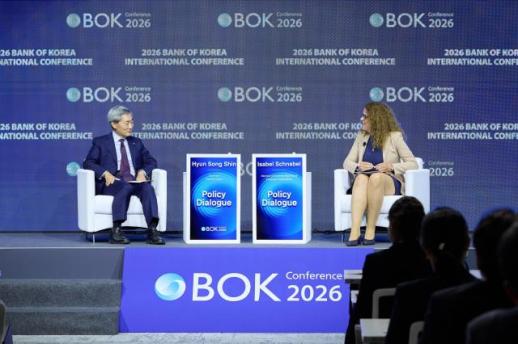 BOK's two-day conference opens with warnings over stablecoins and digital money shift SEOUL, June 01 (AJP) - The spread of stablecoins could reinforce the dominance of the U.S. dollar and weaken monetary sovereignty in other economies, European Central Bank executive board member Isabel Schnabel warned on Monday at the Bank of Korea's annual conference in Seoul on Monday. At the two-day conference held under the theme "Central Banks and the Future of Money" at the central bank's annex hall, Schnabel said in her keynote speech that the rapid spread of stablecoins could strengthen the global role of the U.S. dollar at the expense of other currencies. Her warning was followed by opening remarks from BOK Governor Shin Hyun-song, who stressed that money is not simply a technological tool but a social institution built on trust. "Currency is not merely about technology, but about how our society coordinates economic activities," Shin said, adding that the central question for the future monetary system is how trust in money can be preserved. Stablecoins, which are digital tokens designed to maintain a stable value by being pegged to assets such as fiat currencies, still account for a relatively small share of global financial assets. But their use has grown quickly, and most stablecoins currently in circulation are pegged to the U.S. dollar. "The dollar's dominance would be reinforced, not necessarily owing to stronger economic fundamentals but due to network effects, scale and first-mover advantages," Schnabel said. She warned that the trend could have serious implications for countries with weaker monetary credibility, where households and firms may increasingly shift into dollar-based stablecoins. Such a shift could make it harder for domestic central banks to transmit monetary policy to the real economy, weakening the role of local currencies as policy anchors. Schnabel said the risk is not limited to emerging markets. Even regions with strong monetary credibility, including the euro area, could face long-term consequences if dollar-based stablecoins expand the use of dollar invoicing and global dollar liquidity holdings. From a European perspective, she warned, such a trend could restrict the euro's role in tokenized finance and in the international monetary system. The first day of the conference will focus on financial stability, digital currency and central bank communication, with presentations by Tobias Adrian of the International Monetary Fund, Markus Brunnermeier of Princeton University and Michael Weber of Purdue University and ESMT Berlin. The second day will include a special lecture by Robert Townsend of the Massachusetts Institute of Technology, sessions on the history of central banking and artificial intelligence, and a final panel discussion on "The Role of Central Banks in a New Digital Economy." The BOK is livestreaming the opening session and the second-day panel discussion on its official YouTube channel. 2026-06-01 13:50:08
 -
 The Rise of Physical AI: Smart Glasses as the Competitive Edge in Industry The era of physical artificial intelligence (AI) has officially begun. At CES 2026, humanoid robots, autonomous driving, digital twins, and wearable AI emerged as key themes. In March, at NVIDIA's GTC 2026, CEO Jensen Huang declared a "big bang of physical AI," confirming the transition to real-world applications. The infrastructure is now in place for AI to move from virtual training environments to actual factories and logistics sites. Despite appearing as distinct technologies, all these advancements share a common thread: the ability to perceive and interpret the physical world. AI operating in the real world must be supported by a precise understanding of complex conditions on the ground. To effectively utilize spatial recognition technology in industrial settings, a connection point between workers and AI is essential. Smart glasses have emerged as a focal point. In 2026, major global tech companies began seriously exploring smart glasses as an AI interface for industrial applications. At CES 2026, Siemens announced a collaboration to integrate industrial AI into Meta Ray-Ban AI glasses. When factory workers wear these glasses, they receive real-time voice guidance and task feedback hands-free. Siemens and NVIDIA further declared their intention to jointly develop an "industrial AI operating system," outlining a roadmap to realize the world's first fully AI-based adaptive factory starting at the Erlangen plant in Germany. Google is also expanding its smart glasses ecosystem targeting the enterprise market through its Android XR platform. Market research firm Omdia predicts that shipments of AI glasses will surpass 15 million units this year and reach 35 million by 2030. While it may take time for robots to fully replace factories, equipping workers with AI is feasible right now. For smart glasses to function effectively on-site, simple location data is insufficient. GNSS-based location technologies, represented by GPS, can have errors of several meters in typical environments, and accuracy drops significantly indoors or in complex urban areas. To provide accurate information to workers, smart glasses must determine "which equipment they are in front of and in which direction they are looking." Visual Positioning Systems (VPS) offer a solution to this limitation. The visual sensors in smart glasses or mobile devices recognize features of the surrounding environment and compare them with pre-established spatial data to calculate location and direction with centimeter-level precision. While GNSS excels at approximate location tracking over large areas, VPS enables precise location recognition in specific spaces. The demands of the physical AI era require a comprehensive understanding of equipment, structures, work points, and pathways in three dimensions. The statement at NVIDIA's GTC 2026 that "the factory itself is now a robotic system" reflects this context. To operate an entire factory as a single intelligent system, every space within it must be digitally understood with precision. In the past, creating accurate spatial information required expensive LiDAR scanners and skilled surveyors, making it the domain of large projects. Now, real-time spatial mapping (SLAM) can be achieved with smart glasses without special equipment. Advances in computer vision and spatial computation technology have significantly lowered this barrier. NVIDIA's Physical AI Data Factory Blueprint provides an architecture that generates large-scale synthetic data from limited real-world data, accelerating the development of vision AI agents. The value of technology ultimately proves itself in the field. Smart glasses represent the final point of contact where all the technology stacks of physical AI meet people. In logistics, for instance, a worker wearing smart glasses can see picking locations, product information, and quantities displayed in real-time, while vision AI automatically recognizes barcodes and integrates with the warehouse management system (WMS) instantly. This can be implemented with software alone, without additional equipment investment. In maintenance, when the smart glasses camera recognizes equipment tags or QR codes, schematics, manuals, and inspection histories are immediately displayed in the worker's view. Tasks such as generating reports can be completed using voice commands, standardizing maintenance work that previously relied on individual skill levels. In the physical AI era, future industrial competition will hinge on how precisely the entire physical space can be digitized and how seamlessly AI can connect people, robots, and equipment. At the forefront of this connection are smart glasses that equip industrial workers with AI.* This article has been translated by AI. 2026-06-01 13:48:00
 -
 Samsung SDS Shares Surge Nearly 30% Amid AI Data Center Growth Expectations Samsung SDS shares soared nearly 30% during trading on June 1, driven by growing expectations surrounding the expansion of the artificial intelligence (AI) data center market. This surge has attracted significant investment interest. According to the Korea Exchange, as of 1:34 PM, Samsung SDS shares were trading at 382,000 won, up 27.76% (83,000 won) from the previous trading day. Over the past week, the stock has seen an increase of over 100%. Market analysts suggest that Samsung SDS is being re-evaluated as a key beneficiary in the AI infrastructure sector, moving beyond its traditional IT service business. The company's performance is also expected to improve, bolstered by growth in its cloud business. The growth rate of Samsung SDS's cloud revenue is projected to rise from 14.4% this year to 18.1% next year. Consequently, revenue is expected to increase from 14.169 trillion won this year to 14.876 trillion won next year, while operating profit is forecasted to grow from 826 billion won to 1.096 trillion won. Lim Hee-seok, a researcher at Mirae Asset Securities, stated, "The dawn of the AI era is leading to a surge in demand for AI data centers focused on GPU, power, and network capabilities. Samsung SDS is positioned to lead in the domestic AI infrastructure market expansion, leveraging its strengths in data centers, cloud services, and GPU infrastructure."* This article has been translated by AI. 2026-06-01 13:48:00
 -
 SK Group Chairman Choi Tae-won Attends Jensen Huang's Keynote at GTC 2026 in Taiwan SK Group Chairman Choi Tae-won visited NVIDIA's annual technology exhibition, GTC Taipei 2026, to strengthen global alliances in artificial intelligence (AI). On June 1, local time, Choi attended the opening keynote by NVIDIA CEO Jensen Huang at the Taipei International Convention Center (TICC). In addition to Choi, key executives from SK Group, including Kwak Noh-jung, president of SK hynix, were present, drawing attention at the event. After briefly greeting VIP attendees, Choi and other SK Group leaders took their seats in the front row. During the keynote, Huang unveiled advancements in GPU-based accelerated computing and innovations in key AI technologies. He also shared the production roadmap for the AI accelerator 'Vera Rubin,' set for formal release in the second half of the year, along with updates on collaborations with partners in the Asia-Pacific region. Choi focused intently on the presentation, observing SK hynix's future role amid the rapidly evolving AI ecosystem. SK hynix plans to showcase high-performance AI memory solutions, including the sixth-generation high-bandwidth memory (HBM4) and the low-power server DRAM module 'LPCAMM2,' which will be integrated into 'Vera Rubin.' An SK hynix representative stated, "During his trip to Taiwan, Chairman Choi will introduce SK hynix's evolved vision to key partners, demonstrating our status as a 'full-stack AI memory creator' beyond merely supplying standard HBM." 2026-06-01 13:48:00
 -
 Labor Minister Kim Young-hoon Orders Swift Response to Hanwha Aerospace Explosion An explosion and fire of unknown origin occurred at Hanwha Aerospace in Daejeon, prompting Labor Minister Kim Young-hoon to dispatch Ryu Hyun-cheol, head of the Occupational Safety and Health Agency, to the scene and issue an urgent directive for a swift response. In response to Minister Kim's instructions, the Ministry of Labor established both a Central Industrial Accident Response Headquarters and a Regional Industrial Accident Response Headquarters at the Daejeon Regional Employment and Labor Office on June 1. Ryu will support a rapid and systematic response to the incident. Immediately following the explosion, the head of the Regional Industrial Accident Response Headquarters, along with labor inspectors, arrived at the site to implement a work stoppage for the affected operations. The ministry plans to thoroughly investigate the structural causes of the incident and conduct prompt and strict supervision and investigation of the accident. Minister Kim expressed condolences to the workers who lost their lives in the accident, stating, "We will do our utmost for a swift and rigorous response to the incident and to prevent secondary accidents." The explosion occurred at 10:59 a.m. in a cleaning room within the Hanwha Aerospace weapons manufacturing facility. Fire authorities issued a Level 1 response at 11:17 a.m. and managed to control the blaze within 32 minutes, declaring it fully extinguished by 1:07 p.m. As of 1:30 p.m., five people had died, one was seriously injured, and another sustained minor injuries. 2026-06-01 13:42:00
 -
 SHINee kicks off concert trilogy with sold-out Seoul shows SEOUL, June 01 (AJP) - K-pop boy band SHINee opened its new concert trilogy with three sold-out shows in Seoul, drawing more than 30,000 fans over the weekend, the band's agency SM Entertainment said Monday. SHINee held "The Trilogy I - 2026 SHINee WORLD VIII: THE INVERT" from May 29 to 31 at KSPO Dome in Olympic Park, Seoul. All three shows sold out, including restricted-view seats. The first show was shown through live viewing events at cinemas in South Korea, Indonesia, Thailand, Taiwan, Hong Kong, Macao and Malaysia, while the May 30 and 31 shows were streamed globally through Beyond LIVE and Weverse. "The Trilogy" is a three-part concert series running through 2028, when SHINee marks the 20th anniversary of its debut. Each installment draws from Dante's "Divine Comedy," reinterpreting the epic poem's themes through their music and stagecraft. The first chapter centers on the concept of "invert," turning something upside down or reversing perspective, reflected throughout the show's visuals, production and setlist. The concert opened with a video showing the members falling into another space, followed by kinetic set pieces rising from the floor. SHINee performed the full set with a live band, moving through tracks including "Spoiler," "HARD," "Sherlock," "Juliette," "Don't Let Me Go" and "Everybody." Members also previewed all tracks from its sixth mini album, "Atmos," including a full performance of the title track before the album's official release. "You are always our hope. Let's stay together for a long time," the members said during the show. SHINee released "Atmos" on major streaming platforms at 6 p.m. Monday, along with the music video for the title track on YouTube. The group is scheduled to hold concerts at Belluna Dome in Saitama, Japan, from Friday through Sunday. 2026-06-01 13:39:47