
Journalist

MIN JAE YONG
-
 ASIA DEEP INSIGHT: Is Bloomberg's National Dividend controversial coverage misreporting or overinterpretation? The press is not merely an institution that relays facts. In the age of global finance, international news agencies shape market psychology and, at times, influence the trajectory of national economies themselves. Vast pools of capital moving through New York, London, Hong Kong, and Singapore now react more swiftly to a single headline on a financial terminal than to the smokestacks of factories. In that sense, the recent dispute between Bloomberg L.P. and the South Korean presidential office over the so-called “National Dividend” proposal transcends an ordinary quarrel over journalism. It reflects a deeper collision — one involving the responsibilities of global financial media, the precision of public policy messaging, and the fundamentally different economic vocabularies of East and West. At the center of the controversy stood a Facebook post by Kim Yong-beom, the chief presidential policy aide. Kim referred to the expanding national wealth generated by advances in artificial intelligence and the semiconductor industry, invoking the phrase “National Dividend” while also mentioning Norway’s sovereign wealth fund model. His broader concern was not difficult to discern. In an era defined by AI-driven productivity revolutions, how should the gains of national growth be shared with society at large? Bloomberg, however, interpreted the proposal as a plan to redistribute corporate “excess profits” to the public. That interpretation quickly triggered concerns in financial markets that the South Korean government might be contemplating a windfall tax or some form of state-led redistribution of corporate earnings. Foreign investors grew visibly uneasy. Some reports even suggested that the remarks had contributed to a sharp decline in the Kospi index. The presidential office immediately pushed back. Officials argued that Kim had never advocated the direct confiscation of corporate profits. Rather, they said, he was discussing how to allocate “surplus tax revenues” generated by booming AI and semiconductor sectors. The office went so far as to send an official letter of protest to Bloomberg, emphasizing that Kim had neither proposed a windfall tax nor advocated transferring private-sector profits directly to citizens. So who, then, was correct? A sober reading suggests that the episode cannot easily be reduced to either outright misinformation or deliberate distortion. At the same time, the controversy was too consequential to dismiss as a mere misunderstanding. Markets did react. Investors did become nervous. Words mattered. Indeed, Kim’s original remarks included phrases such as “excess profits,” “National Dividend,” and “Norway’s sovereign wealth fund.” From the perspective of global investors — particularly those shaped by American financial culture — such language was bound to raise alarms. In the grammar of Wall Street, any government discussion linking “national dividends” and “excess profits” can easily be interpreted as a signal of redistributionist intent or increased state intervention in markets. Yet when Kim’s fuller explanation and the presidential office’s clarification are considered together, the central emphasis appears to have been different. The discussion was less about seizing corporate profits than about determining how to utilize increased tax revenues generated by rapid industrial expansion. In other words, the focus was not on redistributing “excess profits” themselves, but on allocating “surplus tax income” produced by economic growth. Ultimately, the controversy is best understood as a collision between ambiguous political language and the interpretive instincts of global financial journalism. Bloomberg, Market Reactions, and the Presidential Office’s Response Bloomberg occupies a uniquely influential position in global finance. Its terminals are embedded in the daily operations of investment banks, hedge funds, sovereign wealth funds, and asset managers across the world. A Bloomberg headline is not merely news; it is often interpreted as a market signal. The issue lay in the interpretive framework applied to Kim’s remarks. Bloomberg framed the “National Dividend” proposal as resembling a redistribution of corporate excess profits, a reading that inevitably unsettled investors. At the time, South Korean markets were already facing multiple pressures: fears of prolonged high U.S. interest rates, volatility in global technology stocks, and profit-taking in semiconductor shares. In such an environment, any policy signal that could be construed as punitive toward corporate earnings was likely to provoke anxiety among foreign investors. Still, attributing market declines solely to Kim’s remarks would also be an oversimplification. Numerous forces were affecting the market simultaneously. To claim that “Kim’s comments caused the Kospi to plunge” risks exaggerating the direct impact of a single political statement. The presidential office nevertheless responded forcefully. Officials accused Bloomberg of employing an “inaccurate framing” that contributed to market confusion. They reiterated that no windfall tax had been proposed and that the government had never intended to transfer private-sector profits directly to citizens. There was also a practical reason behind Seoul’s unusually sharp reaction. South Korea remains deeply dependent on global capital flows. In such an economy, a single policy misunderstanding can reverberate through currency markets, equities, and bond yields simultaneously. From the government’s perspective, correcting what it viewed as a misleading interpretation became a matter of financial stability. Yet policymakers, too, may draw lessons from the episode. Global markets do not interpret political language in the same way domestic audiences do. Terms such as “National Dividend” or “excess profits” may resonate within Korea as concepts of shared prosperity and inclusive growth, but internationally they can easily be read as indicators of market interventionism or anti-business sentiment. That is precisely why precision in policy communication matters. Kim Yong-beom’s Underlying Concerns and the Divided Expert Response The broader concerns raised by Kim are hardly unique to South Korea. Across the world, the rise of AI and platform-based economies has intensified debates over wealth concentration and the distribution of technological gains. In the United States, discussions surrounding Big Tech monopolies and digital taxation continue to intensify. The European Union has expanded efforts to regulate digital platforms and strengthen fair taxation mechanisms. The notion that the benefits of the AI revolution should improve society as a whole is increasingly a global concern. Kim’s argument was not fundamentally different. If AI and semiconductor industries propel South Korea into a new era of economic expansion, how should the resulting increase in public revenues be shared with the broader population? His reference to Norway’s sovereign wealth fund was particularly revealing. Norway transformed oil revenues from the North Sea into a long-term national asset designed to benefit future generations. It was not merely a welfare mechanism, but a strategic system for preserving and managing national wealth. The challenge, however, lies in South Korea’s political and financial sensitivities. Korea is among the fastest-moving financial markets in the world. Foreign participation is substantial, and global news flows exert enormous influence. In such an environment, a single phrase can matter more than the underlying policy itself. Experts remain divided Progressive economists argue that contemplating mechanisms for broader social participation in AI-era prosperity is both natural and necessary. Because AI industries tend to reinforce winner-takes-all dynamics, they contend that governments must explore new forms of social safety nets and wealth-sharing structures. Market-oriented analysts, however, emphasize the dangers of ambiguous language. In a country so dependent on international capital, policymakers must consider not only domestic political interpretations but also how their words will be translated by global investors. In that sense, the controversy was less about ideology than about a clash between political language and financial-market language. Western Media’s Limited Understanding of Asia — and the Need for a New AJP Era The episode also exposes another structural issue: the limited understanding of Asia within parts of the Western financial media establishment. Global finance remains heavily centered around New York and London. American free-market assumptions and Wall Street’s investment logic often shape the interpretive framework of international reporting. As a result, East Asia’s distinct development models and traditions of state-market coordination are not always fully understood. Countries such as South Korea, Japan, Singapore, and Taiwan developed through close interaction between governments, industries, and society. Discussions about sharing the benefits of growth therefore emerge within a different historical and cultural context than they do in the West. Yet Western financial media sometimes interpret these approaches too narrowly as signs of state intervention or redistributionism. The Bloomberg controversy reflects the limitations of that framework. At the same time, Asia cannot simply blame Western media. Asian governments and institutions must also improve their ability to communicate policy in language global markets can accurately interpret. Mutual understanding must evolve in both directions. The 21st century will not belong exclusively to the West. As Asia increasingly becomes the center of global economic growth, the world will require new media platforms capable of explaining Asian history, culture, economic structures, and policy thinking with nuance and depth. That is where AJU PRESS — AJP, or Asia Joint Press: Asia First Press — may hold particular significance. Its role should extend beyond merely translating Korean news into English. It should aspire to interpret Asia’s civilization, technology, economics, and political thought through an authentically Asian lens for a global audience. At its core, journalism is about understanding. When societies fail to understand one another, markets become unstable, politics becomes distorted, and mistrust deepens. The world now urgently needs a new era of journalism — one in which East and West move beyond mutual misunderstanding toward shared understanding and common prosperity. 2026-05-17 11:27:46
 -
 Iran Conflict and Hormuz Blockade Impact South Korea's Economy The conflict in Iran, triggered by U.S. and Israeli airstrikes, has now lasted nearly three months, with the Strait of Hormuz under full blockade for over two months. Although this war is taking place 7,000 kilometers away from South Korea, the impact on the South Korean economy, which heavily relies on Middle Eastern energy, is significant. International oil prices have surged, leading to shortages of petrochemical products, raising concerns across various sectors of industry and daily life. In a country that produces no oil, instability in the Middle East poses a direct threat to both the industrial ecosystem and the livelihoods of its citizens. Diversifying energy import sources and increasing the share of renewable energy have long been national challenges for South Korea. Previous governments have acknowledged the need for energy security and transition. However, the administration of Yoon Suk Yeol, which took office in 2022, has faced criticism for lowering its renewable energy targets during a time when many countries were accelerating their energy transitions in response to the Russia-Ukraine war. In an era where energy is both a hostage and a weapon, energy security is no longer a matter of choice. Ensuring a stable energy supply and expanding renewable energy have become critical tasks directly linked to national survival. The Yoon administration has set a goal to triple renewable energy capacity within five years. The key challenge is turning this goal into reality. There are numerous issues to address, including expanding the power grid, resolving site conflicts, ensuring community acceptance, and adjusting the burden on the industrial sector. MBC 'Straight' will explore the voices of those directly experiencing the energy shock. The program will also revisit the previous government's energy policies and investigate the necessary solutions and urgent tasks to turn the current crisis into an opportunity for energy transition. The broadcast is scheduled for today at 8:30 PM.* This article has been translated by AI. 2026-05-17 11:21:00
 -
 BlackRock Considers Up to $10 Billion Investment in SpaceX IPO World's largest asset management firm BlackRock is reportedly considering an investment of up to $10 billion in Elon Musk's space company SpaceX, which is expected to go public next month. On May 16, U.S. technology news outlet The Information cited multiple sources stating that BlackRock is exploring the possibility of investing between $5 billion and $10 billion in the SpaceX IPO through its $536 billion active fund. Given that SpaceX plans to raise up to $75 billion through this offering, BlackRock's investment could account for as much as 13.3% of the total shares available. Despite raising significant funds from the market, SpaceX intends to limit investor influence over its management. CEO Musk is expected to hold special shares that grant him ten votes per share. Nonetheless, major investors, including BlackRock, are actively pursuing opportunities in SpaceX. The Information noted that BlackRock's motivation for a large investment stems from the current value of its SpaceX holdings, which is approximately $300 million. This amount is relatively small compared to other major investors like Fidelity, Baillie Gifford, and Franklin Templeton.* This article has been translated by AI. 2026-05-17 11:15:43
 -
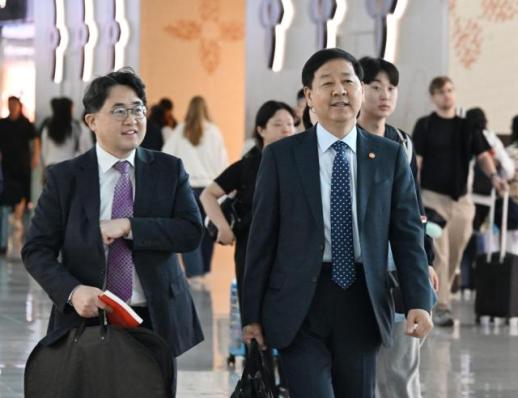 Deputy Prime Minister Koo Yoon-cheol Promotes South Korean Economy in Europe Koo Yoon-cheol, Deputy Prime Minister and Minister of Economy and Finance, is traveling to Europe to showcase South Korea's economic resilience and advancements in capital markets. According to the Ministry of Economy and Finance, Koo departed for the UK on the morning of May 17 to participate in the Investment Briefing (IR) for the South Korean economy. During his trip, he will conduct IR sessions for global investment institutions, hold meetings with major financial firms, and attend the G7 Finance Ministers and Central Bank Governors Meeting. This year, France holds the G7 presidency, and the meeting will take place in Paris on May 19. The agenda includes discussions on global imbalances and building mutually beneficial international partnerships, along with a working lunch for finance ministers and central bank governors from major economies. The meeting is expected to address the need to resolve current account imbalances between countries and explore ways to enhance the effectiveness of international development cooperation. Koo plans to emphasize that addressing complex crises, such as those arising from conflicts in the Middle East, requires collective efforts rather than actions from a single nation. He intends to share South Korea's emergency economic response strategies and plans to stimulate domestic demand and investment. Additionally, he will express his views on global economic issues as a bridge between the G7 and emerging economies. Koo will also strengthen ties with G7 member countries through meetings with UK Chancellor of the Exchequer Rachel Reeves, Canadian Finance Minister François-Philippe Champagne, and German Vice Chancellor and Finance Minister Lars Klingbeil. Before the meeting, Koo will conduct an IR session for major global investment institutions in London on May 18. He previously responded to suggestions at a recent meeting of the Treasury Market Advisory Committee, stating that he would implement timely market stabilization measures to enhance IR efforts targeting investors from Asia and other regions. Koo aims to attract investment by highlighting South Korea's strong global competitiveness, advancements in capital markets, and key policy directions for achieving a hyper-innovative economy. On the same day, he will meet with top executives from major global financial firms, including HSBC and Schroders, to discuss the state of the global economy and international financial markets. He will also meet with Odile Renaud-Basso, President of the European Bank for Reconstruction and Development, to explore how to support developing countries through development cooperation projects that incorporate artificial intelligence (AI). 2026-05-17 11:09:54
 -
 Government Expands Investment Support for Advanced Industries to 170 Billion Won The South Korean government is increasing investment support for materials, parts, and equipment (known as 소부장) companies to strengthen the supply chains of advanced industries such as semiconductors and batteries. This year, the support will also extend to the robotics and defense sectors, aiming to bolster domestic production capabilities across strategic industries amid U.S.-China supply chain competition. On May 17, the Ministry of Trade, Industry and Energy announced that it will unveil the investment support plan and procedures for small and medium-sized enterprises in the national advanced strategic industry sector on May 18. This initiative, launched last year, aims to enhance domestic production capacity for key materials and components in response to global supply chain restructuring and rising protectionism, ensuring the stability of advanced industry supply chains. Last year, the government provided approximately 120 billion won to 22 companies, resulting in a total investment plan of 556.1 billion won for facilities and locations. About 80% of the supported companies invested outside the capital region, contributing to regional economic revitalization. For this year, the national budget for this initiative has been set at 100 billion won, an increase of 30 billion won from last year. Including local government contributions, the total support is expected to reach around 170 billion won. Based on last year's average support per company, the government anticipates that about 30 companies will benefit from this program. Industry experts believe that as competition intensifies in sectors like artificial intelligence (AI) semiconductors, advanced defense, and battery supply chains, the increased support will serve as an incentive for small and medium-sized 소부장 companies to make significant facility investments. The scope of support has also expanded. In addition to the existing four sectors—semiconductors, batteries, biotechnology, and displays—robotics and defense have been newly included this year. Consequently, small and medium-sized 소부장 companies producing stable supply chain items or strategic materials in six national advanced strategic industry sectors will now be eligible for support. The support will cover 30% to 50% of new investment costs for domestic facilities and locations. The Ministry aims to reduce supply chain risks by expanding domestic production bases for key items in advanced strategic industries while also encouraging regional investments. Applications for the program can be submitted through the e-Nara Doum website until 4 p.m. on July 17. The Ministry and the Korea Industrial Technology Agency (KIAT) will hold an information session on May 27 at the Korea Technology Center in Gangnam, Seoul, to provide details on the support and application process to companies and local governments.* This article has been translated by AI. 2026-05-17 11:07:52
 -
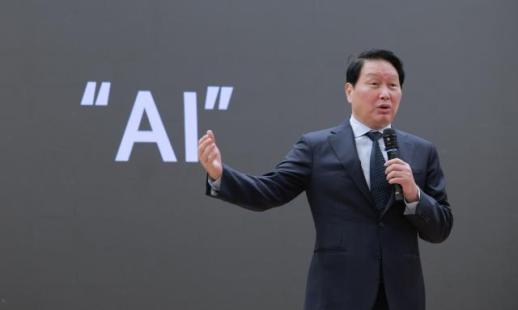 SK Group's Three-Year Rebalancing Efforts Yield Significant Financial Gains SK Group's rebalancing efforts, initiated in 2024, have entered their third year, showing significant results this year with increased operating profits and reduced debt ratios. While the group's overall size has slightly decreased due to the divestment of less profitable businesses, it aims to accelerate its growth into a leading global conglomerate, comparable to big tech firms, by leveraging synergies in semiconductors, artificial intelligence (AI), energy, and telecommunications. On May 17, SK Holdings, the group's holding company, reported a consolidated revenue of 36.75 trillion won and an operating profit of 3.67 trillion won for the first quarter of this year, marking increases of 19% and 760%, respectively, compared to the previous year. The group's borrowing decreased from 63.23 trillion won to 49.55 trillion won, a reduction of about 21%, leading to a drop in the debt ratio from 172.8% to 135.7%. Following concerns raised by Chairman Choi Tae-won about a potential 'sudden death' scenario for the company during a CEO seminar in late 2023, Choi Chang-won, who took office around the same time, has aggressively pursued business restructuring. Choi emphasized that while the focus has been on restructuring and asset efficiency, it is now time to enhance core competitiveness through operational improvements and AI-driven business innovation. Operational improvements aim to optimize key performance indicators (KPIs) such as profit margins and customer satisfaction, maximizing the financial strength and core competitiveness of existing businesses to navigate uncertainties in the market. This strategy has been developed collaboratively by the core management team of SK Group, led by Choi Tae-won and Choi Chang-won. According to a report by Korea Credit Rating, SK Group has achieved approximately 13 trillion won in asset efficiency through restructuring over the past two years. The number of affiliates has decreased from 219 in 2024 to 151 as of May 2026. SK Holdings sold an 85% stake in SK Specialty to Hahn & Company for 2.63 trillion won and disposed of a 14% stake in SK Biopharmaceuticals for 1.25 trillion won. SK Innovation raised over 1 trillion won by selling the Boryeong LNG Terminal and the site of the Cowon Energy Service headquarters, actions taken to secure short-term liquidity amid growing global business uncertainties. The company is also consolidating overlapping businesses. To enhance synergies in its energy sector, SK Innovation is pursuing a merger with SK E&S, which operates in the LNG sector, integrating its refining, petrochemical, and battery businesses. This move aims to improve cost structures for SK On and secure financial strength for future growth. Efforts to strengthen the competitiveness of the semiconductor back-end business, which supports SK Hynix, are also underway. SK Eco Plant has incorporated four semiconductor material companies—Essencore, SK Airplus, SK Trichem, and SK Materials JNC—into its subsidiaries. In the telecommunications sector, SK Telecom, a leader in the industry, is accelerating its AI data center business in collaboration with its affiliate SK Broadband. For instance, the Ulsan AI data center, being built in partnership with tech giant Amazon, is attracting interest from global private equity firms such as KKR and IMM Investment-Stonebridge Capital, which are considering multi-billion won investments.* This article has been translated by AI. 2026-05-17 11:04:28
 -
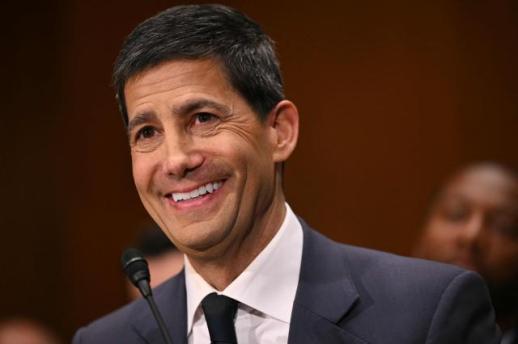 Kevin Warsh, Next Fed Chair, Reports Sale of $1.68 Million in Coupang Shares Kevin Warsh, the incoming chair of the U.S. Federal Reserve, is set to sell a significant portion of his shares in Coupang, the parent company of Coupang Inc. On May 16, the U.S. Securities and Exchange Commission (SEC) disclosed that Warsh plans to sell 102,363 shares of Coupang Class A common stock. The shares, which he received as part of his compensation for serving on Coupang's board from August 2021 to June 2025, are valued at approximately $1.68 million (about 25.2 billion won). This sale is seen as a measure to address potential conflicts of interest ahead of his Fed chair appointment, as the Fed's ethics rules prohibit its chair and directors from holding individual company stocks. Despite this sale, Warsh still holds over 459,000 shares of Coupang, meaning the sale represents about 22.3% of his total holdings. It appears he is opting for a staggered sale to minimize market impact, and additional sales of his remaining shares may follow. Warsh has served on Coupang's board since October 2019 but stepped down from his position after being confirmed by the Senate as the next Fed chair on May 13. Coupang stated that Warsh's resignation was due to his upcoming role as Fed chair and emphasized that it was not related to any disagreements regarding the company's operations, policies, or practices. Additionally, Warsh is noted for being the son-in-law of Ronald Lauder, heir to the Estée Lauder cosmetics fortune, and is considered one of the wealthiest individuals to have held the Fed chair position. According to a financial disclosure made public in April, Warsh and his spouse have a combined net worth of at least $200 million (approximately 300 billion won).* This article has been translated by AI. 2026-05-17 11:03:20
 -
 NH Bank President Kang Tae-young Supports Rural Labor in Gangwon Province NH Bank announced on May 17 that President Kang Tae-young visited Guam Village in Dongsan-myeon, Chuncheon, to participate in joint rural support activities.The volunteer event included over 60 participants, including President Kang and Heo Jang-hyun, head of Gangwon Techno Park. The group assisted with agricultural tasks such as thinning peach blossoms and installing support stakes for peppers. They also delivered watermelons to all households in the village, which is facing labor shortages during the busy farming season, as a gesture of support.Kang Tae-young stated, "It is important for finance to play a role that encompasses continuous support for agriculture and rural areas, as well as the growth of innovative local enterprises. We aim to be a bank that grows together with the community based on ESG (Environmental, Social, and Governance) management principles." 2026-05-17 10:57:42
 -
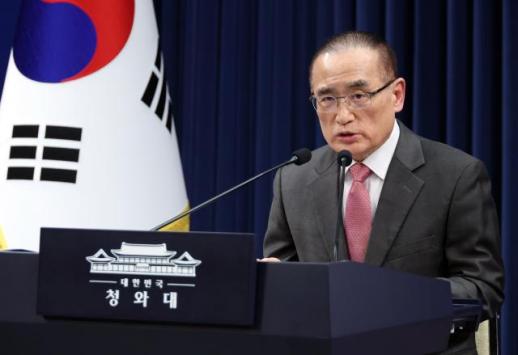 South Korea and U.S. Near Agreement on Transition of Wartime Operational Control Wiesungrak, the Chief of the National Security Office, stated on May 17 that discussions regarding the transition of wartime operational control between South Korea and the United States are progressing, with both sides nearing agreement on the timing. "There is not a five to ten year gap between our positions; we are close to consensus on the timing of the transition," he said. During an appearance on KBS's Sunday Diagnosis, Wiesungrak noted that military consultations are ongoing and that there are no significant differences in conditions or timing for the transition, emphasizing that it is fundamentally a political decision. U.S. Forces Korea Commander General JB Vowell recently mentioned in a congressional hearing that the first quarter of 2029 is the target for the transition. Wiesungrak reiterated that the government's official stance is to aim for a swift transition within the current administration, adding that final details could be addressed at high-level talks between the leaders or their representatives. He also mentioned that a roadmap for the transition will be developed in the second half of this year, and once full operational capability is verified, a proposal for the transition timing will be made. Discussions on the timing will then intensify, where compromises between the U.S. and South Korea will need to be found. Regarding the strategic flexibility of U.S. Forces Korea, Wiesungrak explained that while the U.S. military operates under the command of the U.S. President, it also operates under South Korean sovereignty. Therefore, any flexibility exercised by the U.S. must respect South Korean interests. In response to concerns that U.S. military movements could lead to diplomatic issues between China and South Korea in the event of a conflict in the Taiwan Strait, Wiesungrak stated, "If we maintain the framework of agreement and operational nuances between South Korea and the U.S., we can manage to avoid unwanted disputes, so this is not a major concern." Wiesungrak also mentioned efforts to advance discussions on issues such as nuclear reprocessing and nuclear submarines between South Korea and the U.S., expressing hope to report positive developments soon. Regarding the attack on the HMM Namooho in the Strait of Hormuz, Wiesungrak said, "I cannot say it was Iran, and it is not the right time to delve into who within Iran may be responsible." He added, "We have brought the necessary evidence to Seoul, and investigations are currently underway." He concluded by stating, "We will quickly ascertain the facts and disclose them as soon as possible, taking necessary actions without any other considerations."* This article has been translated by AI. 2026-05-17 10:51:29
 -
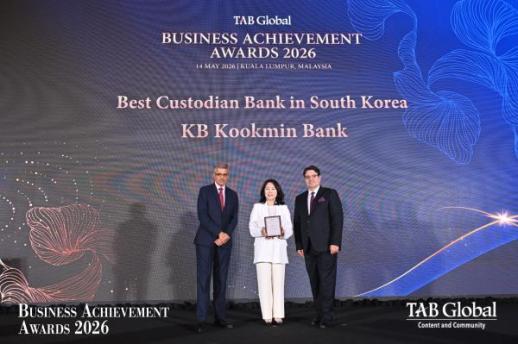 KB Kookmin Bank Named South Korea's Best Custodian Bank for 12th Consecutive Year KB Kookmin Bank has maintained its position as South Korea's best custodian bank for the 12th consecutive year, as recognized by The Asian Banker. On May 17, the bank announced that it was awarded the title of Best Custodian Bank in South Korea at the 'Global Financial Market Awards 2026' ceremony held in Kuala Lumpur, Malaysia, on May 14. Founded in 1996 in Singapore, The Asian Banker is a specialized institution providing research and consulting services related to the financial industry in the Asia-Pacific and Middle East regions. Each year, it evaluates financial institutions across various sectors to determine the best in each category. The Asian Banker noted, "Kookmin Bank leads the South Korean custody market with a stable portfolio management structure. It received high marks for its reliable IT systems, top-tier professional staff, excellent internal control systems, and differentiated service offerings." Kookmin Bank manages and safeguards assets for over 270 clients, including domestic and international asset management firms, government agencies, and insurance companies, covering more than 7,000 fund assets. A representative from Kookmin Bank stated, "We will continue to enhance customer value and strengthen our internal capabilities to solidify our status as the best custodian bank in South Korea, ensuring that our clients can trust and conveniently utilize our services."* This article has been translated by AI. 2026-05-17 10:48:00