
Journalist

MIN JAE YONG
-
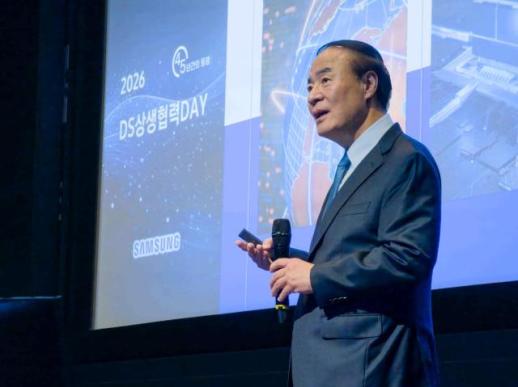 Samsung Vice Chairman Jeon Young-hyun Calls for Unity After Wage Negotiation Agreement Jeon Young-hyun, Vice Chairman and CEO of Samsung Electronics and head of the Device Solutions (DS) Division, urged employees to unite following a tentative agreement on wage negotiations this year. His message came after a period of intense labor-management conflict that nearly escalated into a general strike, signaling a move toward organizational stability and internal cohesion.On May 21, Samsung Electronics announced via internal communication channels a notice regarding the '2026 Wage Negotiation Tentative Agreement' along with a message from Vice Chairman Jeon directed at DS Division employees.In his message titled 'Let's Come Together Again,' Jeon encouraged weary employees from the prolonged conflict and emphasized the need for unity to face the upcoming global semiconductor competition.He stated, "It was the dedication of our employees, who have worked diligently in their respective roles despite challenging circumstances, that made this possible."Jeon acknowledged that while there were disagreements and conflicts during the negotiation process, it was clear that everyone shared a commitment to the company. He expressed that he takes seriously the concerns and disappointments employees have felt throughout this process, particularly in light of rising discontent regarding performance bonuses and internal conflicts among business units.Samsung Electronics and its labor union have been at odds over performance bonus systems and wage increase rates. The issue of compensation for the DS Division has become a central point of contention, especially as the semiconductor market shows signs of recovery. The union had even threatened a general strike, leading to heightened tensions. Amid significant external uncertainties and concerns over potential production disruptions, the parties reached a dramatic tentative agreement, averting a worst-case shutdown scenario.The tentative agreement still requires a vote from union members. The Samsung Electronics union's joint action headquarters plans to conduct voting from 2 PM on May 22 to 10 AM on May 27. If a majority of the eligible members participate and a majority vote in favor, the agreement will be finalized; however, if it fails, discussions about a general strike may be reignited.Thus, Jeon's message is interpreted as a heartfelt appeal to union members to endorse the agreement. He urged, "This tentative agreement still requires gathering the opinions of our members. I ask everyone to come together for the future of the company and its employees."Furthermore, he identified 'the chemical bond of the organization' as a top priority following the labor-management conflict. He emphasized, "What matters now is to leave the time of conflict behind and unite as one. I believe that if we work together based on mutual respect and trust, we can achieve another significant leap forward."In conclusion, Jeon stated, "The company will continue to listen to the efforts and dedication of our employees and strive to create a better working environment."* This article has been translated by AI. 2026-05-21 15:29:21
 -
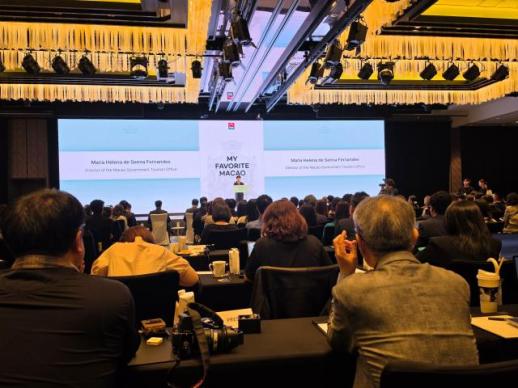 Macau Aims to Attract South Korean Tourists as a Multi-Destination Hub "This year, we aim to attract 41 million tourists, leveraging diverse infrastructure and integrated content to draw South Korean travelers to Macau," said Maria Helena de Senna Fernandes, Chair of the Macau Tourism Board. Macau is accelerating its efforts to attract South Korean tourists as it transforms into a multi-destination hub connecting Hong Kong and Guangdong Province. On May 21, the Macau Tourism Board held the 2026 Macau Tourism Seminar and Travel Mart at the Four Seasons Hotel in Seoul, where it unveiled its key tourism strategies for the year. ◆ Macau Expands Engagement with South Korean Travelers The event was attended by over 250 representatives from Macau, including Maria Helena de Senna Fernandes, the Chinese Ambassador to South Korea Dai Bing, and officials from the Hengqin Economic Development Bureau, Macau International Airport, and major integrated resorts, as well as members of the South Korean travel industry. In her welcoming remarks, Fernandes noted, "South Korea is Macau's top overseas tourism market, with 184,900 South Koreans visiting in the first quarter of this year, a 7.4% increase compared to the same period last year. We aim to increase our engagement with South Korean travelers as we target a total of 41 million tourists and over 3 million foreign visitors this year." Dai Bing also addressed the audience, stating, "Since the return of Macau to the motherland, it has successfully implemented 'one country, two systems' and has established itself as a key city in the Guangdong-Hong Kong-Macau Greater Bay Area. The Chinese Embassy in South Korea will closely cooperate with the Macau SAR government to actively support exchanges in culture, tourism, and MICE (Meetings, Incentives, Conventions, and Exhibitions) among various fields." ◆ Free Bus Service from Hong Kong to Macau: A Multi-Destination Travel Experience This year's core tourism strategy for Macau focuses on enhancing accessibility and diversifying the global market. The emphasis is on developing multi-destination tourism products linked to Hengqin, Guangdong, and Hong Kong. As part of the "Fly You to Macau" campaign, free direct buses to Macau will be provided to foreign tourists using Hong Kong International Airport until the end of the year. Additionally, with the implementation of China's 240-hour visa-free transit policy, travelers from 55 countries can explore Macau, Hengqin, Guangdong, and Hong Kong without a separate Chinese visa for up to 10 days. ◆ Culinary Experiences, Performances, and Convenient Payments: Enhancing Stay Tourism Macau is also expanding its offerings to transform from a simple visit to a stay-oriented destination. The "Tourism Plus" strategy combines MICE, culture, sports, and culinary experiences, with various experiential events planned throughout the year. The goal is to extend tourists' stay by featuring large-scale performance content. To enhance payment convenience for South Korean travelers, Macau has improved its payment options. In addition to KakaoPay, this year it will collaborate with Naver Pay to create a travel environment free from currency exchange burdens. The Macau Tourism Board plans to continue strengthening business cooperation with the domestic industry to cater to diverse demands, from family travel to the MICE sector.* This article has been translated by AI. 2026-05-21 15:25:19
 -
 Seongdong Police Chief Suspended Amid Allegations of Misusing Emergency Vehicle Gwon Mi-ye, the chief of the Seongdong Police Station, has been suspended amid allegations that she used an emergency electric vehicle for commuting to avoid restrictions under the government’s two-part vehicle system. The National Police Agency has initiated an official investigation and announced a strict response policy. According to Yonhap News on May 21, the National Police Agency stated in a press release that it has begun an official investigation into Gwon Mi-ye and that it will take strict action against any misconduct identified during the investigation. Consequently, Gwon has been placed on suspension. Police reports indicate that Gwon is suspected of using a government electric vehicle, which is exempt from the two-part system, for commuting instead of using a designated command vehicle that falls under the restrictions. This vehicle was originally designated for emergency response duties. As the controversy escalated, the National Police Agency also issued directives to reinforce discipline across the national police organization. The agency emphasized the importance of adhering to vehicle restrictions and maintaining electoral neutrality, especially in light of the national energy crisis and the ongoing election campaign. Earlier, Kang Yu-jeong, spokesperson for the presidential office, stated during a briefing that President Yoon Suk Yeol had been informed of the allegations and directed a prompt investigation to ensure accountability. The police plan to determine whether further disciplinary actions are necessary based on the findings of the investigation.* This article has been translated by AI. 2026-05-21 15:24:20
 -
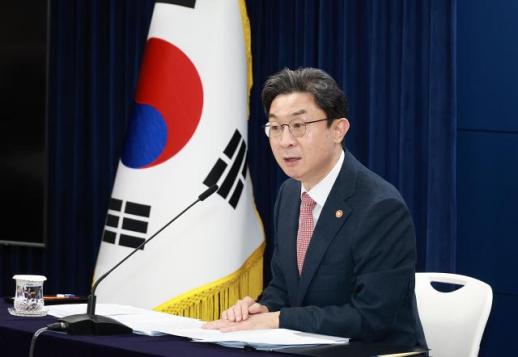 Korea Aims to Attract Foreign Investment with Expanded ETF Access and New IR Event Lee Ok-yeon, chairman of the Financial Services Commission, announced plans to expand the scope of foreign integrated accounts to include exchange-traded funds (ETFs) in order to attract foreign investment in the domestic stock market. He also revealed the establishment of a large-scale international investor relations (IR) event called 'Korea Premium Week.' This initiative aims to transition from the 'Korea Discount' to a 'Korea Premium' era through the globalization of capital markets. During a press conference held on the third floor of the Government Seoul Building in Jongno-gu, Seoul, on May 21, Lee stated, "We will actively promote the globalization of capital markets to attract global funds and high-quality assets, moving beyond a domestic-focused approach." The conference focused on the major achievements of the first year of the administration and key initiatives moving forward. He emphasized that while overseas individual investors are eager to purchase Korean stocks, there are currently insufficient mechanisms to facilitate this interest, saying, "We will address this issue." The Financial Services Commission plans to broaden the trading scope of foreign integrated accounts from stocks to include ETFs. This account system allows foreign investors to invest in the domestic stock market without needing to open an account with a local brokerage. The need for this expansion has arisen due to an increase in foreign individual investors entering the Korean market. Lee explained, "Currently, both institutional and individual investors can invest in domestic stocks through foreign integrated accounts. From April 26 to May 15, the cumulative trading volume reached approximately 58 trillion won, with net purchases around 22 trillion won, indicating significant capital inflow." He added, "At present, trading is limited to stocks, but we aim to expand this to include ETFs. We will soon announce regulatory changes, and for those ready, we plan to implement this quickly through non-action letters, even if it takes time." Additionally, the Financial Services Commission will host 'Korea Premium Week' in September, a large-scale IR event targeting foreign investors. This event aims to establish itself as a representative international event for the Korean capital market, similar to Japan's 'Japan Week' and Taiwan's 'Taiwan Week.' Lee noted, "Previously, various institutions held IR events separately, but we will systematically integrate and coordinate these to create an international event representing the Korean capital market. The program will be comprehensive and multifaceted over the course of a month, and we will also pursue overseas IR efforts to attract promising global companies to list on KOSDAQ." The commission is also accelerating efforts to improve capital market regulations. It is preparing to implement a ban on dual listing principles by July. To this end, two seminars will be held this month, and a draft of detailed regulations and guidelines will be released from late May to early June. Lee stated, "Rather than specifying exceptions for future advanced industries, we are focusing on clarifying the board's obligations to protect shareholders and establishing criteria for evaluating shareholder protection efforts. It is important to create universally applicable procedures and standards." He reiterated the need to ease regulations on network separation in the financial sector. The commission plans to temporarily relax these regulations for financial companies with a certain level of security capabilities that utilize AI for enhanced security, subject to expert review. Furthermore, it is considering completely abolishing network separation regulations for financial companies with advanced security capabilities and AI integration.* This article has been translated by AI. 2026-05-21 15:22:00
 -
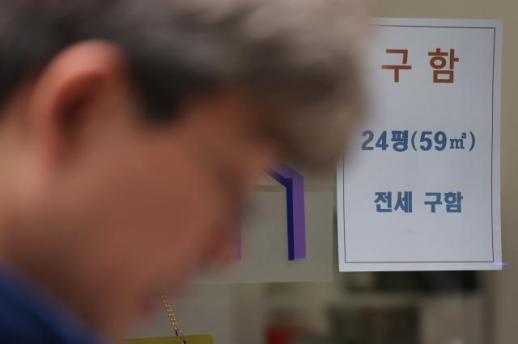 Seoul Apartment Prices Rise 0.31%, With Significant Gains in Gwanak and Gwangmyeong Apartment prices in Seoul have increased by 0.31% in the third week of May, driven by strong demand in the Gangnam Three Districts (Gangnam, Seocho, and Songpa) and an influx of actual buyers in the outskirts. According to the Korea Real Estate Agency's weekly apartment price trends released on May 21, the increase reflects a growing interest in mid- to low-priced apartments, particularly in areas where buyers have access to loans. Gwanak District saw the largest rise at 0.45%, up 0.25 percentage points from the previous week. Other districts with significant increases included Seongbuk (0.47%), Gwangjin (0.42%), Dobong (0.42%), and Nowon (0.39%). Nam Hyuk-woo, a researcher at Woori Bank's Real Estate Research Institute, noted, "In areas like Gangbuk and Gwanak, the ease of obtaining loans and the availability of reasonably priced listings are attracting actual demand from first-time buyers and newlyweds. There is potential for sellers in these areas to move up to higher-priced regions along the Han River, which could have a cascading effect on the market." After a period of decline due to the anticipated resumption of capital gains tax, the Gangnam Three Districts and Yongsan have all turned upward, with increases accelerating last week. Songpa District recorded the highest increase among the four districts at 0.38%, driven by major complexes in Jamsil and Geoyeo-dong. Gangnam (0.20%), Seocho (0.26%), and Gangdong (0.21%) also saw notable gains. Nam added, "As asking prices rise, the market is generally in a wait-and-see mode. However, Songpa is a preferred area for those working in the semiconductor industry, which may continue to attract demand for relocation." In southern Gyeonggi Province, key areas are also showing positive trends in apartment prices. Suji in Yongin (0.38%), Dongtan in Hwaseong (0.46%), Yeongtong in Suwon (0.35%), and Seongnam (0.47%) are leading the upward momentum, reflecting optimism about the booming semiconductor industry. In non-regulated areas like Gunpo (0.18%) and regulated areas such as Uiwang (0.17%) and Gwangmyeong (0.72%), the influx of actual demand continues to support strong apartment prices.* This article has been translated by AI. 2026-05-21 15:19:15
 -
 Government to Expand Experience-Based Economic Education with Tailored Content The Economic Education Association held discussions with stakeholders on enhancing economic education and innovating through artificial intelligence (AI). The government announced plans to build an economic education ecosystem that responds to the digital transformation era by expanding experiential learning and strengthening tailored content for different life stages. The Economic Education Association hosted its "2026 First Half Workshop" on May 21 at the DB Life Human Resources Development Center in Hwaseong, Gyeonggi Province. The event was attended by representatives from 51 member organizations across the private, financial, media, and public sectors, along with officials from government ministries and public institutions. They discussed future directions for economic education, exemplary practices in the field, and collaboration among member organizations. In his opening remarks, Park Jae-wan, president of the Economic Education Association, stated, "We will lead the activation and solidification of economic education based on solidarity and cooperation with our member organizations. We will also focus our efforts on the digitalization of economic education, including the integration of AI into our programs." Kim Young-no, policy planning officer at the Ministry of Economy and Finance, remarked, "This year, the government aims to promote experience-based economic education and expand tailored content for different life stages and social classes under the vision of 'dynamic economic education that reaches everyone.' Government policies must be integrated with the field experiences and cooperation of our member organizations to become truly effective."* This article has been translated by AI. 2026-05-21 15:16:23
 -
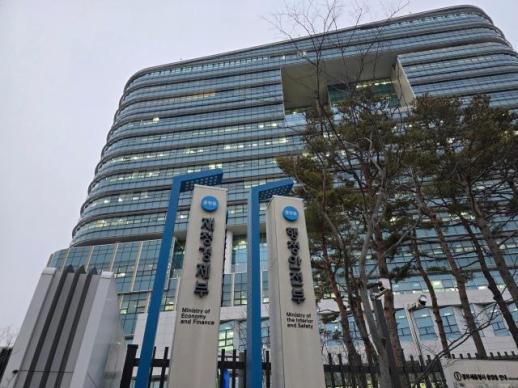 Korean Finance Ministry Promotes K-GX for Climate Crisis Response On May 21, Heo Chang, the Second Vice Minister of Finance, stated that combining South Korea's climate technology and development experience with the Global Green Growth Institute's (GGGI) project development capabilities and the Green Climate Fund's (GCF) financial resources could present a new growth model in response to the climate crisis. He made these remarks during the GGGI-GCF joint conference held at the Four Seasons Hotel in Seoul, which was attended by over 100 participants, including diplomats. In his opening speech, Heo emphasized that the government is actively pursuing the Korean-style Green Transition (K-GX) to address the climate crisis and is expanding cooperation with international organizations based in South Korea, such as the GCF and GGGI. He expressed the intention to establish a virtuous cycle where climate crisis responses lead to future growth drivers. He further explained that through the Global Voluntary Carbon Market (GVCM), which is being developed in collaboration with the UN Framework Convention on Climate Change (UNFCCC) and GGGI, the GCF's carbon reduction achievements could be converted into carbon credits, potentially generating new revenue while contributing to both carbon reduction and development funding. The government plans to strengthen cooperation with major climate and green international organizations located in South Korea. A Ministry of Finance official stated, "We will actively seek ways to enhance collaboration with international organizations such as the GCF and GGGI in the future."* This article has been translated by AI. 2026-05-21 15:15:00
 -
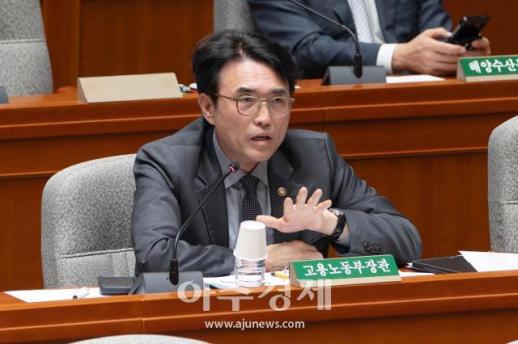 Labor Deputy Minister Warns of Potential Employment Crisis Amid Middle East Tensions Kwon Chang-jun, the Deputy Minister of Employment and Labor, stated on May 21 that the recent instability in the Middle East could lead to significant employment shocks, warning that small signs of trouble may escalate into a broader crisis. He emphasized the need for proactive measures to prevent employment instability from spreading. During the eighth emergency meeting on labor conditions with representatives from the plastic and textile industries, Kwon assessed the impact of the prolonged conflict in the Middle East on these sectors. He also gathered feedback on challenges faced by the industries to explore necessary support measures to prevent an employment crisis. The industries are currently grappling with rising raw material costs due to supply chain disruptions stemming from the Middle East. The instability in the supply of naphtha has led to increased prices, raising concerns particularly in the plastic sector regarding profitability due to rising synthetic resin costs, and in the textile sector due to higher polyester fiber prices. According to the Ministry of Employment and Labor, the number of insured workers in the plastic manufacturing sector has decreased to 175,000 as of last month, continuing a downward trend since January of last year. The textile manufacturing sector has 88,000 insured workers, a decline that has persisted since September 2021, while the clothing manufacturing sector has seen a drop to 46,000 since October 2016. In response, industry representatives have requested multifaceted support to prevent the situation from escalating into an employment crisis. They highlighted the need for employment retention packages and solutions to address labor shortages. Kwon assured that he would seek various support measures to ensure timely assistance where it is needed. Kwon stated, "We will swiftly reform necessary systems and enhance support to enable companies to actively work towards retaining employment. We will simplify the eligibility criteria and procedures for employment retention subsidies to actively recognize and support those in need." He also noted that the designation of special employment support industries has been adjusted to allow for quicker responses to on-the-ground situations, reducing the assessment period for quantitative criteria from 12 months to 6 months. Kwon pledged to review designation criteria based on industry-specific crisis situations and significantly enhance support for training and job stability. To attract job seekers, he mentioned that incentives would be provided for youth employment through the Youth Job Leap Grant, particularly targeting small and medium-sized enterprises in regions where the plastic and textile industries are concentrated. He emphasized the plan to hold job demand days in these areas to provide focused recruitment support services. Kwon urged, "Please communicate openly about how government support can effectively align with on-site needs. I will take your voices as crucial signals and listen carefully to consider the necessary support together." He concluded by stating, "We will remain vigilant to the warnings coming from the field and will promptly review and respond to necessary measures. If the government and industry maintain their awareness and work together, we can overcome this crisis."* This article has been translated by AI. 2026-05-21 15:12:17
 -
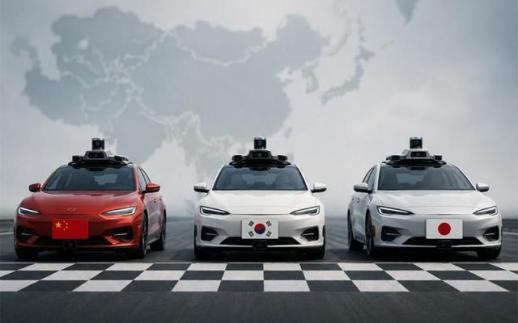 South Korea happy to stay the laggard in self-driving race in Asia SEOUL, May 21 (AJP) - The self-driving race on Asian roads is heating up, but South Korea is in no hurry as it bets safety-first approach will take it farther at the end of the day. China is rapidly scaling up commercial robotaxi fleets while Japan has unlocked Level 4 services on public roads. Modest in comparison, Hyundai Motor Group is launching a citywide testbed in Gwangju to close the gap with overseas rivals. Speaking to reporters last week at the group’s headquarters in southern Seoul, Hyundai Motor Group Chairman Chung Eui-sun openly acknowledged the gap but signaled that Hyundai would not chase speed at any cost. "Autonomous driving is being pushed very quickly by China and Tesla," Chung said, admitting "Waymo is also doing well." "Technology can make up for what is lacking, but the most important thing is safety," he added, suggesting Hyundai would not be matching rivals in speed. In any fledgling market, moving first has its advantages. The global autonomous driving market is projected to grow from $286.45 billion in 2026 to about $3.03 trillion by 2033, according to Coherent Market Insights. Goldman Sachs Research separately estimates the broader autonomous vehicle sector could generate roughly $2 trillion in annual revenue by 2035, with the global commercial robotaxi fleet expanding from around 7,000 vehicles in 2025 to some 6 million by 2035. China leads the Asian pack. Baidu’s Apollo Go now operates in 27 cities globally, with weekly rides peaking at more than 350,000 in March, and is expected to begin testing robotaxis in London alongside Uber and Lyft. Pony.ai, partnered with Toyota Motor China and GAC Toyota, said in February it had begun mass production of its seventh-generation bZ4X robotaxi and is targeting a fleet of more than 3,000 vehicles by year-end. WeRide has expanded into Singapore and the Middle East, while Mercedes-Benz-backed Momenta is rolling out robotaxis on Uber’s network in German cities. Japan is moving less aggressively, but visibly nonetheless. The country revised its Road Traffic Act in April 2023 to permit Level 4 driving on public roads under prefectural public safety commission oversight, paving the way for pilot services by Honda Motor, Nissan, Toyota Motor and open-source platform developer Tier IV. Eiheiji Town in Fukui Prefecture launched the country’s first Level 4 public-road service in May 2023, and Tier IV completed robotaxi pilot tests in Tokyo’s Odaiba and Nishi-Shinjuku districts in late 2024. Korea, despite its technology and manufacturing capacity, is still taking its time. The Gwangju pilot is Seoul’s most ambitious response to date, with the southwestern city last month becoming the first major Korean municipality to designate its entire road network as a Level 4 testbed. Hyundai plans to deploy 200 self-driving vehicles equipped with eight cameras and one radar in the second half of this year. The Gwangju fleet will run on Atria AI, an in-house autonomous driving stack developed by Hyundai subsidiary 42dot. Hyundai is also weighing adoption of Alpamayo, the open-source reasoning vision-language-action model unveiled by Nvidia at CES 2026, although no formal partnership has been announced. In January, the group named Park Min-woo — a self-driving specialist who previously worked at Tesla and Nvidia — as chief executive of 42dot and head of its Advanced Vehicle Platform division. Structural hurdles remain. The Board of Audit and Inspection, in a 2024 review of Korea’s response to the Fourth Industrial Revolution, said inter-ministerial disputes had delayed government decisions on autonomous driving for an extended period, widening the technology gap with overseas rivals. Yet Hyundai’s safety-first posture, echoed by domestic researchers, points to what some experts see as Korea’s potential differentiator. While the country may trail Tesla’s accumulated driving data and the centralized push of China’s state-backed champions, Korean academics argue the local industry is steering its AI training toward courtesy, caution and respect on the road — a "warmer" model of autonomy that could carve out a distinct niche. "Aggressive driving is something an autonomous AI can also learn," said Lim Yong-seob, professor of robotics and mechatronics engineering at the Daegu Gyeongbuk Institute of Science and Technology. "AI prioritizes goal completion above all, so it may follow user commands absolutely and even adopt dangerous driving methods to save time, sidelining humans and triggering collisions as vehicles compete for resources with other autonomous cars," Lim said. "Research actually shows that cooperative autonomous driving with frequent yielding can sharply cut collision rates, even at the cost of slightly slower travel. A conservative, human-protecting style of autonomy — one that errs on caution in rain or unusual conditions — will become increasingly important." For Seoul, the next 18 months in Gwangju may determine whether South Korea can claw back lost ground — or watch the next great mobility platform be built largely in Beijing, Tokyo and Silicon Valley. 2026-05-21 15:11:28
 -
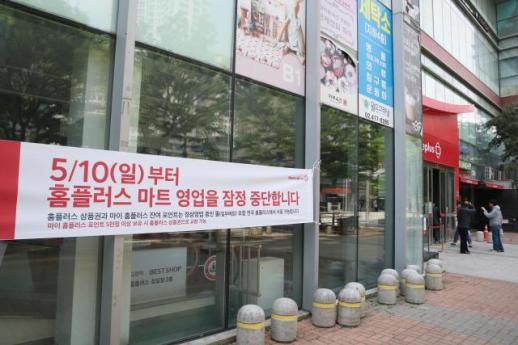 Homeplus Requests Bridge Loan from Meritz Amid Financial Struggles Homeplus has once again requested a bridge loan from Meritz Financial Group to secure emergency operating funds. This request comes as the company prepares for the inflow of funds from the sale of Homeplus Express at the end of next month, which is expected to cover about a month’s worth of operational expenses. On May 21, Homeplus stated, "The proceeds from the sale of Homeplus Express, which is part of our supermarket division, are expected to arrive by the end of next month. We have requested Meritz Financial Group to provide a bridge loan to cover our operational needs for the next month, using these proceeds as collateral." Included in this request is a performance guarantee from Kim Kwang-il, vice chairman of MBK Partners, who is overseeing Homeplus. The company noted, "Vice Chairman Kim has agreed to provide a performance guarantee and has also proposed additional collateral options." Homeplus emphasized that it is currently facing a severe financial crisis. The company remarked, "Today is the payroll date for May, but we have only been able to pay part of April's wages, and we are experiencing significant difficulties in product supply. The bridge loan is essential for the company to navigate its current challenges." Furthermore, the company added, "This funding will also help improve the recovery rate for creditors through the normalization of the company. We have proposed all possible options available to us, and we hope for a positive review and immediate action from Meritz." Meanwhile, Homeplus has suspended operations at 37 of its 104 stores nationwide until July 3.* This article has been translated by AI. 2026-05-21 15:07:03