
Journalist

MIN JAE YONG
-
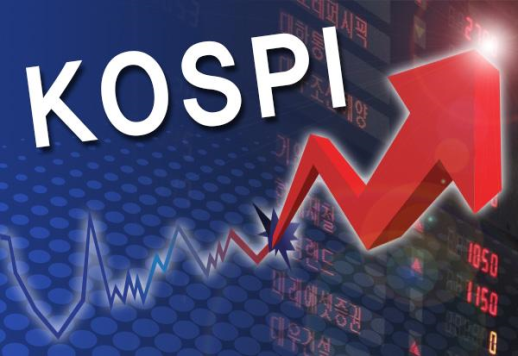 KOSPI Surges Past 7700 After Four Days of Decline, Driven by Samsung and SK Hynix Gains The KOSPI index, which fell below 7100 after initially surpassing 8000 on May 15, rebounded sharply after four days of decline, breaking through the 7700 mark. As of 12:49 PM on May 21, the KOSPI was up 7.66% from the previous trading day, reaching 7761.43. Early in the session, the index surged, triggering simultaneous buy-side circuit breakers for both KOSPI and KOSDAQ. Investor sentiment improved following a tentative wage agreement reached between labor and management at Samsung Electronics, coupled with Nvidia's earnings report that exceeded market expectations. Additionally, President Donald Trump indicated that negotiations with Iran were nearing completion, contributing to a decline in international oil prices and U.S. Treasury yields, which positively affected the stock market. In the securities market, institutional investors purchased over 1.4 trillion won in stocks, driving the index higher. Foreign investors sold about 1 trillion won, while individual investors sold around 400 billion won, realizing profits. Samsung Electronics, which resolved its labor negotiations dramatically the previous night, saw its shares soar by over 8%, touching 300,000 won early in the session. SK Hynix's stock rose 11.06% to 1,938,000 won. Samsung Electro-Mechanics also experienced a surge of over 12% after announcing a 1.5 trillion won supply contract for silicon capacitors with a global company. Samsung Life Insurance and Samsung C&T rose by 12% and 11%, respectively. Hyundai Motor Group stocks also performed well, with Hyundai Motor up 9% and Kia up over 11%. Kim Seok-hwan, a researcher at Mirae Asset Securities, noted, "The agreement at Samsung Electronics has led to a broad rally among its affiliates. The Hyundai Motor Group is also showing strength due to expectations surrounding its Atlas business roadmap and vertical integration into mass production." The KOSDAQ index opened 29.23 points (2.77%) higher at 1085.30 and, as of 12:49 PM, was up 5.07% at 1109.61 compared to the previous trading day. In the KOSDAQ market, foreign investors were net buyers of 130 billion won, while institutions bought 160 billion won. Individual investors sold over 280 billion won. Top KOSDAQ stocks also saw gains, including Alteogen (0.70%), EcoProBM (10.58%), EcoPro (10.36%), Rainbow Robotics (15.20%), Kolon TissueGene (3.56%), Samchundang Pharm (2.45%), Lino Biotech (6.15%), Rigakem Bio (3.62%), HLB (2.94%), and ABL Bio (4.70%). MakinaRax, which successfully debuted on the stock market with a "double-up" (quadrupling its initial public offering price), continued to rise by over 30%, reaching its upper limit today.* This article has been translated by AI. 2026-05-21 14:37:07
 -
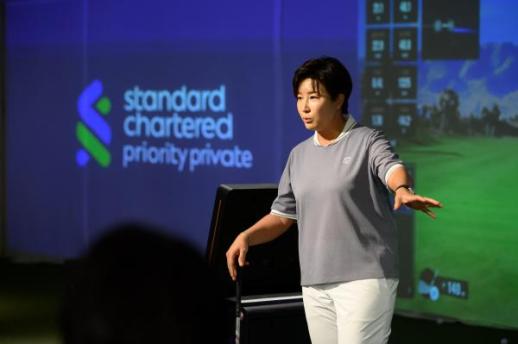 SC First Bank Hosts Masterclass with Park Se-ri for High-Net-Worth Clients SC First Bank is accelerating its tailored programs for ultra-high-net-worth individuals amid fierce competition in the private banking market. On May 15, SC First Bank successfully held a Masterclass featuring renowned golfer Park Se-ri, the bank announced on May 21. The Masterclass is part of SC First Bank's private banking program, which invites top leaders from various fields to provide lectures and experiences for clients with assets exceeding 1 billion won (approximately $900,000). This session focused on the popular theme of leisure and sports, with Park, the bank's first private banking client, participating directly. A highlight of the event was a personalized 'one-point lesson' session for select clients chosen through a lottery. Park provided tailored coaching to the invited guests. Following the lessons, a signing event and photo session were held for all attendees. In addition, SC First Bank organized events for its high-net-worth clients, including professional golfer lessons, mini-games, and a dinner program. Furthermore, SC First Bank plans to host the '2026 Global Future Leaders Program' from July 31 to August 2 for the children of high-net-worth clients. This program will feature a global mentoring camp with students from Oxford and Cambridge. Recruitment for the program will take place from June 1 to June 30, with 40 students selected from the middle and high school children of clients with assets of 500 million won (approximately $450,000) or more. Sachin Bambani, Deputy Head of High-Net-Worth and Wealth Management at SC First Bank, stated, "This Masterclass was designed to offer a unique experience sharing the success philosophy of leaders, and we will continue to provide differentiated services that closely manage the growth of the next generation."* This article has been translated by AI. 2026-05-21 14:36:00
 -
 aespa maps emotional journey on upcoming album 'LEMONADE' SEOUL, May 21 (AJP) - K-pop girl band aespa has introduced additional tracks from its upcoming second full-length album "LEMONADE," highlighting an emotional arc that moves through freedom, self-protection, desire and connection, SM Entertainment said Thursday. The 11-track album is set for release at 1 p.m. (0400 GMT) on May 29 through major streaming platforms and will also be available as a physical album. “LEMONADE” marks aespa’s first full-length album in roughly two years group's first studio album "Armageddon," which was released in May 2024. Among the newly introduced tracks, "Can’t Help Myself" is a rock song driven by rough guitar sounds and the members’ clear vocals. The lyrics carry a message of choosing to live freely even in the face of rejection or criticism. "Camouflage" is a hyperpop song with dreamy synth textures. The track uses the image of camouflage to describe hiding one’s true feelings and presenting another version of oneself as a form of self-defense. “My Plan” is a mid-tempo R&B track about pursuing someone with a playful sense of confidence, while “‘Til We Die” is a pop-rock song about staying together with those who have offered strength and support. The album also includes the title track "LEMONADE," prerelease single "WDA (Whole Different Animal)," "Switchblade" featuring Ty Dolla $ign, and dance tracks "SHAKIN’," "Bite" and "Roll." Preorders are available through online and offline music retailers. 2026-05-21 14:34:01
 -
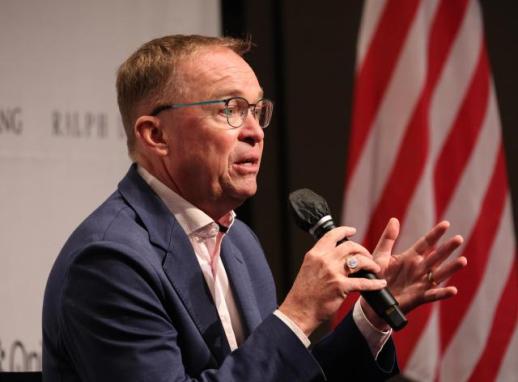 AMCHAM invites former White House acting chief of staff Mulvaney SEOUL, May 21 (AJP) - The American Chamber of Commerce in Korea hosted a special luncheon seminar at Grand Hyatt Seoul on Wednesday, inviting former White House Acting Chief of Staff Mick Mulvaney to discuss the future direction of U.S. policy under a possible second Donald Trump administration. The event, titled “The Return of America First: What Trump 2.0 Means for Business and Geopolitics,” focused on shifting U.S. policy priorities, global trade realignment and the broader implications for international business and South Korea-U.S. economic relations. During the luncheon session, Mulvaney shared insights into policymaking processes inside the Trump administration and discussed strategic priorities expected to shape the evolving geopolitical and economic landscape. The discussion also explored potential impacts of “America First” policies on global supply chains, trade and investment, and the changing regulatory environment affecting multinational businesses. 2026-05-21 14:33:28
 -
 Korea's Fair Trade Commission Eliminates Cap on Whistleblower Rewards for Reporting Unfair Trade Practices The Fair Trade Commission (FTC) of South Korea has announced the elimination of the cap on rewards for whistleblowers who report unfair trade practices, including collusion. Whistleblowers will now receive up to 10% of the total fines imposed for violations.On May 21, the FTC stated that it will conduct a 20-day public notice period until June 10 for a proposed amendment to the regulations governing rewards for whistleblowers reporting violations of the Fair Trade Act.The amendment aims to encourage insiders to report unfair trade practices, such as collusion, to enhance the detection and correction of legal violations. Ultimately, it seeks to strengthen deterrence against corporate misconduct and establish a fair market economy.The current reward limits range from 100 million won to 3 billion won, which the FTC believes have deterred potential whistleblowers due to insufficient compensation relative to the risks involved in reporting. The amendment reflects the understanding that collusion among companies often occurs secretly, making it difficult to detect or prove violations without insider reports.To address these issues, the FTC plans to simplify the reward calculation method, setting the reward at 10% of the total fines imposed, while also considering the whistleblower's contribution. The FTC believes that larger rewards will incentivize more active reporting of significant legal violations.Additionally, the timing of reward payments will be adjusted. Under the current system, rewards are paid within three months of a legal ruling on the violation, which can lead to issues when the final legal status of the fines is not yet determined.Moving forward, the FTC will pay a basic reward once the fines are initially paid into the national treasury, with the remaining rewards distributed after the final determination of the fines.An FTC official stated, "Through the improvement of the whistleblower reward system, we aim to reinforce our strict response to collusion and other unfair practices, while encouraging active reporting from both insiders and outsiders. We expect this will further strengthen the deterrent effect against legal violations."* This article has been translated by AI. 2026-05-21 14:30:44
 -
 Kakao Faces First Joint Strike Threat Amid Prolonged Labor Dispute Kakao is facing a potential strike as prolonged labor negotiations over bonuses and job security continue. The Kakao Union, part of the Korean Chemical Fiber and Food Industry Workers' Union, escalated pressure by approving a strike vote on May 20, while Kakao aims to reach a consensus during the mediation period. According to the IT industry on May 21, a total of five Kakao entities, including Kakao Corp, Kakao Pay, Kakao Entertainment, DK Tech, and XL Games, held a rally on May 20 to support the strike vote, which passed in favor of a strike. The two sides extended the mediation period after their first meeting on May 18, with the next session scheduled for May 27. If mediation fails, the union at Kakao Corp will gain the right to strike. Previously, four subsidiaries had sought mediation from the Gyeonggi Provincial Labor Relations Commission due to stalled wage negotiations, but mediation was halted during the first meeting, granting them strike rights. The Kakao Union has been unable to reach an agreement on the compensation structure, including bonuses, during previous wage negotiations. Concerns about job security have also arisen amid ongoing restructuring within Kakao's subsidiaries. During the rally on May 20, the union presented four key demands: 1) management reform and accountability, 2) job security and community safety nets, 3) fair performance compensation and profit distribution, and 4) the establishment of universal labor conditions and welfare systems. The union believes that the difficulties in wage negotiations stem not only from the compensation system but also from job insecurity and a management-centered performance distribution structure. They plan to continue discussions on their collective demands separately from wage negotiations. Industry sources indicate that the Kakao Union requested bonuses amounting to 13-15% of Kakao's operating profit last year. However, the union clarified on May 20 that their collective demands are separate from the wage negotiations and that they have not demanded bonuses based on operating profit. There is a divergence in perspectives between the union and management regarding Kakao's performance improvement. The union argues that the efforts of employees during the restructuring and cost-efficiency measures have contributed to profitability, warranting discussions on profit distribution. Conversely, Kakao is cautious about expanding compensation due to uncertainties surrounding AI investments. Recent analyses suggest that Kakao's profitability improvements are largely due to restructuring and cost adjustments rather than aggressive business expansion. Kakao has been accelerating its restructuring efforts, including transferring shares and management rights of subsidiaries such as Kakao Games, Kakao Healthcare, and AXZ, the operator of the portal Daum. As a result, the number of Kakao's subsidiaries has decreased from 142 in September 2023 to approximately 93 currently. The outcome of the upcoming mediation session on May 27 is expected to be a critical turning point for the potential strike. If a strike occurs, it could impact Kakao's ongoing services, including KakaoTalk, as well as its planned AI projects and schedules for the second half of the year. Kakao is currently working on a project to integrate AI agents into its core messaging service, KakaoTalk, which encompasses conversation, search, recommendations, and payments. A strike could pose challenges for the advancement of these new business initiatives. The four subsidiaries outside of Kakao Corp are involved in finance and gaming sectors. A Kakao representative stated, "Since both parties agreed to extend the mediation period on May 18, the company will continue to strive for a smooth agreement during the remaining time. We will also work to ensure that there are no disruptions to our ongoing services and project plans." Meanwhile, the potential for Kakao's strike to influence labor relations in other IT companies is being closely watched. The IT Committee of the Korean Chemical Fiber and Food Industry Workers' Union, which includes companies like Naver, Nexon, and Neople, also participated in the rally on May 20. Given that Neople's union previously conducted a strike over bonus distribution issues, the ongoing labor disputes surrounding compensation structures in the IT industry may resurface.* This article has been translated by AI. 2026-05-21 14:28:04
 -
 Korea's Fair Trade Commission to Investigate AI Service Market On May 21, the Fair Trade Commission (FTC) announced it will conduct a survey of major domestic and international companies participating in South Korea's artificial intelligence (AI) service market. The aim is to analyze and assess the current trading practices and competitive conditions within the domestic AI service sector.The FTC noted that while the integration of AI services is driving innovation and competition in related products and services, it is also contributing to increased market concentration among a few companies. This concern is echoed by major global competition authorities in the UK, France, and Australia, which are focusing on the AI service market within the entire AI value chain.To proactively address potential competition and consumer issues, the FTC will conduct this survey under Article 87, Section 1 of the Monopoly Regulation and Fair Trade Act, aiming to understand the structure and competitive landscape of the domestic AI service market.In the first phase of the survey, the FTC plans to target 17 key providers of AI service-enabled products, whether they are offering their own or third-party AI services.Key areas of investigation will include: the current status of AI service businesses and related transactions, the competitive landscape within the AI service market, the methods of AI service provision to consumers, and any experiences of anti-competitive or unfair trading practices.The second phase of the survey will focus on consumer perceptions and behaviors regarding AI services and products, set to begin in July.An FTC official stated, "We will closely analyze the results of the survey and maintain ongoing communication with market participants and experts in academia. We plan to publish a policy report on 'Competition in the Downstream AI Market' later this year to foster a fair competitive environment in the AI market."* This article has been translated by AI. 2026-05-21 14:24:37
 -
 ASIA DEEP INSIGHT: The truth and illusion of Samsung Electronics' strike and tasks ahead SEOUL, May 21 (AJP) - South Korea's industrial order is again standing at a critical crossroads. The labor dispute at Samsung Electronics, together with the broader controversy over performance-based bonuses, is no longer merely an internal matter between management and labor. It has become a national question about the structure of South Korean capitalism, the future of industrial competitiveness and the rules of distribution in the age of artificial intelligence. Samsung Electronics has reached a final labor-management agreement covering wage increases, adjustments to performance compensation, expanded welfare benefits and improvements in working conditions. The immediate confrontation has been contained. Yet the issue cannot be dismissed as a passing conflict inside one company. Samsung Electronics and SK hynix are not ordinary domestic corporations. They are strategic global enterprises at the heart of the world's semiconductor supply chain. Their labor relations are now directly linked to international capital markets, national industrial strategy and the credibility of the South Korean economy. The world is in the middle of an AI semiconductor war. Nvidia and AMD in the United States, TSMC in Taiwan, China's state-led semiconductor drive and Japan's attempt to rebuild its chip industry are all part of a vast global contest. Semiconductors are no longer just electronic components. They are the foundation of military power, national security, artificial intelligence, data centers, automobiles, aerospace and quantum computing. In this environment, a strike at Samsung Electronics inevitably attracts global attention. What foreign investors and supply-chain partners fear most is not simply a rise in wages. Their deeper question is whether South Korea's advanced industrial supply chain remains stable and predictable. Capital markets value stability and predictability above almost everything else. The semiconductor industry requires long-term investment on a scale of tens of trillions of won. Samsung's Pyeongtaek complex, its Taylor plant in Texas, next-generation HBM lines and AI memory facilities all demand extraordinary capital. The payback period is measured not in months but in years, often in decades. This is not an industry that can be governed by slogans, impulses or short-term emotion. At the same time, labor in this industry is no longer what it once was. In the age of AI semiconductors, labor is not simple assembly work. Extreme ultraviolet processes, HBM design, advanced packaging and ultra-fine manufacturing require world-class engineers and highly skilled workers. In advanced industry, labor is not merely a cost. It is a strategic asset. That is why the Samsung labor dispute should not be viewed as a contest in which one side must win and the other must lose. Labor must respect the sustainability of the enterprise. Management must recognize the dignity and contribution of labor. Both sides must operate within global rules. Samsung Electronics and SK hynix are South Korean companies, but they are also world companies. Their labor relations must now be managed by international standards, with full awareness of investor confidence and supply-chain responsibility. At the center of this controversy lies the idea of the "residual claimant." The question is simple but profound: Why do shareholders have the first claim on residual profits? A modern corporation is built on the symmetry of risk and reward. Creditors receive contracted interest and give up the right to excess profit. Workers receive contracted wages and a degree of employment protection, while being shielded from the company's full downside risk. The state receives taxes in return for providing social infrastructure, education, public order and legal systems. After all these claims are settled, the party left to absorb the remaining profit or loss is the shareholder. This is why shareholders are called residual claimants. When a company earns extraordinary profits, shareholders may benefit from what remains. But when a company collapses, or when its market value plunges, shareholders are the first to absorb the loss. During the semiconductor downturn of 2023, Samsung Electronics' operating profit fell sharply. Workers' wages were not cut in proportion to that collapse. Suppliers were not asked to return payments already made. But the company's market capitalization fell, and shareholders — including ordinary retail investors and the National Pension Service — bore the loss. The true residual claimant is revealed not in moments of profit, but in moments of loss. This does not mean the contribution of labor should be ignored. Quite the opposite. In the AI era, human creativity, collective expertise and accumulated organizational knowledge increasingly determine corporate value. The value of a semiconductor company does not come only from its factories. It comes from its research teams, process engineers, design capability, production discipline and decades of institutional experience. The real question, therefore, is not who should take everything. The real question is how the gains of growth can be shared in a sustainable way. That is why global companies use stock options, long-term incentives, employee share ownership plans and performance-linked compensation systems. Labor is not merely a cost line. It is a partner in growth. But labor, too, must face the harsh realities of global capital and global competition. Samsung Electronics and SK hynix are not competing primarily against domestic rivals. They are competing against the United States, Taiwan, China and Japan. China is mobilizing state capital on a massive scale to achieve semiconductor independence. The United States is pouring subsidies into its chip industry. Taiwan has built an entire national ecosystem around TSMC. If South Korea consumes its strength in internal conflict, both labor and management will suffer. If industrial competitiveness weakens, jobs will disappear and the foundation of the national economy will erode. Here, one must understand the difference between CAPEX and OPEX. CAPEX, or capital expenditure, refers to investment for the future: new fabs, advanced equipment, next-generation technology, AI infrastructure and long-term industrial capacity. OPEX, or operating expenditure, refers to the costs of running the business: wages, maintenance, utilities, administration and day-to-day expenses. The semiconductor industry is a CAPEX-heavy industry. Samsung Electronics and SK hynix invest tens of trillions of won every year in future facilities. A single EUV machine can cost hundreds of billions of won. Advanced packaging and AI memory production require immense capital. If short-term compensation demands sharply raise OPEX, companies may reduce future CAPEX. That would weaken long-term competitiveness. The semiconductor industry is not an industry that merely distributes today's profit. It is an industry that reinvests today's profit to win tomorrow's technological sovereignty. Japan's semiconductor decline was caused in part by the collapse of long-term investment discipline. By contrast, TSMC became the world's leading foundry by maintaining an almost religious commitment to capital investment. Nvidia, too, became the company it is today only after decades of investment in research, design and the AI ecosystem. For that reason, the Samsung labor issue must not be reduced to a short-term wage dispute. Labor must understand the structure of future investment. Management must design more sophisticated systems for sharing success. The key is to preserve future competitiveness while ensuring that the people who create value share in its rewards. President Lee Jae Myung's recent remarks at a Cabinet meeting offer an important guide. He did not deny the three basic labor rights. On the contrary, he affirmed that labor rights are constitutional protections designed to defend workers, who are often the weaker party in economic life. But he also emphasized that the exercise of rights must be accompanied by solidarity and responsibility. That message matters. Lee's words carry particular weight because he himself was once a boy factory worker. He knows from personal experience the hardship of labor, the imbalance of power in the workplace and the pain of industrial society's lower rungs. He is therefore not speaking about labor from abstraction alone. He understands both the desperation of workers and the realities of enterprise. Brazilian President Luiz Inácio Lula da Silva, who recently visited Seoul, also rose from the world of labor. Lula, too, came from poverty and factory work, and later became one of the world's most prominent labor leaders before entering national leadership. Though they come from different continents, Lee and Lula share a deep historical sympathy rooted in the lived experience of labor. Yet neither man remained confined to narrow labor ideology. Lula, as president, sought to balance worker protection with industrial growth, investment and exports. Lee, in the Samsung case, likewise emphasized not confrontation for its own sake but the need for rights to remain within the bounds of responsibility. The president's message may be summarized in three principles. First, labor rights are constitutional rights and must be respected. Second, the sustainability of companies and the competitiveness of national industry must also be protected. Third, the exercise of rights must be disciplined by responsibility, restraint and concern for the broader community. This may become an important guideline for the future of South Korean labor relations. In the past, South Korean labor relations were too often defined by confrontation and collision. In the AI era, they must evolve toward shared growth and shared responsibility. Artificial intelligence will dramatically raise productivity. It will also reshape human labor at its roots. Some jobs will disappear. Others will become far more valuable. In such an age, traditional wage struggles alone cannot provide a sustainable answer. A new social compact is needed. Workers must be able to participate not only through wages, but through long-term gains tied to corporate growth. Companies must build innovation systems centered on human dignity, not merely cost reduction. The state must use taxation, welfare, education and retraining to cushion the shocks of industrial transformation. The central task of the AI age is a harmonious productivity revolution. When labor and capital see each other as enemies, industry declines. When they recognize each other as partners in growth, innovation endures. South Korea now stands at a decisive moment. Samsung Electronics and SK hynix are not merely corporations. They are strategic assets on the front line of South Korean industrial civilization. If they weaken, the damage will not be limited to one balance sheet. It will touch the future industrial order and national competitiveness of South Korea itself. What is needed now is not agitation, nor emotion, nor easy populism. What is needed is clear realism and mature social wisdom. Labor must accept responsibility. Management must accept responsibility. The state must accept responsibility. Freedom without responsibility cannot endure. Industry without hope cannot endure either. The philosophy of solidarity and responsibility emphasized by Lee may become the core of a new South Korean model of labor relations. The question is no longer how to defeat the other side. The question is how to build an order of innovation and coexistence. Industry does not grow by struggle alone. Nor does it grow by capital alone. Technology and labor, investment and innovation, responsibility and trust must move together. What South Korea needs now is not a winner-takes-all doctrine, but a mature industrial community capable of competing with the world while growing together. 2026-05-21 14:06:47
 -
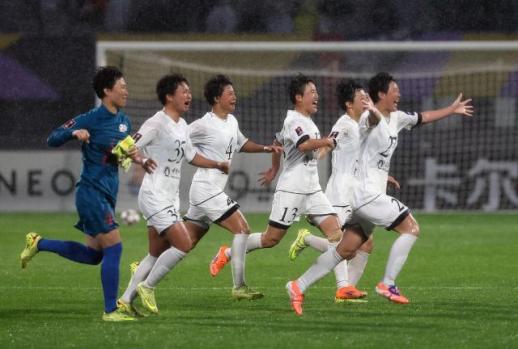 State media breaks silence to cover North Korea's win over South Korea in women's football SEOUL, May 21 (AJP) - North Korea advanced to the final of the Asian Football Confederation (AFC) Women's Champions League after beating South Korea, state media reported on Thursday. Breaking its silence over the reclusive country's footballers' trip to South Korea last weekend, the state-run Korean Central News Agency (KCNA) reported briefly that its Naegohyang Women's Football Club beat its rival 2–1 in a semifinal match in Suwon, Gyeonggi Province the pervious day. In a rain-soaked match, North Korea came from behind to defeat South Korea. South Korea had taken the lead just minutes into the second half but could not hold on, as an equalizer by North Korean player Choe Kum-ok came about five minutes later, followed by another goal from Kim Kyong-yong in the 67th minute. South Korea also missed a late penalty, failing to salvage a draw at least. The North Korean team will now face against Japan's Nippon TV Tokyo Verdy Beleza in the final at the same venue in Suwon on Saturday. Wednesday's match marks the first time in about eight years that North Korean athletes have participated in a sporting event held in South Korea. 2026-05-21 13:56:49
 -
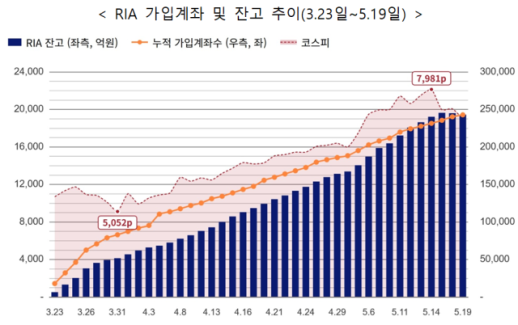 NVIDIA Sales Fund Samsung Electronics as RIA Sees 1.9 Trillion Won Inflow The trend of overseas investment funds returning to the domestic stock market is gaining momentum. Since the introduction of the Domestic Market Return Account (RIA) on March 23, approximately 2 trillion won has flowed in within less than two months. Notably, funds have shifted towards domestic semiconductor stocks like Samsung Electronics and SK Hynix, as well as domestic exchange-traded funds (ETFs). On May 21, the Financial Investment Association reported that as of May 19, the cumulative number of RIA accounts reached 242,856, with a total balance of 1.9443 trillion won. The RIA account offers capital gains tax exemption benefits when transferring overseas investment funds to domestic assets. The balance, which was around 414 billion won at the end of March, increased to 1.3389 trillion won by the end of April and approached 1.9443 trillion won by May 19. The balance of domestic assets also rose from 123.4 billion won to 1.2129 trillion won during the same period. The Financial Investment Association explained, "Funds from the sale of overseas stocks are flowing into domestic stocks and equity funds, contributing to increased demand in the domestic market and foreign currency inflow." Investors in their 40s and 50s make up the majority of account holders. As of May 8, 31% of accounts were held by individuals in their 40s, followed by 26% in their 50s, 21% in their 30s, and 12% aged 60 and above. In terms of balance, those in their 50s accounted for 32% of the total, with 27% in their 40s, 19% aged 60 and above, and 15% in their 30s. However, the share of account holders under 30 also reached 31%, indicating a positive influx of younger investors into the domestic capital market. Investment trends show that funds exiting high-risk leveraged ETFs and major U.S. tech stocks are moving into domestic semiconductor stocks and ETFs. The top-selling overseas stocks included NVIDIA (180.1 billion won), Direxion Semiconductor 3x ETF (SOXL, 94.7 billion won), Tesla (50.4 billion won), and Alphabet A (45.1 billion won). Conversely, the top domestic purchases included Samsung Electronics (78 billion won), SK Hynix (66.7 billion won), Hyundai Motor (14.6 billion won), KODEX 200 (13.4 billion won), and TIGER Semiconductor TOP10 ETF (12.3 billion won). The Financial Investment Association also noted that starting next month, the tax benefits associated with the RIA will be gradually reduced, urging investors to be cautious. The capital gains tax exemption rate for profits from the sale of overseas stocks through the RIA will remain at 100% until the end of this month, but will decrease to 80% in June and July, and to 50% after August. To receive the full 100% exemption, the settlement of overseas stock sales must be completed by the end of this month. Since there is a time lag between the transaction date and the settlement date, investors should check the settlement schedules with their brokerage firms. Additionally, the proceeds from the sale of overseas stocks must be managed within the RIA for one year after the settlement date, including investments in domestic listed stocks, domestic equity funds, and deposits. Failure to comply may result in the loss of tax benefits. Han Jae-young, head of the Financial Investment Association, stated, "The Domestic Market Return Account has significant implications as it facilitates the inflow of liquidity that was previously in overseas markets into the domestic capital market. We will continue to supply a variety of attractive domestic investment products in collaboration with the industry to contribute to exchange rate stability and productive finance."* This article has been translated by AI. 2026-05-21 13:55:23