
Journalist

MIN JAE YONG
-
 May Housing Business Outlook Index Rises Amid Investment Shift to Non-Metropolitan Areas The outlook for the housing business improved in May as investment demand shifted to non-metropolitan areas due to stricter real estate regulations in the metropolitan region. On May 19, a survey of housing developers revealed that the housing business outlook index rose by 13.9 points from the previous month to 77.6. While the metropolitan area saw a decline of 5.3 points to 72.9, non-metropolitan areas experienced an increase of 18.0 points to 78.6. In the metropolitan region, the index fell as follows: Gyeonggi Province dropped by 8.5 points (from 76.9 to 68.4), Seoul decreased by 5.3 points (from 87.8 to 82.5), and Incheon fell by 2.2 points (from 70.0 to 67.8). This decline is attributed to rising interest rates, concerns over tax and loan regulations, and increased construction costs. As mortgage rates rise, the financial burden on buyers has increased, leading to a cautious market stance amid discussions on the end of the temporary suspension of capital gains tax for multiple homeowners and stricter taxation for non-resident homeowners. Conversely, major cities in non-metropolitan areas all reported increases. Ulsan rose by 25.8 points (from 58.8 to 84.6), Daejeon by 25.5 points (from 61.1 to 86.6), Gwangju by 23.5 points (from 52.9 to 76.4), Daegu by 18.2 points (from 68.1 to 86.3), Sejong by 17.3 points (from 75.0 to 92.3), and Busan by 10.5 points (from 60.0 to 70.5). In provincial areas, Chungbuk increased by 29.6 points (from 45.4 to 75.0), Gyeongnam by 29.4 points (from 61.5 to 90.9), Gangwon by 21.7 points (from 58.3 to 80.0), Jeonbuk by 20.3 points (from 61.5 to 81.8), Gyeongbuk by 18.0 points (from 66.6 to 84.6), Chungnam by 6.1 points (from 66.6 to 72.7), Jeju by 3.3 points (from 52.9 to 56.2), and Jeonnam by 2.5 points (from 60.0 to 62.5). This shift in investment demand to non-metropolitan areas is analyzed as a response to the stricter regulations in the metropolitan region. Notably, the Ulsan and Gyeongnam areas benefited from strong performance in the shipbuilding and automotive industries, supporting local economic growth and housing demand. However, regions that experienced significant declines in the previous month showed substantial rebounds, indicating some base effect. The national financing index for May is projected to rise by 6.9 points to 73.0, driven by growing expectations for a recovery in the housing market, particularly in non-metropolitan areas. The easing of financing conditions, including discounts on guarantee fees from the Korea Housing and Urban Guarantee Corporation (HUG) and extensions of project financing guarantees, is also cited as a contributing factor. However, challenges remain, including rising interest rates, tightening project financing loans, and delays in recovering funds due to unsold inventory. The Korea Housing Institute noted, "This increase reflects a slight easing of psychological distress compared to the previous month." The material supply index is projected to fall by 12.5 points to 67.1. This decline is attributed to increased concerns over procurement and construction costs due to the prolonged conflict in the Middle East, which has led to instability in oil and raw material prices. A representative from the Korea Housing Institute stated, "The instability in oil and raw material prices due to the prolonged conflict in the Middle East is increasing construction cost burdens and negatively impacting business outlooks. However, there remains potential for housing prices in the metropolitan area to rise due to the influx of funds from the securities market and concerns over locked-up inventory."* This article has been translated by AI. 2026-05-19 12:22:35
 -
 Government to Offer Up to 40% Discount on Stocked Seafood Amid Seasonal Price Fluctuations The government will supply stocked seafood at prices discounted by up to 30-40% as the fishing season begins and production declines. According to the Ministry of Oceans and Fisheries on May 19, the entry into the fishing season in May is likely to increase price volatility for seafood. To stabilize prices, the ministry plans to release up to 8,000 tons of stocked seafood into the market from May 20 to July 15. Typically, seafood production decreases during the fishing season. The National Fisheries Research Institute reported that in May of last year, production of mackerel, horse mackerel, squid, anchovy, hairtail, and croaker all fell below average levels. The government’s stocked seafood will be available through traditional markets, supermarkets, online and offline wholesale markets, and business-to-business transactions. Consumers can expect to purchase items at prices 30-40% lower than usual. Products such as mackerel fillets, cut pollock, and dried squid will be offered as processed goods, providing consumers with a variety of choices. The supply will include 5,500 tons of pollock, 1,000 tons of mackerel, 900 tons of squid, and 600 tons of hairtail, marking the largest government supply during the fishing season. The ministry prioritized items that have seen price increases or unstable supply and demand. Future market supply will be adjusted based on price fluctuations during the supply period. Minister of Oceans and Fisheries Hwang Jong-woo stated, "We decided to supply stocked seafood considering high prices, the onset of the fishing season, and seafood supply trends." He added, "We hope this supply allows consumers to enjoy quality seafood at reasonable prices, and we will closely monitor seafood prices for stability until fishing resumes."* This article has been translated by AI. 2026-05-19 12:19:21
 -
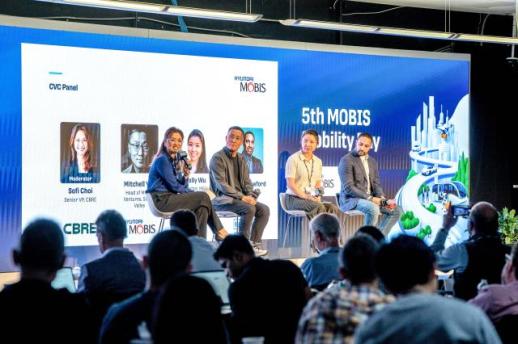 Hyundai Mobis Expands Robotics and AI Partnerships in Silicon Valley Hyundai Mobis is expanding its global network in robotics and physical AI in Silicon Valley. The company is increasing collaboration with local startups, investors, and developers to secure key technologies for future mobility. On May 18, Hyundai Mobis announced it held the 5th Mobis Mobility Day in Sunnyvale, California. This year's event focused on robotics and physical AI, attracting over 400 attendees, the largest turnout to date and more than double last year's participation. The audience included not only mobility industry professionals but also entrepreneurs and developers from new business sectors. During the event, Hyundai Mobis shared its investment and research strategies in robotics. Employees from the company's North American research center presented achievements in autonomous driving, software-defined vehicles (SDV), and electrification. Earlier, Hyundai Mobis signed a contract to supply actuators to Boston Dynamics, a subsidiary of the Hyundai Motor Group. Boston Dynamics' humanoid robot, Atlas, is set to assist with parts sorting at the Hyundai Motor Group Metaplant America in Georgia by 2028. Additionally, Hyundai Mobis established a partnership with Qualcomm, a leading global semiconductor company, at CES 2026 to jointly develop software-defined vehicles (SDV) and advanced driver-assistance systems (ADAS). Hyundai Mobis plans to hold another Mobis Mobility Day in Asia in the second half of this year to share its ongoing open innovation efforts in the mobility sector. A Hyundai Mobis representative stated, "Building collaborative relationships with promising companies in North America and the global market is crucial for creating a global parts ecosystem in the robotics sector."* This article has been translated by AI. 2026-05-19 12:15:47
 -
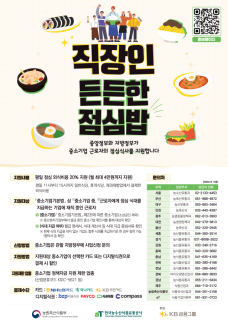 Government to Support Lunch Costs for Small Business Workers The Ministry of Agriculture, Food and Rural Affairs announced on May 19 that it will launch the "Substantial Lunch Program for Workers" starting on the 21st to alleviate the lunch cost burden for employees of small businesses and stimulate sluggish dining consumption.This initiative aims to ease the burden of "lunchflation" on small business employees by providing partial support for lunch expenses through collaboration between the government, local governments, and sponsorship from KB Financial Group. Discounts will be offered via point rewards from card companies or digital meal vouchers.The program will target 50,000 workers employed at small businesses as defined by the Small and Medium Enterprises Basic Act, provided that their companies currently subsidize lunch expenses. However, companies participating in the "1,000 Won Breakfast for Industrial Complex Workers" program will be excluded from this support.Eligible workers can receive a 20% discount on their lunch expenses, up to a maximum of 40,000 won per month, when dining out between 11 a.m. and 3 p.m. on weekdays. Discounts will not apply to meals purchased at company cafeterias, convenience stores, or through delivery apps.Jung Kyung-seok, Director of Food Industry Policy at the Ministry of Agriculture, Food and Rural Affairs, stated, "We hope the Substantial Lunch Program for Workers will reduce the financial burden on small business employees while also boosting sales for local dining establishments. We will strengthen communication with private companies and local governments to continue expanding this initiative."* This article has been translated by AI. 2026-05-19 12:15:24
 -
 Agriculture Minister Song Mi-ryeong to Host Live Commerce Event Amid Onion Price Drop As onion prices plummet due to oversupply, Minister of Agriculture, Food and Rural Affairs Song Mi-ryeong will take to live commerce to sell fresh onions. The Ministry announced that Minister Song will participate as a "guest host" in a live commerce broadcast scheduled for 1 p.m. at the Iksan Agricultural Cooperative online studio in North Jeolla Province. The event aims to encourage onion consumption, during which Minister Song will explain the benefits and storage methods of onions. The live commerce event will be streamed for 60 minutes on Naver Shopping Live and the NH Imarket channel. The first 1,000 customers to make a purchase will receive onion pickling sauce, while 100 customers who verify their purchases will receive melons as gifts. The minister's involvement in the event is a response to a significant drop in onion prices compared to last year. According to the Korea Agro-Fisheries & Food Trade Corporation's Agricultural and Fisheries Product Distribution Information System (KAMIS), the consumer price of onions is currently 2,477 won per kilogram, a 23.2% decrease from the same period last year. The Ministry aims to stimulate market demand and stabilize the depressed onion prices through this promotional event. Minister Song stated, "I hope our farmers' delicious and nutritious produce, which they have cultivated with care, will be purchased generously. I also ask for warm support for our farmers."* This article has been translated by AI. 2026-05-19 12:15:00
 -
 Apple Announces Schedule for WWDC, Expected to Feature AI Announcements Apple has unveiled the schedule for its annual Worldwide Developers Conference (WWDC), which is expected to be Tim Cook's last as CEO. On June 8, Apple announced that WWDC 2026 will take place from June 8 to June 12. WWDC is Apple's yearly developer event, typically showcasing the next generation of operating systems and software updates. Given Apple's recent announcement that it will adopt Google's generative AI model, Gemini, for the next version of Siri, this year's event is likely to emphasize AI-related announcements. Historically, Apple has unveiled new iPhone products in September, suggesting that this WWDC will focus more on software and AI functionality updates rather than hardware. Last year's WWDC featured a major update with the introduction of 'Liquid Glass,' a design overhaul inspired by glass textures. The keynote address will be held on June 8 at 10 a.m. Pacific Time (2 a.m. Korea Time on June 9) and will be streamed live on Apple's official website, the Apple TV app, and the Apple YouTube channel. On the same day at 1 p.m., the 'Platform State of the Union' event will also take place. This year's conference will include video sessions, guides, group labs, and the Apple Design Awards. The group labs will feature live online presentations and Q&A sessions led by Apple engineers and designers. WWDC 2026 is expected to be the last developer conference attended by Cook as CEO. In April, Apple announced that John Ternus, the senior vice president of hardware engineering, will take over leadership in September. Cook became CEO in 2011, succeeding Apple co-founder Steve Jobs. Under his leadership, Apple has experienced unprecedented growth, driven by the expansion of the iPhone and services. However, the company has faced criticism for lagging behind competitors in the AI sector. Although Apple introduced 'Apple Intelligence' at WWDC 2024, the rollout of related features has not met investor and consumer expectations. In contrast, Samsung and Google have rapidly integrated generative AI into smartphones, search engines, productivity tools, and mobile operating systems over the past two years, leading the AI device market.* This article has been translated by AI. 2026-05-19 12:12:46
 -
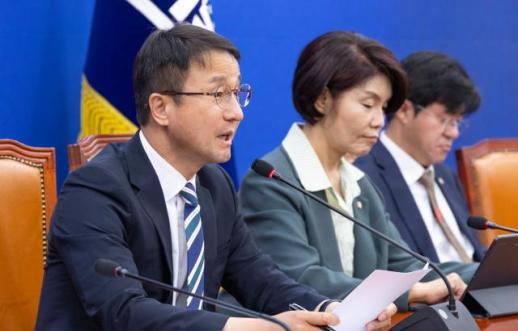 Ruling Party Criticizes Oh Se-hoon Over GTX-A Steel Shortage and Han River Bus Issues The Democratic Party criticized Oh Se-hoon, the People Power Party candidate, on May 19, over allegations of missing steel reinforcements in the GTX-A project and issues related to the Han River bus service. They stated, "He is unfit to take responsibility for Seoul. He should resign and take accountability," and emphasized, "We cannot entrust citizen safety to someone who shifts blame." During a National Assembly meeting, Han Byeong-do, the party's floor leader, highlighted three major administrative failures that threaten citizens: the 20 billion won spent on the audit of the Han River bus service, the 150 billion won wasted, and the 2,570 missing steel reinforcements in the construction project. Han added, "It seems Oh prioritizes showcasing his achievements over the lives and safety of citizens. Similar to the free school meal incident, why not step down and take responsibility now? Oh, who hides failures and neglects safety, is not qualified to lead Seoul." Han Jeong-ae, the party's policy chair, pointed out, "Oh claims the construction company is at fault, but the bidding documents from the Seoul city government list him as the responsible party. This is no different from the Han River bus incident, where he shifted blame to human error after safety accidents occurred." She stressed, "This is shameless evasion of responsibility. We cannot entrust the safety of citizens to someone who prioritizes their own security and shifts blame." Cheon Jun-ho, the party's deputy floor leader, also criticized Oh, stating, "He is characterized by a lack of concern for safety and blatant arrogance. He must take responsibility and apologize first. The most important value a mayor should uphold is the safety of citizens."* This article has been translated by AI. 2026-05-19 12:10:35
 -
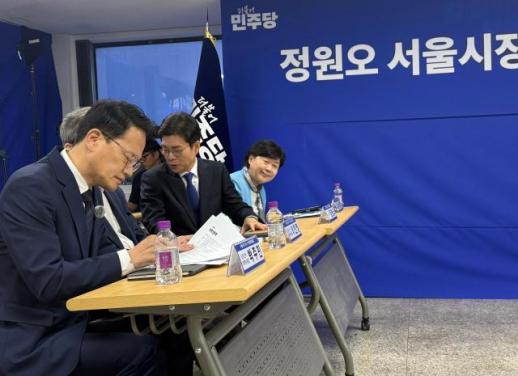 Jung Won-oh Criticizes Oh Se-hoon for Safety Negligence as Democratic Party Launches Campaign Jung Won-oh, the Democratic Party's candidate for Seoul mayor, held his final public meeting before the official campaign kickoff. The meeting, held on the morning of May 19 in Jung-gu, Seoul, featured key figures including Seo Young-kyo, Park Joo-min, Jeon Hyun-hee, and Lee In-young, who launched a coordinated attack on Oh Se-hoon, the candidate from the People Power Party. During the meeting, Jung stated, "This election must serve as a judgment on Mayor Oh's incompetence and irresponsible administration," emphasizing that "citizen safety is the most important factor that cannot be compromised." He criticized the city administration for its "safety negligence," pointing to a series of incidents including the Yongsan and Itaewon disasters, flooding in Gangnam, basement accidents, sinkholes, and bus incidents along the Han River. "These are not isolated incidents; if they keep happening, it indicates a structural problem," he said. Jung highlighted that in the past five years, Seongdong-gu has experienced zero sinkholes, flooding, or major safety accidents, asserting, "I, Jung Won-oh, will prove my commitment to creating a safe Seoul through action, not just words." Seo Young-kyo raised concerns about the company awarded the Audit Garden contract, linking it to the Unification Church. She stated, "The company 'Ilshin Stone' was awarded the contract to install stone columns, and its founder is related to Moon Sun-myung, the late leader of the Unification Church," questioning the relationship between Oh and Ilshin Stone. She also noted that despite two bids—one from company A for 2.9 billion won and Ilshin Stone for 3.9 billion won—Ilshin Stone was ultimately selected as the contractor. Park Joo-min criticized the Audit Garden, calling it a symbol of Oh's disregard for citizens. He pointed out that Oh was not included in the guest list for the Audit Garden completion ceremony and that his impromptu speech turned the taxpayer-funded event into a campaign rally. Jeon Hyun-hee intensified the criticism regarding the missing rebar in the GTX-A line construction, calling it "incredibly shameless for a mayor." She warned that such safety oversights could lead to major disasters threatening citizens' lives and safety, adding, "Instead of apologizing, Oh has shifted responsibility to the construction company and the railway authority." Jeon further questioned why the city did not respond swiftly if it was aware of the missing rebar, urging Oh to stop making excuses and to take responsibility for the management failures, delayed responses, and allegations of cover-ups that jeopardize citizen safety.* This article has been translated by AI. 2026-05-19 12:07:36
 -
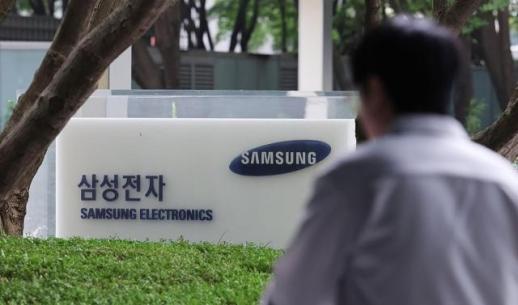 Samsung Electronics Employees' Average Salary Reaches Record 12 Million Won in Q1 Samsung Electronics employees earned an average salary of approximately 36 million won in the first quarter, translating to about 12 million won per month. This figure marks a 25% increase compared to the same period last year, reaching an all-time high. According to an analysis by the Korea CXO Research Institute on Samsung's first-quarter report, total employee compensation is estimated to be between 4.2584 trillion and 4.7907 trillion won. The ratio of salary to total employee compensation has remained consistent, ranging from 76% to 85.5%. This estimate is based on the total salary expenses of 5.0632 trillion won for the first quarter. The average number of employees enrolled in the National Pension Service during the first quarter was 125,580, leading to an estimated average salary of between 33.91 million and 38.15 million won. Monthly salaries are estimated to be between 11.3 million and 12.7 million won. In comparison, the average salary for Samsung employees in the first quarter of last year was between 27.07 million and 30.46 million won, indicating an increase of over 25% year-on-year. This growth rate is more than double the 11.6% increase from 2023 to 2024. In addition to the average salary, the total salary expenses also reached a record high. Last year's first-quarter salary expenses were 4.4547 trillion won, while this year they surpassed 5 trillion won for the first time, totaling 5.6032 trillion won. The Korea CXO Research Institute noted, "The improvement in operating profit in the first quarter has contributed to the highest salary levels for employees. If performance bonuses are included, annual compensation could increase significantly."* This article has been translated by AI. 2026-05-19 12:04:31
 -
 Hancom Offers Up to 50 Million Won for Employees Innovating with AI Hancom has announced a special reward of up to 50 million won for employees who achieve significant work innovations using artificial intelligence (AI). This initiative goes beyond merely distributing generative AI tools; it aims to accelerate the company's overall AI transformation (AX) by providing performance bonuses and additional recognition for employees who successfully integrate AI into their work processes. In an interview with Aju Economy at Hancom's headquarters in Seongnam, CISO Park Sang-hyung stated, "AX is not just about introducing AI tools; it represents a fundamental change in how organizations operate in the AI era. The key is to redefine how much work we delegate to AI and what roles and responsibilities we retain for ourselves." Hancom is currently implementing a growth structure for AX that includes three stages: AI Crew, AX Challenger, and AX Champion. The first stage, AI Crew, allows anyone to freely share their AI experiences. The second stage, AX Challenger, involves executing actual work innovation projects. The final stage, AX Champion, is awarded to employees who demonstrate outstanding AX results. Hancom provides AX Champions with a special bonus of 50 million won and additional recognition in performance evaluations. This approach is considered unusual in the industry as it integrates AI usage experience into the organizational culture and evaluation system rather than treating it as a mere internal event. Park, who joined Hancom in 2013 as an infrastructure architect and later became a cloud architect, took on the role of CISO this year. Previously focused on designing the scalability and connectivity of infrastructure, he now also designs security and control structures suitable for the AI era. He explained, "While the core challenge used to be how to connect systems and make processes flexible, the focus has now shifted to how to securely control those connections. In the AX environment, the priority is not to restrict AI adoption but to create a structure that allows for its safe utilization." At the end of last year, Hancom declared a company-wide AX initiative, signaling a shift from its traditional image as an office software provider to a specialized AX company. This direction aims to redesign the entire organizational workflow and role structure around AI. Park identified the main difference between digital transformation (DX) and AX as the "delegation of roles." He stated, "DX was about digitizing tasks previously handled manually to reduce errors and increase speed, while AX involves negotiating how much authority and responsibility can be safely transferred to AI within that DX environment." He added, "We are currently in a transitional phase. There is still no complete societal consensus on how much decision-making and execution authority we can grant to AI. Ultimately, identifying the points where human intervention is essential is a key challenge for companies." Within Hancom, AI is evolving from a simple assistive tool to a fundamental change in work processes. Initially, all employees were provided with the same AI chatbot environment, but now each department is developing AI agent structures tailored to their specific work characteristics. The implementation process has not been easy. Park noted, "When we began reviewing tools, various departments were already actively using over 100 different AI tools. We believed that enforcing uniform control could lead to backlash from employees and issues with unauthorized external AI services." As a result, Hancom opted for a hybrid strategy centered on actual business needs rather than a top-down approach. This involved first surveying employee demands and then concurrently evaluating functionality, security, cost, and corporate stability. He remarked, "The entire process from survey to actual implementation took only a month, as we recognized the importance of speed in the AI domain and made quick decisions." "Finance Team Also Reviews Code"—AI Innovation Spreads Beyond Development Roles Departments have adopted different approaches. The finance department focused on designing verification structures to reduce errors, prioritizing data accuracy to prevent AI from generating arbitrary outputs. In contrast, the content team approached the task by pre-designing prompts and execution structures to quickly produce desired outcomes. Notably, changes in non-development roles have been significant. Park stated, "Tasks that previously required requests to the IT department are now being implemented directly by operational staff using AI agents. Currently, even employees in the HR and finance teams are considering which APIs to connect and how to structure workflows while reviewing code screens." During Hancom's internal AX presentation event, known as AX Day, a case was shared where an HR team employee implemented an automated seating arrangement system using generative AI. This employee, lacking prior development experience, learned the necessary skills through extensive interaction with AI and completed the implementation without assistance from a separate development team. Hancom is also systematically documenting employees' AX experiences through the "AX Practice Process," which has now accumulated over 750 cases. This documentation goes beyond simply stating, "AI was used"; it details how employees analyzed their work, what data they utilized, and the trials and errors they encountered throughout the process. For instance, the documentation includes how a task that previously took 10 hours was reduced to under one hour after the introduction of an AI agent, along with potential future automation expansions. Park emphasized, "We are not just improving productivity; we are accumulating the experience of utilizing AI as a colleague as an organizational asset. When employees in one team begin to achieve results with AX, it naturally influences other teams. Ultimately, AX is a cultural issue." He concluded, "What matters is not which AI tools we use, but how we redefine work in the AI era. Hancom is experimenting and validating AX internally to create a new organizational culture for the AI age."* This article has been translated by AI. 2026-05-19 11:56:58