
Journalist

MIN JAE YONG
-
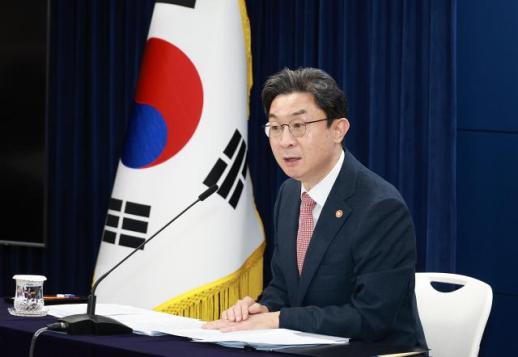 Korea's Financial Authority to Appoint Chief Inclusion Officer to Address Financial Exclusion The Financial Services Commission (FSC) is moving to designate Chief Inclusion Officers (CIFOs) within banks and financial institutions to address the issue of financial exclusion, which President Lee Jae-myung has described as a form of "predatory finance." The initiative aims to implement structural changes to remedy this problem. Additionally, to attract more foreign individual investors to the domestic stock market, the FSC plans to expand the scope of foreign integrated accounts to include exchange-traded funds (ETFs) and will hold a large-scale overseas investment briefing in September. During a press briefing on May 21, Lee Ok-yeon, chairman of the FSC, stated, "We need fundamental improvements to address the structural issues that create financial exclusion." He announced plans to establish a strategy promotion team for inclusive finance in June, which will consist of four divisions: general, policy for the underprivileged, financial industry, and credit infrastructure. The general division will focus on designating CIFOs within financial institutions to discuss ways to improve access to finance for low-income and vulnerable groups at the board and governance levels. The FSC is also considering measures such as providing immunity for employees actively engaged in inclusive finance, establishing a comprehensive evaluation system for inclusive finance, and linking evaluation results to financial institutions' incentives and compensation. Lee emphasized, "While we have focused on urgently rescuing marginalized groups pushed out of the formal financial system, it is now time to improve the very structures that lead to financial exclusion." Improvements to the credit evaluation system will also be discussed. The FSC has noted that the current credit evaluation system, which primarily relies on past delinquency and financial transaction history, fails to adequately assess individuals with limited financial transaction histories or those who have consistently repaid their debts. As a result, the FSC plans to rationally adjust the criteria for utilizing delinquency information and explore the introduction of credit growth accounts and alternative information centers that leverage non-financial data. Additional incentives to stimulate the stock market are also in the works. Specifically, to increase the influx of foreign individual investors into the domestic stock market, the FSC will expand the scope of foreign integrated accounts to include ETFs, which were previously limited to stocks. The large-scale overseas investment briefing, dubbed "Korea Premium Week," is set to take place throughout September. This event aims to systematically consolidate previously dispersed investment briefings into an international event representing the Korean capital market. * This article has been translated by AI. 2026-05-21 18:55:12
 -
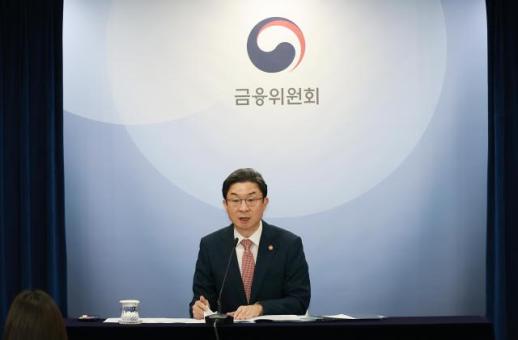 South Korea's Financial Authority Shifts Toward Inclusive Finance The Financial Services Commission (FSC) is set to implement a structural shift toward inclusive finance. This initiative follows President Lee Jae-myung's criticism of predatory lending practices and Policy Chief Kim Yong-beom's concerns regarding interest rate stratification and the exclusion of mid- and low-credit borrowers. The FSC has identified financial sector reform as a key priority for the second half of this year. To this end, Chairman Lee Ok-yeon proposed the 'Three-Tiered Inclusive Finance' model, aiming to address the systemic issues that push vulnerable borrowers into policy-backed microfinance and illegal lending. ◆ Lee Ok-yeon Proposes 'Three-Tiered Inclusive Finance' During a press briefing on May 21, Chairman Lee outlined the 'Three-Tiered Inclusive Finance' model. The first tier consists of formal financial institutions such as banks and savings banks, the second tier includes policy-backed microfinance, and the third tier offers alternative recovery financing for borrowers who cannot be accommodated by the existing financial system. He noted that the first tier has failed to adequately manage risk, resulting in mid- and low-credit borrowers being pushed into the second and third tiers. Lee explained that the role of financial institutions is to assess and manage risk, determining the future potential of borrowers. However, he pointed out that financial companies often gravitate toward the safest options, leading to a situation where vulnerable borrowers are not sufficiently absorbed by formal finance. This results in increased demand for policy-backed microfinance, which in turn cannot handle the overflow, forcing some borrowers into illegal lending. The second tier, policy-backed microfinance, and the third tier, recovery financing, serve as safety nets for borrowers excluded from formal finance. However, as demand from the first tier grows, policy-backed microfinance must operate on a large-scale, standardized basis, limiting its ability to manage individual cases. Lee emphasized the need for a long-term financial approach that utilizes relaxed funding sources, such as donations, rather than traditional bank deposit-based loans, focusing on the potential for recovery over five to ten years rather than the likelihood of default within one year. This movement by the financial authorities aligns with the concerns raised by the presidential office. President Lee Jae-myung recently stated, "Financial institutions are quasi-public entities, and inclusive finance is one of their obligations," urging action against predatory lending practices. Policy Chief Kim Yong-beom has also publicly addressed the limitations of the credit evaluation system and the issues of interest rate stratification and exclusion of mid- and low-credit borrowers. Amid the ongoing scrutiny of long-term debt collection practices, there is a growing recognition of the need to reform both conservative lending practices and the credit evaluation system within the financial sector. ◆ Expanding 'Korea Premium' In conjunction with the shift toward inclusive finance, Chairman Lee also outlined plans for capital market globalization. While efforts have previously focused on eliminating the 'Korea Discount' in domestic markets, the aim is now to attract foreign investment into the domestic stock market, transforming it into a 'Korea Premium.' Lee stated, "We will actively pursue the globalization of capital markets to facilitate the influx of global funds and high-quality assets," noting that while foreign individual investors are interested in purchasing Korean stocks, the existing mechanisms are insufficient to accommodate this demand. To facilitate this, the FSC plans to expand the scope of foreign integrated accounts from stocks to include exchange-traded funds (ETFs). The foreign integrated account system allows overseas investors to invest in the domestic stock market without needing to open separate accounts with domestic securities firms. Additionally, the government will host a large-scale overseas investor relations event named 'Korea Premium Week' in September, similar to Japan's 'Japan Week' and Taiwan's 'Taiwan Week.' This event aims to consolidate various overseas IR activities into a single international event representing the Korean capital market. The FSC is also accelerating efforts to improve capital market regulations. It is preparing to implement a ban on duplicate listings by July. To this end, two seminars will be held this month, and a draft of detailed regulations and guidelines will be released by the end of May or early June. Furthermore, the FSC reiterated plans to ease network separation regulations for financial companies that possess a certain level of security capabilities and are willing to enhance security using artificial intelligence (AI). There is also a possibility of completely lifting network separation regulations for financial companies with advanced security capabilities and AI integration.* This article has been translated by AI. 2026-05-21 18:49:55
 -
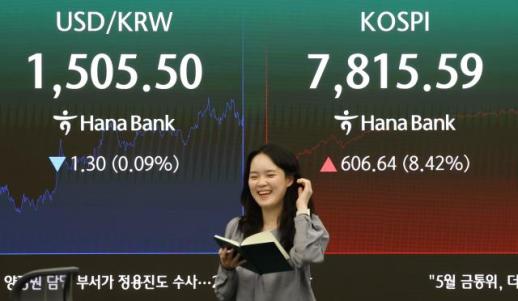 KOSPI Surges Above 7800 as Foreign Investors Continue Selling The KOSPI index surged above 7800 for the first time since April 1, climbing more than 8% amid easing geopolitical tensions in the Middle East, a resolution in labor negotiations at Samsung Electronics, and strong performance from Nvidia. According to the Korea Exchange, the KOSPI closed at 7815.59, up 606.64 points (8.42%) from the previous trading day, marking the largest single-day gain in history. Kang Jin-hyuk, an analyst at Shinhan Investment Corp, stated, "The resolution of uncertainties surrounding the Samsung Electronics strike, Middle East tensions, and Nvidia's earnings has boosted risk appetite, leading to a strong upward trend in the index. Most sectors, including secondary batteries, biotech, and robotics, rebounded significantly." Lee Kyung-min, an analyst at Daishin Securities, noted, "Increased institutional buying and a stabilization in foreign selling have expanded the gains. The negative pressures that had been weighing down the market have eased, resulting in a strong rebound." In the securities market, institutions purchased over 3.2 trillion won worth of stocks, driving prices higher, while individuals sold approximately 2.8 trillion won. Foreign investors continued their selling streak for the 11th consecutive trading day, offloading around 400 billion won in stocks. Notably, Samsung Electronics reached a record high, closing at 299,500 won, up 8.51%. SK Hynix also recovered, rising 11.17% to 1,940,000 won. In the KOSPI market, nearly all sectors rose, particularly semiconductors and automobiles. The electric and electronics sector increased by 9.69%, transportation equipment and parts by 9.10%, manufacturing by 8.96%, insurance by 8.63%, machinery and equipment by 8.50%, retail by 8.32%, securities by 7.51%, finance by 7.01%, construction by 6.30%, and electric and gas by 5.71%. Samsung affiliates saw significant gains, with Samsung Life rising 13.78%, Samsung Electro-Mechanics up 13.48%, and Samsung C&T increasing by 12.96%. Hyundai Motor Group stocks also surged, with Hyundai Mobis up 25.23%, Hyundai Motor rising 12.50%, and Kia increasing 12.38%. LG Electronics hit its upper limit, while LG Electronics preferred shares rose by over 26%. The KOSDAQ index closed at 1105.97, up 49.90 points (4.73%) from the previous trading day. In the KOSDAQ market, foreign investors purchased 160 billion won, and institutions bought 140 billion won, supporting the index, while individuals showed a selling trend of nearly 300 billion won. EcoPro BM, the top KOSDAQ stock by market capitalization, rose 10.36%, while Iot Technics surged 18.83%, Rainbow Robotics increased by 16.46%, and Wonik IPS rose by 11.97%.* This article has been translated by AI. 2026-05-21 18:46:50
 -
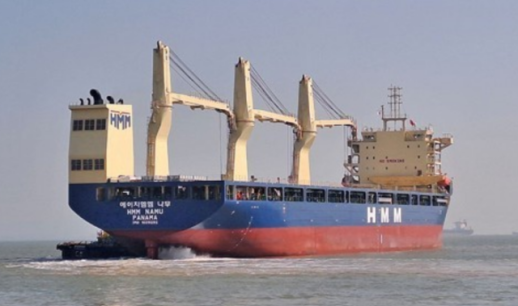 Domestic Insurers Provide War Insurance for 10 Ships in Hormuz Strait Ten domestic non-life insurance companies will jointly provide war insurance at the lowest applicable rates for ten vessels from small and medium-sized shipping companies operating in the Hormuz Strait. Eo Ik-yeon, chairman of the Financial Services Commission, announced on May 21 during a meeting with the shipping industry, policy finance institutions, and the insurance sector in Jongno, Seoul, that "domestic insurers will take responsibility for the return of the ten vessels from small and medium-sized shipping companies in the Hormuz Strait." He noted, "Given the nature of marine insurance, there is an unavoidable reliance on overseas reinsurers. This can create challenges for small and medium-sized shipping companies, which may struggle to secure insurance to return home safely due to their limited negotiating power." The support involves a risk-sharing arrangement among ten domestic non-life insurers, including Hyundai Marine & Fire Insurance, Samsung Fire & Marine Insurance, Meritz Fire & Marine Insurance, KB Insurance, and Hanwha General Insurance. Korean Re, a domestic reinsurer, will also participate. Previously, high reliance on overseas reinsurers raised concerns about soaring premiums or denial of coverage amid escalating war risks in the Middle East. To alleviate the burden of higher premiums faced by small and medium-sized shipping companies compared to larger firms, the Financial Services Commission decided to apply the lowest rates adopted by domestic insurers. The support targets the ten vessels currently waiting in the Hormuz Strait. Larger shipping companies were excluded due to their stronger negotiating power and the capacity of domestic insurers. The government plans to continue providing additional support within this framework if the conflict prolongs. The support measures will take effect immediately. Additionally, the Financial Services Commission urged insurers to expedite the relevant procedures to ensure appropriate compensation for the HMM-operated small bulk carrier Namoo, which experienced a fire incident while waiting in the Hormuz Strait on May 4.* This article has been translated by AI. 2026-05-21 18:45:00
 -
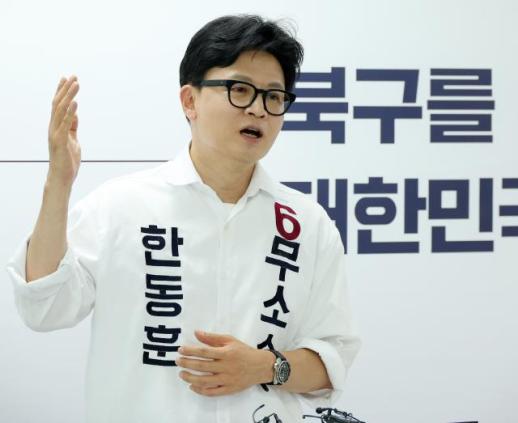 Intensified Pressure for Candidate Unification in Busan North Gap Election 6.3 National Assembly by-elections are heating up in Busan North Gap, where Hah Jung-woo of the Democratic Party and Han Dong-hoon, an independent candidate, are in a tight race. As pressure mounts for unification between Han and Park Min-sik of the People Power Party, the party is showing signs of division.According to political sources on May 21, Han has recorded a lead in support for the first time in the three-way race for the Busan North Gap by-election. Previously, Hah had consistently led in polls, but recent data shows a shift. A survey conducted by Channel A and Research & Research from May 17 to 19 among 500 eligible voters in the Busan North Gap district revealed Han with 34.6% support, Hah with 32.9%, and Park with 20.5%. The margin between Han and Hah is within the poll's margin of error of 1.7 percentage points (conducted via 100% mobile phone interviews, with a sample error of ±4.4 percentage points at a 95% confidence level and a response rate of 10%).In a hypothetical two-candidate scenario, Han also outperformed Hah. In a potential matchup between Hah and Park, Hah led with 42.6% to Park's 32.4%. However, in a direct contest between Han and Hah, Han garnered 44.1% compared to Hah's 37.6%. This suggests that calls for unification behind Han may gain traction.Within the People Power Party, voices urging for unification are growing louder. Representative Park Soo-young called on party leadership to make a decision regarding candidate unification for Busan North Gap. He reportedly stated in a group chat among lawmakers, "My district, Busan Nam-gu, is currently trailing by 10-15 percentage points against the Democratic Party, and without decisive action from the Busan city party and the central party, the election will be difficult." Most Busan lawmakers who gathered on May 17 also expressed support for unifying conservative candidates.Busan mayoral candidate Park Hyung-jun said on May 19, "If we create momentum through candidate unification in Busan North Gap, it will positively impact the overall elections in Busan, Ulsan, and Gyeongnam. Nearly 70% of the People Power Party's supporters want unification, and responding to this is the candidates' public duty."However, Park and other leaders within the People Power Party maintain their opposition to unification. Park stated that a strategic unification would be a betrayal of the residents of North Gap, asserting, "Han is someone who has inflicted irreparable damage on the conservative camp." Earlier, party leader Jang Dong-hyuk also remarked on May 15 that "a unification based solely on vote calculations does not align with conservative values," emphasizing that the issue of unification should reflect the will of party members and the party itself.* This article has been translated by AI. 2026-05-21 18:42:35
 -
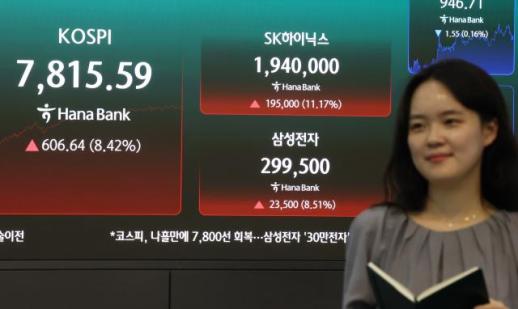 KOSPI Soars as Market Reacts to Positive Developments It was a day filled with positive news. Following a dramatic resolution in negotiations involving Samsung Electronics, strong earnings from Nvidia, and hopes for progress in the Middle East ceasefire, the stock market saw a significant rebound on May 21. The KOSPI index rose by 606 points, marking an increase of 8.42%, the highest since April 1. The total market capitalization of the KOSPI surged nearly 500 trillion won, from 5904 trillion won the previous day to 6396 trillion won today. The KOSPI opened at 7486.37, up 3.85%, and continued to climb throughout the day, reaching a peak of 7819.23. It closed at 7815.59, the highest level since May 14. The KOSDAQ also finished strong, up 49.90 points (4.73%) at 1105.97, after starting at 1085.30, a 2.77% increase, and peaking at 1115.66. The semiconductor sector showed remarkable strength. Early in the session, investor sentiment focused on major semiconductor stocks like Samsung Electronics and SK Hynix, prompting a trading halt due to excessive buying. Samsung Electronics recorded over 10 trillion won in trading volume, with foreign and institutional investors net buying more than 1 trillion and 773 billion won, respectively. SK Hynix saw institutional net purchases exceeding 1.4 trillion won. Samsung Electronics experienced a significant surge, closing at 299,500 won, an 8.51% increase from the previous day. In pre-market trading, it even reached 300,000 won, up 6.95%. The market interpreted the resolution of a potential strike, just hours before it was set to begin, as a relief for investors. SK Hynix also surged by over 11%, reaching 1,900,000 won. The rise of Samsung Electronics and SK Hynix positively impacted other stocks, including SK Square, Samsung Electronics preferred shares, Samsung Life Insurance, and Samsung C&T. LG Electronics benefited from the KOSPI's surge and expectations related to its robotics value chain, closing at the daily limit of 235,000 won. The market's rebound was attributed to a calming of U.S. Treasury yields and international oil prices, which mirrored the upward trend in the New York stock market. Additionally, U.S. President Donald Trump mentioned that negotiations with Iran are in the final stages, further easing geopolitical risks. Nvidia, a global leader in AI, reported earnings that exceeded market expectations, igniting a rally in tech stocks. Nvidia has set a new revenue record for 12 consecutive quarters, with adjusted earnings per share (EPS) of $1.87, surpassing Wall Street's consensus and reaffirming the momentum of AI growth. KOSDAQ leading stocks also saw gains. Among the top market cap stocks, EcoProBM rose by 10.36%, reclaiming the top position. EcoPro and Rainbow Robotics increased by 9.35% and 16.46%, respectively. Alteogen fell by 2.23%.* This article has been translated by AI. 2026-05-21 18:40:08
 -
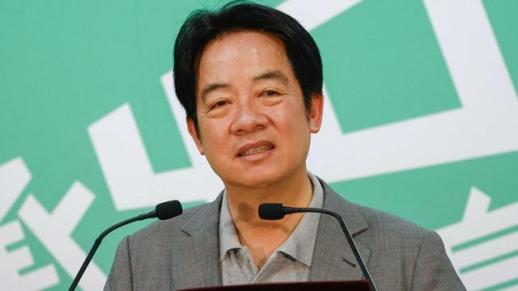 Taiwan President Tsai Ing-wen Declares Taiwan a Sovereign Nation Tsai Ing-wen, the President of Taiwan, stated that "Taiwan is already a sovereign independent nation." Her remarks came as U.S. President Donald Trump mentioned the possibility of a call with her. Tsai reaffirmed her stance of rejecting China's claims of sovereignty while emphasizing the need to maintain the status quo across the Taiwan Strait. According to Reuters on May 20, during a press conference marking her second anniversary in office, Tsai declared, "The Republic of China, Taiwan, is a sovereign independent nation." She asserted, "No country has the right to annex Taiwan," and added, "Taiwan's future cannot be determined by external forces." Tsai emphasized that the Taiwanese people pursue democracy and freedom, which should not be seen as a provocation. On the same day, Trump indicated he would speak with Tsai. Direct communication between the leaders of the U.S. and Taiwan has been considered a sensitive issue in U.S.-China relations since the U.S. severed diplomatic ties with Taiwan in favor of recognizing China in 1979. Tsai expressed her intent to convey to Trump that China is undermining peace and stability in the Taiwan Strait. She reiterated that Taiwan supports maintaining the status quo and that cross-strait dialogue should occur on the principles of equality and dignity. The necessity of strengthening Taiwan's defense capabilities was also highlighted. Tsai noted that acquiring U.S. weapons is essential for maintaining peace and stability in the Taiwan Strait. Taiwan aims to continue its security cooperation with the U.S. amid increasing military pressure from China. China responded strongly to Tsai's statements. The Taiwan Affairs Office of the State Council criticized her remarks as filled with falsehoods, deception, and hostility. They pointed out that Tsai's assertions of "sovereign independence" and "mutual non-subordination" reflect a narrative that China views as advocating for Taiwan's independence. The Chinese Foreign Ministry also stated that it would not accept any attempts to support Taiwan's independence. China considers Taiwan part of its territory and has not ruled out the use of force. In contrast, the Taiwanese government rejects China's sovereignty claims and maintains that the future of Taiwan should be determined by its people. The outcome of any potential call between Trump and Tsai could further escalate tensions in U.S.-China relations.* This article has been translated by AI. 2026-05-21 18:32:32
 -
 K-Art Takes Center Stage in May Auctions Following Record-Breaking Sales This year, the domestic art auction industry has set record prices, prominently featuring Japanese works. In May, however, it is showcasing 'K-Art'. According to the auction industry on May 21, several notable pieces representing Korean art, including the Daedongyeojido, works by Park Soo-keun and Seo Do-ho, will be auctioned this month. Japanese artists have garnered significant attention in the domestic auction market this year. Last month, at a Seoul Auction event, Yoshitomo Nara's 2016 piece 'Nothing about it' sold for 15 billion won, setting a record for the highest auction price in South Korea. In the same auction, Yayoi Kusama's 2015 work 'Pumpkin' fetched 10.45 billion won. In May, the domestic auction industry is focusing on K-Art. Seoul Auction will feature a colored manuscript of the Daedongyeojido in its auction on May 28. This piece is based on the 1861 Sin-yu edition by Kim Jeong-ho, with approximately 35 known copies worldwide. It is classified as a national registered cultural heritage, among seven designated cultural assets. Notably, the manuscript includes the term 'Usan' (于山), referring to Dokdo, a feature not commonly found in woodblock prints. The overall dimensions are approximately 390 cm wide and 685 cm long. It combines geographical representation with artistic form, enhancing visibility through varied colors for different regions and highlighting mountain ranges, waterways, and road networks. Other items include a collection of photographs and materials related to Han Hee-soon, the last court lady of the Korean Empire, and a set of seven photographs related to the Cheondogyo Youth Party, which documented the intersection of religion, education, and national movements during the Japanese occupation. K Auction, which will hold its auction on May 27, will also present Seo Do-ho's large installation 'Cause & Effect', along with significant works by modern Korean masters such as Park Soo-keun, Kim Whanki, and Yoo Young-kuk. Seo Do-ho gained international recognition when he was selected as the representative for the Korean Pavilion at the Venice Biennale in 2001, exploring themes of migration, residence, and the relationship between individuals and communities. His 'Cause & Effect', measuring 164 cm in diameter and 300 cm in height, is a large installation made from acrylic, aluminum discs, stainless steel frames, cables, and monofilament. Thousands of small figurines are intertwined to form a single, massive organism, encapsulating the artist's core reflections on the relationship between the individual and the collective. This is a rare opportunity to acquire one of Seo Do-ho's large works, which are held in major institutions worldwide, including the Leeum Museum of Art. Works by other modern Korean masters, including Park Soo-keun, Kim Whanki, Yoo Young-kuk, Lee Jung-seob, and Lee Eung-no, will also be featured. Meanwhile, the auction industry is experiencing a general resurgence both domestically and internationally. The Phillips Auction's modern and contemporary art evening auction in New York on May 19 achieved a total sales amount of $115,216,700, with a 100% sell-through rate in both quantity and value, more than double the total sales from the previous year.* This article has been translated by AI. 2026-05-21 18:30:00
 -
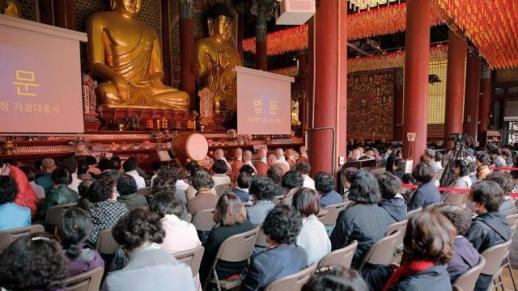 Alternative Holiday for Buddha's Birthday Raises Questions About Services As the alternative holiday for Buddha's Birthday approaches, there is growing interest in the operation of essential services. While government offices, schools, and financial markets typically close, the status of banks, hospitals, and delivery services varies by institution and requires prior confirmation. This year, Buddha's Birthday falls on Sunday, May 24. Since the holiday coincides with a Sunday, the following Monday, May 25, will be designated as an alternative holiday. This practice was established in 2023, when Buddha's Birthday was included in the list of holidays eligible for alternative holiday status alongside Christmas. Government offices will be closed. As the alternative holiday is governed by the 'Regulations on Public Holidays for Government Offices,' central and local government agencies, as well as public institutions, will observe the day off. For any necessary administrative tasks, citizens can utilize online services such as Government24, or they should plan to visit in person after the next business day on the 26th. Schools also typically observe the alternative holiday. Primary, middle, and high schools will close in accordance with the holiday schedule, but the availability of after-school programs and facility access may vary based on the policies of individual schools and education offices. Employees should check with their workplaces regarding attendance. Businesses with five or more employees are required to provide paid leave for public holidays and alternative holidays. The Ministry of Employment and Labor has indicated that since January 1, 2022, this requirement also applies to private companies with between five and 30 employees. However, businesses with fewer than five employees may not be subject to this rule, so it is advisable to review employment contracts or workplace regulations. The stock market will also be closed. May 25 is designated as a holiday for the domestic securities market due to Buddha's Birthday. No trading will occur for stocks, ETFs, ETNs, or ELWs, and investors should verify settlement dates and order times around the holiday. Most bank branches are expected to be closed as well. It is common for alternative holidays to be excluded from financial institution operating days. However, mobile banking, online banking, and ATMs will remain available for use as on regular holidays. Some specialized locations, such as airports and currency exchange centers, may have different operating hours, so it is advisable to check before visiting. The operation of hospitals and pharmacies will vary by institution. Many local clinics will be closed on public holidays, but emergency rooms will remain open. The availability of after-hours and holiday medical services, as well as open pharmacies, will differ by region, so it is recommended to call ahead. The Emergency Medical Portal E-Gen provides information on emergency rooms and after-hours medical facilities, while the Holiday Pharmacy Finder can help locate pharmacies that are open on holidays. Delivery services will depend on the policies of individual companies. General delivery may be limited or delayed on the alternative holiday, but not all delivery services operate in the same manner. Early morning deliveries, same-day deliveries, convenience store deliveries, and those using in-house delivery networks may have different operational policies. If planning online orders around the holiday, it is advisable to check the delivery cutoff times and expected arrival dates with the retailer.* This article has been translated by AI. 2026-05-21 18:27:25
 -
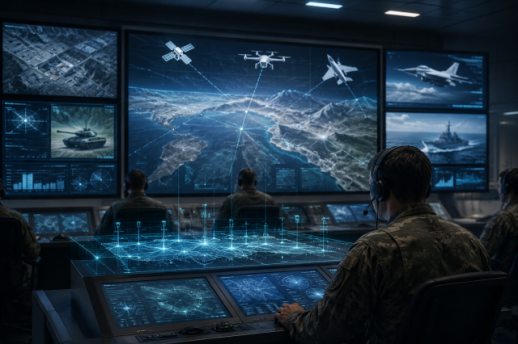 Competition Heats Up for 'K-Palantir' in Defense Technology As artificial intelligence (AI) emerges as a crucial element in future warfare, South Korea is witnessing the rise of defense companies equipped with big tech capabilities. The importance of real-time battlefield situational awareness and data connectivity has increased, particularly following the conflicts involving the U.S., Iran, and the Russia-Ukraine war. The competition for what is being dubbed the 'K-Palantir' is intensifying. According to industry sources, defense startup MakinaRax recorded a 'double' on its initial public offering (IPO) on May 20, quadrupling its offering price and surpassing a market capitalization of 1 trillion won. Known as the Korean version of Palantir, MakinaRax is an AI-driven industrial defense platform that attracted significant investor interest even before its listing. Particularly in the defense sector, attention has focused on its self-developed AI enterprise operating system (OS) that supports decision-making in combat situations. This system is designed to maintain high security even in closed network environments and is reportedly supplying related technologies to the Agency for Defense Development (ADD). Human Technology, which holds the top market share in South Korea's anti-drone sector, is developing next-generation integrated defense solutions that combine AI with aviation, robotics, and electronics. On May 15, the company changed its name to 'Agos' to strengthen its identity as an AI defense firm. It is currently preparing to enter the European defense market in collaboration with five companies, including Rainbow Robotics. The rise of AI-based battlefield platform companies in South Korea is rooted in the recent changes in warfare dynamics. The conflicts involving the U.S. and Iran, as well as Russia and Ukraine, have highlighted the importance of real-time information connectivity using relatively inexpensive drones over costly advanced weaponry. The ability to quickly assess battlefield situations and find optimal responses has emerged as a key competitive advantage. At the center of this 'battlefield brain war' is the U.S. defense company Palantir. Palantir analyzes drone, satellite, and reconnaissance data in real-time, connecting it to command systems through its AI-based battlefield platform. It has reportedly supported the U.S. Department of Defense's strategic decisions during the ongoing conflict in Iran, establishing itself as a leading defense tech company in the U.S. Palantir's growth has been remarkable. In the first quarter of this year, its revenue reached $1.633 billion, an 85% increase compared to the same period last year. This growth was largely driven by an expansion in its defense and public sector business with the U.S. government, which generated $687 million. Its net income soared to $871 million, more than quadrupling. In terms of revenue, Palantir is on par with traditional South Korean defense manufacturers. Its first-quarter revenue is comparable to Hanwha Aerospace's reported 5.751 trillion won, excluding Hanwha Ocean's 3.2099 trillion won. It is more than double the first-quarter revenue of LIG Defense and Aerospace, which stood at 1.1679 trillion won. Among South Korea's major defense companies, Hanwha Systems is recognized as an AI battlefield platform firm. It is building future battlefield platforms based on military command and control systems and manned-unmanned teaming (MUM-T). Last year, it secured a contract worth 93.7 billion won for the 'Joint Command and Control System Performance Improvement Development Project' from the Defense Acquisition Program Administration. The development of an AI-based intelligent command decision support system is also underway, with a target completion date set for 2029. Industry experts believe that AI battlefield operating systems and platforms are likely to become a new revenue stream in South Korea's defense market. Professor Park Joo-hong from POSTECH's Department of IT Convergence Engineering stated, "There is a growing consensus within the military on the necessity of AI-based battlefield systems," but emphasized that AI should evolve into a platform that explains situations considering the decision-making structure of defense organizations rather than autonomously judging wartime scenarios.* This article has been translated by AI. 2026-05-21 18:22:16