
Journalist

Natasha Lindstaedt
-
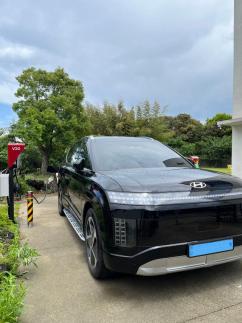 Hyundai Launches V2G Pilot Program for Electric Vehicles in Jeju Hyundai Motor Group announced on May 15 that it will officially launch a Vehicle-to-Grid (V2G) pilot program for general customers in Jeju Island. V2G technology connects electric vehicle (EV) batteries to the power grid, allowing for two-way energy exchange. This approach transforms electric vehicles from mere transportation into strategic assets for energy storage and distribution. The company has been operating a V2G pilot program in collaboration with the mobility platform SoCar since the second half of last year and is now expanding it to include local residents. Forty Jeju residents who own Hyundai's Ioniq 9 or Kia's EV9 and can install V2G bi-directional chargers at their homes or workplaces have been selected as participants. These participants are early adopters with a strong interest in the environmental benefits of V2G technology. Hyundai Group conducted field surveys to ensure a diverse representation of occupations and residences among the final participants. They will receive free installation of the bi-directional chargers and full coverage of EV charging fees during the pilot period. Participants will experience a new form of mobility, utilizing their electric vehicles not just for charging but as 'mobile energy storage systems' (ESS) that can store and supply power. The full implementation of V2G is expected to shift the energy industry from a supplier-centric model to a locally driven economic model. In Jeju, which has a high proportion of wind and solar energy, excess power generated during the day can be stored in electric vehicles and returned to the grid at night, maximizing the utilization and economic viability of renewable energy. Hyundai Motor Group plans to accelerate the development of the domestic V2G ecosystem and industry activation in collaboration with the government and local authorities through this pilot program expansion. A Hyundai Group official stated, "We expect the V2G pilot program, which involves direct participation from the residents of Jeju, to support the realization of local energy production and consumption. It will also play a significant role in achieving Jeju's carbon neutrality vision for 2035." Meanwhile, Jeju is serving as a testbed for carbon neutrality policies, aiming to achieve net-zero emissions by 2035, 15 years ahead of the national target. The island is pursuing various roadmaps to transition its energy production and consumption paradigms. By 2035, Jeju plans to expand its renewable energy generation capacity to 7GW, increasing its share of renewable energy to over 70%. It will also convert existing thermal power plants to hydrogen combustion and co-firing plants. Additionally, the island is testing technologies to promote distributed energy through regulations on new registrations of internal combustion vehicles and the transition of large buses and trucks to hydrogen vehicles, along with V2G initiatives.* This article has been translated by AI. 2026-05-15 09:08:04
 -
 AJP Korea-India Essay Contest Winner: Silver Prize SEOUL, May 15 (AJP) - Winter of 2019, Found in White Silence One winter day, when worries about my future had reached even the tips of my toes, I found myself wandering through Bukchon Hanok Village as if I were being pulled there by something unseen. The roofs of the hanok houses, covered in white snow, seemed to quietly cover my complicated thoughts as well. As I walked through the cold air, I suddenly remembered a day from early January 2019. It was just as freezing as today. That was the day I met my Indian friend, Hiral. A Friendship That Began with a Camera Shutter At the time, I was still a high school student. Hiral, who was traveling alone, shyly asked me to take her picture. Even now, I clearly remember her bright smile through the camera lens against the snowy hanok village. I became her guide for the day, walking together through the narrow alleys of Bukchon. My English was not very good, so I could not make perfect sentences, but I tried my best to explain the beauty of Korean culture with sincerity in every word. She smiled shyly as she talked about how much she liked K-pop, and during those moments, I realized something important. To a high school student who felt uncertain about the future, she showed me that the world was wide and that people could still connect with each other, even across great distances. Before parting ways, we exchanged Instagram accounts, and our connection became much deeper than I expected. During the pandemic especially, video calls became our only way of staying close. She showed me everyday life in India through the screen, introducing me to Indian food and culture one by one. Sometimes she even cooked Korean ramen herself while laughing and saying we should meet again someday. Wanting to feel closer to her culture, I began visiting Indian restaurants in Dongdaemun. As I tried tandoori chicken, curry, naan, and lassi, I imagined the taste of the home she missed. But in 2024, our connection suddenly disappeared. Her Instagram account was hacked, and the friendship we had built for almost five years was lost overnight. Even the messages we exchanged while comforting each other during the difficult days of COVID-19 vanished in an instant. Still, that powerful experience of meeting and losing someone became a compass in my life. The Future I Dream of as an Anthropology Student One of the most surprising things while talking with Hiral was discovering the strange similarities between Korean and Tamil, her native language from South India. Not only did Tamil use the same sentence order as Korean — subject, object, and verb — but many everyday words sounded surprisingly alike. Family words such as “mom,” “dad,” and “older sister” felt familiar. Even words for body parts sounded similar. What shocked me most was learning that even expressions used with children — playful words like comforting sounds and baby-talk phrases — existed in both languages in very similar ways. At that moment, our friendship no longer felt like simple coincidence. It felt like something connected by history itself. These feelings also reminded me of historical traces connecting Korea and India from long ago: the stone pagoda said to have been brought from India by Queen Heo Hwang-ok, the twin-fish symbol found near King Suro’s tomb, and research suggesting similarities between ancient remains found in Gimhae and people from South India’s Tamil region. To me, these were not just historical facts. They felt like proof that the emotions and understanding we shared had roots stretching back thousands of years. Though we were born in different countries, we shared similar emotions, language, and history. Because of this experience, I decided to study anthropology. I now dream of becoming a researcher who studies the historical relationship between Korean and Tamil. What began as a wish to reconnect with a lost friend has grown into a dream of rediscovering the forgotten ties between two countries. I want to continue studying the deep cultural similarities between Korea and India and share them with more people. The Day We Meet Again Whenever I return to Bukchon, I sometimes feel as if Hiral might suddenly appear from somewhere beyond the stone walls. Maybe it is because the gratitude I never fully expressed and the pure feelings from that time still remain there. Even though our online connection has been lost, I still dream of meeting her again someday on a street somewhere in India. The friendship may have been interrupted, but the countless conversations we shared and the warmth of those memories have not disappeared. As I wait for the day we meet again, I want to continue recording and sharing the deep cultural connection between Korea and India. Remembering Hiral, the Diamond in My Life Her name, “Hiral,” means “diamond.” And truly, she was one of the brightest diamonds in my life. I hope that the friendship once buried beneath the white snow of Bukchon will bloom again someday, becoming part of a future where Korea and India embrace each other more deeply. If I ever meet her again in India, I want to tell her this with my brightest smile: “My Hiral, because of you, I was able to see a much bigger world.” More lasting than a broken Instagram follow button are the history, language, and emotions we shared together. And so, I quietly repeat the words I hope to say to her someday again: “Namaste, long time no see.” *The author, Gu Jun-hee, is based in Korea. The author's writing was submitted in Korean, and was translated into English by AI. 2026-05-15 09:07:43
 -
 Song Eon-seok Criticizes President Lee for Election Interference During Market Visits Song Eon-seok, co-chair of the People Power Party's election campaign committee, criticized President Lee Jae-myung on May 15 for his frequent visits to traditional markets, calling it "blatant election interference." In a Facebook post, Song stated, "The president is not just crossing the line of election interference; he is actively campaigning." He noted that after attending a K-Shipbuilding meeting in Ulsan, President Lee visited the Namnok Market in Ulsan and then the Moran Market in Seongnam after a meeting at the Saemaul Undong Central Association. He added that last Friday, the president visited the Namdaemun Market following a Parents' Day ceremony, claiming, "He is now conducting open campaign tours of traditional markets every day." Song emphasized that the Moran Market is politically significant for President Lee, as it is his political hometown, and the candidate for Seongnam mayor, Kim Byeong-wook, is a former senior secretary at the Blue House. He argued that the choice of location is suspicious, stating, "While past presidents have faced allegations of election interference, none have campaigned directly in traditional markets every day just 20 days before an election." He recalled that in March 2016, when then-President Park Geun-hye visited innovation centers in Daegu and Busan, the Democratic Party vehemently criticized her for election interference, despite her actions being part of her official duties. "The Democratic Party condemned her for visiting regions, labeling it election interference, while President Lee is not even visiting traditional markets, yet he is campaigning openly," Song remarked. He concluded by stating, "If the president continues this campaign, the People Power Party will take immediate legal action against his blatant electioneering." Jeong Hee-yong, head of the election campaign headquarters, also targeted President Lee, questioning, "Is the obligation of political neutrality and concerns over election interference a selective principle that disappears when the regime changes?" He criticized the president for leading the push for a so-called 'special prosecutor for the cancellation of charges' amid constitutional controversies, suggesting that such behavior reflects a selective interpretation of laws and principles. Jeong added, "The public does not trust a power that is strict with others but lenient with itself. I urge the president to reflect on the weight of his past words and at least adhere to the standards he has set for himself."* This article has been translated by AI. 2026-05-15 09:07:09
 -
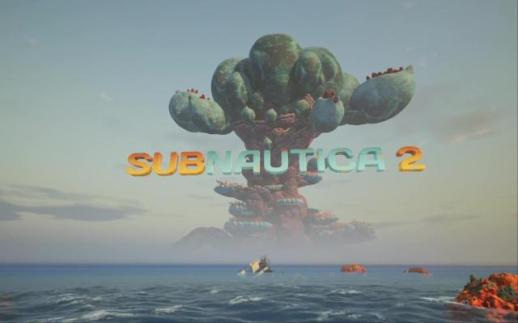 K-Game: Subnautica 2 dives into early access, lonelier than it looks SEOUL, May 14 (AJP) - Most survival games this reviewer has lived inside — Rust, Minecraft, Terraria, Core Keeper — share a comfortable rhythm: gather, build, defend, repeat. Fishing is a life-hobby for this reviewer, an in-game delicacy for such survival games as well. "Subnautica 2," which entered early access on Friday at zero a.m. KST, breaks that rhythm in two specific places. The fish want to eat you. And you cannot breathe. That combination — predators that hunt rather than wander, plus a permanent oxygen clock — is something only this series really commits to, and the sequel does not soften it. Even with a crafting-survival muscle memory built over years, the first dive produced the familiar tightening that the original game weaponized so well: a so-called thalassophobia and megalophobia inducer. Full disclosure: this reviewer never finished the 2018 original, having played it in patches and watched the rest as YouTube playthroughs. That made "Subnautica 2" one of the more anticipated titles on the personal calendar — and, after about five hours of solo play, one of the more interesting to write about. Developed by Krafton-owned Unknown Worlds Entertainment, the sequel drops players onto an unfamiliar alien ocean world aboard a doomed Alterra colony ship called the Cicada. It ditches the first game's planet 4546B entirely and, for the first time in the series, supports up to four-player co-op alongside solo. The franchise has sold more than 18.5 million copies to date, per Unknown Worlds, and the sequel topped Steam's global wishlist for nine straight months, crossing five million wishlists before launch. Story, lightly told The structural pitch differs from the first game in one key way: this is not an escape story. Players are not trying to leave. The Cicada's AI is barking objectives, the planet is hostile, and the goal is to adapt to it — to stay. Adaptation is also a mechanic. A new system called BioMod lets the player splice alien genes into their body to unlock new traits — bio-orb cave markers, faster swim speed, surfacing the planet's biology through one's own skin. The longer the player runs, the further from human baseline they drift. There is no protagonist voice-over and very little hand-holding. Skip the AI dialogue and the logs from earlier visitors, and early objectives become genuinely opaque. Several hours in, this reviewer was still freediving for blueprints like a checklist-bound pearl diver, scanner in hand, oxygen ticking. How the loop feels The loop lands somewhere between meditative and slightly panicked. Without an extra tank, the player surfaces about every 30 seconds or sprints to a bubble-emitting plant to top off. Movement, health and inventory size all expand by finding hidden biopods across the map — a soft, exploration-rewarding progression that worked on this reviewer more than the standard XP bar would. This reviewer's usual survival-game default is "fisherman and forager" — let someone else fight, let the snacks pile up. "Subnautica 2" is the rare entry where collecting fish is also collecting predators, since plenty of them bite back. Less Stardew Valley, more Jeju haenyeo (women divers) in a horror cut: the diver goes down, the diver comes up with whatever did not get her. It is a strangely compelling pitch. Hostile life is otherwise thin in the early game. Nibblers dart in for a single chomp and flee. Larger pursuers can be peeled off with a sonic resonator or a flare — though firing the resonator near a wall produced a reliable bug in which the pursuing creature simply embedded itself in the geometry. Death is gentler than it sounds. A "Reprint" mechanic revives the player from stored memory — think the recent film "Mickey 17" — at the cost of two or three items rather than the full inventory. A quiet kindness in a game that otherwise enjoys making the player suffer. Toys, bases, and the small annoyances The new flagship vehicle, the TadPole, is a glass-fronted, winged sub that can carry up to three players hanging from a top rail, with a smaller drone that detaches to thread tight caves. Base-building has loosened considerably, though the early-access blueprint pool is narrow: this reviewer spent the first stretch living in a hamster-tube of corridors before stumbling on an abandoned habitat that unlocked proper rooms. Solar panels cover the early game but tank hard at night. Inventory management is the most frustrating area. There is no stacking, no drag-to-discard, only five hotkey slots, and the hand-held field container does not auto-collect. One container this reviewer set down on the seabed re-spawned, apparently floating, in a completely different biome on the next load — the first major bug in roughly four hours of play. How it looks, how it runs The jump from Unity to Unreal Engine 5 is doing real work. Light falls through the water column with a softness the first game never had, and at about 200 meters down the sun simply gives up. On a system with an RTX 5070, 32GB of RAM and an AMD Ryzen AI 7 350, the game held up at maximum settings with motion blur off, with occasional hitches — most reliably when climbing a ladder into a vehicle pod. Krafton has said the game targets 4K at 60 fps on an RTX 5070 Ti or Radeon RX 7900 XTX, a softer ask than most UE5 releases. The early-access map is also visibly fenced in. Swim too far toward the giant central tree on the horizon and the world simply tells you it has not been built yet — usually by spawning three leviathan-class predators that kill the player on contact. An honest map border, at least. A note on how the game got here The road to launch was unusually loud. Krafton and the studio's three co-founders — Charlie Cleveland, Max McGuire and former CEO Ted Gill — spent much of 2025 in court over a $250 million earnout tied to the sequel's release. A Delaware Chancery judge in March 2026 ruled Krafton had wrongfully terminated the trio and reinstated Gill as CEO, pushing early access into this year. Co-op, in theory Four-player co-op was not testable during this review window — multiplayer did not return for press play after an earlier closed beta. The setup is straightforward enough on the menu: one player hosts in survival or creative mode (a third slot is marked "Coming Soon"), and the rest join through a Steam friends list or a short friend code. Character customization is thinner than pre-launch chatter suggested — players pick one of four pre-set survivors, and that is it for now. Lead designer Anthony Gallegos has said co-op tuning will follow player feedback after launch. The hooks are there on paper — three-seat TadPole rides, two-player lever puzzles, bio-orb breadcrumb trails. Whether they land is something this reviewer will have to come back to once there is a full team in the water. Worth diving in? After four hours, "Subnautica 2" feels recognizably Subnautica — slower, prettier, more legally complicated, and built around evolving into the planet rather than escaping from it. The horror still works in the specific way only this series does. The inventory does not. The map is small, the bugs are real, and a lot of the promised content is on a roadmap rather than in the build. For someone who came in as a fan-by-osmosis rather than a finisher of the first game, the early hours felt less like clearing a tutorial and more like learning to be a different kind of animal in a place that is actively trying to digest you. For a survival game that lets the player literally adapt into the ecosystem, that seems to be the entire point. 2026-05-15 09:00:00
 -
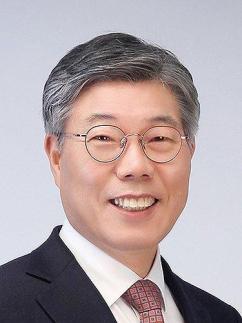 iM Financial Chairman Hwang Byeong-woo to Visit UK, Assures Investors of Performance and Dividends Hwang Byeong-woo, Chairman of iM Financial Holdings, is set to visit the United Kingdom for the first time since taking office. The trip aims to enhance shareholder value by promoting iM Financial's growth story as it transitions to a commercial bank.According to financial industry sources on May 15, Hwang will be in the UK from May 18 to 22.During his visit, he plans to meet with local investors, including asset management firms in London, Stockholm, and Edinburgh. This marks Hwang's inaugural trip to the UK.iM Financial's foreign ownership rate stands at 42.89%. However, the company remains relatively unknown among UK investors. Hwang intends to directly communicate the company's financial performance, long-term growth strategies, and shareholder return policies, including dividends.Hwang's trip is part of the strategy to realize the vision of a 'hybrid financial group.' Since transitioning to a commercial bank in 2024, iM Financial has increased corporate loans in the metropolitan area by utilizing dedicated corporate sales teams. The amount of corporate loans in Korean won rose from 34.6 trillion won at the end of last year to 35.9 trillion won in the first quarter of this year.The number of digital customers has also grown, increasing from 3.87 million in 2024 to 4.47 million in the first quarter of this year, with non-face-to-face savings and deposits accounting for 84% of the total. The proportion of non-banking revenue surged from 15.5% in the first quarter of 2024 to 34% in the first quarter of this year, reflecting increased fees across subsidiaries, including banking, securities, and capital. Hwang's decision to step down as bank president and focus entirely on synergies among subsidiaries has significantly contributed to this growth. In his New Year's address, he emphasized the need for seamless integration of all financial services under the 'Seamless iM' initiative, advocating for broader collaboration and synergy among subsidiaries. This growth trajectory has led to a doubling of iM Financial's stock price, which has risen from the 8,000 won range prior to the bank's transition to approximately 19,000 won now.Hwang is also pursuing an aggressive value-up policy based on his confidence in the company's performance, continuing with share buybacks. Following the separation of dividend taxation last year, iM Financial plans to implement reduced dividends (tax-exempt dividends) this year. Hwang has expressed his commitment to supporting the stock price by purchasing an additional 2,900 shares in March, following the acquisition of 7,136 shares in January.This year, the company is expected to seek growth drivers in new business areas. Hwang has stated, "In a rapidly evolving management environment driven by artificial intelligence (AI), we must identify tasks optimized for the group's capabilities and build success stories." iM Bank is collaborating with Deloitte Group in Korea to explore new digital asset ventures and is developing AI-based facial recognition for remote identity verification and digital asset ATMs.* This article has been translated by AI. 2026-05-15 08:56:23
 -
 Midtjylland Wins Danish Cup After Four Years with Lee Han-beom's Goal Midtjylland secured the Danish Football Association (DBU) Cup title for the third time in its history, defeating Copenhagen 1-0 in the final held at Parken Stadium in Copenhagen on May 15. The victory marks Midtjylland's first cup win since the 2021-2022 season. Lee Han-beom scored the winning goal with a header in the 82nd minute, contributing significantly to the team's success. He played the full match alongside fellow starter Cho Gyu-sung, who, while not scoring, was instrumental in pressuring the opposing defense throughout the game. In earlier rounds of the DBU Cup, Lee also made notable contributions, scoring the decisive goal in the first leg of the semifinals and providing an assist in the second leg. After the match, teammate Viktor Bæk Jensen praised Lee's performance, stating on the club's website, "Lee has been outstanding all season. He has consistently delivered impressive performances since the beginning of the season and has been incredibly reliable. He deserves immense praise." Midtjylland's triumph adds to their previous cup victories in the 2018-2019 and 2021-2022 seasons, solidifying their status in Danish football.* This article has been translated by AI. 2026-05-15 08:51:05
 -
 NH Investment & Securities Raises Target Price for Samsung Electro-Mechanics Amid MLCC Price Increases NH Investment & Securities announced on May 15 that it has raised its target price for Samsung Electro-Mechanics from 1 million won to 1.5 million won, a 50% increase, citing the beginning of a price increase cycle for multi-layer ceramic capacitors (MLCC). The firm maintained its "buy" rating on the stock. In a report released that day, analyst Hwang Ji-hyun stated, "With the price increases for some MLCC products starting, we have adjusted our earnings estimates upward." Hwang noted that Samsung Electro-Mechanics plans to raise prices for certain MLCC products aimed at distributors, adding, "Given the recent supply and demand situation, there is a high possibility that price increases will spread to other product lines in the future." She also highlighted that the shipment-to-order ratio (BB ratio) for Japanese companies Murata and Taiyo Yuden reached 1.36 and 1.31, respectively, in the first quarter of 2026, marking the highest levels in five years since 2021. Both companies reported strong ongoing demand for AI-related MLCCs, with operating rates expected to remain above 90% throughout the year. Hwang explained that AI servers are increasingly adopting Integrated VR (IVR) structures, which integrate power supply paths with CPUs and GPUs, or Vertical Power Delivery (VPD) structures that stack components vertically. "In their earnings announcements, Samsung Electro-Mechanics, Murata, and Taiyo Yuden all mentioned this trend," she said. She added, "This requires technologies to mount MLCCs in an array format on substrates or embed them internally. Unlike other MLCC manufacturers, Samsung Electro-Mechanics has a packaging division, which is expected to enhance its competitive edge through synergy."* This article has been translated by AI. 2026-05-15 08:50:17
 -
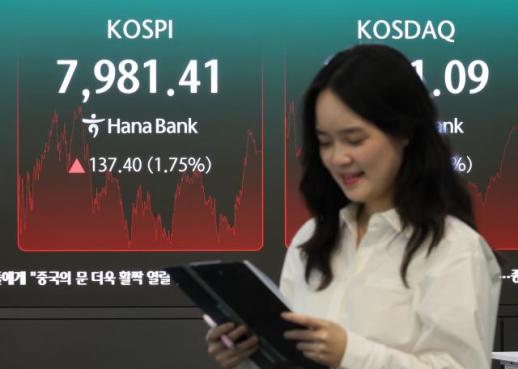 KOSPI Approaches 8000 Mark Amid Strong U.S. Market Performance The KOSPI, which has fluctuated around the 8000 mark throughout the week, is poised to potentially break through this milestone, buoyed by strong performance in the U.S. stock market. According to the Korea Exchange, the KOSPI closed at 7981.41 on May 14, rising 137.40 points (1.75%) from the previous trading day, leaving it just 19 points away from the 8000 mark. In the securities market, individual and foreign investors engaged in a tug-of-war over supply and demand. Individuals made net purchases worth 1.8499 trillion won, driving the index higher, while institutions recorded a net buying of 192.7 billion won. In contrast, foreign investors sold a net 2.168 trillion won, continuing a six-day selling streak. On Wall Street, U.S. stocks closed higher, continuing a rally led by technology shares. The positive sentiment was attributed to a reaffirmation of cooperation between U.S. President Donald Trump and Chinese President Xi Jinping during a summit in Beijing. Han Ji-young, a researcher at Kiwoom Securities, noted, "Expectations surrounding related developments, including NVIDIA, have driven the strong performance in the U.S. market. For this momentum to continue, the actual import approval of China's H200 will be crucial." She added that the market will also focus on existing external factors such as U.S.-Iran negotiations and the direction of U.S. interest rates. On the same day, the Dow Jones Industrial Average closed at 50,063.46, up 0.75%. This marks the first time the Dow has surpassed the 50,000 mark since February 11. The S&P 500 and the tech-heavy Nasdaq Composite also rose by 0.77% and 0.88%, respectively, reaching new all-time highs. NVIDIA shares rose 4.39% amid growing expectations for sales of its H200 chips in China, following news that CEO Jensen Huang was part of the delegation visiting China. Cerebras Systems, a company specializing in AI inference chips, surged 68.15% on its first day of trading on Nasdaq. Other major AI semiconductor stocks, including Broadcom (up 5.52%) and AMD (up 0.94%), also performed well. However, Micron (-3.4%) and SanDisk (-4.5%) saw declines due to profit-taking. The Philadelphia Semiconductor Index closed up 0.46%. Analysts suggest that the likelihood of the KOSPI breaking through the 8000 mark has increased, supported by the strong performance of U.S. tech stocks and improved investor sentiment toward AI. However, the ongoing foreign selling over six consecutive trading days remains a concern. Meanwhile, as of 8:15 a.m. on the same day, Samsung Electronics was trading at 294,500 won, down 1,500 won (-0.51%) from the previous trading day, while SK Hynix was up 4,000 won (0.2%) at 1,974,000 won. 2026-05-15 08:48:00
 -
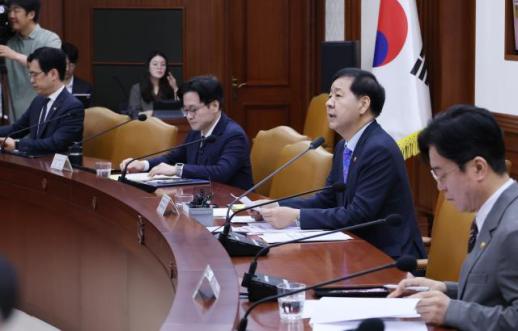 Construction of Taereung Project Advanced by One Year as Government Pushes for Rapid Housing Supply The South Korean government has decided to accelerate the construction schedule for the Taereung district by advancing the start date by one year to enhance the speed of housing supply. This move comes amid ongoing signs of instability in the real estate market, with the government aiming to stabilize the market through increased housing supply. During a meeting of real estate ministers on May 14, Deputy Prime Minister and Minister of Economy and Finance Koo Yun-cheol emphasized, "Rapid supply is of utmost importance," adding that the government is compressing all execution stages to ensure that announced plans translate into actual housing for citizens. The government plans to begin construction on the Taereung Golf Course site in 2029, one year earlier than originally scheduled. This decision aims to alleviate market concerns over delays in supply and to realize tangible housing availability sooner. In addition, the government is pushing forward with projects in the Gangseo military site and the redevelopment of aging government buildings, targeting the construction of approximately 2,900 housing units by 2027, following the exemption from preliminary feasibility studies. The government will designate supply responsibility officers for each site to closely monitor project progress. Short-term supply expansion measures are also being pursued. The government is considering rapid supply options for available housing, including non-apartment units such as officetels, to minimize supply gaps and mitigate market instability. Furthermore, the government plans to strengthen market order management. Koo stated, "We are thoroughly implementing the separation of the real estate market and finance," and pledged to work with relevant agencies to rigorously inspect and respond to market disruption activities. To support this effort, management of housing mortgage loans will be tightened. The government plans to expand inspection targets to include not only individuals but also corporate rental businesses, and will check all housing mortgage loans for potential misuse. This initiative aims to minimize oversight gaps, including small loans.* This article has been translated by AI. 2026-05-15 08:45:19
 -
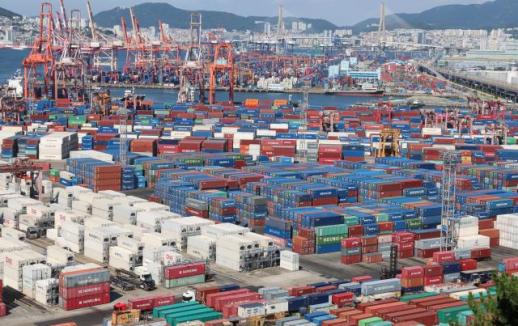 Korea's import prices ease in line with softer oil prices SEOUL, May 15 (AJP) - South Korea’s import prices fell against a double-digit jump in March last month on eased international oil prices despite prolonged Middle East crisis, helping to feed robust trade terms despite slower growth in export prices from strong chip demand. The import price index fell 2.3 percent in April after a 18 percent surge seen in March on lower international oil prices and U.S dollar. As the average price of Dubai crude fell 17.8 percent month on month in April, import prices of raw materials, including mining products, dropped 9.7 percent. Intermediate goods, which are closer to the prices felt by businesses, rose 2.1 percent from the previous month due to a lagging effect. Despite the decline in oil prices, products such as coal and petroleum (up 6.2 percent) and chemical products (up 1.7 percent) continued their upward trend as previous energy price hikes were reflected with a time lag. Against a year-ago, import prices were 20.2 percent higher. Among import items, mining products including crude oil jumped 36.5 percent on year, while import prices for coal and petroleum products rose 67.0 percent, further fueling overall upward inflationary pressure. Export prices rose 7.1 percent from the previous month, slowing from 17-percent jump in March. On year, they were 40.8 percent higher, strongest since 57.8 percent surge in March 1998. Key IT items, such as DRAM (up 232.8 percent) and computer storage devices (up 149.2 percent), led the index rise. Export price strengthening is primarily owed to semiconductor boom, unlike the past - when the surge was driven by a weak won plummeted around 1,800-level as of late 1997 and early 1998, and the transfer of raw material prices. Trade indicators improved as export prices (up 33.6 percent) rose at a faster pace than import prices (up 16.9 percent), leading to an increase in the net terms-of-trade index (up 14.3 percent) and the export volume index (up 12.4 percent). Yet, the situation requires close monitoring as upward pressure on prices across the industry remains firm. "While the rise in import prices has slowed due to the fall in international oil prices, intermediate goods prices remain high due to the time-lag effect," said Lee Moon-hee, head of the Price Statistics Team at the BOK’s Economic Statistics Department. "Given the continued rise in export prices driven by semiconductors and the fact that geopolitical risks in the Middle East have not been fully resolved, we must closely monitor the impact on domestic consumer prices in the future.” 2026-05-15 08:43:44