
Journalist

Nino Antadze
-
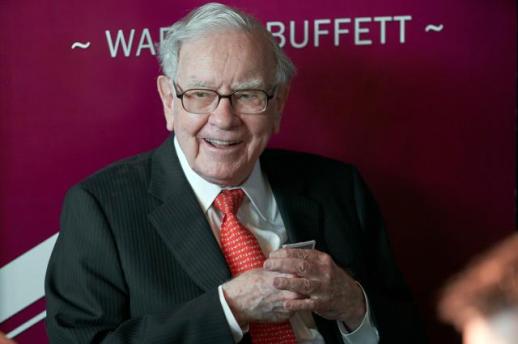 Warren Buffett's Charity Lunch Auction Fetches $9,001,000 Warren Buffett, the 95-year-old chairman of Berkshire Hathaway, has revived his annual charity event, "Lunch with Buffett," which fetched $9,001,000 in an auction. This marks the event's return after a four-year hiatus.According to Yonhap News, Reuters reported that the charity auction held on eBay concluded with the winning bid of $9,001,000 (approximately 135 billion won) the previous day. The identity of the winning bidder has not yet been disclosed.Since 2000, Buffett has hosted the "Lunch with Buffett" charity event annually, donating the proceeds to Glide Foundation, a San Francisco-based organization that supports the homeless. The event was last held in 2022 before being paused, and it resumed this year. The highest bid recorded was in 2022, when the auction closed at $19 million (approximately 285 billion won).This year's lunch is scheduled for June 24 at Berkshire's headquarters in Omaha, Nebraska, where Buffett resides. Proceeds will benefit Glide Foundation and the "Eat.Learn.Play Foundation," established by NBA player Stephen Curry and his wife Ayesha Curry. The couple will join Buffett for the lunch in June.Additionally, Buffett stepped down as CEO of Berkshire at the end of last year, passing the role to Greg Abel. However, he continues to serve as chairman and remains actively involved in investments.* This article has been translated by AI. 2026-05-16 08:35:45
 -
 Former Minister Joo Hyung-hwan Discusses South Korea's Economic Strategy Joo Hyung-hwan, a prominent figure in South Korea's economic policy, has played a crucial role in shaping the nation's approach to economic planning, industrial policy, trade, energy, and responses to low birth rates and an aging population. Known for his meticulous policy design and strong execution, he has earned nicknames such as 'Master of Reports' and 'Idea Bank.'South Korea currently faces a 'complex transition period' characterized by three major trends: AI transition, demographic changes, and the restructuring of global supply chains. At this juncture, Joo emphasizes that national strategy must focus on 'selection and concentration, and speed,' advocating for a shift from the past model of expansive growth to a technology-centered compression strategy. His insights call for a fundamental redesign of South Korea's economic structure.What principles guided your public service?= I have always kept two principles in mind during my public service. The first is, 'Let’s make the world a better place for our children.' I believe policies should be designed to ensure the next generation enjoys a better quality of life and opportunities. The second is to approach every position with the mindset that 'this is a flower seat.' It is crucial to strive for the best results in any role, especially for someone like me who started from an ordinary background. Ultimately, public service is evaluated by results, so thorough preparation and ensuring outcomes are essential.What is the biggest change in South Korea's economic policy?= The most significant change is the shift in the government's role from 'leader' to 'enabler.' In the past, the government presented visions and led the economy through policies and systems, but now the roles of the private sector and politics have grown considerably. The government now acts as a partner that collaborates and supports direction. While this is a natural evolution, it has also led to a weakening of policy consistency and long-term predictability. Since economic policy prioritizes long-term stability over short-term popularity, maintaining this balance is a critical challenge.What is the most important capability for policy designers?= In a word, it is 'capability.' The ability to quickly grasp the essence of issues and coordinate interests to create practical solutions is vital. This requires expertise, creativity, balance, and drive. Policies must not only be ideas but should lead to execution. The government is in a position to persuade various stakeholders, so it is important to create creative yet practical alternatives and push them through to completion.What was the key strategy that boosted exports during your tenure?= The most important factor was quickly addressing on-the-ground issues. I listened to the challenges faced by exporting companies and responded immediately. At the same time, I promoted structural changes. We diversified export items beyond the traditional top ten to include electric vehicles, batteries, biotechnology, defense, and consumer goods, while also expanding markets to the Middle East, Southeast Asia, and South America. Additionally, we innovated export methods through cross-border e-commerce. Above all, changing the mindset of companies was crucial. Creating an atmosphere of 'let's try again' was the essence of our policy.How should policy connect with the field?= I always believe that 'the answer lies in the field.' Reports from a desk provide limited information. However, visiting the field allows one to directly identify the essence of problems and accurately understand the gap between policy and reality. I ensured that feedback was given on opinions raised during field meetings. This builds trust in policies and enhances their execution. Policies only become effective when they operate in the field.Where should industrial competitiveness come from?= The key is 'selection and concentration.' The era of sprawling expansion is no longer viable. We must secure technologies that can make us number one in specific fields. To achieve this, we need to decisively streamline non-core businesses and concentrate resources. Just like the big deals between Samsung and Hanwha, we need to restructure our industrial framework. In the future, the industrial structure should be centered around globally specialized large enterprises.How do you foresee changes in industrial structure in the AI era?= AI will reshape all industries. Not only will the AI industry itself be transformed, but existing industries will also undergo comprehensive innovation based on AI. AI will become a core element in fields such as semiconductors, energy, mobility, and biotechnology. Given South Korea's platform industry foundation, rapid integration of AI can secure competitiveness. The government must address issues related to regulation, workforce, energy, and social resistance to support the AI transition.What is South Korea's strategy amid global technological competition?= Selection and concentration, speed, and public-private collaboration are essential. We cannot compete in all areas; we must focus on fields where we have strengths. At the same time, quick execution is crucial. South Korea excels in application and execution, so we must maximize these strengths. Ultimately, we need to create unique companies like TSMC or ASML.What is the essence and solution to the low birthrate issue?= Low birthrates are not just a demographic issue but a systemic problem for the nation. If the current trend continues, the country could face crises such as declining growth rates, social security collapse, and regional extinction. To address this, we need to strengthen work-family balance policies, expand flexible work arrangements, provide housing support, and implement immigration policies. Targeting and efficiency in policies are particularly important; simply increasing budgets will not solve the problem.What will be South Korea's biggest challenge in the next 20 years?= The simultaneous progression of AI transition, demographic changes, and climate change presents the greatest challenge. Among these, AI is the core issue. AI represents both a crisis and an opportunity. While it can dramatically enhance productivity, it may also lead to large-scale unemployment and social shocks. Therefore, we must design new social systems, educational frameworks, and welfare structures. Ultimately, the future depends not on technology itself but on the systems we choose to implement.■ Joo Hyung-hwanJoo Hyung-hwan is a leading economic strategist and policy designer in South Korea. After graduating from Deoksu High School, he attended Seoul National University, where he studied business administration and entered public service through the civil service exam. He began his policy career at the Economic Planning Board and held key positions, including Vice Minister of Strategy and Finance and Minister of Trade, Industry and Energy, shaping South Korea's economic policy.He is recognized for his dual strengths in policy design and execution, earning him the titles 'Master of Reports' and 'Idea Bank.' During his tenure as Minister, he successfully reversed a long-term decline in exports and contributed to transforming the export structure through the promotion of new industries and market diversification. He also expanded strategic cooperation with Middle Eastern countries, laying the groundwork for the global expansion of South Korean industries.Later, he served as Vice Chair of the Low Birthrate and Aging Society Committee, actively addressing demographic issues. He is regarded as a strategist emphasizing long-term structural reform and system design beyond mere policy implementation. He has consistently highlighted three principles: 'selection and concentration,' 'field-centered policy,' and 'public-private cooperation.'Currently, he continues to voice the direction South Korea's economy should take amid the complex crises of AI transition and demographic changes, stressing the need for technology-centered industrial restructuring and social system innovation.* This article has been translated by AI. 2026-05-16 08:27:23
 -
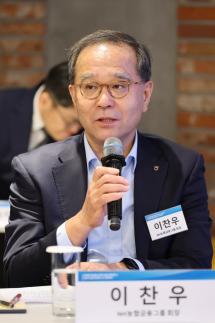 Lee Chan-woo of NH Nonghyup Financial Group: From Macro-Economic Planner to Financial Decision-Maker Lee Chan-woo, chairman of NH Nonghyup Financial Group, is a rare "macro-economic leader" in the financial sector. With a background in policy-making and system design, he views finance not merely as individual products but as a mechanism for resource allocation within the national economy. However, as AI and digital transformation blur industry boundaries, financial leaders are now required to go beyond mere macro insights. They must make entrepreneurial decisions that allocate capital in uncertain industries, accept responsibility for failures, and transform organizational structures. Upon taking office, Lee initiated a comprehensive overhaul, launching a 93 trillion won productive finance strategy, an AI-centered approach, and a complete internal control reform, aiming to shift NH Nonghyup from "managed finance" to "judgment finance." Yet, he faces significant challenges, including the cooperative's unique governance structure, repeated financial incidents, and capital outflow issues. The essence of Lee's leadership lies in the question: Can a bureaucrat skilled in macroeconomic design transform into a financial entrepreneur on the market battlefield? Strengths Lee Chan-woo is a strategic leader who understands both macroeconomics and financial systems. He has clearly defined directions, including the 93 trillion won productive finance initiative, AI strategy, and internal control reforms. His strong insight connects policy and market dynamics. Weaknesses Bureaucratic leadership may slow execution speed. Failures in internal controls and capital outflow structures present structural limitations. The non-bank portfolio remains imbalanced. Opportunities The expansion of AI finance, industrial finance, and capital markets presents structural opportunities for NH Nonghyup. In particular, productive finance could become a differentiated competitive advantage. Threats The cooperative structure, capital outflow, internal control risks, and intensified competition are major threats. Structural constraints pose the greatest risk.* This article has been translated by AI. 2026-05-16 08:26:03
 -
 President Lee warns proxy revenge is serious crime SEOUL, May 16 (AJP) - South Korean President Lee Jae Myung warned through a social media post on Friday that both requesting and carrying out private revenge through third parties constitutes a serious criminal offense. The statement addresses a growing trend of illegal retaliation services coordinated through encrypted messaging platforms. The direct warning from the president signals an intensified government crackdown on digital-age vigilantism. Lee emphasized that modern states must maintain a monopoly on justice to prevent the breakdown of public order. "Private revenge proxy is a serious crime for both the person who requests it and the person who receives the request," the president wrote in a post on the social media platform X. The former human rights lawyer cautioned citizens against engaging in such schemes over minor personal grievances. "Should you ruin your life over something you think is trivial?" he asked. Lee noted that self-governed retribution has no place in contemporary society. He stated that in a modern civilized country, private disputes must be resolved according to the legal order. The president shared an excerpt from a security report detailing a suspected proxy revenge crime in the western port city of Incheon. Police are currently investigating the incident, which reportedly took place early Wednesday at an apartment complex. The report indicates that these crimes have proliferated since the first recorded instance in the southern city of Daegu in August 2025. Criminals typically use the messaging application Telegram to solicit and organize the acts. South Korean authorities have documented 69 such cases to date. Police have arrested 50 individuals in connection with 60 of the recorded incidents. 2026-05-16 08:00:32
 -
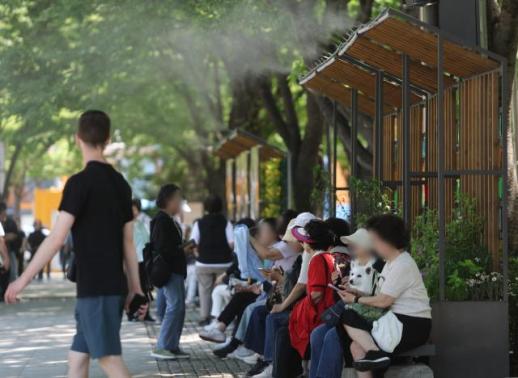 Weekend Weather: Summer Heat Continues with Highs Reaching 33 Degrees On Saturday, May 16, temperatures across most of the country are expected to rise to around 30 degrees Celsius, continuing the early summer heat.According to the Korea Meteorological Administration, the weather will be generally clear due to a high-pressure system located over the East Sea. The heat will be particularly noticeable in the southern inland and Yeongnam regions.Morning low temperatures are forecasted to range from 11 to 18 degrees Celsius, while daytime highs are expected to reach between 25 and 33 degrees, which is above the seasonal average. In some areas, the temperature difference between day and night could be as much as 15 degrees, necessitating careful health management.The expected morning lows and daytime highs for major regions are as follows: △Seoul 18-31 degrees △Incheon 16-29 degrees △Suwon 16-30 degrees △Chuncheon 15-31 degrees △Gangneung 17-30 degrees △Cheongju 16-31 degrees △Daejeon 15-31 degrees △Jeonju 14-31 degrees △Gwangju 15-31 degrees △Daegu 13-33 degrees △Busan 14-25 degrees △Jeju 16-24 degrees.Fine dust levels are predicted to be at 'good' to 'moderate' levels across all regions, although southern Gyeonggi Province may experience temporary 'bad' levels in the morning.Wave heights are expected to be 0.5 to 1.0 meters in the East and South Seas, and around 0.5 meters in the West Sea. In the offshore waters (approximately 200 kilometers from the coastline), wave heights are forecasted to be 0.5 to 1.5 meters in the East Sea and 0.5 to 1.0 meters in the West and South Seas.* This article has been translated by AI. 2026-05-16 07:54:50
 -
 South Korea's labor minister to meet Samsung management to avert strike SEOUL, May 16 (AJP) - In a bid to mediate a labor dispute that threatens an unprecedented general strike of Samsung Electronics workers, South Korean Labor Minister Kim Young-hoon is scheduled to meet with Samsung executives as early as Saturday. The move follows a high-level meeting between the minister and union leadership to discuss demands that could fundamentally reshape the company's compensation structure. The National Samsung Electronics Union plans to launch an 18-day strike from May 21 to June 7. Union officials expect approximately 50,000 members to participate in what would be the largest labor action in the history of the world's top memory chip maker. Minister Kim Young-hoon met with Choi Seung-ho, the chairman of the Samsung Electronics branch of the Samsung Group Supra-Enterprise Labor Union, on Friday to hear worker grievances. The union requested the government's help in replacing the company's lead negotiator, Vice President Kim Hyung-ro, and pushing for a substantial shift in management's bargaining position. Labor representatives have criticized Vice President Kim Hyung-ro for allegedly lacking a deep understanding of the semiconductor industry. They specifically pointed to his previous comments regarding the company's projected operating profit reaching 200 trillion won as evidence that he is unfit to lead the negotiations. The core of the deadlock is the union's demand for a fixed performance bonus equal to 15 percent of the company's operating profit. They are also seeking the institutionalization of a system that removes the existing upper limits on performance-based payouts. Samsung management has proposed maintaining the current bonus system while offering uncapped special rewards to allow for more flexible compensation. Despite several rounds of talks, the two sides have remained on parallel tracks without reaching a compromise. According to the Samsung Electronics corporate history, the company maintained a strict non-union policy for more than 50 years until it was officially abolished in 2020. This current escalation is viewed as a critical test for the company's evolving labor relations framework. 2026-05-16 07:24:18
 -
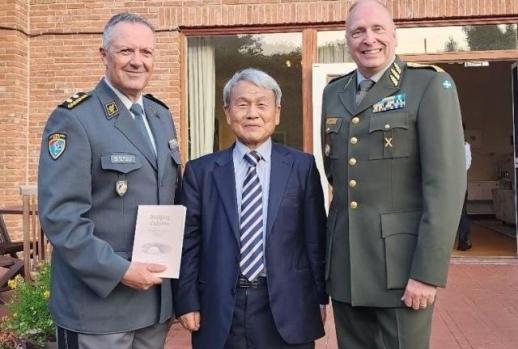 Veteran columnist publishes book on South Korean cultural diplomacy SEOUL, May 16 (AJP) - Veteran South Korean columnist Choe Chong-dae has published a collection of essays spanning nearly half a century of international dialogue, chronicling South Korea's evolving global presence. The book, titled "Bridging Cultures: The Korea Times Columns of a Citizen Diplomat (1979~2025)", captures his experiences as a cultural advocate and lifelong researcher since he began writing in 1979. The volume explores diplomatic history, democratization and South Korean studies through the perspective of a participant-observer. Scholars Alok Kumar and Frank M. Tedesco, who contributed forewords to the collection, described the work as a valuable resource for understanding modern South Korean history and diplomacy. Choe's devotion to South Korean cultural identity was partly inspired by his late father, Choe Nam-ju, a pioneer of South Korean archaeology. The elder Choe participated in the excavation of the ancient Silla Golden Crown alongside the Swedish crown prince, who later became King Gustaf VI Adolf. This early connection to Sweden foreshadowed Choe's own diplomatic recognition decades later. In 2010, Swedish King Carl XVI Gustaf awarded Choe the Royal Order of the Polar Star for his contributions to international relations and cultural exchange. Throughout his career, Choe has examined diplomatic relations between South Korea and numerous European nations, including Belgium, Greece, Germany and Poland. He has also focused extensively on globalizing the heritage of Gyeongju, writing about artifacts such as the Seokguram Grotto and the Divine Bell of King Seongdeok to introduce South Korean history to international readers. Beyond his media columns, Choe has pursued academic research and translation. He published a paper on humanistic egalitarianism in Donghak, South Korea's native religion, in the 2023 volume of the Transactions of the Royal Asiatic Society Korea, which included accessible English translations of its major scriptures. The new book also features his essay "Greece and Korea: A Living Dialogue Between Civilizations," originally published by AJP Press in November 2025. A 2007 column about Queen Margrethe II was also previously featured on an unofficial Danish royal message board. Following the book's release, Choe presented copies of the collection to Bruno Jans and Loukas Tsokos. The handover took place during the Europe Day 2026 reception at the Four Seasons Hotel Seoul on May 8, 2026. 2026-05-16 06:56:27
 -
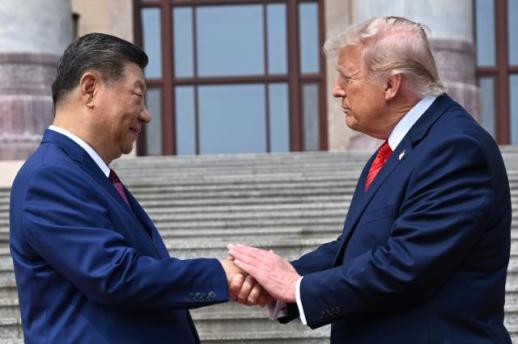 Trump Discusses North Korea with Xi Jinping, Remains Noncommittal on Taiwan U.S. President Donald Trump confirmed on May 15 that he discussed North Korea during his recent summit with Chinese President Xi Jinping. Speaking to reporters aboard Air Force One after returning from China, Trump responded affirmatively when asked if he had addressed North Korea with Xi. When pressed for details on their discussions, he stated, "As you know, I have a very good relationship with Kim Jong Un," adding that the North Korean leader has been "very quiet" recently. Trump also confirmed that he had communicated with Kim, though he did not specify when this communication took place. In response to a follow-up question about the nature of their exchange, he said, "It’s not important. I mean, I’m not going to talk about it. But I have a very good relationship with him. He has respected our country." Earlier, China's state-run Xinhua News Agency reported that Trump and Xi exchanged views on significant international and regional issues, including the situation in the Middle East, the crisis in Ukraine, and the Korean Peninsula during their summit. Regarding Taiwan, a key topic during the U.S.-China talks, Trump stated, "I had a lot of discussions with Xi about it," asserting that he does not believe there is a conflict with China over the matter. He noted that Xi has a very strong stance on Taiwan but emphasized, "I made no promises." This suggests he did not provide assurances regarding U.S. arms sales to Taiwan or support for its recognition and independence. Trump mentioned that he discussed arms sales to Taiwan in detail with Xi but refrained from elaborating, stating, "I will decide that." He added, "What we want least right now is a war 9,500 miles away." On the topic of Iran, Trump commented on a recent proposal from Iran regarding peace negotiations, saying, "The first sentence was unacceptable. They had agreed not to have nuclear weapons, and if they say in any form that they will have nuclear weapons, I won’t read the rest." He noted that a 20-year halt to their nuclear program would be acceptable, but emphasized that the guarantee must be a "real" 20 years.* This article has been translated by AI. 2026-05-16 06:12:33
 -
 KOSPI Surges Past 8000 Before Sharp Decline Amid NVIDIA Earnings and Samsung Strike Domestic stocks this week saw the KOSPI index rise above 8000 for the first time on May 15, driven by strong performances in the semiconductor and automotive sectors. However, the index reversed course the same day, dropping over 6% due to selling pressure from foreign and institutional investors, highlighting the technical challenges following a rapid surge. Analysts suggest that upcoming events, including NVIDIA's earnings report and a strike by Samsung Electronics' union, could increase market volatility next week. According to the Korea Exchange, the KOSPI index closed at 7493.18 on May 15, down 488.23 points (6.12%) from the previous trading day. Over the week from May 11 to 15, the KOSPI and KOSDAQ fell by 0.06% and 6.45%, respectively. Despite external factors such as expectations for peace negotiations between the U.S. and Iran and a U.S.-China summit, domestic stocks maintained a strong trend, particularly in the semiconductor and automotive sectors. NVIDIA CEO Jensen Huang's visit to China and the anticipated resumption of H200 sales in China boosted investor sentiment in semiconductors, while optimism surrounding Hyundai Motor Group's robotics business contributed to gains in the automotive sector. Consequently, the automotive, semiconductor, and display sectors led the weekly gains. Expectations for increased AI investment and upward revisions in profit estimates for the global IT sector were also seen as driving forces behind the rise in domestic stocks. Major semiconductor firms like Samsung Electronics and SK Hynix continued to perform well, with individual investors absorbing foreign profit-taking, sustaining the upward trend. However, some cyclical sectors, including securities, utilities, and steel, showed relatively weak performance. Next week is expected to bring significant global events that could heighten market volatility. Starting with China's industrial production report on May 18, NVIDIA's earnings report is scheduled for May 21, followed by the launch of a public growth fund on May 22. Market observers believe that NVIDIA's earnings will be a key event to assess the sustainability of AI infrastructure investments. The anticipated strike by Samsung Electronics' union is also a major variable. The union and management are in negotiations over special bonuses and performance pay, but the union has announced plans to strike starting May 21. Concerns are growing that a prolonged strike could disrupt semiconductor production. Na Jeong-hwan, a researcher at NH Investment & Securities, noted, "The approval of H200 sales in China is emerging as a positive factor for NVIDIA. Key points to watch include whether guidance for sales in China is reflected, the sustainability of demand for Blackwell, and whether supply bottlenecks are alleviated." He added, "If the strike at Samsung Electronics leads to increased stock volatility, it may be necessary to diversify portfolios with high-quality stocks that have performance momentum." Short-term analyses suggest that the KOSPI has entered a phase of technical pressure. The concentration of supply and demand in semiconductor and AI infrastructure-related sectors has increased valuation pressures on some stocks. However, the ongoing AI investment cycle and improving corporate earnings suggest that the long-term upward trend is likely to be maintained. Shin Han-gil, a researcher at Shinhan Investment Corp., stated, "As the KOSPI reaches 8000 points, technical pressures are also increasing. Following revisions to semiconductor earnings forecasts, additional upward catalysts are gradually weakening, which may slow the pace of increases." Experts advise maintaining focus on existing leading sectors centered on semiconductors while also considering sectors that have not fully reflected earnings improvements. Alternative sectors mentioned include secondary batteries, consumer goods, defense, shipbuilding, and department stores. Jo Byeong-hyeon, a researcher at Daol Investment & Securities, emphasized the need to explore potential in communication equipment, secondary batteries, and renewable energy within the AI value chain rather than seeking alternatives to semiconductor declines. He also noted that expectations for domestic demand have strengthened compared to previous levels, suggesting that retail and distribution sectors should also be monitored.* This article has been translated by AI. 2026-05-16 06:11:01
 -
 Chinese State Media Uses 'Kung Fu Panda' to Highlight US-China Relations In conjunction with President Donald Trump's visit to China, state-run media aired the animated film series "Kung Fu Panda" to promote a cooperative atmosphere in US-China relations. According to China's state broadcaster CCTV, the CCTV movie channel (CCTV6) aired "Kung Fu Panda" and "Kung Fu Panda 3" back-to-back on the afternoon of the 14th, from 2:42 PM to 6 PM, coinciding with the US-China summit. Notably, "Kung Fu Panda 3," released in 2016, was produced during a time of active US-China film collaboration and is the only co-produced film in the series. It involved contributions from the China Film Group, the US-China joint venture Oriental DreamWorks, and DreamWorks Animation. Approximately one-third of the production took place in China, and it was regarded as a symbolic project of US-China cultural cooperation at the time. The film begins with Po, now a dragon warrior, reuniting with his long-lost father, Li. Together, they journey to a secret panda village, where they face unexpected challenges against the villain Kai. Chinese cultural elements are seamlessly integrated throughout the film. The panda village is inspired by Qingcheng Mountain in Sichuan Province, known as the birthplace of Taoism and a habitat for pandas. Chinese cuisine, including dumplings, steamed buns, and noodles, frequently appears in the film. The production team noted in local interviews that they replaced a scene featuring cookies, originally suggested by the American team, with traditional Chinese foods. Released during the Lunar New Year season, the film also features scenes reminiscent of Chinese festivals, such as red lanterns and fireworks. At the time, the state-run Global Times reported that the Chinese production team played a role akin to a "cultural committee," ensuring cultural accuracy through research on Chinese culture, traditional clothing, and panda conservation areas. The film also garnered attention for its voice cast, which included prominent Chinese actors such as Jackie Chan, Stephen Chow, Huang Lei, Yang Mi, Wang Zhiwen, and Zhang Guoli. The box office performance was impressive, with "Kung Fu Panda 3" earning approximately 380 million yuan within three days of its release in China. CCTV6 is known for reflecting international affairs and diplomatic atmospheres through its film programming. Chinese internet users often refer to it as "Liugongzhu" (Six Princess). CCTV stated on its official Weibo account, "We respond to the times through the art form of film." In fact, during the heightened US-China trade tensions in 2019, the channel aired films related to the Korean War, such as "The Battle at Lake Changjin" and "Heroes of the East," showcasing a strong stance. Conversely, shortly after a phone call between the US and Chinese leaders in June of the same year, it abruptly canceled its scheduled programming to air "The Yellow River's Love Story," which depicts cooperation between Chinese and American soldiers against the Japanese, suggesting a potential shift in relations. Additionally, just after China and the US announced significant progress during high-level talks in Geneva last May, CCTV6 scheduled the American film "New York, I Love You," only to cancel it amid controversy.* This article has been translated by AI. 2026-05-16 06:05:11