
Journalist

Nodirbek Rasulov
-
 KT Implements Quantum-Resistant Security System for Defense KT announced on May 19 that it will apply quantum-resistant encryption (PQC) to key defense systems as part of the "2026 Quantum-Resistant Encryption Pilot Transition Support Project" organized by the Ministry of Science and ICT and the Korea Internet & Security Agency (KISA). The company is conducting a PQC demonstration project in collaboration with the Ministry of National Defense and the Army Information and Communications School, forming a consortium with Daeyoung S-Tech and ESI. In this project, KT will implement quantum-resistant encryption modules across critical infrastructure segments, including the smart unit platform (edge) to user PCs, CCTV to network video recorders (NVR), drones to ground control systems (GCS), and 5G routers to core networks. The performance and applicability of these systems will be validated in real battlefield environments. The smart unit platform is a crucial area for PQC transition, as it integrates equipment from different manufacturers and multi-layered network structures. KT plans to apply and validate quantum-resistant encryption throughout the entire lifecycle of defense data from end to end. Based on the verification results and operational experience gained from this project, KT aims to expand the application of quantum-resistant encryption beyond defense to public and private sectors. The company will also continue to develop next-generation security service models that meet global security standards. Jeon Myung-jun, Executive Vice President of KT's Enterprise Services Division, stated, "By carrying out pilot projects in the defense sector, we will enhance the reliability of South Korea's communication and security technologies and lead the establishment of a secure AX environment." Meanwhile, according to global market research firm IQT, the global quantum technology market is expected to grow to 135.8885 trillion won by 2030, with quantum cryptography projected to achieve an average annual growth rate of 59%.* This article has been translated by AI. 2026-05-19 11:36:24
 -
 US approves $4 billion arms sales to South Korea SEOUL, May 19 (AJP) - The U.S. State Department has approved potential arms sales to South Korea worth over $4 billion, including upgrade programs for Apache attack helicopters. The department’s Bureau of Political-Military Affairs said Monday that it approved a possible Foreign Military Sale requested by the South Korean government for 24 MH-60R helicopters, along with related weapons and equipment. The estimated cost of the helicopter package is $3 billion. The State Department said the proposed sale would improve South Korea’s capability “to meet current and future threats” by strengthening “the multi-mission helicopter capability of its Navy.” It separately approved a $1.2 billion AH-64E Apache upgrade program, saying it would strengthen the South Korean Army’s attack helicopter capability. The department said the proposed sales would support U.S. foreign policy and national security objectives by improving the security of a major ally that is “a force for political stability and economic progress in the Indo-Pacific region.” It added that the sales would not alter the basic military balance in the region and would have no adverse impact on U.S. defense readiness. The approvals do not mean final contracts have been signed. Under the U.S. Foreign Military Sales process, the proposed sales must go through congressional notification procedures before any deal is finalized. The approvals also come days after Trump left open questions over U.S. arms sales to Taiwan following his recent summit with Chinese President Xi Jinping last week. 2026-05-19 11:35:58
 -
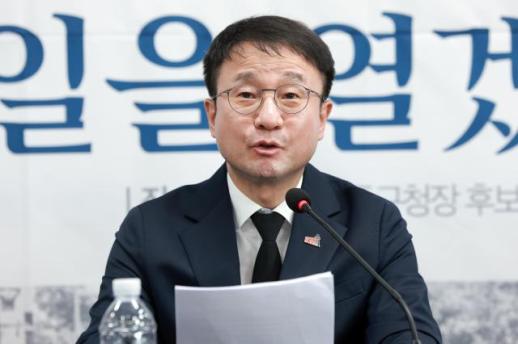 Han Byeong-do Urges Cooperation for National Assembly Session Amid Tensions Han Byeong-do, the floor leader of the Democratic Party, emphasized the need for a National Assembly session on May 19, urging the People Power Party to cooperate in electing the next leadership. "The clock of the National Assembly must not stop. I call for significant cooperation," he stated, reiterating the importance of convening the session.During a meeting at the National Assembly, Han noted, "We must complete the election of the leadership before the local election campaign period from May 21 to June 2," and requested the People Power Party to assist in holding the session on May 20.He added, "The new leadership must be in place by May 30 to begin their duties normally. The National Assembly Act stipulates that the new leadership should be elected five days before the expiration of the previous leadership's term. The People Power Party is violating the law," he said.Han further stressed the urgency of preparing emergency measures for the prolonged situation in the Middle East and expediting legislation to support the KOSPI 8000 era. He also called for the completion of prosecutorial reforms and the normalization of the real estate market.In response to Jang Dong-hyuk's criticism of the upcoming Japan-Korea summit, Han remarked, "It is clear what the intention is behind holding a summit right before the elections. The level of awareness from the leader of the main opposition party is truly disheartening."He added, "It seems he has quickly forgotten the international embarrassment of returning empty-handed from his visit to the U.S., where he couldn't even meet with a minister or vice minister. The Yoon Suk-yeol administration is doing its utmost to restore South Korea's international standing, which was undermined by his administration. I hope he will exercise restraint."* This article has been translated by AI. 2026-05-19 11:34:03
 -
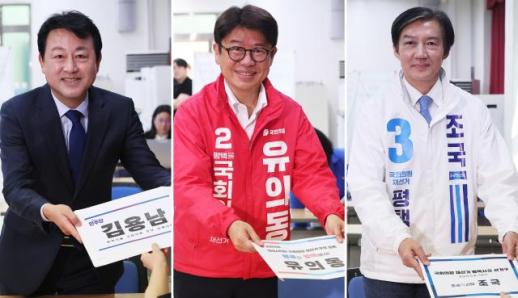 Close Race in Pyeongtaek: Jo Guk Leads with 29.3%, Kim Yong-nam at 25.5% A recent poll indicates a tight race among candidates for the Pyeongtaek by-election, coinciding with local elections. Jo Guk of the Jo Guk Innovation Party leads with 29.3%, followed by Kim Yong-nam of the Democratic Party at 25.5%, and Yoo Yi-dong of the People Power Party at 22.4%. The poll, conducted by Ace Research from May 16 to 17, surveyed 504 adults aged 18 and older residing in Pyeongtaek. Other candidates, including Hwang Kyo-ahn of the Liberty and Innovation Party at 9.4% and Kim Jae-yeon of the Progressive Party at 6%, trailed behind. In hypothetical matchups, the progressive candidates showed stronger support. In a head-to-head scenario, Kim Yong-nam garnered 45.5% against Yoo Yi-dong's 29.1%, with 11.6% undecided and 7.4% unsure. In another matchup, Jo Guk received 44.9% compared to Yoo Yi-dong's 30.7%, with 10.1% undecided, 7.7% unsure, and 6.5% opting for none. This survey utilized a wireless virtual number system provided by three telecommunications companies, employing an automated response system (100% wireless) with a response rate of 7.8%. The margin of error is ±4.4 percentage points at a 95% confidence level. For more details, please refer to the Central Election Poll Review Committee's website.* This article has been translated by AI. 2026-05-19 11:30:47
 -
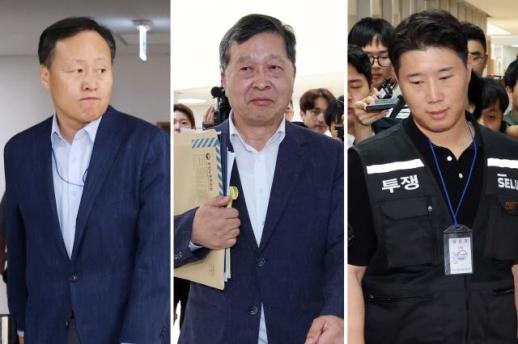 Samsung Electronics Strike Looms as Mediation Talks Continue As the second day of mediation by the Central Labor Relations Commission (CLRC) unfolds, attention is focused on whether Samsung Electronics and its labor union can find common ground. The CLRC is conducting the second day of mediation talks for Samsung Electronics' 2026 negotiations from 10 a.m. to 7 p.m. at the government complex in Sejong. The meeting is closed to the public. Prior to entering the meeting, Choi Seung-ho, chairman of the Samsung Electronics union's joint action headquarters, refrained from making any comments. Ye Myung-gu, head of the Device Solutions (DS) division's people team, stated, "We will do our best until the end" before entering the meeting room. Park Soo-geun, chairman of the CLRC, commented upon entering the meeting that some opinions are being narrowed down, saying, "We will confirm the differences that existed this morning." He added regarding the mediation proposal, "We will assess whether a resolution is possible between the two parties and will present a proposal if it appears unlikely. However, there is still a possibility for an agreement, so we will decide after observing the situation." He also noted that a draft proposal has not yet been prepared. The negotiations come ahead of a planned strike on May 21, following a request from Minister of Employment and Labor Kim Young-hoon to resume mediation talks starting the previous day. During the prior meeting, both sides outlined their positions and engaged in discussions over key issues such as performance-based pay criteria and limits. The CLRC believes that both sides are making progress. Park Jang-beom, a mediation officer at the CLRC, remarked, "Both parties have been proactive. We have heard enough from both sides, and we have seen some changes in the various proposals discussed, which have progressed smoothly so far." As the meeting continues, there is keen interest in whether the two sides will reach an agreement. The CLRC plans to listen to both parties and find common ground to formulate a mediation proposal. However, if the meeting extends, it may continue into May 20. The first round of mediation held on May 11-12 also concluded in the early hours of May 13. The government has indicated that it may invoke emergency mediation powers if the strike at Samsung Electronics becomes a reality.* This article has been translated by AI. 2026-05-19 11:28:03
 -
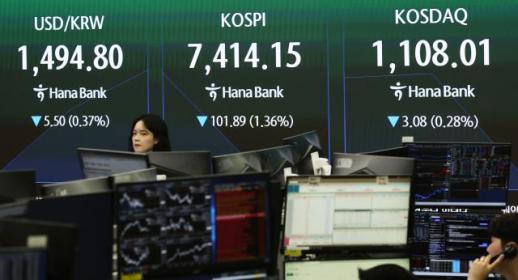 International Oil Prices Continue to Rise as Exchange Rate Shows Mixed Trends The won-dollar exchange rate opened lower but showed mixed trends in the 1500 won range. As of 9:55 a.m. in the Seoul foreign exchange market, the exchange rate for the Korean won against the U.S. dollar was 1500.1 won. The rate opened at 1493.8 won, down 6.5 won from the previous session. The slight decline in the value of the dollar and mixed performance in the New York stock market are believed to have influenced the rise in international oil prices. In the New York stock market, the Dow Jones Industrial Average closed up 159.95 points (0.32%) at 49,686.12. The Standard & Poor's (S&P) 500 index fell 5.45 points (0.07%) to close at 7,403.05, while the Nasdaq Composite index dropped 134.41 points (0.51%) to finish at 26,090.73. Concerns over the prolonged conflict in the Middle East have contributed to the continued rise in international oil prices. The July futures for Brent crude rose 2.60% to $112.10 per barrel, while West Texas Intermediate (WTI) crude futures increased by 3.07% to $108.66 per barrel. The dollar showed weakness, with the dollar index, which measures the value of the dollar against major currencies, falling by 0.33% to 99.03. This decline is attributed to stabilizing U.S. Treasury yields. U.S. Treasury yields stabilized after a sharp rise during the trading session. The yield on the 10-year Treasury note surged to 4.659% in after-hours trading but closed at 4.591%. The exchange rate is expected to decline further due to comments from President Donald Trump regarding his decision to postpone military action against Iran. Min Kyung-won, an economist at Woori Bank, stated, "The active selling response from heavy industry and export companies is likely to widen the decline in the exchange rate. The expectation of progress in negotiations, as President Trump indicated he is engaged in serious talks with Iran, is also positive for the won."* This article has been translated by AI. 2026-05-19 11:26:00
 -
 Musk Loses Lawsuit Against OpenAI as Anthropic Acquires Stainless A U.S. jury has dismissed Elon Musk's lawsuit against OpenAI. At the same time, competitor Anthropic has acquired the AI development infrastructure company Stainless to strengthen its API and agent ecosystem. "Lawsuit filing deadline has passed"… Musk loses against OpenAI According to reports from TechCrunch and other outlets on May 19, a jury in a California federal court ruled in favor of the defendants in Musk's lawsuit against Sam Altman, Greg Brockman, OpenAI, and Microsoft on May 18. The jury unanimously determined that "the deadline for filing the lawsuit had already passed." Musk had claimed that the co-founders of OpenAI transitioned the nonprofit research organization into a for-profit entity to pursue private interests. He accused OpenAI of "stealing from charity" and pointed out that Microsoft was deeply involved in the commercialization process. During the trial, testimonies regarding the background of OpenAI's organizational transition and key figures in Silicon Valley were presented, but the main focus was on the legal statute of limitations. OpenAI argued that the damages Musk claimed had occurred before 2021, asserting that the lawsuit itself was time-barred, a position the jury accepted. Judge Yvonne Gonzalez Rogers stated immediately after the verdict that "there was sufficient evidence to support the jury's decision." Industry observers noted that this ruling significantly alleviated major legal uncertainties that could have impacted OpenAI's restructuring or initial public offering (IPO). OpenAI criticized Musk's claims as "unfounded post hoc assertions," stating they were merely attempts to disrupt a competitor. Microsoft also affirmed its commitment to continue AI collaboration for individuals and businesses worldwide. Musk promptly expressed his intention to appeal. He wrote on his X (formerly Twitter) account, "It is clear that Altman and Brockman used the charity to pursue personal gain, and I will appeal to the Ninth Circuit Court of Appeals to protect the U.S. donation and charity system." Anthropic acquires Stainless… internalizing SDK infrastructure On the same day, AI company Anthropic officially announced its acquisition of the developer tools startup Stainless. While the specific acquisition amount was not disclosed, reports suggest the deal exceeds $300 million (approximately 410 billion won). Founded in 2022, Stainless has gained attention for its technology that automatically generates and manages software development kits (SDKs) for various programming languages, including Python, Java, Go, and TypeScript, based on API specifications. Major AI companies, including OpenAI and Google, have reportedly utilized this solution. A key advantage is its ability to automatically maintain and update SDKs required for AI agents to connect with external services. This capability reduces repetitive SDK management tasks, enhancing development efficiency and establishing itself as a core infrastructure in the AI API ecosystem. Following the acquisition, Anthropic plans to gradually phase out the hosting products operated by Stainless. Industry analysts view this as effectively internalizing a critical development infrastructure previously used by competitors. Anthropic explained, "We have been building official SDKs using Stainless technology since the early API operational phase." Alex Lattre, founder of Stainless, also noted, "Seeing the results produced by developers in the Claude ecosystem made collaboration between our companies a natural choice."* This article has been translated by AI. 2026-05-19 11:22:25
 -
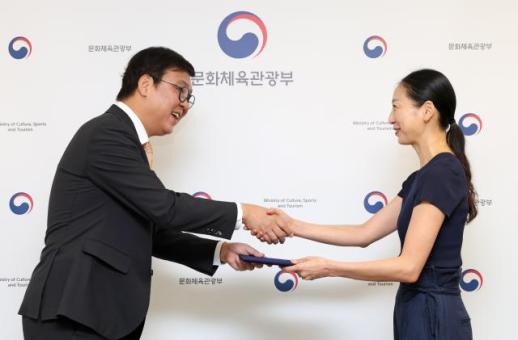 Choi Jin-yeob Appointed Head of the National Contemporary Dance Company Choi Jin-yeob has been appointed as the head and artistic director of the National Contemporary Dance Company. The Ministry of Culture, Sports and Tourism awarded him the appointment certificate on May 19. His term as head will last for three years. Choi graduated from the Korea National University of Arts and the London Contemporary Dance School. He currently serves as the representative and artistic director of Collective A. He has been actively involved in creative projects, including serving as the choreographer for the opening and closing ceremonies of the 2018 PyeongChang Winter Olympics. He has also directed the choreography for the National Dance Company's "Dreaming of the Garden of the Peach Blossoms," acted as the artistic director for the opening and closing ceremonies of the Seoul Urban Architecture Biennale, and served as the chief choreographer for the opening and closing ceremonies of the Incheon Asian Para Games. He has received several awards, including the Isadora Duncan Dance Award and the Young Artist Award. Choi has also contributed to nurturing future talent as an adjunct faculty member at the Korea National University of Arts. His artistic abilities and creative skills have been recognized through various accolades, including the Ministry of Culture's Young Artist Award. Minister Choi Hwi-young expressed confidence in Choi Jin-yeob's leadership, stating, "With his extensive experience as a dancer and choreographer, I expect him to lead the National Contemporary Dance Company stably and contribute to expanding the reach of contemporary dance and enhancing its international competitiveness."* This article has been translated by AI. 2026-05-19 11:21:22
 -
 KOSDAQ Faces Crisis as Major Companies Depart for KOSPI Once a thriving commercial district, a once-bustling area is now filled with vacant storefronts. Initially, businesses flourished, drawing crowds eager to enter shops that often had long lines. However, as time passed, the atmosphere shifted. Empty shops began to dominate the streets, and many restaurants now operate without a single customer all day. The owner of the last successful fish market ultimately decided, "If I stay in this area any longer, I will go bankrupt too." He planned to relocate to a neighboring district with significantly more foot traffic. In response, the local merchants' association urgently pleaded, "What will we do if you leave?" This scenario mirrors the current state of the KOSDAQ market. The fish market owner represents Alteogen, a leading KOSDAQ company with a market capitalization nearing 20 trillion won. As Alteogen announced its official transition to KOSPI, a sense of urgency swept through the KOSDAQ market. Both the KOSDAQ Association and the Venture Business Association publicly urged, "Please stay with KOSDAQ." This issue extends beyond a mere market listing; it reflects a deep-seated fear that the last prominent company may soon depart. This is not the first time such a situation has occurred. Companies like NHN, Kakao, and Celltrion have previously moved to KOSPI. More recently, major firms such as POSCO DX and LG Energy Solution have followed suit. Initially, these transitions were celebrated as "success stories" for KOSDAQ companies. However, as this trend has continued, a sense of cynicism has taken root in the market. Investors now commonly believe that "successful companies ultimately leave for KOSPI." This perception has led to KOSDAQ being viewed as a "second-tier league" or "KOSPI's minor league." From a corporate perspective, moving to KOSPI is a rational choice. KOSPI offers significantly greater access to institutional investors and global passive funds, along with the benefits of inclusion in the KOSPI 200 index. The trust and liquidity from foreign investors are also difficult to compare with KOSDAQ. Particularly in an era where global funds are increasingly focused on AI, semiconductors, and large-cap growth stocks, being part of KOSPI can heavily influence a company's valuation. Consequently, KOSDAQ is becoming a temporary stop rather than a long-term destination for growth companies. The result of this trend raises concerns. What remains in KOSDAQ after the departure of its leading companies? While the number of listed companies exceeds 1,800, the quality of the market is deteriorating. There is an oversupply of penny stocks priced below 1,000 won, alongside many illiquid stocks, long-term loss-making companies, and thematic firms. Critics argue that the market has transformed from an innovative hub into a stage for short-term speculation and thematic trading. The exit of leading stocks weakens ETF investments and institutional demand, shaking market confidence and trading volumes. As a result, volatility remains high. While KOSPI has more than tripled in value over the past year, KOSDAQ has struggled to break free from the 1,100 level. Despite the sluggishness of KOSDAQ, there was a golden era during the dot-com bubble of 1999-2000. At that time, KOSDAQ was home to prominent companies such as Daum Communications, Auction, Hancom, and Saerom Technology, which were seen as representatives of innovation in South Korea. Their stock prices soared above those of large corporations, making them top choices for investors. The peak of the KOSDAQ boom occurred on March 10, 2000, when the index reached 2,925.20. To revive KOSDAQ's golden age, the government has proposed various measures, including the delisting of penny stocks and the introduction of a league system. There is consensus on the need to address underperforming companies to restore market confidence. It is also true that an excessive number of zombie companies undermines overall market trust. However, the question remains whether these measures alone can restore KOSDAQ's competitiveness. The current crisis is not solely due to the presence of underperforming companies. The more fundamental issue lies in breaking the cycle where "successful companies ultimately leave for KOSPI." While KOSDAQ nurtures growth companies, the market's benefits are reaped by KOSPI, making KOSDAQ unsustainable. The departure of leading stocks weakens ETF investments and institutional demand, leading to declines in overall trading volumes and market trust. Ultimately, only highly volatile small and mid-cap thematic stocks remain. Attention must also be paid to changes in the global liquidity environment. Currently, global funds are concentrated on a few large growth stocks, such as those in AI and semiconductors. Foreign investments are flocking to large-cap KOSPI stocks, leaving many KOSDAQ stocks overlooked. If global liquidity begins to waver, the first to feel the impact are typically the volatile growth stock markets. While American companies like NVIDIA and Tesla grow, they remain on NASDAQ, enhancing the market's competitiveness. In contrast, Korea's leading growth companies are moving to KOSPI, diluting KOSDAQ's identity and competitiveness. The market that nurtures growth companies is unable to continuously enjoy the fruits of its labor. Reforming KOSDAQ is an urgent task that can no longer be postponed. However, simply addressing a few penny stocks is insufficient. Without creating an ecosystem where quality companies and long-term investment funds can thrive, KOSDAQ is likely to remain a mere "transit point" before heading to KOSPI, rather than a market for innovative companies. If this continues, the Korean stock market will perpetuate a distorted polarization between the "celebration of 8,000 points" and the "stagnation of 1,000 points." As the Lee Jae-myung administration approaches its one-year mark, KOSPI has surpassed 5,000 points and is now eyeing 8,000. However, KOSDAQ remains at 1,000. Therefore, the current government's goal of revitalizing the Korean capital market has only achieved a 50% success rate. It is now time for the government to strengthen its commitment and act swiftly to achieve the targets of 2,000 and 3,000 points for KOSDAQ.* This article has been translated by AI. 2026-05-19 11:13:30
 -
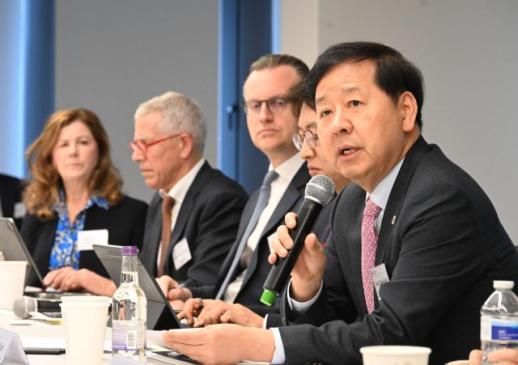 Korea's Investment Opportunities Highlighted at London Economic Briefing Deputy Prime Minister and Minister of Finance and Economy Koo Yun-cheol held a Korean Economic Investment Briefing in London, urging global investors to consider opportunities in South Korea, stating that the term "Korea Discount" is now outdated. The Ministry of Finance and Economy announced on May 19 that the briefing took place at the South Korean Embassy in London on May 18, targeting major global investment institutions. Attendees included representatives from leading asset management firms such as BlackRock, PIMCO, JP Morgan Asset Management, Fidelity, and UBS, as well as European investment banks like BNP Paribas, Barclays, and Standard Chartered. During the briefing, Koo emphasized that South Korea possesses world-class manufacturing capabilities in key supply chain areas such as memory semiconductors, high-bandwidth memory (HBM), power semiconductors, and sensors, particularly in the era of AI transformation. He noted that the country is rapidly transitioning to enhance productivity across all industries by integrating AI. He also highlighted ongoing reforms aimed at improving corporate governance, protecting shareholder interests, and introducing tax incentives for investors, which are part of broader capital market reforms. Koo pointed out that since the new government took office, the KOSPI index has risen by over 170%, elevating South Korea's stock market capitalization ranking from 13th to 7th globally. He mentioned that approximately $10.9 billion in new funds have flowed into South Korean bonds since their inclusion in the World Government Bond Index (WGBI). "The Korea Discount is a thing of the past, and the Korea Premium is becoming a new reality," Koo stated, adding, "Now is the golden time for investment in South Korea." The government plans to strengthen its growth strategy centered on AI and advanced industries, focusing on seven key physical AI sectors, including robotics, automotive, and shipping, as well as 15 ultra-innovative economic projects involving graphene, superconductors, and small modular reactors (SMRs). Reforms in the foreign exchange and capital markets will continue, with plans to enhance foreign investors' access to the market through measures such as 24-hour foreign exchange market operations, the establishment of an offshore won payment system, and the simplification of account opening and payment procedures. Attendees described South Korea's economic growth narrative as a "compelling story," noting that the country's status in the global market and capital markets has significantly improved.* This article has been translated by AI. 2026-05-19 11:11:06