
Journalist

Park Heewon
-
 U.S.-Iran Negotiations Stalled Over Uranium and Hormuz Strait Issues U.S. and Iranian ceasefire and peace negotiations have reached a critical juncture. Both sides have reportedly made significant progress toward a draft peace agreement through messages exchanged via a mediator. However, issues surrounding Iran's export of enriched uranium and navigation through the Hormuz Strait have emerged as key obstacles, preventing a final agreement. On May 21, Ayatollah Ali Khamenei, Iran's Supreme Leader, issued a directive against the export of enriched uranium. Senior Iranian officials indicated that this policy reflects Khamenei's wishes and a consensus within Iran's power structure. This stance directly contradicts a core demand from the United States, which insists that Iran must export its stockpile of 60% enriched uranium. This level of enrichment is significantly higher than that used for civilian nuclear power and could drastically reduce the time needed to further enrich it to weapons-grade levels of 90%. On the same day, President Donald Trump stated at the White House regarding Iran's uranium, "We will take it. We do not need it or want it. After we take it, we will probably destroy it." Iran's calculations differ. The Iranian leadership believes that exporting uranium would make them more vulnerable to further attacks from the U.S. and Israel. They insist that they need to secure guarantees against additional attacks before entering detailed negotiations on their nuclear program. While Iran is open to discussing the dilution of uranium under the supervision of the International Atomic Energy Agency (IAEA), they have drawn a line at exporting it. The issue of navigation through the Hormuz Strait has also surfaced as a significant barrier to agreement. U.S. Secretary of State Marco Rubio stated that if Iran pushes for a toll system in the Strait, a diplomatic agreement would become impossible. He emphasized, "No one in the world supports a toll system; it is unacceptable, completely illegal, and a threat to the world." Rubio's comments address more than just the toll issue. If Iran were to operate the Hormuz Strait under a selective permit system and demand tolls, accepting such a system would imply U.S. recognition of Iran's maritime control, which is why the U.S. has classified this as a non-negotiable issue. Rubio acknowledged some "progress" and "good signals" in talks with Tehran but noted that Iran's internal decision-making appears "somewhat divided," suggesting that further observation is necessary. Even if practical agreements are reached, the alignment of interests among Iran's internal power factions remains a variable for a final agreement. Ultimately, the crux of this negotiation hinges not just on the peace agreement itself but on how far the U.S. is willing to recognize Iran's nuclear capabilities and maritime control post-war. For the U.S., extracting enriched uranium from Iran and restoring freedom of navigation in the Hormuz Strait are essential justifications for accepting any agreement. Conversely, Iran needs to retain its uranium and control over the Strait to maintain its narrative of regime security. Both sides face significant pressure to compromise. Reuters reported that "Tehran views its stockpile of enriched uranium and control over the Hormuz Strait as 'vital strategic assets for survival.'" A senior Iranian official also stated, "Surrender is not an option."* This article has been translated by AI. 2026-05-23 17:18:30
 -
 Growing Interest in Buddhism Ahead of Buddha's Birthday As Buddha's Birthday approaches on May 24, more people are heading to bookstores and art galleries to explore Buddhism. With the younger generation embracing Buddhism as a trendy culture, there is a growing movement to experience the teachings of Buddha outside of temples. According to Kyobo Bookstore, Hermann Hesse's novel "Siddhartha" ranked seventh on the comprehensive bestseller list for the third week of May, climbing two spots from the previous week. Online bookstore Yes24 also reported that "Siddhartha" has remained in the top 20 for two consecutive weeks, gaining traction as interest in Buddhism rises alongside mindfulness and lifestyle content. A Yes24 representative stated, "Sales of 'Siddhartha' have increased every May for the past three years coinciding with Buddha's Birthday. From May 1 to 20 this year, sales surged by 47.4% compared to the same period last year." There is also a trend of enjoying Buddhism as a cultural experience, regardless of religious affiliation. The Seoul International Buddhist Expo held in April attracted a record 250,000 visitors over four days, with individuals in their 20s and 30s making up 81.7% of attendees. Approximately 40% of the visitors identified as non-religious, indicating that the event has evolved into a cultural festival enjoyed by all. This trend is extending to dining as well. Interest in temple cuisine has surged, particularly following the appearance of Monk Seonjae on the Netflix show "Black and White Chef." Yes24 reported that sales of temple cuisine cookbooks skyrocketed by 801% compared to the same period last year (January 1 to May 14). The best-selling book this year is "220 Flavors of Nature: Temple Cuisine by Monk Seonjae," reflecting a growing demand for enjoying temple food at home. Buddhist art is also gaining popularity. The National Museum of Korea's exhibition "Room of Contemplation," featuring two national treasures, the Bangasayusang statues, has drawn significant attention, with visitors captivated by the unique narratives and striking presence of the Buddha figures. The special exhibition "The Enlightened Buddha: The Bongjeongsa Temple Banner" at the National Museum of Korea features a massive banner measuring over 8 meters tall and 6 meters wide, depicting the scene of Buddha delivering teachings on Yeongchuksan Mountain. Additionally, a Kakao Friends character, Lion, and Chunsik have been transformed into a representation of the Bangasayusang statue, attracting visitors in the museum's open courtyard. The special exhibition "Seonunsa Temple: Entering Zen and Lying on Clouds" at the Buddhist Central Museum of the Jogye Order, located in Jongno-gu, features the gilt-bronze statue of Ksitigarbha, which has gained attention on social media due to its remarkable backstory. This statue was taken to Japan but returned after two years, reportedly bringing misfortune to those who stole it. The thieves confessed two years later in 1938, and the monks from Seonunsa traveled to Hiroshima that same year to retrieve the statue. Both exhibitions will run until June 21 and July 31, respectively.* This article has been translated by AI. 2026-05-23 17:13:15
 -
 Samsung Semiconductor Union Denies Voting Rights to DX Union Ahead of Agreement Vote The Samsung Electronics labor union is embroiled in significant internal conflict just hours before a vote on a tentative agreement. The Super Corporate Union Samsung Electronics Branch, which represents the largest group of semiconductor workers, unexpectedly informed the Donghaeng Union, which includes mobile and home appliance members, that they would not be allowed to vote, escalating tensions between the unions. According to industry sources, the Super Corporate Union notified the Donghaeng Union around 10:30 a.m. on May 22 that "Donghaeng Union members will not be recognized as having voting rights in this tentative agreement vote." Initially, it was anticipated that the three unions—Super Corporate Union, the National Samsung Electronics Union, and Donghaeng Union—would conduct a joint vote on the tentative agreement. However, the Super Corporate Union's sudden decision to exclude Donghaeng Union on the day of the vote has thrown the unions into disarray. Donghaeng Union representatives expressed their outrage at the Super Corporate Union's decision. A member of the Donghaeng Union stated that the Super Corporate Union had previously requested on May 20 and 21 that each union prepare for the vote scheduled for 2 p.m. on May 22, asking for member lists to be aligned as of 2 p.m. on May 21. However, on the day of the vote, the Super Corporate Union issued a notice stating, "Donghaeng Union cannot participate in this joint negotiation vote due to the notification of the end of joint negotiations on May 4." As of 8 a.m. on May 22, the Donghaeng Union had 12,298 members, a significant increase from 4,708 members reported the previous day. One Donghaeng Union member criticized the situation, saying, "It makes no sense to prepare for a vote until the day before and then be told on the morning of the vote that we have no voting rights. This is an attempt to thoroughly exclude the Donghaeng Union and deceives the members who were waiting to vote." Some observers believe the Super Corporate Union is attempting to exert control over the voting process, aiming to preemptively block the growing movement within the Donghaeng Union advocating for the rejection of the tentative agreement. A labor sector official noted, "It is extremely unusual to restrict voting rights for specific job categories or unions just hours before the vote. Regardless of the outcome, there could be serious legal repercussions regarding procedural legitimacy." Currently, the Donghaeng Union is reportedly preparing an official complaint and working on a response to the Super Corporate Union's notification.* This article has been translated by AI. 2026-05-23 17:10:42
 -
 Vitamin Market Evolves with Functional and Convenient Products The health supplement market is evolving with a focus on functionality. Recently, pharmaceutical companies have been introducing vitamin products aimed at immune management that prioritize formulation, ease of consumption, and low calories, moving beyond simple ingredient competition. According to industry reports on May 22, as demand for immune management increases ahead of seasonal changes and early summer, the pharmaceutical sector is accelerating competition in new vitamin products. Notably, products designed for convenience and wellness, such as powdered forms that can be taken without water, gummies, and low-calorie options, are expanding consumer choices. Data from Samjeong KPMG indicates that the wellness food market is becoming more segmented with various formulations, altering the competitive landscape. Centrum recently launched its 'Centrum Immune Boost Daily Protection C,' designed as a powdered formulation that can be consumed without water. It contains essential nutrients like Vitamin C, Vitamin D, zinc, and selenium, which are necessary for normal immune function and antioxidant activity. The company stated, "We used Vitamin C sourced from Poland's Bart company, applying liposome technology to enhance delivery efficiency within the body." The differentiation in formulation is also notable. It features a patented Cool Melting technology that dissolves quickly in the mouth, enhanced with a mixed berry flavor for easy consumption without water. Additionally, it is offered in a zero-calorie form without synthetic flavors, colorings, or genetically modified ingredients. Prior to this, Centrum introduced a gummy product, 'Centrum Multi Gummies,' designed to be easily consumed by those who found traditional tablets daunting. Dongkook Pharmaceutical has launched an all-in-one multi-formula, 'MyFitV Liposome Multivitamin Mineral,' which combines vitamins and minerals. According to the company, this product utilizes a patented liposome technology called Lipoprime, maximizing the absorption rate of vitamins and minerals, and contains 17 essential vitamins and minerals in a single tablet. Liposomes are tiny spherical structures with a phospholipid bilayer similar to cell membranes. Vitamins and minerals encapsulated in liposome formulations easily adhere to cell membranes and are absorbed through endocytosis. Dong-A Pharmaceutical has introduced an orally dissolving powder product, 'Orsomol Immune ODP,' which transforms the existing dual-form vitamin 'Orsomol Immune' into a powder form. This innovation enhances convenience by allowing consumption without water, moving away from the previous method that required both liquid and tablets. Industry experts note that these changes reflect a growing consumer preference for not only beneficial ingredients but also for "ways to consume them consistently." They predict that the market for immune management products, including vitamins, will become even more segmented, with an expansion in considerations such as ingredient combinations, taste, formulation, portability, calorie content, and the quality and origin of raw materials. * This article has been translated by AI. 2026-05-23 17:07:54
 -
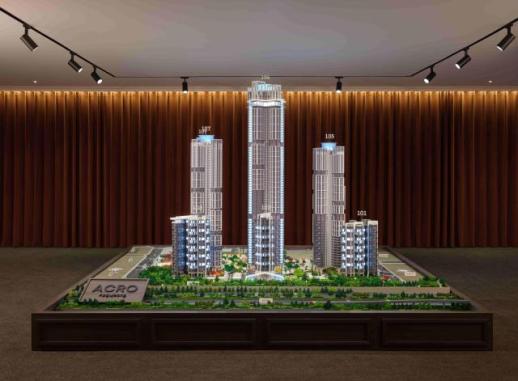 DL E&C Unveils 'Acro Apgujeong' Design with Unique Features for All Residents DL E&C has introduced its design proposal for the 'Acro Apgujeong' project, emphasizing unique features such as views of the Han River, specialized ceiling heights, and terrace and penthouse designs as part of its strategy to differentiate high-end residential offerings. Recently unveiled at the promotional center for the Apgujeong District 5 redevelopment, the design ensures that all 1,232 members of the cooperative will have access to at least one unit with specialized features. The company explained that the design focuses on enhancing the overall quality of space and living experience throughout the complex, rather than concentrating solely on a few high-end units. It includes a variety of configurations such as single-unit manor houses, terrace residences, large penthouses, and units with specialized ceiling heights to reflect the unique characteristics of each unit. DL E&C is particularly highlighting the 'specialized design' as a key competitive advantage in this bidding process. Out of a total of 1,397 units, 1,293 are designed with specialized features, ensuring that all cooperative members can occupy at least one unit with these elements. Specifically, the proposal includes: 243 units with high ceiling specifications, 11 penthouses, 66 terrace houses, 184 units with tilt designs, 955 units with three-sided openings, and 277 units with five-bay designs. The tilt design adjusts the angle of windows to enhance views and openness, while the five-bay design places living rooms and bedrooms prominently at the front to improve natural light and ventilation. A key aspect of the design is the view of the Han River. DL E&C has proposed a layout that allows for river views from the cooperative members' units, with some units featuring multi-faceted openings and multi-room view configurations. The design aims to create a sense of openness throughout the living spaces. The design also includes specialized ceiling heights to enhance spatial perception, with some units featuring ceilings as high as 6.6 meters to maximize views and openness. The terrace designs are intended to improve connectivity between indoor and outdoor spaces. DL E&C has planned not only large penthouses but also medium and small-sized penthouses to cater to diverse residential demands. The design also incorporates strategies to increase the usable interior space of the units. A DL E&C representative stated, "Considering the location and symbolism of Apgujeong District 5, we have comprehensively reflected aspects such as views, spatial configuration, community, and design details in our proposal, aiming to enhance residential quality." Industry experts believe that the symbolic significance of Apgujeong District 5 as a redevelopment site along the Han River will make views, design quality, and product differentiation key factors in the bidding competition.* This article has been translated by AI. 2026-05-23 17:06:00
 -
 Stellantis to Launch Over 60 New Models, Including 29 Electric Vehicles by 2030 Stellantis plans to launch over 60 new models, including 29 electric vehicles, by 2030 as part of its electrification strategy. This move is seen as a response to recent challenges in the electric vehicle market and declining sales in North America. On May 21, Stellantis held an Investor Day at its North American headquarters, unveiling its €60 billion five-year strategic plan, dubbed "Fast Lane 2030." The strategy includes the introduction of 29 battery electric vehicles (BEVs), 15 plug-in hybrids and range-extended electric vehicles (PHEVs and REEVs), 24 hybrid electric vehicles (HEVs), and 39 internal combustion and mild hybrid vehicles (ICE and MHEVs), totaling over 60 new models. Additionally, more than 50 major model updates are planned. Stellantis has faced difficulties due to slowing growth in the electric vehicle market and poor sales in North America, leading to a reported loss of €22.2 billion ($26.5 billion) earlier this year after scaling back its electric vehicle operations. As part of its new plan, Stellantis is emphasizing a "multi-energy strategy" that incorporates electric vehicles, hybrids, and high-efficiency internal combustion engines. The company will allocate over €24 billion, approximately 40% of its total research and development and capital investment, to develop next-generation platforms, powertrains, and new technologies. By 2030, half of its global production will come from three global platforms, including the new "STLA One" architecture. The brand strategy has also been restructured. Jeep, Ram, Peugeot, and Fiat have been designated as core global brands, with 70% of new global assets prioritized for their development. Chrysler, Dodge, Citroën, Opel, and Alfa Romeo will share platforms and assets to enhance brand differentiation. Maserati plans to introduce two new models in the E-segment. Regional strategies have been clarified as well. In North America, 11 new models will be launched, increasing sales volume by 35%. The company aims to strengthen its presence in the mass market by introducing seven vehicles priced under $40,000 and two under $30,000. North America will receive 60% of the total €36 billion investment across all brands and products. In Europe, the focus will be on introducing next-generation urban electric vehicles (E-Cars) and improving production efficiency. The new urban electric vehicles will be produced at the Pomigliano d'Arco plant in Italy. In South America, Stellantis will expand its presence in the pickup truck market, while in the Middle East and Africa, it will pursue localization strategies and expand partnerships in Asia. The Asia-Pacific region, including South Korea, aims to enhance profitability through a lightweight business structure based on strategic alliances and increased exports. Antonio Filosa, CEO of Stellantis, stated, "Fast Lane 2030 is a long-term profitability growth strategy designed after meticulous analysis over the past several months."* This article has been translated by AI. 2026-05-23 17:03:28
 -
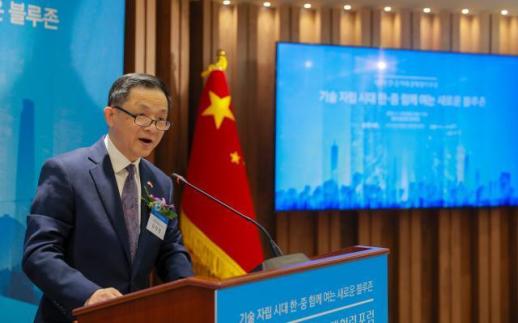 Chinese Ambassador to South Korea Praises President Lee's Critique of Anti-China Sentiment Chinese Ambassador to South Korea, Xing Haiming, expressed his appreciation for President Lee Jae-myung's criticism of fake news and the promotion of anti-China sentiment by some South Korean media. On May 22, the ambassador shared his thoughts on social media platform X (formerly Twitter), stating, "I hope that the entire Korean society can discern right from wrong and voluntarily reject fake news, discrimination, and incitement to enhance friendship between our two nations." In a subsequent post, he remarked, "Some minority media in Korea have fabricated and disseminated fake news to attract attention and increase viewership," urging adherence to journalistic ethics and factual reporting on China. He added, "Do not continue to deceive readers." Earlier, President Lee had addressed reports on May 21 regarding Chinese buyers purchasing numerous apartments in Gangnam, suggesting these reports were likely fabricated to serve as propaganda for anti-China sentiment. He vowed to hold those responsible accountable. The media outlet in question had reported on May 15 that, just before the reintroduction of a capital gains tax on multiple homeowners, Chinese buyers were concentrating their purchases in areas like Gangnam, Songpa, and Yongsan. However, the Ministry of Land, Infrastructure and Transport refuted this claim, leading to the article's removal. The ministry clarified that among the 592 foreign buyers who applied for ownership transfer registration for collective buildings in Seoul from January to April this year, only 218 were Chinese, and just five of those purchased properties in Gangnam. During a Cabinet meeting the previous day, President Lee strongly criticized the report after receiving a briefing from the Ministry of Land, Infrastructure and Transport. * This article has been translated by AI. 2026-05-23 17:00:40
 -
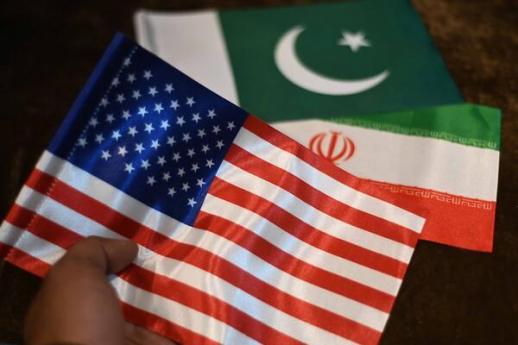 U.S. and Iran Exchange Messages on Peace Talks via Pakistan The United States and Iran are reportedly exchanging messages regarding peace talks through Pakistan. While direct conversations have not occurred, diplomatic channels facilitated by the intermediary nation remain active. On May 22, Anadolu Agency cited Iran's semi-official ISNA news outlet, stating that messages between Tehran and Washington continue via Pakistan's mediation. Earlier, Reuters reported that Iran had conveyed its response to a U.S. peace proposal through the intermediary, Pakistan. Al Jazeera also referenced comments from an Iranian Foreign Ministry spokesperson, confirming that Tehran's reply was delivered to the U.S. through Pakistan. ISNA reported that the latest U.S. proposal has narrowed some differences between the two sides. However, Iran maintains that the U.S. must abandon military solutions for further progress to be made. Reuters echoed this sentiment, noting that while the gap between the two sides has narrowed, disagreements remain regarding uranium stockpiles and control over the Strait of Hormuz. Pakistan's mediation efforts are becoming more concrete. Mohsin Naqvi, Pakistan's Interior Minister, has reportedly visited Tehran for the second time in a week to relay messages from the U.S. to Iranian officials. Al Jazeera also reported that General Asim Munir, Chief of Army Staff of Pakistan, is scheduled to visit Tehran for discussions with Iranian authorities. Negotiations have yet to reach a conclusion, with key issues including the handling of Iran's enriched uranium stockpile and navigation through the Strait of Hormuz. Reuters reported that Iran's leadership has instructed against exporting enriched uranium. The U.S. and Israel insist that any peace agreement must include provisions for uranium export. The Strait of Hormuz remains a contentious issue, with the U.S. demanding the lifting of navigation restrictions while Iran insists on maintaining control over the waterway. Iran prioritizes a complete end to hostilities and guarantees against further attacks from the U.S. and Israel, while the U.S. seeks to include nuclear activity limitations and navigation assurances in the peace terms. Major foreign news outlets indicate that while diplomatic channels between the U.S. and Iran are being maintained and some differences are being narrowed, significant time is still needed to finalize a comprehensive agreement.* This article has been translated by AI. 2026-05-23 16:58:09
 -
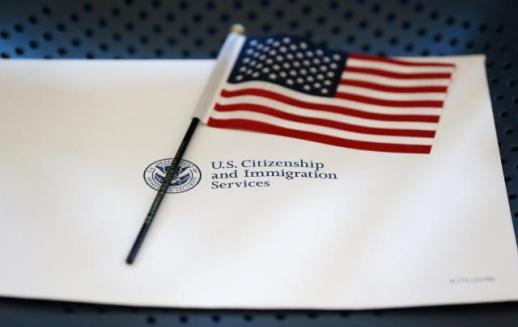 Trump immigration overhaul to rattle Korean Americans and wider Asian diaspora SEOUL, May 23 (AJP)-The Trump administration’s latest immigration crackdown is sending shockwaves through Korean American and broader Asian immigrant communities after the government announced that most foreigners seeking U.S. permanent residency will now have to leave the United States and apply for green cards from their home countries. The policy, unveiled Friday by the U.S. Citizenship and Immigration Services (USCIS), effectively dismantles a decades-old practice known as “adjustment of status,” under which temporary visa holders already living in the United States could apply for permanent residency without leaving the country. USCIS said green cards granted from within the U.S. would now be limited to “extraordinary circumstances,” though it did not clearly define what qualifies. The move marks one of the most aggressive restrictions on legal immigration since President Donald Trump returned to office, broadening the administration’s hardline agenda beyond undocumented immigration and into employment-, student- and marriage-based migration channels that have long underpinned Asian immigration to the United States. For Korean Americans, the impact could be especially significant. According to South Korea’s Overseas Koreans Agency, about 2.56 million ethnic Koreans and Korean nationals live in the United States, making it the world’s largest Korean diaspora community and accounting for roughly 36 percent of all overseas Koreans globally. While most are already U.S. citizens, a substantial share remain on temporary visas, green cards or in transition toward permanent residency — precisely the groups affected by the new rule. The policy threatens to disrupt a well-established immigration pipeline heavily used by Koreans: student visa to Optional Practical Training (OPT), then H-1B work visa, followed by permanent residency. South Korea sent more than 42,000 students to U.S. universities during the 2024–25 academic year, ranking third globally after India and China. Many later pursue jobs in technology, engineering, medicine and finance sectors that depend on employment-based green card sponsorship. Under the new system, however, such applicants may now have to leave the United States mid-career and wait abroad — potentially for months or even years — while U.S. consulates process their cases. Immigration lawyers warn the disruption could be severe not only for immigrants but also for American employers already facing shortages in high-skilled industries. “Consular processing” abroad is already burdened by long backlogs, and shifting hundreds of thousands of applications overseas could create bottlenecks that separate families and interrupt employment. More than 820,000 green cards were granted to people already inside the U.S. through adjustment of status in 2024 alone, according to Department of Homeland Security data. Marriage-based immigration may face some of the harshest consequences. More than 70 percent of marriage green cards issued last year were processed through adjustment of status inside the United States. Korean nationals married to U.S. citizens — a growing demographic among professionals and students — may now be forced to return to South Korea while applications are reviewed, raising the prospect of lengthy family separations. Asian communities overall are expected to bear a disproportionate share of the impact. Asian immigrants dominate many of the pathways targeted by the rule, particularly student and employment-based migration. Asians account for roughly 72 percent of international students in U.S. higher education, with South Koreans representing about 4 percent of the total. Advocacy groups such as AAPI Data have warned that South Koreans, Chinese, Taiwanese, Japanese and Indian immigrants are especially vulnerable because they are heavily concentrated in professional and education-linked visa categories. The policy also arrives amid a broader climate of intensified immigration enforcement. Research cited by advocacy organizations found that Immigration and Customs Enforcement arrests involving Asians more than tripled during the early months of the Trump administration compared with the previous year. Many Asian Americans reported feeling less secure and less willing to participate publicly in civic or political life as anti-immigration rhetoric escalated. The administration defended the move as a return to the original intent of U.S. immigration law. “This policy allows our immigration system to function as the law intended instead of incentivizing loopholes,” USCIS spokesman Zach Kahler said, arguing that requiring applicants to process from abroad would reduce the number of people remaining illegally in the U.S. after visa denials. Critics, however, say the measure amounts to a structural rollback of legal immigration itself rather than a procedural adjustment. Immigration attorneys and former Department of Homeland Security officials expect multiple court challenges in the coming months, especially because USCIS has yet to clarify which immigrants may qualify for exemptions under “extraordinary circumstances.” For Korean Americans and many Asian immigrant families, the uncertainty has already begun reshaping calculations about education, work and life in the United States. What had long been viewed as a predictable pathway toward permanent residency — study, work, settle, naturalize — is suddenly far less certain. 2026-05-23 16:56:30
 -
 Samwha Capacitor Hits Upper Limit on Optimism for MLCC Market, Sets New 52-Week High Samwha Capacitor has reached its upper trading limit, buoyed by expectations of an improved market for multilayer ceramic capacitors (MLCC). The surge in its stock price is attributed to anticipated performance gains from increased investments in AI data centers and the significant rise in Samsung Electro-Mechanics shares, which has had a positive spillover effect. As of 1:40 PM on the Korea Exchange on May 22, Samwha Capacitor's stock was trading at 102,000 won, up 23,500 won (29.94%) from the previous trading day. This marks a new 52-week high, representing a 155% increase from its 52-week low of 40,000 won recorded on March 4 of last year. The company has seen a sharp rise in its stock price, including a 23% jump on May 20. Analysts suggest that investor sentiment is increasingly focused on Samwha Capacitor as a beneficiary of the improving MLCC market and the growing demand related to AI data centers. Notably, Samsung Electro-Mechanics shares surpassed 1.3 million won for the first time, soaring nearly 420% since the beginning of the year. This has led to increased buying interest in Samwha Capacitor, which has also risen approximately 250% during the same period. Market analysts are paying close attention to the potential for Samwha Capacitor's MLCC performance to improve due to the expansion of investments in AI data centers. Lim Eun-young, a researcher at Samsung Securities, noted, "In the first quarter, MLCC sales increased by 24.2% year-on-year to 38.7 billion won, accounting for 52% of total sales of 72.8 billion won. The supply of MLCCs for power infrastructure and devices such as UPS, PDU, and PSU needed for data center operations is expanding." She added, "With leading MLCC manufacturers like Murata and Samsung Electro-Mechanics forecasting price increases due to supply shortages, Samwha Capacitor is likely to benefit from a trickle-down effect starting in the second quarter. If the effects of the ongoing expansion at the Yongin plant are factored in, production could increase by 40-50%." There are also expectations that the market conditions reminiscent of the 2018 cloud data center investment boom may reemerge. At that time, Samwha Capacitor recorded an operating profit margin of 29.6% due to an increase in the proportion of MLCC sales, with its stock price reaching an all-time high of 109,500 won. Additionally, growth prospects for DC link capacitors used in electric vehicles are positively influencing the stock price. DC link capacitors are essential components that stabilize voltage fluctuations in electric vehicle inverters. As Hyundai and Kia expand their hybrid and electric vehicle lineups and the European electric vehicle market continues to grow, demand for these components is expected to rise.* This article has been translated by AI. 2026-05-23 16:56:12