

Journalist

Park Jong-ryeol
-
 Singer Seo In-young to Remarry Businessman Choi Ji-hoon This Fall Singer Seo In-young is set to marry Choi Ji-hoon, the CEO of a content creative company, this fall. According to Yonhap News on June 7, Seo and Choi met through mutual acquaintances and have been in a relationship leading up to their upcoming marriage. Choi is six years older than Seo. Seo's representatives stated they are currently organizing their response following the marriage announcement. Seo In-young debuted in 2002 as a member of the girl group Jewelry. She gained popularity with hits like "One More Time" and "Super Star," and later launched her solo career in 2007 with the song "Cinderella." In 2023, she married a non-celebrity businessman but divorced amicably after about a year. Recently, she opened a YouTube channel titled "Turning Over a New Leaf Seo In-young," where she engages with fans and is experiencing a resurgence in popularity.* This article has been translated by AI. 2026-06-07 16:06:00
 -
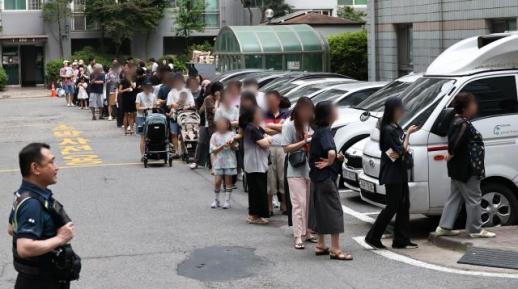 Political Parties Call for National Investigation into Ballot Shortage In an unprecedented situation during the June 3 local elections, some voters were forced to abandon their ballots due to a shortage of voting materials. Both the Democratic Party and the People Power Party have announced plans to submit requests for a national investigation. Jang Dong-hyuk, the leader of the People Power Party, further called for a re-election and the abolition of early voting. On the morning of June 7, Jang held a press conference at the National Assembly, urging the Democratic Party to "immediately form a special committee for the national investigation and expedite the establishment of a special prosecutor's office." He emphasized that the National Assembly must fulfill its duty to uncover the truth and hold those responsible accountable. The People Power Party plans to prepare a national investigation request to submit to the National Assembly on June 8. The ruling Democratic Party is also expected to initiate related procedures on the same day. Currently, both parties are preparing separate requests, indicating that negotiations will be necessary to consolidate them into a single proposal. Han Byeong-do, the Democratic Party's floor leader, stated during a press briefing that "we need to clarify why this incident occurred and whether there are issues within the internal systems of the National Election Commission." He pledged to thoroughly investigate the situation through a swift national inquiry and expressed readiness to negotiate with the People Power Party immediately. Both parties agreed on the necessity of reforming the National Election Commission. Although it operates as an independent body, they acknowledged that external oversight is needed if internal checks are ineffective. The Democratic Party plans to secure measures for improving and overseeing the Election Commission, potentially through a special prosecutor or constitutional amendments, if necessary. Han noted, "As problems continue to arise, allegations of election fraud gain traction," and he vowed to address the root causes. He indicated plans for a comprehensive review of the Public Election Act and to ensure that principles of oversight and accountability are effectively applied to the Election Commission. However, the People Power Party views the national investigation and special prosecutor as merely "minimum measures." They argue that improvements to the election laws and a re-election are also necessary. During the press conference, Jang pointed out, "The public wants a re-election, and if we try to gloss over this with a national investigation or a special prosecutor recommended by the ruling party, we cannot quell the rising anger of the people." He added, "We must abolish early voting, which half of the public distrusts. Instead of dismissing this as a claim from election fraud proponents, we should eliminate the roots of such claims. I cannot understand why there is such a strong insistence on maintaining early voting." 2026-06-07 16:06:00
 -
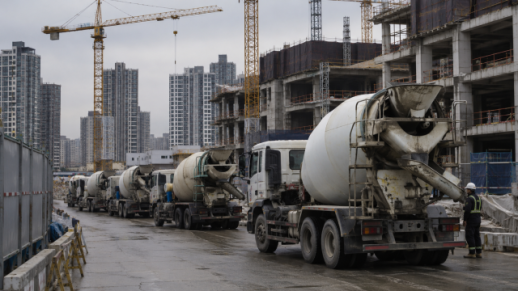 Concrete Transport Costs in Seoul Area Near 80,000 Won After 47% Increase in Five Years Concrete transport costs in the Seoul area are approaching 80,000 won per delivery this year. Over the past five years, transport costs have risen nearly 47%, with short-term work stoppages and price agreements occurring each time negotiations falter. The nationwide transport union's planned full-scale strike on June 8 is part of the ongoing struggle over transport pricing. An increase in transport costs could lead to higher concrete delivery prices, making this year's negotiations a significant factor for the construction industry. The upward trend in costs has been steep. In the Seoul area, transport costs rose from 51,500 won in 2020 to 56,000 won in 2021, then to 63,700 won in 2022, 69,700 won in 2023, 72,430 won in 2024, and 75,730 won in 2025. Compared to 2020, this represents an increase of approximately 47%. Despite a decline in concrete demand due to a sluggish construction market, prices have not stabilized. This year's negotiation baseline has already been set high. In April, Daejeon agreed to raise transport costs from 76,500 won to 81,000 won, marking a 5.88% increase. Currently, the average transport cost in the Seoul area is lower than in Daejeon, leading industry insiders to view 81,000 won as a potential minimum for negotiations in Seoul. If the Daejeon increase is applied, transport costs in the Seoul area would exceed 80,000 won. While specific demands have not been disclosed, the question of whether costs will reach the 80,000 won mark is a key point of interest in this year's negotiations. The negotiation structure adds to the pressure. Traditionally, the Seoul area has set prices by region, but this year, the union is demanding integrated negotiations across the entire Seoul area. Manufacturers are concerned that if integrated negotiations succeed, the price differences between regions will disappear, leading to a standardization of higher transport costs. The union cites the establishment of a nationwide union and court rulings recognizing the employment status of transport workers as the basis for their demand for integrated negotiations. Conflicts over transport costs in the Seoul area have previously led to short-term work stoppages and price agreements. In July 2022, a transport strike in the Seoul area halted operations at 158 concrete plants, resulting in estimated losses of about 30 billion won per day for manufacturers. The conflict was resolved within two days when an agreement was reached to raise transport fees by 24.5% over two years, from 56,000 won to 69,700 won. In July 2024, a three-day work stoppage was also called off, but transport costs subsequently rose again to 75,730 won in 2025. As a result, this year's negotiations are drawing greater attention not just for the potential for a few days of work stoppage, but for the possibility of changing how transport costs in the Seoul area are determined in the future. If regional negotiations continue, some price differences may remain, but if integrated negotiations are enforced, there is a greater chance that transport costs in the Seoul area will be adjusted upward all at once. This is why manufacturers are hesitant about integrated negotiations. A source in the concrete industry stated, "If we move to integrated negotiations, the prices that have been set regionally will inevitably align with the higher rates, and if the union's status is recognized, the balance of negotiations could shift significantly each year."* This article has been translated by AI. 2026-06-07 16:03:00
 -
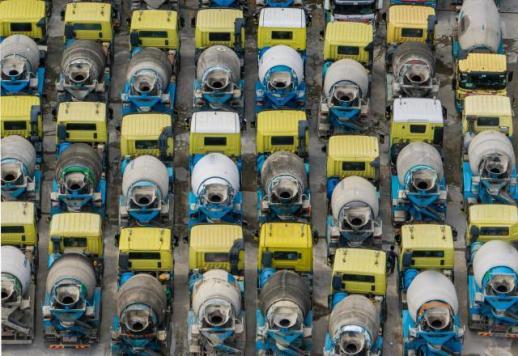 Concrete Truck Strike Looms, Threatening Housing and Semiconductor Projects Concrete truck drivers in the Seoul metropolitan area have announced a full strike starting June 8, raising alarms in the construction industry. This comes on the heels of a recent tower crane strike, compounding labor risks. Concerns are growing that delays will cascade from housing renovation projects to critical national semiconductor construction sites. According to the construction industry, the National Concrete Transport Workers Union recently conducted a strike vote among 7,517 members in the metropolitan area, with 87.8% in favor of the strike. The union is demanding that concrete manufacturers engage in collective bargaining, stating, "The manufacturers will bear all responsibility for the industrial chaos caused by their avoidance of negotiations." Concrete is an essential material in rebar and concrete framework processes, making it virtually irreplaceable. A halt in supply would lead to delays in pouring schedules, causing a domino effect on subsequent construction processes. Many sites have already exhausted their buffer time due to a four-day tower crane strike that began on May 27. If the concrete truck strike coincides, the risks could escalate to unmanageable levels. There are also predictions that the strike will impact the government's housing supply plans. With completion and occupancy schedules likely to be pushed back, construction companies may become hesitant to engage in new projects due to rising costs and declining profitability. According to the Korea Construction Technology Institute, the construction cost index rose to 136.88 in April, a 4.44% increase compared to the same month last year, marking a record high each month since January. Industry experts warn that construction companies are nearing a breaking point. A representative from a mid-sized construction firm stated, "Rising transportation and labor costs are directly reflected in construction expenses, which will ultimately affect selling prices. In a high-risk environment like this, building homes leads to losses." Some reconstruction projects in the metropolitan area have seen no bidders for construction contracts, raising concerns that a prolonged strike could stifle public housing initiatives. The situation is particularly concerning for key semiconductor construction sites, such as Samsung Electronics' Pyeongtaek campus and SK Hynix's Yongin cluster. Delays in semiconductor fabrication facilities incur significantly higher costs than typical construction sites. Reports indicate that concrete transport operators opposed the installation of on-site batching plants at Samsung's Pyeongtaek campus, which aimed to expedite construction timelines. If the strike materializes, the potential damage could be even greater. A representative from a major construction firm noted, "We can make short-term adjustments by altering the sequence of processes at semiconductor facilities, but if the strike continues for an extended period, the situation will change drastically. While there hasn't been a precedent for a prolonged concrete transport strike, recent events have seen multiple strikes occurring simultaneously, so we are closely monitoring the situation." Negotiations are proving difficult. While agreements on transportation cost increases have allowed strikes to be averted in Daejeon and Busan, negotiations in the metropolitan area are stalled due to issues regarding the negotiating parties. A Seoul administrative court is currently reviewing whether transport operators should be recognized as workers under labor law, and concrete manufacturers are refusing to negotiate, arguing that doing so would imply recognition of the union's status. There are also discussions about transport operators potentially demanding direct price negotiations with primary construction companies, especially in light of the recent implementation of the Yellow Envelope Law, which has led to increased demands for negotiations from subcontractor unions. This could complicate the conflict further. A representative from another major construction firm warned, "If both the tower crane and concrete transport operations come to a halt simultaneously, the risks at individual construction sites could become unmanageable."* This article has been translated by AI. 2026-06-07 16:03:00
 -
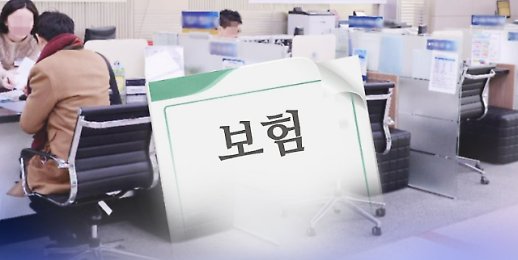 Rising Prices and Interest Rates Impact Life Insurance Sales, New Contracts Drop 11% The prolonged high prices and interest rates have led to a decrease in consumer spending power, causing a slowdown in new insurance sales across the industry. The life insurance market, in particular, is facing concerns over weakened growth as both protection and savings insurance contracts have declined. According to the insurance industry on June 7, the number of new protection insurance contracts from 22 life insurance companies totaled 2,914,130 from January to March this year, a 3.8% decrease compared to 3,027,898 during the same period last year. The total new contract amount also fell by 12.1%, from 41.227 trillion won to 36.2286 trillion won. Savings insurance contracts showed a similar trend, with new contracts dropping from 192,608 to 180,165, a decrease of 6.5%. The total amount for these contracts also fell by 6.4%, from 10.6696 trillion won to 9.9831 trillion won. As a result, the overall number of new personal insurance contracts decreased by 3.9%, totaling 3,094,295, while the total amount shrank from 51.9009 trillion won to 46.2118 trillion won, a decline of 11.0%. Major life insurance companies have not escaped this downward trend. Hanwha Life's new personal insurance contract amount decreased by 5.4% to 5.3212 trillion won, while Kyobo Life saw a 17.8% drop to 4.7067 trillion won. Samsung Life was the only one among the 'Big Three' to report an increase, with a 6.2% rise to 6.8025 trillion won, although its new contract count fell by 1.0%. Only three of the 22 life insurance companies—Heungkuk Life, MetLife, and BNP Paribas Cardif—reported increases in both the number and amount of new contracts during this period. Industry experts cite a slowdown in the sales of short-term whole life insurance as a contributing factor to the decline in new contracts. This product, which had driven performance for life insurers in recent years, has seen its growth potential diminish due to regulatory changes aimed at improving product structures, easing competition on refund rates, and reviewing sales practices. Additionally, the economic slowdown has reduced households' capacity for insurance spending, leading to a general decline in new enrollment demand. If the trend of decreasing new contracts continues, it is expected to pose challenges to the growth of life insurance companies. Given the nature of the insurance industry, new contracts are directly linked to the expansion of future profit sources, known as the insurance contract margin (CSM). A continued decline in new contracts could weaken future revenue generation capabilities. The Korea Insurance Research Institute previously estimated that the CSM for the life insurance sector would decrease by 0.6% this year, from 64.7 trillion won in 2025 to 64.3 trillion won. An industry official stated, "With high prices and interest rates dampening consumer sentiment, insurance products are inherently difficult for consumers to perceive as necessary. This means that agents must actively reach out to explain and persuade potential clients, making the sales environment increasingly challenging. Particularly, the demand for whole life insurance, once a key product, has diminished due to the rise of single-person households and childless families, making sales even more difficult."* This article has been translated by AI. 2026-06-07 16:03:00
 -
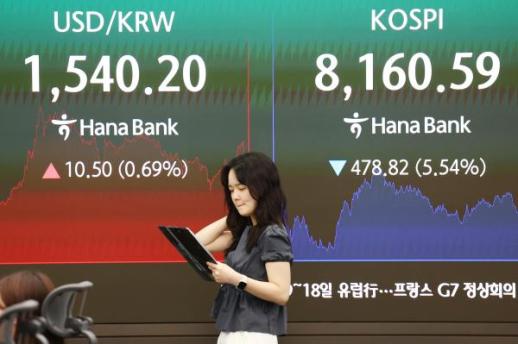 Highest Exchange Rate Since Financial Crisis Raises Concerns for Banks The won-dollar exchange rate has surpassed 1500 won and continues to rise, creating tension across the banking sector. A prolonged high exchange rate could increase costs for foreign currency procurement and raise risk-weighted assets (RWA) due to the revaluation of foreign currency assets, thereby complicating capital ratio management. According to the Seoul foreign exchange market on June 7, the won-dollar exchange rate closed at 1559.0 won during overnight trading on June 6, up 19.9 won from the previous day's closing price. This marks the highest level since March 2009, during the global financial crisis. At one point, the rate peaked at 1561.5 won, exceeding the 1560 won mark. The average quarterly exchange rate has also soared to its highest level since the foreign exchange crisis. According to the Bank of Korea's economic statistics system, the average exchange rate for the second quarter, as of June 5, was 1490.98 won, the highest level in nearly 28 years since the first quarter of 1998 (1596.88 won). This has led to speculation that the high exchange rate in the 1500 won range may become a structural norm. Since the Middle East crisis at the end of February, the trend of high exchange rates has solidified, raising alarms within the banking sector. This situation is expected to impact both foreign currency liquidity and asset soundness. The primary concern is the decline in the common equity tier 1 (CET1) capital ratio, a key indicator of bank soundness. As the won-dollar exchange rate rises, the value of foreign currency assets, such as dollar loans held by banks, increases, leading to an expansion of RWA and heightened risk due to volatility. It is estimated that for every 10 won increase in the exchange rate, the CET1 ratio decreases by an average of 1 to 3 basis points (0.01 to 0.03 percentage points). Considering that the exchange rate was 1432.5 won on February 26, before the U.S. and Israel launched airstrikes on Iran, there has been pressure for a decline in the capital ratio of over 10 basis points. According to the Financial Supervisory Service, the average CET1 ratio for domestic banks was 13.41% in the first quarter, still above the regulatory requirement of 8%. However, concerns are growing that if the exchange rate remains above 1500 won, the capital buffer could be rapidly depleted. The impact of high exchange rates also directly affects banks' foreign exchange trading losses. The profit and loss from foreign exchange transactions for banks is calculated based on fluctuations in the exchange rate of their foreign currency assets and liabilities. As exchange rate volatility increases, the won-denominated value of foreign currency assets and liabilities changes rapidly, affecting profitability. If high exchange rates persist, banks may also face challenges in their overseas operations. Typically, banks allocate annual RWA limits at the beginning of the year, but if high exchange rates continue, the won-denominated amount of the same loans increases, raising the proportion of RWA. This effectively reduces the banks' operational capacity. A financial sector official stated, "If the high exchange rate situation continues, it could adversely affect banks' soundness and profitability, as well as their lending operations. Maintaining a stable capital ratio will be a key challenge for the banking sector for the time being."* This article has been translated by AI. 2026-06-07 16:03:00
 -
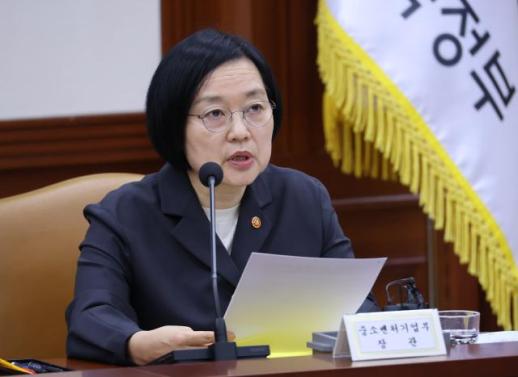 Lee Appoints Han Seong-sook as New Prime Minister to Tackle Economic Crisis President Lee Jae-myung appointed Han Seong-sook, the Minister of SMEs and Startups, as the new Prime Minister on June 7. If confirmed through a parliamentary hearing, Han will become the second female Prime Minister in South Korea, following Han Myung-sook, who served nearly 19 years ago. Additionally, she will make history as the first Prime Minister with a background as a CEO of a major corporation, having previously led Naver, the country's largest IT company. Kang Hoon-sik, the Chief of Staff to the President, stated during a briefing at the Cheong Wa Dae that Han is expected to effectively address the pressing issue of artificial intelligence transformation, leveraging her experience in both the IT sector and as a minister. Kang praised Han's tenure as Minister, highlighting her focus on speed, results, and support for small and medium-sized enterprises (SMEs) and small business owners, which led to record-high exports for SMEs and revitalization of the startup ecosystem. He expressed optimism that Han's innovative approach and experience as Minister, combined with her new role as Prime Minister, could help shift the growth of the Korean economy—currently buoyed by a semiconductor boom and rising exports—toward benefiting all citizens, including SMEs and local businesses. The appointment of Han as Prime Minister is expected to accelerate the ongoing cabinet reshuffle and the selection of new personnel in the Blue House. Speculation suggests that the President may replace ministers from three to four different departments, while also filling vacant positions such as the spokesperson for the Blue House, the Chief of AI Future Planning, and the Deputy Chair of the National AI Strategy Committee. Changes among some senior secretaries are also anticipated. Kang indicated that several appointments are in preparation and may be announced soon. However, he noted, "We are currently reassessing our overall agenda centered on the national task of moving beyond recovery and normalization to a great leap forward. We are also deeply considering the public sentiment demonstrated in the recent elections." The Blue House also made an unusual mention of outgoing Prime Minister Kim Min-seok. Kang remarked that Kim, as the first Prime Minister of the Lee Jae-myung administration, played a crucial role in overcoming national crises and leading the recovery efforts. He stated, "The achievements of the past year under the Lee administration can largely be attributed to Prime Minister Kim." Kang urged Kim to share his experience and insights with his successor as the first Prime Minister of a government founded on popular sovereignty. Kim is widely expected to run in the upcoming Democratic Party convention in August. Kang refrained from commenting on Kim's future plans, stating, "We cannot take a separate position on his individual actions." 2026-06-07 16:03:00
 -
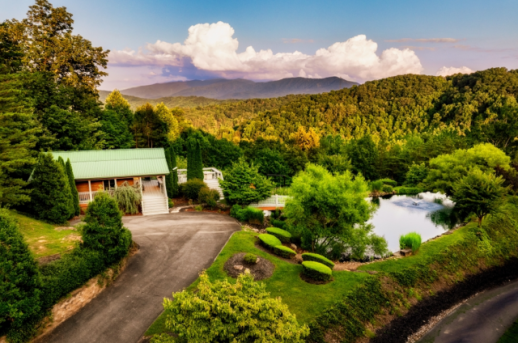 Airbnb Promotes 'Imperfectly Perfect Travel' Campaign for Summer 2026 Airbnb has launched a new brand campaign titled "Imperfectly Perfect Travel," encouraging travelers to break free from rigid itineraries and embrace a more relaxed pace during their vacations. According to a survey conducted by the market research firm Embrain, 97% of Korean travelers reported planning their trips in advance. Among the respondents, 55% expressed feeling that a day spent doing nothing while traveling was a waste of time and money, while 40% noted that they returned from vacations feeling more exhausted than when they left. Conversely, nearly 60% of respondents cited "unexpectedly discovered places or experiences" as the most memorable moments from their travels, with only 20% favoring a perfectly planned itinerary. In light of these findings, Airbnb is proposing a new way to travel for the first time in a decade. The campaign emphasizes the value of "authentic relaxation," encouraging travelers to enjoy their time in independent and comfortable accommodations rather than feeling pressured to maximize every moment. In fact, 53% of respondents indicated a preference for spending time in their lodgings over engaging in external activities to truly unwind. Airbnb suggests that staying in accommodations that reflect the local atmosphere and character can enhance the travel experience. This approach allows guests to slow down and immerse themselves in the local lifestyle, utilizing spacious living areas, kitchens, and yards to create a more leisurely schedule. The campaign's promotional video captures scenes of travel that prioritize relaxation over tightly scheduled plans. This video will be aired as a television advertisement. The emphasis on seeking leisure rather than perfection aligns with global travel trends for this summer. According to Airbnb's travel trend report released on May 27, one in three travelers prefers short trips to nearby destinations rather than long-distance vacations. In the United States, there is a growing trend for "playcations," where travelers seek accommodations near golf courses or lakes to enjoy their hobbies. Additionally, interest in smaller, charming towns has surged, with 86% of travelers expressing a desire to visit these locales instead of crowded, popular resorts. Suh Ga-yeon, Country Manager for Airbnb Korea, stated, "We designed this campaign to offer Korean travelers a way to fill the void left by rigid planning with the joy of simply being. This summer, we hope travelers will experience the value of 'Imperfectly Perfect Travel' by staying at the diverse spaces available on Airbnb at their own pace."* This article has been translated by AI. 2026-06-07 15:57:00
 -
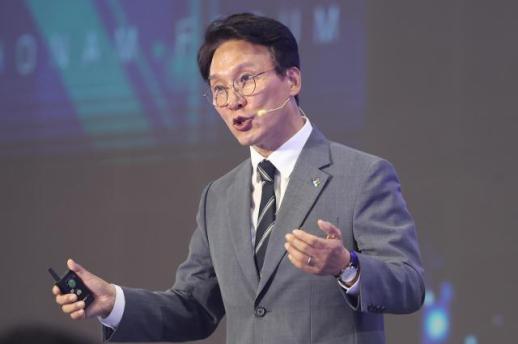 Kim Min-seok Signals Bid for Democratic Party Leadership Prime Minister Kim Min-seok hinted at a potential bid for leadership of the Democratic Party on June 7. He stated, "I am returning to the party to strongly support the spirit of the Lee Jae-myung administration." In a post on social media, Kim emphasized that backing the Lee Jae-myung administration's spirit is both a public desire and a mission for the party's one million members. He noted that the results of the local elections and by-elections demand reflection, vigilance, and innovation from the ruling Democratic Party, which bears infinite responsibility. He added, "To achieve three key objectives—successful governance, victory in the general elections, and continuous rule—the Democratic Party must become a strong practical coalition that embraces both economic growth and democracy." Kim also highlighted his previous role in designing the Lee Jae-myung administration's governance plan and serving as the chief advisor to the first cabinet, stating, "My mission is to overcome resistance from vested interests and create a strong and capable Democratic Party that realizes the spirit of the Lee Jae-myung administration." Furthermore, he declared, "I will open a golden age of democracy among party members and ensure that the Lee Jae-myung administration will usher in a K-golden era." Meanwhile, the Democratic Party's convention is expected to take place between mid-August and early September. Alongside Kim, Representative Jeong Cheong-rae, who is seeking re-election, and former Representative Song Young-gil, who has returned to the National Assembly, are also being mentioned as potential candidates. On the same day, Han Seung-sook, the Minister of SMEs and Startups, was appointed as Kim's successor. She is expected to become the second female Prime Minister in South Korea's history, following former Prime Minister Han Myung-sook, who served during the Roh Moo-hyun administration. 2026-06-07 15:57:00
 -
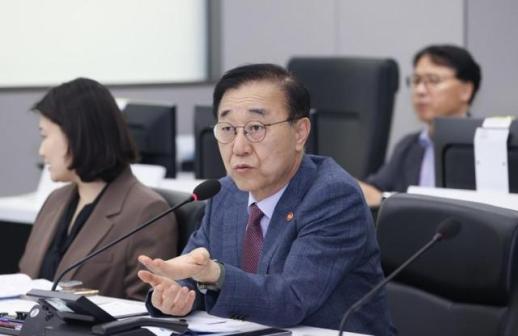 South Korea Boosts Hydrogen Investment in Saemangeum, Officials Visit China's Hydrogen Industry The South Korean government is set to enhance Saemangeum as a hub for hydrogen and AI-based advanced industries by visiting China's hydrogen sector. The Ministry of Land, Infrastructure and Transport announced on June 7 that a delegation led by Minister Kim Yun-deok will visit Beijing and Inner Mongolia from June 8 to 10. The delegation will tour local companies and key facilities to assess the infrastructure for hydrogen production, transportation, storage, and utilization. This visit supports a 9 trillion won investment agreement signed in February between the government and Hyundai Motor Group for Saemangeum. The ministry plans to explore administrative and financial support measures to expedite the development of a solar-powered electrolysis plant and an AI hydrogen city proposed by Hyundai Motor Group. Green hydrogen produced at the Saemangeum electrolysis facility will be supplied to local areas, including waterfront cities, through pipelines and tube trailers. It will also be utilized in hydrogen refueling stations and in the port and logistics sectors, as well as in hydrogen mobility. China is expanding its hydrogen industry value chain, focusing on five major hydrogen demonstration cities. With abundant renewable energy, it has established large-scale production facilities, making it the world's largest hydrogen producer and consumer. On June 8, the delegation will visit the Daxing International Hydrogen Energy Demonstration Zone in Beijing, where they will examine the ecosystem from hydrogen production to utilization. They will assess the durability of stacks and the level of domestic technology in hydrogen fuel cell companies. The delegation will also visit a large hydrogen refueling station to evaluate operational efficiency and safety management systems based on intelligent platforms. On June 9, they will visit one of the world's largest green hydrogen production facilities in Inner Mongolia. The delegation will review the integration of wind and solar power with electrolysis equipment and examine examples of hydrogen supply infrastructure development. The Ministry of Land, Infrastructure and Transport aims to analyze China's examples to develop support measures tailored to the geographical and industrial conditions of Saemangeum. This initiative is expected to establish a stable hydrogen supply network and accelerate the creation of the AI hydrogen city. Minister Kim Yun-deok stated, "It is crucial to establish a stable hydrogen supply infrastructure in Saemangeum and to formulate policies that accurately reflect corporate demand. We will mobilize all possible support measures based on insights gained from China's leading examples to ensure the swift implementation of investments in Saemangeum."* This article has been translated by AI. 2026-06-07 15:45:00