
Journalist

Park Yong-jun
-
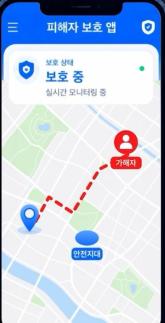 South Korea Unveils Real-Time Stalker Tracking App The Ministry of Justice has successfully developed a mobile app that tracks the movements of stalking offenders in real time, marking its first demonstration. On May 27, the ministry held a media event at the central monitoring center, unveiling the app that allows victims to directly monitor the location and movements of their stalkers. Named the "Stalker Location Notification" app, it is set to officially launch on June 24. During the demonstration, the app displayed a clear map on the victim's smartphone showing the real-time movement of a stalking offender wearing an electronic monitoring device as they approached within a certain distance. At the same time, the app enabled the probation officer to inform the victim of the situation, while police on-site could swiftly apprehend the offender. The key feature of this service is that it shares the location information of offenders, previously only accessible to the monitoring center, directly with victims in real time. Previously, victims were notified via phone through the monitoring center when an offender approached. Now, victims can visually confirm the offender's location through the app on their smartphones. Actor Yoon Park, an honorary probation officer who participated in the event, shared his experience with the app, stating, "While the immediate response from government agencies is reassuring, being able to see where the offender is coming from transforms a vague sense of anxiety into a manageable situation." The attending journalists discussed the app's user-friendliness and information security, while also experiencing the process of electronic monitoring and alert handling to assess the effectiveness of the electronic supervision system. The Ministry of Justice plans to conduct final checks on system stability before the launch and will begin utilizing the app to protect stalking victims at the end of next month. Justice Minister Jeong Seong-ho emphasized, "Since the government's inception, we have worked to create a society where citizens feel safe through the expansion of one-on-one electronic monitoring and the introduction of location notification services. We will actively incorporate the feedback from today's demonstration to establish a comprehensive system for crime prevention and victim protection."* This article has been translated by AI. 2026-05-28 13:52:00
 -
 Man Charged with Attempted Murder at Antarctic Research Station A man in his 50s has been indicted for attempted murder after allegedly trying to kill two colleagues at the Jangbogo Scientific Station in Antarctica using a weapon he crafted himself. According to Yonhap News on May 28, the Gimcheon branch of the Daegu District Prosecutor's Office has charged the man, referred to as A, with attempted murder and violations of laws regarding the safety management of firearms, bladed weapons, and explosives. Prosecutors allege that on April 13, A made a bladed weapon inside the research station and carried it around with the intent to kill two fellow researchers with whom he had ongoing conflicts. Investigations revealed that A was seen searching for his colleagues while armed with the weapon. Prosecutors executed an arrest warrant during A's repatriation to South Korea in coordination with relevant authorities and have since conducted supplementary investigations to gather testimonies from other station personnel to clarify the circumstances and motives behind the incident. A prosecutor stated, "The investigation was conducted by the Gimcheon branch, which has jurisdiction over the defendant's residence, and we will do our utmost to maintain the prosecution so that a sentence commensurate with the crime can be imposed." The Jangbogo Scientific Station, established by South Korea in 2014 on the coast of Terra Nova Bay in Antarctica, is the country's second research facility in the region. It is known for conducting research on polar environments, climate change, and marine and glacial studies, with personnel residing there for extended periods. 2026-05-28 13:44:00
 -
 Six Chinese Nationals Sentenced to Life for Torturing Korean Student to Death in Cambodia Six Chinese nationals have been sentenced to life in prison for torturing a South Korean student to death in Cambodia. The victim, identified as Park Min-ho, was reportedly lured to the country by a fraudulent job offer and subsequently imprisoned by an online crime syndicate. This incident has highlighted ongoing issues related to Southeast Asian scams targeting foreign job seekers. According to reports from the Associated Press and Reuters, a court in Kampot Province sentenced the six men, aged between 30 and 54, for murder involving torture and aggravated fraud. Park was said to have traveled to Cambodia last year after receiving a false job offer. Once there, he was coerced into participating in criminal activities by the online scam organization and was subjected to severe abuse before his death. His body was discovered in August of the previous year in Kampot. The autopsy report released by South Korean authorities in November indicated that Park died from blunt force trauma due to beating and torture. The Cambodian court found sufficient evidence to convict the six defendants. Southeast Asian online scam operations have been known to attract foreigners with offers of high-paying part-time jobs and overseas employment, only to involve them in voice phishing and investment fraud schemes. Victims often face confinement, threats, and violence during this process. In response to these crimes, Cambodia has intensified its crackdown. The AP reported that the local parliament passed a law in March allowing for life sentences for operators of online scam organizations. Authorities have expelled 18,864 individuals from 33 countries between January 2025 and May of this year, and have prosecuted 1,458 people.* This article has been translated by AI. 2026-05-28 13:42:00
 -
 AJP Focus: The day the market crowned memory — and why Korea must not mistake the jackpot for the journey SEOUL, May 28 (AJP) - May 27, 2026, is likely to be recorded as a turning point in the history of both global capital markets and the artificial-intelligence industry. The day's gains were not merely another rally in technology shares. They were a symbolic demonstration of where industrial power now resides in the age of AI, of what determines national competitiveness in the twenty-first century, and of how strong companies, strong markets and strong economies form a single virtuous cycle. The roster of the world's fifteen most valuable listed companies had itself become a map of the global economy. Nvidia stood at the top at $5.4 trillion, followed by Alphabet at $4.6 trillion, Apple at $4.5 trillion, Microsoft at $3.1 trillion and Amazon at $2.9 trillion. Taiwan's TSMC followed at $2 trillion, Broadcom at $1.8 trillion, Saudi Arabia's Aramco at $1.7 trillion, and Tesla and Meta at $1.5 trillion each. And in the next tier, South Korea's Samsung Electronics, at $1.35 trillion, and SK hynix, at $1.06 trillion, stood shoulder to shoulder with the world's leading firms. Berkshire Hathaway at $1.04 trillion, Micron at $1.01 trillion and Eli Lilly at $950 billion rounded out the top fifteen. (The figures represent a single day's snapshot; intraday, SK hynix rose higher still.) These figures are not a mere sum of share prices. They are the clearest evidence that the axis of the world economy is shifting decisively away from oil, automobiles, traditional finance and manufacturing toward AI and semiconductors, platforms and data, biotechnology and advanced technology. The most historic scene of the day was the simultaneous entry of the three memory-chip makers into the trillion-dollar club. SK hynix rose to roughly 1,680 trillion won intraday, about $1.12 trillion at its peak, crossing the threshold decisively for the first time, and in that moment Samsung Electronics, SK hynix and Micron Technology — the world's three memory makers — stood together in the trillion-dollar range. It was the first time this had occurred in the history of the world's equity markets. Memory chips were long regarded as a cyclical industry, one in which prices soared in booms and collapsed as soon as supply expanded. The arrival of the AI era changed the meaning of memory. It is no longer a simple storage device but the memory of AI itself. Hyperscale AI models must read, write and learn from vast quantities of data simultaneously, and that requires high-bandwidth memory, or HBM, of a wholly different order than conventional DRAM. If Nvidia designs the brain of AI, then Samsung Electronics, SK hynix and Micron are the companies that supply the memory and speed that allow that brain to function. For that reason, the market has begun to stop viewing the memory industry as the simple cyclical business of the past. May 27 was the day the world's markets formally confirmed that the winners of the AI era are not only the platform companies but the memory-chip makers as well. The day carried a second historic meaning: South Korea became the second nation in the world, after the United States, to hold two trillion-dollar companies at once. With Samsung Electronics and SK hynix entering the trillion-dollar club together, Korea has risen from a catch-up manufacturing nation to a capital-market power holding two of the AI era's core strategic firms. It matters, too, that a substantial portion of the non-U.S. trillion-dollar giants are now Korean companies. Taiwan, for all the weight of TSMC, holds only one such firm; Saudi Arabia's Aramco stands alone as an energy colossus; and while the big-technology firms of Europe and the United States still dominate world markets, no other nation outside the United States now holds two trillion-dollar companies at once. Yet Korea's possession of two ultra-large semiconductor companies signifies something beyond a rise in corporate value: it means the standing of the Korean economy itself is changing. That the combined market value of Samsung Electronics' common and preferred shares has surpassed 2,000 trillion won is an unprecedented record in the history of Korea's capital market. It is a symbol not merely of one company's success but of the entire Korean economy ascending onto the core axis of the world economy — AI, semiconductors and advanced memory. This historic moment, however, should not be read with celebration alone. It is true that strong companies make strong markets, and strong markets in turn make strong economies. But for that to become genuine truth, the capital market must function not as a mere arena for speculation but as a national artery supplying funds to future industries. A securities market is not simply an exchange for buying and selling shares. It is core infrastructure that allocates a nation's capital efficiently and channels funds into future growth industries. Where a securities market is developed, companies need not depend solely on bank lending but can raise large sums through equity and bond issuance. That capital flows into research and development, capital expenditure, mergers and acquisitions, and overseas expansion, raising corporate competitiveness and productivity. Future industries such as AI, semiconductors, biotechnology and aerospace all require enormous capital. A developed capital market supplies funds to companies with high growth potential, and those companies in turn generate innovation and build new industrial ecosystems. The United States grew into the world's largest economy not on military power and the dollar alone. Behind it stood a powerful capital market that raised Apple and Microsoft, Nvidia and Amazon. Korea, too, must build a virtuous cycle, centered on Samsung Electronics and SK hynix, in which the capital market and industrial competitiveness reinforce one another. The current ranking of the world's equity markets makes this trend clearer still. The U.S. market, at $77 trillion, remains the overwhelming leader. Mainland China is second at $15.3 trillion, Japan third at $8.3 trillion and Hong Kong fourth at $7.5 trillion. Taiwan stands at $4.95 trillion, India at $4.92 trillion and Korea at $4.81 trillion, placing it around seventh in the world. Canada follows at $4.5 trillion, the United Kingdom at $4 trillion and France in the $3 trillion to $4 trillion range. This ranking is not a mere competition of numbers. It is the front line of the twenty-first century's economic war. The world does not wage military wars alone. Economic war is fierce as well. Which nation's companies can raise greater capital, which nation's market can grow future industries faster, which nation's household assets move in a more productive direction — these determine a country's fate. In that light, Korea's rise to seventh in the world is no small achievement. Should the KOSPI reach around 8,500, the Korean market would rise to roughly the $5 trillion range and could contest fifth through seventh place with Taiwan and India; at around 10,000, roughly $5.5 trillion to $6 trillion, a foothold in the global top five becomes possible; and at around 11,000, roughly $6 trillion to $7 trillion, it could vie with Hong Kong for fourth or fifth. The markets of Taiwan, India and Hong Kong may grow in tandem, so the actual ranking could shift in relative terms. But the direction is clear: the possibility is opening for the Korean market to leap from a peripheral market to a capital market that can look toward the world's top five. This matters because the development of a securities market directly affects economic growth. As a market grows, companies raise capital, and that capital flows into research and development, capital expenditure, mergers and overseas expansion — which in turn raises productivity and competitiveness and enlarges the growth potential of the national economy. Innovative industries in particular struggle to grow without a capital market. AI, semiconductors, biotechnology and aerospace all require long-term investment and large-scale capital. Bank lending alone cannot raise such industries; they require venture capital willing to bear the uncertainty of the future, long-term investment capital and the participation of global institutional investors. This is precisely why the United States became the center of world innovation. The Nasdaq was not a mere exchange but the cradle of America's innovative industries. For Korea to become a genuine AI-semiconductor power, the KOSPI and KOSDAQ, too, must become not mere price boards but capital platforms that raise future industries. The development of a securities market also affects the growth of household assets and the expansion of consumption. A rising market increases the financial assets of the public; as assets grow, the capacity for consumption and investment expands and economic activity quickens. This is the so-called wealth effect. Excessive wealth effects can, of course, create bubbles and inequality. But healthy capital-market growth becomes an important channel for sharing the fruits of corporate growth with the public. In Korea's case, the fact that Samsung Electronics has roughly five million individual shareholders is highly symbolic. Close to one in ten citizens is a Samsung shareholder, and counting family members, a very broad swath of Korean society is connected, directly or indirectly, to Samsung Electronics. Adding the National Pension Service, retirement pensions, exchange-traded funds, mutual funds and individual investors' assets, the earnings and share prices of Samsung Electronics and SK hynix are not a matter for the companies alone but a matter of the national economy and national wealth. For Samsung Electronics and SK hynix to grow stronger is not merely for conglomerates to grow stronger; it is connected to the returns of the national pension, the returns of retirement pensions, the assets of individual investors, national tax revenue, jobs for the young and the research-and-development ecosystem. The weight of Samsung Electronics and SK hynix in the Korean economy is already overwhelming. Samsung Electronics' market value stands at about 1,850 trillion won and SK hynix's at about 1,340 trillion won, for a combined value of roughly 3,190 trillion won — about 45 percent of the entire value of the Korean market, with Samsung at about 26.1 percent and SK hynix at about 18.9 percent. By 2025 earnings, Samsung earned about 45 trillion won and SK hynix about 43 trillion won, for combined profit of roughly 88 trillion won, equal to about 45.2 percent of the total profit of all listed Korean companies. Put simply, of every 100 won earned by listed Korean firms, about 45 won came from Samsung Electronics and SK hynix. For 2026, some aggressive forecasts even raise the possibility of combined operating profit on the order of 500 trillion won — Samsung at about 320 trillion won and SK hynix at about 180 trillion won — driven by the AI and HBM super-cycle. Were these figures realized, the Korean economy and capital market would enter an entirely new phase. Yet it is precisely because of that overwhelming weight that Korea bears opportunity and risk at once. The two companies have become both the heart of the Korean economy and its single greatest concentration risk. The same is true of Taiwan's TSMC. With a market value of about $2 trillion and a roughly 35 to 40 percent share of the Taiwan market, TSMC is an absolute company. It manufactures the advanced chips of the world's major AI firms — Nvidia, AMD, Apple, Broadcom and Qualcomm. Taiwan's exports and trade balance, its growth rate, its exchange rate and its entire market are directly affected by TSMC's results. TSMC is a private company, yet Taiwan's government-affiliated National Development Fund is known to hold a stake of about 6 percent as a major shareholder — meaning TSMC is more than a private firm; it is a national champion that the Taiwanese government strategically cultivates and supports. Korea's Samsung Electronics and SK hynix, and Taiwan's TSMC, are none of them mere companies. They are core national strategic assets that govern each nation's exports, employment, pensions, household wealth and equity market. But the roles of Korea and Taiwan differ. Samsung Electronics and SK hynix handle memory chips; TSMC handles foundry. Samsung and SK hynix supply HBM and DRAM, taking charge of AI's memory, while TSMC produces GPUs and AI chips, taking charge of producing AI's brain. Put simply, TSMC makes the brain of AI, and Samsung and SK hynix supply its memory. By market value, too, the combined roughly 3,190 trillion won of Samsung and SK hynix is comparable to TSMC's roughly $2 trillion, or about 3,000 trillion won. In market weight, Samsung and SK hynix account for about 45 percent of the Korean market and TSMC for about 35 to 40 percent of Taiwan's. In share of listed-company profit, Samsung and SK hynix hold about 45 percent, while TSMC likewise holds an overwhelming share among Taiwanese firms. In Korea, the National Pension Service holds about 7 to 8 percent of Samsung and about 7 percent of SK hynix as a key institutional shareholder; in Taiwan, government-affiliated funds participate as major shareholders of TSMC. Samsung is a "people's stock" with some five million individual shareholders, and TSMC, too, is Taiwan's representative people's stock. In the end, Korea and Taiwan each underpin the foundation of the AI-era global digital economy through their strategic firms. The most important point to watch here is the profit structure. In corporate value — market capitalization — the TSMC and Samsung–SK hynix camps have risen to comparable scale. But should the AI memory super-cycle materialize, the 2026 profit of the Samsung–SK hynix camp, at a maximum of roughly 500 trillion won, could far exceed TSMC's projected maximum of about 180 trillion won — and that is the core of what the market is watching. Were this realized, the world's capital markets would have no choice but to reassess Korea's memory-chip industry entirely. If TSMC has until now been recognized as the AI era's absolute strategic company, Samsung Electronics and SK hynix would henceforth be recognized as another absolute axis of the AI era — because the market is confirming that AI's memory matters as much as AI's brain. Yet all these numbers tell us not of a simple rosy future. They demand, rather, a higher level of sobriety. That about 45 percent of the entire value of the Korean market, and about 45.2 percent of listed-company profit, is concentrated in Samsung Electronics and SK hynix is both a blessing and a danger. When a national economy depends excessively on a particular industry and particular companies, that industry's cycle shakes the fate of the entire country. In a chip boom, household wealth grows, tax revenue expands and national credibility rises; but in a chip downturn, the market and the currency, exports and investment, employment and consumption can all be shaken at once. This is the danger of what might be called "semiconductor disease." Just as the Netherlands once suffered "Dutch disease," in which a natural-gas boom weakened its manufacturing competitiveness, Korea must guard against a semiconductor disease in which a chip super-boom drives policy judgment, industrial structure, the capital market and public sentiment too far in a single direction. A boom always clouds the eye. The world is now enraptured by the AI-semiconductor super-cycle. But the history of the technology industry has always been one of cycles. In the 1980s, Japanese semiconductors dominated the world, and the United States trembled at the fear of them. Yet amid the collapse of the bubble, structural change and U.S. technological and trade pressure, Japanese semiconductors faltered abruptly. So it was with the dot-com bubble, with LCDs, and with the solar and battery industries, all of which passed through vast cycles. AI, too, guarantees no eternal straight-line growth. Oversupply may someday arrive, price competition may intensify, technical standards may shift, and China's pursuit may prove faster than expected. China is already pouring enormous funds into AI chips and the memory industry, waging an all-out effort to build its own semiconductor ecosystem even under U.S. technology sanctions. A technological gap still exists, but the most dangerous thing in industrial competition is to underestimate a rival's speed of pursuit. Japan once pursued the United States, Korea pursued Japan, and now China is pursuing Korea and Taiwan. What Korea must do now, therefore, is not self-congratulation but design. That Samsung Electronics and SK hynix have entered the world's trillion-dollar club does not automatically guarantee the future. That the possibility of a KOSPI at 8,500, 10,000 or 11,000 is being raised does not mean the Korean capital market will advance of its own accord. For strong companies to make a strong market, and a strong market in turn to make a strong economy, there must lie between them trust and institutions, transparency and long-term capital, an innovation ecosystem and industrial diversification. Companies must not grow drunk on short-term results but invest in next-generation technology and energy, software and platforms, data and talent. Government must focus not on political slogans but on capital-market advancement and regulatory innovation, tax reform and the cultivation of a long-term investment culture. Labor must consider not only the distribution of present gains but also future competitiveness and the sustainability of industry. Investors must read not short-term swings but the structural transformation of national industry. For the Korean capital market to challenge for fifth, and further fourth, place from seventh carries meaning beyond a simple rise in share prices. It is an indicator that the competitiveness and future growth potential of Korea's capital market are expanding, and over the long term it can become a foundation on which companies, citizens and the nation grow together. That challenge, however, cannot be completed by Samsung Electronics and SK hynix alone. Korea must make semiconductors its central axis while building a broader industrial ecosystem connecting AI software and cloud, robotics and biotechnology, aerospace and defense AI, cultural content and digital finance. For the true winner of the AI era is likely to be not simply the country that makes chips well, but the country that designs the whole of AI civilization. The United States is strong not because of Nvidia alone. As Alphabet at $4.6 trillion, Apple at $4.5 trillion, Microsoft at $3.1 trillion, Amazon at $2.9 trillion, Tesla at $1.5 trillion and Meta at $1.5 trillion attest, the United States holds platforms and software, cloud and data, electric vehicles and an AI ecosystem all at once. Korea, too, must grow beyond the overwhelming memory devices of Samsung Electronics and SK hynix to cultivate AI platforms and software, data centers and power, robotics and defense AI together. National competitiveness in the twenty-first century is not determined by military power and manufacturing alone. The size and quality of the capital market, semiconductors and AI, data and energy, platforms and supply chains together now govern a nation's fate. The $77 trillion of the U.S. market is not a mere number but America's power to absorb and allocate the world's innovative capital. The rankings — mainland China at $15.3 trillion, Japan at $8.3 trillion, Hong Kong at $7.5 trillion, Taiwan at $4.95 trillion, India at $4.92 trillion, Korea at $4.81 trillion — are the present front line of the global economic war. For Korea to rise further in this competition, a rise in corporate value alone is not enough. It must build a market that foreign investors can trust, a market in which the national and retirement pensions can grow over the long term, a market in which individual investors can fairly share the fruits of corporate growth, and a market in which innovative companies can raise capital and venture out into the world. In the end, the meaning of May 27, 2026, is clear. On this day, the world's markets formally confirmed that the winners of the AI era are the memory-chip companies. The three memory makers entered the trillion-dollar club at once, and Korea became the second nation after the United States to hold two trillion-dollar companies. Samsung Electronics surpassed 2,000 trillion won counting common and preferred shares, the combined value of Samsung and SK hynix reached about 3,190 trillion won, or about 45 percent of the entire Korean market, and the two firms accounted for about 45.2 percent of listed-company profit in 2025 — with some forecasts raising the possibility of combined operating profit of as much as 500 trillion won in 2026. Taiwan's TSMC, at about $2 trillion and 35 to 40 percent of the Taiwan market, takes charge of producing AI's brain. Korea's Samsung Electronics and SK hynix take charge of AI's memory. TSMC and the Samsung–SK hynix pair are each the heart of their nation's economy and the most important strategic firms moving the AI-era world economy. But the real history begins now. Numbers speak of possibility, but strategy makes the future. Market capitalization shows present expectation, but a nation's dignity rests on how it connects that expectation to institutions, industry and household wealth. Korea now stands before the door of a boom — and at the same time before the door of risk. In comfort, think of danger — geo-an-sa-wi (居安思危). The AI-semiconductor jackpot is a blessing, but the moment that blessing becomes arrogance, crisis begins. Korea must connect strong companies to a strong market, a strong market to a strong economy, and a strong economy back to strong household wealth and future industries. That, precisely, is the path the Republic of Korea must walk in the age of AI. Semiconductors are the heart of the Republic of Korea. But the Republic of Korea must not become a nation of semiconductors alone. It must build a new national strategy that connects, with semiconductors at the center, AI and energy, the capital market and data, platforms and culture, robotics and biotechnology, defense and space. Only then will May 27, 2026, be recorded not as a day of mere share-price gains, but as the day the Republic of Korea began its leap toward becoming an AI-civilization nation. 2026-05-28 13:37:58
 -
 Foreign investors collected more in Korean dividends than domestic retail in 2025 SEOUL, May 28 (AJP) - Foreign investors collected a larger share of dividends from South Korean listed companies than domestic individual investors did last year, drawing 11.89 trillion won ($7.9 billion) as record corporate payouts — swollen by the semiconductor boom — flowed disproportionately to overseas shareholders. Total dividends paid by companies with December fiscal years reached 37.75 trillion won, up 16.9 percent from a year earlier, according to data released Thursday by the Korea Securities Depository. Of that sum, foreign shareholders received 31.5 percent, a share that rose 21.3 percent in value from the previous year, while domestic individual investors received 10.15 trillion won, or a smaller slice, up 11.6 percent. Domestic corporations remained the largest single recipient, taking 15.72 trillion won, or 41.6 percent of the total. The widening foreign share reflects the same force driving this year's equity rally: the dominance of the chipmakers. Semiconductor manufacturing accounted for the largest block of dividends by sector, at 5.69 trillion won, or 15.1 percent of the total, and it is precisely the chip heavyweights, Samsung Electronics and SK hynix, in which foreign investors hold their heaviest positions. As the AI memory cycle has lifted both earnings and payouts, much of the benefit has accrued to shareholders abroad. A total of 1,246 companies paid year-end dividends, comprising 577 firms on the main KOSPI market, which paid 34.68 trillion won, and 669 on the junior KOSDAQ, which paid 3.07 trillion won. KOSDAQ payouts stood out for their pace of growth, climbing 34 percent from a year earlier. Samsung Electronics led all companies, distributing 3.75 trillion won, the most on the main market. It was followed by Kia at 2.64 trillion won, SK hynix at 1.33 trillion won, Samsung Life Insurance at 952 billion won, and Samsung Fire & Marine Insurance at 829 billion won. On the KOSDAQ, EG Holdings paid the most, at 88 billion won. By sector, holding companies ranked second behind semiconductors at 3.68 trillion won, followed by automobile and engine manufacturing at 3.30 trillion won, while brokerage payouts rose sharply to 1.62 trillion won. Among domestic individuals, the dividends skewed heavily toward older investors. Those in their 50s received the most, at 3.38 trillion won, followed by investors in their 60s at 2.54 trillion won and those 70 and older at 2.01 trillion won. Together, shareholders in their 50s and 60s collected 58.4 percent of all dividends paid to individuals — a concentration that underscores how equity wealth in Korea remains held largely by older generations. 2026-05-28 13:37:12
 -
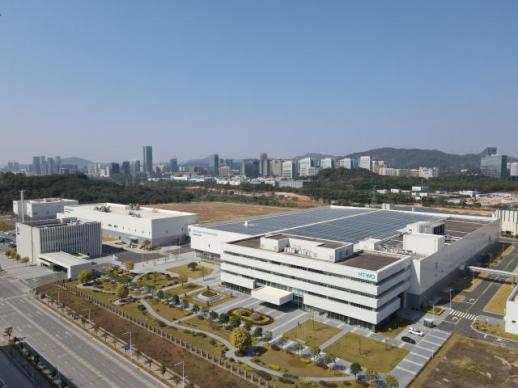 Hyundai's HTWO Guangzhou Selected as Leading Company in China's Hydrogen Industry Hyundai Motor Group's HTWO Guangzhou has been designated as a leading company in the hydrogen industry chain by the Guangzhou Municipal Bureau of Industry and Information Technology. This recognition marks Hyundai's formal integration into China's key hydrogen ecosystem, which is expected to accelerate the expansion of its local hydrogen business. Attention is now focused on whether the company can turn around its fortunes in the struggling Chinese automotive market through its hydrogen initiatives. On May 28, Hyundai Motor Group announced that HTWO Guangzhou, its first overseas hydrogen fuel cell system production base, was selected as a "leading company in the hydrogen energy sector" in the first phase of the strategic industrial cluster initiative. Guangzhou is promoting policies to nurture leading companies in 14 strategic industries, including new energy, smart connected vehicles, artificial intelligence (AI), semiconductors, aerospace, and biotechnology. HTWO Guangzhou is the only foreign-invested company among the 96 firms recognized as leading companies in the industrial chain. These companies are tasked with strengthening the industrial supply chain and fostering ecosystem development. With this designation, HTWO Guangzhou is expected to participate in the development of China's hydrogen industry supply chain, build regional industrial ecosystems, expand core technology cooperation, and enhance global exchanges. Recently, China has accelerated its efforts to develop the hydrogen industry, aiming for carbon neutrality and a transition to green energy. In September 2020, during the 75th United Nations General Assembly, China set goals to peak carbon emissions by 2030 and achieve carbon neutrality by 2060. Specifically, the country implemented policies to deploy 35,000 hydrogen fuel cell vehicles (including commercial vehicles) by last year. Guangdong Province, where Guangzhou is located, ranked first among pilot regions with over 7,000 vehicles deployed during this period. HTWO Guangzhou has sold more than 900 hydrogen fuel cell vehicles (commercial) this year. It ranks third among over 60 fuel cell system companies in the Chinese market and first among foreign-invested firms. Choi Doo-ha, CEO of HTWO Guangzhou, stated, "This selection as a leading company in the industrial chain recognizes our contributions to the development of Guangzhou's hydrogen industry and the establishment of a collaborative ecosystem. We plan to expand our participation in the comprehensive hydrogen energy application pilot projects scheduled to begin in the second half of the year and strengthen cooperation with local governments and partners." Meanwhile, Hyundai Motor Group is leading the global hydrogen industry as a co-chair of the Hydrogen Council CEO Summit, which comprises over 100 member companies worldwide. The company is at the forefront of the global hydrogen vehicle market with the launch of models like the all-new Nexo, Xcient hydrogen fuel cell truck, and hydrogen-powered tactical vehicles. Domestically, it is pursuing a project to establish a hydrogen hub in Saemangeum, North Jeolla Province, with a total investment of 8.9 trillion won.* This article has been translated by AI. 2026-05-28 13:36:00
 -
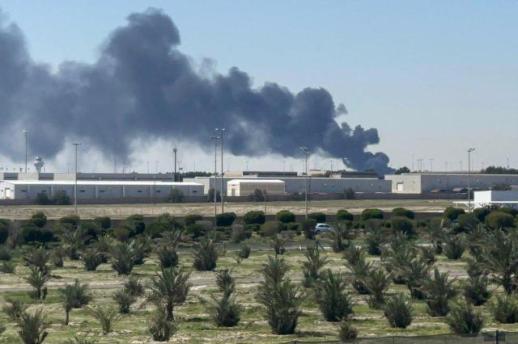 Kuwait's Air Defense System Responds to Missile and Drone Threats Kuwait's air defense system is actively responding to threats from missiles and drones, according to reports. This announcement comes amid claims of additional U.S. airstrikes on Iran and assertions of retaliation from Iran, although the identity of those behind the threats and any potential damage remain unconfirmed. It is also unclear if these events are directly related to Iran's retaliation. On May 28, the Kuwait military stated that its air defense system is intercepting missiles and drones. The military noted that "explosions may be heard" and explained that this is part of the interception operations. Residents have been urged to follow safety guidelines from the relevant authorities. The Kuwait military did not disclose details about the targets, any damage, or the entities involved. No group has claimed responsibility for the incident as of yet. Just before Kuwait's announcement, the United States conducted additional strikes on Iranian military facilities. According to the Associated Press, the U.S. Central Command reported that four Iranian drones posing a threat near the Strait of Hormuz were shot down. U.S. officials also stated that a ground control station in Bandar Abbas was targeted. The Iranian Revolutionary Guard confirmed the airstrikes near Bandar Abbas International Airport, claiming they retaliated against air bases used for U.S. military actions. However, it remains unverified whether the activation of Kuwait's air defense system is directly linked to Iran's retaliation. As tensions in the Gulf region escalate, the situation is compounded by ongoing deadlock in U.S.-Iran negotiations and issues surrounding navigation in the Strait of Hormuz, prompting Kuwait to activate its air defense system.* This article has been translated by AI. 2026-05-28 13:34:00
 -
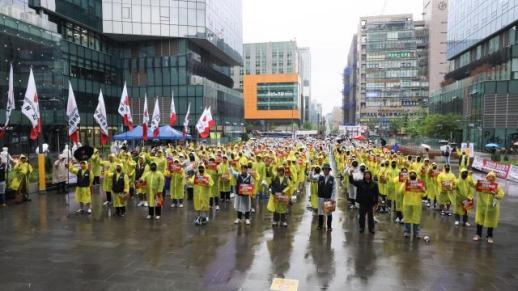 Kakao CEO apologizes to staff as union secures strike right after talks collapse SEOUL, May 28 (AJP) - Kakao CEO Chung Shin-a offered a public apology to employees as the company's union secured the legal right to strike following the collapse of a second mediation session, raising the prospect of the tech giant's first-ever headquarters walkout. Chung issued the apology through an internal notice Thursday, saying she was "sincerely sorry" for failing to quickly dispel growing uncertainty within the company. "Negotiations have dragged on, and I take seriously the fact that our crew members have had to wait this long," she said, using Kakao's in-house term for employees. The CEO struck a conciliatory tone, stressing that labor and management ultimately share the same direction and must work through their differences through dialogue. She also hinted at a partial organizational reshuffle, saying the company needed to reestablish a stable operational framework and reset its service priorities. Mediation talks at the Gyeonggi National Labor Relations Commission broke down late Wednesday after running until 11 p.m., leaving both sides without an agreement. The failure hands the union the legal standing to launch strike action, with about 1,200 union members set to march through the Pangyo Station area on June 10. The union said in a statement that it would not entirely close the door on further dialogue, but added it could "no longer resolve the matter through waiting and patience alone," and would move ahead with preparations for a June strike. The union accused management of passive bargaining, unilaterally paying out bonuses mid-negotiation and repeatedly swapping its lead representatives — moves it said had eroded trust. The central dispute centers on whether Kakao's annual 5-million-won restricted stock unit grants should count as performance pay, a classification the union firmly rejects. Kakao said it would keep communication channels open with the union even after the mediation process concluded. Shares of Kakao traded at 38,700 won per stock on 1:22 p.m., 4.44 percent lower than a day before and roughly 37 percent lower than earlier this year. 2026-05-28 13:29:26
 -
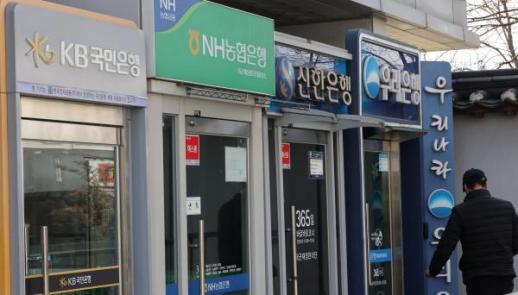 Bank Contributions Exceed 2 Trillion Won, Focus on Community and Financial Support As the government emphasizes inclusive finance to support vulnerable groups, the banking sector's social contributions surpassed 2 trillion won last year. This increase is attributed to expanded spending on community public projects and financial support for low-income individuals. According to the "2025 Bank Social Contribution Activity Report" published by the Korea Banking Association on May 28, the total amount of social contributions by banks reached 2.156 trillion won, an increase of 262.6 billion won (13.9%) from the previous year's 1.8934 trillion won. The scale of social contributions in the banking sector was 351.4 billion won when first recorded in 2006. After surpassing 1 trillion won for the first time in 2019, contributions have steadily increased, achieving the 2 trillion won mark for the first time in six years. Over the past five years, the banking sector's social contribution totals are as follows: 1.0617 trillion won in 2021, 1.238 trillion won in 2022, 1.6349 trillion won in 2023, 1.8934 trillion won in 2024, and 2.156 trillion won in 2025, amounting to a total of 7.984 trillion won. By sector, the "community and public interest" category accounted for the largest share at 1.435 trillion won, or 66.6% of the total. This was followed by "financial support for the underprivileged" at 538.9 billion won (25.0%), "academic and educational" contributions at 73.9 billion won (3.4%), "cultural, artistic, and sports" contributions at 68.4 billion won (3.2%), "global" contributions at 29.2 billion won (1.3%), and "environmental" contributions at 10.6 billion won (0.5%). The Korea Banking Association's report also includes a separate section on the "New Leap Fund." The banking sector contributed 360 billion won to this fund to help small businesses and vulnerable groups rebuild their foundations. The New Leap Fund is a program that purchases non-performing loans of 50 million won or less that have been overdue for more than seven years, providing debt relief. Cho Yong-byeong, chairman of the Korea Banking Association, stated, "I hope this report serves as a transparent and effective means to communicate the banking sector's commitment to social responsibility and genuine efforts to the public. We will lead positive changes in our society based on the values of coexistence and inclusivity."* This article has been translated by AI. 2026-05-28 13:24:00
 -
 Iran's Revolutionary Guard Claims Attack on U.S. Airbase in Response to Airstrikes The Iranian Revolutionary Guard Corps (IRGC) announced that it attacked a U.S. airbase in retaliation for American airstrikes near Bandar Abbas. This response came after the U.S. targeted Iranian facilities, citing drone threats in the Strait of Hormuz. However, the specific target and extent of damage remain unverified. According to Reuters on May 28, the IRGC released a statement through the semi-official Tasnim news agency, claiming, "The U.S. conducted airstrikes near Bandar Abbas airport in southern Iran," and added, "We responded at 4:50 a.m. local time." The IRGC characterized this action as a retaliatory measure. Prior to this, the U.S. had conducted operations targeting Iranian drones near Hormuz. Citing U.S. officials, Reuters reported that American forces shot down four Iranian attack drones that posed a threat to U.S. military and commercial vessels. Additionally, they struck a ground control center in Bandar Abbas that was preparing to launch a fifth drone. The U.S. described the operation as a defensive measure to protect its military and commercial ships. Iran, however, views this as an infringement on its territory and has justified its response. The situation has led to heightened military tensions, with the U.S. framing its actions as defensive and Iran labeling them as retaliatory. The IRGC warned that it would respond more forcefully if further attacks occurred. In its statement, it said, "If aggression is repeated, a more resolute response will follow," adding that the responsibility for escalating tensions lies with the aggressor. The IRGC did not disclose details regarding the means of attack, launch sites, target base names, or the scale of damage. The key takeaway from this announcement is that Iran has officially expressed its intent to retaliate, even as the specifics of the targets and damage remain unclear. This situation further complicates the prospects for resuming navigation through the Strait of Hormuz and any ceasefire negotiations. 2026-05-28 13:24:00