
Journalist

Park Yong-jun
-
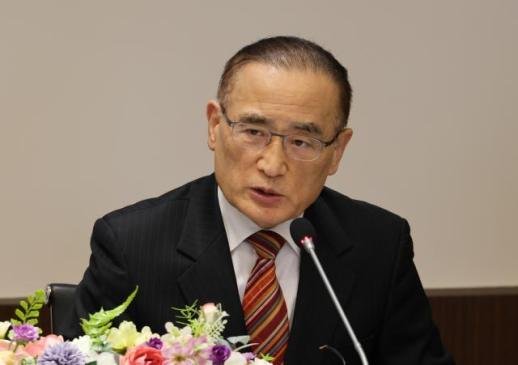 National Security Chief Wi Sung-lak Visits Kazakhstan to Discuss Energy Cooperation Wi Sung-lak, the head of South Korea's National Security Office, is set to depart for Kazakhstan on May 28. The Blue House announced that Wi's visit aims to discuss cooperation with Kazakhstan, a key trading and investment partner in Central Asia, ahead of the upcoming Korea-Central Asia Summit scheduled for September. During his visit, Wi will meet with officials from the Kazakh presidential office to review preparations for the summit and coordinate plans for Kazakh President Kassym-Jomart Tokayev's visit to South Korea. Additionally, discussions will cover regional security dynamics and energy supply chain cooperation. Earlier, South Korea and the five Central Asian countries—Kazakhstan, Uzbekistan, Turkmenistan, Tajikistan, and Kyrgyzstan—agreed to establish the Korea-Central Asia Summit, with the inaugural meeting set to take place in South Korea on September 16-17, 2024. A Blue House official stated, "Our government plans to maintain close communication with Central Asian countries, including Kazakhstan, to ensure the successful hosting of the Korea-Central Asia Summit." * This article has been translated by AI. 2026-05-28 10:43:13
 -
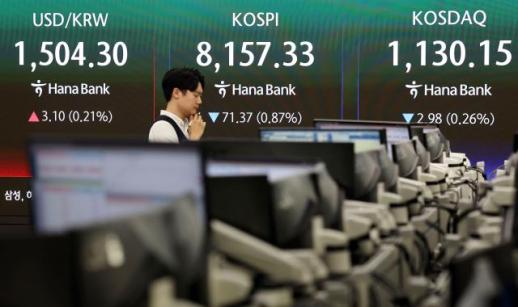 KOSPI Rebounds Amid Retail Buying Despite Foreign Sell-Off The KOSPI index turned upward on the 28th, buoyed by retail investor buying. As of 9:58 a.m., the index was trading at 8,240.30, up 11.60 points (0.14%) from the previous trading day. At this time, foreign investors were net sellers, offloading 23.665 trillion won, while individuals and institutions were net buyers, purchasing 2.606 trillion won and 244.6 billion won, respectively. The KOSPI opened at 8,165.73, down 62.97 points (0.77%) from the previous day, initially widening its losses due to foreign selling. However, strong buying from individual investors soon reversed the trend, pushing the index higher. Among large-cap stocks, SK Hynix rose by 2.45%, Hyundai Motor by 2.35%, Samsung Electro-Mechanics by 2.15%, and LG Energy Solution by 11.47%. In contrast, Samsung Electronics fell by 0.33%, SK Square by 1.49%, and HD Hyundai Heavy Industries by 4.03%. At the same time, the KOSDAQ index showed a decline of 18.36 points (1.62%), standing at 1,114.77. In the KOSDAQ market, foreign and institutional investors were net sellers, offloading 114.4 billion won and 29.1 billion won, respectively, while individuals were net buyers, acquiring 167.5 billion won. Among large-cap stocks, Alteogen fell by 3.62%, Rainbow Robotics by 2.60%, Juseong Engineering by 7.21%, Kolon TissueGene by 5.97%, and Samchundang Pharm by 2.56%. Conversely, EcoPro BM rose by 2.11% and EcoPro by 0.77%.* This article has been translated by AI. 2026-05-28 10:42:24
 -
KOSPI Rebounds Amid Strong Retail Buying Despite Foreign Sell-Off The KOSPI index turned upward on May 28, buoyed by strong retail buying. As of 9:58 a.m., the index was trading at 8,240.30, up 11.60 points (0.14%) from the previous trading day. At this time, foreign investors were net sellers, offloading 23.665 trillion won, while individuals and institutions were net buyers, purchasing 2.606 trillion won and 244.6 billion won, respectively. The KOSPI opened at 8,165.73, down 62.97 points (0.77%) from the previous day, and initially widened its losses due to foreign selling. However, the index reversed course as individual buying intensified. Among large-cap stocks, SK Hynix rose by 2.45%, Hyundai Motor by 2.35%, Samsung Electro-Mechanics by 2.15%, and LG Energy Solution by 11.47%. Conversely, Samsung Electronics fell by 0.33%, SK Square by 1.49%, and HD Hyundai Heavy Industries by 4.03%. At the same time, the KOSDAQ index was down 18.36 points (1.62%), trading at 1,114.77. In the KOSDAQ market, foreign and institutional investors were net sellers, offloading 114.4 billion won and 29.1 billion won, respectively, while individuals were net buyers, acquiring 167.5 billion won. Among large-cap stocks, Alteogen fell by 3.62%, Rainbow Robotics by 2.60%, Juseong Engineering by 7.21%, Kolon TissueGene by 5.97%, and Samchundang Pharmaceutical by 2.56%. Meanwhile, Ecopro BM rose by 2.11% and Ecopro by 0.77%.* This article has been translated by AI. 2026-05-28 10:42:00
-
 Hyundai Mobis Hits New 52-Week High Amid Physical AI Value Chain Reassessment Hyundai Mobis has reached a new 52-week high, driven by investor optimism surrounding the reassessment of its physical artificial intelligence (AI) value chain. According to the Korea Exchange, as of 10:19 a.m. on May 28, Hyundai Mobis shares were trading at 712,000 won, up 24,000 won (3.49%) from the previous trading day. Shortly after the market opened, the stock surged 8.87% to hit 749,000 won, marking a new high. Analysts are focusing on the expansion of Hyundai Mobis's physical AI value chain, leading to upward revisions of target prices. Shinhan Investment Corp. raised its target price from 570,000 won to 900,000 won, an increase of 57.9%. Samsung Securities and LS Securities also adjusted their target prices for Hyundai Mobis to 950,000 won and 870,000 won, respectively. Park Kwang-rae, an analyst at Shinhan Investment Corp., stated, "Hyundai Mobis's after-service (A/S) segment plays a crucial role in supporting the valuation floor as a key cash generator, providing investment capacity for automotive, autonomous driving, and robotics." Lim Eun-young, an analyst at Samsung Securities, noted, "The actuators handled by Hyundai Mobis account for 50% to 60% of the hardware costs for humanoid robots and are also key components for thermal management," indicating an increase in the company's role in the robotics sector. As a result, the price-to-earnings (P/E) ratio has been raised from 13.7 to 18.4.* This article has been translated by AI. 2026-05-28 10:40:35
 -
Hyundai Mobis Hits 52-Week High Amid Physical AI Value Chain Reassessment Hyundai Mobis has reached a 52-week high, driven by investor optimism surrounding the reassessment of its physical artificial intelligence (AI) value chain. According to the Korea Exchange, as of 10:19 a.m. on May 28, Hyundai Mobis shares were trading at 712,000 won, up 24,000 won (3.49%) from the previous trading day. Shortly after the market opened, the stock surged to 749,000 won, marking a new high with an 8.87% increase. Analysts are focusing on Hyundai Mobis's expansion of its physical AI value chain, leading to upward revisions of target prices. Shinhan Investment Corp. raised its target price from 570,000 won to 900,000 won, a 57.9% increase. Samsung Securities and LS Securities also adjusted their target prices for Hyundai Mobis to 950,000 won and 870,000 won, respectively. Park Kwang-rae, an analyst at Shinhan Investment Corp., stated, "Hyundai Mobis's after-service (A/S) sector plays a crucial role in supporting the valuation floor as a key cash generator, providing investment capacity for automotive, autonomous driving, and robotics." Lim Eun-young, an analyst at Samsung Securities, noted that the actuators handled by Hyundai Mobis account for 50% to 60% of the hardware costs for humanoid robots and are also essential components for thermal management. He indicated that this reflects an expanded role in the robotics sector, prompting an increase in the price-to-earnings (P/E) ratio from 13.7 to 18.4.* This article has been translated by AI. 2026-05-28 10:40:05
-
Hyundai Mobis Hits 52-Week High Amid Physical AI Value Chain Reassessment Hyundai Mobis has reached a 52-week high, driven by investor optimism regarding the reassessment of its physical artificial intelligence (AI) value chain. According to the Korea Exchange, as of 10:19 a.m. on May 28, Hyundai Mobis shares were trading at 712,000 won, up 24,000 won (3.49%) from the previous trading day. The stock briefly surged to 749,000 won, an 8.87% increase, shortly after the market opened, marking a new high. Analysts are focusing on Hyundai Mobis's expansion of its physical AI value chain, leading to upward revisions of target prices. Shinhan Investment Corp. raised its target price from 570,000 won to 900,000 won, an increase of 57.9%. Samsung Securities and LS Securities also adjusted their target prices for Hyundai Mobis to 950,000 won and 870,000 won, respectively. Park Kwang-rae, an analyst at Shinhan Investment Corp., stated, "Hyundai Mobis's after-service (A/S) sector plays a crucial role in supporting the valuation floor as a key cash generator, providing investment capacity for automotive, autonomous driving, and robotics." Lim Eun-young, an analyst at Samsung Securities, noted, "The actuators handled by Hyundai Mobis account for 50-60% of the hardware costs for humanoid robots and are essential components for thermal management," indicating an upward revision of the price-to-earnings (P/E) ratio from 13.7 to 18.4 to reflect the company's expanding role in the robotics sector.* This article has been translated by AI. 2026-05-28 10:39:42
-
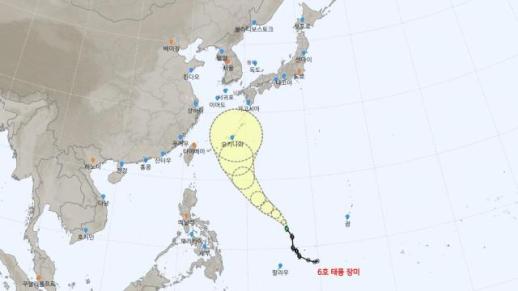 Typhoon 'Jangmi' Expected to Intensify with Potential Impact on South Korea As Typhoon 'Jangmi' moves northward, attention is focused on its potential impact on South Korea. According to the forecast, Jangmi is expected to reach the waters near Okinawa, Japan, early next week. In a bulletin released at 10 a.m. on May 28, the Korea Meteorological Administration reported that as of 9 a.m. that day, Jangmi was located about 610 kilometers northeast of Palau, moving northwest. The central pressure is 998 hPa, with maximum wind speeds near the center reaching 19 m/s and a strong wind radius of 300 km. The storm is moving at a speed of 28 km/h. Jangmi is forecasted to gradually strengthen as it moves northward. The meteorological agency predicts that by 9 p.m. on May 28, the maximum wind speed will increase to 24 m/s, reaching 29 m/s by 9 a.m. on May 29, and 35 m/s by 9 p.m. on the same day. By 9 a.m. on May 30, the maximum wind speed is expected to reach 39 m/s, and by 9 a.m. on May 31, it could develop into a strong typhoon with wind speeds of 40 m/s. According to the expected path, Jangmi will move northwest over the open waters east of the Philippines before heading toward Okinawa. By the morning of May 31, it is projected to be located about 680 km southeast of Okinawa, and by the morning of June 1, about 340 km southeast of Okinawa. It is anticipated to approach the waters near Okinawa by the morning of June 2. The focus now is on whether Jangmi will affect South Korea. Based on the current projected path, it does not appear to be heading directly toward the Korean Peninsula. The expected position on the morning of June 2 is still near Okinawa, not Jeju. However, changes in surrounding atmospheric pressure systems could alter the typhoon's trajectory, so the possibility of indirect effects on the waters south of Jeju and the southern seas will need to be monitored closely in future forecasts. Jangmi is the name submitted by South Korea for this typhoon. The Korea Meteorological Administration will continue to provide updates on the typhoon's path and intensity. Those in the Jeju and southern coastal regions, as well as those with maritime operations or navigation plans, are advised to regularly check the latest typhoon information and marine forecasts. * This article has been translated by AI. 2026-05-28 10:39:00
 -
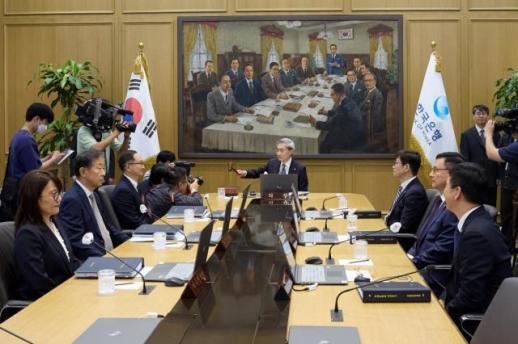 Bank of Korea Raises Growth Forecast to 2.6%, Holds Key Rate Steady for Eighth Time The Bank of Korea has kept its key interest rate steady for the eighth consecutive time. The economic growth forecast has been raised by 0.6 percentage points, bolstered by a semiconductor boom. As the Middle East conflict continues, inflation expectations have also been adjusted upward. During its monetary policy meeting on May 28, the Bank of Korea's Monetary Policy Committee decided to maintain the key interest rate at 2.50% for the eighth time, following freezes in July, August, October, and November of last year, as well as January, February, and April of this year. The committee stated, "While inflationary pressures have increased due to the Middle East conflict, growth is expanding more than expected, supported by strong exports, and risks to financial stability persist. However, given the high uncertainty surrounding the developments in the Middle East and their ripple effects, we believe it is appropriate to maintain the current key interest rate and continue to monitor the situation's impact on growth and inflation." The economic growth outlook has shown stronger-than-expected performance. On this day, the Bank of Korea revised its real GDP growth forecast for the year to 2.6%, also raising next year's forecast to 2.1%. Previously, in February, the forecasts were set at 2.0% for this year and 1.8% for next year. Earlier this year, South Korea achieved a surprising growth rate that significantly exceeded the Bank of Korea's initial forecast of 0.9%. The GDP growth rate for the first quarter was 1.7%, driven by the semiconductor sector. With the semiconductor boom, the possibility of achieving $900 billion in exports this year has also emerged. The ongoing Middle East conflict is believed to have influenced this monetary policy decision. In April, the Monetary Policy Committee noted the significant uncertainty stemming from the conflict and indicated it would maintain the current key interest rate while monitoring the situation. The conflict has also put upward pressure on prices. Consequently, the Bank of Korea has adjusted its consumer price inflation forecast for the year from 2.0% to 2.7%, an increase of 0.5 percentage points. The inflation forecast for next year has also been raised from 2.0% to 2.3%. The exchange rate has remained around 1,500 won. As of 10:15 a.m. on this day, the won-dollar exchange rate stood at 1,503.8 won in the Seoul foreign exchange market. The ongoing difficulties in ceasefire negotiations in the Middle East have heightened the preference for safe-haven assets, with the exchange rate maintaining the 1,500 won level for nine consecutive trading days since May 15.* This article has been translated by AI. 2026-05-28 10:37:05
 -
Bank of Korea Raises Economic Growth Forecast to 2.6%, Holds Key Rate Steady for Eighth Time The Bank of Korea has kept its key interest rate steady for the eighth consecutive time. The economic growth forecast has been raised significantly by 0.6 percentage points, buoyed by a semiconductor boom. However, inflation expectations have also increased due to the prolonged conflict in the Middle East. During its monetary policy meeting on May 28, the Bank of Korea's Monetary Policy Committee decided to maintain the key interest rate at 2.50%. This marks the eighth consecutive freeze, following similar decisions in July, August, October, and November of last year, as well as January, February, and April of this year. The committee stated, "While inflationary pressures have risen due to the Middle East conflict, growth is expanding more than expected, supported by strong exports. However, risks to financial stability persist. Given the high uncertainty surrounding the developments in the Middle East and their potential impacts, we believe it is appropriate to maintain the current interest rate level and further assess the situation's effects on growth and inflation." The economic growth rate is showing stronger-than-expected performance. On this day, the Bank of Korea adjusted its real GDP growth forecast for this year to 2.6%. The forecast for next year was also raised to 2.1%. Previously, in February, the forecasts were 2.0% for this year and 1.8% for next year. Earlier this year, South Korea's economy achieved a surprising growth rate that significantly exceeded the Bank of Korea's initial forecast of 0.9%. In the first quarter, the GDP growth rate was 1.7%, driven by the semiconductor sector. With the semiconductor boom, there are now expectations that this year's exports could reach $900 billion. The ongoing conflict in the Middle East has also influenced this monetary policy decision. In April, the committee noted the high uncertainty stemming from the conflict and decided to maintain the current interest rate while monitoring the situation. The Middle East conflict is exerting upward pressure on prices. Consequently, the Bank of Korea has revised its consumer price inflation forecast for this year from 2.0% to 2.7%, an increase of 0.5 percentage points. The inflation forecast for next year has also been raised from 2.0% to 2.3%, compared to the February estimates. The exchange rate is currently hovering around 1,500 won. As of 10:15 a.m. in the Seoul foreign exchange market, the won-dollar exchange rate stands at 1,503.8 won. The ongoing difficulties in ceasefire negotiations in the Middle East have heightened the preference for safe-haven assets. The exchange rate has remained around the 1,500 won level for nine consecutive trading days since May 15.* This article has been translated by AI. 2026-05-28 10:36:36
-
Bank of Korea Raises Growth Forecast to 2.6%, Holds Interest Rate Steady for Eighth Time The Bank of Korea has kept its benchmark interest rate steady for the eighth consecutive time. The central bank raised its economic growth forecast significantly, citing a semiconductor boom, while also adjusting its inflation expectations due to the ongoing Middle East conflict. During a monetary policy meeting on May 28, the Bank of Korea's Monetary Policy Committee decided to maintain the benchmark interest rate at 2.50%. This marks the eighth consecutive month of holding the rate steady, following similar decisions in July, August, October, and November of last year, as well as January, February, and April of this year. The decision to hold rates was influenced by better-than-expected economic performance and the prolonged conflict in the Middle East. On this day, the Bank of Korea revised its real GDP growth forecast for this year to 2.6%, up from previous estimates. The forecast for next year was also raised to 2.1%, compared to earlier projections of 2.0% for this year and 1.8% for next year made in February. Earlier this year, South Korea's economy achieved a surprising growth rate that exceeded the Bank of Korea's initial estimate of 0.9%. In the first quarter, GDP growth reached 1.7%, driven largely by the semiconductor sector. As a result, there are indications that exports could reach $900 billion this year. The ongoing conflict in the Middle East has also played a role in the central bank's monetary policy decision. In April, the Monetary Policy Committee noted the significant uncertainties posed by the conflict and decided to maintain the current interest rate while monitoring the situation. Inflationary pressures are rising due to the Middle East conflict. Consequently, the Bank of Korea has adjusted its consumer price inflation forecast for this year to 2.7%, an increase of 0.5 percentage points from previous estimates. The inflation forecast for next year was also raised from 2.0% to 2.3% compared to the February outlook. The exchange rate has remained around 1,500 won. As of 10:15 a.m. on this day, the won-dollar exchange rate was 1,503.8 won. The ongoing difficulties in ceasefire negotiations in the Middle East have heightened the preference for safe-haven assets, with the exchange rate maintaining the 1,500 won level for nine consecutive trading days since May 15.* This article has been translated by AI. 2026-05-28 10:36:21