
Journalist

Park Yong-jun
-
 South Korea denies report of alliance rift over wartime control transfer SEOUL, May 28 (AJP) - South Korea's Defense Ministry on Thursday dismissed as "groundless" a local media report claiming that President Lee Jae Myung's push for an early transfer of wartime operational control (OPCON) could lead to the dismantling of the current South Korea-U.S. Combined Forces Command (CFC) structure. The ministry said U.S. Forces Korea had raised no objection to plans for a future combined command led by a South Korean four-star general following the transfer of wartime operational control. "I would like to say that since the visit to Korea in January by a senior U.S. official, there has been no proposal from U.S. Forces Korea to change the existing agreement," Defense Ministry spokesperson Jeong Bit-na said. Jeong added that Seoul and Washington would "continue to maintain the current Combined Forces Command structure" after the OPCON transfer in order to preserve a strong combined defense posture. She also expressed "strong regret" over the report. The remarks came after a South Korean newspaper reported that U.S. military officials had raised concerns that an accelerated OPCON transfer — before South Korean forces fully meet required military capability conditions — could complicate wartime command arrangements under a future combined command led by a South Korean general. Under the current system, the commander of the Combined Forces Command is a U.S. four-star general, while a South Korean four-star general serves as deputy commander. Under a 2018 agreement, the allies agreed to retain the combined command structure after OPCON transfer while placing a South Korean general in command and a U.S. general in the deputy role. The allies are currently conducting assessments and certification procedures for the future command's operational capabilities. The debate reflects broader tensions over the pace and conditions of the OPCON transition, which has long been one of the alliance's most sensitive issues. South Korea assumed peacetime operational control of its military in 1994, but wartime operational control remains under the U.S.-led combined command structure established after the 1950-53 Korean War. Lee has made the transfer a major defense priority, framing it as a matter of sovereignty and "self-reliant national defense." Earlier this week, Lee called for the process to move forward "swiftly" and said South Korea already possesses sufficient military capabilities to defend itself. The issue has drawn renewed attention since Combined Forces Command Commander Gen. Xavier Brunson said during a U.S. Senate hearing last month that "political expediency should not precede conditions" in discussions over OPCON transfer, emphasizing that military readiness should remain the primary standard. Some South Korean military analysts and former officers have warned against accelerating the transition amid growing regional security threats from North Korea, China and Russia. "Recovering wartime operational control is the right direction," said Nam Dong Woo, a retired South Korean Navy brigadier general. "However, the South Korean military must be thoroughly prepared before taking back OPCON. Since this issue has a major impact on South Korea's security, it should never be approached with the mindset of 'if this fails, we can do better next time.'" The OPCON issue has repeatedly resurfaced under successive South Korean administrations. During the presidency of Roh Moo-hyun, Seoul and Washington agreed to dissolve the CFC and adopt a parallel command structure after OPCON transfer, though the plan was later delayed. Under Moon Jae-in, the allies instead agreed on the current Future Combined Forces Command model, which would preserve a unified combined command structure after the transfer. 2026-05-28 17:11:37
 -
 K-pop quartet's new album draws attention after their hit song 'Supernova' SEOUL, May 28 (AJP) - K-pop girl group aespa returned on Thursday with a new full-length album "LEMONADE," unveiling what the quartet described as a more mature musical identity and a new phase in the expanding universe that has defined their rise as one of K-pop's leading global acts. The 10-track album was released at 1 p.m. through major music-streaming platforms, marking aespa's first studio album since "Armageddon" in May 2024. The release arrives after a breakthrough period for the group. "Supernova," one of the double title tracks from "Armageddon," dominated South Korea's music charts in 2024, topping Melon's chart for 15 consecutive weeks and helping aespa win "Group of the Year" at Billboard Women in Music 2025. "We felt a lot of pressure because the first full-length album received so much love, but we prepared with excitement," leader Karina told reporters. "We consulted a lot with the company and worked hard to show a more grown version of ourselves." Since debuting under SM Entertainment in November 2020, aespa — consisting of Giselle, Karina, Ningning and Winter — have become one of the defining K-pop acts, combining a futuristic virtual-world concept with aggressive genre experimentation. "LEMONADE" features double title tracks "WDA (Whole Different Animal)" featuring rapper G-Dragon and "LEMONADE," alongside songs spanning dance, rock, hyperpop, R&B and pop-rock. The album also includes a collaborated song with American rapper Ty Dolla $ign. According to their agency, the album centers on "Complaexity," a concept describing intertwined parallel universes within aespa's ongoing fictional storyline. In the group's narrative, cracks formed between overlapping worlds become a metaphor for transforming disruption into opportunity. "I hope people feel like a new door has been opened when they listen to this album," Winter said. The two title tracks present sharply contrasting styles. "WDA" leans into darker industrial hip-hop with heavy synth bass and restrained vocals, while "LEMONADE" adopts a brighter electronic dance sound driven by acid-techno synth riffs, hardstyle beats and chant-like hooks. The performances also emphasize the contrast. "WDA" focuses on hip-hop-based choreography and controlled movement, while "LEMONADE" incorporates playful gestures, including a signature move mimicking the squeezing of a lemon. "WDA has a dark and overwhelming feeling, while LEMONADE is kitschy and playful," said Giselle. "The mood of the two songs is completely different." Winter described "LEMONADE" as the track that best captures aespa's personality and confidence. "No matter how dangerous or chaotic things get, we'll grind it all up and drink it our way," she said. Other tracks on the album include "Bite," "Camouflage," "Can't Help Myself," "My Plan," "Roll," "SHAKIN," "Switchblade" featuring Ty Dolla $ign, and "Til We Die." The group's debut "Black Mamba" set YouTube records for a K-pop debut music video at the time. The quartet later expanded their fictional "KWANGYA" universe through hits including "Drama," "Next Level," "Savage," "Spicy," and "Supernova." While the four girls initially drew attention for their AI-avatar concept and digital mythology, aespa's commercial rise has increasingly been driven by their musical evolution and global reach. "Supernova" became their biggest international hit, charting on Billboard's Global 200 and earning multiple "Song of the Year" awards in South Korea. To promote the new album, aespa will hold "aespa WEEK - MAKE IT LEMONADE" from May 29 to June 7, with events planned at Banpo Hangang Park, Yeouido Hangang Park and IFC Mall in Seoul. Pop-up events are also scheduled in Los Angeles, New York and Shenzhen, followed by additional promotions in Bangkok, Taipei, and Tokyo ahead of the group's upcoming "SYNK: COMPLaeXITY" world tour beginning in August. "More than anything, I hope people find energy in our music," Karina said. 2026-05-28 17:07:28
 -
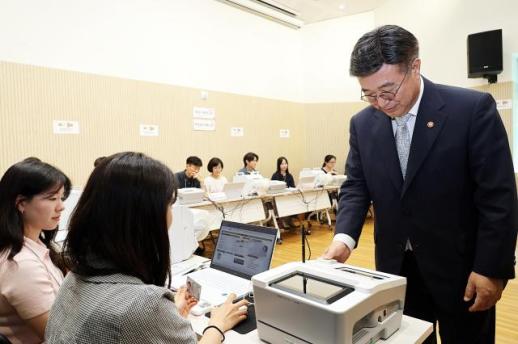 One Day Until Early Voting: Interior Ministry, Police, and Fire Services Conduct Safety Inspections The Ministry of Interior announced on May 28 that it has conducted on-site inspections of early voting locations and finalized safety measures one day before the early voting for the June 3 local elections. Early voting allows citizens who may have difficulty voting on the official election day to cast their ballots anywhere in the country, provided they bring an identification card. This year's early voting will take place over two days, from May 29 to 30, at designated polling places across the country. Voters must present an ID that includes their date of birth and photo, such as a resident registration card, passport, or driver's license. Mobile IDs will not be accepted if they are saved as screenshots; voters must verify their IDs using the app on-site. On the same day, Minister Yoon Ho-joong visited the Sajik-dong Community Center in Jongno, Seoul, to assess the readiness of the early voting site and observe a mock voting process simulating real conditions. During the visit, he personally checked the route voters will take from entering the polling place to casting their votes, focusing on the installation of accessibility features such as elevators and ramps for individuals with mobility challenges. He also reviewed fire safety measures to prevent accidents such as electrical overloads and fires. Additionally, he attended a mock voting session conducted under conditions identical to those of the actual early voting, verifying the operation of voting equipment, including ID checks and ballot issuance. He examined the voting booths and ballot boxes for any irregularities and conducted a thorough check for illegal camera installations. Before inspecting the early voting sites, Minister Yoon visited the Jongno Police Station to discuss security measures and patrol enhancements to prevent illegal protests, disturbances, and arson on the day of early voting. The National Police Agency and the Fire Agency have established safety measures for polling and counting locations that will remain in effect until the counting is fully completed. The police will operate a 24-hour integrated situation room to manage security at polling and counting sites and oversee the transportation of ballots. The Fire Agency is also focused on establishing a rapid fire response system and eliminating fire hazards at all early voting locations. Minister Yoon stated, "We are strengthening security and patrols around early voting sites to ensure that citizens can vote with peace of mind, preparing for risks such as illegal protests, arson, and violence. Every citizen's participation in voting is the beginning of changing the future of their community, so I encourage those who may have difficulty voting on election day to participate in early voting with confidence."* This article has been translated by AI. 2026-05-28 17:06:00
 -
 Government Selects K-Science Projects Combining Heritage and Technology The Ministry of Science and ICT has selected a range of research and development (R&D) projects that combine South Korea's unique historical, cultural, and environmental assets with advanced science and technology. The initiative aims to pioneer new research fields by integrating these assets with technology, ultimately leading to global technological leadership. On May 28, the Ministry announced the selection of candidate projects for the 2026 "Our Science (K-Science)" initiative during a meeting at the L Tower in Seocho-gu, Seoul, attended by representatives from four ministries and agencies, including the Ministry of Culture, Sports and Tourism, the National Heritage Administration, the Rural Development Administration, and the Korea Astronomy and Space Science Institute. This initiative seeks to link South Korea's unique historical, cultural, and environmental assets with scientific technology, aiming to lead research and explore new fields. The focus is on integrating Korean identity into science and technology, promoting both the acquisition of original technologies and the creation of social and cultural value. Earlier, Park In-kyu, head of the Science and Technology Innovation Bureau at the Ministry, explained the rationale behind the K-Science policy during a press briefing in March, stating, "Just as Jane Goodall became a global brand through her lifelong research on chimpanzees, Korea must cultivate its own unique research themes." The selected candidate projects include: the Ministry of Culture's "K-Museum Technology Development," the National Heritage Administration's "K-Genome Platform Construction," the Rural Development Administration's "Small and Medium K-Smart Farm," and the Korea Astronomy and Space Science Institute's "High Astronomy Convergence Research." The Ministry of Culture's "K-Museum Technology Development" project aims to digitize approximately 2.53 million artifacts held by the National Museum of Korea and expand into an AI-based cultural content industry. It will develop technologies for precise exploration of ancient tombs, AI-based environmental control in storage facilities, the construction of cultural heritage significance data, and AI agent-based content creation. The government expects this will lead to citizen-oriented services such as digital twin exhibitions and AI curator services. The National Heritage Administration's "K-Genome Platform Construction" project will analyze ancient human genomes from Korea alongside modern Korean genomes and disease data to reconstruct the origins, migrations, and disease changes of Koreans. The government plans to build a small language model (SLM)-based agent platform to analyze the historical migration routes, living environments, and diseases of ancient Koreans in high resolution, which will be utilized for exhibition and educational content. The Rural Development Administration's "Small and Medium K-Smart Farm" project focuses on developing a Korean-style smart farm model suitable for domestic small-scale farms. It aims to connect the world's first greenhouse technology recorded in the agricultural book "Sangga Yurok" from the Sejong period with modern smart farm technology to promote the scientific and cultural value of Korean agricultural technology. The project will also establish a foundation for global dissemination in connection with discussions on international standards for smart agriculture based on the International Organization for Standardization (ISO). The Korea Astronomy and Space Science Institute's "High Astronomy Convergence Research" project will verify and analyze approximately 25,000 records of ancient astronomy documented in historical texts such as the Samguk Sagi, Goryeo Sa, and Annals of the Joseon Dynasty. The institute plans to use this data for scientific research on long-period variable stars and solar activity, as well as to digitally restore ancient astronomical heritage and create educational content. The selected candidate projects will undergo a budget review process before being finalized as part of the 2026 "Our Science (K-Science)" initiative. The government also plans to support science culture dissemination consulting for each project starting in the second half of this year. Park stated, "We designed the 'Our Science (K-Science)' policy to promote science and technology policies that the public can actively participate in and feel. We will work with relevant departments to ensure that the public can directly see and experience the process of advancing these research and development projects."* This article has been translated by AI. 2026-05-28 17:02:00
 -
 'I Am Solo' Season 31's Ok-soon Closes SNS Account Amid Rumors SBS Plus and ENA's 'I Am Solo' Season 31 participant Ok-soon addressed rumors surrounding her on May 28 during a live broadcast on the YouTube channel 'Chonjang Entertainment TV.' Ok-soon explained her decision to close her social media accounts, stating, "I can handle the negative comments directed at me, but they have also targeted my friends. That’s why I decided to shut down my SNS." She expressed her distress, saying, "It’s okay for people to criticize me, but please don’t talk about my family or friends." Regarding the controversy over her name change, Ok-soon clarified, "I never liked my original name. I didn’t change it to hide my past; I changed it because there are many administrative procedures for a flight attendant, like obtaining a U.S. visa and passport. I informed my parents and changed my name after leaving the company when I had more time." She added, "I don’t participate in community discussions, but my friends have been very supportive, feeling sorry for me. Many of the claims made on anonymous boards are not true." Ok-soon also denied rumors that she left her job to get married, stating, "That’s not true. I am very ambitious about my career." She specifically addressed her breakup with Young-ho, the final couple from the show, saying, "After filming, Young-ho and I were dating well, but I had to go abroad for personal reasons, and we broke up early in the broadcast. The rumors about marriage, pregnancy, and meeting his parents are all false; I have never met his parents, and there was no opposition from them." Previously, the show had sparked controversy when Ok-soon, Jeong-hee, and Young-sook appeared to ostracize or gossip about Soon-ja.* This article has been translated by AI. 2026-05-28 16:58:00
 -
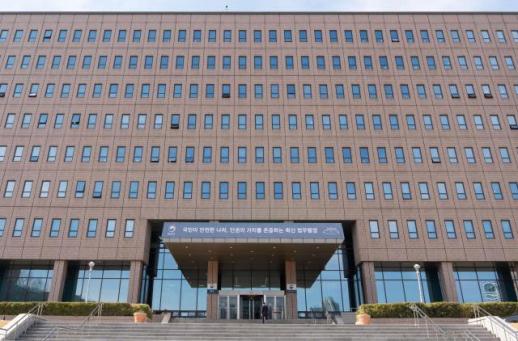 Justice Ministry Reports Passage of 38 Livelihood and Safety Bills in One Year The Justice Ministry reported significant achievements, noting that 38 livelihood and safety bills have passed the National Assembly in the year since the launch of the Lee Jae-myung administration (the People’s Sovereignty Government). According to data released by the Justice Ministry on May 28, a total of 79 bills under its jurisdiction have passed the National Assembly in the last three years (from June 2023 to May 2026). Notably, nearly half of these bills, 38 (48.1%), were passed in the past year (from June 2025 to May 2026). This marks a 65% increase compared to the same period last year (23 bills) and over a 111% increase from two years ago (18 bills). A Justice Ministry official explained that this success is the result of the ministry's operational mobilization under the directive of Minister Jeong Seong-ho to prioritize legislation directly affecting people's livelihoods, as well as effective persuasion of both ruling and opposition parties. The legislative focus has been sharply aimed at protecting vulnerable populations. One of the most notable achievements is the 'Stalking Victim Protection Order System,' passed in March. Previously, victims had to go through investigative agencies to receive protection, but now they can directly request restraining orders from the court. Additionally, a system providing real-time location information of offenders (passed in December 2025) has been established, creating a practical safety net for victims against retaliatory crimes. Management of high-risk sexual violence offenders has also been significantly strengthened. Under a bill passed in April, offenders deemed at high risk of reoffending will be assigned a dedicated probation officer, regardless of the victim's age. Furthermore, support for victims of serious crimes such as murder and robbery has been expanded to include public defenders, and minors or disabled victims can receive assistance without a separate application, reinforcing the state’s protective responsibility. The Justice Ministry has also updated outdated legal frameworks that failed to reflect societal changes. The provision that exempted family crimes from punishment has been revised to align with contemporary realities, and the qualifications of immoral heirs have been revoked, leading to a comprehensive revision of civil law for the first time in 67 years (passed in February 2026). This is seen as a historic decision to address criticisms that the law has not kept pace with modern family dynamics. Additionally, amendments to commercial law have expanded the duty of loyalty for corporate directors to shareholders and mandated the buyback of treasury shares, enhancing transparency in capital markets. Revisions to the lease protection law have also made it mandatory for landlords to disclose details of opaque management fees for small business owners. In response to organized fraud that drives ordinary citizens to the brink, the ministry has focused not only on judicial punishment but also on economic sanctions. Legal grounds have been established for the state to confiscate and recover profits from specific fraud crimes, such as voice phishing, multi-level marketing, and rental fraud, returning them to victims. The pinnacle of these legislative achievements is the enactment of the Anti-Japanese Property Recovery Act, passed in May. This law revives the Anti-Japanese Property Investigation Committee after 16 years, initiating a systematic recovery process. Notably, the scope of recoverable assets has been expanded to include not only properties obtained through pro-Japanese activities but also profits gained by descendants from disposing of these assets, enabling substantial restitution. Recovered assets will be prioritized for the welfare of independence activists and their families. Minister Jeong Seong-ho emphasized, "The results reflect the core keywords of the Lee Jae-myung administration: public safety, livelihood, and reform. We will ensure that the passage of these bills leads to swift implementation and system establishment so that citizens can feel the changes in their daily lives."* This article has been translated by AI. 2026-05-28 16:58:00
 -
 Industrialization and Democratization Must Continue Last week, a significant event took place in the National Assembly. The French Chamber of Commerce in Korea hosted a forum to commemorate the 140th anniversary of diplomatic relations between Korea and France, as well as the 40th anniversary of the chamber's establishment. The organizers chose the National Assembly as the venue to symbolize democracy and the shared values of both nations. While economic exchanges between the two countries are robust, they emphasized the importance of liberal democracy as the foundation of their relationship. Korea's rising status in the international community is partly due to this emphasis. The country boasts world-class competitiveness in advanced industries such as semiconductors, batteries, shipbuilding, and defense, while also maintaining a liberal democratic system. Amid increasing uncertainty in the international order due to U.S.-China competition and conflicts in the Middle East, democratic nations are seeking reliable partners rather than merely low-cost production bases. Korea stands out as a nation that is both trustworthy and capable. The era when industrial competitiveness alone earned respect in the international community is fading. As authoritarian regimes weaponize technology and resources, the importance of solidarity among nations that share democracy, rule of law, and market order is growing. Conversely, nations that merely proclaim liberal democratic values without industrial competitiveness struggle to be seen as practical partners during supply chain crises. In this context, Korea is recognized as a rare example of achieving both democratization and industrialization. However, the phrase "crisis of democracy" is being discussed globally. Political polarization, populism, and distrust in representative systems have led some to argue that authoritarian regimes are more efficient. Yet, history shows that societies lacking freedom of expression, rule of law, and checks on power ultimately collapse due to internal corruption, violence, and economic distortion. While liberal democracy is not perfect, it is difficult to deny that it is the best system for both individuals and groups among the political systems humanity has created. Korea has demonstrated this truth through its own history. The nation has achieved both industrialization and democratization, maintaining its democratic system even amid economic crises and political upheaval. Thus, liberal democracy is not just a political slogan; it is the foundation of today's Korean economy and international trust. Nevertheless, industrialization and democratization are ongoing processes, not completed tasks. In the context of a global AI revolution, Korea must continue its efforts toward new industrialization while also safeguarding and advancing democracy. The existence of movements that advocate for armed insurrection against the people indicates that the authoritarian legacies threatening democratic order have not been entirely eradicated. The ongoing discussions about enshrining the spirit of the May 18 Democratic Movement in the constitution also face significant obstacles. The most fundamental mechanism for protecting liberal democracy is elections. Therefore, the upcoming local elections will serve not only to select local leaders but also as a test of the health of Korean democracy. The importance of local elections is often overshadowed by major national political issues, but democracy ultimately strengthens through participation at the local and everyday levels. Democracy does not collapse suddenly; it weakens gradually amid indifference and resignation. Conversely, democracy grows stronger when citizens remain engaged and involved. The reason the world is paying attention to Korea is not solely due to its economic power. After countless sacrifices beginning with the Korean War, Korea has preserved its liberal democracy and continues to strive for its advancement, which is as significant an asset as its semiconductor industry.* This article has been translated by AI. 2026-05-28 16:54:00
 -
 KOSPI Falls Below 8200 Amid Middle East Concerns; KOSDAQ Drops Over 2% The KOSPI index fell below 8200 on Wednesday, pressured by simultaneous selling from foreign and institutional investors. Following a surge in semiconductor stocks the previous day, profit-taking emerged, compounded by rising oil prices and government bond yields that dampened investor sentiment. The KOSDAQ also closed down more than 2% due to institutional selling. According to the Korea Exchange, the KOSPI finished at 8185.29, down 43.41 points (0.53%) from the previous trading day. The index opened at 8165.73, down 62.97 points (0.77%), and initially widened its losses due to foreign selling. Although it briefly turned positive with an influx of retail buying, it reversed course and fell again in the afternoon. Lee Kyung-min, a researcher at Daishin Securities, noted, "Discussions on the long-term asset allocation plan by the pension fund management committee highlighted the burden of domestic equity exposure, while foreign net selling and rising exchange rates constrained investor sentiment. The recent concentration in semiconductor stocks has eased, leading to profit-taking across various sectors." He added, "With the dollar-won exchange rate surpassing 1500 won again and financial investments turning to net selling, supply and demand pressures have increased. Rising oil prices and government bond yields have also contributed to weakening the preference for risk assets." In the securities market, individuals net bought 4.5098 trillion won, while foreign and institutional investors net sold 3.6819 trillion won and 999.5 billion won, respectively. Among the top market capitalization stocks, SK Hynix (up 2.05%), Samsung Electro-Mechanics (up 13.44%), LG Energy Solution (up 15.25%), and Samsung Life Insurance (up 0.85%) closed higher. Conversely, Samsung Electronics (down 2.44%), SK Square (down 3.06%), Hyundai Motor (down 0.59%), HD Hyundai Heavy Industries (down 5.38%), Doosan Enerbility (down 2.40%), and Samsung C&T (down 2.68%) ended lower. The KOSDAQ index closed at 1104.36, down 28.77 points (2.54%) from the previous day. The index opened at 1135.84, up 2.71 points (0.24%), but turned negative due to selling pressure from foreign and institutional investors, subsequently widening its losses. In the KOSDAQ market, individuals and foreigners net bought 136.8 billion won and 316 billion won, respectively, while institutions net sold 389 billion won. Among the top KOSDAQ stocks, Alteogen (down 4.40%), Rainbow Robotics (down 4.37%), Juseong Engineering (down 9.17%), Kolon TissueGene (down 6.33%), Samchundang Pharmaceutical (down 3.84%), and Rino Industrial (down 3.32%) closed lower, while EcoPro BM (up 2.34%), EcoPro (up 1.26%), and Peptron (up 11.30%) finished higher.* This article has been translated by AI. 2026-05-28 16:50:00
 -
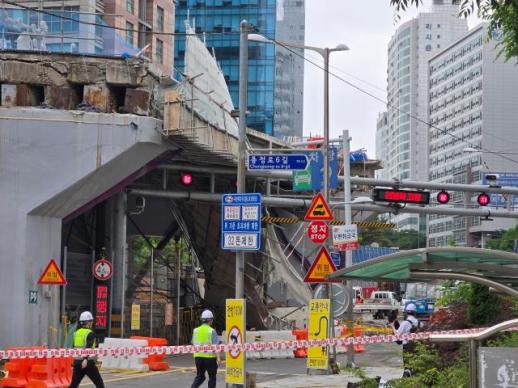 Korea Railroad Corporation Denies Requests for Extended Work Hours The dispute over responsibility for the Seosomun overpass collapse is intensifying between Seoul City and the Korea Railroad Corporation (KORAIL). KORAIL firmly rebutted claims made by Seoul City, which cited "limitations on railroad work hours" as a contributing factor to the accident, stating, "We have not received any requests to extend work hours, nor were we informed of any discrepancies during the accident." On May 28, KORAIL issued a follow-up statement titled "Clarification on the Seosomun Overpass Collapse" after an initial release earlier that morning. KORAIL emphasized, "We have not received any requests from Seoul City regarding 24-hour work or work on all 30 days of the month. On the day of the accident, we were not informed by the construction company or Seoul City about any safety inspections related to discrepancies." KORAIL also raised concerns about the circumstances leading up to the accident. According to KORAIL, at 4:25 a.m. on May 26, the work supervisor communicated to Seoul Station that the work was completed without mentioning any discrepancies. When requesting work approval at 8:15 a.m., the supervisor only described it as "routine daytime work outside of the danger zone," failing to mention that it was related to safety inspections due to discrepancies. KORAIL stressed, "Despite stopping work due to discrepancies during nighttime operations, we informed Seoul Station that the work was completed normally." Previously, on May 27, Seoul City explained during a briefing on the circumstances surrounding the Seosomun overpass accident that it had requested KORAIL to conduct continuous 24-hour work for the rapid demolition of the overpass. However, during negotiations, the work hours were limited to about three hours during the early morning, resulting in delays in construction. In response, KORAIL stated that long-term disruptions to train operations are practically unfeasible due to safety concerns. The Seosomun crossing is a critical section for trains, including KTX, moving to maintenance facilities, and prolonged track closures could disrupt rail operations nationwide. KORAIL added, "This area experiences heavy traffic during the day, with both trains and vehicles operating simultaneously," and noted that Seoul City had been discussing nighttime closure work methods since the initial planning stages.* This article has been translated by AI. 2026-05-28 16:50:00
 -
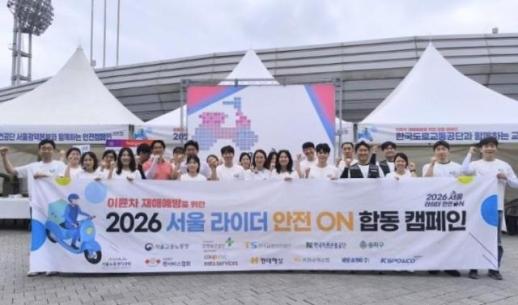 KB Insurance Offers 5% Discount on Premiums for Riders Completing Safety Training KB Insurance is launching a new policy that offers a 5% discount on auto insurance premiums for delivery riders who complete safety training. The "Rider Safety Training Discount" will be available starting June 26 for new contracts. This policy targets motorcycle delivery drivers who complete online safety training provided by the Korea Occupational Safety and Health Agency. It is applicable only to insured individuals using their personal motorcycles for commercial delivery. KB Insurance aims to encourage voluntary participation in safety training among delivery riders, contributing to the prevention of motorcycle accidents and the promotion of a culture of safe driving. With the increase in delivery demand and motorcycle usage, the company hopes that the premium discount will incentivize more riders to engage in safety training. In conjunction with the policy launch, KB Insurance participated in a campaign to promote safety culture among riders. On May 27, the "Seoul Rider Safety ON" joint campaign was held at Olympic Park in Seoul, involving the Seoul Regional Employment and Labor Office, the Korea Occupational Safety and Health Agency, the Korea Road Traffic Authority, the Korea Transportation Safety Authority, delivery platform companies, and the insurance industry. At the event, free safety inspections, safety training based on accident cases, protective gear experiences and distribution, as well as consultations on motorcycle insurance and accidents were provided to delivery workers.* This article has been translated by AI. 2026-05-28 16:50:00