

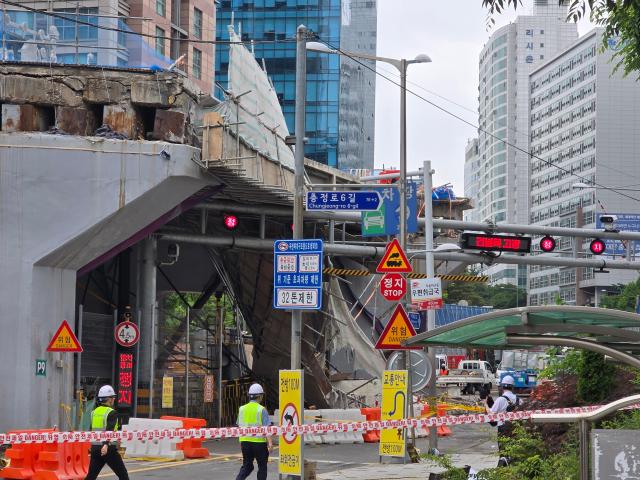
On May 28, KORAIL issued a follow-up statement titled "Clarification on the Seosomun Overpass Collapse" after an initial release earlier that morning.
KORAIL emphasized, "We have not received any requests from Seoul City regarding 24-hour work or work on all 30 days of the month. On the day of the accident, we were not informed by the construction company or Seoul City about any safety inspections related to discrepancies."
KORAIL also raised concerns about the circumstances leading up to the accident. According to KORAIL, at 4:25 a.m. on May 26, the work supervisor communicated to Seoul Station that the work was completed without mentioning any discrepancies. When requesting work approval at 8:15 a.m., the supervisor only described it as "routine daytime work outside of the danger zone," failing to mention that it was related to safety inspections due to discrepancies.
KORAIL stressed, "Despite stopping work due to discrepancies during nighttime operations, we informed Seoul Station that the work was completed normally."
Previously, on May 27, Seoul City explained during a briefing on the circumstances surrounding the Seosomun overpass accident that it had requested KORAIL to conduct continuous 24-hour work for the rapid demolition of the overpass. However, during negotiations, the work hours were limited to about three hours during the early morning, resulting in delays in construction.
In response, KORAIL stated that long-term disruptions to train operations are practically unfeasible due to safety concerns. The Seosomun crossing is a critical section for trains, including KTX, moving to maintenance facilities, and prolonged track closures could disrupt rail operations nationwide.
KORAIL added, "This area experiences heavy traffic during the day, with both trains and vehicles operating simultaneously," and noted that Seoul City had been discussing nighttime closure work methods since the initial planning stages.
* This article has been translated by AI.
Copyright ⓒ Aju Press All rights reserved.