
Journalist

Pei Guangjiang
-
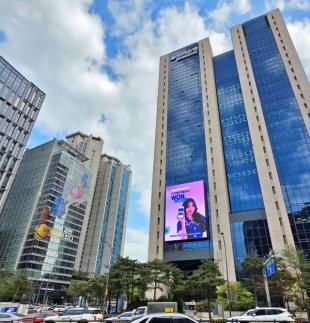 Woori Bank Cuts Mortgage Rates by Up to 0.8% Amid Rising Interest Rates As mortgage rates continue to rise, with the upper limit surpassing 7% annually, Woori Bank has announced additional rate cuts. According to the financial sector on May 19, Woori Bank has reduced the interest rates on its five-year fixed-rate mortgage and variable-rate products by 0.8 percentage points and 0.3 percentage points, respectively, starting today. The bank is increasing preferential rates to lower the final loan rates. As a result, from today, the five-year fixed-rate mortgage will offer preferential rates of up to 1.1% for both the metropolitan and non-metropolitan areas. The variable-rate mortgage will provide preferential rates of up to 0.7%. Woori Bank had previously cut the interest rates on its Woori Apartment Loan five-year fixed-rate mortgage by 0.3 percentage points in the metropolitan area and 0.5 percentage points in non-metropolitan areas in March. Last month, the variable-rate mortgage interest was reduced by 0.4 percentage points. The new preferential rates will be available for loan applications until June 30. Woori Bank has decided to apply higher preferential rates for new loans up to 1.5 trillion won. The same higher preferential rates will apply to variable-rate products for new loans up to 1.5 trillion won. A Woori Bank official stated, "In light of the rapid rise in market interest rates, we are expanding inclusive finance to alleviate the interest burden on actual borrowers." Meanwhile, other banks are also lowering their loan rates in line with the government's inclusive finance policy. On the previous day, Kakao Bank reduced the interest rates on its five-year fixed-rate mortgage and six-month variable-rate products by 0.3 percentage points each. Kakao Bank had also lowered the rates on its mortgage and mortgage refinancing products by 0.2 percentage points and 0.5 percentage points, respectively, last month.* This article has been translated by AI. 2026-05-19 17:39:00
 -
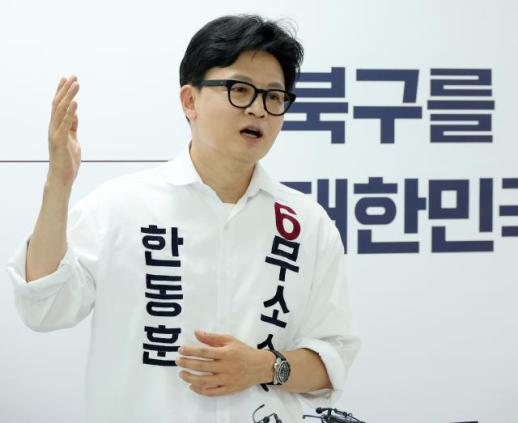 Han Dong-hoon Discusses Possibility of Unification in Election Campaign Han Dong-hoon, an independent candidate in the Busan North Gap by-election, stated on May 19 that public sentiment is guiding the potential for unification with Park Min-sik, the candidate from the People Power Party. He also claimed that if the Democratic Party candidate wins, President Lee Jae-myung will push for the cancellation of his indictment.During a press conference at his campaign office in the Hanjin Building in Busan, Han said, "Public sentiment is already showing how votes should be consolidated to defeat the representative of the Lee Jae-myung administration, which is recklessly pushing for indictment cancellation."He added, "Nothing is absolutely impossible in this world. Those who say otherwise are often harboring fear in their hearts," leaving the door open for a potential unification of the opposition.Han expressed concern about his competitor, Ha Jung-woo of the Democratic Party, saying, "He claims he was sent here on the orders of President Lee. If Ha is elected, it will be as if President Lee received permission here to proceed with the cancellation of the indictment."He continued, "I have been at the forefront of fighting against the cancellation of the indictment, and if it becomes a reality, I will even advocate for impeachment. There is a clear line drawn between President Lee and myself."Han emphasized that rebuilding conservatism involves navigating through the challenges of martial law and impeachment, stating, "If we had regained the right to speak through that process, President Lee would not have been able to go as far as seeking indictment cancellation."He also remarked, "If I, along with ten other lawmakers, had not prevented martial law, would the People Power Party be able to campaign in red uniforms now? I will definitely win and restore the right to speak for conservatism."* This article has been translated by AI. 2026-05-19 17:34:50
 -
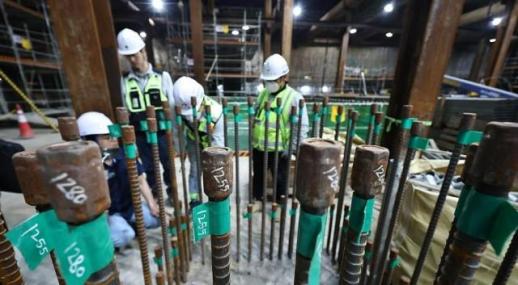 Dispute Over Missing Rebar at Samsung Station Spurs Audit by Ministry of Land The Ministry of Land, Infrastructure and Transport has launched an audit of Seoul City and the Korea Railroad Corporation (KRC) following a significant incident of missing rebar in the GTX-A line at Samsung Station. The situation escalated into a dispute over accountability after it was revealed that there was a lack of official communication among relevant agencies for about six months after the rebar deficiency was confirmed, raising concerns about the overall project management system beyond mere construction flaws. According to the Ministry of Land and construction industry sources, the ministry notified Seoul City and KRC on May 18 of an audit regarding allegations of poor construction and delays in reporting related to the underground complex development at the GTX-A Samsung Station section. Investigators will conduct a preliminary investigation by May 21, followed by a formal audit starting May 22. A ministry official stated, "This audit aims to examine whether there were issues in the overall management of this national project," adding that they plan to verify the reasons for the reporting delays by comparing the materials and explanations submitted by Seoul City and KRC. Last November, Hyundai Engineering & Construction, the contractor, discovered the missing main rebar in the underground platform structure during an internal quality inspection and reported it to Seoul City. It was confirmed that some rebar, which should have been installed in two rows according to the design, was only installed in one row, with approximately 2,500 pieces missing, totaling 178 tons. The issue lies in the subsequent response. Seoul City claims it submitted a construction management report, which included the relevant information, to KRC three times between November and January, following the construction management agreement procedures. They explained that time was needed to review and finalize reinforcement methods, sharing the final reinforcement plan with KRC and the Ministry of Land at the end of last month. In contrast, KRC argues that Seoul City treated the significant safety defect as merely internal documentation rather than a formal report. KRC stated, "The monthly construction management reports submitted by Seoul City are extensive, often running into thousands of pages, making it difficult to immediately recognize the missing rebar issue, which was only included in a portion of the construction management log." There are concerns within the industry that a more direct and clear reporting system should have been in place for such a critical defect in national railway infrastructure. Relying solely on the submission of management reports may have hindered relevant agencies from immediately grasping the severity of the issue. Seoul City maintains that there were no procedural issues, with a city official stating, "A review by structural engineers confirmed that there are currently no issues with structural safety," and that they finalized and shared the reinforcement plan after a comprehensive review of safety and construction feasibility. However, voices within KRC and beyond have raised concerns that given the significant defect in a key national railway project, more proactive external communication and separate reporting should have been necessary. The ongoing dispute over accountability suggests that the reporting system at the time was not functioning effectively. The responsibility of Hyundai Engineering & Construction is also under scrutiny. The Citizens' Coalition for Economic Justice issued a statement asserting that both the contractor and the inspection team bear significant responsibility, calling for a review of structural subcontracting practices and the avoidance of direct construction issues in large projects. Hyundai Engineering & Construction has proposed a reinforcement method that involves wrapping the deficient column exteriors with thick steel plates and welding them. Seoul City believes this method will ensure strength beyond design standards, but the Ministry of Land has stated it will not allow the resumption of reinforcement work until verification by an accredited institution is completed.* This article has been translated by AI. 2026-05-19 17:33:00
 -
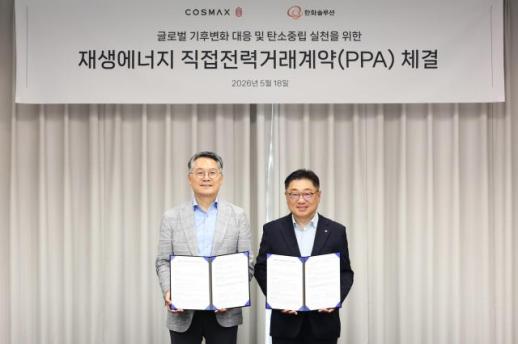 Cosmax to Source 40% of Domestic Factory Power from Renewable Energy Cosmax, a leading cosmetics manufacturer, has partnered with Hanwha Solutions Q CELLS to secure eco-friendly power in pursuit of its goal of achieving carbon neutrality by 2050. On May 19, Cosmax announced that it signed a Power Purchase Agreement (PPA) with Hanwha Q CELLS on May 18. The direct PPA allows power users to trade electricity directly with renewable energy producers, providing companies with a stable foundation for achieving carbon neutrality and RE100 (100% renewable energy usage) through long-term contracts. Under this agreement, Cosmax will receive approximately 10.4 GWh of renewable energy annually for its four key production sites in Hwaseong and Pyeongtaek starting in July, pending final approval from its Environmental, Social, and Governance (ESG) committee. This initiative will enable Cosmax to meet about 40% of its total electricity consumption at domestic factories with renewable energy, significantly contributing to the production of K-beauty products powered by eco-friendly energy. Cosmax aims to enhance its manufacturing competitiveness through this PPA, transitioning to a more sustainable framework while actively responding to the stringent carbon management and ESG standards of global clients. In addition to external power procurement, the company is also expanding its own generation facilities. Currently, it operates solar power generation systems at 12 sites worldwide, including six in South Korea and six abroad. Recently, with the expansion of its Pyeongtaek Plant No. 1, Cosmax is adding a solar power generation facility with a capacity of 499.2 kW, utilizing rooftop space. This facility is expected to be operational by the fourth quarter of 2026 and will produce approximately 638 MWh of renewable energy annually. Furthermore, Cosmax is accelerating the establishment of a Life Cycle Assessment (LCA) system, which quantifies resource and energy use and emissions throughout the entire product life cycle, from raw material procurement to production, distribution, use, and disposal. This system is a key management foundation supporting compliance with global regulations and the achievement of carbon neutrality goals. Last year, Cosmax completed its Product Carbon Footprint (PCF) calculation process and plans to finalize the LCA system covering the entire product life cycle this year. Through these efforts, Cosmax aims to strengthen its capabilities in renewable energy transition and product-level environmental impact management, enhancing its climate change response system to meet global market demands. Cosmax received an integrated A rating in the ESG evaluation from the Korea ESG Standards Institute last year. The company has established a roadmap for carbon neutrality by 2050, focusing on expanding solar power facilities and enhancing its PCF management system. A Cosmax representative stated, "We will continue to expand renewable energy, innovate energy efficiency, enhance our product environmental impact management system, and strengthen supply chain responsiveness to establish ourselves as a trusted partner in the global market."* This article has been translated by AI. 2026-05-19 17:30:00
 -
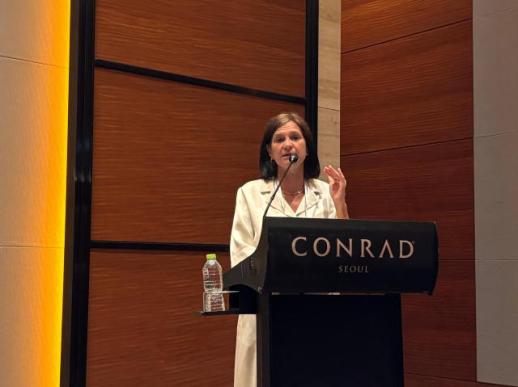 IBM Launches Second Quantum Revolution with Hybrid Quantum Computing "We are currently in the era of the 'Second Quantum Revolution.' Quantum computing is already being utilized in various industries, including life sciences and drug development," said Petra Florijune, IBM's Global Quantum Sales Director, during the 'IBM Asia-Pacific Quantum Connect' media briefing held at the Conrad Hotel in Yeouido, Seoul. IBM emphasized that quantum computing has progressed beyond research and experimental stages and is now being applied in real-world industrial settings. The company aims to enhance the applicability for businesses through a hybrid approach that combines traditional central processing units (CPUs), graphics processing units (GPUs), and quantum processing units (QPUs). At the event, IBM presented the latest advancements in global quantum technology and its applications across various industries. Florijune and Dr. Baek Han-hee, IBM's Quantum Director, discussed the current state of quantum computing, industry use cases, and future commercialization roadmaps. Florijune characterized the present as the 'Second Quantum Revolution.' He stated, "Following the first quantum revolution that enabled technologies such as semiconductors, lasers, and MRI, quantum computing has now entered a new phase that innovates areas difficult to solve with classical computing." He added, "Quantum computing is no longer a distant future technology; it is now being utilized to solve real problems. We are moving from an experimental phase to a stage where businesses and research institutions apply 'quantum utility' in their actual workflows." Florijune also highlighted the rapidly increasing economic value of the quantum computing market. According to IBM, the Boston Consulting Group estimates the potential economic value of quantum computing to exceed $850 billion. IBM emphasized the importance of a 'hybrid approach' to enable practical applications of quantum computing. Dr. Baek stated, "It is crucial that quantum computers do not completely replace CPUs or GPUs but rather combine the strengths of each technology." To this end, IBM is conducting research to integrate its quantum systems with Japan's RIKEN supercomputer Fugaku and the University of Tokyo's GPU-based supercomputer Miyabi. The briefing also highlighted industry application cases. In the life sciences sector, a collaboration between the Cleveland Clinic and RIKEN expanded molecular simulations from eight atoms to over 12,000 atoms by 2024. Florijune remarked, "This case is just the beginning and is developing rapidly." In finance, HSBC has implemented quantum computing for bond issuance predictions and trading optimization, achieving a 34% improvement in prediction accuracy. In materials and logistics, Boeing is conducting molecular simulations for new materials to address aircraft corrosion issues. Additionally, they are developing algorithms to optimize delivery routes for thousands of ships and vehicles. IBM reported a cumulative contract amount of approximately $1 billion in its quantum computing business last year. The company outlined its roadmap for the commercialization of quantum computing technology. IBM aims to demonstrate 'quantum advantage' in terms of cost and accuracy compared to classical computers within this year. By 2029, it plans to introduce fault-tolerant quantum computing (FTQC). IBM also emphasized its strategy for expanding the ecosystem. Florijune noted, "Currently, over 300 partners, including large corporations, startups, universities, and research institutions, are participating in the IBM Quantum Network. IBM's open-source development kit, Qiskit, has become a platform widely used by global quantum developers." Dr. Baek stated, "If the quantum ecosystem in the Korean market expands, we will continue to provide ongoing support and collaboration, including additional system implementations." Florijune concluded, "Quantum computing is a technology that requires a long preparation time. We must start practicing now to complete the marathon of the future."* This article has been translated by AI. 2026-05-19 17:27:00
 -
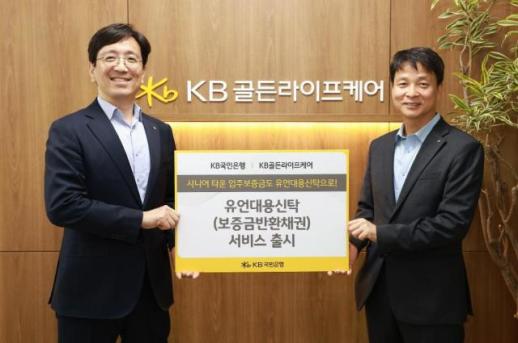 KB Kookmin Bank Launches Trust Service for Senior Residence Deposits KB Kookmin Bank announced on May 19 that it has launched a trust service for managing deposits of customers residing in senior residences. This service was developed in collaboration with KB Life's subsidiary, KB Golden Life Care, to address the concerns of an increasing number of senior residence customers. It is designed to securely protect large entrance deposits while allowing for the stable transfer of assets to designated beneficiaries without the complexities of inheritance procedures.The service is available to customers with entrance deposits at domestic senior residences, and consultations for enrollment can be conducted at KB Kookmin Bank branches.KB Kookmin Bank has lowered the minimum enrollment amount to 10 million won, proactively working to democratize trust services that have traditionally been seen as exclusive to high-net-worth individuals. The bank aims to expand its offerings for senior customers across various sectors and establish a leading position in the market.A representative from KB Kookmin Bank stated, “This service was launched based on the concerns expressed by senior customers we heard directly in the field. In the future, KB Kookmin Bank will continue to introduce proactive and differentiated financial solutions that enhance the quality of life for senior customers in preparation for an aging society.”* This article has been translated by AI. 2026-05-19 17:24:17
 -
 Yujin Park's Former Manager Sentenced to 3.5 Years for Fraud A former manager of violinist Yujin Park has been sentenced to prison for defrauding her of millions of won. The Seoul Southern District Court's Criminal Appeal Division announced on May 19 that Kim, 65, was sentenced to three years and six months in prison on March 26 for charges including fraud, forgery, and embezzlement. The prosecution did not appeal the ruling, and while Kim submitted a petition to the Supreme Court, he withdrew it on May 7, finalizing his sentence. Investigations revealed that Kim exploited Yujin Park's mental health struggles, including bipolar disorder, to manipulate her. He coerced her into signing loan agreements and land sale contracts under the pretense of facilitating her violin performances. From August 2016 to May 2018, Kim had Yujin Park sign loan agreements that resulted in debts amounting to millions of won, while he pocketed approximately 357.5 million won from creditors. Additionally, he sold her land in Jeju from March 2016 to April 2018, profiting from those transactions as well. In June 2018, he altered the rental agreement for an apartment Yujin Park was leasing, taking 50 million won from the security deposit. He also misappropriated about 180 million won in compensation for land that Yujin Park was entitled to, using it to settle his own debts. The first trial court sentenced Kim to four years in prison in November of last year, noting that he had taken advantage of a victim with mental disabilities who trusted him, using her assets for personal gain. Kim appealed, arguing that the sentence was too harsh. The appellate court acknowledged that he had not made restitution and had not received forgiveness from the victim, but it reduced his sentence to three years and six months, considering his long-term relationship with Yujin Park and the repayment of some fraudulent loans. This case came to light in 2019 when the Seoul Disability Rights Center reported Kim to the Seoul Southern District Prosecutor's Office for fraud, breach of trust, and embezzlement. Yujin Park expressed her desire for punishment during the police investigation. Yujin Park, a Korean-American violinist, gained recognition in South Korea after appearing on KBS's "Open Concert" in 1996. She was a full scholarship student at the Juilliard Pre-College and earned the title of "child prodigy violinist" for her performances that blend classical and pop music. However, she has faced controversies regarding alleged abuse by her former agency and exploitation by those around her. The court's ruling in this case, where she suffered financial losses at the hands of a trusted manager, concluded Kim's trial after approximately four years and four months.* This article has been translated by AI. 2026-05-19 17:21:44
 -
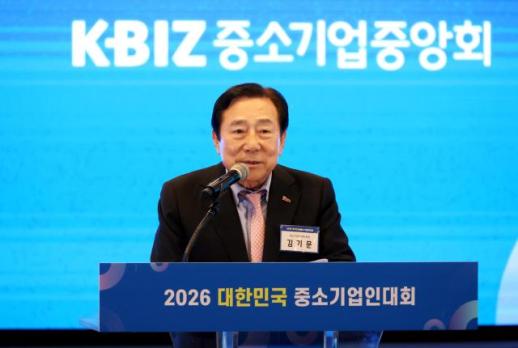 Small Business Leaders Gather for 2026 National Small Business Awards The Korea Federation of SMEs and the Ministry of Small and Medium Enterprises and Startups hosted the 2026 National Small Business Conference. During the event, 92 government awards, including the Gold Tower Industrial Medal, were presented to individuals who contributed to economic growth and job creation. According to the Korea Federation of SMEs, this year marks the 37th iteration of the conference, themed "Turning Change into Opportunity: Challenging Small Businesses." Over 300 attendees included Prime Minister Kim Min-seok, Minister Han Seung-sook, and leaders from various small business organizations. This year's Gold Tower Industrial Medals were awarded to Lee Yeon-bae, CEO of Autozen, and Lee Neung-gu, CEO of Chilgapsan. The Gold Tower Industrial Medal is a prestigious government award given to individuals with significant contributions to national industrial development. Lee Yeon-bae was recognized for his nearly 40 years in the automotive parts industry, particularly for enhancing national industrial competitiveness through the localization of key technologies. Lee Neung-gu was honored for modernizing rice processing products and promoting the globalization of K-food. Kim Ki-moon, chairman of the Korea Federation of SMEs, stated in his opening remarks, "Government investment and support are essential to innovate not only advanced strategic industries but also traditional manufacturing through the National Growth Fund," adding, "We will invest 200 billion won through the Yellow Umbrella Fund." He further emphasized that the AI transformation of traditional manufacturing is now a matter of survival, urging the need to expand support for data infrastructure and cooperative AX projects centered around industry-specific cooperatives.* This article has been translated by AI. 2026-05-19 17:19:22
 -
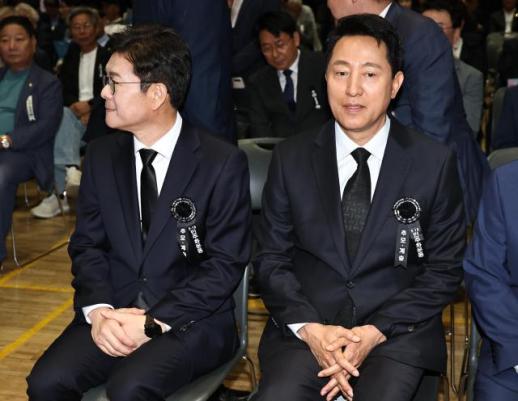 Seoul Mayoral Election Spirals Amid Allegations of Missing Rebar As the Seoul mayoral election, often referred to as the "flower" of local elections, approaches, tensions between candidates are escalating, leading to a potential crisis. The Democratic Party, alongside candidate Jung Won-o, has intensified its attacks over allegations of missing rebar in the GTX-A line, prompting Oh Se-hoon of the People Power Party to demand an official apology from Jung and the Democratic Party, further escalating the conflict. At a press conference on the morning of May 19, lawmaker Ko Min-jeong, co-head of the "Oh Se-hoon 10-Year Judgment Headquarters" within Jung's campaign, increased pressure regarding the rebar allegations. "This construction failure is not merely a construction defect but a reflection of the Seoul city's administrative safety management capabilities and the overall public oversight system," Ko stated. "Oh must take clear responsibility for the allegations of poor construction and cover-up. If he attempted to conceal this, it would be a dereliction of duty that disregards citizen safety." Ko emphasized that during Oh's four years as mayor, incidents such as sinkholes, the Itaewon tragedy, and safety concerns regarding Han River buses have surged, asserting, "Oh, as the final safety manager of Seoul, is the source of safety negligence." The Democratic Party also ramped up its attacks during a parliamentary strategy meeting, with floor leader Han Byeong-do stating, "He knew about the missing rebar but failed to properly inform the Ministry of Land, Infrastructure and Transport. Is showcasing his achievements more important than the lives and safety of Seoul citizens?" He added, "Oh, who hides failures and neglects safety, is unfit to be responsible for Seoul." In response, Oh claimed during a policy meeting that he learned about the missing rebar through news reports, asserting that the deputy mayor also had not received any reports regarding the issue. He accused Jung and the Democratic Party of exploiting the allegations for electoral gain and called for a public apology. "I learned about this issue from the news, and the deputy mayor has stated he received no reports on it," Oh said. "Jung and the Democratic Party should sincerely reflect and apologize for inflating the allegations and spreading them to the level of rumors for electoral purposes." Oh emphasized the importance of resuming construction quickly to ensure that operations scheduled for August 8 proceed without disruption, stating, "The operation of the GTX-A line is my top priority, and I will ensure it is managed properly." Additionally, Oh's campaign issued a statement describing the situation as a blatant "political maneuver" involving the mobilization of investigative and administrative powers for electoral purposes. They asserted that the city had recognized the issue in advance and had taken necessary actions through proper procedures. They warned the Democratic Party, saying, "Lacking confidence to compete for citizens' votes, they are attempting to eliminate opponents by borrowing the sword of power agencies. Investigative and administrative powers are not electoral tools for the ruling party. The citizens of Seoul will deliver a stern judgment against this undemocratic and arrogant behavior."* This article has been translated by AI. 2026-05-19 17:16:26
 -
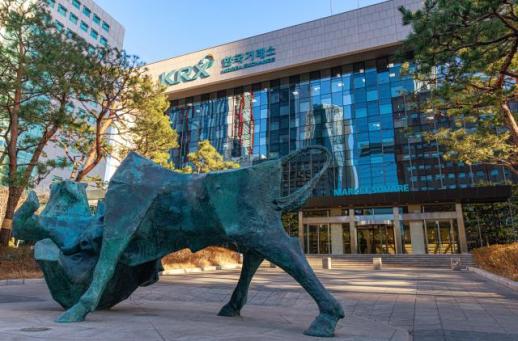 KOSPI Companies Report 175% Increase in Operating Profit, Excluding Samsung and SK Hynix This year, the KOSPI index has risen by 74%, driven by ample liquidity and the so-called "Samsung and SK Hynix effect." This trend is reflected in the earnings of KOSPI-listed companies. In the first quarter, the operating profit of KOSPI-listed companies increased by 175% compared to the same period last year. However, excluding Samsung Electronics and SK Hynix, the increase was only about 2%. According to the Korea Exchange's report on the first-quarter earnings of December fiscal year-end companies, the consolidated operating profit of 639 listed companies reached 156.3194 trillion won, marking a 175.83% increase year-on-year. Revenue was 927.5409 trillion won, and net profit rose by 141.4436 trillion won, reflecting increases of 19.49% and 177.82%, respectively. The consolidated operating profit margin improved to 16.85%, up 9.55 percentage points from the previous year, while the net profit margin rose to 15.25%, an increase of 8.69 percentage points. Samsung Electronics and SK Hynix continued to dominate, with their first-quarter revenue at 157 trillion won and operating profit at 84 trillion won, accounting for 31.73% of total revenue and 77% of operating profit. Excluding these two companies, the remaining listed firms saw revenue and operating profit increase by 2.36% and 2.05%, respectively. Among various sectors, 12 industries, including electronics and non-metallic minerals, reported increased operating profits, while eight sectors, including entertainment and culture, and paper and wood, experienced declines. The debt ratio of KOSPI-listed companies was 108.74%, a decrease of 1.64 percentage points compared to the end of last year. Among the 639 companies analyzed based on consolidated financial statements, 504 reported net profits, a 3.60% increase from the previous year. In the KOSDAQ market, six out of ten listed companies reported profits, with significant increases in operating and net profits. According to the Korea Exchange, the combined operating profit of 1,273 KOSDAQ companies reached 4.1284 trillion won, up 78.17% year-on-year. Revenue increased by 21.72% to 84.9461 trillion won, while net profit surged by 171.22% to 4.4342 trillion won. The operating profit margin and net profit margin improved to 4.86% and 5.22%, respectively, up 1.54 percentage points and 2.88 percentage points from the previous year. The debt ratio for the first quarter was 122.03%, an increase of 9.23 percentage points compared to the end of last year.* This article has been translated by AI. 2026-05-19 17:15:00