
Journalist

Per Stenius
-
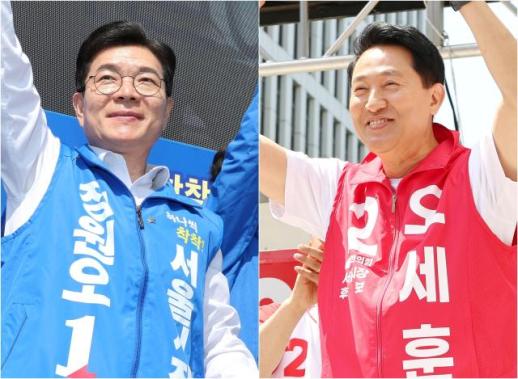 Seoul Mayoral Candidates to Face Off in Final Debate Ahead of Early Voting Jung Won-o of the Democratic Party and Oh Se-hoon of the People Power Party will hold their first and final face-to-face debate on May 28, just seven hours before early voting begins. The debate is expected to focus on issues such as safety and real estate in Seoul. According to the Seoul Election Broadcasting Debate Committee, the legal debate will take place at 11 p.m. at SBS in Sangam-dong, Seoul. The debate will feature four candidates, including Jung and Oh, as well as Kim Jeong-cheol of the Reform Party and Kwon Yeong-guk of the Justice Party. The candidates will discuss four main topics: △measures for economic recovery △housing stability policies △welfare policies for single-person households △employment policies by age group. Safety will also be a key issue. Jung has repeatedly criticized Oh over the missing rebar issue in the GTX-A line section at Samsung Station. At a press conference earlier in the day, Jung stated, "I will approach the debate as I have in the past," indicating he would address the issue. Regarding the collapse of the Seosomun overpass on May 26, he remarked, "We should not politicize an incident with casualties," but added that discussions on improving safety are welcome. In response, Oh plans to highlight his safety policies and achievements. At a press conference that afternoon, he emphasized, "I have repeatedly stated that safety is the top priority of my administration," noting that he has led initiatives for 100% installation of closed-circuit television (CCTV) at construction sites commissioned by the city and 100% installation of screen doors in subways. He particularly highlighted that the installation of screen doors has led to a significant reduction of over 1,000 subway fatalities. Debate over the real estate policies of the Lee Jae-myung administration is also anticipated. Oh stated, "Citizens are suffering greatly from skyrocketing housing prices, especially rent," and pledged to emphasize real estate issues along with culture and welfare throughout the election process. Meanwhile, a recent poll revealed that both candidates have the same level of support. A survey conducted by the Cultural Daily, commissioned to Embrain Public, from May 25 to 27 among 805 Seoul voters showed that both Jung and Oh received 39% support. The survey was conducted via mobile phone interviews, with a response rate of 14.0% and a margin of error of ±3.5 percentage points at a 95% confidence level. For more details, please refer to the website of the Central Election Survey Deliberation Committee.* This article has been translated by AI. 2026-05-28 18:12:00
 -
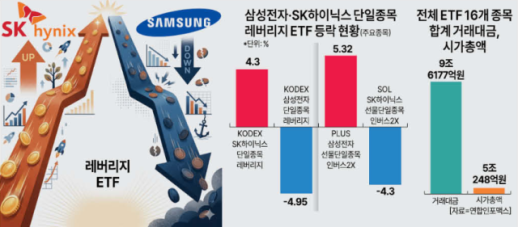 Samsung Electronics Falls While SK Hynix Rises as Leverage ETFs Attract $9.6 Billion After a strong debut, the single-stock leverage ETFs for Samsung Electronics and SK Hynix showed diverging trends. While the SK Hynix leverage ETF continued to gain, the Samsung Electronics leverage ETF experienced a decline. According to the Korea Exchange, Samsung Electronics closed at 299,500 won, down 7,500 won (2.44%) from the previous trading day, while SK Hynix rose by 46,000 won (2.05%) to finish at 2,289,000 won. Consequently, the performance of the leverage ETFs tracking these stocks varied significantly. As reported by Yonhap Infomax, the total trading volume for 16 domestic single-stock leverage and inverse ETFs reached 9.6177 trillion won. Although this was a slight decrease from the previous day's 10.4043 trillion won, trading remained robust for two consecutive days around the 10 trillion won mark, indicating signs of overheating. The overall market capitalization increased slightly to 5.0248 trillion won compared to the previous day. The most actively traded product was Samsung Asset Management's 'KODEX SK Hynix Single Stock Leverage ETF,' which recorded a trading volume of 3.7712 trillion won and a gain of 4.3%. Mirae Asset Management's 'TIGER SK Hynix Single Stock Leverage ETF' also saw a trading volume of 1.9065 trillion won with a rise of 4.39%. In contrast, the Samsung Electronics leverage ETF showed weakness. Samsung Asset Management's 'KODEX Samsung Electronics Single Stock Leverage ETF' recorded a trading volume of 1.4671 trillion won but ended with a return of -4.95%. Similarly, Mirae Asset Management's 'TIGER Samsung Electronics Single Stock Leverage ETF' closed down 5.19% with a trading volume of 988.9 billion won. Given that these ETFs are based on the same stocks, their performance was closely aligned. Inverse products betting against Samsung Electronics performed well. Hanwha Asset Management's 'PLUS Samsung Electronics Futures Single Stock Inverse 2X ETF' rose by 5.32%, with a trading volume of 107.8 billion won. Conversely, Shinhan Asset Management's 'SOL SK Hynix Futures Single Stock Inverse 2X ETF,' which had plummeted the previous day, fell by 4.3% due to the strong performance of SK Hynix shares. Market analysts suggest that single-stock leverage ETFs are rapidly absorbing short-term investment demand. As volatility in major semiconductor stocks, which are currently leading the domestic market, increases, funds with a high-risk, high-reward profile are also flowing into the ETF market, intensifying the concentration trend. Han Ji-young, a researcher at Kiwoom Securities, noted, "The market is currently experiencing short-term fatigue from the dominance of AI and semiconductor stocks, leading to a 'supply-demand black hole' phenomenon created by single-stock leverage. She added, "The previous day's domestic market saw an unprecedented level of return concentration, and it is necessary to prepare for the possibility that this concentration burden could lead to short-term profit-taking and increased volatility."* This article has been translated by AI. 2026-05-28 18:08:00
 -
 LG Energy Solution Shares Surge After Major ESS Contract with DTE Energy LG Energy Solution's shares rose more than 15% following the announcement of a supply contract for energy storage systems (ESS) worth approximately 2 trillion won with a major U.S. energy company. Market expectations are growing that the increasing power demand from artificial intelligence (AI) data centers will serve as a new growth driver for the domestic battery sector. According to the Korea Exchange, LG Energy Solution's stock closed at 442,000 won, up 58,500 won (15.25%) from the previous trading day. During the session, shares peaked at 447,000 won. Trading volume exceeded 719 billion won, ranking eighth in the KOSPI market. The surge in stock price is attributed to the large-scale ESS supply contract with DTE Energy. LG Energy Solution announced that it signed a contract to supply a total of 6 gigawatt-hours (GWh) of ESS batteries with DTE Energy, valued at around $1.6 billion (approximately 2.4 trillion won). DTE Energy is a major power and energy company headquartered in Detroit, Michigan. The contract will support power grid projects, including the Oracle AI data center project being developed in Saline Township, Michigan. Market analysts believe that the expectation of LG Energy Solution's ESS batteries being integrated into the OpenAI data center infrastructure has boosted investor sentiment. As the power demand from AI data centers surges, the importance of ESS for stable power supply and load management is increasing. On the same day, buying interest spread across the secondary battery sector. Samsung SDI initially showed weakness but recovered to close up 7.30%. Investor focus remained on LG Energy Solution, leading to increased interest across the related value chain. Analysts are noting that this contract could signal an expansion of the ESS market for data centers beyond a one-time supply. On the same day, Jumin Woo, a researcher at NH Investment & Securities, stated, "This BESS contract is significant as it addresses not only renewable energy integration but also the power demand from data centers. It exemplifies the potential for expanding the total addressable market (TAM) for battery energy storage systems (BESS)." He added, "New orders this year are still at an early stage compared to targets, suggesting a possibility of substantial additional orders in the second half. If orders related to data center power demand increase, it could trigger a reevaluation of stock prices." Market attention is also focused on LG Energy Solution's competitive edge in securing contracts based on its local production system in North America. The supply will be produced primarily at the Holland plant in Michigan, which serves as a hub for ESS production in North America.* This article has been translated by AI. 2026-05-28 18:08:00
 -
 Prosecutors Cancel Charges Against Victim of 43-Year-Old Spy Case Prosecutors have canceled the suspended charges against Kim Byung-jin, a 71-year-old victim of a fabricated spy ring case involving the Military Security Command, 43 years after the initial charges were filed. This marks the first instance of prosecutors taking action to relieve a victim of suspended charges on their own authority. The Seoul Central District Prosecutors' Office announced on May 28 that it had reinstated Kim's case, which had been suspended due to violations of the National Security Law, and subsequently declared him not guilty. This decision comes approximately nine months after Kim submitted a petition to the Supreme Prosecutors' Office requesting the cancellation of the suspended charges last August. Prosecutors explained that they considered the illegal detention and investigation conducted by the Military Security Command, which lacked civilian investigative authority, as well as the fact that Kim's co-defendant, Seo, was acquitted after a retrial in 2017. In July 1983, while studying at Yonsei University, Kim was taken into custody without a warrant by the Military Security Command and subjected to interrogation for about three months. At that time, the command believed Kim had met with Seo, a Korean resident in Japan, during his studies and had received ideological training, returning to Korea in 1976 to collect state secrets and receive operational funds. Kim received a suspension of charges in November 1983 from the Seoul District Prosecutors' Office. This suspension, under Article 20 of the National Security Law, allows for charges to be postponed based on the motives for the crime or circumstances following the offense. It is similar to the current concept of deferred prosecution, effectively presuming guilt. However, the issue lies in the absence of a separate relief procedure for those who receive a suspension of charges. While individuals with confirmed guilty verdicts can request a retrial, those with suspended charges do not undergo a trial and thus cannot seek retrial. Even after Seo's acquittal, Kim was unable to pursue any legal relief. A suspension of charges cannot lead to prosecution after two years, yet the suspension itself remains in effect. Considering this institutional gap, prosecutors decided to reinstate the case and declare Kim not guilty. A prosecutor stated, "This is the first case where a prosecutor has reinstated a case and declared it not guilty, taking into account the lack of a separate relief procedure for individuals with suspended charges." Kim has long claimed that he was coerced into making false confessions under torture and threats from Military Security Command investigators. After moving to Japan in 1986, he published a book titled 'Security Command' in 1988, exposing the realities of state violence at the time. The Truth and Reconciliation Commission also made two determinations regarding the truth of Kim's case in 2009 and 2024. Prosecutors stated, "We will faithfully fulfill our duty to comply with due process and ensure human rights as representatives of the public interest and as an objective law enforcement agency in past human rights violation cases."* This article has been translated by AI. 2026-05-28 18:08:00
 -
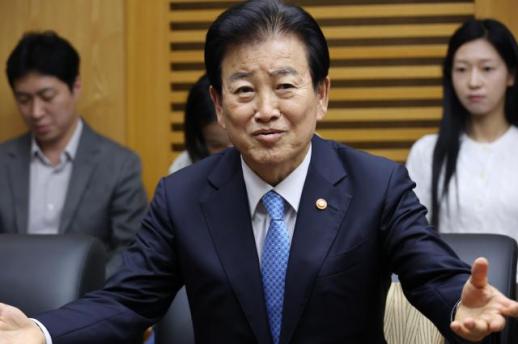 Unification Minister Jeong Dong-young Denies Reports of Prosecutorial Investigation Unification Minister Jeong Dong-young has clarified that he has not received any notifications from relevant agencies regarding reports that he is under investigation by prosecutors for allegedly leaking information related to North Korean nuclear facilities. On May 28, the Unification Ministry's spokesperson issued a statement addressing media reports concerning the minister. The spokesperson stated, "The allocation of the case by the prosecution is merely a procedural measure following a complaint, so it is difficult to view it as the start of an investigation," adding, "We have not received any related notifications from relevant agencies." The spokesperson expressed regret that some articles appeared to prejudge the allegations, stating, "We have lodged a complaint with the media outlet in question." Earlier that day, the Seoul Southern District Prosecutors' Office announced that it had received a case against Minister Jeong for allegedly leaking official secrets and had assigned it to its Criminal Division 1, led by Chief Prosecutor Kang Ho-jun, after transferring it from the Seoul Central District Prosecutors' Office on May 21. The controversy arose after Minister Jeong mentioned 'Pyeonganbuk-do Guseong' in the National Assembly on March 6, in addition to the previously known locations of North Korea's uranium enrichment facilities in Yongbyon and Gangseon in Nampo City. At that time, the Unification Ministry explained that Minister Jeong's remarks were based on comprehensive information regarding North Korea's nuclear facilities, including statements from the Director General of the International Atomic Energy Agency (IAEA) and reports from research institutions such as the Institute for Science and International Security (ISIS). * This article has been translated by AI. 2026-05-28 18:08:00
 -
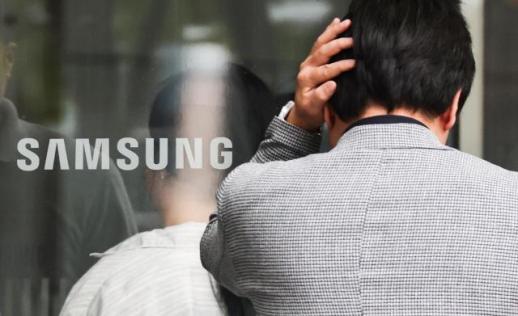 Samsung Electronics Faces Employee Discontent Over Performance Bonuses Samsung Electronics is facing escalating discontent among employees in its Device Experience (DX) division regarding performance bonuses. Despite an official apology from DX head Noh Tae-moon, discussions about a potential spin-off have emerged as tensions remain high.On May 28, an anonymous post on a Samsung Electronics community called for the formal establishment of a committee to pursue the spin-off of the DX division, attracting significant attention. More than 1,100 employees have participated in a vote supporting the spin-off and sale of the division.The compensation structure for DX executives has become a new point of contention. Samsung executives receive long-term incentives (LTI) in addition to the excess profit performance bonuses (OPI) distributed by individual divisions. The LTI, which can reach up to 300% of their salary based on the company's overall performance and stock price over the previous three years, is awarded to executives with over three years of service. Senior executives receive more than 50%, vice presidents over 70%, and presidents over 80% of their LTIs in company stock.This structure has drawn criticism from regular employees in the DX division, who argue that they bear the brunt of poor business performance. One employee stated, "Why should only the staff bear the responsibility for poor performance?"In fact, Noh received 22,679 shares of company stock as part of his LTI last July, valued at approximately 1.596 billion won based on the closing price of 70,400 won on the payment date. This was the largest amount among the 19 eligible executives. Choi Won-jun, head of the Mobile Experience (MX) division, received 473.22 million won (6,722 shares), while Yong Seok-woo, Noh's assistant, received 209.7 million won (2,869 shares).A DX employee expressed frustration, saying, "Executives can secure multi-million won rewards through LTIs even if their OPIs are zero. Ultimately, only the employees are being sacrificed."Although Noh issued an apology to address internal dissent, he is struggling to quell public sentiment. In an official message following the finalization of the labor wage agreement, he acknowledged that many employees likely felt alienated and deprived, expressing awareness of the serious reality facing the DX division.Following Noh's message, online communities and internal chat rooms were flooded with comments demanding, "Don't just apologize; compensate us with bonuses," and "Recoup the investments poured into DS and split off DX." Some expressed skepticism, questioning whether a single apology would suffice.There is also a growing movement to form a separate union focused on the DX division. As of this morning, the Samsung Electronics Labor Union, which has a majority of DX members, surpassed 16,000 members, a fourfold increase in just one week.Lee Jong-hwan, a professor at Sangmyung University’s Department of System Semiconductor Engineering, emphasized the urgency of resolving internal conflicts, stating, "In a time when both semiconductors and finished products are facing fierce global competition, quickly mending internal divisions is a top priority. The management must ensure open communication and improve systems to regain the momentum for company-wide innovation."* This article has been translated by AI. 2026-05-28 18:04:00
 -
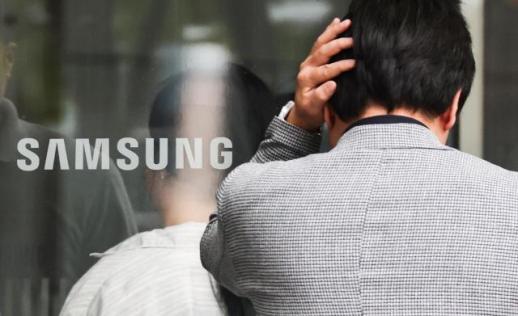 Samsung Union Faces Internal Strife Following Wage Negotiations Samsung Electronics has reached a final agreement on wage negotiations, but internal conflicts within the union are escalating. Concerns are growing that the Samsung Group's inter-company union, representing Samsung Electronics, may lose its majority status as employees from the Device Experience (DX) sector continue to leave the union.As of 10 a.m. on May 28, the number of members in the inter-company union has dropped to approximately 69,000, a decrease of over 6,000 from the peak of 76,000 during the wage negotiations. This decline is particularly attributed to the exodus of members from the DX sector, which oversees home appliances and mobile devices.The inter-company union secured its majority and legal representative status from the Ministry of Employment and Labor in April. To maintain this status, it must retain more than approximately 64,500 members, which is half of the total workforce.If the current trend of departures continues, the union's influence may weaken during the multi-union negotiation process next year.In fact, the second and third largest unions, the National Samsung Electronics Union (Jeonsamno) and the Samsung Electronics Union Donghaeng, have recently seen an increase in membership, reaching 20,000 and 16,000 members, respectively. This shift appears to be driven by dissatisfaction among DX sector employees with the provisional agreement focused on compensation in the DS sector.In response, the inter-company union has begun restructuring its organization. Chairman Choi Seung-ho announced plans to operate negotiations under a 'two-track system' for the DS and DX sectors. The executive committee will be divided into five members from DS and three from DX, with separate consideration for DX sector demands.Choi acknowledged, "I understand that a high approval rate does not necessarily reflect member satisfaction. I have deeply contemplated the disappointment and inadequacies that are not visible in the votes." He also publicly apologized for controversial remarks made during negotiations, including comments expressing frustration with the DX sector. A vote for his reappointment as chairman is scheduled for June 17.However, there are concerns within the union regarding the separation of negotiations for DS and DX. Jeonsamno issued a statement on May 27, emphasizing that "the real threat is not from our colleagues but from a structure that encourages competition between business units," clearly opposing the idea of separate negotiations.While Jeonsamno recognizes the feelings of alienation among DX members and the compensation disparities between memory and non-memory sectors within DS, it argues that the root cause lies in the company's opaque compensation system, not the union. They stressed, "Both DS and DX are affected by market changes, and if the negotiation structure is divided, it will inevitably weaken our ability to support each other in times of crisis."There are predictions that internal discord between the DS and DX sectors will persist for some time, as performance bonuses and differences in business unit results widen, prompting the union to begin operating based on business unit interests. In this context, discussions about the potential separation of DS and DX sectors have also emerged. Unlike most leading global semiconductor companies like NVIDIA, TSMC, and SK Hynix, which have specialized structures focused on semiconductors, Samsung Electronics uniquely operates as a comprehensive electronics company encompassing both semiconductors and finished products.* This article has been translated by AI. 2026-05-28 18:04:00
 -
 BMW 220i Active Tourer Offers Sedan-Like Driving with SUV Versatility The BMW 2 Series '220i Active Tourer (M Sport Design Trim)' resembles a sports utility vehicle (SUV) but delivers a sedan-like driving experience. Positioned as a niche model, it aims to balance practicality and driving performance in a market dominated by SUVs.Upon first encountering the vehicle, which was tested on May 28, it gave an impression closer to a small SUV. Although classified as a hatchback, its height and width felt substantial. However, it is not overly large for beginner drivers, consistent with BMW's compact segment models. The exterior features sharp LED headlights and a low roofline, contributing to a sporty aesthetic.Driving from Jung-gu, Seoul, to Gapyeong, a distance of about 70 kilometers, the route combined urban and national roads. The first noticeable aspect during the drive was the expansive visibility. The elevated body provided a sense of openness in the front, and the side mirrors offered a relatively wide field of view.The smooth ride throughout the journey evoked the feel of a sedan. Even on sections with numerous speed bumps, the vehicle absorbed shocks effectively, and at high speeds, it maintained stability on the road. Notably, during cornering, the body control was firmer than expected, likely due to the 'Adaptive M Suspension' feature included in the M Sport Design Trim. The vehicle did not sway excessively on winding roads near Gapyeong.In areas without traffic, the vehicle accelerated quickly with just a light press on the gas pedal, allowing for a lively driving experience. The 220i Active Tourer can go from a standstill to 100 km/h in just 7.5 seconds. However, it is more about smoothly increasing speed rather than explosive performance.The spacious interior is another appealing feature. The second row offers ample space, even for adult males, with enough legroom and headroom. A center armrest with cup holders is integrated for convenience, making it suitable as a family vehicle.For long trips, the infotainment options can keep children entertained. By connecting a smartphone using a QR code displayed on the 10.7-inch screen, the smartphone can function as a console for gaming within the vehicle. This is made possible by the standard BMW Operating System 9.Additionally, the generous trunk capacity further supports its viability as a family car. With a base capacity of 470 liters, it expands to a maximum of 1,455 liters when the rear seats are folded down, making it suitable for camping or outdoor activities. Ultimately, the 220i Active Tourer appears to be an ideal choice for consumers seeking both the practicality of an SUV and the driving feel of a sedan.* This article has been translated by AI. 2026-05-28 18:02:00
 -
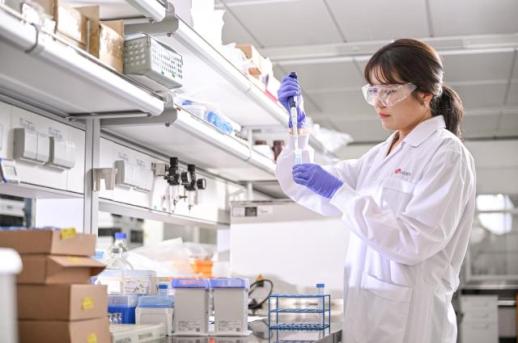 LG Chem Accelerates Future Portfolio Transition with Four Growth Drivers LG Chem announced on May 28 that it is accelerating the restructuring of its future business portfolio centered around four growth drivers: eco-friendly products, battery materials, pharmaceuticals, and high-value specialty businesses. The company aims to triple its revenue from these sectors, which stood at 5.8 trillion won last year, by 2030. In the battery materials sector, LG Chem is enhancing the development of next-generation cathode materials, including high-voltage mid-nickel (HV Mid-Ni), lithium manganese-rich (LMR), and lithium iron phosphate (LFP). The company is also working on sodium-ion battery (SIB) materials while focusing on optimizing its production base in Tennessee, North America, to secure price competitiveness. The company is also pursuing global expansion in its oncology pharmaceuticals business. Clinical trials are underway for treatments targeting head and neck cancers and immuno-oncology therapies, with plans to explore adjacent areas such as women's health and osteoporosis. In the eco-friendly sector, LG Chem is strengthening its low-carbon materials business based on PCR (post-consumer recycled) plastics and bio-based raw materials. The company is accelerating the development of next-generation low-carbon technologies, including biofuels derived from used cooking oil (HVO), sustainable aviation fuel (SAF), dry reforming of methane (DRM), and e-SAF. The specialty business is being restructured around high-performance materials, including high-heat ABS, ultra-high molecular weight SSBR, and high-purity IPA for semiconductors. LG Chem is also aiming to expand its high-value product lineup, targeting PVC for electric vehicle fast-charging cables, aerogels, and SAN for cosmetic containers.* This article has been translated by AI. 2026-05-28 18:02:00
 -
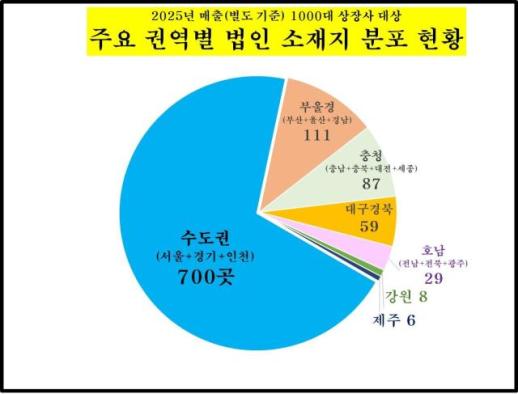 70% of South Korea's Top 1,000 Companies Are Based in the Capital Region A recent report reveals that 70% of South Korea's top 1,000 listed companies are headquartered in the capital region. Despite discussions about relocating public institutions and businesses to provincial areas since the launch of the Lee Jae-myung administration, the concentration of corporate headquarters in Seoul and Gyeonggi Province remains strong. Notably, larger companies tend to be more concentrated in Seoul, while the Busan-Ulsan-Gyeongnam (BULG) area shows relative strength among non-capital regions.According to the Korea CXO Research Institute's analysis of the locations of the top 1,000 listed companies by revenue in 2025, 700 of these companies are based in the capital region, which includes Seoul, Gyeonggi, and Incheon.The analysis focused on the top 1,000 listed companies based on individual and separate revenue figures from last year, using the corporate addresses listed in their business reports.Within the capital region, the concentration in Seoul is particularly pronounced. Of the top 1,000 companies, 405 are headquartered in Seoul, while 263 are in Gyeonggi Province and 32 in Incheon. This means that nearly 40% of South Korea's major companies are based in the capital.The trend of larger companies being more concentrated in Seoul is evident. Among the 40 companies in the '10 trillion club,' which reported revenues exceeding 10 trillion won last year, 30 are headquartered in Seoul. Hyundai Motor and Kia are based in the Seocho district of Seoul, while Posco International and Hyundai Mobis are located in the Gangnam area.However, some of the country's leading manufacturing firms are headquartered in Gyeonggi and Incheon. Samsung Electronics, the top company by revenue and market capitalization, is based in Suwon, Gyeonggi Province, while SK Hynix is located in Icheon, Gyeonggi. Hyundai Steel is also headquartered in Incheon. This reflects the characteristics of the manufacturing sector, which often aligns with production sites despite the overall trend of concentration in the capital region.In non-capital regions, the BULG area shows the strongest presence, with 111 of the top 1,000 companies headquartered there, accounting for about 11% of the total. Among the metropolitan areas, Gyeongnam has the third-highest number of companies, with 50.In Gyeongnam, companies in the shipbuilding, defense, and machinery industries play a central role. Hanwha Ocean is based in Geoje, while Changwon is home to major defense and heavy industry firms such as Hanwha Aerospace, Hyundai Wia, Doosan Enerbility, and Hyundai Rotem. Changwon has the highest number of top 1,000 company headquarters among non-capital cities, with 25.Busan has 37 companies headquartered there, including HJ Heavy Industries, Seongwoo Hightech, and Hwasung Industry. Recently, HMM, one of the largest shipping companies in the country, officially announced its relocation to Busan, raising the possibility of further corporate clustering in the city. Busan is accelerating its strategy to attract businesses in the maritime and logistics sectors.In Ulsan, companies such as HD Hyundai Heavy Industries, Lotte Fine Chemical, and Gyeongdong City Gas are located, reflecting the city's traditional manufacturing base.In the Chungcheong region, a total of 87 companies are headquartered, with 35 in South Chungcheong, 31 in North Chungcheong, 14 in Daejeon, and 7 in Sejong. Notable companies in South Chungcheong include Coway, Dongwon Systems, and Hanamicron, while North Chungcheong is home to Hyundai Elevator, HK InnoN, and Simtech. Daejeon features KT&G and Hanon Systems among its leading companies.The Daegu-Gyeongbuk region has 59 companies headquartered there, with 33 in North Gyeongsang and 26 in Daegu. Pohang is home to Posco Holdings and Posco Future M, while Hanwha Systems is located in Gumi. In Daegu, Korea Gas Corporation, L&F, and SL are leading companies driving the local economy.The Honam region has relatively fewer company headquarters, totaling 29, including 13 in North Jeolla, 9 in South Jeolla, and 7 in Gwangju. However, the presence of Korea Electric Power Corporation in Naju, South Jeolla, is significant. Other companies such as KEPCO KPS and Kumho Construction are also based in Naju.Gangwon and Jeju regions have 8 and 6 companies headquartered, respectively. Gangwon Land is the largest revenue-generating company in Gangwon, while Kakao and Jeju Air are notable firms in Jeju.At the municipal level, Gangnam District in Seoul has the highest number of headquarters, with 89 companies. It is followed by Seongnam City in Gyeonggi Province and Jung-gu in Seoul, each with 63. Seocho District in Seoul has 47, Yeongdeungpo District has 46, and Hwaseong City in Gyeonggi has 41, all identified as areas with a high concentration of corporate headquarters.Gangnam District is home to Hyundai Mobis, Posco International, DB Insurance, and GS Retail, while Seongnam City hosts KT, Naver, Samsung Heavy Industries, and SK Gas. Yeongdeungpo District houses major LG Group affiliates, including LG Electronics, LG Display, and LG Chem.Despite recent government initiatives aimed at balanced regional development and discussions about relocating businesses, analysts suggest that the preference for the capital region among companies is unlikely to change easily. Factors such as access to top talent, transportation and business infrastructure, supplier networks, and financial accessibility remain concentrated in the capital.As large corporations increasingly rely on connections to investment, finance, legal, and consulting services, the preference for Seoul is particularly pronounced. In contrast, provincial areas often serve primarily as manufacturing sites, limiting incentives for relocating headquarters.Oh Il-seon, head of the Korea CXO Research Institute, stated, "The ongoing concentration of major corporations in the capital region continues to widen the socio-economic gap with non-capital regions across various indicators. When companies relocate to provincial areas, there needs to be a premium and long-term support strategy in terms of taxation, location, and talent acquisition that can be practically felt."* This article has been translated by AI. 2026-05-28 18:02:00