

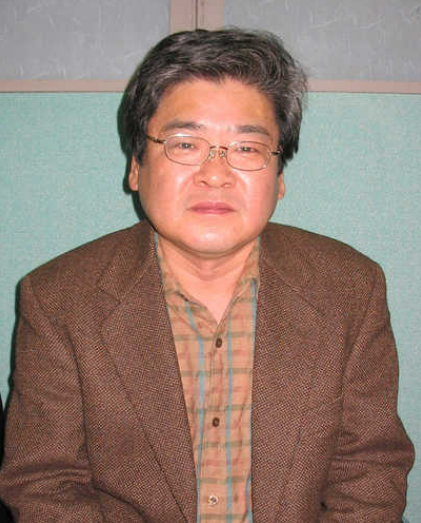
Prosecutors have canceled the suspended charges against Kim Byung-jin, a 71-year-old victim of a fabricated spy ring case involving the Military Security Command, 43 years after the initial charges were filed. This marks the first instance of prosecutors taking action to relieve a victim of suspended charges on their own authority.
The Seoul Central District Prosecutors' Office announced on May 28 that it had reinstated Kim's case, which had been suspended due to violations of the National Security Law, and subsequently declared him not guilty. This decision comes approximately nine months after Kim submitted a petition to the Supreme Prosecutors' Office requesting the cancellation of the suspended charges last August.
Prosecutors explained that they considered the illegal detention and investigation conducted by the Military Security Command, which lacked civilian investigative authority, as well as the fact that Kim's co-defendant, Seo, was acquitted after a retrial in 2017.
In July 1983, while studying at Yonsei University, Kim was taken into custody without a warrant by the Military Security Command and subjected to interrogation for about three months. At that time, the command believed Kim had met with Seo, a Korean resident in Japan, during his studies and had received ideological training, returning to Korea in 1976 to collect state secrets and receive operational funds.
Kim received a suspension of charges in November 1983 from the Seoul District Prosecutors' Office. This suspension, under Article 20 of the National Security Law, allows for charges to be postponed based on the motives for the crime or circumstances following the offense. It is similar to the current concept of deferred prosecution, effectively presuming guilt.
However, the issue lies in the absence of a separate relief procedure for those who receive a suspension of charges. While individuals with confirmed guilty verdicts can request a retrial, those with suspended charges do not undergo a trial and thus cannot seek retrial.
Even after Seo's acquittal, Kim was unable to pursue any legal relief. A suspension of charges cannot lead to prosecution after two years, yet the suspension itself remains in effect.
Considering this institutional gap, prosecutors decided to reinstate the case and declare Kim not guilty. A prosecutor stated, "This is the first case where a prosecutor has reinstated a case and declared it not guilty, taking into account the lack of a separate relief procedure for individuals with suspended charges."
Kim has long claimed that he was coerced into making false confessions under torture and threats from Military Security Command investigators. After moving to Japan in 1986, he published a book titled 'Security Command' in 1988, exposing the realities of state violence at the time. The Truth and Reconciliation Commission also made two determinations regarding the truth of Kim's case in 2009 and 2024.
Prosecutors stated, "We will faithfully fulfill our duty to comply with due process and ensure human rights as representatives of the public interest and as an objective law enforcement agency in past human rights violation cases."
* This article has been translated by AI.
Copyright ⓒ Aju Press All rights reserved.